Limping into the New Year

On the Friday before Christmas, my wife Lori was returning home on I-85 near High Point, North Carolina, when the dashboard lit up, and the car did something no one ever wants a car to do going 70 mph on the interstate. It went into “limp mode.”

If you’ve never experienced it, “limp mode” is exactly what it sounds like. The car doesn’t stop completely. It doesn’t break down and shut off on the side of the road. But it can no longer go as it once did. Power is reduced. Speed is limited. Everything is suddenly fragile.

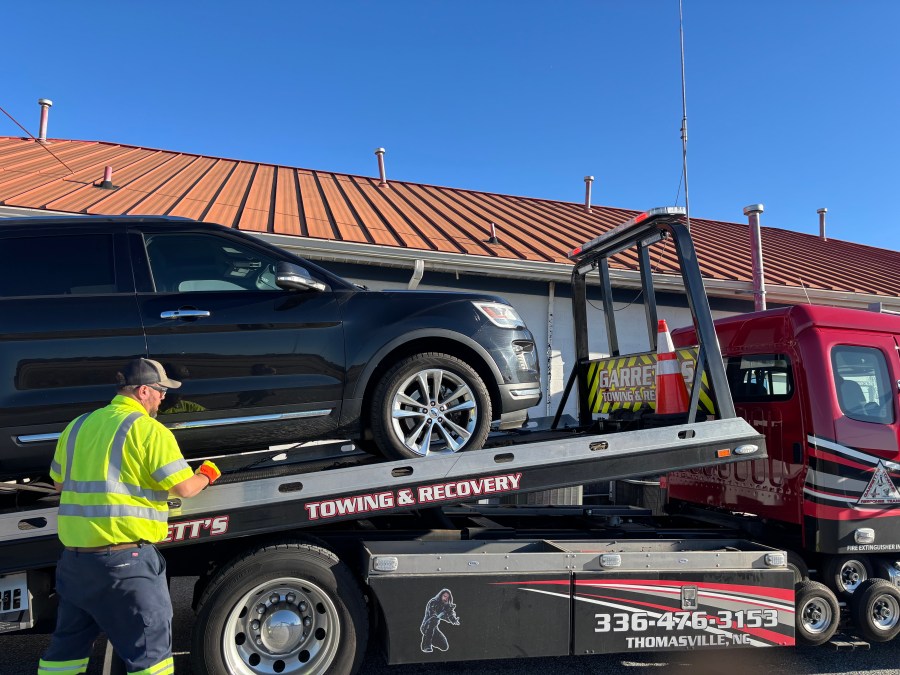
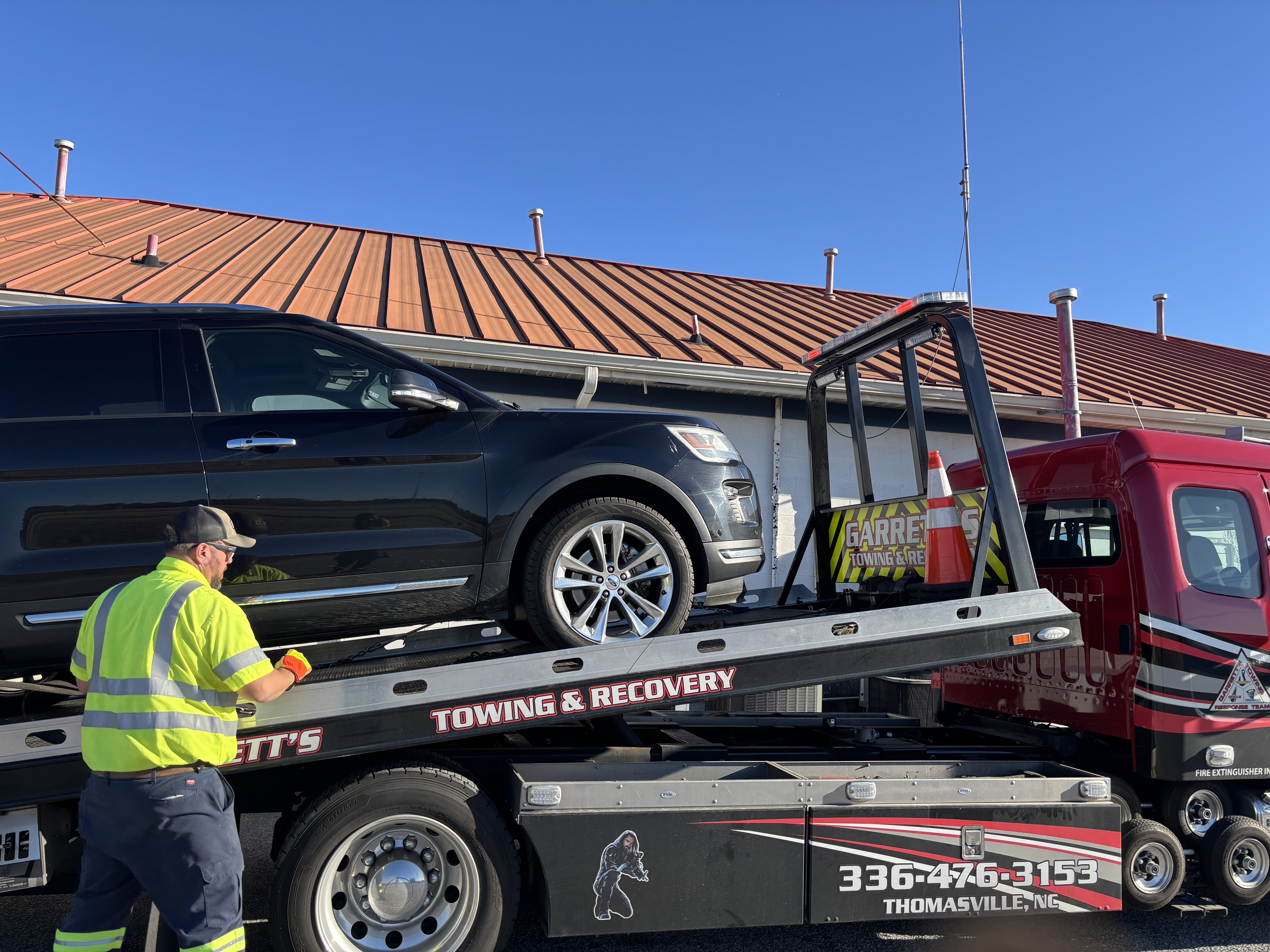
Lori stayed calm while panicking a little at the same time. However, she kept both hands steady on the wheel. She said to herself: “I am still here. I am going slow, but I am still moving.” She listened to what the car could still do, not what it could no longer do. And little by little, she guided it safely off the highway to a convenience store. A tow truck came. A mechanic took a look. A few days later, the problem was fixed. And now she’s back on the road.

As we step into a new year, Lori’s limp-mode adventure feels like a parable, as many of us are not roaring into January with full power. Honestly, we are limping, emotionally, spiritually, financially, physically. Some are carrying grief that didn’t resolve itself by December 31. Some are exhausted by a world that keeps demanding more while offering less. Some are doing the brave work of survival and calling it what it is.

The good news is that “limp mode” doesn’t mean we have failed or need a complete overhaul.

It only means that something in the system needs attention. It means slow is the new faithful.

The temptation in a new year is to pretend we’re stronger than we are. We make bold promises we don’t have the fuel to keep. We shame ourselves for not accelerating fast enough. However, wisdom teaches us something different. Remain calm, even if we are panicking a little. Pay attention to what we still have. Protect what’s still working. Get to a safe place.

There is hope, not because everything is fine on January 1, but because we are still moving.

Hope looks like pulling over instead of pushing harder. Hope looks like asking for help. Hope looks like trusting that repair and recovery are possible, even if we don’t yet know how or when.

The car didn’t heal itself on the highway. It needed a tow. It needed a mechanic. It needed time.

So, if you are limping into this year, the good news is that you are not broken beyond repair. As long as you are still moving, even slowly, there is a future for you in 2026. As long as you are paying attention, pulling over when needed, and letting others help carry what you cannot, there is grace for the road ahead.

And sometimes the most hopeful thing we can say at the start of a new year is this: “I’m still here.” “I am going slow, but I am still moving.”

And that is enough to begin.

Running this Race Called “Life”

running-group

Running is such a great metaphor for life.

It began as an ordinary Saturday morning run with the Greenville Running Group.  We were running our regular Starbucks’ route from Greenville Boulevard to the Town Commons and the Greenway. I effortlessly covered the distance of the first two miles before I even realized it. Into the third mile, I was confidently running down Charles, past Dowdy-Ficklen Stadium, as I had many times in the past. I had this. Life was good. I was all smiles, on cruise control.

Then without warning, early into mile three, I really stepped into it. Without seeing it, I managed to step into a metal hoop that was in the road, about 18 inches in diameter. My right heel caught the back of the hoop and stood it up. My left foot joined my right foot inside the hoop and down I went. Before I knew exactly what happened, I was laying in the gutter of Charles Boulevard. Muddy and bloody, my knees took the brunt of the fall.

Three of my running friends rushed to my aid, empathetically asked me if I was okay, then reached down and helped pick me up out of the gutter. They did not judge me for not looking where I was planting my feet, nor did they express any disappointment that I had interrupted their run. They only expressed compassion for me.

They led me to the Duck-Thru convenience store at the corner on 14th Street where they found a spigot to wash my wounds. One of my friends came out of the store with a first aid kit. Another friend, with her own hands, took some gauze from the kit and made sure my abrasions were clean.

Willing to sacrifice their run, they offered to walk back with me to my car. However, their compassion was more than I needed to encourage me to press on and finish the run. Ten miles later, I completed one of the best runs ever.

The scriptures say: “Therefore, since we are surrounded by so great a cloud of witnesses…let us run with perseverance the race that is set before us…” (Hebrews 12:1). Jesus said, “I give you a new commandment, that you love one another. Just as I have loved you, you also should love one another” (John 13:34).

May God forgive us for arrogantly thinking that we can do this thing called “life” alone. And may God give us the grace to love one another, to link up with one another in mutual care and compassion, to feel responsibility for one another, and to run this race together.

How God Always Responds to Death

Sermon Excerpt from Death at a Funeral

Luke 7:11-15

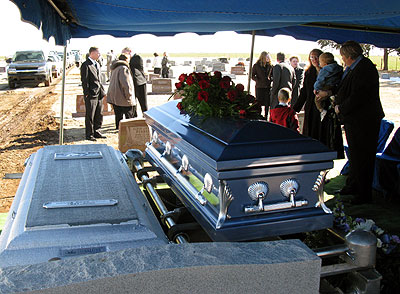
840-casket-before-burial

This is how I believe our God always responds to death: God does not will death. God does not ordain death. God is not sitting on a throne pushing buttons calling people home. Luke teaches us that when someone dies, God is moved very deeply.  It is a visceral reaction.  God is flooded with compassion for both the deceased and the living. God does not ignore death or accept death as a natural part of life, but on the contrary, God confronts death, recognizes the harsh reality of it, the sheer evil of it, and God is moved from the very depths of who God is.

Therefore, it is very inaccurate to ever say that in death: “God takes people home.” I have said many times that God is a giver not a taker. It is the very nature of who our loving God is. It is far more accurate to say that when any death occurs, no matter the age, no matter the circumstance, God confronts it. God is moved with compassion. And God doesn’t take, but gives God’s self completely, fully and finally to the one who dies and his or her grieving family.

God does not ignore death, or demean death, or simplify death saying, “This is all part of my purpose driven plan.”  Through Jesus, God does not let any death at a funeral simply pass by like it is somehow meant to be.  Through Christ, God is moved with compassion and sees death as a force contrary to God’s will and acts to overcome it. God always acts to transform death at a funeral into life at a funeral.