A Prophetic Cup of Water

Matthew Chapter 10 is perhaps one of the most demanding chapters in the entire Bible. 

Early in the chapter, we read that the discipleship business is a risky business. We are to go out into the world and encounter the sick and the dying. We are to engage those possessed by pure evil. We are to be willing to leave behind our families, our homes, even our clothes! Persecution is not only to be accepted. It is to be welcomed!  To save one’s self, we are to practice denying one’s self, pouring one’s self out, and losing one’s self.

And when read it, we think, “You know, I don’t think I am really cut out for this discipleship business. I don’t have the gifts, the time, the energy, the courage, and quite honestly, I don’t have the desire.” 

So thanks for the invitation, but I prefer to just keep my place safe and comfy in air-conditioned sanctuary. I am quite content singing some songs, even listening to a sermon. 

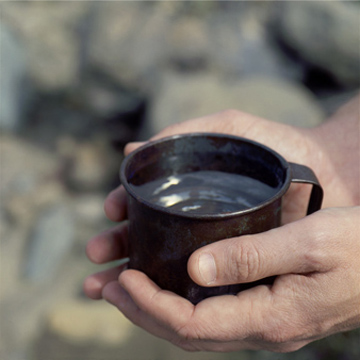
 Then, we reach the end of the chapter and we read these words: “Whoever gives even a cold cup of water to one of these little ones—truly I tell you, none of these will lose their reward.”  

And we say: “Hey now.  Wait just a minute! You know, this just might be something I can handle!—I can’t heal the sick. I hate hospitals, and I do all I can do to avoid nursing homes. 

I don’t have what it takes to minster to the poor. They make me nervous, make me feel dirty, and quite honestly, they stress me out.

I can’t be with the dying. That is what Hospice is for. And I dread going to funerals. I never know what to say or what to do. 

And I can’t leave my family behind. I can’t give up my possessions. And I don’t want to even think about losing my life. But hey, I am all about sharing a cold cup of water! 

Finally! Something I can do!. So, Jesus, I’ll tell you what I’m gonna do. As soon as I get home from church this afternoon, I am going to hook up my water hose to the spigot out in front of my house.  Then I am going to I make a sign and put it out by the road that reads: ‘Free cold drink of water for all who are thirsty!’ And to make this guest preacher happy, since he is preparing to move away, I will even add #JustLoveYour Neighbor.

Maybe I am cut out to be a disciple of Jesus after all!”For most of us, this seems like some good news! We who generally fail at casting out demons (even when they show up in church), we who would rather come to this lively place, than take the gospel out to the dying, we who take care of our own children while other children go hungry, and we who find praise far more satisfying than persecution, even we can open the doors of the kingdom through a simple act of hospitality, as small as giving a thirsty stranger a cold cup of water. 

“Praise be to Jesus!” we say. 

“So, I am going to just forget about all of that other stuff Jesus talked about, that big prophetic stuff, that demanding stuff, that risky and radical stuff. I’m just going to take Jesus at his word in Matthew 10:42 and run with it!  In fact, is going to be my new favorite scripture verse. This is my new calling. This is my mantra and my ministry. Cold cups of water for all God’s people!

But you have to wonder if we aren’t missing something. For deep inside, we all know we can do a lot better than that. We all know a cross or two we could bear. We all know a neighbor or three we could love. We all know someone we could help out. We all know ways we could be a little less selfish, less materialistic, more generous. 

True discipleship really cannot be as easy as passing out a few cups of water, can it? Are we really supposed to forget all about everything else that Jesus talked about? All of that hard stuff about “turning the other cheek,” “loving our enemies,” and selling everything we have to give to the poor?”  

Surely those are the marks of true discipleship. Those are the keys to the kingdom of heaven. There’s just no way a small act of inconsequential hospitality can compare to the risky and radical business of battling the demonic, coming into contact with the sick, ministering to the dying and enduring persecution.  

But Jesus seems to disagree. For in a fragmented and divisive world such as ours, a simple act of kindness, a small gesture of welcome to a stranger, a little genuine hospitality is never an easy, inconsequential act. In fact, it can be very risky business with very radical consequences.

 If you have trouble believing it, ask Don Hames who recently fell through someone’s front porch while delivering a small box of groceries! 

Or ask him how the act of delivering a hot meal can actually lead to the disappointment, rejection and persecution that Jesus talked about. As they encircled Jesus to arrest him in the Garden of Gethsemane, ask him about the day the St. Tammany’s Sherriff’s department came to his home, after a meal recipient who was suffering with mental illness and paranoia had trouble believing in our gracious hospitality. 

But also ask him how simple, practical acts of acts of love have literally changed people’s lives, and I am not talking only about the lives of those we serve, but I am also talking about those who serve. 

In this fragmented world, a world of walls and barriers, a world where there is so much division, so much hate and loneliness, a small gesture of hospitality, becomes a risky, radical and prophetic act that has the power to change your life, and perhaps the world.

And Jesus says to go and do this. Go out, move out, seek out, and reach out to strangers. Go and love your neighbors. 

And yes, this world is frightening beyond our walls. Our neighbors can be so different. And the truth is some of our neighbors can be downright scary. 

But our neighbors are also thirsty. 

So, welcome, engage, touch. Share a drink with someone. Make yourselves vulnerable to another. For there is no other way to fulfill the purpose for which you were created—to seek and make genuine peace in this world. 

This is discipleship. This is following the way of Jesus. It is done face-to-face, side-by-side, hand-to-hand, person-to-person. 

We cringe. Because we know that this kind of hospitality involves risk. It involves radical openness and intimacy with another.

Offering a cup of water to another involves the risk of rejection, even persecution, but also the risk of laughter; the risk of tears, but also the risk of love. 

I’ve heard it said that the problem with others is that they are just so “other.” Others can quite often be different. Others may not like us. Others might refuse our kindness. Others might wound us. Others might crucify us. And worst of all, others might change us.

The truth is that putting a welcome sign in the front yard beside the water hose is a downright dangerous activity.

Let me share the story with you that helped to inspire this movement, we call Just Love. A few years ago, while serving as pastor, I walkedx into the church kitchen to get a cup of coffee. A woman from the cleaning service the church had hired was in there preparing to mop the floor. Although I had seen her almost every week for three years, I am ashamed to say that I did not know her name. 

But that day, before I really thought about it, before considered the dangerous consequences of it, I asked this stranger, “Would you like a cup of coffee?” Somewhat shocked by my simple act of hospitality, she responded, “Yes, I would.” 

She then introduced herself to me over that cup, as she introduced all of her children, a sick grandchild, a sister battling cancer, a brother who lost his job, and an absent husband. I filled a bag with squash and cucumbers from our community garden, and I hugged this woman who I had hardly spoken to in three years—this stranger that I had all but ignored—this woman who was no longer a stranger. She was my sister. And acknowledging the change, the miraculous transformation that had occurred, I thought, or maybe I prayed, “Good Lord, it was just one cup of coffee!”

Paraphrasing United Methodist Pastor William Willimon: This is the way of the good Lord. For Jesus, oftentimes through the smallest and simplest of ways, is always trying to change us, challenge us, move us. He welcomes and accepts us only so we will welcome others, for not only their sakes, but for our sakes.

This is the gift of community. This is why we were created. It is the answer to our own sadness, to our own loneliness and to our deepest desires. Jesus knows we were not created to live in isolation, but created from the heart of a God who lives in a self-giving, loving communion with the Son and the Holy Spirit—A heart that is so full of love that it cannot help but offer grace and redemption to all and call all into this communion. 

And this communion grows. It grows when we offer kindness, gentleness, and mercy, when other lonely lives become wrapped up in our own, when the grace of God that was given to us is freely given to someone else. 

And before we know it, the small cup of water we offered to another becomes a cup of salvation as fear fades, barriers fall, walls come down, hands touch, hearts connect, eyes open, lives become entwined.  Creed, color, gender, sexual orientation, it really doesn’t matter.

Doing business with this kind of God, even when it seems small, safe and inconsequential, is always a risky business with radical consequences. And Jesus wants us to know that these consequences are eternal. Whether we are fighting demonic evil, healing the sick, caring for the dying, leaving behind our homes, our possessions, our friends and family, being persecuted for taking a stand for social justice, or simply offering meager acts of hospitality to a stranger, we always risk experiencing salvation.  

This is the great wonder of the gospel. When we reach out, accept, and welcome others, when we take the hand of another, when we embrace another, when we offer the unconditional love of God to another, even in the smallest of ways, even in sharing a glass of water or a small cup of coffee, or a box of groceries, God welcomes us. 

When we encounter another, we find communion with God and receive the overflowing hospitality of the Father, and of the Son, and of the Holy Spirit.[i]

Today, this is more important than ever. 

One of my favorite preachers, Diana Butler Bass, prophetically proclaims:

When the law fails to welcome and include, the practice of hospitality falls back to those who envision a truly accepting society — a community where all are welcomed and all are fed, a place of reciprocal generosity, humbled by the tender knowledge that (at any moment) we might be either host or guest.” 

The New Testament is clear. When Caesar’s law rules against hospitality to strangers, God’s people inveigh against such laws. We welcome everybody. We respect the dignity of every person. If you turn people away, you are turning Jesus Christ himself away.

The Cottage, Sunday Musings, Diana Butler Bass

“When the law fails to welcome and include, the practice of hospitality falls back to those who envision a truly accepting society — a community where all are welcomed and all are fed, a place of reciprocal generosity, humbled by the tender knowledge that (at any moment) we might be either host or guest.” 

The New Testament is clear. When Caesar’s law rules against hospitality to strangers, God’s people inveigh against such laws. We welcome everybody. We respect the dignity of every person. If you turn people away, you are turning Jesus Christ himself away.” 

Thank you, O God, for the hope that we can be a part of your plan for this world. Through Christ Jesus our Lord. Amen.

Commissioning and Benediction

Go out from this place with hope—hope that you can be a part of God’s plan for this world.  Move out now and reach out to strangers. Love your neighbors. Yes, even your neighbors who are different, even those who are downright scary. 

Because your neighbors are thirsty. 

Welcome, engage, touch. Embrace. Make yourselves vulnerable to another.

Go home and metaphorically make a sign to be placed out front where you live that reads: “Cold Cups of Water for All! #JustLoveYourNeighbor!”

And may the love of God, the grace of Christ, and the communion of the Holy Spirit be with us all. Amen.


[i] Inspired and Adapted from William Willimon. “Risky Business,” Clergy Journal, Jun 26, 2005, vol 33, no 2, pp 53-56.
A Radical Cup of Water

waterhose

Matthew 10:40-42 NRSV

Matthew Chapter 10 is perhaps one of the most demanding chapters in the entire Bible.

Early in the chapter, we read that the discipleship business is a risky business. We are to go out into the world and encounter the sick and the dying. We are to engage those possessed by pure evil. We are to be willing to leave behind our families, our homes, even our clothes! Persecution is not only to be accepted. It is to be welcomed!  To save one’s self, we are to practice denying one’s self, pouring one’s self out, losing one’s self.

And when read it, we think, “You know, I don’t think I am really cut out for this discipleship business. I don’t have the gifts, the time, the energy, the courage, and quite honestly, I don’t have the desire.”

So thanks for the invitation, but I prefer to just keep my place safe and comfy on this padded pew.

Then, we reach the end of the chapter and we read these words: “Whoever gives even a cold cup of water to one of these little ones—truly I tell you, none of these will lose their reward.”

And we say: “Hey now.  Wait just a minute. You know, I think I might be able to handle this! I can’t heal the sick—I hate hospitals, and I do all I can do to avoid nursing homes.

I don’t have what it takes to minster to the poor. They make me nervous, make me feel dirty, stress me out.

I can’t be with the dying. That is what Hospice is for. And I dread going to funerals. I never know what to say or what to do.

And I can’t leave my family behind. I can’t give up my possessions. And I don’t want to even think about losing my life. But hey, I am all about sharing a cold cup of water!

Finally! Something I can handle. So, Jesus, I’ll tell you what I’m gonna do. As soon as I get home from church this afternoon, I am going to hook up my water hose to the spigot out in front of my house.  Then I am going to I make a sign and put it out by the road that reads: ‘Free cold drink of water for all who are thirsty!’ And to make the preacher happy, since it is his last Sunday, I will even add: “And all means all.”

Maybe I am cut out to be a disciple of Jesus after all!”

For most of us, this seems like some good news! We who generally fail at casting out demons (even when they show up in church), we who would rather stay in our pews than take the gospel out to the dying, we who take care of our own children while others starve in the streets, and we who find praise far more satisfying than persecution, even we can open the doors of the kingdom through a simple act of hospitality, as small as giving a thirsty stranger a cold cup of water.

“Praise be to Jesus!” we say.

“So, I am going to just forget about all of that other stuff Jesus talked about, that big prophetic stuff, that demanding stuff, that risky and radical stuff. I’m just going to take Jesus at his word in Matthew 10:42 and run with it!  In fact, is going to be my new favorite scripture verse. This is my new calling. This is my mantra and my ministry. Cold cups of water for all God’s people!

But you have to wonder if we aren’t missing something. For deep inside, we all know we can do a lot better than that. We all know a cross or two we could bear. We all know a neighbor we could love. We all know someone we could help out. We all know ways we could be a little less selfish, less materialistic, more generous.

True discipleship really cannot be as easy as passing out a few cups of water, can it? Are we really supposed to forget all about everything else that Jesus talked about? All of that hard stuff about “turning the other cheek,” “loving our enemies,” and selling everything we have to give to the poor?”

Surely those are the marks of true discipleship. Those are the keys to the kingdom of heaven. There’s just no way a small act of inconsequential hospitality can compare to the risky and radical business of battling the demonic, coming into contact with the sick, ministering to the dying and enduring persecution.

But Jesus seems to disagree. For in a fragmented world such as ours, a simple act of kindness, a small gesture of welcome to a stranger, a little genuine hospitality is never an easy, inconsequential act. In fact, it can be very risky business with very radical consequences.

A short time ago, I replied to an email from a complete stranger who wrote to thank me for something that I had written on my blog. By the way, I ended that article, “And all means all.”

I replied to his email with a simple, hospitable, what-seemed-to-be-inconsequential, “Thank you.”

A few days later we are friends on Facebook.

A couple of weeks later, I get a telephone call asking me to pray for him about a job opportunity in the City.

A week later, I am asked to meet this stranger at a restaurant.

Before I left the house, I told Lori exactly where I was going. I called her when I arrived and told her that if she did not hear from me in a couple hours to call the police.

During dinner, he shared with me some his burdens, some of his pain, some of fears. He told me how he had often been condemned by the church for being different. I made myself vulnerable by sharing some of my own burdens. Before we departed, we embraced, no longer as strangers, but as brothers who had made a covenant suffer with and to pray for one another. I drove home wondering: “What on earth have I gotten myself into?”

In this fragmented world, a world of walls and barriers, a world where there is so much division, so much hate and loneliness, replying to a simple email, a small gesture of hospitality, becomes a risky, radical and prophetic act that has the power to change your life, and perhaps the world.

And Jesus says to go and do this. Go out, move out, seek out, and reach out to strangers. Love your neighbors.

And yes, this world is frightening beyond our walls. Our neighbors can be so different. And the truth is some of our neighbors can be downright scary.

But our neighbors are also thirsty.

So, welcome, engage, touch. Share a drink with someone. Make yourselves vulnerable to another. For there is no other way to fulfill the purpose for which you were created—to seek and make genuine peace in this world.

This is discipleship. This is following the way of Jesus. It is done face-to-face, side-by-side, hand-to-hand, person-to-person.

We cringe. Because we know that this kind of hospitality involves risk. It involves radical openness and intimacy with another.

Offering a cup of water to another involves the risk of rejection, but also the risk of laughter; the risk of tears, but also the risk of love.

I’ve heard it said that the problem with others is that they are just so “other.” Others can quite often be different. Others may not like us. Others might refuse our kindness. Others might wound us. Others might crucify us. And worst of all, others might change us.

The truth is that putting a welcome sign in the front yard beside the water hose is a downright dangerous activity.

Nearing the end of my ministry in North Carolina before moving to be with you here in Enid, I went into the church kitchen to get a cup of coffee. A woman from the cleaning service the church had hired was in there preparing to mop the floor. Although I had seen her almost every week nearly three years, I am ashamed to say that I did not know her name.

But that day, before I really thought about it, considered the dangerous consequences of it, I asked this stranger, “Would you like a cup of coffee?” Somewhat shocked by my simple act of hospitality, she responded, “Yes, I would.”

She then introduced herself to me over that cup, as she introduced all of her children, a sick grandchild, a sister battling cancer, a brother who lost his job, and an absent husband. I filled a bag with squash and cucumbers from our community garden, and I hugged this woman who I had hardly spoken to in three years—this stranger that I had all but ignored—this woman who was no longer a stranger. She was my sister. And acknowledging the change, the miraculous transformation that had occurred, I thought, or maybe I prayed, “Good Lord, it was just one cup of coffee!”

Paraphrasing United Methodist Pastor William Willimon: This is the way of the good Lord. For Jesus, oftentimes through the smallest and simplest of ways, is always trying to change us, challenge us, move us. He welcomes and accepts us only so we will welcome others, for not only their sakes, but for our sakes.

This is the gift of community. This is why we were created. It is the answer to our own sadness, to our own loneliness and to our deepest desires. Jesus knows we were not created to live in isolation, but created from the heart of a God who lives in a self-giving, loving communion with the Son and the Holy Spirit—A heart that is so full of love that it cannot help but offer grace and redemption to all and call all into this communion.

And this communion grows. It grows when we offer kindness, gentleness, and mercy, when other lonely lives become wrapped up in our own, when the grace of God that was given to us is freely given to someone else.

And before we know it, the small cup of water we offered to another becomes a cup of salvation as fear fades, barriers fall, walls come down, hands touch, hearts connect, eyes open, lives become entwined.  Creed, color, gender, sexual orientation, it doesn’t matter.

Doing business with this kind of God, even when it seems small, safe and inconsequential, is always a risky business with radical consequences. And Jesus wants us to know that these consequences are eternal. Whether we are fighting demonic evil, healing the sick, caring for the dying, leaving behind our homes, our possessions, our friends and family, being persecuted for taking a stand for social justice, or simply offering meager acts of hospitality to a stranger, we always risk receiving salvation.

This is the great wonder of the gospel. When we reach out, accept, and welcome others, when we take the hand of another, when we embrace another, when we offer the unconditional love of God to another, even in the smallest of ways, even in sharing a glass of water or a small cup of coffee, or in responding to an email, God welcomes us.

When we encounter another, we find communion with God and receive the overflowing hospitality of the Father, and of the Son, and of the Holy Spirit.[i]

[i] Inspired by William Willimon. “Risky Business,” Clergy Journal, Jun 26, 2005, vol 33, no 2, pp 53-56.

Risky Business

Cup-Cold-Water

Matthew 10:40-44 NRSV

Matthew Chapter 10 is perhaps one of the most demanding chapters in the entire Bible. In this chapter Jesus seems to stress how important it is that every member of the Kingdom of God realizes that he or she is called to do ministry. And he calls us to do some very demanding things.

Early in the chapter, we read that following Jesus is some very risky business. We are to go out into the world and come in contact with the sick and the dying. Encounter those possessed by pure evil. We are to leave behind our families, our homes, even our clothes!  Persecution is to be not only accepted, but welcomed!  We are to practice denying one’s self, losing one’s self to receive salvation.

We read it, and we think, “You know, I don’t think I am really cut out for this salvation business. I don’t have the gifts, the time, the energy, and quite honestly, nor the desire to be a disciple of Jesus.

Then we reach the end of the chapter and we read these words: “Whoever gives even a cold cup of water to one of these little ones—truly I tell you, none of these will lose their reward.”

Then we think: “Hey. You know, I think I might be able to handle this! I sure can’t heal the sick—I hate hospitals and I avoid nursing homes. I don’t have what it takes to minster to the poor. They make me nervous, make me feel dirty.

I can’t be with the dying. That is what Hospice is for. And I hate going to funerals. I never know what to say or what to do. I can’t leave my family behind. I can’t give up my wardrobe. And I don’t even like to think about losing my life.  But hey, I am all about sharing a cold cup of water!

Finally, Jesus! Something I can handle. I’ll tell you what I will do, Jesus. As soon as I get home from church this afternoon, I am going to hook up my water hose. Then I am going to I make a sign and put it out there by the faucet that reads: ‘Free cold drink of water for all who are thirsty!’ Maybe I am cut out to be a disciple of Jesus after all!”

For most of us, this is some very good news indeed. We who generally fail at casting out demons, who would rather stay in our pews than take the gospel out to the dying, who pamper our own families while others starve in the streets and who find praise far more satisfying than persecution, even we can open the doors of the kingdom of heaven through a simple act of hospitality as small as giving a thirsty stranger a cold cup of water.

Praise be to Jesus!” we say.  “I am going to just forget about all of that other stuff, that big stuff, that demanding stuff, that risky stuff Jesus talked about.  I’m just going to take Jesus at his word in Matthew 10:42 and run with it.  This is going to be my new favorite scripture verse.  This is my calling. This is my ministry. Cold cups of water for everyone!

I wonder though, if we aren’t missing something. For deep inside, we all know that all of us can do a lot better than that. We all know a cross or two we could bear. We could probably be giving more to the church and to others. We could all be a little less selfish, less materialistic.

True discipleship really cannot be as easy as passing out a few cups of water, can it? Are we really supposed to forget all about everything else that Jesus talked about?  All of that hard stuff about “turning the other cheek,” “loving our enemies,” and selling everything we have to give to the poor?”

Surely these are the marks of true discipleship.  These are the keys to the kingdom of heaven. A small act of inconsequential hospitality cannot compare to the risky business of battling the demonic, coming into contact with the sick, ministering to the dying and enduring persecution.

Jesus seems to disagree.  In a fragmented world such as ours, a simple act of kindness, a small gesture of welcome to a stranger, a little genuine hospitality is never an easy inconsequential act. In fact, it can be some very risky business and its consequences can be eternal.

Several weeks ago, I replied to an email from a complete stranger who wrote to thank me for something that I had written on my blog. I replied with a simple, hospitable, what-seemed-to-be-inconsequential “Thank you.”  A few days later we are friends on facebook. A couple of weeks later, I get a telephone call asking me to pray for him about a job opportunity in Charlotte. A week later, I am asked to drive to meet this stranger in Raleigh.

Before I left the house this past Monday to meet this stranger, I told Lori exactly where I was going. I called her when I arrived and told her that if she did not hear from me in a couple hours to call the police.

When I met him for dinner, he shared with me some his burdens, some of his pain and fears. He told me how he had often been condemned by the church for being different. I made myself vulnerable by sharing some of my burdens. Before we departed, we embraced, no longer as strangers, but as brothers who made a covenant suffer with and to pray for one another. I drove home wondering, “What on earth have I gotten myself into?”

In this kind of world, a world of walls and barriers, a world of violence and loneliness, a world of great diversity, replying to a simple email, a small gesture of hospitality, becomes a risky, prophetic act that has the power to change your life.

And Jesus said to go and do this. Go out, move out, and reach out to strangers. Love your neighbors. Yes, this world is very frightening beyond our walls. And the truth is our neighbors are downright scary. But our neighbors are also thirsty. Welcome, engage, touch. Make yourselves vulnerable to another. For there is no other way to fulfill the purpose for which you were created—to seek and make genuine peace in this world. This is discipleship. This is following the way of Jesus. It is done face-to-face, hand-to-hand, person-to-person. We cringe. Because we know that this kind of hospitality is risky. It involves openness and intimacy with another.

Offering a cup of water to others involves the risk of rejection, the risk of laughter, the risk of tears, and the risk of love. I’ve heard it said that the problem with others is that they are just so “other.” Others quite often can be different. Others may not like us.  Others might refuse our kindness. Others might wound us. Others might crucify us. And worst of all, others might change us.

The truth is that putting a welcome sign in the front yard beside the water hose is a downright dangerous activity.

coffee friends

On Friday morning, I went in to the church kitchen to get a cup of coffee. A woman from the cleaning service was in there preparing to mop the floor. Although I have seen her almost every week for the last nine months, I did not know her name. Before I really thought about it, considered the dangerous consequences of it, I asked this stranger, “Would you like a cup of coffee?” Somewhat shocked by my simple act of hospitality, she responded, “Yes, I would.” She then introduced herself to me over that cup as she introduced all of her children, a sick grandchild, a sister battling cancer. I filled a bag with squash and cucumbers from our garden, and I hugged this woman who I had hardly spoken to in nine months, this stranger that I had all but ignored, this woman who was no longer a stranger but a sister. And acknowledging the change, the miraculous transformation that had occurred, I thought, or maybe I prayed, “Good Lord, it was just one cup of coffee!”

Paraphrasing United Methodist Pastor William Willimon: This is the way of good Lord. For Jesus, through the smallest and simplest of ways, is always trying to change us, challenge us. He welcomes and accepts us only so we will welcome others, for not only their sakes, but also for our sakes.

This is the gift of community. This is why we were created.  It is the answer to our own sadness, our own loneliness and our deepest desires. Jesus knows we were not created to live in isolation, but created from the heart of a God who lives in a self-giving, loving communion with the Son and the Holy Spirit.

A heart that is so full of love that it cannot help but offer grace and redemption to all and call us all into this communion. And this communion grows. It grows when we offer kindness, gentleness, and mercy, when other lonely lives become wrapped up in our own, when God’s love that was given to us is extended to someone else. And before you know it, the small cup of water we offered to another becomes a cup of salvation, as barriers fall, hands touch, lives become entwined.

Getting involved with this kind of God, even when it seems small, safe and inconsequential is always a risky business with great consequences. And Jesus wants us to know that its consequences are eternal. Whether we are fighting demonic evil, healing the sick, caring for the dying, leaving behind our homes, our wardrobes, friends and family, being persecuted for our faith, or simply offering meager acts of hospitality to a stranger, we always risk finding salvation.

This is the great wonder of the gospel. When we reach out and accept and welcome others, when we touch another’s hand, embrace another, offer the grace of God to another, even in the smallest of ways, even in sharing a glass of water, even in replying to one simple email or offering one small cup of coffee, God welcomes us. When we encounter another, we find communion with God and receive the overflowing hospitality of the Father, and of the Son, and of the Holy Spirit.[i]


[i] Inspired and Adapted from William Willimon. “Risky Business,” Clergy Journal, Jun 26, 2005, vol 33, no 2, pp 53-56.