In a Foreign Land

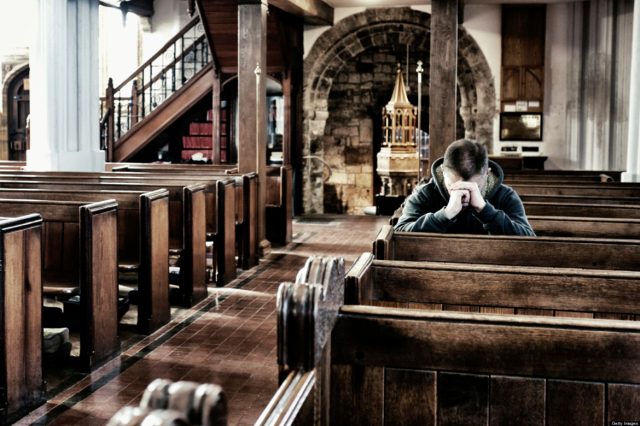
church in decline

Jeremiah 29:1, 4-7 NRSV

I often think of Rev. David Brooks. He was the first pastor who suggested that God may be calling me to be a pastor. I had the opportunity to serve with him as the youth director of a church during the summer of 1986.

I will never forget the day that he called me into his office and shut the door behind me. I thought I was in some kind of trouble. For this was the first time I had ever served on church staff, and I wasn’t too sure I knew what I was doing.

Well, I soon found out that I was in trouble, albeit a different kind of trouble. For he asked me: “Jarrett, have you ever considered that God may be calling you to be a pastor?”

“Me a pastor? No way I will ever be a pastor!” I said.” He then went on to point out the pastoral gifts that he saw in me and to encourage me to prayerfully consider that God may be calling me to pastor a church. Out of respect for him, I told him I would.

Well, five years later, as I was getting ready to graduate from seminary to be a pastor, I was sad to hear that Rev. Brooks had passed away.

I think about him often today. For, as we are studying on Wednesday nights, the church and the culture has changed so much since that day he called me into his office, and I think of how shocked he would be if he could witness what we are experiencing today.

I must confess that I also wonder if he would still believe I possessed the necessary gifts to pastor a church. Because the truth is, although I now have over 30 years of experience serving with churches since that day I was called into his office, I still have moments, especially here in 2019, when I am not too sure I know what I am doing.

In the 1980’s, if a pastor loved the members of their church, if a pastor showed up on Sunday morning with a sermon (it didn’t have to be an awe-inspiring or even a good sermon, just a sermon that was based on scripture and had an appearance that the pastor had put a little work into it), then the church pews on Sunday morning would be full of people to hear the sermon.

Parents with young children came without hesitation, although the only children’s program consisted of a nursery and a simple Sunday School lesson. Young adults even found the music meaningful, that consisted only of a small choir, organ and piano.

Today, the only churches that seem to be full of people are expected to have elaborate children’s centers that rivals some amusement parks, a Chuck-E-Cheese or a Playland at McDonalds. The music must be on par with the music that entertains us at concerts. There’s disappointment if there is an absence of video screens, smoke machines and concert lights. The pastor needs to wow us with their charisma, and just make us feel really, really good.

He also never experienced 9-11 and the rise of religious fundamentalism that came out of it. He never witnessed the election of the first black President, and as a response, the resurgence of the religious right and the rise Christian white nationalism. He never witnessed the anti-Christ spirit that is in our nation today: the greed, the vulgarity, the selfishness, the fear of the other, and the further marginalization of those who are different.  And he never knew that many churches today would support, even seem to worship these anti-Christ sentiments.

And Rev. Brooks died before some people started walking away from the church for good. He knew that many churches in Europe were in delcine, but he never saw it here. He could not ever imagine that an entire generation of young adults would reject the church.

From the vantage point of 1986, it is like we are living in a strange, foreign land, in a completely different world. Churches that were once the insiders of society are now the outsiders. And many of us in churches like ours today are afraid, and we are not too sure if we know what we are doing.

This is exactly where the Israelites find themselves in today’s Hebrew lesson. They have just been exiled into Babylon, finding themselves in a foreign land.           .

It is into this strange and fearful reality, that the prophet Jeremiah sends a letter of hope.

Jeremiah writes that they can find their hope in the willingness and the courage to let go of their past.

Jeremiah insists that the people who have found themselves in a foreign land must surrender its old identity and accept its new situation not only to survive, but to eventually flourish.

He encourages them to begin working towards building a new way of life. They needed to accept that Babylon was where God has planted them and where God wants to work through them.

When Jeremiah says, “Pray to the Lord on their behalf,” the prophet is affirming the truth that God can be found even in this strange and foreign land. God has never left them. God is still working among them and wants to use them to make their new world a more just and peaceful place to live.

Jeremiah wants them to know God is present everywhere, even at the margins, even among the broken, the dejected, the afraid, and the subjugated, in other words, even among outsiders like them.

Jeremiah assures them that they can call on the Lord even without the temple, and the Lord will answer.

Having been conquered, humiliated and deported by military force, the exiles are embittered and vengeful. And Jeremiah writes: “Seek the welfare of the [foreign] land to which God has banished you.” In other words, “Seek the well-being of the land of your enemies. For their well-being is also you well-being. Their peace is also your peace. Pray for their land.”  This is an illustration of the social and political significance of praying for and loving one’s enemies.

Jeremiah encourages them to accept their situation in exile, but not to regard it as hopeless or unchangeable. As he mentions in a later verse, we have the promise from God: “I know the plans I have for you, plans to prosper you and not to harm you, plans to give you hope and a future.”

I believe Jeremiah’s letter has much to say to churches in 2019 who find themselves in a foreign land.

Churches today who find themselves living in a foreign land respond respond in several unhealthy ways.

The most popular response is to just give up and walk away, to give in to defeat and scarcity, to succumb to the lie that God is no longer present, no longer working in the land, that God no longer has anything for us to do, that church today is just a waste of time.

Another popular response is to just be in denial about it all and to just ignore it. “Yes, the world may be different, but we really don’t need to do anything differently to live in this new reality. So we just need to keep doing the same things that we have always done.”

Another response is to adopt a defensive, self-protective posture. Paralyzed by fear, having no idea what to do, we retreat into our safe sanctuaries to comfort one another while loathing our enemies, for those we blame for this new reality.

Another response is to join the new culture. “People crave entertainment? We will give it to them. People want to feel good about themselves today? Let’s make that happen. The culture has embraced an “us vs. them” mentality? Our leaders resort to name-calling and bullying and work to further disenfranchise the other? To survive in this new world, we will join them and do the same thing. Everyone around us has forgotten that the greatest of God’s commandments is to love our neighbors as ourselves? Well, we’ll just forget that too. To survive in this new culture, we will simply blend in with the new culture.”

I believe Jeremiah’s prophetic words call churches today to respond in a better way.

The prophet reminds us that God is still here, and God is still working in this world. And God still wants to work through us. And God still has a lot of work for us to do!

And God is specifically pressing us to move away from the private walls of the church and into the world, into the public space, to do what we can to fulfill our calling as people of faith to do justice, to love kindness and to walk humbly.

And because churches that embrace love, kindness and humility now find themselves living in a world of hate, meanness and greed, because churches that embrace the inclusive, counter-cultural way of Christ, are now the outsiders, the disenfranchised, and the marginalized of society, I believe we are to especially go out and address the needs of others who have been disenfranchised and marginalized, all those who suffer from political, social and cultural insecurity and discrimination.

For one thing that our faith teaches us is that God is always most discernible and most present in the margins. Jesus called his disciples to leave their old lives, their old worlds behind, to drop their nets, to journey out to the fringes of society to experience God in new ways and in new forms.

So, what does God want us to do in this foreign land? What do we do when we are not sure what to do?

We need to first make sure that our theology is not a private theology, but that it is a very public theology. It is one that presses us to pray for the welfare, not for our church, but for our city and nation.

It pushes us to commit to work for shalom, for peace, for well-being, for healing, for wholeness, and for justice, not just for the members of our church who feel like they are now living on the margins of society, but for those who have always lived on the margins, for those who have always felt like outsiders…

…while remembering the great promise of God:  “I know the plans I have for you, plans to prosper you and not to harm you, plans to give you hope and a future.

Let us pray together

O God, in this strange time and place, help us to be strong and courageous as we share the good news of gospel out to the margins of society. Knowing that you are with us and with you is our hope and our future.

Seventy Disciples

Mission Possible

Luke 10:1-11, 16-20 NRSV

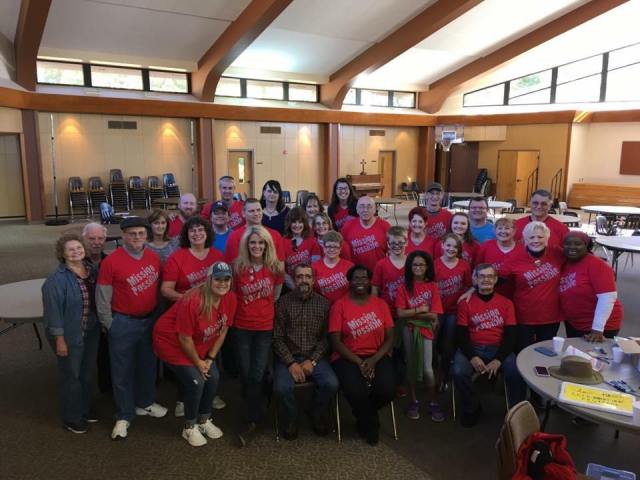
For several years now First Christian Church in Fort Smith has adopted a little slogan that we have used to identify us as a congregation: Mission Possible. You’ve seen it on t-shirts, on our Facebook page, and on our Narrative Budget that shares our mission with others.

The slogan has more meaning for me this week in light of today’s gospel lesson.

Mission Possible has been on my mind, because, as preaching professor Karoline Lewis has pointed out, Jesus’ instructions to the seventy before they venture out on their mission sound more like orders received from central command in the series “Mission Impossible.”

“Go on your way. See, I am sending you out like lambs in the midst of wolves. Carry no purse, no bag, no sandals; and greet no one on the road—Carry no provisions. Not even a decent pair of walking shoes. Danger abounds, and by all means, don’t stop and ask for directions!”[i]

And guess what? Although you are going in peace, announcing the Kingdom of God is here, not everyone is going to accept your peace or be happy with what the Kingdom of God being near entails!

Now, how many of us are ready to sign up for that mission trip? It sounds absolutely dreadful.

Yet… here we are.

On this weekend after the Fourth of July, there’s not many of us, but there’s at least, what would you say, 70?

A good 70, I’ll say; which, interestingly enough, just so happens to be the average worship attendance in mainline churches these days.

Here we are. And curiously, the mission to which we have committed ourselves through this particular church is no less daunting, dangerous, and dreadful today than the mission of these 70 Jesus sends out.

Like Jesus’ 70, we have inherited an Abrahamic faith that began when Abraham extended generous hospitality to complete strangers who just so happened to be messengers from God.

Sadly, in our current culture, sharing this hospitable faith, or even standing up for this faith is very unpopular.

Deuteronomy might say:

 You shall also love the stranger, for you were strangers in the land of Egypt (Deuteronomy 10:19).

But our culture says, “Some strangers are animals, not people.”

Leviticus might say:

The alien who resides with you shall be to you as the citizen among you; you shall love the alien as yourself, for you were aliens in the land of Egypt: I am the Lord your God (Leviticus 19:34).

But our culture says: “We should only love and welcome aliens based on their merit which we will determine through a strict vetting process.”

Mosaic Law may warn:

Cursed is anyone who withholds justice from the foreigner, the fatherless or the widow (Leviticus 27:19).

And the Psalmist may warn:

The Lord watches over the strangers; he upholds the orphan and the widow, but the way of the wicked he brings to ruin (Psalm 146:9).

But today’s culture says: “If foreigners and strangers are unhappy with the conditions of our detentions centers, just tell them not to come. All problems solved.”

The prophets may declare:

For if you truly amend your ways and your doings, if you truly act justly one with another, if you do not oppress the alien, the orphan, and the widow, or shed innocent blood in this place, and if you do not go after other gods to your own hurt, then [the true God] will dwell with you in this place, in the land that I gave of old to your ancestors forever and ever (Jeremiah 7:5-7).

But our religious culture says, “The God you talk about is not the true God, but some imaginary God.”

The prophets may command:

Thus says the Lord of hosts: Render true judgments, show kindness and mercy to one another; do not oppress the widow, the orphan, the alien, or the poor; and do not devise evil in your hearts against one another (Zechariah 7:9-10).

But today’s culture argues: “But they might be drug dealers, criminals and rapists.”

So many churches today have said, “Thanks, but no thanks, Moses. Sorry Jeremiah. It’s not happening Zechariah.” What you people of God are talking about, especially in these days, is Mission Impossible.

However, the good news is that this church, the First Christian Church in Fort Smith, says, no, what the holy scriptures command us is actually Mission Possible. But how? How do we do what the Bible tells us to do when we live in a world where we are like lambs living in the midst of wolves?

For the mission we have committed ourselves to seems impossible when we consider that not only are we a church with Abrahamic roots that has been called to stand up for the foreigners coming into our land, we are a group of people who claim to be followers of Jesus, who we believe Jesus is the Christ, the way, the truth and the life. Consequently, we are a church on a mission to embrace the way of Jesus, and to call on all people, all nations, including our own nation, to embrace the same way.

On this first Sunday after the day we celebrate our nation’s birth, we implore our leaders:

  • To lose their way of greed and materialism, to follow Jesus’ way of generosity
  • To lose their way of dishonesty and deceit, to follow Jesus’ way of truth
  • To lose their way of militarism and perpetual war, to follow Jesus’ way of peace
  • To lose their way of violence and domination, to follow Jesus’ way of servanthood
  • To lose their way of putting themselves first, to follow Jesus’ way that started with: “For God so loved the world.”
  • To lose their way of bigotry, to follow Jesus’ way of valuing every human as one made in the image of God
  • To lose their way of harming children, to follow Jesus’ way of treating children as the greatest among us
  • To lose their way of suppressing the rights of women, to follow Jesus’ way of empowering women
  • To lose their way of abandoning the needs of the sick, the hungry, the foreigner and the imprisoned, to follow Jesus’ way of loving them as their very selves

And here is perhaps what makes our church’s mission seem even more impossible these days:

Not only are we a church with Abrahamic roots, and not only are we committed to following the compassionate and just way of Jesus, we are a church born out of the Stone-Campbell movement. That means, that like our foundersBarton Stone and Thomas and Alexander Campbell, we have made a commitment to be on a mission to follow the inclusive way Jesus, even if it causes us to lose some friends!

We have made the decision to welcome all people to Lord’s table as God has welcomed us—graciously, generously, lovingly, unconditionally. And we do this in a culture where such welcome is socially unacceptable.

We have committed ourselves to let the first word that anyone hears from our mouths be “Peace.”  And we do this in a culture where the very first words that many hear from churches are words that denote the exact opposite of peace—Words of judgment and condemnation; words judging others as not only sinners, but as “abominations.” In the name of God, they justify their hate with the same type of Christ-less scriptural interpretation that has been used to support sexism, slavery and racial discrimination since our country’s founding.

So, how do we do it? How do we transform a Mission Impossibleinto a Mission Possible? How is that our slogan?

I believe the answer is in the obvious but oftentimes overlooked detail in our gospel lesson this morning. The answer is the number 70.

The good news is that we are not on a mission to be open and affirming in a culture that is closed and condemning alone. Each one of us has at least, at least, 69 fellow disciples, 69 friends in the faith, on whom to depend. Seventy people may look small in this sanctuary that seats 400, but 70 is a lot of bodies, a lot of somebodies, a lot of disciples on which to count when the going gets rough.

Jesus did not expect any of his disciples to be alone on the difficult mission to which he was sending them. And neither does God expect us to be alone to do our seemingly impossible work.

Right now, I want you to take a moment and look around you. For what you see… no… whoyou see, is all you need to do the work Jesus is calling you to do in a world where danger and injustice abound.

You need no purse, no bag, no sandals; and not even the ones you may meet on the road. All that is necessary to carry out our mission, to transform Mission Impossible into Mission Possibleare scattered about in these pews.

And I have a feeling that is why you are here this morning. You are here, because here, in this place, is your group of seventy. You come to be reminded that you are not in this alone. You come here acknowledging that if we are ever going to be the people God is calling us to be, we need one another.

Even before moving here two years ago to serve with you as your pastor, the Mission Possible slogan caught my eye.

For it is a slogan with optimism and assurance, potential and promise, success and victory.

With God, anything is possible! Right?

With God, it will be possible for me to declare that the Kingdom of God is coming near to the River Valley.

With God, it will be possible for me to announce to Fort Smith, Van Buren, Barling, Greenwood, Roland and Spiro: “Peace!”

With God, it will be possible for me to speak up and speak out, and the demons will submit!

Well, not exactly. With God, and about 70 others!

Today, I am grateful that I found a group of 70, well, at least 70, sometimes 120-140, and more than that on Easter and Christmas Eve, whatever the number, I have found a lot of good somebodies with whom to go out and follow Jesus wherever he leads.

And together, although we seem small, and our provisions are limited, with God, we can do some big things to bring the Kingdom of God near!

Let us pray together.

Gracious God, emboldened by being apart of our 70, may our spirits be filled with joy and enthusiasm by following the way of Abraham, Moses, the prophets and Jesus, sharing your redeeming love with all people. AMEN.

[i]http://www.workingpreacher.org/craft.aspx?post=4683

Called to Ministry

MISSION TRIP 2018

Mark 6:6B-13 NRSV

I think we sometimes need to be reminded of the peculiar way that the Kingdom of God was started in this world, to be reminded how Jesus began his ministry on this earth ushering in the reign of God. As the Son of the Most High, the Alpha and the Omega, the eternal Word who became flesh, the one through all things came into being and the Messiah of the world, do it all by himself?

He certainly could have. But instead, he goes out, finds, and calls together a group of some of the most ordinary people in the world to do get the Kingdom started. And not only were they ordinary, they were also

imperfect. They stumble, fumble and bumble behind Jesus proving over and over that they have very little idea of who Jesus was and where Jesus was taking them. Yet, this is how God works in our world. It is the way God has always worked.

In Genesis, we read that God creates the world: the mountains and seas; the valleys and streams; every animal, every living thing in the water, in the air and on the land; the sun, moon, stars and all that lies beyond. Then, God creates human beings, gives them a garden, telling them to look after it and tend to it.

It is as if God says, “You know, I have really enjoyed creating all the beauty and order in this world. Of course, I could take care of it all myself, but I want to see you do it.”

Likewise, Jesus comes into the world making all things new, creating, recreating, reordering; ushering in the Kingdom of God. He touches and heals, welcomes and includes, defends and forgives, turns water into a lot of wine and a small basket of food into a great feast, all as a sign of that Kingdom of God was coming. He redeems and restores the lives of the lost, the poor and the marginalized. He chastises judgmental religion and exorcises demonic forces.

And then it is as if he says, “You know, I’ve enjoyed doing the holy work of God, demonstrating the reality of God’s reign, but now I want you to do it for yourselves. Now, it’s your turn. I am commissioning you to do my work in the world.”

Today’s scripture lesson is this commissioning. I believe it’s important to notice here that Jesus sends them out to do exactly what he himself does: to preach, teach, heal, and to overcome evil.

And Jesus chooses people who to these things who, as far as we can tell in Mark’s Gospel, have no apparent qualifications to do these things. Their only qualification is that they are chosen and commissioned by Christ. And that is enough.

If we are to be the church God is calling us to be, it is imperative for us to recognize the fundamental truth that God does not work alone. Our God is in the business of calling disciples, calling ordinary folks like me and you, and commissioning them to be his ministers in this world.

It’s important for us to realize that all of us are ministers—those to whom Jesus has delegated the work of God. My job as senior minister, at best, is a coordinator, and an encourager and an equipper of you, the ministers.

After finding out that Lori was going into the hospital this past week for a procedure, someone came up to me this week and said, “Jarrett, as our minister, you come and pray for us when we have surgery, but who comes and prays for you when you have surgery?” I said, “I’m lucky, for I have an entire congregation of ministers who pray for me.”

One of my favorite preachers, Barbara Brown Taylor, has written a wonderful meditation on ordination and preaching, stressing the importance of the preaching of all Christians.  It’s called The Preaching Life.  In it, she writes:

Somewhere along the way we have misplaced the ancient vision of the church as a priestly people—set apart for ministry in baptism, confirmed and strengthened in worship, made manifest in service to the world. That vision is a foreign one to many church members, who have learned from colloquial usage that ministermeans the ‘ordained person,’ in a congregation, while lay personmeans ‘someone who does not engage in full-time ministry.’ Professionally speaking that is fair enough—but speaking ecclesiastically, it is a disaster. Language like that turns clergy into purveyors of religion, and lay persons into consumers, who shop around for the church that offers them the best product.

Taylor writes of the need to revive Martin Luther’s vision of the priesthood of all believers, who are ordained by God at baptism to share Christ’s ministry in this world.

Nowhere in the scriptures do we find God saying: “Go into the world and make nice Christians out of people. Bring them into the church so they can sing some hymns, pray and listen to a sermon that will make them feel like they are good, religious, moral people who are on their way to heaven. Form a type of club. Hire a full-time club president to be there for the comfort, security and entertainment of the club members.

No, what we do find in scriptures is Jesus instructing us to go forth into the world and make disciples. And what do disciples do? Sit on a pew every Sunday? Sing, pray, and dream about heaven? No, they do what Jesus did. They preach, and they teach. They welcome, and they include. They accept, and they forgive. They clothe, and they feed. They heal, and they fight injustice. They love, and then, they love some more.

But you say, “I can’t do those things. I can’t preach. I am no preacher. That’s why we pay you to be the “preacher!”

Barbara Brown Taylor continues writing: “

While preaching and celebrating the sacraments are two particular functions to which I was ordained, they are also metaphors for the whole church’s understanding of life and faith…Preaching is not something that an ordained minister does for 20 minutes on Sundays, but what the whole congregation does all week long; it is a way of approaching the world, and of gleaning God’s presence there.

We are all preachers, and whether or not you realize it or not, some of you have been preaching all week.

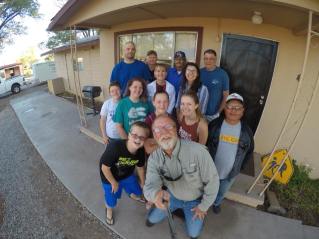
Our mission team has been preaching the gospel of Christ every day this week in New Mexico with hammers and nails and screws and saws, helping to add on a room to a church building in addition to leading a Vacation Bible School.

Some of you preach the grace of Christ every week by working with recovery programs such as Alcoholics Anonymous.

Some of you preach the love of Christ mentoring young people as a Boy Scout leader or camp director.

Some of out preach good news of Christ to the poor by making distributing sandwiches to the food insecure through the sack lunch program.

Some of you are physicians who preach the healing of Christ to people who are suffering. Some preach the hope of Christ to people who are homeless. And some preach the comfort of Christ my volunteering at the hospital.

Although you do not get paid by your employer to preach, some of you preach every day at work and at home. Many of you preach a sermon of unrestricted grace to a co-worker, a sermon of unconditional love to a customer, a sermon of undeniable hope to a friend, to a neighbor, even to a stranger.

And many more of you; although you had other places to go, other things to do (some of you no doubt even felt like staying home), you got up this morning to come to this place of worship. You didn’t know it, but your smile this morning made someone else smile. The handshake that you offered was heartfelt. The hug you gave was sorely needed. Your simple words of greeting brought someone encouragement and another peace.

Mark’s gospel teaches us when you do all these things in the name of Jesus, then you are ministering. Yes, I’m happy to say that some of First Christian Church’s best preaching does not come from this pulpit on Sunday mornings. But it comes from the people in the pews who have answered their calling to be preachers every day of the week.

These are serious times, and Jesus is calling. He is calling ordinary people like me and you everyday to do ministry. Where has Jesus called you to ministry?  What is the work you are equipped and called to do? There is perhaps no more important question. For it is simply the way our God works, the way God has always worked in this world.

Let us pray:

O God, you do not work alone in this world. You reach out and call ordinary folk to be your disciples. We thank you for your graciousness in calling us. Give us what we need to be faithful disciples. You have given us good work to do. Keep giving us the gifts we need to keep doing your work. In the name of Jesus, Amen.

Invitation to Communion

As we sing our hymn of communion, may we open our minds and  hearts so that we may hear the voice of Jesus—calling us and commissioning us to be his disciples, God’s representatives, God’s ministers in this world. All are invited to receive these elements representing the body of Christ because all are called to be the body of Christ.

Lifted up for Service


cialis

Mark 1:29-39 NRSV

These few verses found in the end of the first chapter of Mark paint a beautiful portrait of who our Lord is, how our Lord acts, and what our Lord desires. Listen to them again, carefully, prayerfully…

“As soon as they left the synagogue, they entered the house of Simon and Andrew, with James and John. Now Simon’s mother-in-law was in bed with a fever, and they told him about her at once.”

Do you hear the urgency in this passage? “As soon as they left…” “…at once.”

I hear a lot of people talk about God’s timing. They say that God will bring healing or restoration in God’s own time. They say that God’s time is usually not our time. And they say that God has reasons for God’s delay. I believe this passage teaches us that the Lord wants to heal us and restore us now: not tomorrow, not some day or one day, but today, right now, “at once.” It is not the Lord’s will for any of us to ever be sick, broken, or even have a fever.

Therefore, if we are sick or broken, if we are suffering in any way, we must understand that it is not because God has some twisted reason or some purpose-driven plan for it. And since suffering is not the will of God, and since we are loved by God, we can know that when we suffer, God suffers with us and is doing all God can do to bring healing, wholeness and restoration.

“He came and took her by the hand…”

Perhaps more than anything else, I believe it is the will of our Lord to come to us and take us by the hand. When I was a child I learned a wonderful song:

Put your hand in the hand of the man who stilled the water

Put your hand in the hand of the man who calmed the sea

Put your hand in the hand of the man from Galilee

Our problem is that we put our hands in so many other places to receive wholeness.

Instead of putting our hand in the hand of the Lord we put our hands to work. We believe that if we can somehow work hard enough, serve diligently, industriously, thoroughly, and persistently enough, then we can achieve or earn wholeness or peace.

This may be the greatest sin of most of us.

We put our hands, our trust in our own selves instead of in the hands of the only one who can save us. Ephesians chapter two teaches us: “For by grace we have been saved through faith, and this is not our own doing; it is the gift of God— not the result of works, so that no one may boast.”

Instead of putting our hand in the hand of the Lord, we also put our hands in the hands of others. My granddaddy was not a pastor, preacher, or a scholar, but he was sometimes quite the theologian. One thing that he said, and said often was: “There’s only one man that you can trust in this world, and that is the Good Lord.”

However, many of us put our trust in the hands of so many others. We put our hands in the hands of the government, we put our hands in the hands of our friends and neighbors, even in the hands of the church. Then we become disillusioned when they sooner or later disappoint us. The 118th Psalm reminds us:

It is better to take refuge in the Lord

than to put confidence in mortals.

It is better to take refuge in the Lord

than to put confidence in princes.


And instead of putting our hand in the hand of the Lord, we also put them in our own pockets. We put our trust in our wealth and our material possessions. Our sense of well-being, wholeness and security comes from our bank accounts, 401-k’s, our homes, automobiles and clothing. In chapter six of the Gospel of Matthew we read the warning:

“Do not store up for yourselves treasures on earth, where moth and rust consume and where thieves break in and steal; but store up for yourselves treasures in heaven, where neither moth nor rust consumes and where thieves do not break in and steal.”

The good news for all of us this day is that Jesus, the Son of the God of Heaven is coming to us, and he wants to take us by the hand and give us a peace that the world simply cannot give (John 14:27).

“Jesus came to her, took her by the hand, and lifted her up.”

When we put our hand in the hand of the Lord, the Lord lifts us up. Preacher and Princeton Theological Seminary professor Nancy Gross says this is good news because “There is no shortage of “down” from which people need to be lifted up.”

Down today are all those things that the young people in the Scouts of America seek to emulate:

Trust and loyalty are down. Helpfulness and politeness and kindness are down. Respect for the law is down. Fiscal responsibility, a clean environment, courageous leadership and reverence are all down.

And in the middle of one of the worst flu seasons on record, many are down with sickness.

The good news is when we are down in the dumps, down with despair, down with disease, down with a fever, when we put our hand in the hand of Jesus, Jesus always lifts us up!

Now, as much as we might like to do so, now is not the time to sing a hymn, break some bread, sing another hymn and go home. Because our scripture text doesn’t end here.

“Then the fever left her, and she began to serve them” (Mark 1:31).

When we put out hand in the hand of Jesus, we are lifted up. We receive wholeness. We receive peace. We receive salvation. Then, we serve. We are lifted up for a specific purpose: to serve.

Jesus makes us whole not only for ourselves alone, not soley to help us feel better, more hopeful, more happy, more peaceful and more alive, not solety to help us get through a hard week at school, at work or at home. We are lifted up for service to others.

I believe a major problem with the Christian faith today is that many have a very selfish understanding of salvation. Our faith has been reduced to some kind of ticket to heaven, some sort of divine stamp of approval, or some kind of new drug to make our lives better, fuller, richer.

Have you noticed that every other television commercial that comes on the air is an ad touting the benefits of a new prescription drug? There is a new drug available for whatever it is that might ail you!

Are you tired of being tired? Do you have trouble going to sleep? Do you have difficulty waking up? Is your hair falling out? Do you have a going problem or a growing problem?  Are you overweight but love to eat?  Do you need to put some excitement back into your relationships? Do you read the story of the the three little pigs and wolf who huffs and puffs only to have your granddaughter say, “That sounds like you grandpa!” No matter what you’ve got, there is a new pill created just for you.

And then, in nearly every commercial, after the person begins taking what they asked their doctor to prescribe, there is all of this exuberant celebration: dancing in the streets; jumping up and down; digging for clams; running around in the yard with their dog and your water hose; even sitting outdoors and watching the sunset while holding hands with their significant other in separate bathtubs!

I oftentimes wonder if this is not how we oftentimes promote our faith. If you channel surf through the religious channels, you will find that there is no shortage of preachers who sound like they are spokespeople for some new drug. “Are you down and out?  Are you drowning in a sea of debt? Are you empty inside? Does your love life need a boost? Then pick up the phone and make your pledge, send in your check, and sit back and wait for God to pour out God’s blessings!  Wait for God to give you a reason to celebrate!”

I am not exactly sure, but I suspect that is what many people were thinking when they were following Jesus throughout Galilee. Listen to how the Sermon on the Mount begins: “And great crowds followed him from Galilee, the Decapolis, Jerusalem, Judea, and from beyond the Jordan.”  Folks had come out from all over to follow Jesus with these expectations that Jesus was going to somehow make their lives better

And listen to what Jesus says:

Are you 40 years old and wonder where your life is going? Are you feeling blue?  Do you need help raising your children? Does your marriage need a boost?

No, instead, Jesus says things like, “For the gate is narrow and the road is hard that leads to life, and there are few who find it.”

The crowd gets really quiet!  Someone whispers, “I know he didn’t say ‘hard,’ did he?  I thought Jesus was all about making things easy. What’s he talking about?

And he’s not finished. “Love everyone, including your enemies. Pray for those who persecute you. Forgive those who have wronged you. Don’t judge. Accept others as I have accepted you. Deny yourself. Pick up your cross and follow me. Die to yourself.”

I am afraid that churches are so desperate to attract people that they have been willing to trivialize and water down the gospel. So much so that the salvation that many churches are preaching is no different than the salvation that is being preached by the prescription drug industry.

May God forgive the church for implying that we need Jesus in our life to lift us up… period. Just lift us up. And implying Jesus will make our lives easier, fix everything that is wrong with us, put a little lilt in our voices, a little sunshine in our souls.

Because the chances are very good that when we put our hand in the hand of the man from Galilee, our lives will become even more difficult than they were before.

It is the will of the Lord to come to us, and to come to us immediately, without delay, with as sense of divine urgency, to take us by the hand, lift us up, and make us whole, for one purpose and for one purpose only: service, self-denying, self-expending, sacrificial service.

Let us pray together.

O God, as Christ took Simon’s mother-in-law by the hand, take our hands. Make us whole. Lift us up to be the church you are calling us to be in this world. Amen.


Invitation to Communion

Do you need to be lifted up? Are you down in the dumps, down with despair, down with disease? Have you been down with a fever? If so, gather around this table and put your hand in the hand of Jesus. He will lift you up. But he won’t stop there. The bread which he says is his body given is going to lift you up to selflessly give your own bodies as sacrifice. As he pours and lifts the cup he is going to lift you up to sacrificially pour yourself out for others.

Let us prepare to be to be lifted up for service as we sing together.


Commissioning and Benediction

He’s coming to you. He’s coming without delay. He’s coming immediately, with a divine urgency. He’s coming reaching in and reaching out his hand.

So, go ahead, right here and now, put your hand in the hand of the man from Galilee. He will lift you up. He will make you whole. For service.

As you go and serve, may the Lord bless you and take care of you; may the Lord be kind and gracious to you; may the Lord look on you with favor and give you peace.

Mission Possible

shirt back

In a world of uncalled for meanness, is it possible to find people who believe they have actually been called to be on a mission to love kindness?

In a world of inequality and discrimination, is it possible to find people on a mission to do justice?

In a world of superiority and self-aggrandizement, is it possible to find people on a mission to walk humbly?

In a world of greed and selfishness, is it possible to find people on a mission to give rather than receive?

In a world of hatred and bigotry, is it possible to find people on a mission where diversity is valued?

In a world of violence and war, is it possible to find people on a mission that uses peace as a weapon?

In a world of indifference, is it possible to find people on a mission to empathetically care for others?

In a world of wealth and privilege, is it possible to find people on a mission to stand with the poor and marginalized?

In a world of divisive politics, is it possible to find people united on a mission of inclusion and respect?

In a world of alternative facts and fake news, is it possible to find people on a mission to live honestly, authentically, and unpretentiously?

In a world of bad religion, is it possible to find people who have little desire to be religious, yet yearn to be a mission to fulfill the greatest commandment to love one another?

Thanks to a group of folks that I have found who call themselves “Disciples,” I thank God that I know such a mission in this world is very possible!

shirt front

Autumn People

Autumn-Leaves-in-sunshine

Christians are fond of saying that they are Easter people. We say we have a spring-time faith. We are about new life springing forth.

What we tend to forget is that before spring can happen, autumn must come. Before new life can spring forth, something must die. Before Easter could arrive, someone had to pick up and carry a cross.

We have many difficult issues facing our country today. According to a recent poll by the Associated Press, only 24% of Americans believe we are heading in the right direction. The status quo seems to be dividing us further, emboldening the hate among us, and leading us into a nuclear winter.

Christians have responded in typical fashion.

Some Christians have embraced the status-quo, for change is too uncomfortable. They have chosen to live in denial with blind eyes, deaf ears and hard hearts.

More Christians understand that our nation is heading in the wrong direction, but they have made the decision to tune it all out and do nothing to try to change anything. They have chosen to retreat into safe sanctuaries to sing about Easter and going to heaven.

However, if Jesus chose comfort and safety, if Jesus embraced or ignored the status quo, Easter could not happen.

I believe the time has come for Christians to rediscover our call to be autumn people.

The time has come to let the old ways of being Christian die. Like the leaves of a tree, we must let our old ways of self-preservation, our old ways denial and retreat, fall to the ground and be swept away.

The time has come for us to pick up and carry a cross. The time has come for us to risk something, sacrifice something, and do something. We must depart the safety and the comfort of our sanctuaries to stand against evil, liberate the oppressed, rescue the perishing, and speak truth to power.

We must be willing to sacrifice something for justice, lose something for kindness, give away something for peace, die to something for love.

For it is in losing we find. It is in dying we live. It is in being autumn people we become Easter people.

Getting Our Hands Dirty

Harvey

John 9:1-7 NRSV

Let’s think for a minute what it did for that poor blind man when the disciples began theological debate over his blindness.

“So, they say you were born blind?  Well, let get out our Bibles and see if we can find some theological reason for your blindness. It has to be because of sin.  But since you were born blind, perhaps it’s not your sin that is to blame but the sins of your parents.”  Yes, I’m sure all of that blaming did a whole lot for that poor man!

But how often have we’ve been guilty of doing the same. For some reason, because we are Christian, we believe it is our holy responsibility to try to explain human suffering and misery in light of our faith in God.

Since Hurricane Harvey flooded Texas, I have heard people blame the Mayor Sylvester Turner, climate change, the lack of zoning regulations, Donald Trump, the recent solar eclipse and even same-sex marriage. I am sure there will more blame associated with Hurricane Irma in the coming days.

In the face of human pain and suffering, there are two predominate responses by the church.

The first one is that God has a reason for it. God is sitting at the command center in complete control of every earthly thing that happens.

The other point of view is one of silence, just silence.

I find both of these responses troubling. Those who believe God has some kind of divine purpose for every evil thing that happens in this world paint a very mean portrait of God. And those who respond with silence make God out to seem detached and uncaring.

However, I believe the life, suffering and death of Christ teach us that when the rains poured down, so flowed the very tears of God. When the waters overflowed the banks of the bayous, so broke the very heart of God. When lives were suddenly drowned out, so emptied the very self of God. God was not causing the evil. Neither was God silent.

This is where I believe the story of the man born blind can be helpful. When Jesus is questioned about the man’s suffering by his disciples, Jesus doesn’t answer their questions, but neither is he silent. Jesus responds that this is the time, not to assign blame or responsibility, but rather, to bend to the ground and get his hands dirty, so that the glory of God might be revealed.

In the wake of the many storms in our world, may we do the same.

We Are God’s Help

rescue

The catastrophic images from Texas bring back painful personal memories from 1999 when Hurricane Floyd flooded our home in Eastern North Carolina. Carson and Sara, who were four and two years-old at the time, were rescued by boat, while Lori and I stayed behind to put more of our things into the attic. We spent the next three months living in a FEMA camper in the driveway of our decimated home.

In the days the water receded, I remember being overwhelmed with feelings of despair. We had only lived in our home for six weeks prior to the flood. It was the first home we ever owned, and we had yet to make our first mortgage payment. Because we did not have flood insurance, rebuilding our home seemed impossible.  I cannot recall any other time in my life when I felt more hopeless. If ever I needed divine help, it was then.

Thankfully, help from God came. Every week help came. Help came bringing pry bars, hammers and saws to rip out carpet, pull up flooring, tear out sheetrock and pull out wet insulation. Help came bringing new flooring, sheetrock, and insulation. Help came with paintbrushes and paint.

Help also came bringing what we needed the most: hope. Help came with a message that rebuilding our home was possible. Help came with the good news that although we could not go back to the good old days before the flood, with the help of God, we could go forward into good new days.

The movie All Saints, which is now playing in theaters, is a true story of the All Saints Episcopal Church of Smyrna, Tennessee. The church was preparing to close their doors for good and sell their property when a group of refugees from war-torn Southeast Asia showed up.

In one scene, the teenage son of Rev. Spurlock asks his father about the fate of the refugees if he decides to allow the church to close.

Rev. Spurlock responds: “We must pray and ask God to help them.”

His son replies: “Dad, aren’t you God’s help?”

The people of East Texas need our prayers. However, when we pray for God to help them, may we remember that we are God’s help.

Today, we can be divine help by sending our dollars to Texas by giving to the mission fund of the Christian Church (Disciples of Christ) at http://www.weekofcompassion.org. You can designate 100% of your gifts to help communities affected by Hurricane Harvey.

In the days, weeks, and months to come, we will have opportunities to be divine help by sending ourselves, bringing tools and building materials. More importantly, we will have opportunities to be divine help by bringing what these people need now more than anything else: hope.

We will have opportunities to go with the good news, that with the help of God, although it seems impossible, good new days are indeed ahead.

Preach, Raise, Cast Out and Heal

Heal-the-sick-300x200

Matthew 9:35-10:8

I think sometimes we need to be reminded of the strange way that the Kingdom of God was started on this earth.

Jesus begins his ministry ushering in the reign of God, and how does he do it?  Does the Son of God, the Messiah of the world, the alpha and the omega, the one through all things came into being, do it all by himself?

Nope.

Oddly enough, he calls together and sends out ordinary people like you and me to help him.

Master preacher Barbara Brown Taylor has written a wonderful meditation called The Preaching Life where she stresses the need for all Christians to recognize that they have been called to be ministers.

She writes:

Somewhere along the way we have misplaced the ancient vision of the church as a priestly people—set apart for ministry in baptism, confirmed and strengthened in worship, made manifest in service to the world. That vision is a foreign one to many church members, who have learned from colloquial usage that minister means the ‘ordained person,’ in a congregation, while lay person means ‘someone who does not engage in full-time ministry.’  Professionally speaking that is fair enough—but speaking ecclesiastically, it is a disaster. Language like that turns clergy into purveyors of religion, and lay persons into consumers, who shop around for the church that offers them the best product.

Taylor says we need to revive Martin Luther’s vision of the priesthood of all believers, who are ordained by God at baptism to share Christ’s ministry in this world.

All we have to do is sit down and study he scriptures to understand that this is just how our God works in this world. Nowhere in the scriptures do we find God saying: “Go into the world and make Christians. Bring them into the church so they can sing some hymns, sit and pray and listen to a sermon about being good, moral people. Form a type of club. Hire a full-time club president who is going to be there to plan activities for and to support the club members, making sure they are comfortable and happy.”

No, what we do find in scriptures is Jesus instructing us to go into the world and make disciples out of all nations. Make disciples, not Christians.

And what do disciples do? Sit on a pew every Sunday? Sing, pray, try to be good. Maybe attend a committee meeting every now and again?

No, they do what Jesus did. Nothing too big mind you. Just your ordinary raising of the dead. Just your routine healing of a disease. Just your typical demon exorcism sort of thing. They do things that change the world.

Seriously. That’s what it says. Read it with your own eyes.

Maybe this is part of our problem. Maybe ancient scriptures like this which don’t seem to apply to us are why we sometimes look more like club members than disciples.

Perhaps we are tempted to believe that passages such as this have absolutely nothing to do with us. For how in the world can we sophisticated 21st-century folk take these words about raising dead people and casting out demons seriously?

Jesus also sent the disciples out to heal diseases. “Does that mean we are supposed to have faith healing services? Put a billboard out on Garriott: “Before you go to the Emergency room at Bass or St. Mary’s, swing by Central Christian Church first!”

I guess we will also need to create a demon exorcism ministry team and put an ad in the paper which will read: “Know someone possessed by the devil? Call the demon exorcism team of Central Christian Church. We’ll make your possessed loved one’s head spin around until the demons are cast out and are gone for good!”

And then I suppose we need to create a resuscitation ministry team—A team that will be on call to receive calls from families of loved ones who just died? We’ll send out flyers to hospitals and nursing homes which will read, “Before you call the funeral home, call our resuscitation ministry team, and we’ll bring the dead back to life!”

So, we read this and think that just maybe we’re not supposed to take this passage that seriously. Maybe this is not what we are to be about. After all, it was written very different people who lived a long, long time ago, in place far, far away. How in the world can this passage be for us living in the 21st century?

But this is the Bible we are talking about here. If there is anything true, it is in here. We are baptized Christians and believe Jesus is Lord—he is our Lord.  And this is Jesus speaking here. This passage has to have something to do with us—perhaps everything to do with us.

Let’s look at healing diseases. Several years ago, Duke University did a study which revealed that people who go to church, people who have faith and a family of faith, people who are prayed for, statistically have a better recovery rate from major surgeries than people who are not a part of a church. Think of how many dreadful experiences you have had, how many horrible things you have gone through which made you say in the end, “I don’t know how people without faith and the church do it.”  Christians bring healing to people whenever they pray, send cards or flowers, and make visits or phone calls.

Now, let’s look at casting out demons. We need to understand that the problems that people possess really have not changed in 2000 thousand years. It’s just the descriptions of those problems that have changed. Demon possession was a diagnosis given to a whole host of problems. Most of these problems labeled demon possession had an oppressive nature. People who were said to be possessed by demons had a problem or a habit, perhaps an addiction that they could not break by themselves.

And of course that is still true today. On this day, when our thoughts once more are turned toward family, there are countless children, living right here in our city, who are bound, living in a cycle of poverty from which they can not escape. Drugs have taken their toll on some of their parents. Some have been abandoned by their fathers, some by their mothers. Some of their fathers are in prison. These children feel unloved, unwanted, and unclean. The demons of these children are many. They are in survival mode. And a way out seems impossible.

Unless someone intervenes. Unless someone becomes a mentor or a role model to these children. Unless someone answers a call to step in to befriend these children, include these children, tutor these children, read a book to these children, coach these children, love these children. Unless maybe a church dedicates themselves to these children.

Ok, perhaps we can understand how we called to partner with Jesus to fight the world’s demons and diseases, but how on earth do we raise dead people back to life?

I want to suggest that we do this all the time.

Tony Campolo tells the story of attending a funeral where the minister stopped preaching to the congregation and started preaching to the dead body. The casket was still open as the minister recounted Clarence’s faithful life and talked about how everyone would miss him dearly.

Then his tone changed, as he started talking directly to Clarence. He walked down and looked at Clarence lying there in the casket. He said: “Today, Clarence, we say good-bye. But this good-bye isn’t ‘so long.’ Clarence, it’s ‘until then.’” Then he closed the casket himself and said, “Good night Clarence, we’ll see you in the morning.”  Then the choir rose up and started to sing, That Great Getting’ Up Morning.

And when I think about it, at every funeral, I try my best to raise the dead. With scripture and prayer, I do all I can do to assure everyone that we will see them again.

And I will never forget how the dead was raised at the first Enid Welcome Table on Easter Sunday when one of our guests said to a volunteer: “Today, you have made me feel human again.”

The truth is that Jesus Christ gives all of us, his disciples, the power and the authority to partner with him in his mission and ministry in this world which includes, casting out demons, healing the sick and raising the dead.

But, you say, that’s still not for me. That kind of work was for the apostles. It was just for those special twelve disciples that Jesus called to follow him. They were special people, with extraordinary gifts and powers. I’m just an ordinary lay person. This passage is really not for me.

Let’s take a closer look at the list of these twelve to find out what was so special about them. Only two of the twelve here have descriptions in addition to the mention of their names (the rest of them are so ordinary that their names do not merit a description).

One name that does is “Matthew, the tax collector.” Matthew was a despised, disreputable, no good, low-life tax collector who took money from his own people to give to the Roman occupiers.

The other one with a description is “Judas Iscariot, the one who betrayed him.” Jesus is either a miserable judge of character, or even his worst enemies are able to go out and work miracles in his name.

Think about it. There is nothing here to indicate that Judas failed to go out and preach, raise, cast out and heal. As far as we can tell, Judas had the same success as everyone else, including Matthew, the despised tax collector.

Beverly Gaventa says that this passage indicates that Jesus had a general rule for disciple-calling: “Only tax-collectors and traitors need apply.”

Jesus seems to only call sinners and nobodies to do his work.  Does anyone here really know who James, the son of Alphaeus is?”

If even these twelve can be called to do Jesus’ work, so can people as ordinary as us. The truth is: this passage, that may seem strange and outdated on the surface, has everything in the world to do with us.

Are you ready to take it seriously? “The harvest is plentiful and the laborers are few,” said Jesus. God is calling every one of us to preach, heal the sick, cast out demons and raise the dead.

What will be our response?