


Jesus said: The way the Kingdom of God happens, the way love wins and justice prevails in our world, is like someone scattering seeds on the ground, and then, lies down and goes to sleep. Then, while they are not paying any attention to it, and are unable to explain it, the seed sprouts and grows. The earth produces “of itself.” The seed produces “of itself.”
I think it is hopeful to consider the Greek word translated “of itself.” The word is automatos. Sound familiar? It is where we get our English word “automatically.”
And for emphasis, the Greek places the word in the beginning of the sentence. When we scatter good seeds: “Automatically, the seed grows. Automatically, the earth produces. Automatically, the Kingdom of God happens.”
In miraculous ways that we cannot begin to understand, when we plant the right seeds, the Kingdom of God automatically happens.
I love Martin Luther’s interpretation of this parable. He said:
After I preach my sermon on Sunday, when I return home, I drink my little glass of Wittenberg beer, and I just let the gospel run its course.
In other words, after working with God scattering some good seeds, proclaiming the gospel that Jesus taught, enacted, and embodied, Luther knew he could take some time off, enjoy a Sabbath, or possibly, take a little vacation.
Because Luther knew that the power of his sermons to create a more just and peaceful world was not based on the power of his theological acuity, the eloquence of his words, or in his gifts as a community organizer. No amount of charisma or art of his persuasion could plant the gospel in such a way that it would grow, expand, and transform into something that looked like the Kingdom of God. That was only something that only God could do, organically, mysteriously, and miraculously. All he could do was scatter some good seeds.
This explains how I could go to the beach with my family last week and do absolutely nothing for seven days and still call myself a faithful disciple. And it explains how you can take a vacation too without the guilt of thinking you need to be doing more to make a difference in this world!
Now, I know telling you to “take a vacation” flies in the face of what you usually hear me say from this pulpit on Sunday mornings. And for that, perhaps I should apologize.
Since I have been your pastor, you could argue that you’ve only heard me preach one sermon. And that is: “We’ve got some work to do!”
If you were here a couple of weeks ago, you heard me say that God does not work alone in this world. Since the very beginning, God has called human beings to accomplish God’s divine purposes for the world. And I said that when God calls, God calls us to do some pretty big things! My sermon even inspired Johnny Louthridge to challenge Ken Burger end all wars and to bring peace on earth.
On Trinity Sunday, I called being a disciple of the Triune God a “dance”—a beautiful dance of selfless, self-expending love. God calls us to enter that dance, to get busy answering the call to love this world! On Easter Sunday, I said: “For Easter to happen, for love to win, for justice to prevail, we need to pick up and carry a cross!”
Attempting to make a difference in this world as a preacher, I am afraid I may have given the impression that it is up to us to do good in this world, or good will not be done. Through my sermons, you may have heard the blasphemous belief that we are the saviors of the world, that it is up to us, and only us, to set the world right, or the world will be lost.
This “only-I-can-fix-it” mentality can be very dangerous, not only to ourselves, but ultimately, to the world.
It is what causes preachers to burn out and followers of Jesus to check out. We look at the overwhelming gravity of the world’s problems, at all the violence and greed, the injustice and inequity, and we say: “There’s just no way we can make any real difference.” So, we throw our hands in the air and give up. Some take even a permanent vacation from church.
So, please forgive me if you heard me say that God created the world and then left it all entirely up to us. Pardon me if I have ever sounded like our country’s Deist founders who believed that God created the universe and then went on some cosmic vacation.
There’s a famous account of the great prophet, Sojourner Truth, while she was listening to a speech one day in 1852 by a despairing and nearly burned-out Frederick Douglass, who was questioning if slavery could end without slaves resorting to violence. From the audience, Sojourner Truth interrupted Douglass by shouting out a rhetorical question: “Is God dead?” Douglass said her interruption was like someone throwing a brick through a window!
Truth had faith that God had a central role in the quest towards the abolition of slavery. Truth believed that God not only created the world, but God is still creating. God not only sent and resurrected Jesus, but our God is still resurrecting, and is still sending God’s self through God’s Holy Spirit. Our God is not dead, inactive, or ineffective, but very much alive, active, and ever victorious!
And because of that, the good news is that we can go on vacation. Because God is continually acting, we can relish times of inactivity, reflection, and the good grace of doing absolutely nothing.
We can spend a lazy day, or seven, at the beach, because God’s reign in the world is growing and will continue to grow, day in and day out, year after year.
But there’s an important caveat for the faithful disciple who wants to take a break. There are a few terms and conditions we must consider. There’s an acknowledgement box that needs to be checked. And I know how most of us like to skip over all those words, scroll quickly down to the bottom so we can check the box and move on. But it’s important for us to take some time and actually read the terms and conditions that apply.
The problem with too many Christians today is that they’ll put their hand on the Bible to be sworn into public office and never open the Bible and read it!
It’s only okay to take a vacay, if we’ve been working with God scattering good seeds. We don’t get to take a vacation if all we’ve been doing is working against God sowing bad or mean seeds: seeds of division, seeds of fear, and seeds of hate.
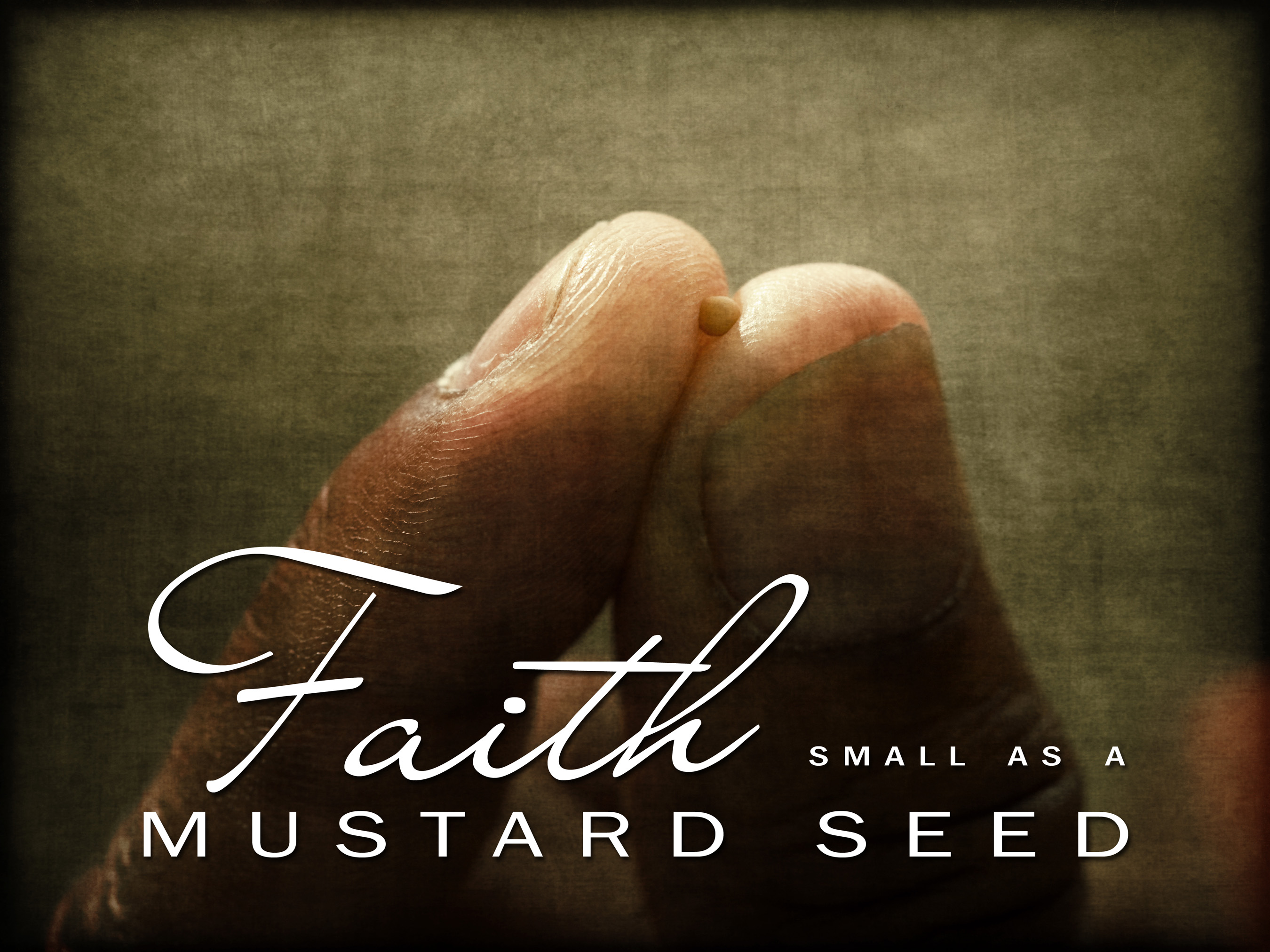
And the good news is that if we are working with God sowing good seeds, they can be the smallest of seeds, like the mustard seed, which, when sown upon the ground, is the smallest of all the seeds on earth; yet it grows and becomes the greatest of all shrubs which puts forth large branches, so that the birds of the air can make nests in its shade.
Did you hear that?
Disciples are those who do something, even a little something, to cultivate structures and systems that provide shade, shelter, protection, and healthy living environments.
This is what working with God looks like in this world. And notice that this is not the first time we read about birds in this fourth chapter of Mark’s gospel. We read in verses three and four that the seeds that fall on the path are eaten up by birds that were hungry. Is it possible then, that those same hungry birds are the ones who will be able to make their nests in the shade and protection of the large shrub produced by the mustard seed?
The Psalmists certainly understood that the provision of protection, especially for the hungry and the poor, is paramount to the purposes of God. Listen to this prayer for those in power recorded in the seventy-second Psalm:
May [they] judge your people with righteousness and your poor with justice. May the mountains yield prosperity for the people, and the hills, in righteousness. May [they] defend the cause of the poor of the people, give deliverance to the needy, and crush the oppressor… May [they] be like rain that falls on the mown grass, like showers that water the earth… For [they] deliver the needy when they call, the poor and those who have no helper. [They have] pity on the weak and the needy and save the lives of the needy. From oppression and violence, [they] redeem their lives; and precious is their blood in their sight”(Psalm 72:1-6, 12-13).
The psalmist’s prayer underscores that “working with God” means working for a justice that emphasizes the well-being of the entire community, with special attention on behalf of the poor, the vulnerable, and the marginalized. “Working with God” means working to protect the least of these from being overpowered, exploited, or rendered landless, homeless, and destitute.
The psalmist prays that those with political, social, and economic power will be especially attentive to bring justice to the poor, to defend the cause of the poor, to protect the poor, and to crush those who would oppress them.
This is why we are working to charter a bus to Washington on June 29 to stand with the Poor People’s Campaign. Bishop William Barber compares this event to the march on Washington on January 6, 2021, saying:
We’re marching on Washington with a spirit of resurrection, not of insurrection—a non-violent resurrection of unity, not a violent insurrection of division.
In other words, we’re marching to combat hate, division, and an extremist political agenda by scattering seeds of new life, seeds that will sprout opportunity for people, especially poor people, to live lives that are protected and enabled to thrive.
We are scattering seeds to sprout: living wages for low-income workers; healthcare for all people; environmental justice; a ceasefire and humanitarian relief in Gaza and an end to genocide worldwide; just immigration laws; the restoration of the rights of women; adequate and affordable housing; a fully-funded public education; and full and expanded voting rights.
And when we do this work, when we get in lockstep with God, when we join that dance between the Father, Son and Holy Spirit, when we pick up and carry a cross, when we pray with the Psalmist, doing what we can individually, democratically and ecclesiastically to scatter seeds of justice, seeds of equity, seeds of mercy, and seeds of peace—because they are good seeds, because they are holy seeds—the fruits that God will produce from those seeds, the fruits of “love winning” and “God’s kingdom coming,” will be automatic!
The hungry will be filled with good things.
The lowly will be lifted up.
The mighty will be cast down from their thrones.
And then, we can rest from our labors.
We can take a vacation.
We can enjoy a sabbath.
And if we want, even this very afternoon, we can sit back with Martin Luther and sip a cold beer. Amen.
 Just Love