

Jeremiah 8:18-9:1
My joy is gone. Grief is upon me. My heart is sick. Is there no balm in Gilead? Is there no physician there? O that my head were a spring of water, and my eyes a fountain of tears, so that I might weep day and night for the slain of my poor people.
How many of you can feel the enormous grief of the prophet? It’s heavy. It’s exhausting. And I confess that there was a time this week I felt like just giving up.
Jeremiah’s gut-wrenching lament comes from the suffering of a broken city—amid a people demoralized by a corrupt government, betrayed by those in power, and abandoned by the religious establishment.
The prophet’s voice trembles with profound sadness. He sees a nation that has lost its way: a people who claim to believe in God but who fail to practice kindness, justice, and mercy; leaders who have consolidated power by telling lies, scapegoating the weak, silencing dissent, and threatening violence.
Sound familiar?
In Jeremiah’s time, the Babylonian war machine bore down on Judah.
Instead of defending the vulnerable, the powerful protected their own wealth and position, leaving ordinary people exposed to invasion and suffering. The poor were crushed, widows abandoned, orphans ignored, and migrants exploited. The powerful told the people what they wanted to hear, proclaiming “peace,” when there was no peace, because there was no justice.
And Jeremiah wept.
Jeremiah wept because people fell for the lies. He wept because the cries of the vulnerable went unheard. He wept because leaders in the nation had hardened their hearts. And he wept because those leaders were blessed by religious leaders.
Sound familiar?
It was not only a political crisis. It was a moral crisis, a spiritual crisis.
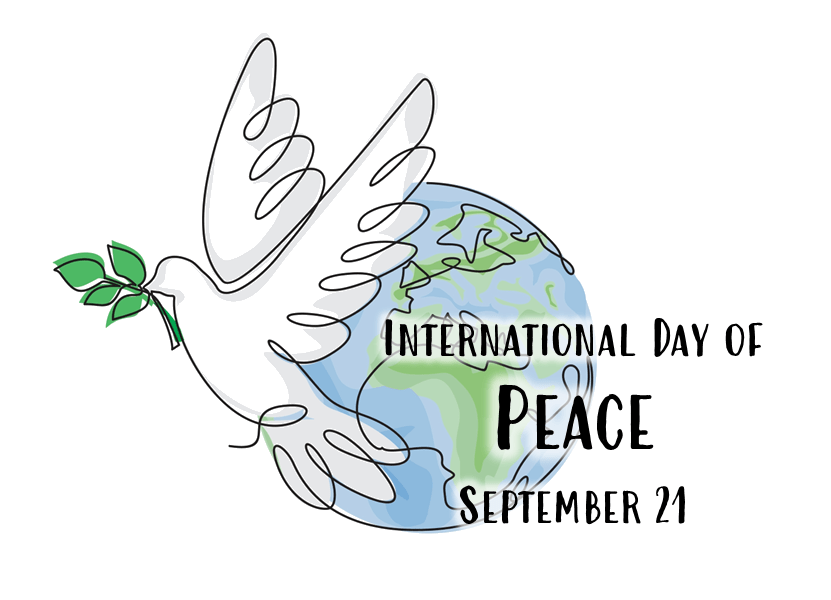
And on this International Day of Peace in 2025, we find ourselves in a strikingly similar crisis, as fascism tightens its grip on our nation.
Power has been consolidated by dividing the nation, scapegoating immigrants, and silencing dissent. The playbook of the powerful demonizes the most vulnerable among us. It criminalizes protest, censors history, dismantles education, denies science, and spreads lies, all to protect their power.
We live in a time when comedic satire aimed at the rich and powerful is silenced, while hate aimed at the poor and powerless is protected. A comedian was pulled off the airwaves after mocking the President. Yet, a Fox news host openly called for the killing of the homeless and the mentally ill—those whom Jesus would say that “if you do it to them, you do it to me”—and not only did he keep his job, he was defended by many who claim to be Christian.
This is much deeper than politics. It’s about the soul of the nation. When truth is silenced, when the poor are demonized, and when those in the church bless it, it is more than democracy at stake. It is our very humanity and witness to God.
This is the sin-sick world Jeremiah saw.
Judah was collapsing under its own corruption. The prophets who should have spoken truth to power bowed down to power. Babylon loomed large, an empire built on conquest, intimidation, and fear. And Judah’s leaders tried to imitate the empire, believing violence would secure peace. Peace through strength, as they like to say. Prophets like Jeremiah were threatened, beaten, and even imprisoned for speaking truth (Jer. 20:1–2; 26:7–11).
But Jeremiah rose up and spoke out anyway. Listen to his words from the previous chapter:
Don’t for a minute believe the lies being spoken here: ‘This is God’s Temple, God’s Temple, God’s Temple!’ [It’s] total nonsense! Clean up your act, the way you live and treat your neighbors…[quit oppressing the alien NRSVUE], exploiting street people and orphans and widows. Quit taking advantage of innocent people, [and stop going after other gods to your own hurt …NRSVUE] Get smart! Your leaders are handing you a pack of lies, and you’re swallowing them! Use your heads! (Jeremiah 7, The Message).
Jeremiah wept because the people had been conned, falling for the lies of the powerful, even against their own interests, choosing violence over love, a false peace over justice. And Jeremiah wept because people were being hurt in the name of God.
His nation was sick with sin and Jeremiah lamented: “Is there no balm in Gilead? Is there no physician here?”
It’s difficult not to see the parallels to 2025.
Today, politicians quote scripture while cutting food program and taking away healthcare. Governors sign laws to censor history, erasing the stories of Black, Brown, and queer lives. Politicians want to control the media and criminalize protest, making dissent itself illegal. They attack education, deny the reality of climate change, and sneer at science.
And they bless it all in the name of God. They silence the prophets in the name of peace. They embrace fascism in the name of patriotism.
The nation is sin-sick when comedians who poke fun at power are silenced, while broadcasters who fantasize about killing the poor are protected. The nation is sin-sick when protest is criminalized and violence is excused, when truth is silenced and lies are amplified, when bigots are honored and those who speak out against bigotry are villainized.
Thus, Jeremiah’s cry becomes our own: “Is there no balm in Gilead?”
So today, we join Jeremiah’s weeping.
We weep for all who are still swallowing lies at their own peril.
We weep for immigrants locked away without due process, terrorized and scapegoated for problems they did not cause.
We weep for our unhoused neighbors, those whom many wish would just disappear.
And we weep for the silenced voices—journalists, teachers, artists, prophets—punished for telling the truth.
However, here’s the good news. We weep with the prophet today, but we weep with hope. If not, I don’t think we would be in this sanctuary this morning. We weep before God as those who know the tears of the faithful are sacred, that the laments of those who believe in love are holy, that weeping itself is an act of resistance in a culture that tells us that everything is fine.
Jeremiah asked: “Is there no balm in Gilead?”
Two thousand years later, the African-American church of the 19th century answered the prophet. Although the powerful what us to forget it, while African Americans were considered chattel property with no rights, subjected to forced labor from sunrise to sunset, while they were bought, sold, and separated from their families, their lives defined by brutal coercion, including whippings and the threat of death, while they were denied legal rights and autonomy, they were somehow still able to sing out loud, words that we will sing in a few moments: “There is a balm in Gilead!”
Not the balm that came from bowing down to their masters. Neither was it the balm of hating them or responding to their violence with more violence. It was the balm of God’s justice, the balm of Christ’s love, and the balm of Spirit’s fire. The balm with the power to make the wounded whole, to heal the sin-sick soul. The balm that is found wherever people choose love over hate, truth over lies, and justice over fear.
The balm of Gilead is in the streets where the people march. It’s in the pulpits where prophets preach and in the pews where worshippers pray. It’s in the classrooms where teachers defy censorship, and it’s in the laments of all who believe in love.
The balm of Gilead is found in our tears, our laughter, our songs, and our courage.
Jeremiah cried, “O that my head were a spring of water, and my eyes a fountain of tears.”
In 2025 America, we know our tears can become rivers of justice. Our lament fuels our resistance, and our weeping gives birth to action.
When protest is criminalized, our tears compel us to march anyway.
When immigrants are demonized, our tears move us to stand with them in solidarity and proclaim that no human being is illegal.
When history is censored, our honest tears become words telling the truth in our classrooms, in our pulpits, and in our homes, because we know it is only the truth that sets us free.
When science is denied, our weeping stirs us to honor the creation, because we believe in our hearts God has entrusted this world to our care.
When God’s name is used to do harm to our neighbors, our grief send us out of the sanctuary into the streets to protect them in the name of God.
When satire is silenced, even in mourning, we will laugh louder, for we believe humor is holy and joy is a weapon.
When hate is excused, we will raise our trembling voices for love, because we know love will ultimately win.
On this International Day of Peace, we cry with Jeremiah, we weep with Jesus, and we rise with the Spirit. We stand to reject the fake peace of empire and the immoral peace of silence, while we embrace the true and costly peace of justice, the risky peace of love, and the revolutionary peace of the gospel.
Because while fascism may grip the nation, it cannot crush the Spirit. Those in power may silence prophets, but they cannot silence God. Hate may roar for a season, but love is eternal.
“Is there no balm in Gilead?”
Yes, there is a balm! And we are called to be it!
Today, we weep. But the good news is that our tears are not the end of the story. Because there does come a time when our tears turn into hope. There comes a time when lament gives birth to testimony, when weeping rises up into a witness that shakes the foundations of empire.
And now is that time!
We see that people in our nation are already paying the price for being a moral witness. Workers are being fired from their jobs, teachers dismissed from classrooms, journalists silenced—all because they dared to post on social media what Jeremiah would have shouted from the streets—”Those with power are lying. Fascism is here. And anyone who does harm to the poor, to the immigrant, to the most vulnerable among us, is no friend of God!”
And when prophets are silenced like this, when truth is censored, when jobs are lost for speaking conscience, the church must rise with even greater courage to say: “Yes, these days are heavy, but we will not bow down. We are exhausted, but we will not give up! We will not allow fascism to have the last word! We will not allow love to be silenced while hate is amplified! And we will not allow truth to be buried beneath lies! Even if there is a price to pay!”
So, let’s rise together as balm in a broken land.
Let’s rise as physicians for a sin-sick nation.
Let’s rise as a river of justice, a mighty movement of revolutionary love, because we are the balm. We are the healers.
This week, we have wept for the nation. Collectively, in the words of the 119th Psalm, our tears have cried a river. But let’s remember that rivers have power. Rivers carve valleys. Rivers reshape the land. And they move history itself.
Now is the time to let our tears carve a new way forward.
Amen.
Pastoral Prayer
God of weeping prophets and wounded people, we come before You with broken hearts and open hands.
We weep for children taken too soon by gun violence,
for immigrants cast out and scapegoated,
for unhoused neighbors treated as disposable,
for truth-tellers silenced while lies are protected.
You, O Lord, hear the cry of the poor.
You see the fear that grips our nation, the cruelty that masquerades as strength, the empire that blesses weapons more than it blesses life.
Yet, you also see the power of love rising,
voices refusing to be silenced,
hands building communities of care,
feet marching for peace with justice.
Heal us, O God. Make us bold enough to speak truth in love,
to resist every system that thrives on fear and division,
and to live as balm in this wounded land.
We pray not only for peace but for the courage to embody it—
in our homes, in our streets, in this church, in our nation.
Through Christ, who wept with us and yet rose with power, we pray.
Amen.
Invitation to Communion
This table is not the empire’s table.
It is not gated, policed, or censored.
It does not silence the hungry or privilege the powerful.
This is Christ’s table—where the broken find healing,
where the weary find rest,
where the silenced find a voice,
where the despised find welcome.
On this International Day of Peace,
we come to taste a peace rooted in justice,
a love that breaks chains,
a hope that refuses to die.
Come, not because you are worthy,
but because Christ makes you whole.
Come, because there is a balm in Gilead,
and it is poured out here in bread and cup.
Invitation to Give
Our offerings are not hush money to quiet our conscience.
They are seeds of resistance, investments in justice,
fuel for the Spirit’s movement in this place and beyond.
When the world blesses weapons,
we bless children.
When the empire silences prophets,
we empower truth-tellers.
When systems sow fear,
we plant love.
Let us give, not reluctantly but boldly,
trusting that God will multiply these gifts
into balm for a wounded world.
Commissioning and Benediction
Go now as people of lament and of action.
Let your tears water the seeds of justice.
Let your weeping fuel your courage.
Let your prayers become protest,
your songs become strength,
your love become revolution.
The world asks, “Is there no balm in Gilead?”
We leave this place answering:
Yes, there is a balm—and we will be it.
Go in peace, go in power, go in love.
And let the church say: Amen.


 Just Love