Christmas on the Run


Matthew 2:13-23

We love a Christmas story that soothes, slows, and settles us down. Like the ones on the Hallmark Channel. Where people come back home, fall in love, get engaged in the snow, start a small business on the town square, and live happily ever after. Nothing too disruptive. Nothing that can’t be resolved in ninety minutes with a hot cup of cocoa and a change of heart.

And we love the nativity. Of course, I am talking about the kind that’s stationed inside the mall near JCPenney’s. A baby in a manger who doesn’t cry, need a diaper, or make a fuss. A very calm Mary and Joseph. Shepherds kneeling quietly. Magi standing in their place, holding their gifts. A silent night that doesn’t disturb anyone’s politics, profits, or comfort.

The problem is that that looks and sounds nothing like the scene in Matthew’s gospel.

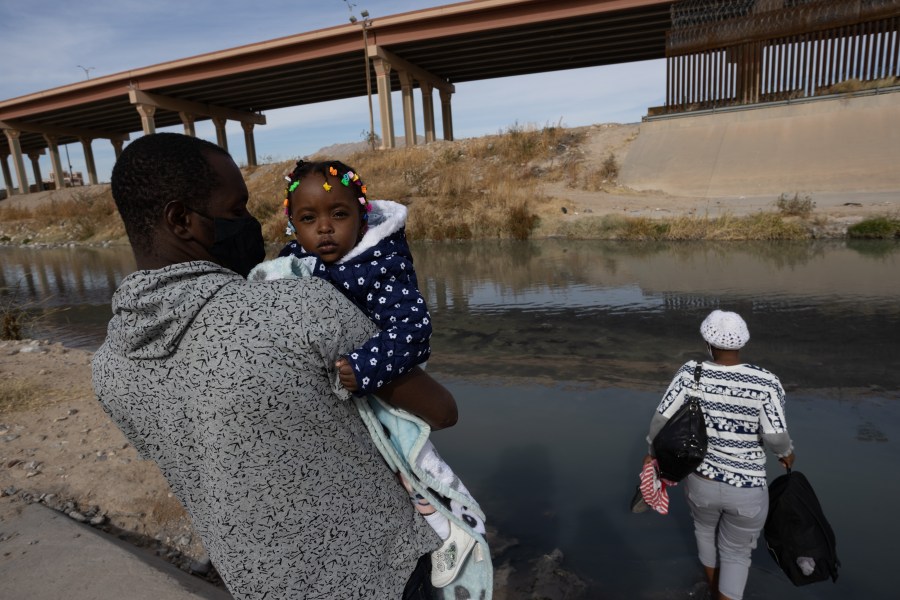
Before wonder has time to settle in, an angel appears to Joseph in a dream and says: “Get up! Take the child and flee to Egypt.” Not relocate. Not travel. Not go on a spiritual retreat. As soon as Love takes on flesh, Love is forced to flee.

Matthew reminds us today that Christmas is a story on the run. The Prince of Peace has been born into a world ruled by selfish power and violent fear and the Word Made Flesh is forced to flee as a refugee.

Herod receives the news that a child has been born who might upend his throne. So, he does what all insecure authoritarians and their sycophants do. Herod confuses his own survival with the will of God. To protect his reign, he weaponizes fear and sacrifices the innocent.

And so, the story of Christmas becomes, not a peaceful hallmark story of personal salvation and happily-ever-after, but a frantic, suspenseful thriller of border crossings, desperate decisions, and parents doing whatever it takes to keep their child alive.

This is real Christmas. This is Christmas in a world where the powerful will do anything to stay powerful. And this is the Christmas they want us to forget.

Now, it’s probably not too sinful to sit down and watch that Hallmark movie or to stop by the nativity scene at the mall—

as long as we understand that there’s no way the holy family gathered around that manger Bethlehem would pass today’s background checks for moral or financial worthiness—

and as long as we understand Jesus was born a poor, brown-skinned, Jewish Palestinian into a world where governments rip apart families like his.

And we must never be fooled whenever we hear the powerful claim that they are the “protectors of Christmas,” the reason people are saying “Merry Christmas” again.

Because, in the real world, the powerful don’t protect Christmas. They fear it. So, they seek to capture it. Control it. Own it. And then tame it. Change it into something that looks nothing like Matthew 2. Because when Christmas is taken seriously, it is a threat to every system built on fear and domination.

The spirit of Christmas stirred the abolitionists to challenge slavery. It sustained the faith of enslaved people who believed God was indeed on the side of the oppressed. And it fueled movements that dared to imagine freedom in a culture structured to deny it. It unsettled Jim Crow, exposed segregation as sin, and inspired ordinary people to stand up to extraordinary injustice.

That is why Matthew reaches back to the prophet Hosea and writes, “Out of Egypt I have called my son.” Hosea was speaking of God calling Israel out of Egypt, out of slavery, out from under the grip of empire.

Like the Israelites, God does not shield Jesus from the oppression of a tyrannical government. But there, in Egypt, Jesus experiences the same paths of displacement, oppression, grief, and danger that marked the lives of the enslaved Hebrews…and so many immigrants and refugees today.

Which means that there is no way we can preach this text honestly without asking hard questions about our own moment in history:

when children are still caught in the crossfire of political fear;

when families are still fleeing violence, famine, and oppression;

when the powerful are shameless in their lies to justify cruelty;

and when religious language is still being used to bless policies that terrorizes families.

Herod is not just a character in the Bible.
Herod is a historical pattern.

Herod is a scourge on this world that shows up any time leaders choose domination over compassion; any time power protects itself by scapegoating the vulnerable; any time the lives of children become collateral damage in the name of “order” or “security.”

And sadly, because Herod is a pattern, so is the weeping of Rachel. Matthew recalls words spoken by prophet Jeremiah: “A voice was heard in Ramah, wailing and loud lamentation, Rachel weeping for her children.”

Rachel weeps today in refugee camps. She weeps in detention centers. She weeps in neighborhoods and schools shattered by gun violence. She weeps in hospitals, on city streets, and at graves that should never have been dug.

And notice that Matthew doesn’t soften her grief: “wailing and loud lamentation.” Matthew does not explain it away. He does not say: “Things can happen.”

He lets Rachel weep, honestly, painfully, bitterly.

Because Christmas never denies suffering. Christmas names suffering. And then, it refuses to let suffering have the last word. The Herods of the world die. Empires fall. Fear cannot and does not win forever. The child survives. And that is the quiet defiance of Christmas.

Jesus grows up not sheltered from the world’s cruelty, but shaped by survival, displacement, and resistance.

Which may explain why, when he begins his ministry, he stands with the poor, the sick, the criminalized, and the cast out. Why he speaks so clearly about unjust power. Why he refuses to confuse God with empire, faith with nationalism, and love with judgment.

The story of Jesus is that God shows up not in Herod’s palace, but on the margins. Not with people claiming to be greatest, but with those considered to be the least. Not in an army, but in a vulnerable child.

And if we want to be faithful to this Christmas story, the question is not: “Do we believe in Christmas?” The real question is: “Where do we stand in Christmas?”

Do we stand with fear? Or with the families trying to survive it?
Do we stand to protect power? Or do we stand to protect children?

Do we sing Joy to the World, while only caring about joy in our little corner of the world?

Do we believe the good news of Christmas?

Not that God came once upon a time in the little town of Bethlehem. But the good news that God is still showing up, in the little town of Bedford, Boonesboro, Forest, Lynchburg, Madison Heights, Hurt, Appomattox, and Roanoke—in every town: through every act of courage; every refusal to dehumanize; every welcome offered to a stranger; every challenge to unjust power; every policy resisted that harms the innocent; every stand taken with the vulnerable; and every insistence that love is stronger than fear, and love always wins.

So, this Christmas, let’s not be afraid to tell the whole story.
Not just the angels, but the anguish.

Not just the birth, but the violence it provoked from the powerful.

Not just the joy, but the justice that joy requires.

Not just the glory, but the calling of Christmas, which is: if God is born among the vulnerable, then our faith is measured by how we treat them!

This is not Hallmark or shopping mall Christmas. This is real Christmas. This is Christmas on the run. This is Emmanuel, God with us, even here.

Thanks be to God.

The Most Hopeful Word in Scripture

Luke 15:1-10

This morning, I’ve got a simple sermon. Now, don’t get too excited. I didn’t say short! I said simple. It’s about one word. Just one word. And I believe it may be the most hopeful word in scripture.

Jesus is confronted by grumbling Scribes and Pharisees: “Jesus, why do you insist on hanging out with people everyone knows are sinners? Rumors are flying all over town about you eating, drinking, and having parties with those people!”

And Jesus responds as he usually does by telling a story. Here, he tells three stories: one about a lost sheep, another about a lost coin, and another about a lost boy.

It is in these wonderful stories that we find what I believe is the most hopeful word in the entire Bible.

What about the word “found?” Now there’s a hopeful word. In each of these stories, there is something or someone who is found. The shepherd finds the lost sheep. “And when he found it, he lays it on his shoulders and rejoices!” The woman finds the lost coin. “Rejoice with me, for I have found the coin that I had lost.” And the father finds his lost son. “Let us celebrate for this son of mine was dead and is alive again; he was lost but now he is found!”

Found: It’s a wonderful word. For being found is the polar opposite of being lost. Being found means being recognized and accepted, welcomed, and affirmed where we are and for who we are. Being found means coming home. Coming home to a place where you are loved unconditionally and appreciated and understood. Being found means belonging. Being found means salvation.

Found: What a hopeful word! For how many of us yearn to be known fully, understood completely, accepted entirely, and loved unconditionally? How many of us yearn for a place that we can call home? Where we can be our authentic selves and be welcomed and affirmed. Found: it’s a wonderful, hopeful word. It is who we are called to be as a church, and it is what makes this Open and Affirming congregation in Lynchburg so special.

“Found” is good. “Found” is hopeful. But it’s not quite the word I’m after. What about “rejoice?” Now, that’s a hopeful word…

In each of these stories, there is an awful lot of rejoicing. You gotta love the way Jesus responds to criticism about all the parties he was attending by telling three stories about having a party?

When the shepherd finds his lost sheep, he lays it on his shoulders and “rejoices.” He comes home, calls together his friends and neighbors and invites them to a party, saying, “Rejoice with me, for I have found my sheep that was lost.”

After the woman found her lost coin, she called together her friends and her neighbors, saying, “Rejoice with me, for I have found the coin that I had lost.”

And who can forget the party in the final story of the lost boy. When the boy is found, the father says to his servants: “Quickly, bring out a robe, the very best one, and put it on my boy. Put a ring on his finger and sandals on his feet. And get the fatted calf and kill it, and let’s eat and celebrate; for this son of mine was dead and is alive again; he was lost and is found!” And they began to rejoice together with food, music, dancing, and belonging.

Rejoice: it’s an incredibly hopeful word, but it is not the word I am thinking of. There is another word, a smaller word, a stronger word, a word that will preach hope in every age!

Jesus says that the shepherd searches until he finds the lost sheep. The woman searches until she finds the lost coin, and the father waits until the lost boy is found.

It’s important to remember that each time Jesus tells a parable, he is implying that God is like that. God is like a shepherd who searches, not for an hour, not for 24, 36, or 48 hours, not for a week or a month or even a year, but searches until he finds his sheep. God is like a woman who turns on all the lights in the house, sweeps every square inch and feverishly searches until she finds it. And God is like a parent who patiently and graciously waits untiltheir child comes home.

The most hopeful word in the Bible may be the simple word until.

I have always prided myself on being open-minded. I have preached sermons about the importance of being open-minded. I’ll never forget that after one such sermon, a worshipper came up to me and asked, “Pastor, don’t you think that sometimes it is good to be close-minded? Don’t you think that there are some things that even God is hard-headed about?”

Although the worshipper was notorious for being closed-minded, he did have a pretty good point. For the good news is that the God Jesus describes is a close-minded, hard-headed, stubborn God. God is obstinate and unrelenting in God’s desire to draw all people unto God’s self. It was a very stubborn, immovable, and inflexible love which propelled to the cross. Perhaps the most close-minded statement that was ever made was made from the cross: “Father, forgive them, for they know not what they do.”

So, you say: “I know I am not the person I need to be. How much longer will God keep molding me, shaping me, enveloping me with grace? The good news is, until.

You say, “I keep failing, I keep falling. How long will God continue to pick me up and put me back on my feet?” The good news is, until.

You say, “I don’t think I am ever going to get over the loss of my loved one. How much longer can I keep calling on God to help me?” The good news is until.

How long will God keep fighting for me in this battle? How long will God keep protecting me in this storm? The good news is, until.

How much longer is God going to believe in me and stand by me and make a place for me at God’s banquet where there is going to be endless rejoicing?

The answer is in the simple, yet most hopeful word in the entire Bible: until.

And we’re not the first to discover this hope. In a dream, Jacob wrestled with God all night long by the river, refusing to let go. His stubborn cry was: “I will not let you go until you bless me.” And God stayed with him, held onto him, and gave him a new name and a new future.

Hannah prayed in the temple year after year, pouring out her soul, long after others had given up on her. She prayed until her tears turned into songs of joy, and Samuel was born.

Moses went back again and again to Pharaoh, each time with the same demand: “Let my people go.” Pharaoh hardened his heart, but Moses kept coming back until God’s people were set free.

And Jesus told us of a widow who kept knocking on the door of an unjust judge, demanding justice. She would not be silenced, and nevertheless, she persisted. She kept knocking until the judge gave in.

Even in Gethsemane, Jesus prayed not once, but over and over, staying with God until his spirit was strengthened to bear the cross.

The whole story of scripture testifies to this hope: God will not quit. God will not give up. God will not turn away. No matter our mistakes, no matter our trouble, no matter our obstacles, God will love us, chase us, hold us, and transform us—until.

And church, if God is stubborn like that, if God loves us until, then the people of God must be stubborn too. That means we cannot quit on our neighbors. We cannot give up on this nation. We cannot give in to violence, even when those who call us their enemies declare war. We can never answer hate with more hate, but with a stubborn love that never grows weary in this nonviolent struggle for justice and peace.

As the late Henri Nouwen once said: “Those who choose, even on a small scale, to love in the midst of hatred and fear are the people who offer true hope to the world.”

We must stand, we must work, we must love (Somebody say it) “UNTIL!”

Until our streets and our schools are free from gun violence, and political violence no longer poisons our common life.

Until our presidents stop dividing the nation, and our leaders speak words that heal instead of harm.

Until every child in America can walk into a fully funded school,
with books that tell the truth about our past, not with shelves stripped bare by censorship.

Until Black and Brown lives are safe, voter suppression is dismantled, and police violence is no more.

Until immigrants are welcomed as neighbors, not treated as criminals.

Until every worker earns a living wage, and nobody has to choose between medicine and rent.

(Somebody say it) “UNTIL!”

Until women’s bodies are honored, and reproductive freedom is protected.

Until our queer and trans siblings are celebrated as God’s beloved.

Until every person is granted equal protection and due process under the law.

Until Christian nationalism is unmasked as idolatry.

Until this planet is a more sustainably just and harmoniously peaceful home for every creature.

Until justice rolls down like waters, and righteousness like a mighty stream!

That’s the stubborn love of God! And now, the same stubborn love that propelled Jesus to the cross now propels us into the streets!

And when we get tired, when we feel like giving up, asking ourselves, “How long will God sustain us in this struggle?” The gospel answers: Until.

Thus, when the powers and principalities ask us:

So, how long are you going to keep showing up?”

“How long are you going to keep organizing?”

“How long are you going to keep protesting?”

“How long are you going to keep flying that flag?”*

“How long will you fight for healthcare, housing, and hope?”

“How long will you keep praying and prophesying and bearing witness against greed, violence, division and hate?”

We will rise up with one voice and declare:

“We will not stop.

We will not bow down.

We will not turn back.

And we will not be silent. Not for a season.

Not until the news cycle moves on.

Not even until the next election.

We will love.

We will struggle.

We will stand.

And we will march

until every person is free,

until every child is safe,

until every body is honored,

until justice is done,

and the kingdom comes on earth as it is in heaven!”

Amen.


*Referring to the pride flag that flies outside on our church sign.