Anointing a Movement

John 12:1-8 NRSV

Palm Sunday is just a week away, and you know what that means. Well, at least according to the Revised Common Lectionary, it’s time to gather around the table with Jesus for an unforgettable dinner party where so much more is happening around, and under the table, than we can imagine.

In fact, there must be more happening around this table, or this whacky supper scene would be like some bizarre, meaningless dream, like the kind we have when we’re sick with a fever.

It’s a scene that begs us to take a deep dive, asking some serious questions.

Because, seated at the head of the table is none other than Lazarus, who just a few weeks ago was dead and buried. And this is no Weekend at Bernie’s situation! Lazarus is alive and kicking, because a few days ago, Jesus stood at his grave, called him by name, and raised him from the dead.

What on earth can this mean? That Jesus is at the table with Lazarus, who was dead and buried but is now asking someone to please pass the gravy!

We are told that Lazarus’ sister Martha is serving. Sounds like Martha. Always busy in the kitchen. His sister Mary’s also there. But she’s in the dining room with Jesus. Something else that makes sense, as we might remember Jesus’ visit with Mary and Martha as told by Luke.

But it’s what Mary does next that completely floors us! As Mary literally gets in the floor! The scene under the table is almost as insane as the living and breathing presence of Lazarus at the table! She’s down there anointing Jesus’ feet with a pound of very expensive perfume. Think about that! A pound of perfume! Of course, the fragrance fills the entire house.

Then, we have another surprise. Judas, the disciple whom John says is about to betray Jesus, is also at the table. Jesus is at the table with both friend and foe, ally and adversary. And just as we start to ponder the meaning such an inclusive, open table, Judas shocks us by asking a question that we can easily imagine Jesus asking, “Why wasn’t this perfume sold and the money given to the poor?”

But just when we think that we have seen and heard everything, we are floored again by Jesus’ response: “The poor you will always have with you. You will not always have me.”

Oh, Jesus. I sure wished you hadn’t said that.

 Because Jesus, although it sounds absurd, because it is absurd, Christians will use that one sentence to justify ignoring over 2,000 verses in the Bible calling for economic justice and a civic responsibility to care for the poor, marginalized, and oppressed. Jesus, I know this sounds ridiculous, because it is ridiculous, Christians will make their faith solely about worshipping at your feet, praising you, instead of following you. In fact, they will worship you while embracing a way of life, that is the exact opposite of following you.

They will stand behind and support the Herods of this world who defund programs that serve the poor. They will bless authoritarians who cut humanitarian aid, leaving food intended to feed the hungry to rot in ports and warehouses. They will support tyrants who suspend refugee resettlement programs, who target and remove from the country certain ethnic groups without any due process or legal counsel. They will support executive orders criminalizing migrants, dismantling public education, that take away healthcare, eliminate food assistance and public health services, remove environmental protections, and deny science. And in the place of fair, progressive taxes, they will bless rulers who institute tariffs, causing the cost of goods and services to skyrocket, hitting the poorest amongst us the hardest—all to enrich the already ultra-rich.

And preachers, who claim Christian, will gather on Sunday morning, stand in pulpits, and not say one word about it. They will shrug their shoulders, and using your name, say something like: “Poverty? Well, there’s really nothing we can do about that. Like Jesus said, we’ll always have the poor among us.

So, Jesus, I really wished you hadn’t said that.

But you are Jesus. So, you must have a had a pretty good reason for saying it.

Hmm. Let’s think about this… You said it the context of this whacky dinner party where there is so much more going than we know.

Lazarus was dead and buried, but he’s now sitting upright and taking nourishment! Mary is under the table anointing your feet with this expensive perfume that she purchased for your burial, to anoint your dead body. Hmmm.

In the home of one who had been brought back to life from the dead, instead of anointing your dead body, she is anointing your living body.”

Jesus, I think we are beginning to see a theme here.

At a table, belonging to Lazarus, who had been called out of death into life, Mary anoints not the death of Jesus, but the life of Jesus. Mary anoints the living Jesus, the living way of Jesus, the living movement of Jesus.

So, maybe in defending the anointing of Mary to Judas, Jesus wasn’t saying that we can’t do anything about poverty. Jesus was saying that doing something about poverty in this world is going to take more than selling some perfume and writing a check. Eradicating poverty is going to take more than charity. It’s going to take a living movement. It’s going to take embracing a way of life, a holy movement, that challenges the corrupt systems of injustice, that resists the Empire, and speaks truth to power.

This whacky dinner party is beginning to make sense to us now, as it seems to me that one of the problems with the church today is that too many Christians prefer the dead feet of Jesus over the living feet of Jesus.. Just ask them: “Who is Jesus to you?” They’ll respond: “The one who died for my sins.”

They prefer the dead feet of Jesus over the living feet of Jesus that takes steps to bring good news to the poor and to the marginalized, the feet that takes a stand to liberate the oppressed, the feet that stands at the bedside of the sick brining life to the dying, and feet that even stands outside a tomb bringing life to the dead.

Jesus didn’t die for anyone’s sin. Jesus died because of sin. Jesus died because the Empire preferred a dead Jesus about personal and private salvation over a living Jesus about political and societal transformation.

In anointing the living feet of Jesus, Mary was anointing a movement—a dynamic, public, political movement of feet standing for justice, a movement of feet marching for peace, a movement of feet making strides for acceptance, belonging, diversity, equity, and inclusion.

Mary was anointing a way of living, a movement that put legs and feet on thoughts and prayers, that walks the extra mile to bless the poor, filling the hungry with good things and sending the rich away empty.

At the dinner table of Lazarus who had been called out of death into life, Jesus is calling us out of death into life: “Do you want to do something that changes the world? Do you really want to do something about poverty? Then don’t embrace my dead body lying in a tomb. Embrace the life I am living, the way I am walking, the movement I am embodying. Walk the walk, take the steps, and make the stands I am making.”

Like he did while standing in front of the tomb of Lazarus, I believe Jesus is calling us out of death today. He is calling us by name, begging us to come out to become his living feet in this world.

I love the way the Apostle Paul states this truth in the fifth chapter of his letter to the Ephesians:

Wake up from your sleep!  Climb out of your coffins! Christ will show you the light!

So, watch your step. (C’mon Paul! He’s saying, “Watch how you march, where you stand.”)

Use your head. Make the most of every chance you get. (And listen to this next sentence) These are desperate times!

So, don’t live carelessly, unthinkingly  (I hear: “Please don’t willfully misinterpret Jesus to avoid your responsibility to the poor. ‘Cause more than two thousand verses of scripture can’t be wrong.”)

Then, Paul says: “Make sure you understand what the Master wants” (Ephesians 5:14-17 MSG).

And what does the Master want?

The Master wants a movement. The Master needs us to do more than support a charity. The Master wants a movement. The Master wants fearless feet that march against all the forces of death in the world— the forces of greed, selfishness, disease, and violence—marching in a movement to raise the entire creation back to life!

The Master wants compassionate feet that take a stand for mercy, empathetic feet that walk in the shoes of another.

The Master wants gracious feet that run to welcome a stranger

The Master wants quick feet that jump to defend someone being oppressed, strong, determined feet that never retreat, give in, or give out.

The Master wants tireless feet that can stand for over 25 hours on a senate floor to proclaim words of love and truth, liberty and justice, fairness and equality, kindness, and decency to a nation in crisis.

The Master wants courageous feet that can stand in the street for two hours in the bright springtime sun on a Saturday afternoon in front of city hall to call out greed, bigotry, and corruption.

The Master wants caring feet that can stand for an hour in a silent vigil to be a public, prophetic witness for justice, or for just three minutes to speak truth to power at a meeting of the city council.

Six days after this dinner at Lazarus’ house, Jesus is, once again, at a table with his disciples. It would be his final dinner before nails are driven into his feet, as well as his hands. After the dinner, Jesus gets up from the table, takes off his robe, and ties a towel around himself. He then pours water into a basin and begins washing the feet of the disciples, wiping them with the towel around him.

Now, many will say that he was just teaching his disciples how to be a servant. But those of us who just have read the previous chapter… we have this idea that he is teaching us something more. Jesus was anointing a movement. Because Jesus knows that eradicating poverty and the problems of this world is going to take more than volunteering to serve in a soup kitchen. It’s going to take a movement—an anointed, living, dynamic, breathing, alive and kicking, nonviolent, courageous, public, street-taking, truth-telling, peace-making, mercy-seeking, justice-doing, forward-marching, love-infused, prophet-inspired, Spirit-empowered, Jesus-led movement.

Are we ready to be the feet in such a movement? The times are indeed desperate, so I pray we are.  Amen.

Light It Up!

beatitudes-1

Matthew 5:1-20

I believe one of the reasons that some Southerners yearn to see some snow, at least once a year, is because of the sheer magic of it. In an article for the Farmville Enterprise I quoted J.B. Priestly: “You go to bed in one kind of world and wake up in another quite different, and if this is not enchantment then where is it to be found?”

Then I wrote:

One day Stantonsburg Road was littered with empty Natural Light cans, leftover trash from Bojangles and McDonalds, and the carcass of a possum or two. The next day it was a majestic, untarnished pathway through a winter wonderland.

One day my lawn was brown, covered with ugly winter weeds and strewn with fallen tree limbs and dog droppings that I have been too lazy to pick up. The next day it was glistening white, void of a single blemish.

One day the flaws and faults of this fragmented world were all too apparent. The next day everything seemed to be forgiven, blanketed by grace. And although the world was still a very dangerous place to drive and to even walk, the hopeful wonder and potential beauty of the world was obvious (from: Snowflakes from Heaven).

Snow in the South is like a fairytale. But a few days later, the sun comes out, the rains fall, and it quickly melts away bringing us back to the real world, where we see the harsh, uncovered reality of it all. And the winter wonderland that once was seems to be a distant magical dream.

Have you ever considered that we might have it all backwards?

What if the fairytale is the littered highways and the brown lawns with ugly winter weeds?

What if the magical dream is the uncovered, unforgiven, graceless, and fragmented existence?

What if reality is the winter wonderland? What if reality is the world that has been blanketed by grace? What if reality is the world where hopeful wonder and potential beauty always exist?

I know what you are thinking…“Oh my goodness! Somebody call 911 ‘cause the preacher has lost his mind!”

But what if I have not lost my mind, and in fact, right now, my mind is as sane and as sharp as it has ever been?

I have said before that Jesus spoke less about sin and more about our inability to see. Jesus said, “I came into this world for judgment so that those who do not see may see…” (John 9:39).  He continues throughout the gospels:

Do you have eyes and fail to see (Mark 8:18)? Why do you see the speck in your neighbor’s eye (Matthew 7:3)?  Blessed are the eyes that see what you see (Luke 10:23)! Prophets and kings desired to see what you see but did not see it (Luke 10:24)!

Over and over, Jesus talked about importance of seeing something that most have difficulty seeing. I believe this is what Jesus meant when he said that he came not to abolish the law, but to fulfill it (Matthew 5:17). Not to get rid of it, but to bring it back into focus, to help us to truly see the purpose within it.

This is why I believe he said: “I am the light of the world. Whoever follows me will never walk in darkness but will have the light of life” (John 8:12).

To see anything, light is needed; thus, one of the main purposes of Jesus is enabling people to see, to see the real world, to see reality.

And what is reality? What is it that we have so much trouble seeing? What is it that God wants us to see?

I believe the answer is in Jesus’ first recorded sermon. Jesus went up on a mountain, and after he sat down, his disciples came to him, and taught them, saying:

Blessed are the poor in spirit, for theirs is the kingdom of heaven (Matthew 5:3).

God favors the “poor in spirit.” Not the religious, the devout, the pious or even the spiritual. Not the pastors, the elders and the deacons, not even the church member who serves in the soup kitchen. No, God favors the ones who have come to be served at the soup kitchen. They are not the ones with something to give. They are the ones with nothing to give. Jesus says the ones who are blessed, the ones who are blessed by God are those who, spiritually speaking, are completely destitute and needy. Their very spirits have been broken. And notice that Jesus uses the present tense. Not will be blessed. Not might be favored. They are, right now, right here, blessed. This is reality. And their future is the kingdom of heaven.

Blessed are those who mourn, for they will be comforted (Matthew 5:4).

God favors the mourners. Not the faithful who can understand what the Apostle Paul was talking about when he said we should “give thanks in all circumstances” (I Thessalonians 5:18), or “rejoice even in the midst of suffering” (Romans 5:3-10), but the ones who are not just complaining about the pain in their life, but they actually in mourning over that pain. They look at who they are, and who they have become, and they grieve. They look in the mirror in utter despair, and Jesus calls them blessed and promises comfort.

Blessed are the meek, for they will inherit the earth (Matthew 5:5).

The meek, the gentle, the shy and the timid are favored. Not the strong. Not the ones with the personalities or the confidence to overcome all sorts of adversity and somehow still make it to the top. Blessed are the ones who have never conquered anything, not even their own fears. It is the weak, says Jesus, not the strong, who survive and inherit the earth.  

Blessed are those who hunger and thirst for righteousness for they will be filled (Matthew 5:6).

Not the ones who are righteous, but the ones on whose behalf the prophet Amos preached: “Let justice roll down like waters, and righteousness like an ever-flowing stream” (Amos 5:24). These are the ones who have been unjustly judged, mistreated, shunned and bullied by society, even by communities of faith. They have suffered grave injustices because of their race, gender, ethnicity, sexual orientation, mental and physical ability, socioeconomic level and political or theological background. They have been beaten up so badly by the world that they hunger and thirst for justice and righteousness, like a wanderer lost in a hot desert thirsts for water. Jesus says that they are blessed and they are favored and they are the ones who will not only be satisfied, but will be filled, their cups overflowing.

Blessed are the merciful, for they will receive mercy (Matthew 5:7).

Not the perfect and the proud, the boastful and the arrogant. But God favors the ones who are fully aware of their imperfections, the ones who have made mistakes, terrible mistakes. Thus, when they encounter others who are also suffering from unthinkable errors in judgment, they have mercy and compassion, and in their hearts, there is always room for forgiveness. They give mercy, because they need mercy for themselves. And because they are favored by God, they will receive it.

Blessed are the pure in heart, for they will see God (Matthew 5:8).

Not the pure, but the “pure in heart.” Not the ones who, on the outside, appear to be straight and narrow, the ones who seem to have it all together, whose characters appear to be flawless. No, God favors the ones viewed by the world as abominations. We are reminded of the words of 1 Samuel “for the Lord does not see as mortals see; they look on the outward appearance, but the Lord looks on the heart” (1 Samuel 16:7). God will see the hopeful wonder and the potential beauty of who they are and they will see God.

Blessed are the peacemakers, for they will be called children of God (Matthew 5:9).

Not the ones who have necessarily found peace for themselves. But the tormented, disturbed and restless, who, because they are so continuously in chaos, seek to make peace whenever and wherever they can. Blessed are those who are without stability, but seek it, because they will find a home, a place of security, rest and a peace that is beyond all understanding, within the family of God.[i]

This, Jesus pronounces, is not a prescription of how things should be or how things could be. Jesus asserts that this is how things are! This is not some enchanted dream or magical fairytale. This is reality. This is truth. And Jesus announces: “I have come as light, as the Light of the World, to help you see it, to give all who are blind to it, sight to really see it as it really is.”

And not only that, Jesus says, you, who seek to follow me, you, who seek do the things that I do, go to the places that I go, you, who want to be my disciples, are also the Lights of the World. And you are called not to hide your light, but to shine your light on what is reality, what is true, so all may see it the way God sees it.

And we are to light it up in the same manner Jesus lit it up.

In Matthew 4 we read after James and John, Peter and Andrew left their fishing nets to follow Jesus, they proclaimed “…the good newsof the kingdom by curing every disease and every sickness among the people…those who were afflicted with various diseases and pains, demoniacs, epileptics, and paralytics, and he cured them” (Matthew 4:23-24).

We are to shine our lights by lifting up, accepting and caring for all people, especially those the world leaves behind. We are to light it up by loving, accepting, and caring for the least among us: the poor, the weak, those who need mercy, the marginalized who hunger and thirst for justice, the obviously flawed but pure in heart, and the troubled who yearn for peace.

Will we look like fools? You bet. Will people say that the way we accept and love and affirm others is socially and even theologically unacceptable? It’s likely. Will we be demeaned and even persecuted by others in the community, even other churches? Perhaps.

But here is the good news: Jesus also said,

Blessed are those who are persecuted for righteousness’ sake, for theirs is the kingdom of heaven. Blessed are you [notice the change in person] when people revile you and persecute you and utter all kinds of evil against you falsely on my account. Rejoice and be glad, for your reward is great in heaven, for in the same way they persecuted the prophets who were before you (Matthew 5:10-11).

So let the rest of the world live in their enchanted, dreamlike, fairytale existence where the rich, the prosperous, the powerful and the strong are blessed and favored by God.

And let us commit ourselves to living in reality, in the world created by our gracious God, in the world that Jesus, the Light of the World, came to help us see, in the world where the Holy Spirit reveals the hopeful wonder and potential beauty in all things and in all people, in the world that has indeed been blanketed by grace, like a 4-inch snowfall in the South.

And let us, as lights of this world, for the sake of this world, keep lighting it up, until the day comes when the eyes of all are finally fully opened. Amen.


[i] Words on the Beatitudes were inspired by Frederick Buechner. Whistling in the Dark: An ABC Theologized (New York: Harper Collins, 1988), 18.           


COMMISSIONING AND BENEDICTION

Go now into the world and light it up!

So the poor will know that they are blessed.

Light it up!

So that the weak will know that they are favored.

Light it up!

So that those who ache for justice will be satisfied.

Light it up!

So that the obviously flawed but pure in heart will see God.

Light it up!

So that those you yearn for peace will know security as God’s beloved children.

Light it up!

Knowing that if you are persecuted, yours is the Kingdom of Heaven.

Light it up!

Until the day comes when the eyes of all are finally fully open, and all may know love of God, the grace of Jesus Christ and the communion of the Holy Spirit. Amen.


The Christmas Disparity

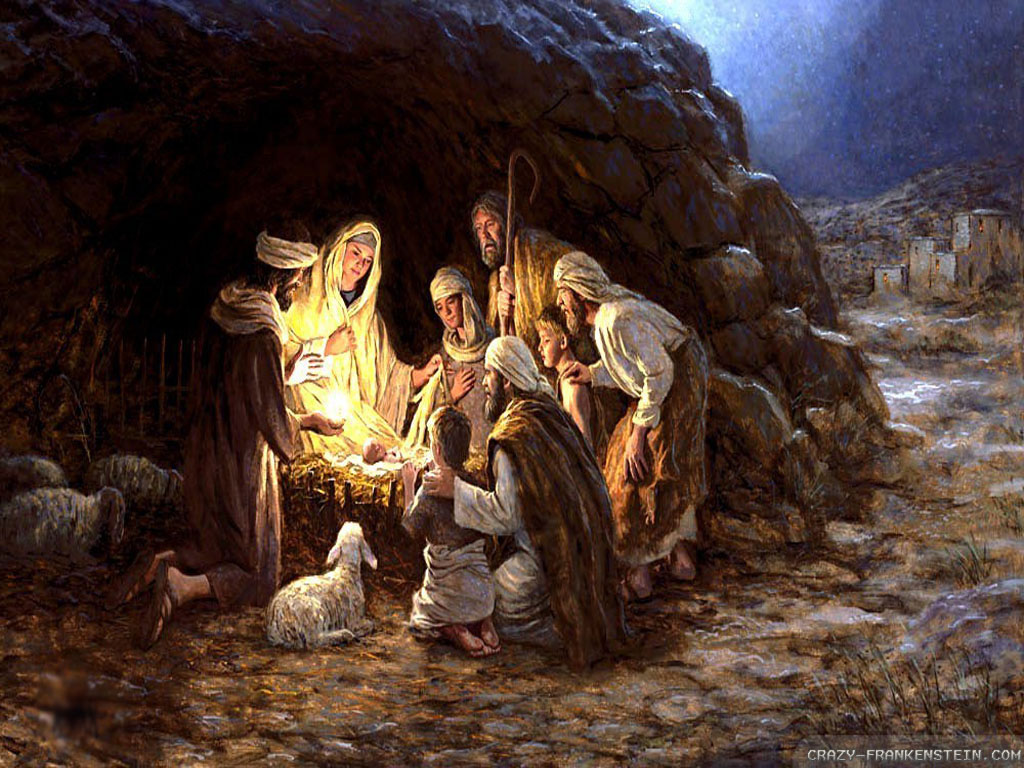
baby-jesus-christmas-nativity-wallpapers-1024x768Have you ever thought about the stark disparity of the first Christmas and the way our culture celebrates Christmas?

Stockings hung on the fireplace; a wreath on the door, presents wrapped under a tree—A baby born in a stable and placed in a feeding troth; homeless refugees fleeing to a foreign land; the slaughter of the innocent.

The scent of fresh-cut cedar and fir; the aroma of warm gingerbread; the smell of candy canes and tangerines—the stench of animal waste; the smell of wet straw; the repugnant odor of poor, unbathed shepherds.

Jingle Bells, Rudolph, and Frosty the Snowman; the tolling of church bells; the laughter of children playing—The disappointment in an innkeeper’s voice; the painful cries of a night of labor; the wails of grief from parents holding their dead babies.

Why the disparity?

Could it possibly be because we are frightened by who true Christmas calls us to be and where true Christmas calls us to go?

Perhaps this is why we go to great lengths every year to cover it up. This is why we decorate it. This is why we tie a bow around it and string it with lights.

True Christmas looks more like the rejected homeless sleeping on the street, the grief-stricken eyes of mourners, and the wearied and anxious faces of refugees.

True Christmas smells more like the stench of a dank prison cell, the foul odor of a nursing home, and the uncleanliness of the very poor.

True Christmas sounds more like the cries of a distraught Alzheimer’s patient, the moaning of an AIDS patient, and the sobbing heard at a funeral.

This year, may we see through the wrappings, glitter and lights and BE the people that Christmas calls us to be and GO to the places Christmas calls us to go.

We’re Able, but Are We Willing?

bridges not wallsLuke 16:19-31 NRSV

This morning, Jesus is telling another story to teach us something about the nature of God—who God is, how God acts, and what God desires. And as I said last week, we usually find that something in that part of the story that takes us by surprise, shocks us.

It is not difficult to find that moment in this morning’s lesson. But to fully grasp it we need to know a little background about original audience.[i] The Pharisees were notorious for believing and teaching some very bad theology. It is what we call “TV evangelist theology,” “the prosperity gospel” or the “health and wealth gospel.”  It means that we can find favor with God, and if we do, whether it is by living a pure and holy life or by giving generously to God “through a seed offering to the name and address displayed on your television,” then God will bless you with health and wealth. In fact, if you give regularly to their ministry, not only can you expect to receive an autographed copy of their new book, but you can expect to get unexpected checks in the mail! You will not only feel good that you are supporting a great ministry, but you may also be healed your disease or disability.

So here’s the thinking:

Have a lot of money, a great stock-portfolio, growing investments? Blessed. Living from one social security check to the next? Not blessed.

Have plenty of food, nice clothes and a nice car? Blessed. On food stamps, wear worn, old-fashioned clothes, drive a broken down heap? Not so much.

Have great healthcare, low co-pay and deductible? Access to great doctors? Blessed. No insurance, can’t remember your last check-up? Not so blessed.

Nice home? Blessed. Live in the projects? Not blessed.

Healthy and fit, training to run a 5k? Blessed. Sick, in a wheel-chair, homebound? Unblessed.

The sick and the poor, well, they’re just not living right. They make poor decisions in life. I hate to say it, but a lot of them deserve their plight.

The healthy and wealthy, well, evidently they have been living right. They make good and wise decisions, and because of that, they have caught the eye of God and found some divine favor. The poor? The sick? Well, they’ve caught the eye of God too!

And because of that belief, the Pharisees kept the poor and sick at a distance, outside of their circle of friends. They did everything they could do to keep a large gap between them. They were never invited into their homes and they cringed each time one would stumble into the synagogue.

So Jesus tells a story. There was a rich man from a big family who was well-dressed, well-fed and well-off, and of course lived in an exclusive gated community. And right outside of that gate, was this poor, hungry and sick man named Lazarus.

Lazarus would look through the gate and dream of being able to eat just the left-over scraps from the rich man. The only attention and care he received were from the neighborhood dogs that came and licked his wounds. How unblessed is that?

Well, one day, both men died. After all that’s what all men do, don’t they?  All of the money, good fortune in the world can not prevent it. So, no surprise there.

But hold on, because here it comes. The poor man, the man who was seemingly blessed not so much in life, is carried away by the angels to be with Father Abraham.

And, by this time, you know it is really coming. You can almost feel it! If the church pews had seatbelts, I’d be hearing a lot of clicks about now.

The rich man who had a stellar reputation in the community, the one who was seemingly very blessed in life, the one who always bragged to his friends down at the synagogue how good God had been to him, found himself being tormented in Hades.

C’mon Jesus, really?!? Really?

Really! He looks up and sees Abraham with Lazarus at his side and cries out, “Father Abraham, it’s hot as Hades down here! Please send Lazarus to visit me with just a drop of water!”

Abraham responds, “It’s too late. You are no longer able to be comforted. Besides, there is now this chasm, this gate, this wall separating you from us and us from you. And it has been fixed.

Now, isn’t that ironic? In life, the rich man who separated himself, who kept his distance, segregated and protected himself from the likes of people like Lazarus, is now eternally separated from him. And he is unable to do anything about it.

“Ok,” he says, “If I am unable, my five brothers who are still living are very able! Please send Lazarus to warn them so that they will not join me in this God forsaken place!”

Abraham responds: “They’ve already been warned in the scriptures.”

“But, Abraham, look, uh, I know my brothers, and I am afraid that they are not really into Bible Study, but if someone rises from the grave, then they might listen.”

“No,” says Abraham, “If they are not willing to listen to Moses and the prophets, neither will they be convinced, even if someone rises from the dead.”

Oh – my – word! Jesus is not just speaking to the Pharisees here, is he? Jesus is speaking to crowds of people gathered almost two-thousand years later on Sunday mornings at 11am who proclaim to know someone who has indeed rose from the dead.

It is too late for the rich man. He is no longer able to change—change his theology, change his heart, change his view of his neighbors living on the other side of the tracks. He is no longer able to tear down the wall and begin building bridges. And although his five brothers are able to change, we learn the sad and the scary truth that they are simply not willing to change.

And here we are, as able as those brothers. The truth is, we are more than able. For not only do we have Moses and the Prophets, we also have Matthew, Mark, Luke, John and Paul and the risen Christ himself. So, the scary question is: are we willing? Are we willing to change our theology, our hearts and our actions? Are we willing to tear down the walls and build some bridges?

Yes, we hear bad theology all of the time from the TV preachers, but we also hear it right here in the local church. And sometimes it comes out of our very own mouths.

When someone compliments us by telling us what a nice home we live in, or what a nice car we drive, or what a beautiful family we have, or how good we look for our age, we respond how we think all good Christians who go to church every Sunday should respond, “Well, the Lord has really been good to me.” “The Lord has really blessed me.”  And we even believe responding in such a manner might coax God into blessing us some more!

Through the story of the Rich Man and Lazarus, Jesus says that our wealth and our health and our nice teeth are not signs that we are God’s favorites. In fact, those things may be some of the bricks in the wall that separates us from those who are poor, sick and have never seen a dentist. And according to Jesus, if we do not do something about it, that wall, that chasm, will eternally separate us from God.

When someone who is doing the best they can to make ends meet, who is struggling to put food on the table and keep the lights on, hears someone who has it all proclaim, “Yes, the Lord sure has been good to me! The Lord has really blessed me!” what are they to think?  What else can they think except: “Obviously, for some reason or another, I am not one of God’s favorites.”

So, should those of us with good jobs, nice homes and a clean bill of health thank God for what we have? Absolutely! But should we interpret our nice things as a sign that God has looked down on us favorably, given us a nod and a wink—a pat on the back? Jesus says, absolutely not!

One week before Hurricane Katrina paralyzed the Gulf Coast, a young mother went into labor about 10 days before her due date. Although she needed a C-section, she delivered a healthy boy in a New Orleans hospital. She later interpreted having the baby 10 days early as a sign of God’s divine favor. She said, “God knew that if the baby was born on the due date, we would not be able to get to a hospital. So, God made the baby come early.”

There’s no doubt she should thank God the baby came early; however, Jesus says she needs to be very careful how she interprets and shares her story because, without knowing it, she may be building a wall or a chasm between her and someone else. For example, what is the New Orleans father to think whose baby did not come early, whose wife was unable to go to the hospital because of the flood, and because of that, lost not only his baby, but his wife too?  Did God favor one family over the other?

Jesus said, absolutely not! And if you think that because of your good fortune in life you are blessed, one day you might find yourself asking someone who was less fortunate than you in life for a sip of water!

Jesus also put it this way: the sun shines on the good and the evil and the rain falls on the just and unjust alike (Matthew 5:45).

One day Luke says that Jesus cried out, “How often have I desired to gather everyone together as a hen gathers her brood under her wings, but you were not willing!” (Luke 13:34).

The question for us this morning is this, “Are we willing to be gathered under the wings of grace[ii] and see all people, rich and poor as our brothers and our sisters. Are we willing to start building bridges or keep putting more bricks in the wall?”

The good news for us is, unlike the rich man in our story, it’s not too late. We are able, more than able. The question is, “Are we willing?”


[i]Cousar, Charles B.; Gaventa, Beverly R.; McCann, J. Clinton; and Newsome, James D., Texts for Preaching: A Lectionary Commentary Based on the NRSV–Year C (Louisville:  Westminster John Knox Press, 1994)

Craddock, Fred B., Luke, Interpretation. (Louisville:  John Knox Press, 1990)

Craddock, Fred B.; Hayes, John H.; Holliday, Carl R.; and Tucker, Gene M., Preaching Through the Christian Year, C (Valley Forge:  Trinity Press, 1994)

Culpepper, R. Alan, Luke, The New Interpreter’s Bible, Volume IX.  (Nashville:  Abingdon, 1995)

Another Brick in the Wall

The-parable-of-LazarusFrom We’re Able, but Are We Willing? 

Luke 16:19-31

Through the story of the Rich Man and Lazarus, Jesus says that our wealth and our health and our nice teeth are not signs that we are God’s favorites. In fact, those things may be some of the bricks in the wall that separates us from those who are poor, sick and have never seen a dentist. And according to Jesus, if we don’t do something about it, that wall will eternally separate us from God.