
Matthew 5:13-20
As I said last week, many of us were raised hearing a very skewed version of Jesus’ Sermon on the Mount, as we sat in the comfort and shelter of a flag-adorned sanctuary among the beneficiaries of white supremacy. It’s fair to say that some of us heard from an alternative Jesus who blesses the rich and the powerful, instead of the Jesus who blesses the poor and confronts power.
So today, I invite you to clear your minds and open your hearts to hear from the brown-skinned Jewish Palestinian who experienced life as an immigrant on the run, who was, from day one, a target of the state. Listen to the Jesus who identified with the vulnerable, the marginalized, and the criminalized, as he delivers a word from God to people who are exhausted from life under a corrupt, tyrannical government, to people who know what it is like to hear their leaders use scripture to support exclusion, exploitation, and oppression.
And it is to them (not to the powerful; not to those called “patriots” by King Herod and his minions; not to the priests aligned with Rome or to the loudest voices claiming divine authority) that Jesus says: “you are the salt of the earth,” and “you are the light of the world.”
And what may be even more shocking is that Jesus does not say, “you will be salt”—when Herod dies, or “you will be light”—when the pendulum swings.
But to those who are exhausted by a system that favors the rich, to the poor in spirit, the mourners, the powerless, to those who hunger for justice and yearn for peace, Jesus says: “you are,” today, right now, in this very moment, “the salt of the earth” and “the light of the world.”
Salt in the ancient world was not merely something that was sprinkled on food to enhance its flavor. Its main purpose was to preserve food that would otherwise rot. And due to its antibacterial properties, salt was used as a therapeutic agent to treat wounds. Salt was essential for healing—disruptive, uncomfortable, and necessary to stop infection and decay.
That’s why we should pay attention when we hear people say we shouldn’t “open the old wounds of our past,” that talking honestly about our nation’s racist history through works like the 1619 Project is somehow divisive, unnecessary, or unfaithful. Because anyone who has ever had a wound knows this: wounds that are never cleaned don’t heal; they fester. And salt, when applied to an open wound is never comfortable. It stings. It burns. It makes us wince. But it also kills infection. It interrupts decay. It makes healing possible.
If Jesus calls us to be salt, then he is not calling us to comfort the wound, to cover it, or to pretend it never happened. He is calling us to tell the truth about where the injury is, how deep it goes, and what it has cost, because it is only then that healing can begin. Refusing to name injustice is not simply moving on. It is choosing rot over restoration.
That’s why Jesus gives the warning if salt loses its saltiness, if salt stops doing what it was made to do, it becomes useless and gets trampled underfoot. In other words, if you don’t want those in power to tread on you, you must start being who you were created to be!
Like salt, light can also sting and be uncomfortable. Light is dangerous, as it is a threat to darkness, exposing what the darkness covers up. And Jesus says, you don’t light a lamp and then hide it for the sake of safety. You don’t dim it, to keep you out of trouble. But you put it on a stand, and you share it with as many people as you can.
Jesus is talking about being a public witness. He’s talking about possessing a faith that shows up in the world where people are hungry, oppressed, and crushed by unjust systems.
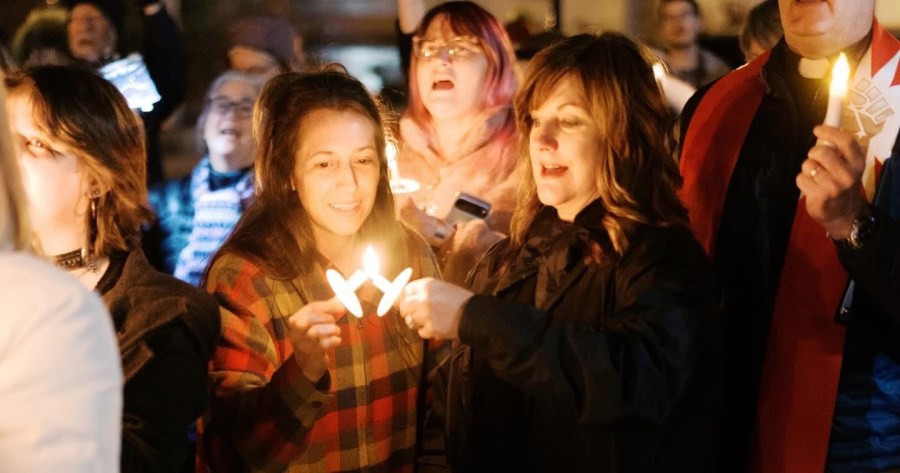
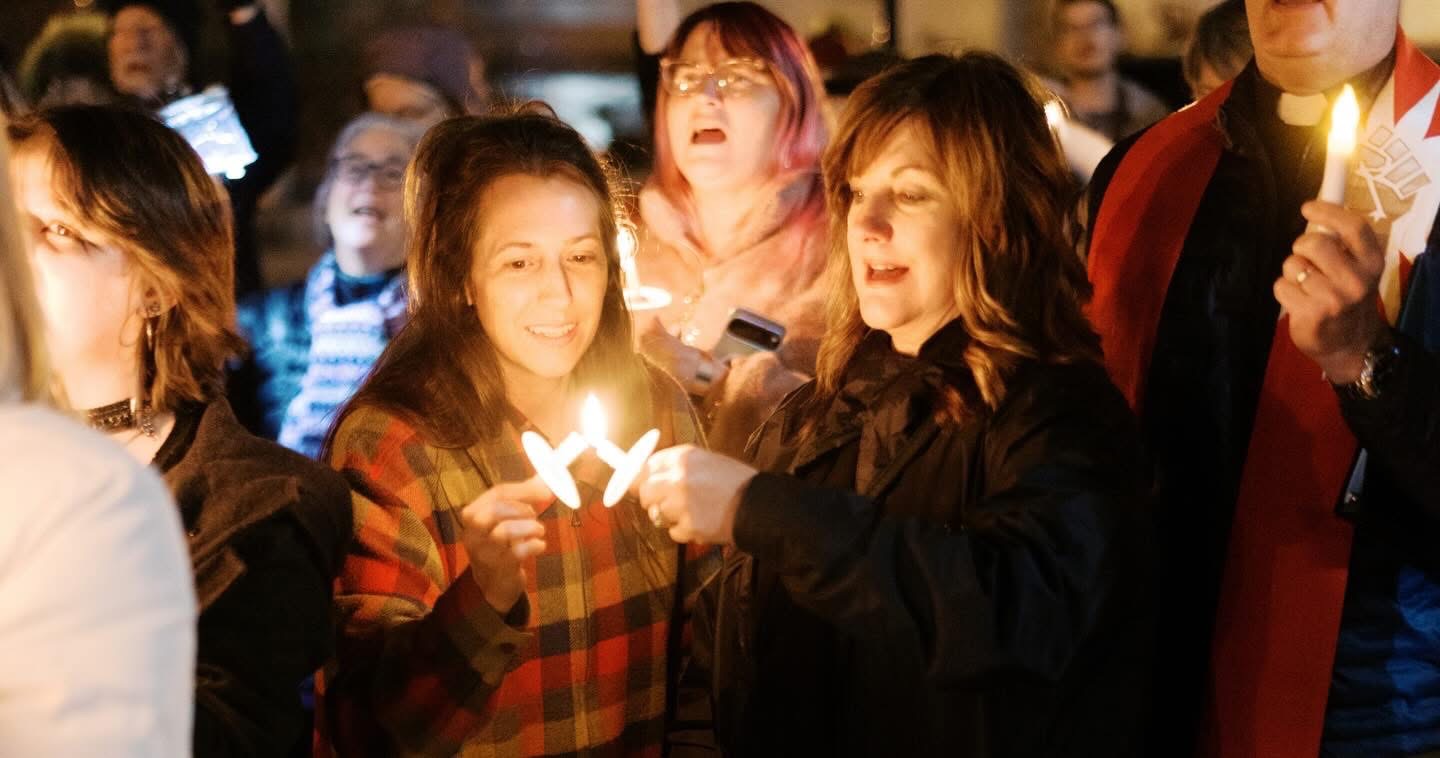
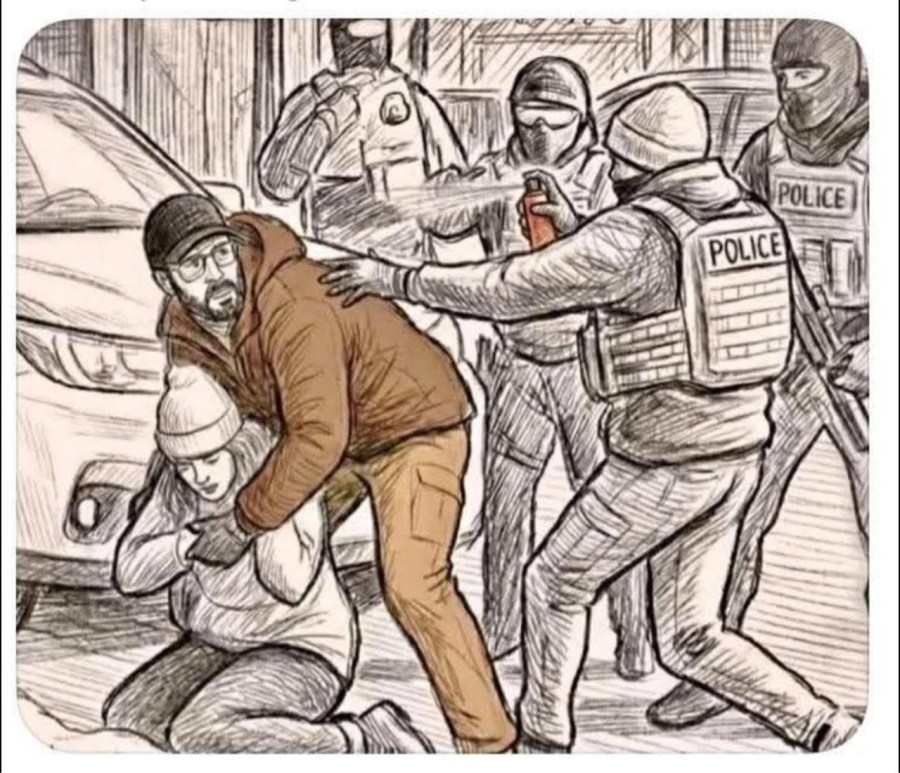
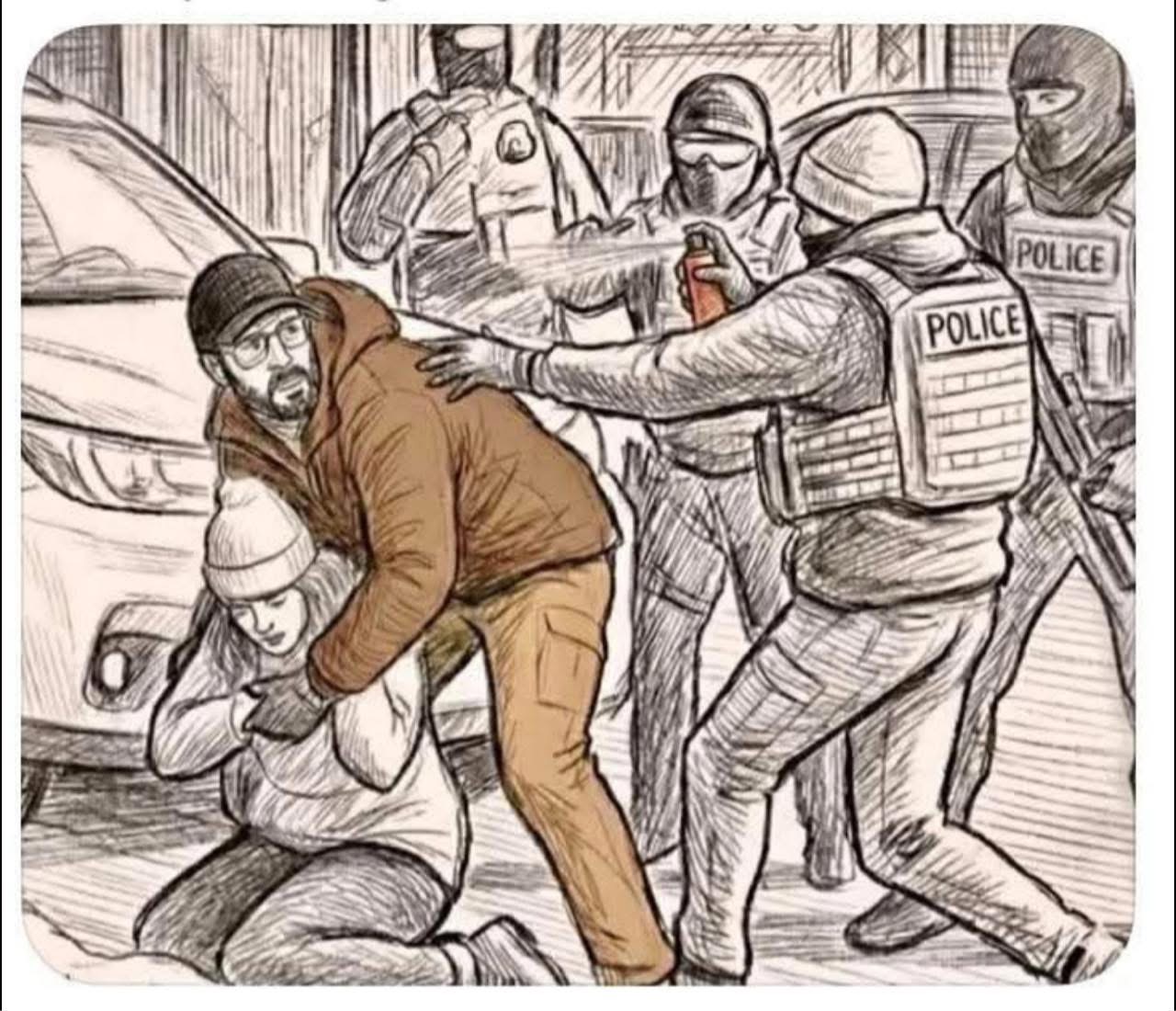
When Jesus talks about light and salt, I can’t help but think about the way people are bearing public witness to the truth today with nothing more than a cell phone in their hands, recording what others hope will go unnoticed, preserving the truth that would have decayed otherwise.
In a world where lies travel fast and violence is quickly denied, these witnesses are letting their light shine, exposing what the darkness wants hidden, preserving the truth before it can be erased. With moral courage they are refusing to let darkness control the story. Every time cell phone cameras come out in Minneapolis, you could almost hear the people singing, “This little light of mine, I’m going to let it shine!”
That simple song that most of us learned as a child might not have been written as a protest anthem, but it was never neutral. It emerged from Black communities of faith where light was already a language of survival. To sing about light in a world shaped by slavery and Jim Crow was already to make a claim: that God’s presence and love could not be extinguished by racism and violence.
During the Civil Rights Movement, that song was carried out of the sanctuary and into the streets. It was sung in marches, in jail cells, in the face of clubs and dogs and fire hoses. Freedom singers didn’t softly hum “This Little Light of Mine.” They shouted it and marched with it in the streets. In the darkness of Bloody Sunday in Selma, Alabama, they turned it into a bold declaration of justice.
And at the same time, those of us who grew up in predominantly white churches, learned how to sing the same song without ever stepping into that darkness. The words and the tune were the same. But the power of the words was diluted. The light was kept safely inside, deep in our hearts, something personal, something polite, something that asked nothing of power.
What we did to that song illustrates how the gospel of Jesus gets whitewashed, prompting the Rev. Dr. Raphael Warnock to recently say: “I have to say, as a pastor, I think Jesus is the biggest victim of identity theft in the country.”
We’ve learned how to keep the language of Jesus while emptying it of its demands. The light Jesus talks about becomes personal comfort and salvation instead of public confrontation and social transformation. And Jesus becomes someone to believe in rather than someone to follow.
Which is exactly what Jesus is addressing in verse 20 where we read: “Unless your righteousness exceeds that of the scribes and Pharisees, you will never enter the kingdom of heaven.”
It’s important to remember that the scribes and Pharisees were not secular villains. They believed in God. They were morally serious and deeply religious. They quoted scripture fluently. They claimed divine authority. They believed they were defending God’s order in the world. And yet, they had learned how to practice religion without practicing love. How to keep the law while neglecting the least of these. How to be righteous without being just.
And Jesus is saying: “That kind of righteousness is just not going to cut it!”
Not that it might prevent us from experiencing heaven when we die, but that it will certainly prevent anything close to God’s reign of love from being experienced here on earth.
Jesus is saying: You can know and even obey all the rules and still miss the reign of God. You can quote scripture and still block the kingdom at the door. You can be loud about God at a prayer breakfast and silent about injustice.
Jesus is saying the righteousness of the kingdom exceeds right religion, because it is all about right relationship, with God and with our neighbors, especially with our neighbors who are suffering: the poor; the foreigner; the crushed and the cast aside.
The righteousness of the kingdom looks like love showing up to heal suffering. It looks like justice showing up to disrupt the darkness. It looks like the refusal to stay safely inside the Pharisee’s religious walls of belief.
It’s the kind of righteousness that is never private but always practiced publicly. It shows up in real places, with real bodies and real risk. It looks like telling the truth in the face of lies. It looks like standing with our brown and black neighbors who are being targeted, even when it costs us comfort or reputation. It is showing up where silence would be complicity.
Salt preserves what would otherwise decay and exposes what the powerful want to hide. And every time we choose courage over comfort, solidarity over safety, truth over security, we are practicing the righteousness Jesus is talking about.
So, when Jesus says, “you are the salt of the earth,” he is saying:
don’t lose your edge; don’t soften the gospel until it no longer confronts injustice.
When he says, “you are the light of the world,” he is saying: don’t hide the truth to stay safe; don’t dim your witness to stay comfortable.
And when he says our righteousness must exceed that of the scribes and Pharisees, he is saying:
The kingdom of heaven is experienced through love that refuses to look away, through justice that costs something and through faith that stands with the vulnerable even when it makes us enemies of the powerful.
Jesus is saying: The world today does not need any more salt that has gone bland. And it does not need a light hidden behind patriotism or religious certainty.
It needs a church brave enough to live a righteousness that exceeds belief, rejects the false religion of nationalism, and dares to trust that God’s reign is still breaking in. The world does not need more certainty. It needs more courage.
And Jesus does not say this to shame us. He says it to name us. “You are the salt of the earth.” “You are the light of the world.” Not someday. Not when it’s safer. Not when the cost is lower. But right now. Which means courage isn’t something we wait for. It’s something God has already placed in us—
The courage to tell the truth when power is lying.
The courage to show up when silence would be easier.
The courage to follow Jesus not just in what we confess, but in how we live.
The darkness is real today. But so is the light.
And the darkness does not get to decide if the light shines.
So, at the end of the service when we sing, “This little light of mine,” we’re not singing a sweet little children’s song like you used to in Vacation Bible School.
We are making a public vow,
a declaration that in the darkest night, the light still shines.
That truth will be told.
That wounds will be healed, even when it stings.
And love will not stay silent.
Amen.
 Just Love