People asked the prophet, “What is the one thing the Lord requires?” He responded: “He has told you, O mortal, what is good; and what does the Lord require of you but to do justice, and to love kindness, and to walk humbly with your God” (Micah 6:8).
Is that all? Really?
People asked Jesus, “What is the one thing, the one commandment that is above all other commandments?” He responded: “‘You shall love the Lord your God with all your heart, and with all your soul, and with all your mind, and with all your strength.’ The second is this, ‘You shall love your neighbor as yourself.’ There is no other commandment greater than these” (Mark 12:30-31).
Seriously? That’s it?
Micah and Jesus say: “Yes!”
Could it be that they understood when we make life more complicated than justice, kindness, humility and love, then terrible things tend happen?
When we make it more complicated than kindness, then we might excuse racist chants of “send her back.”
When we make it more complicated than justice, then we may ignore the harm done to the brown children of asylum-seekers who have been separated from their parents.
When we make it more complicated than humility, then we could overlook and perpetuate racial privilege.
When we make it more complicated than love, then we might defend hate, bigotry and discrimination.
When we make it more complicated that the main things that the prophet and Jesus said that it was all about, then we may be apathetic and silent when the President imitates the Ku Klux Klan by saying: “Love it or leave it.”
So, let’s stop making it so complicated.
Let’s be just. Let’s be kind. Let’s be humble. And let’s love all our neighbors.
It is time to get going. It is time to move. We need to get the hell out of this country now.
It is difficult to leave behind what we have always known, but we need to do it, and we need to do it now. It is time to go. It is time to get the hell out of here.
We need to get the hell that is racism out of this country now.
We need to get the hell that is sexism out of this country now.
We need to get the hell that is selfishness and greed out of this country now.
We need to get the hell that is xenophobia, Islamophobia, and homophobia out of this country now.
We need to get the hell that is hate out of this country now.
We need to get the hell that is demagoguery out of this country now.
We need to get the hell that is White Christian Nationalism out of this country now.
We need to get the hell that is denial, silence and apathy out of this country now.
We need to protest it out, pray it out, preach it out, run it out, vote it out, or impeach it out. We need to love the hell out of this country. We need to love every anti-Christ part of it out. Now is the time for good people to get going, to start moving, to work together, to get the hell out of this country now.
Go back to that time before the Civil Rights Act of 1964. Go back to the time of Jim Crow when discrimination and segregation was the law. Go back to that place where people of color were terrorized with cross-burnings, church-burnings and lynchings.
Go back to where you came from.
Go back to that time before women had the right to healthcare, the right to vote and the right to work outside the home.
Go back to where you came from.
Go back to that time in history when human beings were sold and treated as property. Go back to that place where human beings were chained, shackled and whipped.
Go back to where you came from.
Go back to that time when indigenous Americans were considered to be soul-less creatures who could be hunted, killed and displaced like animals. Go back to that time women like Pocahontas were kidnapped and raped by colonizers without remorse.
Go back to where you came from.
Go back to that time when the state controlled religion in order to control people. Go back to that place where Christianity was used to support slavery, genocide, the castrations of gay people, and the hanging of women suspected to be witches.
Go back to where you came from.
Go back to that time when Christians terrorized anyone who did not fall in line with their understanding of God and the world. Go back to that place where they put free-thinking women like Jan Hus and Joan of Arc on a stake and set them on fire.
Go back to where you came from.
Go back to that time before Jesus said that the greatest commandment was to love our neighbors as ourselves. Go back to that time before the prophet Micah proclaimed that the one thing God requires is to do justice, love kindness and walk humbly with God.
Please, go back to where you came from. Because this is 2019. It is not 1919, 1819, 1619 or any other dark time in human history.
There is no doubt that we have a crisis in this country. It is a spiritual crisis. It is a crisis of the soul. And it is a national emergency.
There is an anti-Christ spirit in our land that refuses to love our neighbors as ourselves. This spirit has poisoned religion in our culture to the point that people of faith are not only indifferent to the suffering of their neighbors, but they actually doing harm to their neighbors.
This spirit has reduced faith in God to something that is merely private and personal. Faith is understood as something that can save one’s own life, rather than saving the lives of others. It is understood as a ticket to leave this world, rather than keys to loving and blessing this world. Whereas Martin Luther King Jr. reminded us that “Life’s most persistent and urgent question is: What are you doing for others?” the church has made life’s most urgent question: “Have you accepted Jesus as your personal Lord and Savior so you can one day go to heaven?”
It is a spirit of selfishness. It is a spirit of greed. It is a spirit of power and privilege.
And although this anti-Christ spirit is obviously demonic, this spirit is not other-worldly. It is a familiar spirit that has haunted our nation since its founding.
The source of this spirit is most revealed today in the politics of Christian White Nationalism that is being fueled by the fear that black and brown people will soon be in the majority. The source of the anti-Christ spirit in our land and our national emergency is racism.
I suppose we think: “If we keep our faith in God personal and private, then we don’t have to obey what Jesus said is the greatest commandment, to love our neighbors as ourselves, and that include those who do not look like us.
The good news is that this evil spirit is no match for the power of love. It never has been and it never will. Love always finds a way.
A bullet in Memphis could not stop it. Jim Crow could not silence it. Civil War could not end it. And a cross in Jerusalem could not crucify it.
I believe the best way to fight an anti-Christ spirit is with the spirit of Love Himself, the spirit of Christ. We can respond to our national emergency and defeat the spirit of the anti-Christ by being the body of Christ, understanding that our faith is not solely a personal matter and should never be private.
The Gospels paint a portrait of a Jesus who is continually tearing down the walls that divide us. From the wall of heaven being ripped apart at his baptism to the temple curtain being being torn in two at his crucifixion, it is evident in the Gospel stories that no wall on heaven or on earth can contain or limit the love of God.
Jesus breaks every barrier erected by religion and culture. He touches lepers and a woman with a hemorrhage, making himself ceremonially unclean. He allows Mary Magdalene to sit at his feet as a disciple, a position (the feet of a Jewish Rabbi) that was previously reserved for male disciples. He welcomes little children to the dismay of his disciples. He learns from a Syrophoenician woman. He asks a woman from Samaria for water. He breaks the chains and liberates a demoniac. He eats and drinks with known sinners. He raises the dead.
I believe this is what is needed to attend to our national emergency today. Understanding that nothing in all of creation separates any of us from the love of God, as the Body of Christ, we must do the public, social and political work of Jesus to proclaim every human being is united by this love. We are all beloved children of God; therefore, we must all learn to live as beloved sisters and brothers.
Unless the Lord builds the house, those who build it labor in vain.
This is definitely true in marriage.
If a couple does not incorporate some of the basic tenets of the Christian faith into their marriage, their attempts to build a happy home will be in vain. Ephesians 5:20 reminds us that mutual submission in marriage should exist: “Be subject to one another out of reverence for Christ.”
If there is not some mutual sacrifice, self-giving and cooperation in a marriage, then there’s a pretty good chance that the minister who officiated that wedding wasted his or her entire weekend. Randy could have gone to that TCU – Arkansas football game! Howard could have played in that golf tournament! And we don’t even want to think about what the parents of the couple could have done with all of that money they spent on the wedding!
Furthermore, as a Christian who seeks to be guided and defined by the love of God fully revealed in Christ, here’s the verse from Ephesians that means to most to me: “Husbands, love your wives, just as Christ loved the church and gave himself up for her” (Ephesians 5:25).
If I do not love Lori with a self-giving, self-expending love that is revealed to us in the outstretched arms of Christ on the cross, then all the effort we put into our marriage is in vain.
Unless the Lord builds the house, those who build it labor in vain.
This also applies to the church.
Like marriage, I believe the church should be built on the foundation of God’s love that was revealed on the cross.
One day, a very wealthy church member approached the new pastor after he preached a sermon on the inclusive love of Christ. He asked: “Pastor, we’re not going to be the kind of church that welcomes and accepts those people, are we?
By “those” people, I am certain he was referring to anyone who does not look like, live like, love like or think like him.
The new pastor answered, “Of course we are going to be that kind of church. For we believe that the love we are to model to others was fully revealed in the outstretched arms of Jesus on the cross reaching out to all people.
The wealthy man replied: “I suggest that you do everything in your power to prevent that from happening, or I am going to take my family and my money to another church!”
This story, which by the way is a true story, a very personal story, begs the question: “Can a church practice exclusivity and continue to be a church that the Lord is building?”
I believe the answer has to be “no.” For the inclusivity that is revealed in those outstretched arms of our Lord on the cross is foundational to who we are as the church.
A church that does not love and welcome all people in the name of the Christ who died for all is not a church at all, but is only the worst kind of club. And every member of that club is wasting their time. They worship in vain.
Unless the Lord builds the house, those who build it labor in vain. Unless the Lord guards the city, the guard keeps watch in vain.
I believe this most certainly applies to our nation.
If the Lord is not building our nation, if our security and foundation is not in the Lord, then those who labor for this nation and those who guard this nation do so in vain.
Where this becomes the most serious, of course, is when we consider our veterans, especially our veterans who have not only guarded this nation, but gave their lives for this nation.
At one point during the Marine Corps Marathon in Washington DC, we ran along the scenic Potomac River and what’s called “the Blue Mile.” This is a mile stretch of the marathon where fallen service members are commemorated in photographs along the roadway decorated with American flags.
As I ran the Blue Mile, I tried my best to read each name and their ages when they made the ultimate sacrifice. I did not see an age over 39.
As Americans, we owe it to them to do all that we can do to ensure their lives were not given up in vain.
We also owe it to every veteran who survived but nevertheless sacrificed much in service to our country, to do all that we can to ensure that they did not serve in vain.
In the 1930’s Henry Emerson Fosdick, the pastor of Riverside Church of New York, once talked about the seriousness of the Lord building and shaping this world.He prophetically proclaimed:
For myself, I shall try to stand for Jesus Christ as the interpreter of… life. In this world with its cynicism, its disillusionment, often its disheartenment, how men and women are needed to stand for him with the intellectual, personal, and social implications of his gospel. And it is going to be serious business standing for him in this generation.
Fosdick then tells a story:
It is said that a man once came to [the great artist James Abbott] Whistler, and asked his help in hanging a new and beautiful picture. The man complained that he could not make the picture fit the room, and Whistler, looking over the matter, said, ‘Man, you’re beginning at the wrong end. You can’t make that painting fit the room. You will have to make the room fit the painting.’
Fosdick says:
So when we carry into this modern world the picture of [the] life that Jesus Christ brought, we cannot make it fit the room. Put it over against our private morals, our disintegrating family life, our economic system… it will not fit the room. We must change the room to fit the picture. [And] that is serious business.
It is important to mention that since Fosdick inferred that we the need to renovate of our nation to fit the portrait of Jesus, Christian “Reconstructionists” have sought to rebuild or reconstruct America to fit their personal interpretation of biblical morality. You need to know that I am not talking about doing that. I am not advocating transforming our democracy into some sort of theocracy. And I am certainly not advocating dismantling the First Amendment.
I am talking about building upon that foundation that was laid in 1776 with these powerful words found in our Declaration of Independence:
We hold these truths to be self-evident, that all men are created equal, that they are endowed by their Creator with certain unalienable Rights, that among these are Life, Liberty and the pursuit of Happiness.
Although I do not believe our nation is or was ever intended to be a Christian nation, I believe these words found in our Declaration of Independence, like the words inscribed in the Statue of Liberty: “Give me your tired, your poor…your huddled masses yearning to breathe free,” are rooted in and influenced by the love of God revealed in that selfless, inclusive portrait of Jesus hanging on the cross with outstretched arms.
And for me as a Christian, it is this foundation that I believe should be preserved and built upon. This is what it means for the Lord to build the house and guard the city to ensure that the veterans who guarded this nation, did not do so in vain. And more importantly, that those who gave their lives for this nation, did not die in vain.
So, more than anything, what I believe our nation needs today is some Jesus!
I believe that means we must work to ensure that every person, regardless of their race, ethnicity, tax bracket, ability, and religion, is valued equally. That means we must stand against racism, sexism, ableism, anti-Semitism, and Christian White Nationalism. We must speak out against Islamophobia, Xenophobia, trans and homophobia, or else those veterans who served this country did so in vain.
I believe we must work to ensure that every vote counts in our democracy. That means we must fight all tactics of voter suppression, voter intimidation and partisan gerrymandering, or else those veterans who served this country did so vain.
I believe we must work to preserve our fragile freedoms: the freedom of speech, freedom of the press, freedom of religion as well as freedom from religion, or else those veterans who served this country did so in vain.
I believe we must defend the rights of every person to live, to work, to love and to have equal protection under the law. We must work for affordable healthcare, access to quality education and to fair living wages. We must do more that send our thoughts and prayers in response to the mass shooting epidemic in this nation, or else those veterans who served this country did so in vain.
I believe we must be relentless in the difficult work of peacemaking, of reconciliation, of loving our neighbors as we love ourselves. That means we must stand against tribalism and the politics of vulgarity, vitriol, and violence. We must agree that words do matter, and we must be willing speak up against words that stoke the fires of fear and fan the flames of hate, speak against any word that seeks to divide us rather than unify us. We must work with other nations to end perpetual war and the profiteering from war, or else those veterans who served this country did so in vain.
I believe we must care for our environment, to do what we can to reduce the number of wildfires on the West Coast and the number of hurricanes on the East Coast and the number of earthquakes in Oklahoma, or else those veterans who served this country did so in vain.
I believe we must continuously work for, march for, fight for, and vote for the liberty and justice of all, especially for the most vulnerable among us, or else those veterans who served this country did so in vain.
This building-of-a-more-perfect-union was stated most beautifully in a poem written during the First World War by Canadian physician, Lieutenant-Colonel John McCrae. He was inspired to write it on May 3, 1915, after presiding over the funeral of friend and fellow soldier Lieutenant Alexis Helmer, who was killed in action.
In Flanders fields the poppies blow
Between the crosses, row on row,
That mark our place, and in the sky,
The larks, still bravely singing,
Fly, Scarce heard amid the guns below.
We are the dead; short days ago
We lived, felt dawn, saw sunset glow,
Loved and were loved, and now we lie
In Flanders fields. Take up our quarrel with the foe!
To you from failing hands we throw
The torch; be yours to hold it high!
If ye break faith with us who die
We shall not sleep, though poppies grow
In Flanders fields.
Let us pray together…
Dear Lord, please keep our veterans in your care and grant them the peace that they sought to safeguard for others. As we continue honor our veterans, we also pray for peace everywhere. O God, teach your children of every race, creed and faith, in every land, the ways of peace, freedom and equality, so that those who have sacrificed so much for peace and freedom will not have sacrificed in vain. It is in the name of Christ Jesus, the prince of peace we pray, Amen.
“For all of us must appear before the judgment seat of Christ, so that each may receive recompense for what has been done in the body, whether good or evil” (2 Corinthians 5:10).
When I was a kid, this is the passage of scripture used by my Sunday School teachers to keep me on the straight and narrow. This verse may the be the reason I tried not to “cuss, drink, chew or go with girls who do.”
And maybe this is what keeps me on the straight and narrow today.
However, the older that I get, and the more I study the scriptures, I have learned that there are more evil things we can do in the body than saying a curse word.
If loving our neighbors as ourselves is the highest good, as Jesus said it was, then refusing to love is the lowest evil.
It was Jewish Holocaust survivor Elie Wiesel who reminded us that the opposite of love is not hate. It is indifference. Evil can be silence. Evil can be refusing take a stand. Evil can be refusing to take a knee. Evil can be looking the other way, tuning something out, refusing to understand. Evil is not giving a damn.
When I get to heaven and appear before the judgment seat of Christ to receive payment for the good or the evil I have done with my body, I hope to be able to say:
“Do you remember your command for us to love one another?”
“Do you remember the stories you told about accepting those who have been marginalized by religion and culture?”
“Do you remember your sermon about blessing the poor, the meek, the mourners, the peacemakers, and the oppressed who hunger and thirst for justice?”
“With my heart, soul, mind and body, I gave a damn.”
The pastor stands up in the pulpit, clears his throat, and announces: “This morning we are going to talk about racism and reconciliation.”
And all over the sanctuary the congregation winces. Under their breaths, they beg: “Preacher, please don’t do it! You are getting ready to open up a can of worms!”
But the middle-aged preacher, who has opened up more cans of worms than anyone could possibly count, ignores the grimaces and metaphorically gets out the can opener.
Ever since I have been a pastor, church folks have urged me to avoid talking about race.
They say: “If you talk about it, you are just going to stir things up, make things worse. If we would all just leave it alone, it will go away.
And if you think about, those who call attention to the color of their skin are the real racists. They need to stop saying their lives matter and understand that all lives matter. Reconciliation Sunday? Really? Come on, preacher, we just need to let it go!”
And, for the most part, when it comes to talking about race, we white preachers have been very silent.
But guess what? It ain’t working.
The recent Alt-Right White Nationalists’ march in Charlottesville was a stark reminder that racism in this country is not going away that easily.
Yet, many would still rather shut their eyes and close their ears, pretending that racism no longer exists.
A couple of years ago, someone blocked me on Facebook. When I asked a mutual friend why I was blocked. She responded that he didn’t like seeing my Ainsley’s Angels posts of children with special needs. He said that the pictures of the children made him uncomfortable.
“Out of sight out of mind,” as we like to say.
Maybe this is why Jesus talked more about sight than he talked about sin.
Throughout the gospels, Jesus asks: “Do you have eyes and fail to see?” (Mark 8:18)
In our gospel lesson this morning, Jesus quotes the prophet Isaiah:
You will indeed listen, but never understand, and you will indeed look, but never perceive. For this people’s heart has grown dull, and their ears are hard of hearing, and they have shut their eyes; so that they might not look with their eyes and listen with their ears.
In Isaiah chapter 6, we read that closed minds, closed eyes, and closed ears (ignoring injustice, looking the other way, tuning it out), will lead to “cities lying in waste without inhabitant, and houses without people, and the land utterly desolate.”
Refusing to listen to and understand the cries of injustice— possessing hearts that are dull and indifferent— leads to complete desolation. It leads to tiki torches in Charlottesville, a shooter in Charleston, voter suppression in North Carolina, an assassination in Memphis, Jim Crow in the South, a holocaust in Germany, and a mass lynching of 237 African Americans in Arkansas.
Isaiah continues:
Even if a tenth part remains in it, it will be burned again,
like…an oak whose stump remains standing when it is felled.’
But listen to the good news. This passage in Isaiah concludes:
The holy seed is its stump.
There’s a holy seed ready to sprout forth. In a land of deep darkness, a light shines forth. In the demise and the decay, there is the promise of new life. Like a candle flickering in the dark, hope is burning. Like a stream trickling in the desert, reconciliation is possible.
And Jesus suggests that the key to reconciliation, healing and redemption is open minds and open hearts.
The mission of Ainsley’s Angels is the very thing that Jesus is talking about here. The primary mission is “raising awareness.” Awareness, says Jesus, is having God-blessed eyes and God-blessed ears. Because whether you are talking about ableism or racism or any other ism, awareness is what is needed before reconciliation can happen.
And with this blessed awareness, what is it specifically that Jesus wants us to see? What do we see for Jesus to respond: “Blessed are your eyes for they see!” “Prophets and righteous people longed to see what you see but did not see it!”
I believe the answer is in Jesus’ first recorded sermon. In Matthew 5 we read where Jesus went up on a mountain and taught them saying:
Blessed are the poor in spirit, for theirs is the kingdom of heaven. Blessed are the meek for they shall inherit the earth.
God-blessed eyes see that the “poor in spirit” and the “meek” are blessed by God; Not the one who has never had a reason to doubt that God was indeed for them, not against them; with them, not away from them. But God-blessed eyes see that God is on the side of the ones who have been degraded and dehumanized by the systems and structures of the priveledged. Their spirits have been crushed by inequitable education, poor healthcare, discrimination in the workplace and racial profiling in the streets. But their future, says Jesus, is the kingdom of heaven.
Blessed are those who mourn, for they will be comforted.
God-blessed eyes see that God empathizes with the mourners. Not those the Apostle Paul is talking about when he says we should “give thanks in all circumstances” (I Thessalonians 5:18), or “rejoice even in the midst of suffering” (Romans 5:3-10), but the ones who have a difficult time finding anything for which to be thankful. For them, there is no rejoicing. They are not just complaining about the pain in their life. They actually in mourning over that pain. They look at how their parents and grandparents were valued by the world. They see how their lives are valued. And they look into the eyes of their children and grandchildren, and they grieve for them. But because Jesus knows that love will win, and evil will be overcome, Jesus calls them blessed and promises comfort.
Blessed are those who hunger and thirst for righteousness for they will be filled.
Not the ones who are righteous, but the ones on whose behalf the prophet Amos preached: “Let justice roll down like waters, and righteousness like an ever-flowing stream” (Amos 5:24). This is everyone who have been marginalized by society, even by communities of faith. They have suffered grave injustices just for being different.
They have been bullied so badly by the world that they hunger and thirst for justice and righteousness like a wanderer lost in a hot desert thirsts for water. Jesus says that they are blessed, and they are the ones who will not only be satisfied, but will be filled, their cups overflowing.
Blessed are the pure in heart, for they will see God.
Not the pure, but the “pure in heart.” Not those who look like you do on the outside. Not those who share your skin tone. No, God blesses those who dream with Rev. Dr. King for a world where they will be judged not by the color of their skin but by the content of their character. God-blessed eyes have the grace to see others as the Lord sees them, “for the Lord does not see as mortals see; they look on the outward appearance, but the Lord looks on the heart” (1 Samuel 16:7). God sees them for who they truly are, beloved children of God, created in the image of God, and they will see God.
Blessed are the peacemakers, for they will be called children of God.
Not the ones who have necessarily found peace for themselves. But God blesses the tormented: the discriminated and the victimized, who, because their lives are so continuously in chaos, seek to make peace whenever and wherever they can. Blessed are those who live with no peace, but seek it, because they will find a home and a peace that is beyond all understanding, within the family of God.[i]
Blessed are the merciful, for they will receive mercy.
Not the proud, the boastful and the arrogant. Not the ones who never admit any mistake, those who say they are “the least racist person” or that they “don’t have a racist bone in their body.” But God blesses the ones who are fully aware of their prejudices, the ones who have made mistakes, terrible mistakes, and they know it. Thus, when they encounter others who are also suffering from this fragmented world, they have mercy and compassion. In their hearts there is always room for others. They give mercy, because they need mercy for themselves. And Jesus says, they will receive it.
Do you see what Jesus wants us to see? Are your eyes God-blessed?
What’s the one thing we mortals need in order to see?
We need light.
The good news is that the Lord announces: “I have come as light, as the Light of the World!”
And not only that, Jesus says: “You who seek to be my disciples, you who have answered the call to be my hands and feet in this world, are not only holy seeds in a burned-out stump. You are also the Lights of the World. And you are called not to hide your light, but to shine your light so all may see this world as God sees it.
We are to shine our lights by Stanley with, lifting up, and caring for all people, especially those who are left behind. We are to light it up by defending and caring for those whose spirits have been broken, those who mourn and need mercy, the marginalized who hunger and thirst for justice, the discriminated who seek equity, and the troubled who yearn for peace.
So, as lights of this world, for the sake of this world, may First Christian Church of Fort Smith light this our city up:
So crushed spirts can have new life.
Light it up,
So the despairing can have hope.
Light it up,
So that those who ache for fairness will be satisfied.
Light it up,
So that victims of all kinds of discrimination will see God.
Light it up,
So that those who yearn for peace will receive justice and know peace.
Light it up,
Until the day comes when the eyes and ears of all are finally and fully blessed and the entire human race be reconciled as one.
[i] Inspired by Frederick Buechner. Whistling in the Dark: An ABC Theologized (New York: Harper Collins, 1988), 18.
I first expressed the following bullet-points following the actions of domestic terrorist and white supremacist Dylan Roof in Charleston, South Carolina. Many were calling the murders of the African Americans who had gathered for a Bible Study at the Mother Emanuel Church “a wake-up call.” I have heard the same expression used this weekend following the white supremacists who gathered to spew their hate in Charlottesville. What happened? Did we fall back asleep? It is way past time for America, especially the church in America, to stop hitting the snooze button, stop closing our eyes to ignore the racism and bigotry has been emboldened in our country today. It is way past time to wake up, rise up, stand up, and speak out, as intolerance cannot be tolerated.
We must wake up to the reality that racism is not only a wound from our country’s past, but it is a deadly virus that still plagues us today. White preachers, including myself, have been too often afraid to even use the word “racism” from our pulpits for fear of “stirring things up,” as if we might reignite some fire that was put out in the 1960’s, or at least by 2008 when we elected our first black president. We must wake up and boldly call this evil by name and condemn the racism that is ablaze today, in all of its current manifestations: personal racism; systemic racism; political; and the subtle racism that is prevalent in our homes, in the workplace, in the marketplace, in government, and even in the church, for Jesus could not have been more clear when he said: “Love your neighbor as yourself.”
We must wake up to the reality that hatred in this country is being defended by people who are calling it “religious freedom.” In America, we believe all people are created equally; therefore, “religious freedom” never means the freedom to discriminate. Slave-owners used the same religious-freedom arguments in the nineteenth century to support slavery. Today, we do not tolerate people who want to own slaves, nor should we tolerate anyone who wants to discriminate on the basis of race, gender, religion, or sexual orientation.
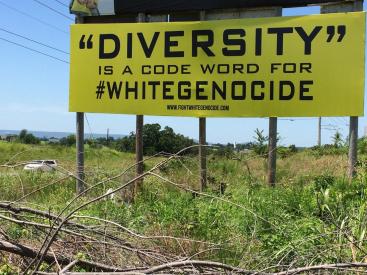
We must wake up to the reality that many who cry out that they want to “Make America Great Again” loath what makes our country great today, that is, our cultural, ethnic, religious and racial diversity. We need to boldly speak out that it is this diversity that makes us look most like the image of God in which we were created. This diversity also looks like the portrait of heaven we find in the book of Revelation: “After this I looked, and there was a great multitude that no one could count, from every nation, from all tribes and peoples and languages, standing before the throne and before the Lamb” (7:9). We must wake up to voice our opposition to the purveyors of fear, some who are even calling people bear more arms “to take our country back.” Furthermore, we must wake up to stop folks mid-sentence when they start reminiscing about going back to the good old days of the 1950’s when “we had prayer in school,” as they are completely disregarding the fact that during this time African-Americans in our country were not only treated as second-class citizens, but were being lynched in trees.
We must wake up to the reality that the most segregated hours in our country occur on Sunday mornings. We must find ways to build bridges and tear down the walls that we have created that prevent us from worshipping and doing ministry together. To stand against racism, hatred and violence and to stand for social justice and equality for all, we must do it side by side, hand in hand, as one body, one Church, serving one Lord.
There is but one body and one Spirit—just as you were called into one hope when you were called.
Unity. It is the theme of World Communion Sunday. But when we talk about “unity” in the church, what are we really talking about? Are we talking about everyone believing the same thing, thinking the same way, being on the same page when it comes to matters of faith and practice? Are we talking about sharing the same set of values and moral principles? Are we talking about one particular style of worship? What does “unity” in the church really mean?
I believe the ancient story of the Tower of Babel can help us with this.
In the eleventh chapter of Genesis we read:
“Now the whole earth had one language and the same words. And as they migrated from the east, they came upon a plain in the land of Shinar and settled there. Then they said, ‘Come, let us build ourselves a city, and a tower with its top in the heavens, and let us make a name for ourselves; otherwise we shall be scattered abroad upon the face of the whole earth.”
The whole earth was one. One language. One people. One tribe. One race. And they all came together to live in one place. They all came together to build something special, something great, something wonderful that would be a symbol of their unity.
Unity, oneness, togetherness, harmony, people of the same minds living in one accord. Isn’t this the will of our God, God’s great purpose for humanity?
So what’s not to like in this seemingly perfect picture of unity in Genesis chapter 11? As it turns out, according to God, the creator of all that is, not very much.
Let’s look at God’s reaction to this oneness in verse 7 of our story: “Come, let us go down, and confuse their language there, so that they will not understand one another’s speech.” So the Lord scattered them abroad from there over the face of all the earth…”
What? Are you serious? What is wrong with this great portrait of human unity, of one race of people, one nation, one language, all of one mind, coming together, to build something great, to celebrate the pride of one master race?
The truth is that the builders of the great tower in Shinar had accomplished not what God wants for humanity, but what many throughout history, including the likes of Adolf Hitler and the Ku Klux Klan, have wanted for humanity: One master race of people coming together to form one supreme social order, one culture, sharing the same ideals, values and moral principles.
For so many, diversity is a threat. Diversity is something to fear. Diversity is something to segregate and discriminate. Diversity is something to scapegoat. Diversity is something to send to the gas chambers, lynch in the trees or shoot in the streets.
I am not sure if anyone in my lifetime has articulated the thinking of the people of Shinar better than Atlanta Braves pitcher John Rocker back in 1999. Some of you may remember his response when he was asked by Sports Illustrated if he would ever play for the New York Mets or New York Yankees.
Rocker said:
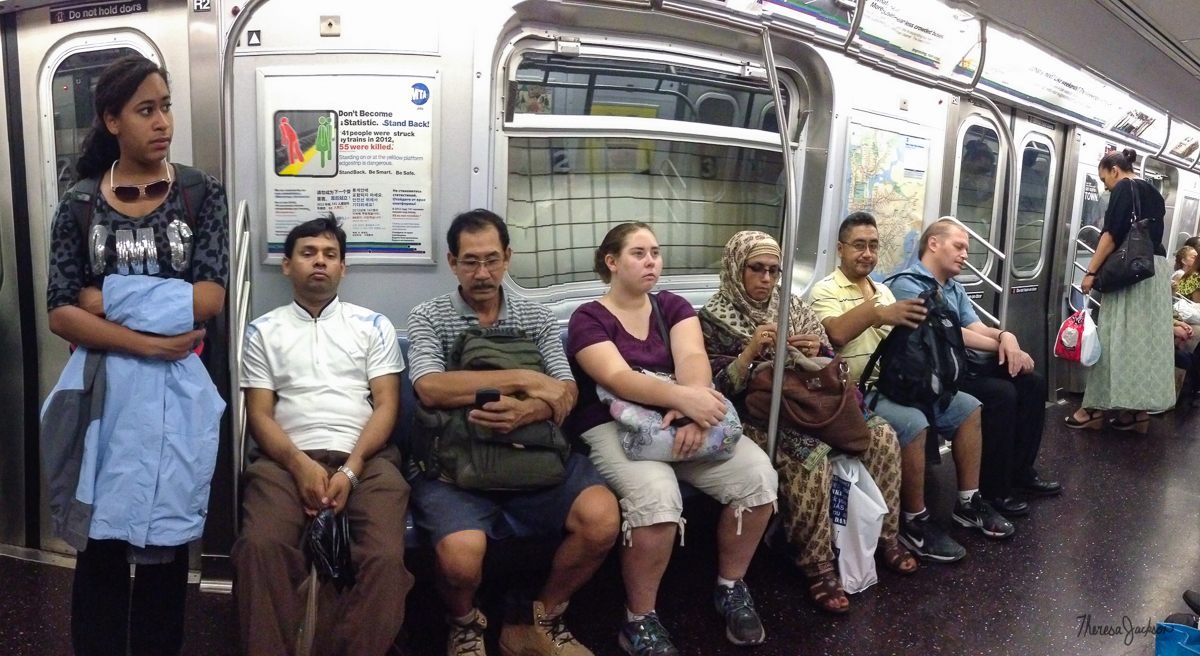
“I’d retire first. It’s the most hectic, nerve-racking city. Imagine having to take the number 7 Train to the ballpark looking like you’re riding through Beirut next to some kid with purple hair, next to some queer with AIDS, right next to some dude who just got out of jail for the fourth time, right next to some 20-year-old mom with four kids. It’s depressing… The biggest thing I don’t like about New York are the foreigners. You can walk an entire block in Times Square and not hear anybody speaking English. Asians and Koreans and Vietnamese and Indians and Russians and Spanish people and everything up there.”[i]
The story of the Tower of Babel teaches us that what John Rocker said “racked his nerves” in the world is exactly what God wills for the world. In verse 4 we read that the purpose of building the tower was to avoid what depressed John Rocker on the No. 7 train leaving Manhattan for Queens, and to avoid what John Rocker heard in Times Square.
The purpose of settling in Shinar and building that tower was to live in a world with no foreigners, no confusing babbling in the streets, no queers or kids with purple hair to encounter on the way to work, no eating in the marketplace with people on strange diets, no rubbing elbows with people wearing weird clothes, head coverings or dots on their foreheads.
No sitting in the same pews at church with people dress differently than we do on Sunday morning and definitely no people who think differently, believe differently, or worship differently.
The people in Shinar said: “We will be truly unified! We will look alike, think alike and believe alike. We will sing worship alike, sing alike and pray alike.”
So they came together and said, let’s build a tower of unity “to not be scattered over the face of the whole earth.”
And God’s reaction to this kind of unity? Let’s “scatter them over the face of the whole earth,” to create a world of diverse languages and cultures, to create a world of foreigners.”
God was only accomplishing what God had always willed for the creation: diversity. In chapter one of Genesis, we read that the original plan for creation was for humankind to “multiply and fill the earth.” And after the flood in chapter ten we read where God sanctions and wills all nations to be “spread out over the earth.” (Gen 10:32). Simply put, from the very beginning of time, in spite of our will, in spite of our fear and our racial or cultural pride, God wills diversity.
Therefore, if we ever act or speak in any manner that denigrates or dehumanizes another because of their race, gender, language, beliefs, dress, nationality or ethnicity, we are actually disparaging the God who willed such diversity. According to Genesis, diversity is not to be feared, avoided, prevented, lynched or shot. If we want to do the will of God our creator and redeemer, diversity is to be welcomed and embraced. In other words, if we love God, we will also love our neighbor.
And this is what should unite us as Christians!
It is the love of God for all of us, a love that God wants us to share with others that unites us.
I believe it’s why Jesus called it the greatest commandment. Loving God and neighbor is what should unite us; not race, not correct doctrine, not a set of beliefs, not one style of worship, but love. It was Disciples of Christ forefather Thomas Campbell who said: “Love each other as brothers [and sisters] and be united as children of one family.”
And the Apostle Paul wrote: “I therefore beg you to lead a life worthy of the calling to which you have been called, with all humility and gentleness, with patience, bearing with one another in love.”
The story of God’s displeasure with the Tower of Babel is God’s gracious stamp of approval, of blessing, on every race, every tribe, and every language in every land. It is the fulfillment of God’s original purpose for creation. The song we learned as little children cannot be more true: “Red, yellow, black and white, they are all precious in God’s sight.”
God is not color-blind, as I hear some say, for God creates, wills, blesses, and loves color. And it is this love that unites us all, as we have all been created to harmoniously see humanity as God sees it: as a beautiful, diverse, colorful rainbow created by, sanctioned by, and graced by God.
As Bible-believing Christians, our nerves should never be racked on Sunday mornings, [as my mama used to say, we should never get in a tizzy!) if we look around the congregation and see some diversity—see some folks who not only dress differently and look differently, but see folks we know believe differently, live differently, worship differently, interpret the Bible differently, and yet they still choose to partner with us through this church, united by a commitment to share the love and grace of Christ we have all received with the world.
And it should rack our nerves all to pieces on Sunday mornings, if we look around the congregation and only see a bunch of folks who look just like us.
And if we are not immensely bothered by a lack of diversity in this sanctuary, if we are not partners in ministry with those who differ from us, if we would rather remain homogenous by remaining divided, I believe we need to remember not only this story in the first book of our Bible that describes a beautiful and diverse creation willed by God, but I also believe we need to think about a about a passage in the last book of our Bible that describes a diverse eternity willed by God.
And we must as ourselves the question: If diversity bothers us now, what are we going to do when we get to that place we think we’re are going after we die to live forever and ever.
Because guess what? According to Revelation, heaven looks more like Times Square and that No. 7 train on the way from Manhattan to Queens than some affluent suburb outside of Atlanta, Georgia.
In Revelation 7, we read these words:
After this I looked, and there was a great multitude that no one could count, from every nation, from all tribes and peoples and languages, standing before the throne and before the Lamb, robed in white, with palm branches in their hands. They cried out in a loud voice, saying,
‘Salvation belongs to our God who is seated on the throne, and to the Lamb!’
And all the angels stood around the throne and around the elders and the four living creatures [each representing the diversity of all creation], and they fell on their faces before the throne and worshipped God, singing, ‘Amen! Blessing and glory and wisdom and thanksgiving and honor and power and might be to our God for ever and ever! Amen.
Let us pray: Thank you O God for the diversity that is in this place we call Central Christian Church. Help us to accept it, embrace it, love it, as we partner together to be the church you are calling us to be in this city and in our world.
Originally Published in the Farmville Enterprise, August 2014.
Some of you may remember the infamous response of a Atlanta Braves pitcher when he was asked in 1999 by Sports Illustrated if he would ever play for the New York Mets or New York Yankees. He said:
I’d retire first. It’s the most hectic, nerve-racking city. Imagine having to take the No. 7 train to the ballpark looking like you’re riding through Beirut next to some kid with purple hair, next to some queer with AIDS, right next to some dude who just got out of jail for the fourth time, right next to some 20-year-old mom with four kids. It’s depressing… The biggest thing I don’t like about New Yorkare the foreigners. You can walk an entire block in Times Square and not hear anybody speaking English. Asians and Koreans and Vietnamese and Indians and Russians and Spanish people and everything up there.
The story of the Tower of Babel in Genesis 11 teaches us that what the baseball pitcher said “racked his nerves” in the world, is what God, in fact, wills for the world.
In verse 4 we read that the purpose of building the tower was to avoid what depresses some on the No. 7 train leaving Manhattan for Queens, and to avoid what can be heard in Times Square. The purpose of settling in Shinar and building that tower was to live in a world with no foreigners, no confusing babbling in the streets, no queers or kids with purple hair to encounter on the way to work, no eating in the marketplace with people on strange diets, no rubbing elbows with people wearing weird clothes, head coverings or dots on their foreheads. So they came together and said, let’s build a tower of unity “to not be scattered over the face of the whole earth.”
And God responded to their fear by “scattering them over the face of the whole earth,” by creating a world of diverse languages and cultures, by creating a world of foreigners.
God was only accomplishing what God had always willed for the creation: diversity. In chapter one of Genesis, we read that the original plan for creation was for humankind to “multiply and fill the earth.” And after the flood in chapter ten we read where God sanctions and wills all nations to be “spread out over the earth” (Gen 10:32).
Simply put, from the very beginning of time, in spite of our will, in spite of our fear, God wills diversity.
Therefore, if we ever act or speak in any manner that denigrates or dehumanizes another because of their race, language, nationality or ethnicity, we are actually disparaging the God who willed such diversity. According to Genesis, diversity is not to be feared or avoided. If we want to do the will of God our creator, diversity is to be embraced.
In other words, if we love God, we will also love our neighbor.


 It is time to get going. It is time to move. We need to get the hell out of this country now.




 Just Love