Are We More than Theologians?

hungryMark 7:24-30 NRSV

Our scripture lesson this morning has been called one of the most disturbing passages in the gospels. And it is disturbing on many levels.

On one level, it is disturbing, because Mark tells us that Jesus goes on a trip to a Gentile region and enters a house hoping no one would know he was there. This is so unlike our portrait of Jesus as a fisher of people, as a good shepherd who seeks and finds.

The story becomes even more disturbing, when he encounters this Gentile woman of Syrophoenician origin. Mark tells it as if Jesus is bothered by this woman. “Yet, he could not escape notice.” Have you ever had to run to the grocery store early in the morning? Unshaven. No makeup. Wearing a pair of sweats. You go hoping you would not run into anyone you know. But it never fails. You always do. Mark tells this as if Jesus has that same type of disappointment. “Yet, he could not escape notice.”

Then we begin to wonder the real reason he was disappointed. Was it because someone recognized him or was it because a “Gentile woman of Syrophoenician origin” recognized him? Why would Mark point out this woman’s ethnicity?

The story gets worse.

The woman begins to beg Jesus to cast a demon out of her daughter. This is when the seemingly disappointed Jesus gives the woman a callous, seemingly racist answer. “Let the children be fed first, for it is not fair to take the children’s food and throw it to the dogs.”

Jesus, using a common expression of his day, says: “Let the needs of the Jews be met first, for it is not fair to take the gifts of God which are intended for Jews and give it to the Gentiles” [he calls “dogs”].

Of course, many have speculated why Jesus gave such an insulting response. Some have said that it was because he was simply tired and needed little break. Jesus was trying to get away, get some rest and have some privacy. And this woman simply ruined his vacation.

Some say that since Jesus was a good Jew, he still had problems sharing the good news to the Gentiles. Jesus had problems and prejudices, like we sometimes have problems and prejudices, sharing the good news with folks who are different.

Others have tried to soften the words of Jesus. They say that when Jesus called the Gentiles “dogs,” he was merely referring to beloved household pets. He wasn’t being harsh at all. He was referring to lovable animals that people cherish and treat as part of the family.

Some have even suggested that Jesus did not really mean what he said. He was only saying it to test the woman’s faith.

Then, just when you think it cannot get any worse, the story becomes even more disturbing, as we hear from the woman. The woman schools Jesus:

Sir, even the dogs under the table eat the children’s crumbs. [In other words: At my house, the dogs eat at the same time the children eat. So why should have to wait until the needs of the Jews are met before my needs are met? There’s enough room and enough food at God’s table for all of us at the same time.]

Jesus recognizes her wonderful answer and says: “For saying that, your daughter has been healed.”

This is disturbing because this is the exact opposite of what we usually expect from Jesus. It is Jesus who is supposed to answer with a wonderful good news revealing the truth of God’s grace and love for all people, Jews and Gentiles. But here, it is the woman, the Gentile, the outsider, who gives the correct response, who gives the good news, and even appears to correct Jesus with the good news.

Well, I have told you how others have interpreted this disturbing text. Now, let me tell you what this text means to me.

I believe it is very important to interpret this text within its context. Before coming to Tyre, Jesus was back in Galilee arguing theological matters with the Scribes and Pharisees, the religious leaders of his day, regarding who was clean and who was unclean. The religious leaders said that all non-Jews, like the Syrophoenician woman, who did not strictly adhere to their traditions were “unclean” in the sight of God. In the previous passages, calling the religious leaders “hypocrites,” Jesus says “no” to this type of thinking with a very deep, insightful theological discourse.

Then he goes to Tyre, and he is confronted by a non-Jew who has a daughter with an “unclean spirit.” It is now time for Jesus to practice what he has been preaching. However, Jesus is still thinking theologically. It may be because that was the purpose of his solitary stay at that house. He was perhaps there to do some theological reflection regarding the nature of his ministry and mission. So when he is surprised by this woman, taking a little off guard, still in a theological frame of mind, he responds with the theological statement that children should be fed before dogs.

The truth is that God did choose to reveal God’s self, first, through Israel. God emptied God’s self and became human as a Jew. However, God did not come for the Jews only, and Jesus never says that. He only says that “children are fed first.” His statement does not rule out a mission to the Gentiles. He was making a truthful theological statement.

And notice that the woman does not dispute Jesus’ statement. She does not say that Jesus is wrong. She does not deny who she is apart from God. What I believe she is saying is this: “Jesus, that may be good theology. That may win you some arguments in the seminary back in Galilee, but you know something? It does absolutely nothing to help my sick daughter. My daughter still has an unclean spirit.” Jesus is then challenged to put all of the theology he has been teaching into practice.

Therefore, the question I believe this text asks us is: “Are we more than theologians?” Because, like Jesus, we are confronted by people every day who need more than our good theology.

I believe there are many who look at us theological church people and say:

You know, I am glad you go to church. I am glad you believe in the life, death, resurrection and ascension of Jesus, but you know something? That does nothing to help my daughter. I am glad you worship every Sunday. I am glad that you tithe faithfully and celebrate weekly communion, but you know something? That does nothing to help my son.

How do we respond to one who is hungry? Are we merely theologians? Do we simply say that we believe God blesses those who hunger? Or do we put our theology into action and feed that person?

How do we respond to one who is lonely? Are we merely theological? Do we tell them that God is with them, and if they pray they will sense God’s presence and not be lonely? Or do we offer ourselves, our presence, and our friendship? Do we offer the image, the presence of God in us, to that person?

How do we respond to one who does not profess Christ as Lord? Do we tell them how he came and died on the cross for their sins? Or do we show them by our own actions of sacrificial love?

How do we respond to people who are: sick or depressed; marginalized or imprisoned; poor or homeless; afraid or dying; grieving or suffering? Are we more than theologians?

And how do we respond to people who are different? How do we respond to those who have been taught by society, and even by the church “on God’s authority,” that their lifestyle is outside of God’s grace and love? How do we respond to those we sometimes refer to silently, if not out loud, as “dogs?”

If anything should disturb us about this passage, it is this! Because I think we know the answer.

Fourteen years ago this month, shortly after September 11th, a husband and wife and their beautiful daughter visited a church in North Carolina. They were new in the community and had heard about the reputation this church had for being a warm, friendly, loving community, so they decided to visit.

After the service, the pastor was at the front door shaking the hands of these visitors letting them know how glad he was that they had come to worship with them this morning. A deacon, one of the most revered, theologians in the church, passed by. He had been a Sunday School teacher for 30 years. The pastor got the deacon’s attention and introduced him to the visiting family. The father extended his hand to shake the hand of the deacon. The deacon, however, looked irately at the pastor and then walked out the front door, leaving the visitor’s hand extended in the air.

For you see, this visitor’s hand had a Middle Eastern tone. He was Arabic. And his wife’s hands were black. And the little girl’s hands were a mixture of both.

I don’t know what the family said to one another when they got back to their car. I do know that it was the last time they visited that church. But they might have said something like:

You know, I am glad that you say that you love the Lord. I am glad that you people are faithful to this church. I am glad you believe the things you say you believe. But you know something? That does nothing to help my daughter. And no, we are not like you at all. We are not the traditional Norman Rockwellian family, and you may think we are dogs. But, you know something, at my house, even the dogs eat at the same time the children eat. At my house, there is enough room at the table and enough food for all.

A New Day Dawning in Farmville

McNairIn the late 1930’s Harry Albritton began dreaming of a new day for Farmville. It began one day when he and his best friend decided to go to the movies together at the Paramount Theater. When they arrived, Harry became confused, agitated and disappointed as he was told that his friend could not sit with him. For you see, his friend, nicknamed “Ting,” was black. Harry was told that he was welcomed to come in and sit downstairs, but his friend had to use another entrance and sit in the balcony. Harry, not wanting to be separated from his friend, remembers responding: “If Ting is going to sit in the balcony, I am going to sit in the balcony too.” He said, “I was the only white boy in the balcony that day, but I was not going to let skin color separate me from my friend.”

It is almost eighty years later, and a lot has changed in Farmville. However, a lot has remained the same. In many ways, we are still separated. The new day of Harry’s dream as a little boy has yet to arrive.

Yet, there appears to be a light glimmering on the horizon. It’s a distant, faint light, but it’s a light nonetheless. Last Thursday, the Apostle Dr. Aaron McNair from the Mount Moriah Church spoke from the pulpit of the First Christian Church. He boldly admonished us to come together erasing the lines that separate us to be one Church to do the work of Christ together, side-by-side, hand-in-hand: feeding the hungry, lifting up the poor, giving hope to the despairing, speaking truth to power, and exorcising all kinds of demonic evil: structural, systemic, personal and even ecclesial.

McNair said: “Think of what a better town this would be. Think of what a better nation this would be, if we would just come together.”

After he spoke to the congregation that was gathered, he and I embraced there on the chancel. As we hugged, he whispered, “I believe this is the start of something big.”

I whispered back, “I believe it is.”

The light on the horizon is faint, because there is much work to do. If the new day of Harry’s dream, and of so many others since, is to arrive, much will need to change. However, the good news is that wherever there is just a flicker of light, there is hope. And last Thursday, I saw more than a flicker.

Freaking out in front of the Pastor

embarrassed young brunette covering her mouth with both handsI am working on a mission project with a group of men. We are building a handicap ramp for someone who is disabled. One of the men accidently hits his thumb with a hammer. And he says it: “S#IT!”

I look up and smile. Then it begins: “I am so, so sorry preacher! I can’t believe I said that in front of you! May the Lord forgive me!”

I am at dinner with a group of friends. Someone shares a shocking story. Someone else at the table says it: “D&MN!”

Then they turn to me, their face red with remorse and embarrassment, their hands covering their mouths, and they freak out: “Oops, I did not mean to say that word, especially in front of the pastor! Please accept my apology!”

I am standing in a long line at the grocery store with a friend. The person checking out is having trouble with their EBT card. My friend whispers: “That’s the problem with this country. Too many N*%%ERS on food stamps.”

I look at them startled. Then…well, then there’s nothing. Just silence. Like nothing at all happened out of the ordinary. No flushed cheeks. No apology.

During my entire ministry I have been told not to talk about racism. People tell me: “It just stirs things up.” “It creates division.”  And for the most part, like most white preachers in the South who like to avoid controversy, I have acquiesced.

Perhaps that is the reason that people become horrified with regret and overcome with embarrassment when they utter a harmless four-letter word in front of me, but act completely normal when they say a word that has been created for the sole purpose of harming others. Speaking out against racism is not going to suddenly change things; however, I am convinced that ignoring it, pretending that it does not exist, and keeping silent will change nothing.

Like removing a flag or a monument and changing a mascot, changing our vocabulary is not going to magically end hate in our world. Changing what is acceptable and what is unacceptable to say in front of your pastor is not going to suddenly bring about racial harmony. But isn’t it the least we can do?

My hope is that others will join me in speaking out against racism, at least until the “N-word” becomes more offensive than “the D-word,” “the S-word, and the “F-word,” and at least until all people freak out with shame and remorse if one day they ignorantly let the N-word slip out in front of their pastor.

Seeing the Flag

confederate

Raised in the rural South and as a big Dukes of Hazzard fan, I grew up loving the Condederate Battle Flag. I was proud to be from the South and proud to be a country boy. The flag represented that pride for me.

I believe in free speech and would die for everyone’s right to proudly fly the Confederate Battle Flag on their personal property if they so choose. I do not believe that flying or displaying the flag makes one a racist any more than I believe that not flying it makes one not a racist.

As a white southerner, when I see the Confederate Battle Flag, I may see Southern history. I have the capacity to see Southern pride and heritage. I can see brave men a ho fought for and gave their lives for their homeland. That is what I see.

I think it is interesting that Jesus talked an awful lot about “seeing.” In fact, he talked more about blindness than he talked about sin. He was constantly asking his disciples: “Do you not see?” “Do you have eyes and fail to see.” Furthermore, it is obvious that when Jesus gives sight to the blind, he is symbolically giving sight to others, especially the religious folks of his day.

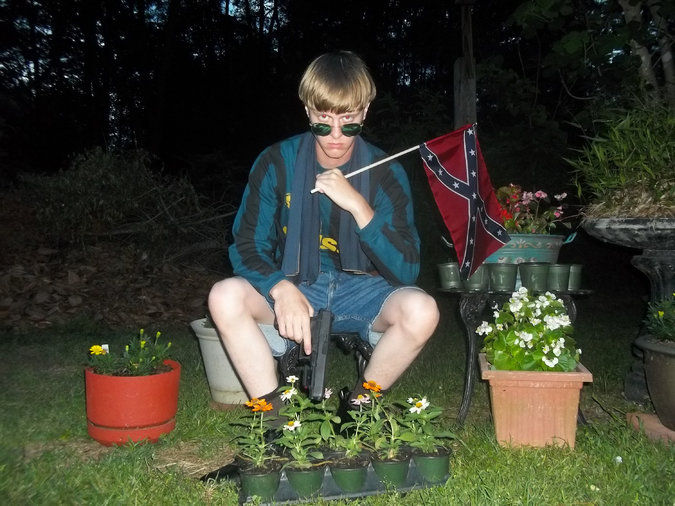
In the light of the tragedy in Charleston, I now see the flag differently. With many others, I believe I now see the flag more clearly, more wholly, and more honestly, as I now see it through the eyes of those who were murdered in that church. 

Since the tragedy, I have been reminded how the flag has been used and abused by hate groups, mainly by people who long to go back to the day when “black people knew their place.” l realize that the flag now has meanings that it was never intended to have. I also am reminded why the flag was raised at the South Carolina Capitol in the first place: as a symbol of opposition to the civil rights movement.

I also understand that it is a symbol. It is not a sign. It is not a historical marker. Unlike signs, symbols have a particular power to excite and to elicit. Unlike signs that give information invoking a response in the brain, symbols stand for something invoking visceral emotions in the heart and gut. So when I see the flag through the eyes of the victims in Charleston, I can understand the consternation that most of our African-Americans citizens have in the South when they see it. Seeing it on a bumper sticker, t-shirt, or flying in someone’s yard is one thing; seeing it flying by the government or endorsed on a license plate issued by the government that should be working for liberty and justice for all is quite another thing, especially if that government has a history of oppression.

As a Christian, I believe in the words of Jesus, “love one another as I have loved you” and “love your neighbor as yourself.” I believe we do that best by trying to put ourselves in the shoes of others, when we try to see the world through the eyes of others, especially through the eyes of the oppressed, the poor, the marginalized, the disadvantaged, the least of these our brothers and sisters.

And it is a shame that it took the slayings of nine people to help me see that.

Charleston Wake-Up Call: Five Thoughts

dylann roofI have heard many people call the massacre in Charleston a wake-up call for our country. I believe it is specifically a wake-up call for predominately white churches in our country. As a pastor of a predominately white church in the South, here are five thoughts that have been awakened in me:

  1. We must wake up to the reality that racism is not only a wound from our country’s past, but it is a deadly virus that still plagues us today. White preachers, including myself, have been often afraid to use the “r-word” from our pulpits for fear of “stirring things up,” as if we might reignite some fire that was put out in the 1960’s, or at least by 2008, when we elected our first black president. We must wake up and boldly preach against racism, in all of its current manifestations that are ablaze today: personal racism; systemic racism; and the subtle racism that is prevalent in the workplace, in the marketplace and even in the church, for Jesus could not have been more clear when he said: “Love your neighbor as yourself.”
  2. We must wake up to the reality that preaching and working against racism is not “being political,” but it is being “Christian.” When voting districts are re-drawn to limit poor black votes or when laws are created that make it more difficult for poor black people to vote, we must stand up and boldly proclaim the message of Jesus who came to announce “good news to the poor.”
  3. We must wake up to the reality that hatred in this country is being defended by church folks who are calling it “religious freedom.” In the United States of America, where we believe all people are created equally, religious freedom never means the freedom to discriminate. Slave-owners used the same religious-freedom arguments in the nineteenth century to support slavery. Today, we do not tolerate people who want to own slaves, nor should we tolerate anyone or respect the views if anyone who wants to discriminate.
  4. We must wake up the reality that “the oppression of Christians” in this nation and the “war on Christmas” that we hear about every December has been manufactured by folks who loathe what makes our country great, that is our cultural, ethnic, religious and racial diversity. We need to also preach from our pulpits that it is this diversity that makes us look most like the portrait of heaven we find in the book of Revelation: “After this I looked, and there was a great multitude that no one could count, from every nation, from all tribes and peoples and languages, standing before the throne and before the Lamb” (7:9). We must wake up to boldly voice our opposition to the purveyors of fear who are calling on people to bear even more arms “to take our country back.” Furthermore, we must wake up and tell the folks in our pews to please shut up, when they start reminiscing about going back to the good old days of the 1950’s when we had prayer in school. We need to be able to say: “You know, I have many black friends, and I have never once heard them talk about wanting to go back to 1950.”
  5. We must wake up to the reality that the most segregated hours in our country occur on Sunday mornings. We must find ways to build bridges to bridge the gaps that we have created that prevent us from worshipping and serving together. To stand against racism, hatred and violence, to stand for social justice and equality for all, and to persuasively speak truth to power, we must do it side by side, hand in hand, as one body, one Church, serving one Lord.

Response to Viral Video Attacking Farmville Central High School

FCHSTo avoid fueling the fire, I have been asked not to respond to the insanity surrounding Farmville Central High School regarding the reactions of Christian extremists to a vocabulary lesson set in an Islamic context. I do not always do what I am asked; however, this time, I am acquiescing. The following is my non-response:

Sometimes the actions and words of others can be so ludicrously ignorant and unreasonable that they are unworthy of any thoughtful response. People who make obviously uninformed and phobic statements regarding the race, gender identity, sexual orientation, political affiliation or religion of another do not merit serious debate. It is like arguing with someone who does not believe in gravity.

Click here for WNCT story.

Grace in Genesis: Tower of Babel

Tower_of_Babel

Genesis 11:1-9 NRSV

The pastor stands up behind the pulpit, clears his throat, and announces: “This morning we are going to talk about race and racism.”

All over the sanctuary the congregation winces, and beg under their breaths: “Preacher, please don’t do it, for you’re about to open up a giant can of worms!”

But the old preacher, who has opened up more cans of worms than anyone could possibly count, ignores the grimaces and metaphorically gets out the can opener.

I hear many people in the church say that we should not talk about race or make race an issue. However, I believe we make it an issue when we pretend that it is a non-issue. I believe we do great harm to the cause of Christ when we ignore racism or deny that it exists. Furthermore, if we are to accept and do the will of God that I believe is revealed in the story of the Tower of Babel, the church must be willing to openly talk about race and the inherent racism that is prevalent in our families, our town, our region, our world, even in our own hearts.

In the eleventh chapter of Genesis we read:

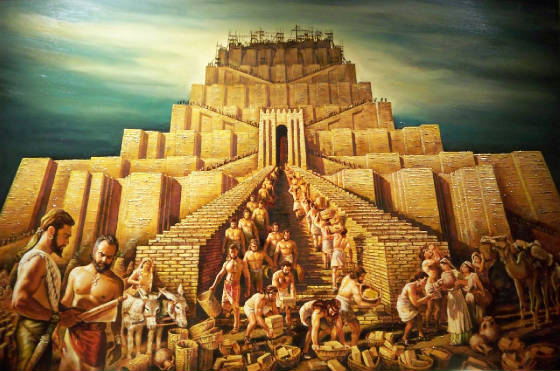
Now the whole earth had one language and the same words. And as they migrated from the east, they came upon a plain in the land of Shinar and settled there. Then they said, ‘Come, let us build ourselves a city, and a tower with its top in the heavens, and let us make a name for ourselves; otherwise we shall be scattered abroad upon the face of the whole earth.

The whole earth was one. One language. One people. One tribe. One race. And they all came together to live in one place. They all came together to build something special, something big, something wonderful that would be a symbol of their unity, pride and patriotism.

Now, what is not to like about that?

Unity, oneness, togetherness, harmony, people of the same minds living in one accord.  Isn’t that the aspiration of all? Isn’t true that great minds think alike? Isn’t this the will of our God, God’s great purpose for humanity?

So what’s not to like in this seemingly perfect picture of unity in Genesis chapter 11? As it turns out, according to God, the creator of all that is, not very much.

Let’s look at God’s reaction to this oneness in verse 7 of our story: “Come, let us go down, and confuse their language there, so that they will not understand one another’s speech.”  So the Lord scattered them abroad from there over the face of all the earth…”

What? Are you serious? What is wrong with this great portrait of human unity, of one race of people, one nation, under God indivisible, all of one mind, coming together to make a name for themselves, to build great things, to be on top of the world, to celebrate their purity and pride as one master race?

The truth is that the builders of the great tower in Shinar had accomplished not what God wants for humanity, but what many throughout history, including the likes of Adolf Hitler and the Ku Klux Klan, have wanted for humanity: One master race of people coming together to form one supreme social order, one culture, sharing the same ideals, values and moral principles. Diversity is a threat. Diversity is something to fear. Diversity is something to segregate and discriminate. Diversity is something to send to the gas chambers or lynch in a tree.

I am not sure if anyone in my lifetime has articulated the thinking of the people of Shinar better than Atlanta Braves pitcher John Rocker back in 1999. Some of you may remember his response when he was asked by Sports Illustrated if he would ever play for the New York Mets or New York Yankees.

Rocker said:

I’d retire first. It’s the most hectic, nerve-racking city. Imagine having to take the number 7 Train to the ballpark looking like you’re riding through Beirut next to some kid with purple hair, next to some queer with AIDS, right next to some dude who just got out of jail for the fourth time, right next to some 20-year-old mom with four kids. It’s depressing… The biggest thing I don’t like about New York are the foreigners. You can walk an entire block in Times Square and not hear anybody speaking English. Asians and Koreans and Vietnamese and Indians and Russians and Spanish people and everything up there.[i]

The story of the Tower of Babel teaches us that what John Rocker said racked his nerves in the world is what God wills for the world. In verse 4 we read that the purpose of building the tower was to avoid what depressed John Rocker on the No. 7 train leaving Manhattan for Queens, and to avoid what John Rocker heard in Times Square. The purpose of settling in Shinar and building that tower was to live in a world with no foreigners, no confusing babbling in the streets, no queers or kids with purple hair to encounter on the way to work, no eating in the marketplace with people on strange diets, no rubbing elbows with people wearing weird clothes, head coverings or dots on their foreheads. So they came together and said, let’s build a tower of unity “to not be scattered over the face of the whole earth.” And God’s reaction to this racial purity and pride was to “scatter them over the face of the whole earth,” to create a world of diverse languages and cultures, to create a world of foreigners.

God was only accomplishing what God had always willed for the creation: diversity. In chapter one of Genesis, we read that the original plan for creation was for humankind to “multiply and fill the earth.” And after the flood in chapter ten we read where God sanctions and wills all nations to be “spread out over the earth.” (Gen 10:32). Simply put, from the very beginning of time, in spite of our will, in spite of our fear and our racial pride, God wills diversity.

Therefore, if we ever act or speak in any manner that denigrates or dehumanizes another because of their race, language, nationality or ethnicity, we are actually disparaging the God who willed such diversity. According to Genesis, diversity is not to be feared, avoided, prevented or lynched. If we want to do the will of God our creator and redeemer, diversity is to be embraced. In other words, if we love God, we will also love our neighbor. And this is what God wants us to be united by. It is why Jesus called it the greatest commandment—love God and our neighbors as ourselves. Love is what should unite us; not racial pride or patriotism.

The story of the Tower of Babel belongs to the same genre of the stories of Adam and Eve, Cain and Abel and Noah and the Flood. They are considered to be “pre-history stories.”[ii] That is, they are describing God’s relationship to the world before the call of Abraham and the history of the Jewish people. It amazes me how God in each of these stories is so often misinterpreted by Christians who believe that the God of the Old Testament is a God of wrath; not a God of grace. They say that they believe Jesus Christ is God; however, they fail to see Christ in these stories.

Consequently, God is often seen as one who curses Adam and Eve by kicking them out of the garden instead of as one who bends to the ground and clothes them with grace. God is seen as someone who curses Cain by sending him to the land of Nod, instead of as one who protects his life with a mark of grace. God is seen as one who curses all of humanity with a great flood with the exception of one family, instead of one who makes a decision to graciously suffer alongside all of humanity. And here in this story, God is seen as one who curses the builders of the tower by scattering them over the face of the earth, instead of being seen as one who reacts to racial pride and unity by fulfilling the purpose of creation from the very beginning, filling the earth, by graciously creating diverse languages, races and cultures.

The tragic irony is that throughout history many have used the story of the Tower of Babel to support slavery, apartheid, segregation and other forms of racism. Bob Jones University once used this story to ban interracial dating on campus. However, this story teaches something very different. The story of the Tower of Babel is God’s gracious stamp of approval, of blessing, on every race, every tribe, and every language in every land. It is the fulfillment of God’s original purpose for creation. The song we learned as little children cannot be more true: “Red, yellow, black and white, they are all precious in God’s sight.” God is not color-blind, as I hear some say, for God creates, wills, blesses and loves color. And it is this love that unites us all, as we have all been created to harmoniously see humanity as God sees it: as a beautiful, diverse, colorful rainbow created by, sanctioned by, and graced by God.

As a Bible-believing Christian, it confounds me when I hear that another, supposedly, Bible-believing Christian, has decided to put their house on the market and move because a person or a family of another race has moved into their neighborhood. I often think about this story in the first book of our Bible that describes a beautiful and diverse creation willed by God. But I also think about a passage in the last book of our Bible that describes an eternity willed by God. And I wonder what in the world these people, who claim to be Christian, are going to do if they do get to that place they think they are going after they die to live forever and ever.

Because guess what? According to Revelation, heaven looks more like Times Square and that No. 7 train on the way from Manhattan to Queens than some affluent suburb outside of Atlanta, Georgia.

In Revelation 7, we read these words:

After this I looked, and there was a great multitude that no one could count, from every nation, from all tribes and peoples and languages, standing before the throne and before the Lamb, robed in white, with palm branches in their hands. They cried out in a loud voice, saying, ‘Salvation belongs to our God who is seated on the throne, and to the Lamb!’  And all the angels stood around the throne and around the elders and the four living creatures [each representing the diversity of all creation], and they fell on their faces before the throne and worshipped God, singing, ‘Amen! Blessing and glory and wisdom and thanksgiving and honor and power and might be to our God for ever and ever! Amen.’

[i] Read more: John Rocker – At Full Blast – York, Braves, City, and League – JRank Articles http://sports.jrank.org/pages/4014/Rocker-John-At-Full-Blast.html#ixzz39oVUCEtA

[ii] See Walter Brueggemann Genesis


Other Sermons in this Series:

Grace in Genesis: Adam and Eve

Grace in Genesis: Cain and Abel

Grace in Genesis: Noah


A Personal Thought on Martin Luther King, Jr. Day

martin-luther-king-on-pulpit-robert-casillaWhen I moved to southern Louisiana to preach the gospel, my church had a policy to close the church office on Fat Tuesday (the Tuesday before Ash Wednesday), but not on Martin Luther King, Jr. Day. I immediately changed the holiday policy stating: “I believe that churches should especially honor the MLK holiday. After all, he was a preacher who was martyred for preaching the gospel of Jesus!”

So, for me, today is a day to remember not only the sermons of Martin Luther King, Jr., but to also reexamine my own preaching, or lack thereof.

I have always believed that there is a lot of correlation between what happened in Memphis in 1968 and what happened in Jerusalem 2,000 years ago. I truly believe that if you love all people, and live your life trying to convince others to love all people, then there will always be some people, probably religious, who will want to kill you.

Today, I am reminded that if my preaching does not take grave risks by offending and outraging those who do not believe that God’s love expands past the lines of race, class, religion, nationality and sexual orientation, then I am not preaching the gospel of Jesus.