Foolish Enough to Be Faithful

1 Corinthians 1:18-31; Matthew 5:1-12

Father John Dear reminds us that the Beatitudes are not polite blessings for private spirituality. It’s not chicken soup to nourish our souls during a quiet time with God.

The Beatitudes are Jesus’ nonviolent manifesto—a public declaration that God stands with the poor, the mourning, the meek, the justice-hungry, and the peacemakers.

Jesus was declaring a way of living that turns the world upside down, directly confronting every system that depends on fear and violence to survive. The Beatitudes unmask the lie that domination brings security and expose the myth that peace can be achieved through force. It is Jesus’ refusal to bow down to Herod, his rejection of religious nationalism, and, his insistence that the way of love—not fear, not coercion, not “comply or die”—is the only power that will heal this broken world.

And yet, the reality is that most of us didn’t grow up hearing from that Jesus, the Jesus of the gospels: brown-skinned; Jewish; Palestinian; unjust law-breaker; anti-racist; one who was born poor and forced to flee racialized, state-sanctioned violence as a refugee in Egypt; one who was arrested and executed by the state for protesting and resisting systems that harm the least of these.

Instead, many of us were raised hearing about an alternative Jesus— a very white, privileged, moderate, capitalist Jesus, a “wise,” law-abiding Jesus shaped by flags, greed, and power. A Jesus who blesses order more than justice, silence more than truth, authority more than accountability, the privileged more than the vulnerable, and even violence if it preserves the status quo.

The version of the Beatitudes many of us were taught is the voice of what we might call “religious-nationalist Jesus.” It’s a voice that borrows Jesus’ name to protect systems that harm the vulnerable while protecting the privileged. I invite us to hear out loud what has already been speaking quietly to us for a long time.

It sounds something like this…

When Jesus saw the crowds, he went up on a mountain. He walked out on stage, flanked by uniforms and flags, and then spoke with the calm authority of one who never had to fear the law.

Blessed are the rich, for their hard work and great faith, God has given them the gift of prosperity.

Blessed are the strong, for they will never have to depend on anyone.

Blessed are the hard-hearted, for empathy clouds judgment.

Blessed are those who comply, for they will make it home alive.

Blessed are the merciless, for mercy interferes with enforcement, and that could get you murdered.

Blessed are those who do not mourn too loudly, for public grief makes people uncomfortable as it asks dangerous questions about deaths, cruelty, and suffering.

Blessed are the pure in heart who know how to stay in their place and keep their protests to themselves.

Blessed are those who do not hunger and thirst for justice, for justice is disruptive, and to the king, disruption looks like insurrection.

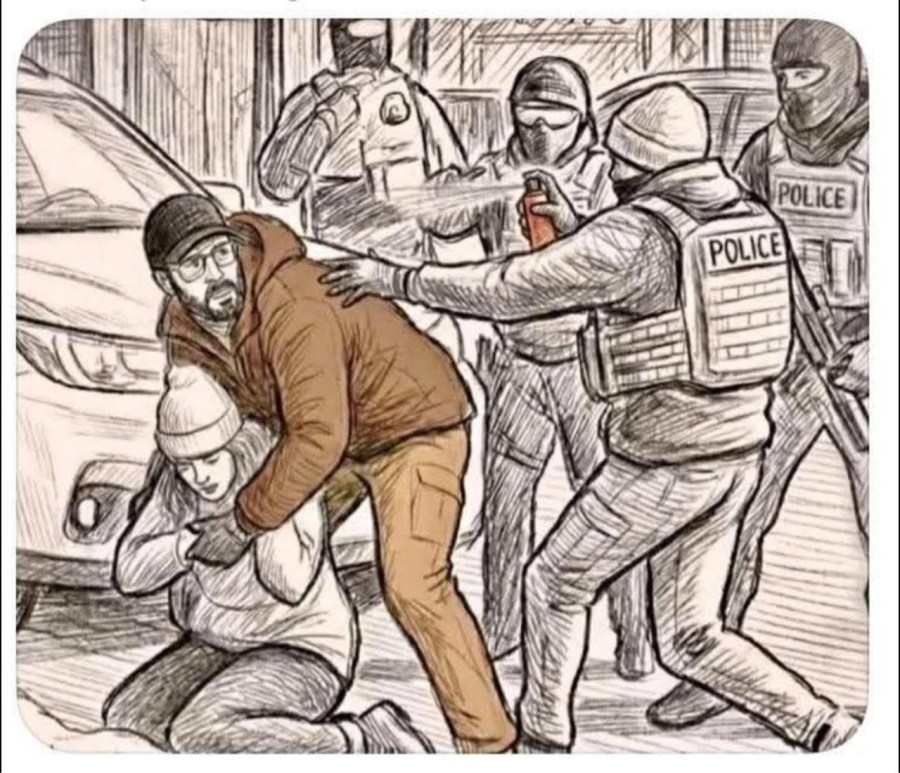
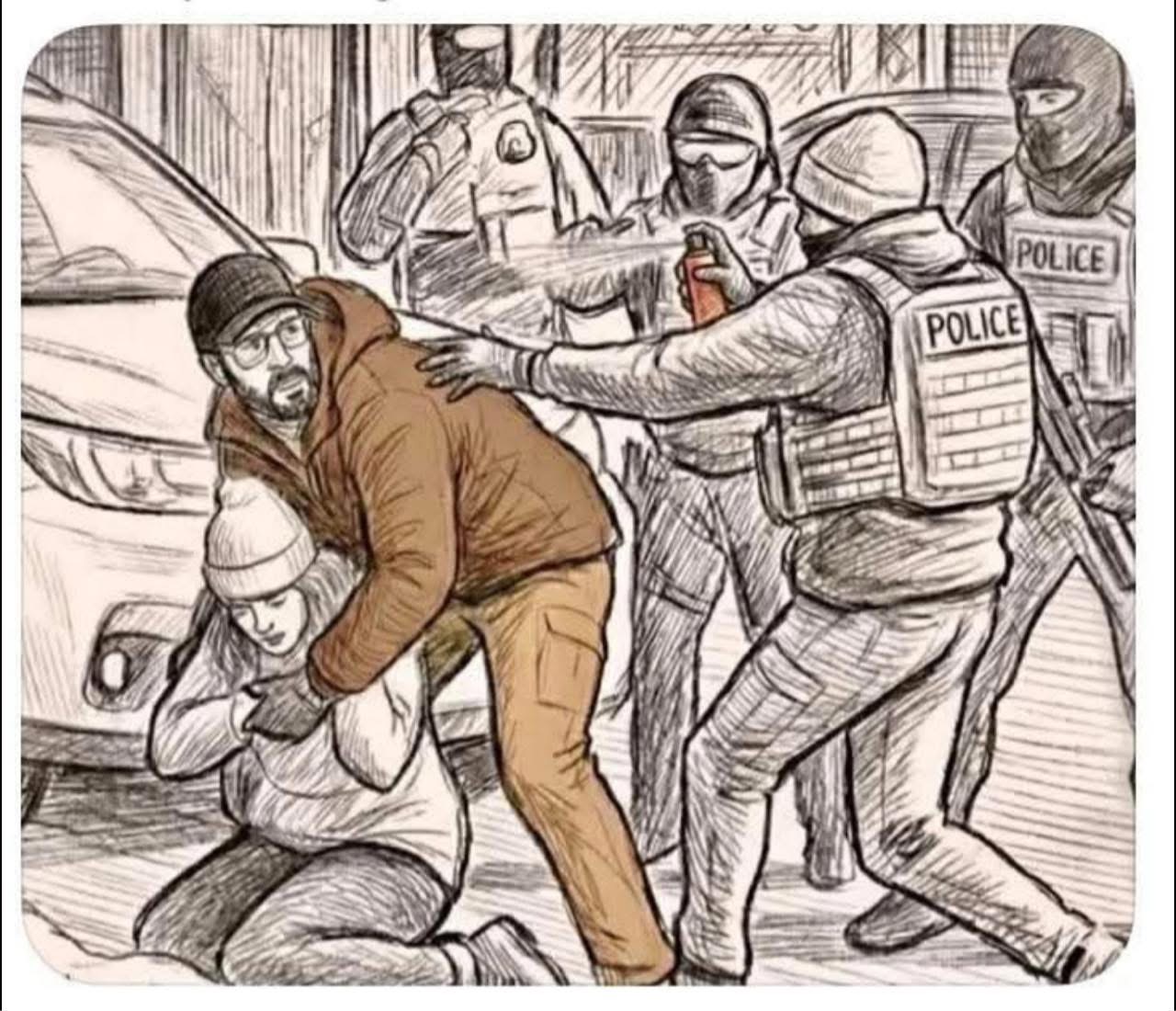
Blessed are the peacekeepers, not the peacemakers, but the ones who call pepper spray ‘domestic terrorist control’ and bullets ‘necessary force.’

Blessed are those who condemn protests in the name of civility, who call moral resisters “agitators,” “communists,” “Marxists,” and “antifa-types.”

But woe to you if you are poor, for you are obviously lazy and unfaithful.

Woe to you who are weak and need help from your neighbors.

And woe to you who march.

Woe to you who blow a whistle.

Woe to you if you block traffic.

Woe to you if you if you love your neighbor as yourself, if you dare to put your body between a masked agent and a woman shoved violently to the ground.

Woe to you if you bear witness to the truth you see with your own eyes instead of repeating the lies from those on high.

And blessed are those who echo the lies and blessed are ones who say, “well, there’s bad on both sides,” because bending the knee to power is safe, and neutrality feels like wisdom.

Rejoice and give thanks, for your reward is order without justice,
peace without righteousness, life without humanity, but a system that works exactly as it was designed.

And the crowds nodded, a few amens could be heard, because they knew their king would approve. It sounded like law and order. It sounded like good, common-sense, conservative values. It didn’t sound foolish at all. It sounded like the wisdom of the wise.

This thinking is perhaps what prompted the Apostle Paul to quote the prophet Isaiah: “For it is written: ‘I will destroy the wisdom of the wise…’ …For God’s foolishness is wiser than human wisdom, and God’s weakness is stronger than human strength.”

Paul does not try to rescue the gospel from the charge of foolishness. He embraces it. He leans into it. He says, in effect: Yes. I know this way of love that Jesus taught and embodied looks foolish. I know the cross doesn’t look like wisdom to an empire that measures strength through domination. A crucified Messiah doesn’t inspire confidence in a world that believes security comes from force and order comes from fear.

And yet, Paul dares to say that this so-called foolishness is exactly how God is dismantling the violent wisdom of the world, “abolishing the things that are,” he writes.

This foolishness, says Paul, is the power of God.

It’s not the power to crush enemies, but the power to expose their lies and cruelty. It’s not the power of coercion, but the power of love that refuses to disappear even when it’s nailed to a cross or murdered on a public street.

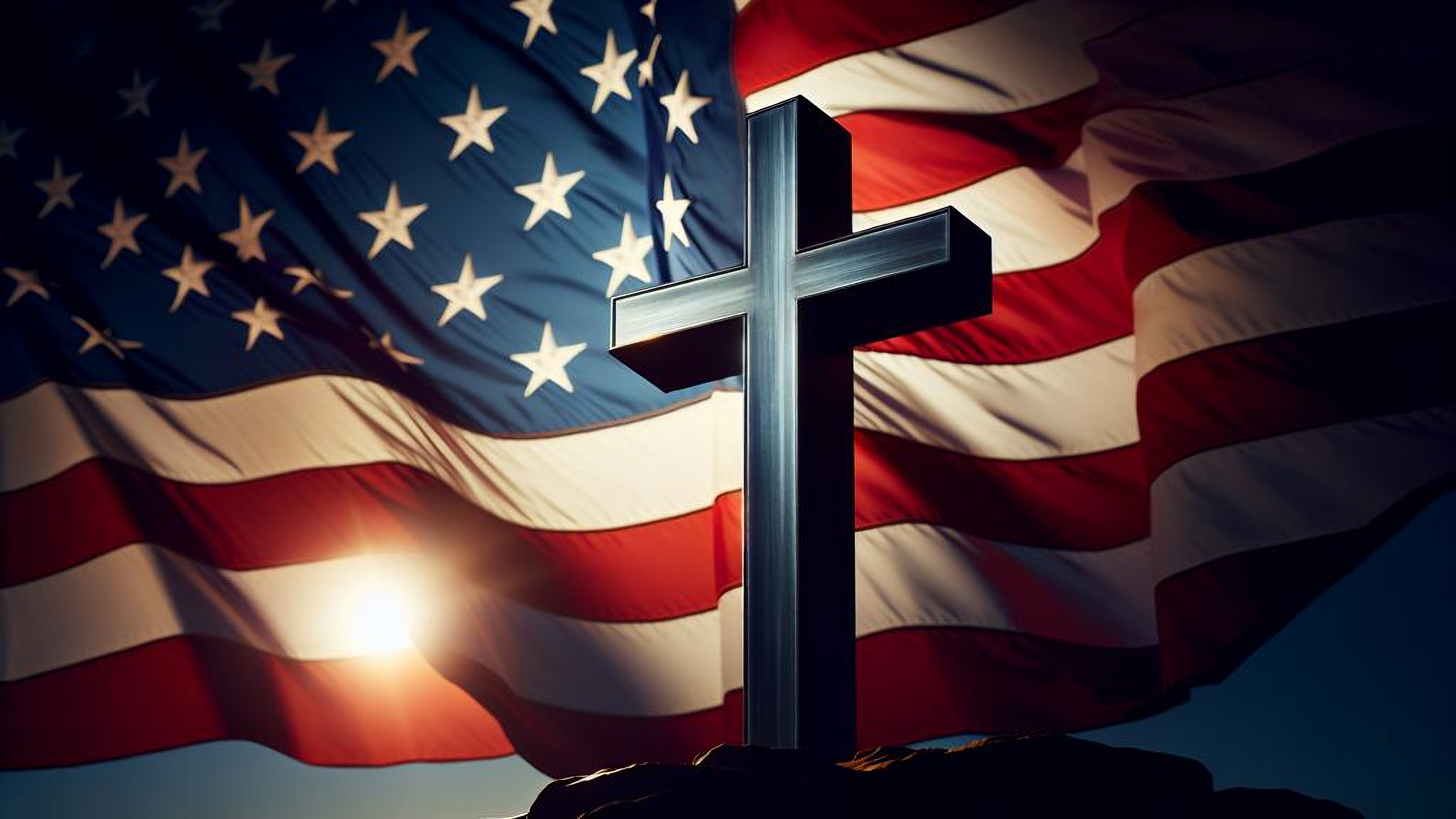
This is why the Beatitudes and the cross belong together. Both seem foolish. Both look weak and impractical. Both seem absolutely powerless when confronting those invested in keeping things exactly the way they are. And both announce that God is not impressed by what those in high places call “wisdom.”

Paul reminds the church: “Not many of you were wise by human standards. Not many were powerful. Not many were of noble birth.” In other words, not many of you are respected by those in power today. Not many of you would be called patriots or even people who love their country. But God is not going to ask their permission to choose you. God is not going to wait until the next election to call you. God is calling you today to change this world.

In this very moment, I believe God is choosing the foolish. God is choosing the weak. God is choosing the despised. God is choosing the poor in spirit. God is choosing the mourners. God is choosing the meek. God is choosing those who hunger and thirst for justice. God is choosing the peacemakers who refuse to confuse peace with silence.

And because this is who God chooses, Jesus speaks with a wisdom that sounds like foolishness, feels like resistance, and looks like hope.

When the world says, “Be obedient,” Jesus says, “Be merciful.”

When the world says, “Keep the peace,” Jesus says, “Make peace.”

When the world says, “Respect authority,” Jesus says, “Blessed are those who refuse to bow to evil.”

This is why protest makes power nervous. Not because it might lead to violence, but because it tells the truth. It exposes the gap between our rhetoric of equality and due process and the reality of racialized suffering. It reveals who is expected to absorb pain quietly, so that the privileged can remain comfortable.

And when people who are supposed to be invisible refuse silence, the wisdom of the world begins to unravel.

Paul says God chooses the foolish and the lowly. And Jesus says they are blessed now.

This means that God is not neutral. God is not undecided. God is not standing above history waiting to see who wins. No, it means God is already present—among the crucified, the criminalized, the grieving, the justice-hungry, the meek, and the merciful.

That’s why Jesus does not say the poor will be blessed eventually, after they stop being poor. He does not say the mourners will be blessed once they move on. He does not say the justice-hungry will be blessed when they stop resisting and wise up to the ways of the world. He says they are blessed now.

And we see that blessing even now. You can murder Renee Good for defending her neighbors, and Alex Pretti for protecting a woman shoved to the ground, but instead of killing love, you only multiply it. You only make it stronger, wider, deeper, and fiercer.

So, hear the good news today: mercy is not weak; empathy is not foolish; compassion is not soft; and love is far from powerless.

These things are dangerous—to injustice.
These things are disruptive—to systems that depend on fear.

And these things are powerful enough to dismantle a world shaped by domination and supremacy.

Love looks weak—until it refuses to die.

Mercy looks small—until it spreads.

Empathy looks foolish—until it builds movements.

Compassion looks soft—until it organizes, makes signs, marches, chants, sings, and exposes the evil of a system that dehumanizes, divides, and demonizes so it can survive.

The poor are not powerless; they are positioned.

The meek are not losers; they are inheritors.

Those who hunger and thirst for justice are not wasting away; they are bending the moral arch closer to the Kin-dom of God.

And those of us who mourn today are not abandoned; but we are being held close to the heart of God and are being reassured that God’s reign of love and justice is coming.

Not through religious nationalism or enforced conformity, but it comes through a foolish, cross-shaped love that refuses to let violence have the final word.

And blessed are all who believe this, because you are already living into God’s future.

Amen.
The False Religion of Herod: Wisdom Pilgrims in Violent Times

Matthew 2:1-12

Some say that “an epiphany” is what happens anytime someone discovers something brand new, like when they say something like: “I was today-years-old when I discovered thisor learned that.

I was today-years-old when I discovered the game we played as children called, “tag,” (T.A.G.) is an acronym: “Touch and Go.”

I was today-years-old when I learned the nursery rhyme “this little piggy went to the market,” didn’t mean this little piggy was going to Kroger to pick up some groceries. It meant this little piggy was going to be the groceries!

I was today-years-old when I learned the word “stressed” is just “desserts” spelled backwards. Or I was today-years-old when I learned that the Bible never says there were three wise men. It only mentions three gifts. And they were not kings, but magi, astrologers, who did not visit the baby Jesus at the manger with the shepherds. but visited the toddler Jesus in a house maybe a couple of years later. And there is no scholar who believes they rode on camels.

However, the word “epiphany” means something more. Even the Google says: When someone says, “I had an epiphany,” it means they’ve experienced a powerful, illuminating moment of clarity that changes not only their perspective, but their actions.

The Epiphany we commemorate today reveals what’s really going on in the world, and then, calls us to make a change, to do something. Epiphany is both an unveiling and a calling.

Matthew wastes no time unwrapping Christmas: “After Jesus was born in Bethlehem of Judea, in the time of King Herod…”

Before the star shines and gifts are given, Matthew names the power in the room. Because Epiphany is not just about who Jesus is. It’s about what his presence in the world exposes.

Herod hears of a child born “king of the Jews,” and Matthew says he is frightened, and notice this, “all of Jerusalem with him.” Because when an unhinged autocrat like Herod is frightened, everybody is in trouble.

Herod is frightened because oppressive power always recognizes a threat when it hears one. And this is the first thing that Matthew wants us to understand. Jesus, and the way of liberating love, mercy, justice, and nonviolence he would teach, model, and embody, and call others to follow, poses a serious threat to the kings of this world.

Now, one might guess that Herod would follow in the steps of his predecessor Antiochus IV who outlawed Jewish religious rites and traditions.[i] But Herod does not reject religion. He does something far more sinister, something that came quite naturally for his egotistical, greedy, self-serving, always-looking-out-for-number-one self. Instead of banning religion, he uses religion. He exploits faith purely for personal benefit.

He gathers the scribes. He pretends to consult the scriptures. He listens as scribes read the prophets to him. He speaks fluently in religious language, asking about the Messiah.

And then he lies. Not crudely. Not clumsily. The smooth-talking conman lies faithfully.Or at least, it sounds that way:

“Go and search diligently for the child, and when you find him, bring me word, so that I also may go and pay him homage.”

This is Herod doing one of the things Herod does best: conning people in order to serve himself. This time it’s religious people, making them believe he is one of them.

But the religion of Herod is a lie. It’s just fear, dressed up as faith. It’s violence wrapped in reverence. It’s power using the name of God for evil purposes.

Matthew wants us to see this clearly, because as you know, this is not an ancient political scheme. It’s a recurring one.

And today, we need to say it clearly and often: White Christian Nationalism is not Christianity. It is the lie of Herod, baptized and repackaged.

It claims a nation and a race of people are God’s favorites.
It confuses achievements and dominance with the blessing of God.

It demands absolute loyalty and calls it being faithful.

And it’s all a lie.

And what makes the lie so dangerous is wherever it takes root, someone, or some group, is always made expendable.

Antisemitism grows when Christianity is fused with national identity, turning Jewish neighbors into outsiders within a so-called “Christian nation.”

Islamophobia flourishes when that same logic decides who belongs and who never will, baptizing fear and casting Muslims as threats rather than beloved neighbors.

And political violence becomes justified when religious language sanctifies power, hardens hearts, training people to confuse cruelty with righteousness in the name of God and country.

Herod did not invent hatred. He simply learned how to make hate sound holy.

This is the evil Epiphany reveals. The whole world witnessed it on Christmas Day when bombs dropped on Muslims in Nigeria were called “a Christmas present.”

This is the false faith of Herod. It’s state violence that is baptized. It’s innocent lives reduced to collateral, and it’s the holy name of Christ used to bless what the nonviolent Jesus condemns.

And when Christians applaud it, excuse it, or explain it away, then the lie has completed its work. Because the greater travesty is not only that power speaks this way; it’s that the church learns to tolerate it.

This is why Epiphany matters. Epiphany exposes this false religion of Herod. But as even Google points out, Epiphany doesn’t stop there. Epiphany tells us exactly what to do about it.

In a recent article, Father John Dear reminds us that the Magi are not decorative figures in a nativity scene. They are our model. He calls the Magi “wisdom pilgrims,” people on a lifelong spiritual journey toward the God of peace. They follow the light they are given, not toward comfort, but toward truth.[ii]

It cannot be overstated that the Magi are outsiders, foreigners, practitioners of another tradition; and yet, they suddenly see what the insiders miss. They are “that-day-old” when they recognize that God’s presence and power is not found in palaces or on thrones, but in vulnerability. They kneel before the child, presenting their gifts.

And then comes the main point of Epiphany.

After the revelation, after the worship, after the gifts, they are ordered to return to Herod: to report back; to cooperate and to collude; to assist a system that sacrifices the innocent to preserve itself.

But Matthew tells us that once they encounter this child, once they meet the God of peace enfleshed in vulnerability, they cannot comply. They disobey orders. Not violently. Not dramatically. But decisively. Because, as Father Dear would say, once you meet the nonviolent Jesus, obedience to violent power becomes impossible. Epiphany makes cooperation with violence morally incoherent.

This is the moral clarity that is needed in our world today. The Magi understand something Herod never will: you cannot encounter a God who enters the world without violence and then support a war-making system. You cannot kneel before a vulnerable child and not resist a tyrant.

This is why Father Dear points out that, after Epiphany, discipleship becomes civil disobedience. Because it is obvious that the nonviolent Jesus cannot be fused with empire. And religion used to justify violence or cruelty is no longer Christian. It is anti-Christ.

This is why the lie must sound religious. Because violence cannot survive without spiritual cover. This is why empire always needs chaplains. Because power depends on churches that will quote scripture while looking away.

The good news is that not many of you, if any, were “today-years-old” when you discovered not every prayer is faithful. Not every “God bless America” from a politician is holy. Not every appeal to God deserves our allegiance. Not every law should be followed. And this is where Epiphany informs our public life.

Because when religious language is used to justify war, the church must decide whether it will provide cover or tell the truth.

When antisemitism hides behind distorted theology, the church must remember Jesus was a Jew.

When Islamophobia is baptized as security, the church must choose whether fear or love will shape its witness.

When political violence is normalized with Christian rhetoric, the church must decide whether it still recognizes the voice of Herod and follows the voice of Jesus.

The Magi show us what faithfulness looks like after Epiphany. It looks like nonviolent resistance.

And that is the call Epiphany places on us now.

Not to admire the Magi.
Not to romanticize their journey.
But to join them.

Father Dear says we too are called to be “wisdom pilgrims.” We are people who seek the nonviolent Jesus on the margins of a culture addicted to violence. We are people who are allowing our encounter with Christ to lead us away from systems that depend on bloodshed and cruelty. We are people who live the Sermon on the Mount not as metaphor, but as mandate.

Our faith is a faith of resistance. It’s faith that refuses to bless bombs. It’s faith that refuses to baptize borders. It’s faith that refuses to confuse domination with God’s blessing. It’s a faith that will call out the proclamation that “this is a Christian nation” for what it is. It’s a lie, a dangerous lie that must be called out. Because change will happen, not because people will stop the lies, but because the lies are exposed by the light.

The good news is that the light still shines in our world.
Truth is still being revealed.
And Christ is still born into this world that would rather kill him than change anything.

So, let’s go from this place today as wisdom pilgrims.

Follow the Light, even when it leads you away from power.

Shine the light, even when it is dangerous to do so.

Refuse the lie, especially when it sounds religious.

Withdraw your cooperation from violence in every form it takes.

Kneel and offer your gifts only where the God of the nonviolent Jesus is truly revealed.

And may the God of peace guide our steps, the Christ of nonviolence shape our faith, and the Spirit that is Holy give us courage to live what has been revealed, to live this Epiphany.

And when we are challenged, when our faith is questioned, when we are asked what’s gotten into us. “What kind of kind of resolution did you make this year?”

May we remember this Epiphany Sunday and answer: “I was today-years-old when I learned that following Jesus means becoming ‘a wisdom pilgrim.’”

Amen.

[i] https://www.thetorah.com/article/antiochus-iv-persecution-as-portrayed-in-the-book-of-daniel

[ii] https://open.substack.com/pub/fatherjohndear/p/civil-disobedience-a-spiritual-journey?utm_campaign=post&utm_medium=post%20viewer