

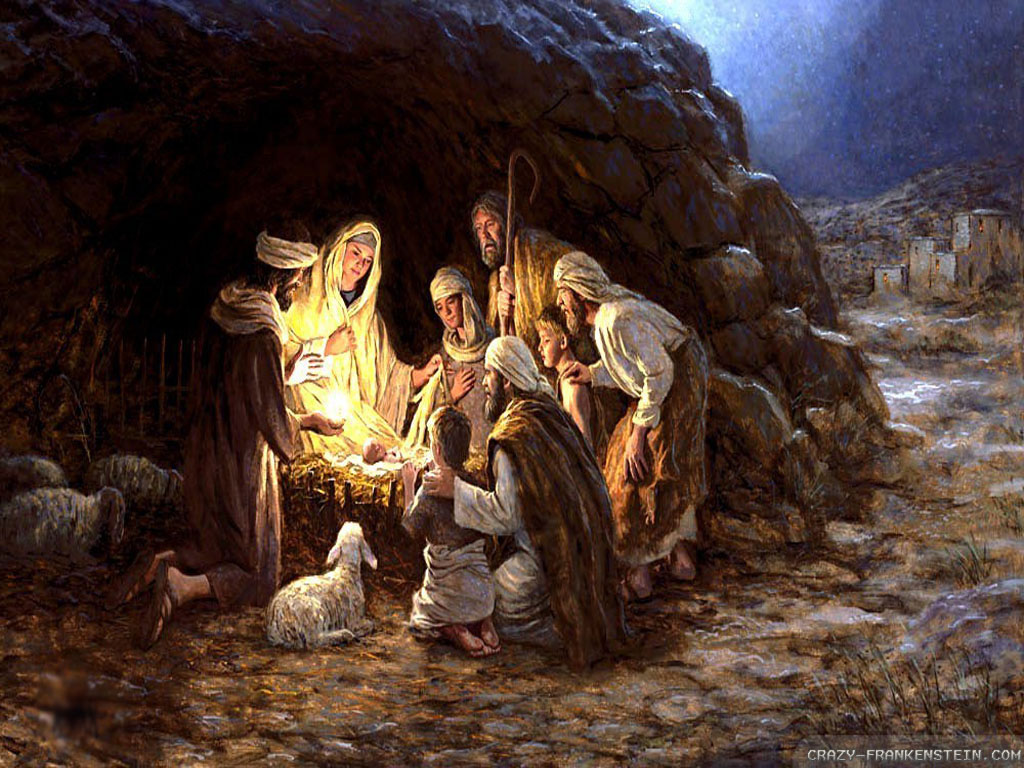
The very first ones on earth to hear the pronouncement of Christmas were shepherds. Who were these shepherds? It is accurate to say that they were folks that the popular religious people knew would never “inherit the kingdom of God.”
This is not easy for most of us to hear. For most of us have a tendency to romanticize the shepherds. After all, we have been raised in the church with our innocent children depicting shepherds wearing bathrobes in adorable Christmas plays. And for most of us church folk, shepherding evokes a very positive and pastoral image. We think about the Old Testament images of the shepherd king David. We think about the beautiful green pastures and still waters and the protection of the rod and staff of the twenty-third Psalm. And, of course, we think about Jesus Himself as being the “good shepherd.”
However, the reality is that shepherding was a most despised occupation. Mercer New Testament Professor Alan Culpepper writes: “In the first century, shepherds were scorned as shiftless, dishonest people who grazed their flocks on others’ lands.” Therefore, it would not be too great of a stretch to give shepherds the current degrading designation: “illegal aliens.”
And why were these people involved in such a despised occupation? The theology of the day would say, “because of sin, of course.” They were who they were because of either their own sin or the sins of their parents. In the eyes of popular religion, the shepherds were poor, immoral sinners.
Fred Craddock writes that the shepherds belong to the Christmas story “not only because they serve to tie Jesus to the shepherd king, David (2 Sam 14:23, 21) but because they belong on Luke’s guest list for the kingdom of God: the poor, the maimed, the blind, the lame (Luke 14:13, 21).
The very first people in history to receive the birth announcement of the messiah, the very first ones on earth to celebrate Christmas are sinners; they are the despised, the lowly, the immoral and the outcast.
This is why the angels pronounce the good news of Christmas is great joy for ALL the people. Culpepper writes: “The familiarity of these words should not prevent us from hearing that, first and foremost, the birth of Jesus was a sign of God’s abundant grace.” The birth is a sign that God is on the side of ALL people—even the most despised, the most lowly, the most immoral, the most outcast, the most alien, and the most illegal . Jesus came even for those who find themselves standing on the outside of the community or church.
And in what form does this sign appear? The savior was coming into the world through a poor peasant woman to lay in a manger, a feeding trough made for animals. And it is this humble scene that sets the stage for his entire life on earth. Jesus, the savior of the world was born and lived and even died on the fringes, on the margins of society—underscoring the truth that the good news has come into the world for ALL—maybe especially to the marginalized.
Page Kelly, my Old Testament professor at Southern Seminary, used to love to say that the biblical symbol for God’s justice on this earth was not a blind woman holding a set of scales. “It was one of the Old Testament prophets holding a set of scales with his eyes bugged out and his long bony finger mashing down on the side of the poor.” –Favoring those who have always been despised and marginalized by society.
Sounds a little like the Angels’ song: “Glory to God in the highest heaven, and on earth peace among those whom he favors.”
“But God does not have favorites!” we say. Arguing that God’s grace is all-inclusive, some ancient manuscripts even omit, “among those whom he favors.” Fred Craddock says that interpreting this passage all depends on where you put the comma. The original Greek was without punctuation. Thus, one could read: And on earth peace among those (comma), all those who inhabit the earth, whom God favors—making it the song all-inclusive.
But then we have the Song of Mary. In the Magnificat, Mary sings, “My soul magnifies the Lord, and my spirit rejoices in God my Savior, for he has looked with favor on the lowliness of his servant.” And this favoritism does not appear to be all-inclusive for “he has brought down the powerful from their thrones, and lifted up the lowly. He has filled the hungry with good things, and set the rich away empty” (Luke 1:46-48, 52-53).
So, maybe just maybe, those folks, who for whatever reason, cause people to judge as unworthy of “inheriting the Kingdom of God,” are not the ones who have the problem.
Now, here’s the good news. And it just so happens that I heard it while visiting an Alzheimer’s patient in the nursing home who does not remember who I am. There are some days when she does not know who her husband is, but amazingly, she has never forgotten who her Lord and Savior is. As soon as I entered her room, she read me the front of Christmas card that she was holding in her hand. “Jesus—in the incarnation, God showed us mercy.”
The good news is that when we realize that we stand in desperate need of God’s mercy, when we realize that apart from the grace of Christ, we are all outsiders, we are all poor, alien, sinful, immoral, when we realize that the shepherds are our brothers, then the joy and peace that is Christmas, that is salvation, is ours.
Wake Forest theologian Frank Tupper commented on Luke’s story of the Good Samaritan stating, “We are all half-dead men or women lying in a ditch somewhere east of Eden—beaten so badly by the sin and evil of this world that no one can tell if we are rich or poor, slave or free, male or female.”
And the news even gets better. When we realize that we are sisters and brothers to the shepherds, the outsiders, the lowly and despised, the poor and the weak, when we reach out and offer them our bread, our drink, our clothing, our presence, our touch, our love, when we reach out and take in, then the Song of the Angels still fill the skies singing with the comma in just the right place—“Glory to God in the highest, and peace on earth, among all who inhabit it, whom God favors.”
 Just Love