A Crowded Table

Sermon delivered during the Interfaith Service of Unity at Peakland Baptist Church in Lynchburg, VA, Thanksgiving Day 2024

Isaiah 25:1-9 NRSV

I begin the sermon with the two questions that are on everyone’s mind today: #1 “Will this divided nation ever come together?” And #2 “When will there finally be peace on earth?”

Nah. That’s not it. The questions on everyone’s mind today are: #1 “What’s for dinner?” and #2 “Who’s all invited?”

The prophet Isaiah answers the first question “What’s for dinner?” with a song about God’s promise of a generous and extravagant table where (as we read in the New Revised Standard Version):

The Lord of hosts will make a feast of rich food, a feast of well-matured wines, of rich food filled with marrow, of well-matured wines strained clear.

I imagine Isaiah adding: “Did I mention we’ll be havin’ well-mature wines and rich food?”

Isaiah understands that life is best celebrated with plenty of delicious food and the best wines, particularly when times have been dark, when the table’s been empty, when the cupboards ae bare—when tyrants have the upper hand, when the shadows of chaos and catastrophe cover a nation, like it is being punished for their poor choices causing the entire creation to suffer.

In the previous chapter of Isaiah, we hear the desperate lament of the prophet:

The earth is utterly broken, the earth is torn asunder, the earth is violently shaken…the moon… abashed, and the sun ashamed (24:19, 23).

A dark shroud of universal dismay and despair covers the land. And there, under the dismal cover of darkness, everything good seems to be wasting away.

Of course, the first thing Isaiah grieves is the wine cellar. Isaiah cries out:

The wine dries up, the vine languishes, all the merry-hearted sigh, the mirth of the timbrels is stilled, the noise of the jubilant has ceased (24:7-8).

It is in this dry, dark, and desolate setting that a shocking announcement is made by the prophet. It comes in the form of a gracious invitation to attend a most extravagant dinner table with rich food and plenty of delicous wine!

Which brings us to the second question on our minds this day. Now that we know what’s for dinner, we want to know who’s all invited?

And here comes the real shock. Who’s invited? All are invited to enjoy the feast.

And notice that it’s like Isaiah understands that such radical inclusion will be difficult for some folks to believe. So, the prophet uses the word “all” five times in three verses to make sure he gets his point across!

In verse 6 we read that the table is “for all peoples.” And just in case some interpret all peoples to mean just the legal, documented citizenry, the prophet adds, “all nations, and all faces.”

Talk about a crowded table! A table where everyone whose got a face is welcome!

“All are welcome.” That’s the words that we are accustomed to seeing outside some of our houses of worship or our meeting places, right? All are welcome. But it was my son who once pointed out the fallacy of that simple welcome. Referring to the sign outside a church building where I once served, he commented: “Dad, all can’t be welcome unless someone is doing the welcoming. A better sign would read, ‘We welcome all.’”

I had never thought about that. But he’s right. For all to be welcome, someone must do the welcoming. Someone must put in some effort. Someone must take some initiative. Someone must have some radical intentionality to create the revolutionary hospitality. Especially if all faces are invited. Especially if strange faces might show up. And most especially if the table is going to be crowded with strange faces.

I will never forget the first time that my wife Lori came home with me to meet my parents back in 1987, a few months before we were engaged to be married. I am very tempted right now to tell you that it was Thanksgiving, but it was actually Easter.

After attending worship that Sunday, my family gathered around a very crowded table for dinner, nine of us scrunched up together to sit at a table made for six. My aunt and uncle and cousin joined my brother, sister, Mom, Dad, Lori, and me. I was sitting at one end of the able. Dad was seated to my left. And Lori was seated to my right.

As my father asked the blessing using the vernacular of King James in 1611, to make Lori feel welcome at the strange, crowded table, I took my foot under the table and gave Lori a little love-tap on her ankle. (Most inappropriate during the high Old English Eastertide blessing my father was offering, but I suppose that’s what made it so much fun). Feeling my affection under the table in the middle of the prayer, Lori made eye contact with me gave me the sweetest little grin. I know, we were so bad.

A few minutes went by, when Lori got the notion to reciprocate, reaching out her toe to tap my foot. But when she looked over at me, she was rather disappointed to see that I didn’t react. So, she did it once more, this time, a little more playfully. But again, I was as cool as a cucumber, sitting there eating my dinner like it never happened.

That’s because it never happened. Lori, in a state of confusion sat back and peered under the table, only to discover that she had been flirting with my father!

But here’s the thing. My dad also never reacted. He too sat there like it never happened.

Now, I can only come up with two explanations for Daddy’s stoic lack of response. The first one, which I refuse to believe, is that is he enjoyed it and didn’t want her to stop. So, the conclusion I have chosen to draw is that he realized that Lori, bless her heart, didn’t really know what she was doing, and thus he made the decision to extend grace. Instead of embarrassing her, he chose to forgive her, accept her, and love her.

To set a crowded table where every face is welcomed, all those at the table must be intentional when it comes to grace, more so if strange faces are present. All the grace Daddy offered that day would have been for naught, if my cousin, or one of my siblings, was gawking under the table judging all the inappropriate footsie carryings-on.

To set a gracious table, one where every face fed feels safe, appreciated, respected, affirmed, liberated, and loved, takes some work, especially for those faces who have not been feeling those things. To set such a table might mean that we have to go so far as to turn over a table or two. It might mean we need to get into some trouble, in the words of John Lewis, “some necessary trouble, some good trouble.”

Because as history as proved, there are always privileged tyrants in the world who believe it’s their role to play the judge: deciding who deserves a seat at the table and who should be excluded or deported.

I believe it is notable that the Hebrew word for “tyrant” is repeated three times in three verses (verses 3, 4 and 5). In Isaiah 13 and 49, we read that Babylon was the tyrant. But here in chapter 25 the lack of a specific reference conveys the frequent cyclical threat of tyrants throughout history—tyrants in every age whose refusal to demonstrate love and grace, to treat every face with equality and justice, benefits them and their friends at the top, while everyone else suffers, while “the wine drys up, the vine languishes, and all the merry-hearted sigh.”

In every generation, there are those seek to enrich themselves at the expense of others. And fearing a revolt of the masses who will certainly suffer, they lie and make up stories, conning the masses to believe that it’s not them and their oligarch cronies who are preventing them from having a seat at the table, sharing in the rich bounty of the table, but it’s some poor marginalized group who’s preventing them.

It’s the poor and the immigrants, the Eunuchs and the sexually different, the widows and the unmarried, we should fear. They are the ones who are poisoning our blood, making us weak, destroying our culture. The tyranny of the greedy and the powerful who are now at head of the table have nothing to do with our low position or no position at the table, or why there is so little on the plate in front of us.

So, not seated at the prophet’s extravagant table set with rich food and fine wines for all faces, are the tyrants. Because the problem with just one tyrant at the table is that all faces will no longer feel welcomed at the table, especially those who hunger and thirst for a seat at the table, those who have been the victims or the scapegoats of tyranny. These were Isaiah’s people, the faces for whom the prophet was most concerned: the faces of all who have been pushed to the margins: the faces of widows and orphans, the faces of Eunuchs and foreigners, the faces of the poor and needy.

This is the sacred table I believe people of faiths are being called to set in our world today: a large, crowded table where there is no injustice, no bullying, no cruelty, no hate, and no oppression whatsoever.

Setting such a gracious table will most certainly require possessing the courage to flip a table or two, as we will have to work diligently to prevent anything, or anyone, opposed to love from taking over the table.

Public dissent is essential around the table, because the one thing that tyrants count on is the silence of others. As the old German saying goes: “If one Nazi sits down at a table with nine people, and there is no protest, then there are ten Nazis sitting at that table.”

However, when the nine stand up, speak up, and speak out, taking steps to ensure that just love remains at the table, either the fascist will leave the table, taking their prejudice, fear, hate and toxicity with them, or they will find grace for themselves, experience liberation and redemption, and be given a welcomed place at table.

And in the safe space of the table, as the people eat and drink together, as they share their grief and cry together, as they are filled with grace and love together, the dark shroud that had been covering their world will begin to dissipate, and suddenly they will once again be able to celebrate and to laugh together.

Gathered around the crowded and diverse table, Palestinian and Jew, Ukrainian and Russian, Indigenous people and colonists, queer and straight, documented and undocumented, able-bodied, and differently-abled, brown, black and white, all God’s children begin to understand that they share more in common than that which divides them, most importantly, one God, one Lord, and Creator of all faces. And there around the prophetic table, they are able to see their great diversity as the very image of God.

So, what’s for dinner?

As prejudice leaves and fears are relieved and tears are wiped away, mercy and compassion are for dinner.

As disgrace is forgiven and barriers begin to fall, grace and love are for dinner.

As despair dissipates and sorrow fades, hope and joy are for dinner.

As plates are passed and the wine is consumed, as people are seen, their voices are heard, and their beliefs are respected, as enemies become friends, and strangers become siblings, peace and salvation are for dinner.

And who’s all going to be there?

Here, now, this afternoon, tomorrow, next year, and well into the future, around our family tables, around the tables of our faith, around the table of our city, around the table of our nation, around the table of the earth, all who believe in love and need love, all who hunger and thirst for justice, are going to be there! Your faces are going to be there, and my face is going to be there. We are all going to be there, regardless of our religion or lack thereof, ensuring that no one and no thing opposed to love, no matter how powerful, will be there.

And the good news, proclaims Isaiah, is that our hungry and thirsting God will be also there, seated in our midst at the very crowded table, swallowing everything in heaven and on earth that divides us from one another, and consequently, from the love of God.

God will be there with a ravenously righteous appetite, swallowing even death, forever. And the most divided of nations will be united as all become one, and on earth there will be peace, as the entire creation is born again. Amen.

Check Your Oil

Matthew 25:1-13 NRSV

Jesus said the Kingdom of God is like a group of bridesmaids getting ready to meet the bridegroom to enjoy a grand wedding reception. Half the bridesmaids are very wise and fill their lamps with oil. The other half are foolish and forget to fill their lamps. Then, when the groom, “Love himself,” shows up to take them to the party, the ones who ran out of oil are left in the dark, while the ones with oil in their lamps go to the wedding banquet and have the time of their lives.[i] Later, when the bridesmaids who forgot to check their oil somehow find their way in the dark to the dance, they find the door to the banquet hall has been shut, and no one any longer knows who they are.

How many times have you heard “You don’t know what you’ve got until it’s gone?” You don’t know what you’ve got until a relationship ends, a moment is lost, a freedom is taken away, a right is relinquished, a democracy dies, a window is closed, a door is shut.

I once visited a man in the hospital who one day found himself completely paralyzed from the waist down. After he had a successful surgery to remove two cysts on his spine and had regained the use of his body, he said; “One day, you are going about your business taking everything in life for granted; then the next day, everything is gone.” Then he said, “You better believe, I will never take anything for granted anymore!”

A woman who was suffering with cancer and lost her the ability to perform even the most mundane tasks to take care of herself once told me: “It is amazing how much we take for granted every day. Oh, how I would give anything in the world to be able to get up out of this bed, walk into my kitchen and just pour me a bowl of Froot Loops.” She went on, “You know, when I was healthy, when I could get out of bed and walk to the kitchen, when I could feed myself, when I could chew and swallow my food, I don’t believe I once ever thanked God for a bowl of Froot Loops.”

Who in the world even thinks about the awesome gift of being able to do something as mundane and as boring as pouring a bowl of Froot Loops? Someone who can longer pour a bowl of Froot Loops.

Who thinks about the miraculous gift of being able to walk? Someone who has lost the ability to walk does.

Who thinks about the gift of healthy lungs? Someone living with COPD or asthma does.

Who thinks about their kidneys or their liver? Someone on the way to a dialysis treatment. Someone living or dying with cirrhosis.

And who truly thinks about the miracle that is their life, the miracle that is this creation? People diagnosed with a terminal illness do. Those who have had a close encounter with death do or those who have a loved one on the verge of death or those who lost a close friend or family member to death.

In the epistle of James we read: “What is your life? For you are a mist that appears for a little time and then vanishes” (James 4:14, ESV). In other words, life, creation, appears for a little time, then the window closes, the door is shut.

Frederick Buechner has said:  “Intellectually, we all know that we will die, but we do not really know in the sense that the knowledge becomes a part of us. We do not really know it in the sense of living as though it were true. On the contrary, we tend to live as though our lives would go on forever.”  In other words: “We know we are going to die but we don’t live as though we believe it is true. We live as though we are going to live forever.[ii]

In other words, we are really good at taking life for granted. Most of assume that we will be here tomorrow, at Thanksgiving and Christmas, even next year. We live as if we assume that nothing truly ever ends.

About 15 years ago I walked into an AT&T store to talk to someone about getting a new cell phone. As I as waiting in line, I could not help but to hear the conversation that was taking place between the salesperson and another customer. It went something like this:

 “Here’s my phone that no longer works. Will you be able to retrieve my contacts and put them om my new phone?”

The salesperson, who appeared to be a college student, responded: “Sir, that all depends. Did you back up your contacts on the computer with the USB cord that came with your phone?”

“No,” the man answered with a very frustrated tone. “I was not expecting my phone to just one day die.”

The salesperson said: “Oh, that’s too bad. Then I am afraid your contacts are lost.”

The man was flabbergasted. “What do you mean ‘lost’? This was a very expensive phone. It was the best and latest version on the market when I got it. This phone was not supposed to die!”

It was then I noticed the clerk getting a little exasperated, and then, she responded: “Sir, everything dies. People die!”

There’s nothing like being reminded of your mortality by a college student selling cell phones.

It was about this time of the year in 1997 when the doctors told my grandfather, who had been suffering with lung cancer for over a year, that he would likely not be here for Christmas. Looking back, I remember Granddaddy living more during those last few weeks than he did his entire 74 years on this earth. He no longer worried about the insignificant things that occupy the majority of our time. He took nothing and no one for granted. He traveled to Florida to visit his brother whom he had not seen in a decade. He made it a point to spend precious time his family and his friends. He gave more of his money to the church.

Granddaddy was of that generation, or of that mindset, that didn’t do anything that would cause anyone to accuse him of being soft. For example: I don’t remember him ever holding or playing with my little sister. In fact, never remember him ever holding or playing with any of his grandchildren. I never remember getting a toy from him; but I do remember getting a pocket-knife or two and a BB gun.

It is remarkable then when I think about the picture I have of him that was taken right before his last Thanksgiving. He is holding my daughter Sara in his arms, who was about 5 months old. In the picture he is looking at her as if she was his very own. I will never forget taking that picture and watching him adjusting her tiny dress, touch the ruffles on it with his tough, weathered hands as he held her and smiled.

Granddaddy appreciated each new day as he never had before. He cherished each breath. He was grateful for every bite of food and he relished every sip of drink. He treasured watching sunsets, cherished the frost on cold autumn mornings, and revered his friendships. He took absolutely nothing for granted. During those precious weeks, Granddaddy didn’t miss anything.

Jesus said that the foolish bridesmaids forgot to check their oil and missed the whole dance. They never believed that the door to the banquet was one day going to be shut. And he ends the parable with these words: “Keep awake” (Matthew 25).

Keep awake. Check your oil. Keep your lamp burning. Keep watching and keep looking, recognizing that we are never promised tomorrow. Check your oil. Keep your eyes wide open. Take nothing for granted. Treasure your lungs, your kidneys, your liver. Cherish the ability to walk into the kitchen and pour something as mundane and boring as a bowl of Froot Loops. Relish every taste. Revere every sight and every touch. For in life, nothing is ever mundane. It is never boring. It is all miracle. It is all gift. It is all grace. And it all will certainly one day come to an end.

As you may know that I spent the last four years planting a new expression of church in the Greater New Orleans. My salary was funded by the First Christian Church of Mandeville which had made the decision years earlier to close their doors for good. A few of the former members of the church helped me with the new church plant. I would often here them say: “You just don’t ever think that a church will close, that its ministry will come to an end, that the doors would be shut, and shut for good.”

Keep awake. Check your oil. Keep your lamps burning. Keep worshiping the God of love. Keep following the way of Jesus. Be grateful for every opportunity you are given through this church to serve others. Cherish every chance to love your neighbors with this congregation. Relish every ministry team meeting. And revere every board meeting. Although it is a little work, be thankful for every year we’re able to host the Interfaith Thanksgiving Service and have a Christmas Eve Candlelight service. Be grateful for even what appears to be the mundane or the boring aspects of church, because the truth is, nothing in this world is mundane. Nothing is boring. It is all miracle. It is all grace. And one day, the doors will be shut.

Let’s check your oil. And let’s keep your lamps burning and not miss the bridegroom, Love, love’s self. And let’s dare not miss the dance!

[i] Paraphrased from Frederick Buechner: http://frederickbuechner.com/content/weekly-sermon-illustration-once-upon-time-our-time

[ii] This quote and the remarks in the paragraphs above came from and were inspired by: http://jbailey8849.wordpress.com/2010/07/15/taking-life-for-granted/

Grateful to Be Done with Religion

done

Hebrews 10:11-25 NRSV

I am done. I give up. I have nothing left. I just can’t do this anymore. It’s over. No matter how hard I try, nor how much I put into it, I can never get it right.

And I know that I am not the only one. In fact, do you know what the fastest growing “religious” group in America is called?  They are called “the Dones.” At one time, they tried religion. But now they are done.

But here’s the good news—here’s what may be the best reason to be grateful this Thanksgiving: The wonderful truth about the Christian faith is that it is not a religion. No matter what anyone may tell you, the church is not a religious organization.

While I was pastoring a church right out of seminary back in 1993, a deacon in our church asked me where I saw myself in twenty-five years. Although I didn’t mention Arkansas, I told him that I believed that I would still be pastoring a church somewhere.

He laughed out loud.

“What’s so funny?”   I asked.

“I see you more as the type who might be teaching in some college somewhere. I don’t think you are going to be a pastor.”

“Why do you say that?”

He said, “For one thing, pastors are generally religious people. And you, my friend, are not very religious!”

What this deacon failed to realize was that the church is not a religious organization. And the last thing a Christian pastor should be is religious.

Let me share with you what I think is a good definition of religion.  It comes from the late Episcopal Priest Robert Capon: “Religion is the attempt by human beings to establish a right relationship between themselves and something beyond themselves which they think to be of life-giving significance.”

Now, for some people religion has absolutely nothing to do with God.

For example, some say that I run religiously. I have heard my wife tell me that I read Runner’s World magazine like the Bible. I read it religiously to reach beyond myself, to run faster, achieve good health so I can enjoy the good life!

We’ve observed the religious habits of others. “He studies the stock-market religiously.” “She sanctimoniously follows a low-carb diet.” “He works 60 hours a week, religiously.” “He plays golf, religiously.”

We work out, eat right, study, go to work, follow a regimen, all with the same goal: to achieve life! So, it’s possible to be a religious fanatic and have absolutely nothing to do with God.

However, for some, religion is all about God. There are those who feel that we must be religious to get right with God. The main reason they go to church is to work on their relationship with God. They believe if they say the right prayers, believe in the right creed, behave the right way, avoid the right sins, then they can be right with God and God will bless them. If they can conduct their lives in a certain way, they can place themselves in a right relationship with God and achieve abundant and eternal life.

The bad news is that we human beings are always flunking religion.  No matter how hard we work at religion we can never get it right.

We can read all about running and how to run fast, but we will probably get injured.

We can study the Wall-Street Journal religiously and still make a bad investment.

We can religiously follow a diet and still gain weight.

We can place all of our time and energy into our careers, going to work early and leaving work late, and still be unappreciated and miserable.

And when we finally arrive at the place where we think you we have it right with God. When we finally believe we’ve got it right in the religion department, guess what? It only leads to pride and arrogance. A church member once told me, “I am the most humble person in our church!”

Sure you are.

In his wonderful book Unafraid: Moving Beyond a Fear-Based Faith, Benjamin Corey writes about a strange encounter with someone who was religious.

Upon meeting the gentleman, he wondered whether he could ask me a few questions to determine what kind of Christian I was. For some reason, I agreed—and ended up quickly regretting my decision, because the two questions out of his mouth were: “Do you spank your kids? And “Do you think gays are going to hell?”

I was like, “Wait…what kind of survey is this?” I should have known that this True Christian Surveywasn’t going anywhere, but in that moment I was foolish enough to answer his questions.

When I answered “no” on both counts, and answered another question to indicate that I did not believe in the rapture, the gentlemen told me that the reason why I was an adoptive father instead of a biological father was because God was refusing to bless me with children.

The good news of our scripture lesson this morning is that God came into the world through the person of Jesus Christ to put an end to such nonsense, to put an end to religion.

Hebrews notes that the priests stood before God in the temple. Well, of course they stood. There was no time to sit. There is no chair in the holy of holies.

And I know if a priest is going to be setting things right between God and my sin, he’ll never have a chance to sit down! The poor priest will constantly be running back and forth between my sin and God’s salvation.

No matter how great and sincere my sacrifice is when I go to the temple, my shortcoming as a fragmented human being are not going to disappear. The poor priest is never going to get a day off. He’s never going to be able to sit down. That’s why we read: “And every priest stands day after day at his service and offers again the same sacrifices that can never take away sins.”

Now contrast the posture of the priest to Jesus. Notice what Jesus is doing? Jesus is sitting down. “When Christ offered for all time a single sacrifice for sins, he sat down at the right hand of God.”

The veil in the temple, separating us from God was torn in two at his death. And through this great gift of God’s self, God revealed to the world that we should be done with religion.  Jesus is sitting down.

Consequently, there is no point of us getting on some treadmill of right thoughts, right beliefs, right speech, right actions, because that right relationship we so desperately seek has already been made right by God.

We have to only trust that God has indeed done what was needed to be done through Christ.

This is why our church teaches “no creed but Christ.” Being a member of this church is not about believing in this set of principles or that set of ideals, in that biblical interpretation or in this style of worship. It is about trusting and following Jesus.

That is why we call it the gospel. That is why we call it good news. If we called it religion, it would be bad news. Religion would mean that there was still some secret to be unlocked, some ritual to be gotten right, some law to obey, some theology to grasp, or some little sin to be purged.

This Thanksgiving, I thank God that through Jesus Christ this thing called sin between us and God has been made right. Thank God that the church is not a religious organization!  If it hadn’t, as irreligious as I am, there is no doubt in my mind that I would be in some other line of work by now!

The good news is, unlike the priests who are standing, running around, working hard, trying to get it right, Jesus is sitting down. His work is done. Religion is finished. We accept salvation trusting that Jesus has already done the work for us. Our relationship with God has been made right through him.

So, instead of spending holy moments working on our relationship with God, we can spend some sacred time working on our relationships with others, loving others as we love ourselves.

Now, don’t get me wrong. We don’t need religion, but we still need church. However, we don’t need church to get right with God. We need church to discover ways we can get right with our neighbor. Because what this world needs is not more people who say they love God, but more people who love their neighbor with the unconditional, unreserved love of Jesus. We are free. We are free from fear. And we are free to love.

I know that there are some who still believe that what we do here in the church is religious. They have never stepped out to follow Christ, to share the love of Christ with others, because they are waiting until they somehow get it right themselves. They are busy trotting back and forth to the altars of right beliefs, right thinking and right praying.

But this morning I am inviting all to come and realize that God has already made it right through Jesus Christ. I invite all to take a good look at Jesus this morning.

There he is. He’s sitting down.[i]

Thanks be to God.

Invitation to the Table

Each one is now invited to be served the bread and the wine of this table representing the broken body, and outpoured life of God.

There is absolutely nothing you can do to earn a rightful this table. There are no right words, right actions, or right beliefs. The good news is that when we could not make things right with God, God, through the sacrifice of Christ, revealed to the world that things have been made right. May we reflect on the sacrifice of God as we remain seated and sing together.


[i]Inspired from a sermon written by William Willimon.

Thanksgiving Day Collusion

Turkey

Like many of us, after a big Thanksgiving meal, the only thing I want to do is take a nap. It is like I am in some drug-induced coma!

Several years ago, we were told that the culprit behind our Thanksgiving afternoon slumber and subsequent Advent hangover was too much Tryptophan!

Although scientists are now telling us that the amount of Tryptophan found in turkeys is no greater than the amount found in chicken, there still seems to be something about Turkey that makes it difficult to keep one’s eyes open watching the Dallas Cowboys Thursday afternoon.

Do you know what I think?

[warning: satire ahead]

I think there might be some type of criminal collusion afoot here, some type of evil conspiracy to make Christians sleep through the next four weeks that we call Advent! In addition to the Tryptophan, perhaps our turkeys have been inserted with some drug to make Christians miss the real reason for this most wonderful of seasons!

We essentially sleep through Advent and Christmas each year and miss the good news that the God who created the heavens and earth loves all of us so much that God humbled God’s self and became one of us, suffering for us even to the point of death, even death on the cross.

How else can one explain the number of Christians who believe God calls some people “abominations” simply because of the way they were born? How else can one explain the number of Christians who defend men who brag about molesting women or prey on fourteen-year old girls? How else can one explain how many Christians believe that God is behind hurricanes, earthquakes, floods and fires? How else can one explain Christians who dehumanize and scapegoat others for living a different faith, speaking a different language, or having a different skin tone? What else explains the apathy of so many Christians towards the poor and the marginalized? What explains the failure of so many Christians to love their neighbors?

Maybe Christians have eaten so much turkey at Thanksgiving that they’ve slept through countless Christmases!

Christians go through the whole month of December with their head in a fog, their souls numb to the good news that God is with us all and for us all, always working all things together in our world for the good. Every year, wearing turkey goggles, we somehow fail to see the good news of Christmas.

Now, I know I am not going to convince you to skip the turkey this year. Therefore, I urge all of you to plan to detox your souls by participating in our Advent Services of Worship leading up to Christmas Eve. Fight the terrible turkey withdrawals! Stay awake! And see the good news that God is Emmanuel, God with us!

Avoiding the Holiday Blues

holiday blues

The next six weeks on the calendar can be the gloomiest time of the year. The nights grow longer, the temperatures cooler. The way we celebrate during these weeks also has a tendency to bring us down.

If the holidays are all about preparing meals and parties… Then it will mean a ton of extra calories that will lead to weight gain, tighter clothes, and the blues.

If the holidays are all about children… Then it will be especially painful for those who have lost children, for those who have never been able to have children, and for those whose children are estranged. The holidays will mean lost dreams that will lead to anguish, regret and the blues.

If the holidays are all about family… Then it will be especially painful for those of us, who have lost loved ones this past year. The holidays will mean empty chairs at the table that will lead to grief, sorrow and the blues.

If the holidays are all about shopping and exchanging gifts… Then it will mean a lot of shopping that will lead to a lot of stress, debt and the blues.

No wonder this is the gloomiest time of the year for many.

However, if holidays are truly holy days, if they are all about giving thanks to the Giver of Life and Love… Then the holidays will mean grace.

If the holidays are all about the Holy gift of God’s self to us through a little baby named Jesus… Then the holidays will mean hope.

If the holidays are all about Emmanuel, God with us… Then the holidays will mean peace.

If the holidays are all about God who came to earth to reach out, heal and forgive… Then the holidays will mean love.

If the holidays are all about God, who through Jesus the Christ came to love this world unconditionally and inclusively… Then the holidays will mean joy.

So, let’s avoid the blues this holiday season by making the worship of the God of our Lord Jesus Christ a priority, so we can receive the good news of these holy days, and together, share it with others.

Grateful for My Injuries

orubo
Running the OBX Marathon in Bo’s Memory

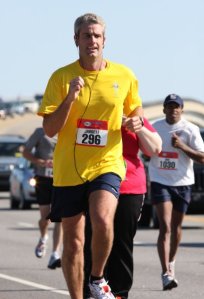
Last November, I was registered to run the Richmond Marathon. Then, I injured my hip. I notified the Richmond Marathon of my injury, and they graciously allowed me to defer my registration to this November. Then, I injured my knee.

Many people have told me that they are praying that I am able to run the marathon next November.

I began running marathons in 2007 with a group from the Oakmont Baptist Church of Greenville, North Carolina who proudly call themselves: “Oakmont Runners for Bo.” Bo was the only son of Rev. Beth and Tommy Thompson. Bo, a high school track star, was tragically killed in a car accident shortly after I took up running. I ran my first marathon with the group wearing a shirt bearing Bo’s name.

Running in Bo’s memory has helped me to keep life in perspective. It has also influenced my prayer life. Having been given the gift of nearly thirty years on this earth longer than Bo, thirty undeserved years, it is very difficult for me to pray for a pain-free hip or for comfortable knees.

Instead, I pray thanking God that I had the health and the ability to run and to risk injury. I pray thanking God that I have lived long enough to run almost 20 marathons. Instead of praying that I may be able to run another race, I pray thanking God that I was ever able to run any race.

I am afraid that too much of our prayer life is about asking God for more things, instead of about thanking God for the things we have. More often than not, we pray for God to keep us safe and secure from all alarms, instead of praising God for the inexplicable gift of life where risk and injury are inherent.

This Thanksgiving Season, may we truly count our blessings and name them one by one: life; breath; mobility; sunrises and sunsets; cups of coffee with a friend; sitting on the porch watching the rain; a warm embrace; love; and the list goes on and on and on.

Give Thanks in All Circumstances

eeyoreThe Apostle Paul admonishes us to “rejoice always, pray without ceasing, give thanks in all circumstances; for this is the will of God in Christ Jesus for you.” (1 Thes. 5:16-18).

When life is good to us, it is easy to be thankful. We are thankful for the beauty of each day. We give thanks for the splendor of autumn and for the crispness in the air. We are thankful for cold mornings, the warmth of the sun at noon and for the brightness of the moon at night. We are even thankful for the more simple things in life: the excitement of football games, for warm cookies and cold milk and sweet potato pie, for movie theaters, for popcorn, for restaurants, for the pleasure received from Christmas shopping and for the brilliance of Christmas lights. When life is good, when life is happy, it is very easy to give thanks.

However, when life is cruel, and when life is miserable, thankfulness is something that comes hard. Autumn appears drab. The air seems stifling. Cold mornings only symbolize the frigid callousness of living. The sun is an annoying glare. The moon is irrelevant. Football and basketball games become pointless. Cookies and milk and pie are petty.

When your child is in the hospital, when your mother has just been buried, when your spouse is undergoing surgery, when you hear words from the doctor like cancer and Alzheimer’s— restaurants become mundane, movie theaters and popcorn are trivial. When you are laid off from work, when you are behind on your mortgage, when you are struggling to just buy groceries—Christmas shopping becomes oppressive and Christmas lights appear dismal.

So, how in the world are we ever to do the will of God by rejoicing always and giving thanks in all circumstances?

In Philippians 1, we read how Paul himself did it during his imprisonment. Alone in a dark, dank prison cell, with being beheaded as his apparent destiny, Paul rejoiced. But, notice that Paul did not rejoice or give thanks for being restrained in a prison. Paul did not give thanks for the morning or the air. Paul did not thank God for the sun, moon or stars. He did not rejoice for flowers or trees or cookies or milk or pie. Paul gave thanks and rejoiced in the only thing that he had left in that dark, clammy jail cell. Paul gave thanks and rejoiced for hope. Paul hoped that the gospel would be spread with even greater boldness because of his imprisonment. Paul hoped that through prayers, the Spirit of Jesus Christ would work out all things for the good. Paul hoped that God would wring whatever good could be wrung out of this, his most difficult hour.

Hope was the only thing that Paul had left. And hope was enough. Hope was all that Paul needed to give thanks and to rejoice in his miserable circumstance. The good news is: for persons with faith in Jesus Christ, who offers us a living hope, who promises to always be with us for our deliverance, whatever our circumstances may be, who promises us a new life even when our old lives end— thankfulness can be something that comes easy.

We may not be experiencing happiness. We may not be able to develop an extensive list of things in which we are thankful. But, on the list of every believer, even if there is only one thing, there is hope. Life can take away much and destroy much in our lives. But, there is no thing and no one that can take away our hope. And, hope is always enough. So, rejoice always, pray without ceasing, give thanks in all circumstances; for this is the will of God in Christ Jesus for you. Amen.

Grace of Froot Loops

Froot Loops

Excerpt from Check Your Oil for The Farmville Enterprise.

How many times have you heard “You don’t know what you’ve got until it’s gone”? You don’t know what you’ve got until a relationship ends, a moment is lost, or a freedom is taken away.

A woman suffering with cancer, who lost her ability to perform even the most mundane tasks, once told me: “It is amazing how much we take for granted every day. Oh, how I would give anything in the world to be able to get up out of this bed, walk into my kitchen and just pour me a bowl of Froot Loops.” She went on, “When I was healthy, when I could get out of bed and walk to the kitchen, when I could feed myself, when I could chew and swallow my food, I don’t believe I ever thanked God for something as boring as a bowl of Froot Loops.”

Who in the world even thinks about the awesome gift of being able to do something as mundane and as boring as pouring a bowl of Froot Loops? Someone who can longer pour a bowl of Froot Loops thinks about it.

Who in the world thinks about the miraculous gift of being able to walk? Someone who has lost the ability to walk.

Who in the world thinks about the gift of healthy lungs? Someone living with COPD.

Who in the world thinks about their kidneys or their liver? Someone on the way to a dialysis thinks about their kidneys. Someone living or dying with cirrhosis thinks about their liver.

And who in the world the world truly thinks about the miracle that is their life, the miracle that is this creation? People diagnosed with a terminal illness do. Those who have recently lost a loved one to death do.

In one of his parables, Jesus said that some foolish bridesmaids missed the whole dance, because they forgot to fill their lamps with oil and did not see the bridegroom when he showed up. Jesus ended the parable with the admonishment: “keep awake” (Matthew 25).

Keep awake. Check your oil. Keep your lamp burning. Don’t miss the dance. Keep watching and keep looking, recognizing that we are never promised tomorrow. Take nothing for granted. Don’t wait until it’s gone to know what you’ve got. Treasure your lungs, your kidneys, and your liver. Cherish the ability to walk into the kitchen and pour something as mundane and boring as a bowl of Froot Loops. Relish every taste in creation. Revere every sight and every touch in this world. For in life, nothing is ever mundane. It is never boring. It is all miracle. It is all gift. It is all grace.