The False Religion of Herod: Wisdom Pilgrims in Violent Times

Matthew 2:1-12

Some say that “an epiphany” is what happens anytime someone discovers something brand new, like when they say something like: “I was today-years-old when I discovered thisor learned that.

I was today-years-old when I discovered the game we played as children called, “tag,” (T.A.G.) is an acronym: “Touch and Go.”

I was today-years-old when I learned the nursery rhyme “this little piggy went to the market,” didn’t mean this little piggy was going to Kroger to pick up some groceries. It meant this little piggy was going to be the groceries!

I was today-years-old when I learned the word “stressed” is just “desserts” spelled backwards. Or I was today-years-old when I learned that the Bible never says there were three wise men. It only mentions three gifts. And they were not kings, but magi, astrologers, who did not visit the baby Jesus at the manger with the shepherds. but visited the toddler Jesus in a house maybe a couple of years later. And there is no scholar who believes they rode on camels.

However, the word “epiphany” means something more. Even the Google says: When someone says, “I had an epiphany,” it means they’ve experienced a powerful, illuminating moment of clarity that changes not only their perspective, but their actions.

The Epiphany we commemorate today reveals what’s really going on in the world, and then, calls us to make a change, to do something. Epiphany is both an unveiling and a calling.

Matthew wastes no time unwrapping Christmas: “After Jesus was born in Bethlehem of Judea, in the time of King Herod…”

Before the star shines and gifts are given, Matthew names the power in the room. Because Epiphany is not just about who Jesus is. It’s about what his presence in the world exposes.

Herod hears of a child born “king of the Jews,” and Matthew says he is frightened, and notice this, “all of Jerusalem with him.” Because when an unhinged autocrat like Herod is frightened, everybody is in trouble.

Herod is frightened because oppressive power always recognizes a threat when it hears one. And this is the first thing that Matthew wants us to understand. Jesus, and the way of liberating love, mercy, justice, and nonviolence he would teach, model, and embody, and call others to follow, poses a serious threat to the kings of this world.

Now, one might guess that Herod would follow in the steps of his predecessor Antiochus IV who outlawed Jewish religious rites and traditions.[i] But Herod does not reject religion. He does something far more sinister, something that came quite naturally for his egotistical, greedy, self-serving, always-looking-out-for-number-one self. Instead of banning religion, he uses religion. He exploits faith purely for personal benefit.

He gathers the scribes. He pretends to consult the scriptures. He listens as scribes read the prophets to him. He speaks fluently in religious language, asking about the Messiah.

And then he lies. Not crudely. Not clumsily. The smooth-talking conman lies faithfully.Or at least, it sounds that way:

“Go and search diligently for the child, and when you find him, bring me word, so that I also may go and pay him homage.”

This is Herod doing one of the things Herod does best: conning people in order to serve himself. This time it’s religious people, making them believe he is one of them.

But the religion of Herod is a lie. It’s just fear, dressed up as faith. It’s violence wrapped in reverence. It’s power using the name of God for evil purposes.

Matthew wants us to see this clearly, because as you know, this is not an ancient political scheme. It’s a recurring one.

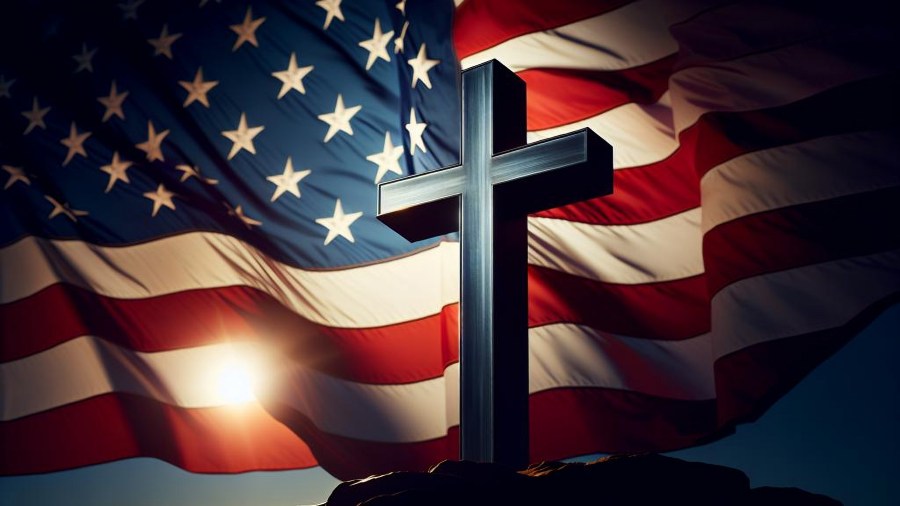
And today, we need to say it clearly and often: White Christian Nationalism is not Christianity. It is the lie of Herod, baptized and repackaged.

It claims a nation and a race of people are God’s favorites.
It confuses achievements and dominance with the blessing of God.

It demands absolute loyalty and calls it being faithful.

And it’s all a lie.

And what makes the lie so dangerous is wherever it takes root, someone, or some group, is always made expendable.

Antisemitism grows when Christianity is fused with national identity, turning Jewish neighbors into outsiders within a so-called “Christian nation.”

Islamophobia flourishes when that same logic decides who belongs and who never will, baptizing fear and casting Muslims as threats rather than beloved neighbors.

And political violence becomes justified when religious language sanctifies power, hardens hearts, training people to confuse cruelty with righteousness in the name of God and country.

Herod did not invent hatred. He simply learned how to make hate sound holy.

This is the evil Epiphany reveals. The whole world witnessed it on Christmas Day when bombs dropped on Muslims in Nigeria were called “a Christmas present.”

This is the false faith of Herod. It’s state violence that is baptized. It’s innocent lives reduced to collateral, and it’s the holy name of Christ used to bless what the nonviolent Jesus condemns.

And when Christians applaud it, excuse it, or explain it away, then the lie has completed its work. Because the greater travesty is not only that power speaks this way; it’s that the church learns to tolerate it.

This is why Epiphany matters. Epiphany exposes this false religion of Herod. But as even Google points out, Epiphany doesn’t stop there. Epiphany tells us exactly what to do about it.

In a recent article, Father John Dear reminds us that the Magi are not decorative figures in a nativity scene. They are our model. He calls the Magi “wisdom pilgrims,” people on a lifelong spiritual journey toward the God of peace. They follow the light they are given, not toward comfort, but toward truth.[ii]

It cannot be overstated that the Magi are outsiders, foreigners, practitioners of another tradition; and yet, they suddenly see what the insiders miss. They are “that-day-old” when they recognize that God’s presence and power is not found in palaces or on thrones, but in vulnerability. They kneel before the child, presenting their gifts.

And then comes the main point of Epiphany.

After the revelation, after the worship, after the gifts, they are ordered to return to Herod: to report back; to cooperate and to collude; to assist a system that sacrifices the innocent to preserve itself.

But Matthew tells us that once they encounter this child, once they meet the God of peace enfleshed in vulnerability, they cannot comply. They disobey orders. Not violently. Not dramatically. But decisively. Because, as Father Dear would say, once you meet the nonviolent Jesus, obedience to violent power becomes impossible. Epiphany makes cooperation with violence morally incoherent.

This is the moral clarity that is needed in our world today. The Magi understand something Herod never will: you cannot encounter a God who enters the world without violence and then support a war-making system. You cannot kneel before a vulnerable child and not resist a tyrant.

This is why Father Dear points out that, after Epiphany, discipleship becomes civil disobedience. Because it is obvious that the nonviolent Jesus cannot be fused with empire. And religion used to justify violence or cruelty is no longer Christian. It is anti-Christ.

This is why the lie must sound religious. Because violence cannot survive without spiritual cover. This is why empire always needs chaplains. Because power depends on churches that will quote scripture while looking away.

The good news is that not many of you, if any, were “today-years-old” when you discovered not every prayer is faithful. Not every “God bless America” from a politician is holy. Not every appeal to God deserves our allegiance. Not every law should be followed. And this is where Epiphany informs our public life.

Because when religious language is used to justify war, the church must decide whether it will provide cover or tell the truth.

When antisemitism hides behind distorted theology, the church must remember Jesus was a Jew.

When Islamophobia is baptized as security, the church must choose whether fear or love will shape its witness.

When political violence is normalized with Christian rhetoric, the church must decide whether it still recognizes the voice of Herod and follows the voice of Jesus.

The Magi show us what faithfulness looks like after Epiphany. It looks like nonviolent resistance.

And that is the call Epiphany places on us now.

Not to admire the Magi.
Not to romanticize their journey.
But to join them.

Father Dear says we too are called to be “wisdom pilgrims.” We are people who seek the nonviolent Jesus on the margins of a culture addicted to violence. We are people who are allowing our encounter with Christ to lead us away from systems that depend on bloodshed and cruelty. We are people who live the Sermon on the Mount not as metaphor, but as mandate.

Our faith is a faith of resistance. It’s faith that refuses to bless bombs. It’s faith that refuses to baptize borders. It’s faith that refuses to confuse domination with God’s blessing. It’s a faith that will call out the proclamation that “this is a Christian nation” for what it is. It’s a lie, a dangerous lie that must be called out. Because change will happen, not because people will stop the lies, but because the lies are exposed by the light.

The good news is that the light still shines in our world.
Truth is still being revealed.
And Christ is still born into this world that would rather kill him than change anything.

So, let’s go from this place today as wisdom pilgrims.

Follow the Light, even when it leads you away from power.

Shine the light, even when it is dangerous to do so.

Refuse the lie, especially when it sounds religious.

Withdraw your cooperation from violence in every form it takes.

Kneel and offer your gifts only where the God of the nonviolent Jesus is truly revealed.

And may the God of peace guide our steps, the Christ of nonviolence shape our faith, and the Spirit that is Holy give us courage to live what has been revealed, to live this Epiphany.

And when we are challenged, when our faith is questioned, when we are asked what’s gotten into us. “What kind of kind of resolution did you make this year?”

May we remember this Epiphany Sunday and answer: “I was today-years-old when I learned that following Jesus means becoming ‘a wisdom pilgrim.’”

Amen.

[i] https://www.thetorah.com/article/antiochus-iv-persecution-as-portrayed-in-the-book-of-daniel

[ii] https://open.substack.com/pub/fatherjohndear/p/civil-disobedience-a-spiritual-journey?utm_campaign=post&utm_medium=post%20viewer




When Freedom Is Fatigued

Galatians 6:1-16

As our country’s freedom is celebrated this weekend, I believe we’re called as people of faith to remember the painful truth of our history and to acknowledge that freedom has never been free. It has been and must continually be fought for.

Our remembering is especially important as history itself is under attack with a dangerous push to whitewash the truth.

Books are being banned, libraries are being closed, and words like “slavery,” “racism,” and “reconstruction” are being scrubbed from school curriculums like they never happened. And just last month, we saw the Juneteenth holiday denigrated by those in power complaining about Americans getting “too many days off.”

They want us to forget the truth and just move on, because if we forget the wounds, we might lose the urgency to heal them. And if we forget the cruelty, the brutality, and the inhumanity, they can more easily repeat it.

So today, we gather to remember the truth, and we do so in the name of Jesus, who proclaimed that it is the truth that sets us free (John 8:32).

Long before 1776, sovereign nations like the Monacans who lived on this land in harmony with the earth, had their lands stolen, and treaties were broken by the same men who would declare liberty and justice for all.

In 1776, while white men signed the Declaration of Independence,
Black people remained in chains, counted as property, not people.
And the pen that wrote “all men are created equal” didn’t write for women, the poor, and the indigenous.

Since then, the story of America has been a story of contradiction:
of beautiful promises and brutal practices; of high ideals and hard-hearted policies. And true liberty and justice for all has always been a struggle.

· It was a struggle when Harriet Tubman followed the North Star through the night leading herself and others out of slavery.

· It was a struggle when Frederick Douglass stood in pulpits and pointed out the hypocrisy of a slaveholding church.

· It was a struggle when Sojourner Truth asked, “Ain’t I a woman?”

· It was a struggle when immigrants crossed deserts and oceans to chase a dream—only to be met with discrimination, quotas, and cruelty.

· It was a struggle when laborers organized for a living wage.

· A struggle when LGBTQIA siblings stood at Stonewall and said, “No more.”

· A struggle when King, Lewis, Williams and others marched across Edmund Pettus Bridge on the day remembered as Bloody Sunday.

· A struggle when Cesar Chavez and farmworkers fasted for dignity in fields that fed the nation.

The truth is that freedom has never rolled in on the wheels of inevitability. As Dr. King said, it comes by struggle and sweat, by movement and by sacrifice.

And that’s why Paul’s words to the Galatians are so prophetically powerful today:

“Let us not grow weary in doing what is right, for we will reap at harvest time, if we do not give up.”

How appropriate are these words today, as those committed to the freedom of all people are, quite frankly, worn out.

We’re tired of begging for justice for the poor and the marginalized.

-Tired of the lies, the hate, the cruelty.

-Tired explaining why it is unfair to call poor people “lazy” and just plain mean to call them “parasites.”
-Tired of explaining why the dignity of LGBTQ persons is not up for debate.

-Tired of explaining why science is real, women’s rights are human rights and Black lives matter.
-Tired of sowing seeds of peace in a land still addicted to violence.

And this weekend Paul has a message for us:

Keep going. Keep working. Keep struggling. Keep sowing those seeds. Don’t grow weary. Because the harvest is coming.

So today, on this weekend of noise and nationalism, injustice and immorality, we gather to tell the truth:

-We’re tired of marching for justice while lawmakers pass bills to steal it.
-We’re tired of praying for peace in a nation that budgets more money for bombs than any nation on earth.
-We’re tired of hoping for change in a country that celebrates independence while restricting who gets to be free.

Today, freedom is fatigued, but the good news is, the struggle is not over. Because our faith is calling us to keep sowing, believing the harvest is coming.

And being exhausted today only affirms our faithfulness to the gospel, because gospel work is heavy work.

Jesus talked about the heaviness of the gospel when he criticized the Pharisees’ hypocrisy for playing lightweight religious games, tithing spices like mint, dill and cumin, while ignoring the weightier matters, the heavy matters of mercy and justice (Matthew 23).

For the gospel is not just about personal salvation. It’s heavier than that. It’s about communal transformation. We are called to confront sin, not just in the soul, but in systems. Because we are called to not just look after ourselves, but to carry each other’s burdens.

Verse 2 of our verse needs to be repeated today as many Americans who call themselves Christians and talk about bootstraps and personal responsibility seem to have forgotten it: “Bear one another’s burdens, and in this way, we fulfill the law of Christ.” Bearing another’s burden, having empathy for others, says Paul, is the essence of what it means to be Christian.

And Christians today, not the Christians in name only, but Christians who fulfill this law of Christ, haven’t been this burdened in years.

And Paul’s message for us is to keep going, keep bearing those burdens, keep sowing those seeds, reminding us that we will one day reap what we sow.

Of course, we in America know all about reaping what we sow.

We elect leaders who sow division, declaring that they hate over half the people in the country, and then ask why we’re so polarized.

We sow billion-dollar weapons, and billion-dollar detention centers, and billion-dollar border walls, and then wonder why there’s no money for education and healthcare.

We sow exclusion and meanness, and do so in the name of God, and are shocked when young people leave the church.

So, we ask today:

What kind of country are we sowing?
What kind of church are we planting?
What kind of future are we tending?

If we sow silence when immigrants are deported, we will reap a nation with no conscience. If we sow tolerance for white supremacy, we will reap a church with no soul.

But if we sow solidarity, if we sow compassion, if we sow truth with love and justice, then we might just see the harvest.

In speaking of the harvest to come, how appropriate is Paul’s warning: “Do not be deceived. God is not mocked.”

Because another truth we must tell today, especially here in Lynchburg, Virginia, is naming the seed that’s continually mocking God and choking the harvest: the seed of White Christian Nationalism.

So many have been deceived into believing that this the Gospel of Jesus. When in fact, it’s the exact opposite. It’s the idolatry of race, the weaponizing of scripture, and the spiritual disguise of liberty that’s only for the privileged. It’s the heresy that says God loves America more than other nations, that straight whiteness is holiness, guns are sacred, and power matters more than people.

It wraps the cross with the flag, prays over injustice, and oppresses all the people Jesus would invite to a party. It anoints hate with holy water. It baptizes voter suppression, xenophobia, patriarchy, and LBGTQ bigotry and dares to call it “religious freedom.” But it’s far from freedom. It’s spiritual fascism dressed in red, white, and blue.

And Paul has a strong warning for those who have been deceived by such fascism: “God is not mocked.”

I believe that means that God is not fooled by the praise songs sung in a sanctuary of a church that turns its back on the oppressed.

God is not honored by churches that preach salvation but vote against food programs, health care, housing, and human dignity.

It’s not just bad theology—it’s deadly theology. And if we don’t name it and speak out against it, it will keep reaping violence, apathy, and war against the image of God in every non-white, non-straight, non-male, non-citizen body.

So, on this Fourth of July weekend Christians must say it clearly: We renounce the false gospel of white Christian nationalism. We will not grow weary naming it, resisting it, and working to plant something more beautiful in its place.

And Paul tells us exactly what we need to plant. Look at verse 15.

“For neither circumcision nor uncircumcision is anything; but a new creation is everything!”

Paul is talking about more pointless, lightweight religious stuff, saying it means absolutely nothing.

Worrying about how much foreskin one has is pointless when you couldn’t care less about the deeper wounds of others. Hanging the Ten Commandments on the Wall of a classroom is ridiculous when you refuse to feed the hungry children who sit in those classrooms.

America doesn’t need more lightweight, God-mocking religiosity. America needs something heavier. America needs a new creation.

A new creation where human dignity isn’t decided by documentation.
A new creation where education and health care are not luxuries.
A new creation where Black and Brown lives matter and queer kids live and thrive.

A new creation where people live like our ancient ancestors— in harmony with the earth, air, and sea.
A new creation where the church never bows to empire but always stands in solidarity with the least, the last, and the left out.

And Paul reminds us: We don’t get there by accident. And we don’t get there mocking God with religious hypocrisy. We get there by sowing it in faith and never giving up.

So, here’s the good news:

If you are exhausted today, it means you’ve been bearing a heavy burden fulfilling the law of Christ.
If you are tired today, it means you’ve been in the struggle sowing a new creation.
If you feel like giving up today, it only means you still care.

If your patriotism feels today more like fatigue than fireworks, you are on the right path.

And today, God has three words for you: Don’t. Give. Up.

Don’t give up on the child who needs your voice.
Don’t give up on the system that looks too broken to fix.
Don’t give up on the Church, even when it’s lost its moral compass.
Don’t give up on the movement. Don’t give up on the struggle.
Don’t give up on your calling, and never give up on love.

And know you don’t have to carry it all alone. Because we’re going to bear the burden together.

So, this weekend, while the nation celebrates its imperfect, incomplete freedom, we’ll keep sowing for the freedom that still hasn’t fully come.

And we will not give up. Because we know the harvest is coming.
And God will not let our labor be in vain.

So go, worn out but willing. March on, wounded but not defeated, stunned but not silent. Sow seeds of justice with trembling hands and tired feet.
And trust that the God who began a good work in us will one day bring home the harvest.

Amen.


Pastoral Prayer

O God of the long road and the tired feet,

You have seen every protest march, every underground meeting,

every whispered prayer beneath the weight of oppression.

You were with Harriet Tubman in the woods,

with the veterans of Selma on the bridge,

with the mothers crying at detention centers today.

This weekend, as a nation sings of liberty,

We are grieving, for we know the truth that not all are free.

We know freedom is more than fireworks and parades—

it is housing, it is healing, it is dignity, it is truth.

We grieve the cruelty of a nation that passes a bill soaked in injustice: that takes healthcare from the sick, food from the hungry, and dignity from the poor to fund tax breaks for the rich and concentration camps for immigrants.

We grieve, O God, for Texas Hill Country—where catastrophic floods struck on July 4 killing at least 51 people including many children, sweeping away cabins at a summer camp with 27 girls still missing.

May the families waiting in anguish feel your presence.

Give rescue workers strength, bring swift comfort,

and awaken in us a fierce call to care for our neighbors in every disaster.

We confess, God, that we sometimes grow tired of it all.

Tired of the suffering of this world. Tired of fighting the same battles.

Tired of speaking truth in ears that won’t hear.

Tired of watching laws be written that wound your people.

So, pour your Spirit upon us like a second wind.

Give us the courage to keep showing up—

to sow goodness, to bear burdens, to carry one another.

And give us joy that this labor is never in vain.

Make us co-creators of your new creation,

until the tired are lifted, the wounded are healed,

and the world becomes your Beloved Community. In the name of Jesus, our justice, and our rest. Amen.


Invitation to Communion

Jesus never promised an easy road, but he did promise a shared table.

At this table, the tired are welcomed, the wounded are fed, and no one carries the Gospel alone.

Here we remember that Christ’s body was broken not just for individuals,

but for communities—for the collective healing of the world.

If you are weary, if you are burdened,

if you are longing for a taste of real freedom—

come. All are welcome.

This table is for you.


Invitation to Give

Giving to this offering is not about guilt or obligation. It is about sowing.

And we reap what we sow.

When we sow into justice, we reap a more beloved world.

When we give with compassion, we build up the Body of Christ.

On this weekend when so much is spent on fireworks and celebration,

we invite you to invest in something eternal:

a love that serves, a truth that speaks, and a justice that marches.

Let us give, not out of surplus, but out of hope.

Not to keep the lights on, but to light the way.

Commissioning and Benediction

Go now, tired but unbroken.

Go now, weary but still willing.

Go now, and do not grow weary in doing what is right—

for the harvest is coming.

May the Spirit strengthen your hands.

May the Christ who bore our burdens walk beside you.

And may the God who is not mocked guide you into new creation.

Go in peace, go in power,

go in love—

and never give up.

Amen.

When Jesus Falls Out of Favor (and nearly off a cliff!)

Luke 4:14-30 NRSV

Once upon a time, in a land far away, but not so different from our own, excitement was in the air as folks began gathering in the narthex, sipping their coffee. Everyone was looking forward to the sermon. Because today, they had a special guest preacher!

Many were just glad to have a break from listening to their pastor who they’ve had to now put up with for a year and a half. But some were really looking forward to hearing one of their own, someone who had moved away, made a name for himself, and made them proud. He had come back home for a visit and had been asked by the Elders to fill the pulpit.

No one paid attention as the announcements were being made. In the pews, heads moved and necks stretched, as everyone was trying to catch a glimpse of their hometown pride and joy.

After the Children’s Moment and the Pastoral Prayer, the young man stood up in the pulpit.

“Look! There he is!”

“My, hasn’t he grown!”

“He looks just like one of us, with his dark eyes and complexion.”

The worship leader handed him a scroll. He unrolled it and began reading words from the prophet Isaiah:

‘The Spirit of the Lord is upon me,

   because he has anointed me

     to bring good news to the poor.

He has sent me to proclaim release to the captives

   and recovery of sight to the blind,

     to let the oppressed go free,

to proclaim the year of the Lord’s favor.’

He rolled up the scroll, gave it back to the worship leader, and sat down. All were smiling as he had just read one of their favorite scripture passages.

It is then, that he stood back up and dropped the mic by declaring: ‘Today, this scripture has been fulfilled in your hearing!’

Countless amens could be heard throughout the sanctuary. One congregant shouted: “Hallelujah!” Another exclaimed, “Praise Jesus!” Another said, “I wished he was our full-time pastor!”

Everyone was pleased as they could be! Because the scripture he read was being fulfilled for them. Good news for the poor meant good news for them, because they didn’t consider themselves to be among the rich oligarchs that were in power.

And because they were living in an occupied territory, release to the captives, meant liberation for them!

Because they had lost hope and had a difficult time seeing anyway forward, recovery of sight to the blind meant recovery of hope for them!

And because they felt oppressed by the Romans, freedom for the oppressed meant freedom for them!

So, amen, brother! Preach it!

They could not have been more enthusiastic with their hometown hero! All throughout the sanctuary, you could hear proud comments like: “Why isn’t that Joseph’s oldest boy?”

After the choir sang the anthem, the young preacher stands back up, takes a sip of water, and begins the sermon: “There’s no doubt many of you will say: ‘Doctor, cure yourself.’ ‘Do here also here in your hometown the things that we heard you do Capernaum.’”

“That’s right!” someone shouted!

Another yells: “Charity begins at home!”

Someone else screams, “America First!” (I mean, “Israel First!”)

On the edge of their seats, their ears are itching to hear what their hometown boy had to say next!

It is then he says something like: “You know that no prophet is accepted in his hometown

Someone cupped their hands to their mouth and shouted: “We’ll always accept you Jesus!”

Another yelled: “That’s right! You are one of us!”

Still another shouted: “We’re with you all the way!”

He takes another sip of water and then begins to proclaim that Isaiah’s prophetic vision of good news, liberation, recovery of sight, and freedom is not for them only, or even for them first. It is for everyone, maybe even especially for those who need it the most, folks that may not be from around here

In the congregation, shoulders tense, and heads turn. More comments could be heard, but the enthusiastic tone becomes disconcerting: “Wait a minute! I know he’s not talking about diversity, equity, and inclusion, is he?”

Jesus, though, is undaunted by the sudden aggravation in the air, because he wasn’t there to win a popularity contest or to scratch itching ears. He’s  there to tell the truth, even if that truth is unsettling, because Jesus knows that the truth of God’s inclusive and equitable love, as offensive as it may be, is the only way to create a more peaceful and just world.

Jesus then reminded the congregation why the prophets are never popular in their hometown by referring to two stories, one about the prophet Elijah and one about the prophet Elisha.

“You remember Elijah, don’t you? And the story of those three and half years it hardly rained a drop, causing a severe famine throughout the region? Now there were countless widows living in Israel during that time who were starving to death. But God didn’t send the prophet Elijah to help any widows in Israel. No, instead, God sent the prophet to save a widow in Lebanon.”

Apart from a few gasps, the congregation fell so silent you could hear a pin drop.

“And you remember the prophet, Elisha? There were many lepers suffering in Israel, but instead sending the prophet to heal those in Israel of their disease, God sent Elisha to heal a leper in Syria.”

The sanctuary exploded! People rose to their feet. Some began shaking their fists in the air.

How dare he say that the blessings of God extend beyond our borders, to other cultures and ethnicities!

The audacity he has to say that God’s mercy, justice, and freedom are not just those of us who have the proper papers or the right genes!

And how dare he infer that God may even favor someone from Lebanon or from Syria, over us!

The unmitigated gall he has to say that this scripture is fulfilled in our hearing, but not fulfilled for us!

Overcome with rage, the congregation turns on Jesus.

Some demand an apology.

Others call his words “ungracious,” his tone “nasty.” And his service “boring.”

One accused him of being a left-wing lunatic who was bringing woke politics into the synagogue!

Someone else cried: “Deport him!” Another shouted: “Send him to Guantanamo Bay!”

They become so angry that before Jesus is able to finish the sermon, they chase him out of the sanctuary and run him clear out of town right to the edge of a cliff. But he doesn’t fall off the cliff. He somehow sneaks through the crown and escapes.

How quickly had Jesus fallen out of favor and nearly off a cliff!

But that’s the world in which we live—a world where empathy is considered a sin. Because empathy involves loving our neighbor—not the just ones who live next door, but the ones who live in Lebanon and Syria, in Mexico, Gaza, Columbia, Cuba, and Venezuela—as much as we love ourselves.

The word “freedom” has always been a threatening word when it is applied to a group people that another group of people deem “other” or “less.”

 “Diversity,” “equity,” and “inclusion” have always been offensive words to those who want good things for themselves only, or at least, for themselves first. Equality can feel like oppression to those accustomed to privilege. And in our nation, that means that the angry mobs have historically been white people.

It was only a little over 60 years ago, a time that those currenlty in power are trying to take us back to, empathetic people from all over the United States traveled to the South to take a stand for the civil rights of all people. Some were called Freedom Riders, as they rode buses throughout the South to nonviolently resist unjust Jim Crow laws.

Like the time Jesus preached freedom for the other in the synagogue, an angry mob formed. And on Mother’s Day in 1961, in Anniston, Alabama, 50 white men, many of them religious, attacked a Greyhound bus carrying black and white Freedom Riders with pipes, chains, and bats. They smashed windows, slashed tires, and beat the sides of the bus to terrorize the Freedom Riders who were inside.

Once the attack subsided, with the Freedom Riders still on board, the police pretended to escort the damaged bus to safety, but instead they abandoned it just outside the Anniston city limits.

Another armed mob surrounded the bus and began breaking more windows. The Freedom Riders refused to exit the bus and received no aid from two highway patrolmen who were watching nearby. When a member of the mob tossed a firebomb through a broken bus window, others in the mob attempted to trap the passengers inside by barricading the doors of the bus.

The mob fled when they feared the fuel tank was about to explode. Somehow, the Riders were able to escape the ensuing flames, only to be attacked and beaten as they exited the burning bus.[i]

Kindness, grace, and compassion have always made people wickedly angry when it is applied to outsiders. Some people have always called empathy a “sin,” because empathy involves caring for someone other than yourself, or other than “your” people. Thus, the powers of wickedness have always tried to trump the power of love. Darkness has always sought to overcome light.

The good news is that darkness is no match for even a little bit of light, and love always wins. The good news is that Jesus did not fall off that cliff, and through the resurrected body of Christ, he is still alive and preaching in our world today.

I know that it may feel like we are standing at the edge of a great cliff. Our feet may be slipping as the rocks move under our feet. Some of us have slipped, and our feet are dangling over the edge. We’re barely hanging on. But we are not falling.

Somehow, someway, as Jesus escaped those angry worshippers who chased him to an edge of a cliff outside the city limits of Nazareth, and as the Freedom Riders escaped that bus set on fire outside the city limits of Anniston, Alabama, we too have escaped.

 We are still here. Jesus and his followers may have fallen out of favor with the powers-that-be, but we have not fallen off the cliff!

And despite the opposition in our nation today, the intimidation in our state today, and the hostility in our city today, we are still proclaiming good news today, not just for ourselves, but for all people.

We are still committed as ever to fulfilling the promises of God for black and brown people—

Proclaiming God’s liberation for non-binary and transgendered people—

Proclaiming God’s freedom for undocumented people, asylum seekers, refugees, migrants, and victims of war.

And proclaiming a hopeful vision of God’s peace and justice—

God’s empathetic vision of mercy and compassion—God’s prophetic vision of diversity, equity, and inclusion—shining our lights so all can see it!

The dark winds of wickedness are howling, but our candles are still burning!

On the edge of a cliff, we may feel we are barely hanging on today. We may have fallen out of favor. But we are not falling off! Say it with me: We are not falling off! Amen.

[i] https://calendar.eji.org/racial-injustice/may/14