
Matthew 5:21-24
Almost every day, I read or hear someone say that much of the church today looks nothing like the movement of love and justice that Jesus started.
Many agree it is due to a wide-spread rejection of Jesus’ words in the Sermon on the Mount. Folks in church have dismissed the beatitudes where Jesus proclaims that God is on the side of the poor, the meek, the grieving, the compassionate, and those who hunger for justice and peace. Because they prefer to live in a world where God is on the side of the privileged and powerful, those who have never had to ask for their lives to matter, even on the side of those who are merciless and violent—to the people who look, speak and worship differently.
Because frankly, if you are one of the privileged, it’s just better that way. It’s more comfortable. It’s safer and just easier.
However, I want to suggest that the main reason many churches look nothing like Jesus is because some of us have refused to obey the first command Jesus gives about worship. We’ve ignored Jesus’ command to stop worshipping, stop singing, stop praying, get up in the middle of the sermon, and go home. And don’t come back, until we’ve reconciled with our brothers and sisters.
Or maybe it’s because, we’ve grossly misinterpreted this command.
As a child, I remember being warned very seriously by my mother: “Jarrett, you must never, ever call your brother, Jason, ‘a fool.’ Because you could go to hell for that!”
And I believed her. I think I called my brother every name in the book. But I never called him a “fool.”
It’s strange when I think about it, as I grew up in a world where I heard the “n-word”spoken casually. I’ll never forget hearing racist jokes told around the dinner table, right after church, hearing laughter at the expense of others.
No one warned me about that.
My family was deeply religious, in church every time the doors were open. And yet, we seemed to miss what Jesus was actually saying in his first recorded sermon.
Referring to verse 22, and the danger of calling a brother or sister “a fool” or else “be liable to the hell of fire,” I’ve heard people boast, “Well, I’ve never called my brother or sister a fool!”
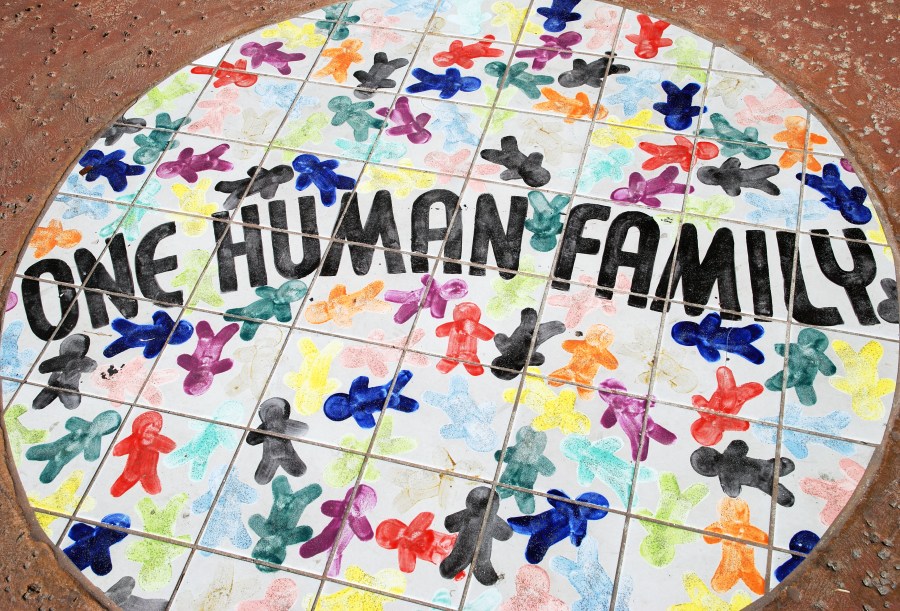
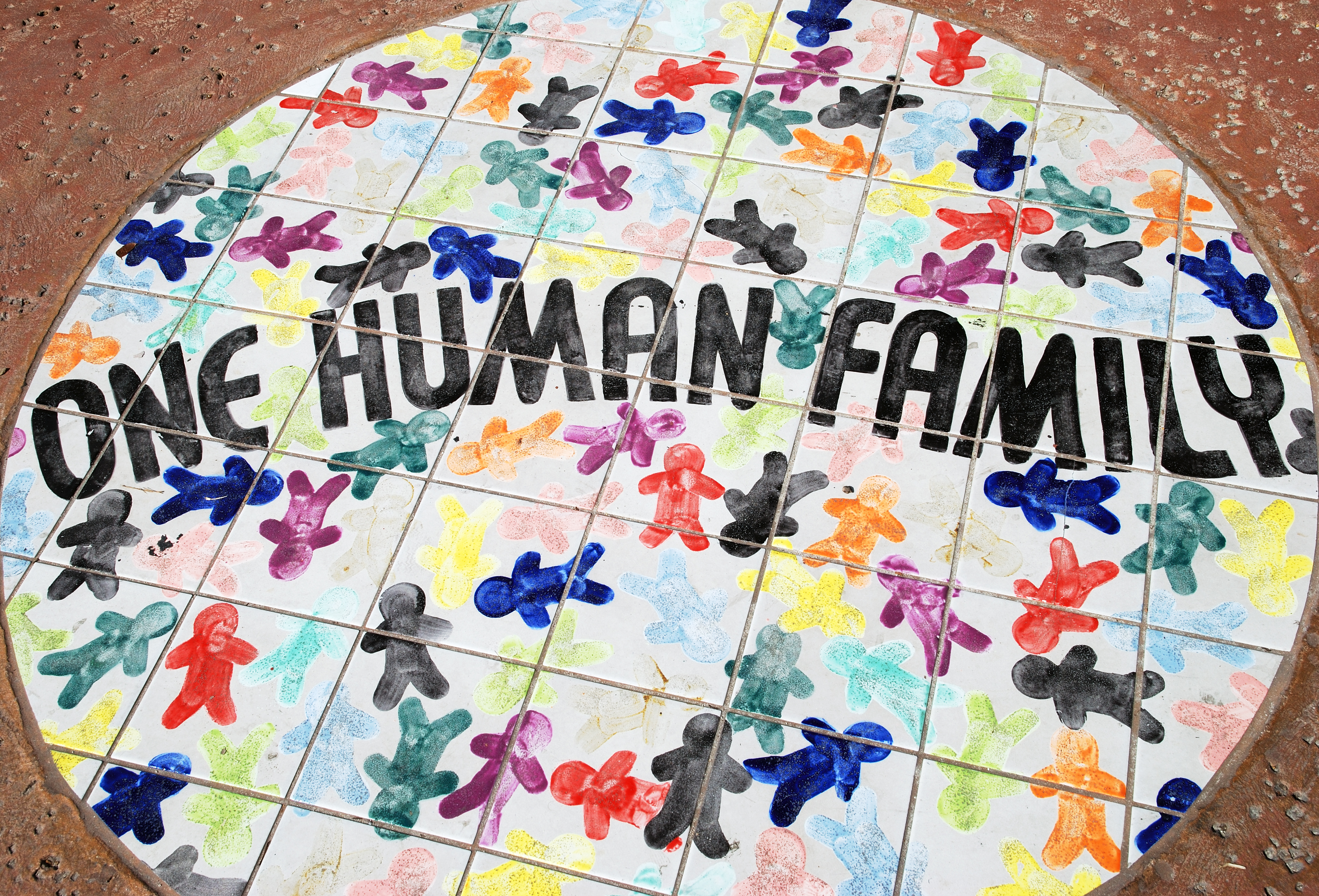
The problem is that whenever Jesus speaks of family, he always broadens its definition.
Later in Matthew, we read about a time Jesus is teaching in the synagogue when someone interrupts him saying, members of your family are here to see you. Jesus turns and points to everyone in the room and says, “All of these are part of my family.” In every word and action of Jesus, he continually enlarges the circle. Family is not defined by bloodline, nor ethnicity, nor tribe, nor nation.
In Matthew’s Gospel, the word translated brother or sister, adelphos, stretches beyond biology. Family is not bloodline or tribe. It is anyone who belongs to God.
So, when Jesus says, “if you say to your adelphos, ‘you fool,’” he’s talking about the person sitting in front of you and behind you, the one across the aisle, across the border, across the political divide.
He’s saying: The ones you despise are your siblings, and that should change everything. Because it’s one thing to insult a stranger. It’s quite another to degrade members of your own family. It’s one thing to caricature “them.” And it’s another to realize there is no “them” in the kingdom of God.
Jesus then names two insults. The first is raka, an Aramaic word which means something like “empty-headed,” “stupid,” “washed up,” “good for nothing,” “worthless.” It’s a dismissal of someone’s value. It’s saying someone is disposable and can be discarded.
The second word is translated “fool.” In Greek, it is moros. It’s the root of “moron.” But in that culture, calling someone moros was not about intelligence. It meant morally worthless, godless, demonic, beyond redemption. It was a way of saying: You do not matter, you do not belong, and you never will.
With these two words, Jesus was warning people of the harm of dehumanization and demonization.
When we hear Erika Kirk call the protesters in Minneapolis “demonic,” when we see images depicting Barack and Michelle Obama as apes, when Congresswoman IIlan Omar is called “garbage,” when immigrants are described as “infestations” or “invasions,” and when a Puerto Rican singer is told “he doesn’t belong,” we are witnessing a centuries-old strategy of dehumanization and demonization.
Enslaved Africans were called “property” and “animals,” because you cannot enslave someone you fully recognize as part of your family.
Indigenous peoples were called “savages,” so land could be stolen without moral consequence.
Black men were labeled “brutes” and “bucks”, so lynching could be framed as protection.
Jewish people were depicted as “vermin,” so genocide could be justified and rationalized.
Japanese Americans were called enemies, so detention centers could be normalized.
The pattern is always the same: First, a label, then a caricature, then a policy, and then a grave.
What we are continuing to learn about the Epstein files should not surprise us as we are bombarded with language that objectifies women: jokes that reduce women to body parts; comments that treat women as trophies or temptations; speech that minimizes harassment or blames the victims of assault.
Before assault becomes physical, language makes it conceivable. When the bodies of women are described as things to be grabbed, owned, and evaluated, then empathy is lowered and permission to harm is created.
Jesus is saying here that once someone is no longer adelphos, once they become “less than,” harm becomes easier to justify.
But if she is your sister, if she is adelphos, then her dignity is not negotiable.
If Barack and Michelle Obama are adelphos, then ape imagery is not just offensive. It’s family betrayal.
If Black and Brown immigrants are adelphos, if the Puerto Rican artist is adelphos, then slurs are not just words. They are deep wounds within the household of God.
If women exploited and molested by rich and powerful men are adelphos, then the demand for justice will be relentless and a suggestion that the acceptance of injustice is worth a $50,000 Dow Jones will not be tolerated.
Now, it’s easy to hear a sermon like this and think of someone else. It’s easy to nod our heads because we would never post the meme, never chant the slur, never laugh at the joke. But Jesus does not say, “If your enemy has something against someone else.” He says, “If your sibling has something against you.” Which means this is not only about the loud cruelty out there. It is about the quiet ways we withdraw from people who frustrate us. The way we roll our eyes and dismiss others. The way we avoid hard conversations. The way we decide someone is not worth the effort. Dehumanization does not begin with a microphone. It begins in the heart. And even good, justice-seeking people are not immune.
Jesus says dehumanization endangers us with hell. But like a misinterpretation of the word adelphos, raka, and moros, the way we have interpreted “hell” has actually made this world more hellish.
The word Jesus uses here is Gehenna. It’s a valley outside Jerusalem associated with burning refuse and with Israel’s history of violence. It symbolized what happens when a society becomes a dumping ground for human dignity.
Jesus is saying that Gehenna is what we create on earth when we treat others as garbage, worthless, washed-up, disposable.
And then, to underscore how important it is to treat all people with dignity, to love others like family, to love all people as we love our own, as our very selves, Jesus says this: “If you are offering your gift at the altar and remember that your sibling has something against you, leave your gift at the altar.”
Leave the worship service before the peace is passed and the benediction pronounced. And go. Be reconciled. Jesus refuses to separate love of God from the love of people and suggests that God does not receive praise from lips that practice dehumanization of others.
Reconciliation is not politeness, or kindness, although we certainly need more of that in the world. It’s not pretending harm did not happen or moving on, letting bygones be bygones, nor is it “agreeing to disagree.”
Reconciliation is truth-telling. It is repairing and restoring. And it is a refusal to continue dehumanizing and being silent in the face of dehumanization.
After learning that our sibling Christopher Lilley, passed away suddenly this week, many have asked me if Chris had family. I do not know of any biological family, but I do know he had family. He had church family, members of this church and members from the former Court Street United Methodist Church, who enveloped Chris in love and grace. He also had his recovery family, a community that helped him stay sober for the last 11 ½ years.
I cannot put into words what it meant to Chris that he had people who treated him as adelphos.
Two months after Chris was born in the Brooklyn neighborhood of Baltimore, Maryland, his mother literally discarded him, threw him out with the trash, leaving him outside of a garbage dumpster. Chris was found and placed in the custody of the state for months before he bounced around between several different foster parents. Years later he was finally adopted, but his childhood was one of trauma.
Chris struggled with mental illness and alcoholism. He often heard dehumanizing and demonizing voices in his head. Most wrote him off. However, the good news is there were people in this city who loved Chris, who treated him like family, who let him know that he was not trash. He was a beloved child of God, a sibling of immeasurable worth.
And not only did Chris overcome his addiction to alcohol, he became a sweet, caring, empathetic, soul. The little way he giggled at his own jokes revealed a spirit that was far from broken.
Chris had an incredible passion for social justice. Chris often told me how he had no tolerance for white supremacists, Nazis, and bigots, for anyone who made anyone else feel like trash. Chris called me often, many times just to ask me how I was doing, or how people on our church’s prayer list were doing.
Having been treated as garbage, Chris experienced his share of Gehenna in this world. But because he found a community of grace, reconciliation, and restoration, I believe he also experienced a little bit of heaven.
So, before we come to this table, before we say the prayers, before we receive the bread and drink from the cup, we must ask:
Where have we dismissed someone as less than?
Where have we laughed along at jokes that harm?
Where have we stayed silent?
This table is not for the perfect. It is for the honest. It is for those who are willing to love as Jesus loved, to resist dehumanization and demonization in all its forms.
Invitation to Communion
Here we remember a body that was mocked.
A man publicly shamed. A Savior treated as disposable.
And we remember that he refused to return contempt with contempt.
This meal does not erase our responsibility. It forms us for reconciliation.
So, come.
Not because you have never spoken harm. But because you are willing to stop.
Come, ready to see every person as adelphos.
Come, ready to reject the language of Gehenna.
Come, ready to build a community where dignity is not negotiable.
Because Jesus is not just trying to keep us from committing murder. He is trying to form a community where murder becomes unthinkable.




 Just Love