B.S. Wingate University, 1988
M.Div. Southern Seminary, 1992
D.Min. Gardner-Webb University, 2005
Served churches in Kentucky, Georgia, Louisiana, Oklahoma, Arkansas and North Carolina
Currently serving at First Christian Church (Disciples of Christ) in Lynchburg, Virginia
Running the OBX Marathon in Bo’s Memory
Last November, I was registered to run the Richmond Marathon. Then, I injured my hip. I notified the Richmond Marathon of my injury, and they graciously allowed me to defer my registration to this November. Then, I injured my knee.
Many people have told me that they are praying that I am able to run the marathon next November.
I began running marathons in 2007 with a group from the Oakmont Baptist Church of Greenville, North Carolina who proudly call themselves: “Oakmont Runners for Bo.” Bo was the only son of Rev. Beth and Tommy Thompson. Bo, a high school track star, was tragically killed in a car accident shortly after I took up running. I ran my first marathon with the group wearing a shirt bearing Bo’s name.
Running in Bo’s memory has helped me to keep life in perspective. It has also influenced my prayer life. Having been given the gift of nearly thirty years on this earth longer than Bo, thirty undeserved years, it is very difficult for me to pray for a pain-free hip or for comfortable knees.
Instead, I pray thanking God that I had the health and the ability to run and to risk injury. I pray thanking God that I have lived long enough to run almost 20 marathons. Instead of praying that I may be able to run another race, I pray thanking God that I was ever able to run any race.
I am afraid that too much of our prayer life is about asking God for more things, instead of about thanking God for the things we have. More often than not, we pray for God to keep us safe and secure from all alarms, instead of praising God for the inexplicable gift of life where risk and injury are inherent.
This Thanksgiving Season, may we truly count our blessings and name them one by one: life; breath; mobility; sunrises and sunsets; cups of coffee with a friend; sitting on the porch watching the rain; a warm embrace; love; and the list goes on and on and on.
A huge issue facing the church today is authenticity, or more specifically, a lack of authenticity.
People say that churches are full of people who pretend like they have it all together. Churches are full of fake smiles and phony piety. Churches are full of folks who act like they have all of the answers, have everything on earth and even in heaven all figured out.
Almost every week, I will hear at least one person ask: “Why can’t Christians just be real?” Someone once asked: “Why can’t people act the same way in church that they act at home?”
I believe the reason many Christians are so fake is that we still have a problem with the good news of the gospel we call grace. We have a difficult time believing that God truly loves us, accepts us, and welcomes us just as we are.
Because, it seems too good to be true.
I believe we Christians have a difficult time being authentic, making ourselves at home, because we have a difficult time accepting that the extravagant, amazing grace of Christ that welcomes us to be real; and because of that, we also have difficult time sharing grace. So, not only do we hide or deny our sins, we are quick to point out the sins of others. Consequently, we have gotten this reputation in the world for not only being fake, but also judgmental.
Indeed, the word of God is living and active, sharper than any two-edged sword, piercing until it divides soul from spirit, joints from marrow; it is able to judge the thoughts and intentions of the heart. And before him no creature is hidden, but all are naked and laid bare to the eyes of the one to whom we must render an account (Hebrews 4:13-13).
Indeed, but sadly, I believe this is where most folks in the church stop reading the Bible. We cannot even think about laying all of our sins bare before the Lord. So we cover it up, hide it, deny it and try to justify it.
And it is obvious to our friends and to everyone we encounter that we phony.
So listen again to the good news:
Since, then, we have a great high priest who has passed through the heavens, Jesus, the Son of God, let us hold fast to our confession. For we do not have a high priest who is unable to sympathize with our weaknesses, but we have one who in every respect has been tested as we are, yet without sin. Let us therefore approach the throne of grace with boldness, so that we may receive mercy and find grace to help in time of need (Hebrews 4:14-16).
But it sounds too good to be true. Doesn’t it? It is almost difficult to hear.
Let us hold fast to our confession. In other words, let us get real and be real. Let us lay bare our sins and authentically approach the throne of judgement.
Wait minute, it doesn’t say that. Does it?
Let us lay bare our sins and authentically approach the throne of grace.
That’s what it says.
And let us do it fearfully.
No, that’s not what it says.
Let us do it with boldness.
That’s what it says.
So, that we may receive our punishment and find correction.
Nope.
So that we might receive mercy and find grace in the time of need. It’s like coming home. Coming home where we can be real, authentic, yet still be accepted and loved.
But it is sounds too good to be true. Doesn’t it? It is all so extravagant, so amazing. It is difficult for us to read, hear and comprehend.
I believe Jesus knew that we would have a hard time with this. That is why I believe he prepared us for it by telling so many stories.
There was a father who had two sons. The youngest had the amazing gall to demand his inheritance so he could leave home. As the youngest, this disrespectful son had no claim to anything of his father’s. Who did he think he was?
Then the truly amazing part: The father takes his “whole living;” (notice how extravagant this is) the scriptures say that he takes all that he has, and gives it to the boy who slips into the “far country” where he wastes every red cent on selfish living. It is only when he finds himself in the time of his need that the boy decides to go back home.
This is where the story gets even more amazing.
“And while he was a long way off,” the father saw him and ran and embraced him.”
Think about this for a moment.
How did the father see him “a long way off?”
Because the father had been looking for him.
Every day this father sat on his front porch gazing down the road, grieving but hoping and praying that his child would one day come home.
And when he finally came home, he ran to him and cried out: “Come and celebrate with me. My child who was dead is now alive!”
I wonder how long the father waited for his dead son’s homecoming. I wonder why the father waited. For all he knew, his son was dead. Can’t you almost hear his concerned friends and neighbors, or maybe even his preacher, telling him: “Old man, it’s time for you to move on. Old Man, you’ve got to get past this. You’ve got to face the facts. He’s not coming back. You got to get over it. Concentrate on your older boy who is still here with you.”
But the father, amazingly, still waited. Most of his friends probably thought he was crazy. Such excessive, extravagant waiting was hard for them to believe.
After all, he really did not know that his son was ever coming home. A young kid with a pocket full of cash first time away from home was an easy target to any would-be thieves and murderers. Remember the story of the Good Samaritan?
Still the father patiently, amazingly waited. Every day he kept looking down the road in front of his house. Straining to see, hoping to see his son coming home.
We call this the story of the prodigal son. But William Willimon says that if the word “prodigal” means “extravagant” or “excessive” or “amazing,” it should be called the story of the prodigal father. For when the boy left home, the father extravagantly gave him his entire savings. While he was gone, his friends and neighbors would say that the father excessively waited. And when the boy at last came home, the father extravagantly threw a huge party, holding nothing back. The father loved his son prodigally when he left home, he loved him amazingly while he was away from home and he loved him extravagantly when he returned home with a fatted calf, a new robe and sandals, a ring, and festive music and dancing.
It all seems too good to be true
It is a story of extravagant, excessive, prodigal love. It is a story of amazing grace.
And the good news is that Jesus’ story of the prodigal father is the story about his prodigal Father. And it is the story about our prodigal Father. Our God is a God who, when it comes to grace and love, holds absolutely nothing back.
I know, the truth sounds too good to believe, but it is the truth.
Our God waits, with confidence that the far country of sin and death shall not be the last word. Our God waits, ready to welcome us home with a celebration that is more than we deserve, not because of who we are, but because of who God is, namely a prodigal father.
One of the greatest things about this story told by Jesus is that it does not have an ending. Have you ever noticed that? We wonder if the younger boy ever learned from his mistakes and grew up to be more responsible. We wonder if the older brother ever let go of his resentment. We don’t know. All we know is that both boys are finally safe, at home with the father.
Willimon suggests that perhaps the reason the story does not have an ending is because this story is eternal. We know when the party began. But for all we know, the party never ended. Maybe this is a scene of what we all have to look forward to. An eternal homecoming celebration for those daughters and sons who once were dead but are now alive, who once were lost but now are found.
After our service this morning, you are invited to a homecoming celebration that has been waiting for you that Joan Smith, once called “a true vision of the Kingdom of Heaven.”
When you see the large amount of food that has been prepared for you this day, it may cause you to pause. It is so excessive, so extravagant, you may have trouble believing it. It will seem too good to be true.
But before this service is over, you are invited to another homecoming celebration that has also been waiting for you. In fact, this homecoming celebration is waiting for you each week. The meal is small. It’s just a tiny cracker and a sip of juice; however, when you understand the meaning of it, the truth of it, the love and grace of it, the extravagance and the excessiveness of it, it may also give you pause. For you may have trouble believing it. It will seem too good to be true.
But the good news is that it is true. For it is the truth. It is the good news of the gospel. It is amazing grace, and it is for you.
So, come home and hold fast to your confession.
Come home and be as real and as authentic as you can be.
Come home with all of your sins laid bare.
Come home and approach the throne of grace with boldness.
Come home because you will not be turned away from it.
Come home because nothing in heaven or on earth can separate you from it.
Come home, because this celebration has been prepared for you, even while you were still a long way off.
Come home, because this table has been set for you even while others have judged you, have condemned you, have given up on you, and even have written you off for dead.
Come home, because your God has not given up on you.
Come home, because your God has been waiting for you.
Come home, because his body has been broken for you.
Come home, because his blood has been shed for you.
Come home, because Christ has died for you.
Come home, because Christ has been raised for you.
Come home, because the baptistery has been filled for you.
Come home, because the Word of God is alive and active for you.
Come home and receive extravagant and excessive mercy.
Since Scott and I became friends fifteen years ago, he and I had numerous conversations about his name. Although he did not have a big problem with his middle name Scott, the name by which he was most commonly known, he actually preferred his first name Joseph; because, like the Jewish people of the Bible, Scott understood that names are important.
Joseph was his favorite name for a couple of reasons. First, Joseph reminded Scott of Jesus’ earthly father, the selfless carpenter who had the privilege of raising the savior of the world.
Although Scott was always quick to admit that he was no carpenter, Scott did consider himself to be a pretty decent handyman. And not only was he a decent handyman, Scott was a most selfless handyman. As far as I know, Scott never profited from any of his labor.
I could literally stand up here for the rest of the day and talk about the countless mission projects that Scott worked on voluntarily in Farmville for the First Baptist Church, for Monk Memorial Methodist Church, Emmanuel Episcopal Church and the Farmville Community Soup Kitchen. Scott spent incalculable hours, many times working all through the night, painting, refurbishing, repairing, restoring and landscaping.
Scott also shared his talents by working on many homes that needed repair throughout eastern North Carolina. Additionally, Scott volunteered at a homeless shelter in Tarboro doing whatever they needed him to do. And just this past summer, he helped our church build a handicap ramp for someone in Farmville, as he built many handicap ramps in this community with the West Edgecombe Baptist Church.
Scott would do anything that you needed him to do, and Scott never expected anything in return. In fact, Scott volunteered to serve, without pay, on staff of the First Baptist Church in Farmville as the Church Sexton. Anytime anything needed repairing or refurbishing, the church could count on Scott.
Along with local mission projects here in eastern North Carolina, Scott traveled to Gulfport, Mississippi to repair homes with the First Christian Church of Farmville after Hurricane Katrina. Scott and Bridget also traveled to Moldova on a mission trip with the Oakmont Baptist Church of Greenville.
Like the Good Samaritan, Scott never passed up any opportunity to help someone in need. And he literally never passed anyone on the side of the road who needed assistance. I bet no one in this room has changed more flat tires for strangers than Scott Thorne.
Scott was always volunteering to do things for me personally. Scott repaired my lawnmower, repaired my son’s electric scooter, repaired my washing machine, repaired my dishwasher, repaired cracks in my sheetrock, caulked my windows, painted my ceilings and spread pine straw around my bushes. Scott was the consummate giver, always doing whatever he could do to selflessly help others.
Like I said, I could talk all day about Scott’s selfless ministry, but Scott would not want me to do that. Because Scott’s favorite name was Joseph.
Scott preferred the name of a selfless handyman who had the honor of raising the savior of the world, yet in the scriptures, does not utter a single word. Scott’s favorite name was Joseph, the name of one who selflessly gave himself to the world, yet never drew any attention to himself and never asked anything in return for his selflessness.
Scott also loved the story of Joseph in the Old Testament, the favorite son of Jacob. In fact, Scott’s dream was to start a ministry based on this story called: Joseph’s Coat of Many Colors. Earlier this year, he designed a logo that he wanted to put on an enclosed tool trailer to use to offer his many gifts with any who needed them, whether it was painting a church or a house or repairing a washing machine. Bridgett said that the T-shirts Scott ordered with the Joseph’s Coat of Many Colors logo were just delivered to their home.
The following are Scott’s words that he put on Facebook earlier this year to describe his dream:
I am trying to start up a new ministry to occupy my time and serve God. Over the past eight years, I have done much needed work on four churches and on many homes of elderly and disabled community members. My wife and I want to continue this ministry. I am not asking for money from my family or friends, only prayers. This type of ministry is not expensive. I always refer back to the time I helped a widow who had a broken shower. She took pan baths for six months, because her hot water nob in her shower was broke. With less than four dollars for a part and with a few tools, I was able to change her life. All I asked was for her to know that God loved her and for a hug. Please lift me and my wife up as we plan a more detailed and organized ministry. The “many colors” in our ministry name represent many aspects of our ministry.
I am not sure I can even remember the last time Scott introduced himself to anyone as Scott. He always introduced himself as Joseph. Sometimes Joseph Scott Thorne; but never just Scott Thorne.
Like the people of the Bible, his name was important to him. Moreover, Scott also understood that names have the peculiar power to bless or to curse. Like few others we know, Scott understood the popular lie that we have been taught by our culture that sticks and stones may break our bones, but names will never hurt us.
Scott understood that names do hurt. He would agree with David Lose, President of the Lutheran Seminary in Philadelphia who has written:
“Whether they are names we have been called by others, or those we have called ourselves, names can exaggerate our inadequacies or herald our failures; names can expose our weaknesses or pay tribute to our bad decisions.”
It was no secret that Scott suffered with mental illness. Scott suffered with it, and in a world that does not treat mental illness like other diseases, Scott also suffered for it.
And I believe it needs to be said today, and said clearly, that Scott did not take his life. The disease of mental illness took his life.
Scott would be the first to admit that he had a disease. He would often say something to me in jest that was simply hilarious. For example (now, remember I am a pastor): “Hey Jarrett, why don’t you and I go out tonight, buy us some lottery tickets, get us a case of beer and a carton of cigarettes and just have a big ol’ time.”
Or, after he joined the staff of First Baptist Church as our Sexton: “Hey Jarrett, I am going to get me some business cards that read ‘Joseph Scott Thorne: Sexton. It’s not what you think.’”
I would say, “Scott, you’re crazy.”
And each time he would respond, “Yeah, and I’ve got papers to prove it!”
On some days, Scott could joke about his mental illness. But on many days it was no laughing matter.
It was no secret to anyone that Scott struggled; not just recently, but for much of his life. Some days he felt as if he was blessed by God, but other days, perhaps most days, he felt as if he had been cursed by God.
And more than anything, all Scott wanted was to know that he was blessed by God.
This is the real reason I believe Scott’s favorite name was Joseph. Joseph: the favorite son of Jacob, the fulfillment of the promise of God to Jacob.
None of us will ever understand Scott’s struggles, much like we will never understand the struggles of Jacob. Much like Scott, Jacob also struggled with his name. Jacob, literally, meant “heel,” as he was named for grasping the heel of twin brother Esau in the womb to prevent him from being the firstborn. And ever since that day, Jacob lived his life grasping and struggling.
One might say that Jacob’s grasping and struggling came to a head one night on a bridge over troubled waters. It was there we are told that Jacob wrestled all night. No one knows exactly with whom Jacob wrestled or what monsters assailed him in the dark of that night. Perhaps it was his hopes and his fears; his dreams and his nightmares; his present and his past; his regrets and his hopes. Was it a demon? Was it an angel? Was it an enemy? Was it a friend?
Whatever it was, the struggle was real. The struggle was spiritual. The struggle was mental. And the struggle was even physical, as he dislocates his hip during the fight.
Jacob, realizing that he is in the presence of something real, but at the same time, something supernatural, asks for that which he had always yearned, to be blessed. Because more often than not, Jacob believed that he was somehow cursed.
It is here that the story takes a strange but wonderful twist as Jacob’s opponent demands to know Jacob’s name before he will bless him. But names in the biblical world are never simply names; rather, they are descriptors, tell-tales, indicators of one’s very character.
And Jacob’s name, literally, “heel,” is no exception. Jacob was the one who was grasping to be blessed by God even before he was born. And he’s been grasping ever since, struggling to make sense of the world and to find his place in it.
In asking for his name, the demon or angel or enemy or friend was demanding that Jacob confess— confess his grasping and struggling, confess his pain and brokenness, confess his fears and failures, confess that he can no longer live in this world the way he has been living.
And when he does, when he confesses that he is at the end of his rope; when he confesses he has simply had it with his life; when he confesses that he has had all that he can stand; when he confesses that he wants the pain and the suffering, the dark voices of torment lurking inside his head and in his soul to finally be silenced, something extraordinary happens. Something miraculous happens.
Amazing grace happens. Unconditional love happens. Eternal salvation happens. Resurrection happens. Because God happens. God shows up, and God refuses to allow Jacob’s name, Jacob’s ceaseless struggles, Jacob’s relentless grasping, to define him forever.
So, God gives Jacob a new name, a name that signifies to the world that although he struggled his entire life, struggled with humans and with God, struggled with angels and with demons, he has prevailed. He has finally and eternally prevailed. He has seen God face to face, and his life has been preserved.
Thus, Jacob enters a new future with a new hope. Jacob is given a new name and a new life, a name and a life that he passes down to each of his descendants, but somehow, especially to Joseph, his favorite son, his favorite name.
Joseph: It is just a name. But, it is much more than a name.
Joseph: the favorite name of the one who had been grasping so.
Joseph: the favorite name of the one who had been struggling so.
Joseph: the favorite name of the one you had been yearning to be blessed by God so.
Joseph: the fulfillment of the promise of God to the one who found himself at the end of his rope.
Joseph Thorne, your name means that your dark struggle on the bridge over troubled waters is over.
Joseph Thorne, your name means that although the fight with unseen monsters appears to have gravely wounded you, the good news is that you have prevailed.
Joseph Thorne, your name is the revelation to the world that you have fought the good fight, you have finished the race, you have kept the faith, and you have struggled with humans and with God, with angels and with demons; with others and with yourself, and you Joseph, you Joseph Thorne have won.
Joseph Thorne, you have finally been given that which you have always yearned. You have finally been blessed by your God. You have been wholly, completely and eternally blessed.
Joseph Thorne, you have seen God face to face, and your life is now whole, complete and eternal; your life, Joseph Thorne, has truly been preserved.
Eastern North Carolinians, including myself, know the devastation of flood waters all too well. That is why we have been praying for our neighbors throughout South Carolina. We pray, because we believe prayer works.
Pope Frances once said this about prayer: “You pray for the hungry. Then you feed the hungry. That’s how prayer works.”
Prayer works, and prayer creates work.
Prayer generates empathy and sacrificial efforts. Prayer fosters unreserved love and extravagant acts of grace. Prayer encourages boundless compassion and generous acts of mercy. Prayer creates risk. Prayer creates responsibility.
So you know what this means, don’t you? If we have been praying for South Carolina, and we believe prayer works, then we must go to South Carolina and work!
First Christian Church recently purchased a missions trailer that we are currently stocking with tools, materials and supplies to help our neighbors in times such as this. We are planning to lead a mission trip to South Carolina November 15 – 21. We welcome all who have been praying for South Carolina to join us.
If you are interested in donating or participating in any way, please contact our church office at (252) 753-3179. You may also contribute by supporting our Fall Festival for Missions on November 7.
Originally Published in the Farmville Enterprise, August 2014.
Some of you may remember the infamous response of a Atlanta Braves pitcher when he was asked in 1999 by Sports Illustrated if he would ever play for the New York Mets or New York Yankees. He said:
I’d retire first. It’s the most hectic, nerve-racking city. Imagine having to take the No. 7 train to the ballpark looking like you’re riding through Beirut next to some kid with purple hair, next to some queer with AIDS, right next to some dude who just got out of jail for the fourth time, right next to some 20-year-old mom with four kids. It’s depressing… The biggest thing I don’t like about New Yorkare the foreigners. You can walk an entire block in Times Square and not hear anybody speaking English. Asians and Koreans and Vietnamese and Indians and Russians and Spanish people and everything up there.
The story of the Tower of Babel in Genesis 11 teaches us that what the baseball pitcher said “racked his nerves” in the world, is what God, in fact, wills for the world.
In verse 4 we read that the purpose of building the tower was to avoid what depresses some on the No. 7 train leaving Manhattan for Queens, and to avoid what can be heard in Times Square. The purpose of settling in Shinar and building that tower was to live in a world with no foreigners, no confusing babbling in the streets, no queers or kids with purple hair to encounter on the way to work, no eating in the marketplace with people on strange diets, no rubbing elbows with people wearing weird clothes, head coverings or dots on their foreheads. So they came together and said, let’s build a tower of unity “to not be scattered over the face of the whole earth.”
And God responded to their fear by “scattering them over the face of the whole earth,” by creating a world of diverse languages and cultures, by creating a world of foreigners.
God was only accomplishing what God had always willed for the creation: diversity. In chapter one of Genesis, we read that the original plan for creation was for humankind to “multiply and fill the earth.” And after the flood in chapter ten we read where God sanctions and wills all nations to be “spread out over the earth” (Gen 10:32).
Simply put, from the very beginning of time, in spite of our will, in spite of our fear, God wills diversity.
Therefore, if we ever act or speak in any manner that denigrates or dehumanizes another because of their race, language, nationality or ethnicity, we are actually disparaging the God who willed such diversity. According to Genesis, diversity is not to be feared or avoided. If we want to do the will of God our creator, diversity is to be embraced.
In other words, if we love God, we will also love our neighbor.
Rain is good. We need rain, but we don’t need so much rain. There is such a thing as too much rain.
I suppose that rain is like most things in life. Moderation, they say, is the key. Eat and drink, but don’t eat and drink too much. Have a little dessert, but have a little dessert. Don’t overdo it.
The same thing could even be said about faith. Muslims and Christians calling for the deaths of one another is an example of extreme faith or too much faith. Too much faith, one could argue, leads to closed-mindedness, bigotry, self-righteousness and even violence.
So have faith, but don’t overdo it. Always respect the freedom of those who have different faiths and even those who have no faith.
What about hope? Have you ever known anyone who hoped too much? They hoped so much that they literally lost touch with reality or got stuck in the past. It is one thing to hope for the possibility of good new days, but it is quite another to hope for the return of good old days.
So hope, but don’t overdo it. Be real with hope. Hope for the future; not for the past. Elvis is not coming back.
What about love? Can we love too much? Can we overdo it with love?
One who has experienced the heartbreak of grief may quickly answer: “Yes.”
However, after thinking about it, I believe most would answer: “No!” Because although loving another will inevitably bring some pain, never loving another, and never being loved by another, is unthinkable. Overdoing love may lead to heartache, but restricting love leads to something much worse.
Garth Brooks once sang, “I could have missed the pain, but I’d have had to miss the dance.” In other words, the only way to miss pain in life is to miss love in life. But to miss love in life is to never really live.
So love. Love freely, unconditionally and unreservedly. Overdo it. Never limit love and never moderate love. Never love “a little.” Love until you think you can’t love anymore. Love until you realize that you can never love too much. Love until it becomes clear that love never fades, and love never fails.
And now rain, faith, hope and love abide, these four; and the greatest of these is love.
There are basically two types of Christians in this world.
First, there are the loud, demonstrative, sanctimonious and pretentious Christians. Every time the church doors are open, they are present. Every time they do a good deed, you know it. They speak very openly about their faith, even to total strangers. They never miss an opportunity to teach a Sunday School class or chair a church committee; lead a prayer, sing a solo or read scripture in worship. They are all over social media, posting and tweeting all sorts of religiosity. And if they are not careful, they can come across to others as arrogant, superior, holier-than-thou, and even fake.
That’s the first type.
Then, there is Earl: quiet, unassuming, inconspicuous, real, not a pretentious bone in his body. He modestly served his Lord reticently, yet compassionately and generously. Earl served his Lord, not so much in the church, as in the community.
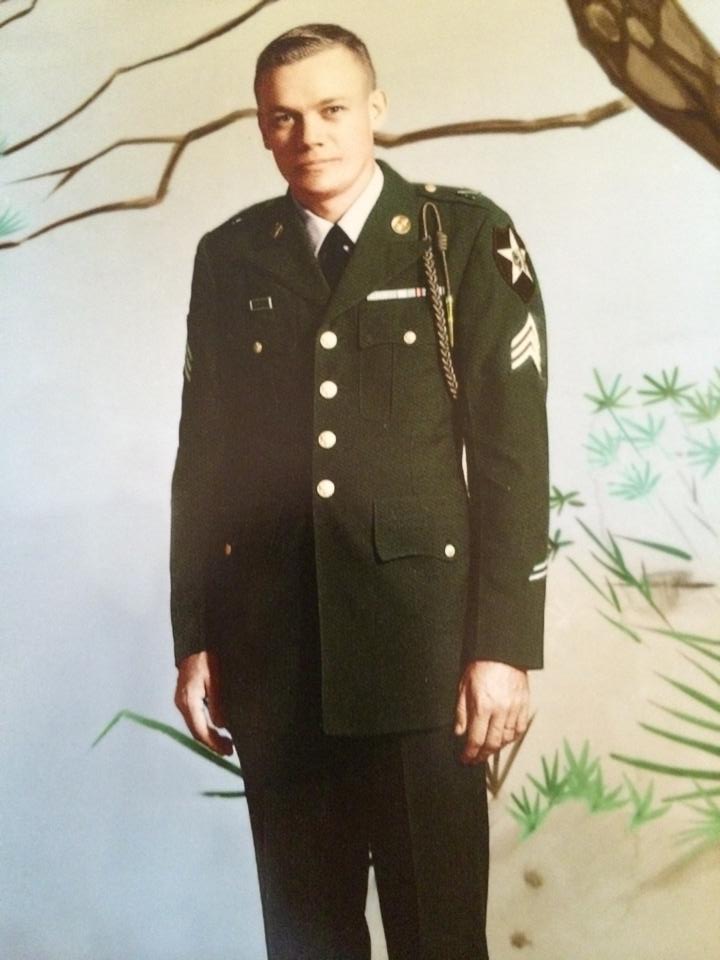
Earl enlisted in the US Army at age 17. He was promoted to staff sergeant, while he served for ten years through both the war in Korea and the war in Vietnam.
But how many of his friends and clients knew this? How many of his neighbors knew this? For Earl never bragged about his generous service to his country. He never boasted about any of his military accomplishments.
Earl was also a generous supporter of scouting for most of his life. I am certain that one thing that he really appreciated about his church is our sponsorship of Cub Pack 25. But how many of his friends and clients knew this about Earl? How many of his neighbors knew of his compassionate contributions to the youth in this community?
Donna said that she remembers first witnessing this quiet, yet compassionate faithfulness when they learned that Danielle Nelson, a nine-year old girl from Bethel, was diagnosed with cancer. She lived only one more year. Donna says she will never forget the sincere empathy that Earl possessed for that little girl and her family and the quiet, yet generous compassion that he shared with them.
Donna remembers many times watching Earl quietly being moved to tears, after they learned someone, especially a small child, was diagnosed with cancer or another dreadful disease. And she said that his compassion almost always led him to give generously.
But how many of his friends or clients knew this? How many of his neighbors or church members knew this?
I believe Earl possessed something that more Christians need to possess in this world, and that is: the quiet empathy of Christ.
Over and over, the gospels speak of Jesus being “moved with compassion.” And the Greek word translated “moved” is a deep, inward, visceral word. It is a special reaction that takes place deep within someone’s soul. And usually, only someone who is very close to one who has this reaction notices it.
When Jesus encountered the hungry Matthew says, “he was moved with compassion.”
When Jesus encountered the helpless who were: “like sheep without a shepherd;” he was moved with compassion.”
When Jesus encountered someone who stricken with the dreadful disease of leprosy, Mark says, “he was moved with compassion.”
Jesus was moved with a deep, visceral, real compassion.
This was type of Christian that Earl was.
Earl lived his life with a quiet faithfulness and dedication. He loved and took care of his family, his children and grandchildren, unassumingly, yet compassionately and generously. He never bragged about being a good father or grandfather. He never flaunted his love. For his love was deep. His love was visceral. His love was real.
Earl took care of his clients with the same quiet, faithful dedication. He worked hard until the job was finished, yet he never sought any accolades or special recognition. Because his dedication was deep. His dedication was visceral. His dedication was real.
Earl gave generously to this community whenever he learned of a need. But he always gave quietly, almost always in cash, not expecting anything in return, not even a tax deduction. And he was a CPA! Because his generosity was deep. His generosity was visceral. His generosity was real.
Donna said that Earl loved the scriptures; however, he preferred the scriptures that were the direct words of God, as opposed to, for example, the Apostle Paul’s interpretation of those words. Some might call Earl a “Red-letter Christian,” in that the words in the Bible written in red letters, the direct words of Jesus, meant something a little more to Earl.
For those of us who really knew Earl, this should not surprise us. For in his first recorded sermon, Jesus spoke the following words:
Beware of practicing your piety before others in order to be seen by them; for then you have no reward from your Father in heaven.
So whenever you give alms, do not sound a trumpet before you, as the hypocrites do in the synagogues and in the streets, so that they may be praised by others. Truly I tell you, they have received their reward. But when you give alms, do not let your left hand know what your right hand is doing, so that your alms may be done in secret; and your Father who sees in secret will reward you (Matthew 6:1-3).
Earl would quietly attend our Wednesday night suppers at church with Donna. As soon as they walked through the door, they would be greeted by Kim, our church administrative assistant who takes up money for each plate which costs $6.00.
Kim says that every time before Earl would pay for him and Donna, he would say the same thing. He said: “Look, I will make a deal with you. I don’t have any money on me today. But Donna will wash all of the dishes.” Then, he would whip out a hundred dollar bill, put it in the basket, and say, “Keep the change.”
The only reason that I know this is that Kim tells me this every Thursday morning after this happens. She says: “And he never says what all of the extra money is for! When he first did it, I thought he was pre-paying for him and Donna for an entire year of suppers. But, every week, he keeps doing it.”
Knowing Earl, I believe when he walked into our fellowship hall, he immediately saw a table full of children who come to our church without their parents. And looking at them, he knew could not afford the $6. Thus, I believe that when he saw them, he was moved with compassion. He had a deep, visceral, real reaction which led to his quiet, yet passionate; secret, yet generous donation.
Every Thursday, Kim would ask: “Why does Earl keep doing this?”
I would respond today: “That was just the type of Christian that Earl was.”
The good news is that now as Earl has given generously to us, compassionately, yet quietly, and secretly; his heavenly father who sees in secret has rewarded him.
For when Earl’s heart stopped on Thursday evening, I believe God was moved. Knowing the pain that would be experienced by Maurey and Brent, by their children, and by Donna, I believe God was moved with the quiet empathy of Christ.
And then I believe God came. God came to Earl. God came quietly, and God came compassionately. God came quickly, and God came generously. And the generosity of God is deep. The generosity of God is visceral. The generosity of God is real. And the good news is: the generosity of God is eternal.
And as God came and gave God’s self to Earl compassionately, generously and eternally, God promises to come to you Donna, to you Brent and Maurey, to all of Earl’s family and friends. For God knows your pain. And God is deeply moved by it.
God will come to you with the same empathy of Christ we have been blessed to know through Earl.
For perhaps too many weeks now, maybe too many months, our scripture lessons have been pointing out the things that are not right within the church. They have been pointing out the sins of the church. They spoke about disciples being ashamed of the gospel: ashamed of the extravagant grace and unrestricted love of the gospel. They pointed out the hatred, bigotry and racism that is present in society, but also in the church. They talked about the temptation to do what is popular instead of what is holy. They spoke about the dangers of following the laws of culture instead of the supreme law of God to love our neighbors as ourselves. And last week, the scriptures said to be a consecrated church, to be a blessed church, we need to stop worrying about how to be the greatest and start worrying about the least, the poor, and the marginalized.
Well, today, it appears that we may finally be off the hook, as our scripture lesson this morning focuses on some things that I believe are very right within the church.
“Are any among you suffering?” James asks. “Then you should pray.”
Hallelujah, we got that, James!
For this is one thing that we are actually pretty good at doing! We will certainly pray for one another, especially if we hear that another among us is suffering.
One of the comments that I hear frequently from church people who have experienced some form of suffering is: “I just don’t know how people who do not have a church family make it in this world.”
You say that, because you truly mean that. You say that, because when you needed your church the most, people in the church prayed for you. People in the church cared for you. When you suffered, people in the church came to your side and suffered alongside you, offering you mercy and compassion, love and grace.
As Paul wrote to the Corinthians: “When one part of the body suffers, we all suffer” (1 Cor 12:26).
James continues: “Are there any among you cheerful? Then sing songs of praise.”
Amen, brother James! We got that too!
This past Wednesday night, when we heard Ann Byrd and Myrtle Sugg had turned another year older, we cheerfully put our voices together and sang “Happy Birthday!”
For as Paul also said, “When one part of the body rejoices, we all rejoice!”
James goes on: “Are any among you sick? They should call for the elders of the church and have them pray over them, anointing them with oil in the name of the Lord.”
Oh, we are quite good at that too, brother James!
One of the first things we do when we hear someone has been hospitalized, has become ill, has lost a loved one, or has been bitten by a dog, is to email the Elders.
Then, although we may not use olive oil like it was used in the first century, we do participate in other acts of “personal touch,” other forms of “laying on of hands,” to bring healing, to foster wholeness and peace. And we do it the name of the Lord.
As most of you know, we have a wonderful prayer quilt ministry here. We have a group that meets monthly to make the quilts that we pass around to the entire congregation, so each member of the church can prayerfully lay their hands on each quilt, before we present it to the person who is suffering. It is a truly wonderful ministry.
Then, James reminds us that prayer works. Prayer changes things. Prayer changes people. Prayer brings healing; sometimes physical; always, always spiritual. Prayer, says James, helps us to forgive one another. Prayer “saves.” And the Greek word translated “save” here, is sozo, the same word that we use when we talk about “salvation.”
And then James tells a story to back it up, a wonderful story about Elijah and the power of prayer.
James, we are with you 100 percent! Preach it brother! For we also have our stories.
Just last Sunday afternoon, I visited an elderly widower in his home. He shared his joys with me. I shared mine. Then, the shared some of his sorrows. He shared his sufferings. He talked about his failing health and his frail body. He talked about a new medication that the doctors were trying. Dr. Barrow, we laughed together, when he said, “You know doctors, though. They only practice medicine.” I said, “Just like preachers: “we only practice faith.” Then he got serious, as he said, “So, only God knows if I am going to get any better.”
After we talked a little more, we joined hands, we bowed our heads, and we prayed together. After we prayed, he took out a handkerchief, removed his glasses, and wiped tears from his face.
Then, with a grin that emitted pure joy, he said, “I know I am going to be fine. I am going to be fine. I am going to be fine one way or another. Whether I get better, or whether I go to be where my wife is. God knows, either way, I am going to be fine.”
Prayer works. Prayer changes things. Prayer changes people. Prayer raises people up. Prayer saves people. Sometimes physically; always, and most importantly, spiritually.
And, all of us inside the church have countless stories to back it up.
So, Amen again brother James! Preach it! As Bobby Jr. says, “You got that right!”
But brother James…oh, he’s not finished with us yet.
Listen to how biblical scholar, Eugene Peterson, puts it:
My dear friends, if you know people who have wandered off from God’s truth, don’t write them off. Go after them. Get them back and you will have rescued precious lives from destruction and prevented an epidemic of wandering away from God. (James 5:19-20 MSG).
Hmmm, not only does prayer work, prayer is work!
So, maybe, we are not so much off the hook this week after all. For we would all confess that this is an area that is not always right within the church.
Most churches are pretty good about being a community of care of concern. We are good about praying for one another and rejoicing with one another. The bad news is: we are also good about sometimes writing people off. Where we sometimes struggle is working to bring others into our community.
For churches generally have programs and ministries that are geared to meet the needs of primarily whom?
They have shepherding programs, prayer shawl or prayer quilt ministries, prayer meetings, Bible studies, hospital visitation teams, homebound ministries, bereavement care, youth and children’s programs for whom?
For folks outside of the church?
Or for folks inside of the church?
Do you remember one of the first things that I led us to do as the pastor of this church? I said that we really needed to fix our stained glass windows as soon as possible. The Plexiglass that protected our beautiful stained glass windows depicting the good news of Christ were tarnished so badly on the outside, that our windows could only be seen by those of us on the inside the church.
I said, “aesthetically speaking,” it was “horrendous;” but “theologically speaking,” it was a “disaster.” I said that we needed to make sure that we were always working to share the good news of Christ with those who are on the outside of the church.
Do you remember what one of the first things we heard from folks who questioned us having a community garden?
Someone asked: “What if someone who doesn’t belong to the church comes by and steals your tomatoes?”
And we responded, “Isn’t that the whole point?”
One thing that I love about our church, and one of the reasons that I believe we continue to grow, is that we are moving well past a ministry model that focuses on the needs of the membership and moving toward a ministry model that focuses on the needs of the community.
The good news is: when I ask for a prayer quilt, no one asks me: “Well, pastor, is this for a member of the church?”
The good news is: when we get a request to build a handicap ramp, no one asks, “Is this for someone we know?”
The good news is: when I ask the outreach ministry team for some money to pay someone’s utilities, no one questions: “Does this person really deserve our help?”
The good news is: when I ask you to pray for someone, no one asks: “What church do they belong to?”
The good news is: no one here batted an eye when the town wanted to have a meeting in the fellowship hall to discuss Pitt Community College coming to Farmville. And, as far as I know, no one even raised an eyebrow when they asked us to serve them a meal.
The good news is: I know of no one who got upset when the Methodist church in town borrowed our van to go on a mission trip. And no one even flinched when money was allotted to send a mission team from our church back to West Virginia.
And, the good news is: I know of no one who criticizes me for spending time ministering to those outside of our church, like the elderly widower with whom I spent part of last Sunday afternoon.
Because you get it.
Prayer works. Prayer changes things. Prayer changes people. Prayer heals. Prayer raises people up, and prayer saves.
And we have stories to prove it.
And, as James reminds us, prayer is not just for us.
Prayer is for all.
And all means all.
Prayer works, and prayer creates work. Prayer generates selfless and sacrificial efforts. Prayer fosters acts of extravagant grace and unrestricted love. Prayer encourages generous mercy and boundless compassion. Prayer creates risk. Prayer creates responsibility. Prayer creates a church with wide open doors and a wide open table.
Yes, you are right. I don’t know how people who do not have a church family make it in this world.
So, let’s keep praying and let’s keep working. Let’s keep sacrificing. Let’s keep giving, and let’s keep risking to invite and to welcome them into our church family, showing them by our extravagant grace and unrestrictive love, through our generous mercy and boundless compassion, that prayer works.
The disturbing data is in. Church membership in America is declining rapidly. I read a recent poll that revealed that although 76% of Americans claim to be Christian, only 17% claim to be a member of a local church. Ten years ago, 38% of Americans identified themselves as church members. Someone recently posted the following question on Facebook and Twitter: “Why are you opposed to church membership?” One of the most popular answers was: “I don’t want to join a social club.”
I believe that one of the greatest threats to the church is the heretical understanding that the church nothing more than a local social club or social-service organization. And it is not non-members who are propagating such a false understanding of the church, but church members themselves.
We act as if the church is about meeting our needs, instead of rearranging our needs. We come to church asking God to fulfill our desires, instead of transforming our desires. We view the church as a place we go to take care of the self, instead of viewing the church as a way of life to die to self. The question that we most often ask in the church is: “What do we want?”; instead of asking: “What does God want?”
Another way that we act like social club instead of the body of Christ in the world is the way give to the church. In the past, we have looked at the church’s budgetary needs, and then have asked the question, “What are my church’s needs?” If the church’s budget is increases, we increase our pledge. If the church’s budget remains flat, so does our pledge. If we did not give anything the previous year, and the church met its budget, we figure the church does not need us to pledge anything for the coming year.
However, since the church is not a social organization designed to meet selfish needs but is the living body of Christ, the proper question to ask is not “What do I want to give” or even “What does my church need me to give?” The proper question is: “What is God calling me to give?”
I believe, if we truly asked this question, our finances would never be in a state of deficit, and our membership would never be in a state of decline.
Next Sunday is Consecration Sunday. It is the Sunday that we are asked to prayerfully commit ourselves to the 2016 budget of this church and to serve on a ministry team, and it is the Sunday that we will ask God to bless those commitments. Members will receive a pledge card in the mail. If you are not yet a member, if you wish, you will be able to pick one up from an usher.
We are doing this, because for almost two years now, I have been preaching that, perhaps more than anything else, the church needs to re-discover its mission to be the church, to be the body of Christ, to be the very embodiment of Christ in this world. As Christ, we are to continue his ministry in this world, doing the very same things that he did while he was on this earth: offering healing to the sick, hope to the despairing, comfort to the troubled, grace to the sinners, love to the hateful, and life to the dying.
Now, if this is like any church that I have ever known, there may be more than a few of you who are thinking: “I just don’t believe I am ready to make such a commitment. I have some things that I need to work out first in my life. My faith needs some work. I have my doubts. I have questions. I have so much to learn, so much to figure out. And I have some very personal issues to deal with. I have this problem with anger. Sometimes I act or say before I think. So right now, if you don’t mind, until I can get my act more together, learn a little more, I think I will pass on this pledge card thing.”
Well, here’s my response to that: “Have you ever met Peter?”
You know, Saint Peter. The one Jesus called a “rock” and said, “on this rock, I will build my church.” The one Roman Catholics recognize as the first Pope. Perhaps you’ve heard of St. Peter’s Square, St. Peter’s Cathedral, and St. Peter’s Basilica. Peter: the one whom Jesus loved and trusted to carry on his ministry in this world.
Well, let me tell you a little more about this Peter fella.
One day, he is out on boat with the other disciples. It is the middle of the night, and there’s this big storm. The wind is howling. The waves are crashing against and into the boat. And as you could imagine, they were all scared to death. But then, Jesus comes to them, walking on the water, saying to them to have courage and fear not.
But Peter…Peter has some doubts. Peter has some questions. Peter needs to work some things out: “Lord, if it is really you, then command me to come out on the water.” And Jesus responds, “Peter, you of little faith.”
Later, Jesus is instructing Peter about discipleship. Jesus talks about being humble, lowering one’s self, even pouring one’s self out. Jesus talks about selfless, self-expending, sacrificial love, being with and for the least of these.
But Peter…Peter has some issues. Peter has some things to learn. Peter gets into an argument with the other disciples about which one of them was the greatest.
After Jesus prays in the garden, surrendering himself to the will of God, offering himself as a sacrifice, Jesus does not resist arrest. Jesus practices what he teaches and turns the other cheek.
But Peter…Peter loses it. Peter acts before he thinks. In a fit of anger, Peter fights back. Peter draws his sword and begins swinging it Jesus’ captors, cutting the ear off of one.
And in our text this morning, Jesus foretells that garden event. He talks about being rejected by organized religion. Jesus is essentially saying:
“When you preach the word of God that cuts like a sword; when you love all people and try to teach others to love all people; when you preach a grace that is extravagant and a love that is unconditional; when you talk about the need to make room at the table for all people, even for folks called “illegal” or “aliens”; when you stand up for the rights of the poor and the marginalized; when you proclaim liberty to the oppressed and say that their lives matter; when you defend, forgive and friend sinners caught in the very act of sinning; when you tell lovers of money to sell their possessions and give the money to the poor; when you command a culture of war to be peacemakers; when you tell the powerful to turn the other cheek; when you call religious leaders hypocrites and point out their hypocrisy; when you criticize their faith without works, their theology without practice, and their tithing without justice; when you refuse to tolerate intolerance; when you do these things that I do,” says Jesus, “then the self-righteous-powers-that-be will rise up, and they will hate. They will hoist their colors, and they will grab their guns. They will come against you with all that they have, and they will come against you in name of God. They will do anything and everything that is in their power to stop you, even if it means killing you.”
But Peter…Peter has some serious issues with that. Peter says to Jesus: “No way! Stop talking like that. This is not right. You are crazy. We will not let this happen!”
Then, having had about all that he could stand of Peter and his nonsense and excuses: his doubts, his questioning, his anger, his lack of faith, his personal issues, all the mess that he needs to work out, Jesus responds to Peter with some of the harshest words ever recorded by Jesus: “Get behind me, Satan.”
Jesus, calls Peter, “Satan.”
And yet, that did not stop Jesus from loving Peter, from using Peter. Jesus kept teaching Peter, kept calling Peter, and kept leading Peter to do his work in the world. In fact, that did not stop Jesus from calling Peter to start his church in the world.
So, if you are not ready to make a commitment to Christ and his church, and if your excuses are: that you have doubts; or you have questions; or you are just not ready; or you have some issues to work out; or even have days you feel unworthy, even have days you know you resemble Satan more than God; then you are going to have to come up with another excuse, because as Peter teaches us: with Jesus, those excuses simply don’t fly!
So, what is it that is really keeping us from committing ourselves to Christ and his church?
After Jesus is arrested, Peter goes into the courtyard of the High Priest. It is a cold night, so he gathers with some folks who had started a fire to warm themselves. A servant girl begins staring at Peter and says: “This man was with Jesus. He traveled around with him doing the things that Jesus did, saying the things that Jesus said.” But Peter denied it, saying, “Woman, I do not even know this Jesus.”
A little later, another saw him and said: “You are a disciple, a disciple of Jesus who defended, forgave and friended sinners. You welcomed strangers, visited prisoners, clothed the naked, gave water to the thirsty, and fed the hungry. You restored lepers, elevated the status of women, gave dignity to Eunuchs, and offered community to lepers. But, again, Peter denied it.
About an hour had passed and another man began to insist saying: “Certainly this man was with Him, for he is a Galilean too. You called out hypocrisy on the behalf of widows. You challenged the status quo on the behalf of the sick. You disobeyed the laws of God on the behalf of the suffering.” But Peter said, “Man, I do not know what you are talking about!”
Perhaps Peter’s denials had nothing to do with his lack of faith. Perhaps his denials, his refusal to take up his cross, had to do with shame.
Peter’s failure to pledge his commitment to Christ and his church had nothing to do with his doubts and his questions, because, as Jesus pointed out over and over, those excuses simply don’t cut it. Peter’s failure was shame.
Peter’s failure to start his own ministry team had nothing to do with his personal issues or poor anger management. Peter’s failure had to do with shame.
Peter failed to make a pledge; Peter failed to commit himself to Christ and his church, because he was ashamed.
Peter was ashamed of the gospel: What the gospel stood for, and for whom the gospel stood.
Peter was ashamed to love, because living among voices clamoring to take their country back from foreign invaders, it was more popular to hate.
Peter was ashamed to turn the other cheek, because it was more popular to draw a sword or get a gun.
Peter was ashamed to identify with the least, because it was more popular to identify with the greatest.
Peter was ashamed to share his wealth, because it was more popular to hold on to it.
Peter was ashamed to side with the poor, because it was more popular to ridicule them for being “lazy” and “entitled.”
Peter was ashamed to welcome immigrants, because it was more popular to dehumanize them by calling them “aliens.”
Peter was ashamed to defend sinners, because it was more popular to throw rocks.
Peter was ashamed to stand up for the marginalized, because it was more popular to call them “abominations.”
Peter was ashamed to visit those in prison, because it was popular to treat them as animals.
And Jesus said: “Those who are ashamed of me and of my words in this adulterous and sinful generation, of them the Son of Man will also be ashamed when he comes in the glory of his Father with the holy angels.”
So, are we ready to commit? Are we ready to give sacrificially and serve graciously? If not, what’s our excuse? We must remember, with Jesus, a lack of faith, having a lot of questions and some serious issues, or not having ourselves together simply doesn’t cut it!
Could it be it is because we are somewhat ashamed? Are we ashamed of the gospel? Are we ashamed of what it stands for, and for whom it stands?
The good news is that Peter dealt with his shame. Peter made his commitment. Peter turned in his pledge card. Peter joined one ministry team and started another. And, this one Jesus called “Satan,” helped start the church and has been named by the Church as its first Pope.
And the good news for us this morning is that we still have a little time to deal with our shame.









 Just Love