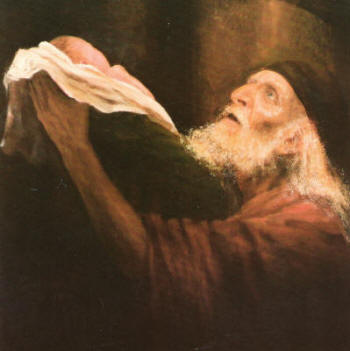
Christmas in the Boondocks

Luke 3:7-18 NRSV

As a preacher, I often wonder about this thing we call a sermon. Like, why do we do it? Why do preachers prepare and deliver them, and why do you sit and listen to it?

I tend to believe that you are here for the sermon because need a little encouragement. In a world that can be dark and despairing, you need to hear a word of light and hope. In a world that can be sad and chaotic, you need to hear a word of joy and peace.

On top of all the problems in the world, war in Ukraine and in the Middle East, the acceptance of fascism throughout the world, including in our own country, you have all kinds of stress in your life. Some of your children are not doing as well as you would like. Some of you are having a difficult time taking care of aging parents. And some of you have your own health worries. Some of you are still dealing with grief over the loss of a loved one. And you are still struggling with forgiving that friend who let you down or loving a neighbor who betrayed you. So, you come to this place every to sit in a pew to get a little inspiration, to find a little peace.

So, I, along with hundreds of other moderate, educated, mainline preachers in our pretty, city pulpits, seek to give you a dose of what we think you want on Sunday mornings. Instead of saying anything that might add to the stress in your life, we try to say something to fill you with such peace, that when the time in the service comes when we pass the peace, you actually have something to pass. During the sermon, we seek to metaphorically pat you on the back on Sunday mornings assuring you that everything is going to be alright.

I am very tempted this morning to talk about my new granddaughter and how the birth of a little baby can change our world; then somehow compare that to the birth of Jesus peaching a soft, sweet, sentimental sermon of comfort and peace.

But then I encounter a text like this morning’s gospel lesson and read the account of a preacher who doesn’t remind us of any grandfather we know whose heart has been softened by the birth of a baby. His name is John, and he’s also a far cry any educated, moderate, mainline preacher in a pretty, city pulpit. He’s a harsh man with a harsh voice crying out in the boondocks far from the lights of the city.

No one ever called John “moderate.” And no one ever called him “mainline.” And there was seemingly nothing peaceful, about his message of hell, fire, brimstone, and impending judgment.

When John stood in the mud of the Jordan River and looked out in the congregation, he didn’t seem to see what I see when I look out on Sunday mornings. I see mostly good people who truly want to be better. John saw a snake pit. He preached: “You bunch of poisonous snakes! There’s a bunch of dead stones in this muddy river, but God is able to raise up a family out of these stones. There’s a heap of dry chaff, mixed all up in with the wheat, and you know what God’s going to do? God’s coming with fire to burn off the chaff. I wash you with water; and if this water is too cold for you… there is one who’s coming right behind me who is going to scorch you with fire!”

“You better get washed. You better get clean!  If you haven’t treated someone right, go make it right. If you have something you can give to those who have nothing to give, give it. If you have any prejudice in your heart, you better get rid of it. This may be your last warning. Today is the day. Now is the hour, for the ax and the fire are surely coming!”

Now I think, who wants to listen to a sermon like that? As it turns out, lots of people. Luke says: “multitudes” came out to hear him. And genteel, educated preachers in our nice city pulpits everywhere, scratch our heads and ask: “why?”

Perhaps you don’t come to church to listen to a sermon solely to be encouraged. Perhaps you also come to hear the truth.

Multitudes travelled way out into the boonies because that redneck preacher who looked like he could handle a snake or two named John was telling people the truth.

And perhaps that is why we are all here this morning. In a world where we are bombarded with lies…in a world in which we are overwhelmed with deceit, disinformation, propaganda, gaslighting and indoctrination… in a world where people make up stories to control us, using us for their selfish and greedy purposes…in a world where the rich and powerful control the media and malign the media they don’t control…and in a world where money is always the objective, we need to hear someone who will unashamedly speak to us, honestly and truthfully. We come here out of a deep yearning to hear a word of truth from God, because we know deep in our hearts that it is only that truth that will set us free and give us the peace we all desire.

That is why more people went out to hear John preach in the boondocks than have ever come here to hear me preach in the comfortable city sanctuaries where I have preached. Multitudes trudged through the briars and dust and went to hear a fire-breathing preacher who stood, not in a beautifully crafted and decorated pulpit, but in the muddy Jordan River, and spoke of axes, judgment, and fire. They went to hear the truth, even though they knew that truth was going to hurt. Because they somehow instinctively knew that it was the truth and only the truth that was going to set them free and give them a lasting peace.

If John was here today, I believe he would tell you that preachers like me often sell you short. And maybe he would be right.

For I have noticed, when every now and again, I unintentionally slip up and step on a few toes, a lot harder than I would ever intend to, inferring that some of you are not right…That some of you could do a little better…That some of you need a bath…That some part of you needs to be cut off, removed; something in you needs to be burned away…When I challenge you by saying something like: peace is only going to come on earth if you do something, that justice is only going to be done, if you use your privilege and power and act…When I explain how, even now, we are participants in the systems of oppression we deplore… you know what happens? Why, people line up after the service to say, “Thank you preacher. I really needed to hear that!” “You really got on top of my feet today! Thanks for being honest.”

I wonder what would happen if preachers all over the world had the gall to discuss all the lies and disinformation in our world today that is behind the growing popularity of fascism. What if we inferred that all of us could do more to stop it, that we could be more vocal in our condemnation of it, that our silence today only helps to normalize it, and such normalization is actually part of the historical playbook of fascism?

 What do we think our congregants would do if we challenged them— telling them the truth that when they hear their neighbors, co-workers and family members say things like: “People are just over-reacting;” “Things will not get that bad!” “The people in power? Why, they’re only talking. They don’t really mean what they say.” Our system of democracy is not fragile”—when they hear that, and then they say nothing, they only help to normalize fascism.

What would happen if preachers made a historical comparison between our silence today and the silence of those in 1860 when their friends defended slavery, saying things like: “We are actually doing them a favor!” What would happen if preachers compared our silence to those in 1930’s Germany when their friends defended concentration camps, saying something like: “Oh, they are just work camps. They are only helping people learn the value of labor and hard work!” What would happen if we compared our silence with those who said nothing when everyone around them was calling Martin Luther King Jr. “a troublemaker?”

Yeah, saying those things will certainly make some people mad. Some may not turn in their pledge cards. It may cause them to leave and never come back. But I have a feeling they’ll be many people lined up in narthexes everywhere to thank us, because people know the truth that before something can be born anew, something old must die. Before love can win, someone must be willing to pick up and carry a cross. Before justice can be done, work must be done. Before peace can happen, sacrifices must be made. Before Christmas can be celebrated, gifts must be given.

That is why people came to hear John preach. They came for the candor, for the honesty, and for the truth. From his prolific sermon illustrations (the fire, the ax, and chaff), we know that what John was preaching was the death of something old and the birth of something new.

This is why the multitudes traveled out into the boonies to hear John preach. Because when John told the people what they needed to change, what they needed to prune, cut off and burn up, the wilderness began to look something like the Garden of Eden. The muddy Jordan became the River of Life. Out of the dry dust, a flower began to bloom. Peace on earth became a little bit more of a reality.

This was the message of John the Baptist. People flocked to hear John, and I believe come to worship every Sunday so they can hear the truth: that none of us are who we ought to be. All of us could do better. We could be better.

We come here to ask God to hold up a mirror in front of us so we can see our complacency and our complicity. We ask God to search us and know our hearts; to test us and know our thoughts, to see if there is any wicked way in us and lead us the way that is everlasting. And having accepted the truth, we come to drop to our knees and ask God to take an ax and cut us down, or kindle a fire and purge us, so we can be reborn, so we can be cleansed and changed, so we can then do all that we can do to change the world. John preached the possibility of such a transformation.

And he’s still preaching it today. We can’t get to Christmas without first meeting him out in the boondocks. Multitudes have. By God’s grace, so will we.[i]

[i] Inspired from a sermon entitled Here Comes the Judge by William Willimon.

It’s Advent, and the Church Has Been Put on Alert

On this First Sunday of Advent, the lectionary gospel lesson puts the church on alert. If Luke was working with Homeland Security, the watch condition would be raised to the color, red, as the times in which we are living are severe. If there has ever been a time for the church to be prepared, wide awake, and paying attention it is now.

And what are we looking for? What are we making preparations for? For Jesus to show up of course!

The problem for some of us, including your pastor, is that sounds absolutely terrifying!

For that is how I was certainly introduced to this topic raised in a church where there was no shortage of end-of-the-world Sunday School lessons and doomsday sermons. In the sixth grade, I had a Sunday School teacher who talked about the imminent appearance of Christ every Sunday for an entire year. She clouded my head with charts and graphs, all indicating that Jesus was to appear in the clouds before my high school graduation.

In seventh grade, our youth minister took us to see the movie The Late Great Planet Earth that depicted people disappearing in the rapture. Planes, trains, and automobiles were suddenly without drivers. I watched in horror as planes crashed into crowded cities, trains derailed, and automobiles collided on every street.

And if this was not enough to permanently scar me for life, it seems like every revival preacher I heard preached that they were certain that the Lord was going to show up in their lifetime. This especially bothered me since most of those revival preachers were retired pastors, and to me, looked like they only had only one, maybe two good years left.

Today, we can find preachers all over the internet who are still preaching the imminent coming of Christ in this manner. They point to world events like Russia’s war with Ukraine and Israel’s war with Hamas, the involvement of North Korea and Iran—all signs that Jesus will soon be appearing.

And they’ll use scripture passages like our gospel lesson this morning to admonish Christians to stay alert, to be on guard watching for signs in the sun, moon, and stars. So, every eclipse, solar flare, supermoon, and shooting star is a sign that we are getting ready to meet Jesus! There will be distress among the nations confused by the roaring of the sea and the waves. So, every tsunami, hurricane, or the threat from melting ice caps, becomes signs that we are about to meet Jesus.

So, we are to be always on guard. Everyday, we must be on alert and prepared to stand before Jesus, because we don’t want to Jesus to come back unexpectedly, like a trap.

Thus, when I was a teen, this was the scripture my mom would use to discourage me from watching R-rated movies, drinking a beer, and smoking cigarettes:

“Jarrett, you need to know that the Lord could show up anytime. And if he catches you doing anything you are not supposed to do, he may not take you back to heaven with him.”

Although she probably didn’t realize it, my mom was using scripture the way the church has used it for 2,000 years, to control people with fear.

How sad and ironic is thar when it could be said that the greatest challenge our world faces today is fear.

From Pharaoh in the first chapter of Exodus (v. 8-10) to the fascist tyrants of our day, fear is used to turn those who are in some way different from us into the enemy. Fear causes us to be selfish. Fear is what makes us want to shout: “America first.” Fear causes us to horde, believing we will never have enough for ourselves if we continue to allow others to pour into our country. Fear drives wedges of distrust into our communities and makes any form of compassion or kindness seem dangerous.

Fear causes us to define ourselves and those around us not by what we share, but by what makes us different. Fear creates an “either/or” and “us/them” mentality that makes it nearly impossible to find any common ground, let alone see one another empathetically. Fear drives us inward. It hardens our hearts, darkens our vision, and makes us miserable.

Perhaps fear has always been our greatest problem as human beings, part of our evolutionary DNA. Maybe that is why the most common command in Scripture is: “Do not fear,” spoken 120 times by some angel, some priest or prophet or by an ordinary person.

I believe this is why I am drawn to the words of hope in verse 28 of our gospel lesson this morning. While many will faint in fear when they see bad things happening in the world, Jesus says: “Now when these things begin to take place, [we can] stand up and raise [our] heads, because [our] redemption is drawing near” (21:28).

It’s a promise that may be difficult to believe, because “these things” refers to foreboding signs in the earth and heavens, catastrophe and chaos among the nations, the powers of the day being shaken, and the coming of the apocalyptic “son of man” in power and glory.

So, how can we courageously stand up, and fearlessly keep our heads up, when the whole universe is burning down? How do we live in these days and in the coming days and not fear?

This is why I am glad that Luke is not the only gospel writer to write such apocalyptic narratives. A couple of weeks ago, we heard a hopeful word from Mark who said that such bad things happening just means that something beautiful is about to be born.

Matthew also wrote about Jesus talking about “the son of man coming in glory.” It is in Matthew 25 that we read:

When the Son of Man comes in his glory, (notice that he uses the same language as Luke) and all the angels with him…All the nations will be gathered before him…Then the king will say…“Come, you that are blessed by my Father, inherit the kingdom prepared for you from the foundation of the world; for I was hungry and you gave me food, I was thirsty and you gave me something to drink, I was a stranger and you welcomed me, I was naked and you gave me clothing, I was sick and you took care of me, I was in prison and you visited me.” Then the righteous will answer him, “Lord, when was it that we saw you hungry and gave you food, or thirsty and gave you something to drink? And when was it that we saw you a stranger and welcomed you, or naked and gave you clothing? And when was it that we saw you sick or in prison and visited you?” And the king will answer them, “Truly I tell you, just as you did it to one of the least of these who are members of my family, you did it to me.

I believe this passage in which we read Matthew’s description of the Son of Man coming in glory, helps explains why the church should be put on alert, be prepared and on watch today. We need to stay awake and pay attention for opportunities today to see Jesus in the chaos, catastrophe, and calamity of our world. Where? In the eyes of someone who is hungry and needs something to eat, or in the eyes of someone who is thirsty and needs something to drink. We need to stay on constant watch for opportunities to support organizations like Park View Mission, Meals on Wheels, or Lynchburg Daily Bread.

In these perilous days as missiles fall from the sky in Kyiv, bombs are denotated in Gaza, and fascists all over the world are stoking the fires of fear and division, the church is in a red alert situation to be on watch for opportunities to see Jesus in the eyes of a stranger, a foreigner, an immigrant, or a refugee who desperately needs a safe place of welcome, acceptance and hospitality. We need to be on watch for opportunities we may have to provide sanctuary.

In a world where politics is not only force that is more extreme these days, but extreme weather wreaks havoc on us all, especially those who are poor and vulnerable, the church needs to be woke enough to see Jesus the eyes of anyone who needs a safe and dry place to be and comfortable warm clothes to wear. We need to be on watch for opportunities to support warming shelters or places like Miriam’s House and Rush Homes.

In a world where sickness and disease is big business and access to affordable healthcare is tenuous, the church needs to be on watch for those who are sick or experiencing pain and be prepared support health providers such like Johnson Health Center, Community Access Network, or the Free Clinic.

During this time when tyrants seem to have the upper hand, when fear of marginalized groups is used to win elections, the church needs to be placed on full alert, on guard to see Jesus in the anxiety of someone living in some form of confinement, facing some sort of oppression, far from thriving, barely surviving. We need to be on watch for those opportunities we have to compassionately show up in solidarity.

Want to see Jesus this Advent Season? In these times of chaos, calamity, and catastrophe, we certainly need to be wide awake and watchful, hyper-vigilant and keenly aware of opportunities to see his imminent appearance. But don’t look up in fear. Look down with love. Look down and do justice.

Though signs may appear in the heavens like a shining star over Bethlehem, Jesus will not be found in the skies above. Though the capital city shakes, Jesus will not be seen in places of power. If we want to see the one who came into the world as a brown-skinned, middle eastern, undocumented refugee born in a lowly stable, we need to look for him down in the places we least expect to find him, suffering and crying among the least.

So, although the times in which we are living are severe, and the world around us seems to be falling apart, we can courageously keep standing, and fearlessly keep our heads up, because, as Luke says, our redemption is drawing near. Because when Jesus appears before us as we are being vigilant in caring for the least of these among us, it means that we are loving this world as we were created and called to love this world, with a just and equitable love that has the power to redeem, bringing wholeness to all of creation.

Holding Christmas Hope

Luke 2:22-40 NRSV

One of the great wonders of church is the surprises. Our worship on Christmas Eve certainly had one, as probably, for the very first time for all who had gathered, as Erin Gresham read from John 1 about the light coming into the world that the darkness could not overcome, a rather exuberant bat invaded the service.

Now, you may not know this, but in seminary, they don’t teach you what to do or say when that happens. So, instead of singing “What Child Is This” with the congregation before Holy Communion, I just stood at the table racking my brain for the right words to say as I watched people in the back of the sanctuary, unsuccessfully and rather comically, trying to shoo the bat out by frantically waving their jackets at the bat to chase it out the door, but I didn’t want to say anything that may illicit some laughter that might interfere with the seriousness of the moment.

So, I just kept leading the service as planned, ducking at least once as the bat swooshed towards the chancel. It was a crazy scene, really. We just lit our candles and sang Silent Night like it had never happened or that it happens all the time. I guess we proved the words Erin read to be true, that our lights were going to shine in the darkness, and nothing, not even a crazy bat, was going be able to stop it!

But that’s the thing with church, you never know when you will be surprised or shocked by what goes on here! You are tired and not feeling your best, but you get up and come to church anyway. You may come more out of duty than desire. You come not really expecting anything surprising from what is certain to be a just another predictable service. You come fully expecting to leave the same way you came, unmoved, untouched, unchanged. But then, out of nowhere something happens that astonishes you: someone unexpectedly hugs you; a song you’ve sung a thousand times before astounds you; a word you’ve heard countless times startles you. God, in spite of everything, in spite of you, and even in spite of the preacher that day, speaks. And everything, including you, your whole world, is amazingly transformed. A simple handshake brings healing. A smile from an unassuming child generates hope. A tiny cracker and a sip of juice become more than sufficient.

Simeon had arrived to worship in the Temple as he had for many decades. He was as devoted to the Lord as anyone. For years, he had been eagerly coming to the Temple expecting to be surprised by the presence of the Messiah; however, year after year he left each service disappointed.

It was just another ordinary Sabbath. Old Simeon was tired and give-out. Over the years, much of his anticipation had turned into doubt. But he got up and came to Temple anyway, more out of duty than desire, knowing that he would probably once again leave the service unmoved, untouched, and unchanged.

He came in through the front door, nodded politely to the usher who handed him an Order of Service that he had all but memorized, and settled in his usual seat for another predictable service. During the Prelude, he opened the bulletin and noticed that there was going to be another baby dedication service. As was their custom several times during the year, the minister was going to once again ask the congregation to bless a newborn baby. Nothing unusual. Simeon had seen this a hundred times before.

After the Prelude and the Chiming of the Hour, the Call to Worship the Invocation, and a hymn, this strange new couple unexpectedly came down the aisle holding a tiny baby. They were coming for the baby dedication service. And then, out of nowhere, it happened.

Simeon cannot explain how he knew it, but he knew it, nonetheless. This was it! He could not keep his eyes off that baby during the prayers for the child and the parents, for he knew without a doubt that this was the Messiah, the Promised One God sent to save Israel.

In the middle of the dedication service, he grabbed the back of the pew in front of him with both of his hands and slowly pulled himself up to stand on his tired feet. Holding on to the pew in front of him, he shuffled past three people who were sitting beside him and made his way down the aisle to the front where the new parents were standing. Then he had the courage, some would say the audacity, to ask the parents if he could hold the tiny baby. The old man must have looked harmless enough, for Mary and Joseph handed the old gentleman their firstborn son without hesitation.

Again, Simeon cannot explain how he knew it, but he knew that he was holding more than a baby in his arms that morning. Astoundingly, he was holding hope in his arms. Amazingly, he was holding salvation in his arms. Surprisingly, he was holding none other than Christmas in his arms, Simeon had crossed off in his mind the only thing that was ever on his bucket list and started praising God saying:

‘Master, now you are dismissing your servant in peace,
according to your word;
for my eyes have seen your salvation,
which you have prepared in the presence of all peoples,
a light for revelation to the Gentiles
and for glory to your people Israel.’

This is the wonder of this thing called church. When we least expect it, God shows up and surprises us. We perform an ordinary ritual, like a Child Dedication Service, and something extraordinary happens that changes us forever.

Mary and Joseph showed up with their baby asking the likes of old men like Simeon to bless their newborn baby, and the child ends up blessing Simeon.

 We may have thought we knew what we were doing here this morning. We thought our friends Kevin and Elaine Lindmark were coming to merely present their daughter, Leighton Annette and Shanaya and Aili Barricklow-Young were merely presenting their daughter Feyre Elaine.  Wee thought they were coming to ask us, their family of faith, to take them in our church’s arms and bless them—Bless them by promising to teach them the faith, to share our knowledge of the way of love Jesus taught his disciples with them.

But, to our surprise, what if it is the other way around?

What if we are not here this morning to bless Feyre and Leighton, but Feyer and Leighton are actually here to bless us? Now, I know we are not Simeon and they are not the Messiah; however, it was the Messiah who had this to say about children like these: “Let the little ones come to me, for to such as these, belong the Kingdom of God” (Luke 18:16).

I believe this means that these little ones have more to teach us about the ways of God than we could ever possibly teach them. I believe this means that they and the other children whom God has given us are not the future of the church, but they are the church’s present. Surprisingly, they have much to give the church today. Unexpectedly, even as young and as they are, have much to teach the church this very moment.

For example, Feyre and Leighton will never be more vulnerable, more dependent than they are right now. And because of this, they may never have more to teach us. For hey teach us that if the church is going to look like the Kingdom of God, then the church must continually reach out, invite, bring in, accept and adopt, and care for those in our society who are the most vulnerable, the most dependent.

         They teach us that we are to feed those who cannot feed themselves, give drink to those you cannot drink on their own, clothe, shelter, comfort those in need, and love those who are the most frail, fragile and needy.

Feyre and Leighton affirm our support of Our Daily Bread, Miriam’s House, Parkview Mission, The Free Clinic and Interfaith Outreach. Teaching us that we come the closest to living in the Kingdom of God, we come the closest to holding the Messiah in our arms, when we offer grace and hope to the least of these.

However, they also teach us something that may be even more important. The Messiah once said: “Unless one comes to me as a little child, they cannot enter the Kingdom of God.”  Leighton and Feyre may never be more honest, more real, and more genuine than they are today. What you see is what you get. There is no putting on airs with them. They are not proud. There’s not a pretentious bone in their tiny bodies. When they are hungry, they are going to let us know. When they are distressed, saddened or in any discomfort, they are going to tell us. When they need a change, they will cry out to us.

If we could only learn to be as honest as these little ones: honest with each other, and honest with God. Because before we can truly offer grace and hope to others; I believe we must confess our own need for grace and hope. We must confess our own dependency on God and on others. We must confess our own weaknesses, our need of a Savior who knows such vulnerability, to pick us up, to comfort us and to change us in those places where we most need changing.

We thought we were going to come here this morning and hold two little girls in our arms; however, through their honest vulnerability and their utter dependence, through the Christ revealed in them, amazingly, we held hope in our arms, hope for the present and for the future. We held our church’s mission in our arms. We held Christmas in our arms. We held salvation in our arms. And with Simeon, by the grace of God, we will not leave this service unmoved, untouched, unchanged. We will leave this morning praising God saying:

‘Master, now you are dismissing your servants in peace,
according to your word;
for our eyes have seen your salvation,
which you have prepared in the presence of all peoples,
a light for revelation to the Gentiles
and for glory to your people Israel.’ Amen

Christmas Favor

Luke 1:46b-55, 2:14 NRSV

And suddenly there was with the angel a multitude of the heavenly host, praising God and saying, ‘Glory to God in the highest heaven, and on earth peace among those whom he favors!

Among those whom God favors? Let’s be honest for a moment. Are you at least a little bit offended? God doesn’t have favorites, right? God is supposed to be like that parent going back to the shopping mall on Christmas Eve, because they are afraid a few dollars may have been spent more on one child than another! The phrase is so offensive, did you know that some ancient manuscripts omit it all together!

However, even if we omit it, we have the Song of Mary. In the Magnificat, Mary sings: “My soul magnifies the Lord, and my spirit rejoices in God my Savior, for God has looked with favor [there it is again] on the lowliness of God’s servant. God has brought down the powerful from their thrones and lifted up the lowly. God has filled the hungry with good things, and sent the rich away empty” (Luke 1:46-48, 52-53).

And then, we have the shepherds, the first ones on earth to hear the pronouncement of Christmas. Of course, we love to romanticize these shepherds, as we remember our innocent children depicting these Christmas characters wearing bathrobes in adorable Christmas plays. We also think about images of the shepherd king David and the beautiful green pastures, still waters and the protection of the rod and the staff of the twenty-third Psalm. And we may remember Jesus calling himself “the good shepherd.”

However, the reality is that shepherding was a most despised occupation. New Testament Professor Alan Culpepper writes:

In the first century, shepherds were scorned as shiftless, dishonest people who grazed their flocks on others’ lands.

Fred Craddock writes that the shepherds belong to the Christmas story:

Not only because they serve to tie Jesus to the shepherd king, David (2 Sam 14:23, 21) but because they belong on Luke’s guest list for the kingdom of God: the poor, the maimed, the blind, the lame (Luke 14:13, 21).

This is why the angels pronounce the good news of Christmas is great joy for ALL the people. Culpepper writes:

The familiarity of these words should not prevent us from hearing that, first and foremost, the birth of Jesus was a sign of God’s abundant grace.

The birth is a sign that God loves ALL people, even the most despised, the most lowly, those labeled by the religious culture as the most immoral.

And in what form does this sign appear? The savior was coming into the world through a poor peasant woman to be placed in a feeding trough made for animals. And it is this humble scene that sets the stage for his entire life on earth. The savior of the world was born and lived and died on the fringes, on the margins of society—underscoring the truth that the good news has come into the world for ALL—especially to those who are marginalized by politics and religion.

Page Kelly, my Old Testament professor at Southern Seminary, used to love to say that the biblical symbol for God’s justice on this earth was not a woman holding a set of scales wearing a blindfold, but was one of the prophets holding a set of scales with his eyes bugged out and a long bony finger mashing down on the side of the poor—favoring those who have always been despised and marginalized by society. Favoring those in our world who need more justice, more peace and more love.

Think about that for a moment. Today, is there any person or group of people, perhaps someone you know personally, who needs more love today?

It is a most important question, for I believe answering this question, and then doing something about it, is how God wants us to celebrate Christmas. More than lighting candles and singing carols, I believe God needs us, yearns for us, to show some favor, to love some people more than we love others—namely, those among us today who need more love.

The entire Biblical witness affirms that this favor is the will of God.

Moses commanded the Israelites:

If there are any poor…in the land…do not be hard-hearted or tightfisted toward them. Instead, be generous and lend them whatever they need. …Give generously to the poor, not grudgingly, for the Lord your God will bless you in everything you do. There will always be some in the land who are poor. That is why I am commanding you to share freely with the poor and with other Israelites in need (Deut 15:7-11).

Never take advantage of poor and destitute laborers, whether they are fellow Israelites or foreigners living in your towns. …True justice must be given to foreigners living among you… (Deut 24:14-16).

The writers of the Proverbs could not be more emphatic:

…blessed are those who help the poor… Those who oppress the poor insult their Maker, but helping the poor honors him”(Proverbs 14:21, 31).

If you help the poor, you are lending to the Lord— and he will repay you! (Proverbs 19:17).

Those who shut their ears to the cries of the poor will be ignored in their own time of need (Proverbs 21:13).

A person who gets ahead by oppressing the poor or by showering gifts on the rich will end in poverty (Proverbs 22:16).

Whoever gives to the poor will lack nothing, but those who close their eyes to poverty will be cursed (Proverbs 28:27).

So,

Speak out for those who cannot speak, for the rights of all the destitute. Speak out, judge righteously, defend the rights of the poor and needy (Proverbs 31:8-9 NRSV).

The Psalmist writes:

Give justice to the poor and the orphan; uphold the rights of the oppressed and the destitute. Rescue the poor and helpless; (Psalms 82:2).

Isaiah pleads:

Learn to do good. Seek justice. Help the oppressed. Defend the cause of orphans. Fight for the rights of widows. “Come now, let’s settle this,” says the Lord. ‘Though your sins are like scarlet, I will make them as white as snow. Though they are red like crimson, I will make them as white as wool’ (Isaiah 1:17-18).

“In other words,” says the Lord, if you truly want to celebrate the advent of the Messiah, if you want to light a candle on Christmas Eve and experience some of my Christmas favor, sing your carols, but then make a point to love the least among you more. Offer more love to those who need love more!

Free those who are wrongly imprisoned; lighten the burden of those who work for you. Let the oppressed live free and remove the chains of injustice. Share your food with the hungry and give shelter to the homeless. Give clothes to those who need them, and do not hide from relatives who need your help.

Then your salvation will come like the dawn, and your wounds will quickly heal. The Spirit of God will lead you forward, and the glory of the Lord will protect you from behind. Then when you call, the Lord will answer. ‘Yes, I am here,’ he will quickly reply, ‘Remove the heavy yoke of oppression…Feed the hungry and help those in trouble. Then (listen carefully to this!) your light will shine out from the darkness, and the darkness around you will be as bright as noon’(Isaiah 58:6-10).

You know what that sounds like? That sounds like Christmas to me! Sounds like John chapter one:

The light shines in the darkness, and the darkness did not overcome it (John 1:5).

The good news is that when we bear the image of God, when we heed the words of the prophets and follow the way of Jesus, the light of the world, by favoring the least of these among us, when we offer more love to the lowly, the marginalized, the despised, the poor and the weak, when we reach out and offer them our bread, our drink, our clothing, our presence, our touch, our very selves, then we will not be offended by the chorus of the angels:

Glory to God in the highest, and peace on earth, whom God favors.

Christmas: Can You See It?

Isaiah 2:1-5 NRSV

Isaiah 2 begins:

The word that Isaiah, son of Amoz, saw concerning Judah and Jerusalem.

Now, let me ask you, who in the world talks that way?  We would say, “The word that Isaiah heard…” Not “The word that Isaiah saw…”

What does it mean to not just hear a word, but to see a word? What would it mean to say: “That’s why I go to church on Sunday morning, to see a word.”

The word “see” here means much more than merely reading words on a scroll. It implies that the words are literally brought to life.

In chapter 1, Isaiah graphically paints a portrait what he has seen in the world: it is a detailed, dark scene of violence, war, corruption, dishonesty, unfaithfulness, oppression of the weak, and trampling on the poor.

The people worship. But their religion is sick. They pray, and they give. But God is not having it. Their prayers are not heard, and their gifts are not accepted.

Then, chapter 2 opens as though Isaiah is starting all over with a new, fresh canvas – or you could say, God is. Isaiah sees people of every nation going to the Mountain of God, including those who were enemies of Israel and Judah and being completely transformed by God’s love.

Can you see it?

Isaiah can. And the transformation is nothing less than miraculous.

They shall beat their swords into plowshares,

and their spears into pruning hooks;

nation shall not lift up sword against nation,

neither shall they learn war anymore.

The transformation that the love of God creates is a complete reversal of the way things currently are in the world. That is why it is so difficult for us to see.

Living in a world that is in perpetual war, where innocent hostages waving white flags are gunned down, living in a world where children regularly practice hiding in their classrooms from active shooters, it is hard for us to see any possibility of this world being at peace.

But what is important for us to understand is that Isaiah’s image of swords turned to plowshares is not Isaiah being naïve. For Isaiah is no Pollyanna Prophet. Isaiah is a realist. Isaiah had this gift to see the world as it really is, and as it actually will be.

His vision of the world in Chapter 1 is as real as the evening news:

Corrupt deals by those whose heads are sick, whose hearts are small, who have no truth in them from the soles of their feet to the top of the heads. They love a bribe and run after gifts. They do not defend orphans nor listen to widows. They pretend to worship God, but their worship is in vain, and their country is desolate. This is reality.

Then, in chapter 2, Isaiah has another vision which is equally real.

Weapons of war are turned into agricultural tools. Death-dealing images are turned into food-producing, life-giving images. This is not wishful thinking. This is a promise. This is reality. This is truth. The scene in Chapter 2 is as real as the scene Chapter 1. Isaiah saw it. He believed it. The question is, can we see it? Do we believe it?”

I believe President Dwight Eisenhower may have seen it. In one of the most prophetic of all presidential speeches, Eisenhower once said,

Every gun that is made, every warship launched, every rocket fired signifies, in the final sense, a theft from those who hunger and are not fed, those who are cold and are not clothed.

         Like Isaiah, I believe Eisenhower saw the Word of God. The question is can we see it? Do we believe it? Are we praying today for Israel and Russia to see it. For our country to see it?

Wouldn’t it be wonderful if this Word could somehow be made flesh to dwell among us to show us the precise paths we should follow, the narrow but abundant way we could live?

I think it is more than interesting that Isaiah suggests that for people to see the Word, they need to climb the mountain of God to allow God to teach them or show them. For Matthew says Jesus climbed a mountain, and there he taught us to see a world completely re-created by the love of God.

A world where the poor are blessed, mourners are comforted, the meek are rewarded, and those who thirst and hunger for justice are satisfied. A world where those who need mercy, receive it. Those who want peace, find it, and the pure in heart, (what do they do?) They see God.

The question is, can we see it?

Maybe our hearts are not pure enough to see it—too filled with the darkness and despair of the world. I believe this is why we need to continually return to the mountain, to sit at the feet of the Word made flesh, to be taught how to see it, to believe it, and thus how to live it, to be it.

To be light and salt. To love our enemies and to pray for those who do us harm. To forgive seventy times seven, to turn the other cheek, to go the extra mile, to give the very shirt off our backs. To do unto others as we would have them do unto us, to always speak the truth, to never judge or demean another. To avoid greed and materialism and hypocrisy, and more importantly, to be doers of this Word and not hearers only.

With its ornaments and bright lights, December may be the most visual time of the year. Everywhere we look, light pierces the darkness. Yards that would otherwise appear dreary and dead, come to life with evergreens, colorful decorations and bright lights. Like the downtown bluff walk, the whole world is transformed.

This should remind us that one of the most important things we can do during this season we call Advent is to help others visualize a world transformed by Christmas.

How? By going to the mountain to sit at the feet of Jesus so we can walk with others in the Light of the Lord.

And there lies the key to seeing anything – light.

If there is not a considerable amount of light in a room, or even outside, our vision is significantly impaired, and the older we get, the worse it gets. That is why the 21st century technological advance that for which I am most appreciative is the little flashlight on my cell phone.

This is why I love the tradition of the Advent wreath. Christians everywhere prepare for Christmas by lighting candles to celebrate the Light of the World who has come to shine light into our darkness. We believe by going to the mountain to sit at the feet of Jesus, by not only hearing, but seeing, then doing his words, we are allowing this Light to get brighter each week changing the way we see ourselves and this world forever.

Looking at the world in the Light of Christmas means believing God is here with us and has identified with us by becoming flesh to dwell among us. God shares in our joy, but God also shares in our suffering.

Looking at the world in the Light of Christmas means believing that the Word that was made flesh is still very much a part of our lives shining light in the darkness.

Looking at the world in the Light of Christmas also means believing that God is always working to transform the world bringing order out of the chaos, triumph out of defeat, joy out of sorrow, and life out of death. God is always working all things together for the good and uses people like you and me to accomplish this.

What this world needs today is more believers. I am not talking about those who merely believe in God. I am talking about those who believe the gospel truth that God is doing, even today, a new thing in this world. This world needs more believers who believe that the Kingdom of God is really coming, and the will of God is being done on earth as it is in heaven!

Advent is the time to allow the Light of the World to adjust our focus and to sharpen our vision, to remind us, that because the Word was made flesh, we have been given the grace to see the whole creation in a brand new light. Misery becomes opportunity. Strangers become family. Enemies become friends. Everyday becomes gift, a fresh, new canvas to recreate a brand new world!

A world where no child goes to bed cold or hungry, no child knows foster care, and no child ever fears being shot in their classroom—A world where everyone is paid a living wage, healthcare is accessible to all, education is equitable for all, as every life is valued—

A world where people of all creeds and all cultures live peaceably, harmoniously, graciously, side-by-side, shoulder-to-shoulder, hand-in-hand—

A world where the distorted morality is restored. Sick religion is healed, and all that is broken is remade—A world where the lame walk, the deaf hear, the blind see and the outsider is included. It is a world where walls come down, chains are loosened and all are free. Hate, violence, wars, corruption, division and bigotry pass away. All of creation is born again, and liberty and justice fully and finally comes for all.

A world where all will know that into the world’s night, a Light shines in the darkness, and the darkness will never overcome it!

Christmas Shoes

Mark 1:1-8 NRSV

About the gift of Christmas, the gift of God’s enfleshed self to the world, John said, “I am not worthy to stoop down and untie the thong of his sandals.”

It was written in Jewish law that “pupils should do everything that is commanded by their teacher with the exception of unlacing the teacher’s shoes.”  The subservient task of kneeling to the ground and unlacing another’s shoe was something only a slave should perform.[i]

 This means that John not only regarded himself unworthy to be a disciple of Jesus, John believed he was unworthy to even be a slave of Jesus. When he compared himself to the one wearing the shoes of Christmas, John regarded himself as lower than the lowliest lowly.

And who could blame him? John was talking about God, the Holy Creator of all that is, the Divine One, Love Love’s self who has come down to earth wearing shoes. John was talking about the great sovereign of the universe from on high, miraculously and lovingly stooping low enough to the earth to kneel down to the ground, put on, lace up and wear shoes. John was talking about heavenly feet accustomed to walking on streets where angels trod that have put on earthly shoes in order to walk the same roads each one of us walk.

Although it was John’s plan to make our windy and rocky roads straight and smooth for these holy shoes, the purpose of the divine shoes was to walk every crooked path, experience every twist and turn, identify with every bump, every dip, every rut. The Lord of Hosts stooped down, knelt down, and laced up shoes to walk down snaky roads; travel down uncertain roads; journey down long, lonely, and desolate roads.

God knelt down and put shoes on feet that would grow weary and sore from those roads. God laced up shoes that would cause great suffering when Jesus’ feet would swell, blister and bleed.

Those shoes ran down fearful, foreign roads to escape Herod’s sword. Those shoes would journey down dark, dangerous wilderness roads that try the soul. Those shoes would travel down desperate roads to bring good news to the poor. Those shoes would travel down neglected roads to give dignity to those marginalized by a religion that had been hijacked by greed and privilege. Those shoes would walk roads lined with the hypocritical and judgmental to defend and forgive the sinner. Those shoes would move down roads paved with suffering to heal and restore the sick. They would go down tear-soaked roads to comfort mourners and raise the dead. They would march down fearful roads to stand for justice and to bring peace.

And near the end of his road on this earth, those holy shoes, worn, frayed and tattered by life, would lead him to a table with his friends. After supper, he would get up from that table, take off his outer robe, and tie a towel around himself. He would then pour water into a basin. And like his humble beginning in a lowly manger, he would once again stoop down, kneel to the ground, and lovingly, empathetically and subserviently untie the shoes of each one at that table, even the shoes of the one who would betray him and of the one who would deny ever knowing him.

Now, in the historical and cultural context of the day, the disciples’ shoes would be removed long before they reclined at the table. However, figuratively and theologically speaking, Jesus untied their laces and removed their shoes.[ii]

Relief, respite and release overcame them as they realized that none of their unworthiness prevents their Lord from graciously taking their feet into his hands and washing away all the dirt and grime from every road they had ever traveled. None of their filth is too offensive. There are no stains too deep. The fresh water from the basin that restores, refreshes and relaxes their wearied feet is miraculously transformed into living water that saves their wearied souls. And a holy peace beyond all understanding overwhelmed them.

The good news of Christmas is that the Holy One, whose laces John believed he was unworthy to untie, comes to us, stoops down, kneels before us, and unlaces our shoes, freeing us in the places we have been too tightly bound.  He empathetically takes our feet into his hands and washes our dirty, sore and weary feet, and makes us ready for the road again.

That is the good news of Christmas. Now, listen to the good irony of Christmas.

John believed he was unworthy to untie the shoes of Christmas. However, because of the good news of Christmas, John is not only worthy to untie and remove those shoes, John is actually worthy to put on, lace up,  and wear those shoes.

Through the gift of Christmas, through the gift of the God who has walked where we walk, through the gift of the Divine who stoops down, unties and removes our shoes, washing our feet and our souls, we are made worthy to not only untie the shoes of Christmas, but to wear the shoes of Christmas. We are worthy to put on Christmas shoes to go where he went, to do as he did, to include as he included, to forgive as he forgave, to love as he loved, to bend ourselves to the ground to touch the places in people that most need touching.

It is believed that fourteenth century saint Teresa of Avila once said:

“Christ has no body but yours, no hands, no feet on earth but yours.
Yours are the eyes with which he looks with compassion on this world, and yours are the feet with which he walks to do good.”

The Apostle Paul has written: “How beautiful are the feet of those who bring the good news” (Romans 10:15).

Don’t worry. It is perfectly natural to feel unworthy to untie those laces, to wear those shoes, to be the hands, the feet, the body of Christ.  And if you believe you are unworthy you are in very good company.

Abraham and Sarah did not believe they were young enough to be worthy (Genesis 17:17). Jacob was not truthful enough to be worthy (Genesis 27). Moses was not articulate enough (Exodus 4:10). David was not faithful enough. (2 Samuel 11:2-4). Rahab was not pure enough (Joshua 2:1). Jeremiah was not mature enough (Jeremiah 1:6). Mary was not rich or powerful or old enough (Luke 1).

Yet, God makes the unworthy worthy to be God’s enfleshed presence in this world, to be God’s body, hands, eyes, and feet in this world. As the Apostle Paul reminds each of us:

 “Consider your own call, brothers and sisters: not many of you were wise by human standards, not many were powerful, not many were of noble birth. But God chose what is foolish in the world to shame the wise; God chose what is weak in the world to shame the strong” (1 Corinthians 1:26-27).

United Methodist Bishop William Willimon tells a wonderful story about a visit to a fraternity house one night while he was the campus minister at Duke University. The reputations of the fraternity houses at Duke were getting so bad that the University Dean required each fraternity to have a certain number of religious programs each year to give them at least some semblance of respectability.

 One of the fraternities invited Willimon to lead one of the programs. He was tocome to the frat-house and give a lecture on “Morality and Character on Campus.”

On the appointed evening, Willimon went to fraternity and knocked on the door. When the door opened, he was greeted by a young boy who appeared to be nine or ten years old.  He thought, “What in the world is a little boy like this doing in a frat house at this time of night?”

“They are waiting for you in the common room,” the little boy said politely. Willimon followed the boy back to the common room where all the young men were gathered, glumly waiting for the preacher’s presentation.

Willimon says for about an hour he talked about morality, responsibility, character and faith and how the frat houses on campus gave little evidence of any of those things. When he finished his harsh talk he asked if there were any questions. Of course, they were none. So, he thanked them for inviting him and headed out.

 One young man got up and walked him to the door. Before they got to the door, Willimon overhead him say to the little boy, “Hey buddy, you go and get ready for bed. I’ll come up, tuck you in and read you a story in a few minutes.”

When they got outside, the fraternity boy lit a cigarette, took a long drag on it, and thanked the pastor for coming out.

 Willimon turned and asked, “Who is that kid in there, and what is he doing here?”

“Oh, that’s Donny,” said the young man. “Our fraternity is part of the Big Brother program in Durham. We met Donny that way. His mom is addicted to drugs and is having a tough time. Sometimes it gets so bad that she can’t care for him. So, we told Donny to call us if he ever needs us. We go over, pick him up, and he stays with us until it is okay to go back home. We take him to school, buy his clothes, books, and stuff like that. Just trying to give him a little bit peace in his life, if you know what I mean.”

The dumbfounded preacher stood there and said: “That’s amazing. You know, I take back everything I said in there about you guys being immoral and irresponsible.”

“I tell you what’s amazing,” said the college boy as he took another drag on his cigarette, “what’s amazing is that God would pick a guy like me to do something this good for somebody else.”[iii]

 In other words: “What’s amazing is that God, the Holy Creator of all that is, would make an unworthy guy like me worthy to not only untie, but to wear the shoes of Christmas.”

[i] Alan Culpepper, Smyth and Helwys Commentary: Mark, 2007, p. 47.

[ii] From a sermon by J. Will Ormond entitled Advent on a Shoestring preached during Advent in 1987 at the Columbia Theological Seminary.

[iii] From a sermon by William Willimon in Pulpit Resource, January 2006, p. 19.

Room for Christmas

Isaiah 64:1-9 NRSV

It was a dark time in a dark world. The prophet Isaiah prays a desperate prayer asking God to rip open the heavens and come down and heal the nation, to bring peace on earth and joy to the people; a prayer asking God to establish a new order that will override the destructiveness of those in power. It’s a prayer of hope that God will come in the same liberating way as God had come in the past.

However, the mood of the prayer changes. Hopeful expectation turns into dreadful despair as the sins and transgressions of the people are considered.

The term “unclean” means “ritually unacceptable.” It is not believed that Israel is a community where God’s presence is willing to come. Like a “filthy cloth,” the nation is so impure and contaminated that no one would dare touch it.

Like “a faded leaf,” it’s in danger of rotting away. Because the people have called on false gods, there seems to be no room for the God of truth. Because they have turned their backs on social justice, turned their eyes away from the poor, there seems to be no place for the God of mercy. Because the people have chosen a way of violence, there seems to be no way for the God of peace. There seems to be no hope.

But then, the mood changes once more with one of the most hopeful words in the scriptures: “YET!”

YET, you are our Parent. YET, you are our potter. YET, we are all the work of your hand. YET, we are your people.

Isaiah hopefully asserts: YET, you made us, you own us, you are responsible for us, we belong to you. Thus, we trust that you will indeed come again to love us, to save us, just as you have come in the past.

Advent is a time of celebrating this hopeful: “YET!”

It was a dark time in a dark world. The sick and injured were passed by on the other side by prominent men claiming to be religious. The poor were unfairly taxed. Foreigners, scapegoated. Women, objectified. Victims of abuse, stigmatized. Anyone different, marginalized. The entire nation, demoralized.

 YET, a peasant girl named Mary carries hope in her womb and a song in her heart:

 ‘My soul magnifies the Lord,
and my spirit rejoices in God my Savior,
for he has looked with favor on the lowliness of his servant…

…he has scattered the proud…
He has brought down the powerful from their thrones,
and lifted up the lowly;
he has filled the hungry with good things,
and sent the rich away empty.

This is the hope of Advent! The world seems dark, YET, the Light of the World is coming!

Later, the parents-to-be were on the road to pay taxes to a puppet king of an occupied land. The road was long, and being with child made the road especially difficult. And to make things more difficult, when it was time for the baby to be born, they discovered that there was no room in the inn.

There was no room. Sounds like the desperate prayer of Isaiah.

There was no room. There was no place. There was no way. There was no hope.

YET, as God had proved over and over throughout history, from the covenant of Abraham to the great Exodus, there is nothing in all of creation that can separate the world from the love of God. For God, would once again come! Despite every demonic power that tried to thwart God’s coming, God came.

And the good news of this Advent season is that we know that God still comes. And there is nothing in all of creation, nor things above nor below, nor angels nor rulers, nor things present nor things to come, nor life nor death that can stop God from coming.

A church once presented a Christmas play. You know the kind. I used to be in one every year when I was growing up. Three boys playing shepherds are carrying long sticks wearing bath robes with towels wrapped around their heads. And three more boys playing wise men wearing cardboard Burger-King crowns wrapped in Reynolds Wrap are carrying boxes decorated with left-over Christmas garland. They all walk up on the chancel, greet Mary and Joseph, and bow down before the baby Jesus.

Well, during one particular play, after the wise men and shepherds came and bowed before Jesus, a spokesperson for the wise men made the announcement: “We three kings have traveled from the East to bring the baby Jesus gifts of gold, circumstance and mud.” Of course, laughter filled the sanctuary.

But you know what they say: “out of the mouths of babes.”

In the circumstance of being told there is no room for you, there is no place for you, there is no way for you, and there is no hope for you, through Christ, God came to Mary and Joseph and God comes to us and says: “YET!”

The good news of Advent is that God comes to us in all our circumstances and offers us the assurance that there is no circumstance on earth or in heaven that is beyond God’s amazing grace.

And coming as a human being, coming into the world as a fleshly body, a body made up of dust and water, God comes and joins us in our mud.

Through Christ, God came into and still comes into our muck of pain and sickness and offers comfort and healing.

Through Christ, God came into and still comes into our muck of loneliness and fear and shares divine presence and a peace beyond understanding.

The world says there is no room; things are not going to get any better. The world says there is no way; the good old days are long gone. The world says there is no place; evil will get the best of you. The world says there is no hope; peace on earth and good will shall never happen.

YET, a young woman named Mary goes into labor as God says: “I am working all things together for the good!”

YET, a baby is born in the darkness as God says: “The best days of life are always before you.”

YET, a child cries in the night as God says: “Although you cannot go back to the good old days, good new days are coming!

The world says: “There is no room. You will never amount to anything.”

The world says: “There is no way. Sin will always get the best of you.”

The world says: “There is no place for you. Nobody really cares about you.”

The world says: “For you, there is no room, no way, no place, no hope.”

YET, a baby is wrapped in bands of cloth born to underserving, unwed teenagers in an occupied land, as God says: “I love you just as you are, and I come to wrap you in my mercy, clothe you with my grace, nurse you with my love. I know your sins and I forgive you. I will always be with you and never away from you. I will always be for you and never against you. I will always stay by your side fighting for you, even if it means dying for you.”

The world says: “Racism will never end. Bigotry will not cease. Misogyny isn’t going away. There is no way this country will ever come together. There is no room for diversity. There is no place for equality. There is no hope for unity.”

YET, a brown-skinned baby’s birth to a Hebrew woman is announced by angels: “I am bringing you good news of great joy for ALL the people. For you, ALL of you, a baby is born who is Christ the Lord, and through him there is no longer Jew or gentile, slave or free, male or female, for all are one!”

The good news of Advent is while the world often seems dark, YET the light of God will not be diminished.

Biased news channels and social media will continue to divide us, YET the good news that unites us will not be suppressed.

Minorities continue to be pushed to the margins, YET the justice of God will not be defeated.

The sound of gun violence is deafening, YET the Word of God will not be silenced.

The cease-fire has ended, rockets are being fired, YET the Prince of Peace will not be conquered.

The powerful spew misinformation and stoke fear to push their racist agendas, YET truth cannot be hidden.

Hate seems to be flourishing, YET love will not lose.

Sin and selfishness seem to get the best of us, YET grace will not fail.

Despair overwhelms us, YET hope will not die.

The nation feels like a faded leaf that’s about to rot away, YET the kingdom of God will reign forever and ever.

Many churches seem to have lost their way. Blind by power and greed, they embrace a spirit that can only be described as anti-Christ, YET I know of many churches, I know one particularly well, that is committed to following the way of Christ, committed to being the church, to being the enfleshed body of Christ in this world bringing good news the poor, freedom to the oppressed and recovery of sight to the blind.

It’s Advent, and our world grows darker;

YET, it’s Advent, and the Light of the World is coming!

And the darkness will not overcome it.

It’s Advent. God is acting. The Spirit is moving. Christ is coming—Being born, even today, even this very moment, in every one of us. Hallelujah.

Be the Light

shirt backA Christmas Charge to the Congregation of First Christian Church in Fort Smith, Arkansas

Before I depart as your Senior Minister, I just want to say:

“I’VE SEEN THE LIGHT!”

And no, that is not why I am leaving!

For two and a half years, I have seen the light of Christmas shining through this church.

I saw the light the first Sunday a transgendered woman walked through these doors, and you welcomed her with open arms. I saw it again you when you showed up to support the LGBTQ community at a rally during Pride Week. I saw it yet again when you voted to be an Open and Affirming Congregation by placing an extravagant statement of welcome in your bylaws.

I saw the light when you collected Christmas gifts for the families of undocumented workers following an ICE raid in Alma. I saw it again when you gathered for a prayer vigil to protest the mistreatment of our southern neighbors at the border.

I saw the light when the first African-American woman was ordained in our church. I saw it again when you showed up at the Martin Luther King Jr. breakfast and parade to stand against racism and for the sacred value of every human being..

I saw the light when you shared a pot-luck meal with members of a Muslim mosque. And I saw it again when you attended a worship service in that mosque to stand in solidarity with them and with Muslims all over the world after the massacre in New Zealand.

I saw the light when you committed yourself to be a Green Chalice Congregation. I saw it yet again when you marched for environmental justice in Little Rock with the Poor People’s campaign.

I saw the light when you enveloped Lori and me with your love during her sickness and surgery. And I saw it again and again and again when you did the same for others.

I saw the light each time you left the sanctuary to praise God in a brew pub with beer and hymns. And I saw it again just a few weeks ago when you sang carols and served cookies and hot cocoa in Creekmore Park.

I saw the light when you stuffed backpacks with food for poor children at the Clearing House, prepared and served meals to the homeless at Hope Campus, served people who are food insecure a sack lunch, and supported the mission of Antioch Youth and Family that no child should go to bed hungry. I saw it again when you gave Christmas gifts through Earthbound Angels, and I saw it yet again when you helped to repair a porch and did everything you could to help someone clean their cluttered home.

I saw the light when you supported the inclusive mission of Ainsley’s Angels, a spark that started right here and then spread like wildfire throughout Arkansas. I saw it again when you removed some pews to make this place of worship more accessible for those with different abilities.

I saw the light when you freely offered Disciples Hall to other groups, expecting nothing in return, when you used the holy space God has given you to bless our community.

But as we have learned, we live in a dark world where the light of Christmas can be painfully bright. The intensity of the light is just too much for some. It is too inclusive, too encompassing. We have also discovered with Jesus that although the Light has come into the world, some people will always love the darkness rather than the Light.

Thus, there is a great temptation to dim the light, to tone it down, or to adjust the light in such a way to make it more pleasing–to soften the light to make it less offensive, less embarrassing. There is a temptation to even hide the light, to put it under a bushel. Then, there’s always the temptation to keep the light to yourself, to conserve it, to protect it, to save it to warm yourselves instead of sharing it to warm others.

But on this Christmas Eve, I want to charge you to resist these temptations, and shine on! Shine on graciously. Shine on generously. Shine on selflessly, courageously and liberally.

And don’t just shine the light. Be the light. Be grace and mercy. Be inclusion and acceptance. Be empathy and kindness. Be justice and peace. Be joy. Be hope. Be love. Be Christmas! Be the enfleshed presence of Christ in this world!

And do not be afraid. Although there will be those who will abandon you, deny you and betray you, if you faithfully shine the light in the darkness, the darkness will never overcome it. Faith will not be dimmed. Hope will not fade. And love will never die.

I Smell Smoke

Pentecost fire

Luke 3:15-17 NRSV

Let’s be honest. Church, even as Christmas approaches, can be a pretty boring experience. Each Sunday we sit in the same pew, follow the same order of service, look at the back of the same ol’ heads, sing the same hymns, say the same prayers, and hear a sermon that we’ve already heard before.

I remember as a child doing all kinds of things to do to pass the time. I remember counting the number of times the preacher would wipe the sweat off his forehead with his handkerchief. I also remember holding mama’s hand and playing with her jewelry, turning the rings on her fingers, messing with her bracelets. And when she would get tired of all of that, I would just sit there and twiddle my thumbs, while secretly hoping and praying, begging for something, anything to happen.

Lord, if you love me, why don’t you send mouse running down the aisle, or through the choir loft? And Lord, if you really love me, maybe a cat chasing the mouse! How about bird swooshing through the front door!  Please, Lord, let something happen, something, anything!

I’ll never forget that Sunday my prayers were answered. In the middle of the typical, predictable service, while we were singing the offertory hymn, we began to smell this smell. It was hard to tell what it was, a burnt, smoky kind of smell. Then came the whispering. The hymn became more mumbling than singing. I heard Daddy whisper, “I think I smell smoke.”  Mama whispered back, “Gene, where there’s smoke there’s fire.”

Then, in the middle of the half-hearted singing and murmuring, someone in the congregation, shouted: “Fire!”

We then did what most folks do when someone yells, “fire,” in a crowded building. We got out.

We evacuated the sanctuary, but only to discover, there wasn’t really a fire. The furnace had simply over heated or something.

It was one of the best worship services that I’d ever attended!

As a pastor, there have been many a Sunday I’ve thought about that exciting day in church and secretly wished that it would somehow be repeated. In the middle of the service, oftentimes in the middle of my sermon, I have thought, what we need is somebody, anybody to stand up in this place and yell “fire” to just to create a little bit of excitement.

Well, this week, we’re in luck, because somebody is coming that is going to do just that! In the middle of our order of service that hasn’t changed in decades, comes this shocking introduction by John the Baptist:

“I baptize you with water; but one who is more powerful than I is coming; He will baptize you with the Holy Spirit and fire.

I believe we really need to hear these words, because of how these words cut across the grain of why most of us, especially us grown-ups come to this predictable place to worship Sunday after Sunday. Children may still pray for something exciting to happen at church, but we adults, we know better. We know that nothing ever really happens here. Nothing ever changes. If we’ve never done it that way before, then we’re not going to be doing it anytime soon. And you know something? We like it that way.

We come here seeking a place of comfort and quiet consolation. Because after all, our lives are always on fast-forward, a real-rat race, always moving, constantly changing. So, each Sunday we gather here, to sit down, to stop, to center ourselves, to get grounded, to touch base with that which is stable and dependable, even if it issometimes boring.

In our fast-paced world where we have grown accustomed to burning the candles at both ends, especially during these weeks before Christmas, we like to come to this place Sunday after Sunday to slow down, cool down, quiet down and settle down. In a world ablaze with constant change and ceaseless activity, we need a place, if just for an hour, to just chill out. So here we are. The problem is: here comes someone who does something as audacious as yelling “fire” crowded building!

When we least expect it and perhaps least desire it, John the Baptist stands up and says, “Someone who is more powerful than me is coming, and he is coming with fire!”

Moses had just killed a man in Egypt. He’s a fugitive, a sinful human being floundering in the middle of nowhere without a purpose. Then, out of nowhere, comes, you guessed it, fire!  A bush bursts into flames. Then comes a voice that lights a fire under Moses. “I’m sending you Moses to stand up to the Pharaoh, to the powers that be, to give liberty to the oppressed!”

And John says that Jesus is coming to those of us today who just want to unwind and relax, “I’m consumed with that “burning-bush” blaze and I intend to light a fire under you. I intend for you to rise up, speak up and speak out on the behalf of refugees and migrants, to proclaim with your words and actions liberty and justice for all.

The children of Israel were freed by Moses from Egyptian slavery.  But shortly thereafter, in the wilderness, they began complaining, “You know, at least as Pharaoh’s slaves, we had three meals a day. At least the status quo gave us some stability, some sense of security. But now, here in the dangerous wilderness, we don’t know where we are going or what we are doing.”

Do you remember the response of God?

God said, “You poor, poor babies. I’m so sorry. Let me slow things down a bit and let you build a comfy and cozy sanctuary from the wilderness. Let me give you some nice padded pew cushions, so you can sit down and take a load off. I’ll send you a good preacher to sooth your spirits, ease your minds.”

No, God said, “I’ll give you fire, a pillar of fire leading you out into the darkness, driving you towards your purpose, pulling you into my future. I’m giving you fire to lead you to be the people I am calling you to be out in the wilderness.

And here comes John, saying to those of us today who just want to sit back and lay back, “Jesus is coming and he is kindling that same Exodus fire. And he’s going to light you up and show you gifts you never even knew you had, reveal opportunities your never dreamed possible, and take you to places you’ve never been!”

When the prophet Daniel describes the throne of God, he doesn’t describe a reign that is stationary and static, immovable and immobile. No, the prophet says that God sits on a throne with wheels, active, on the move, going places. And they are not just any wheels. Daniel says that they are wheels of blazing fire.

And here comes John saying to all of us who prefer to be set in our ways, secure in our beliefs, Jesus is coming on a chariot with those same wheels of fire to change your ways, challenge your assumptions and move you to take action.

The disciples were gathered together after Jesus had left their presence. They were just following the order of worship, going through the motions. The ushers were making sure everyone had a bulletin, everyone’s comfortable and seated, doors shut, typical boring service, then, at some point, perhaps in the middle of the offertory hymn, the building began to rumble, the windows started rattling, the doors swung open, and somebody shouted, “fire!”

We call that day the day Pentecost, the day the Holy Spirit showed up as fire. William Willimon says that on that day, “the church was born in the crucible, in the furnace of God’s fire.

[And here comes Jesus, saying to those of us today who have come to this place to check out and chill out], My Spirit is ablaze with that same Pentecostal fire and I’m looking for a few good men and women here who are combustible!’”

The truth is, when our church becomes nothing but a safe, static sanctuary, a place of secure stability where nothing ever changes, where we can cool off, cool down and just for sixty-minutes a week, chill out, we are not fulfilling our purpose as the children of a dynamic, moving God. We are not the incendiary force that Jesus ignites us to be. And we are one boring sight—to God as well as to the world.

Yet, when we be become ignited, fired up, disrupted, when we allow ourselves to be engaged by the Christ, when we truly decide to not just worship Jesus in here but to follow Jesus out there, to not just go to church but to be the church, when we move our church out of the sanctuary into the world, each of us using the gifts we have been given by the fiery Holy Spirit to serve him, to truly love all people as we love ourselves, to meet the needs of our community; when we lose ourselves and become caught up in the movement of God, we become a purifying and warming blaze, and it is, I promise you, a glorious site to behold, to God, as well as to the world.

The question today is: Will First Christian Church accept a baptism of unquenchable fire? I believe I know the answer to this question. For today, here in this place, the good news is:

I smell smoke.

It’s the End of the World as We Know It

its the end of the world as we know it

Luke 21:25-36 NRSV

December is here. The Advent Season has arrived. As Luke says, it’s time to “be on guard.” “It’s time to be alert.” “The Son of Man is coming!” It’s time to get ready! It’s time to make some preparations! It’s time to get our homes, this church and this city looking more like Christmas!

In just a few weeks, wherever we are, standing in line at Wal-Mart, sitting in the office or sitting in church, people will start asking us the question, “Are you ready?” “Are you ready for Christmas?”

Of course, what they mean is: “Have you finished all of your Christmas shopping? Have you purchased all of our groceries? Have your wrapped all of your presents? Is your house decorated?”

But the question that we probably should be asking, and especially be asking here in church is: “Are we ready for Jesus?” “Are we really ready for the Advent of the Messiah? Are we really ready for the gospel, the good news, of Jesus Christ?”

“The gospel”—that’s what Christmas is all about, isn’t it?

The problem is that it is this word, “gospel,” is one of those words that we have heard and used so much as Christians, that it’s meaning has been distorted, diluted and even lost.

For some the word “gospel” only means some kind of individual, private relationship. It means the forgiveness of personal sins. It’s an individual’s ticket to heaven. It means that a personal transaction can be made with Jesus to avoid going to hell.

For others, the word “gospel” means the “right thinking about the Christian faith.” When some say “gospel,” they mean the body of doctrine that a person is expected to believe to be a true Christian. It’s a list of things we are supposed to be against as Christians, and most of it is individual, personal things.

However, the truth is that if we take the Greek word, evangelion, the word we translate “gospel,” many theologians agree that the word would best be translated as “revolution.”

In Jesus’ day, it meant “good news.”  But evangelionwas not just any good news. And it was never understood as individual, personal good news. But was good news that had political and social significance.

When one nation was at war with another, fighting for its civic freedom, evangelionor “gospel” was what was the report that was brought to the General. “Good news, the battle has been won!”

Or when a son was born to the king, ensuring the political stability of the kingdom, evangelion or “gospel” was what they announced to the public.  “Good news! A child has been born to the king. Our reign is secure.”

Mary’s gospel song at the news of Jesus’ birth is an example of such good news proclamation. “My soul doth magnify the Lord.” The good news, the evangelion continues: kings are being cast down from their thrones, the hungry are taking over, and the rich are being sent away empty.”

Her song is nothing less than a battle cry!

The song of her kinsman Zechariah at the birth of his and Elizabeth’s son, John the Baptist, is a similar gospel song: “as he spoke through the mouth of his holy prophets of old, that we would be saved from our enemies and from the hand of all who hate us…”

And when that baby grew up, when John began his own preaching in the wilderness, Luke literally described it as “gospeling.”  And what was the nature of his gospel or` good news? “Even now the axe is lying at the root of the trees; every tree therefore that does not bear good fruit is cut down, and thrown into the fire.”

“And the crowds asked him, ‘what then should we do?’  In reply he said to them, ‘whoever has two coats must share with anyone who has none; and whoever has food, must do likewise.’”

In his very first sermon, Jesus proclaimed, in terms almost identical to John’s, that “the kingdom of heaven is near,” and then more precisely, “The Spirit of the Lord is upon me, because he has anointed me to bring good news to the poor. He has sent me to proclaim release to the captives and recovery of sight to the blind, to let the oppressed go free, to proclaim the year of the Lord’s favor.”

And by the way, this year of the Lord’s favor, this acceptable year, is what is called in Leviticus “the year of Jubilee.”

According to Leviticus, slaves and prisoners would be freed, debts would be forgiven, and the mercies of God would be particularly manifest.

It would involve turning the world upside down, the redistribution of wealth and power.

Do you detect a pattern to this good news?  When God comes into the world, when God moves against the present order, it is always good news for the poor and the oppressed, and bad news for the proud and the powerful—it’s political, economic, social good news, much more than individual, personal good news.

Evangelion means the end of the world as we know it.  Evangelion is what is described in our scripture lesson this morning: “There will be signs in the sun, the moon, and the stars, and on the earth distress among the nations.” Our Savior is the one who saves the world by disrupting the old order of things and bringing a brand new order. And his reign, his dominion, is going to be so adversarial toward dominion of the powers-that-be, that his work among us is nothing less than a revolution.

No wonder that there were many in Judea that thought that good news really didn’t sound that good news at all.

No wonder John the Baptist ended up dead shortly after his sermon.

No wonder Jesus himself found himself hanging on a cross between two thieves just three years after first announcing this good news.

This is the good news of the gospel. This is the good news that John and Jesus, Mary and Zechariah proclaimed. It is not individual, personal good news that changes our hearts saves our souls. It is revolutionary good news that changes everything and saves the world!

Which begs the questions: Is this our idea of good news?

I suppose that the main difference between good newsand bad newsis where you happen to be standing when you get the news.

Here I stand. My life, my world is not too shabby. It’s a pretty good world, a pretty good life. I’m benefiting fairly well from the present order. I am pretty well-fixed, fairly secure, quite cozy. I have warm clothes, a warm home, a warm car, and warm food to eat and drink. I have never felt oppressed, hated, or discriminated against. I don’t need a revolution. And I don’t really want a revolution, especially if that revolution will come cause me to sacrifice something in my life, if it is going to mean the end of my world as I know it.

No wonder the meaning of the word gospel has been changed over the years from revolutionary good news to merely individual, personal good news.

“Good news!  The Messiah’s coming and he’s going to finally set right what’s wrong with this world!  He’s going to do justice where injustice has been done!” “He is going to change everything! He’s turning this world upside down. “It’s the end of the world as we know it!”

“Well, please forgive me for not rushing over to Bethlehem for the party!”

When Jesus was born, according to Luke, people like me missed the whole thing. The angels’ heavenly message of evangelion came to none of them. Rather, the heavens split open, songs filled the air, and an angelic army appeared to who?  To lowly, poor shepherds out in the fields working the night shift.

And the angels sang: “Glory to God in the highest and peace on earth to those with whom God is well pleased.” Did you know that this phrase is almost a direct quote from the decrees of Caesar Augustus, one of the world’s most powerful and ruthless dictators?

When Augustus made some imperial decree to support Roman occupation of the Near East, the following were the words which opened the decree: “Glory to the most august Caesar (who was otherwise known as God in the Highest), and peace on earth to those with whom the god Augustus is well pleased.”

Do you see what’s going on here? Christmas angels now sing the Emperor Augustus’ imperialist words. When Jesus was born in Bethlehem, there was a royal decree: “Glory to God in the highest. There’s a new king on the throne, and Jesus Christ is King!” Therefore, Augustus is not.

Love is King. Selfishness is not.

Generosity is King. Greed is not.

Humility is King. Pride is not.

Social justice is King. Inequality is not.

Mercy is King. Putting yourself first is not.

Grace is King. Judgment is not.

Selflessness, sacrifice and self-expenditure is King. Self-protection and self-preservation is not.

Being a church that is about feeding the hungry is King, coming to church to get fed ourselves is not.

It’s the end of the world as we know it.

It’s good news.  I guess.

Let us pray together.

Come Lord Jesus. Expectantly, eagerly, we await your advent among us.  And when you come, give us the courage to receive you, to open our doors to you, and to open our hearts.  Give us the grace to receive you as you are, not as we would imagine you to be.  Give us the strength to step up, to let go, to move out, and to become citizens of your reign.  Amen.