Too Smart for Our Own Good

The Shack

John 3:1-17 NRSV

In today’s gospel lesson a very knowledgeable and prominent leader of Israel comes to Jesus seeking to discover who Jesus is and what Jesus is all about. Poised and confident, the educated and sophisticated Nicodemus begins his conversation with Jesus: “Now, we know that you are…”

He begins his conversation from the same place that most of us mature, experienced, long-time students of Sunday School often begin our conversations about God: from the things we know, the things we have figured out… or think we think we have figured out:

“Now we know that you are…”

And it’s from there that the conversation gets all confused, confounded and convoluted. Jesus begins talking to Nicodemus about birth, but poor Nicodemus thinks Jesus is talking about literal, physical birth. Jesus starts talking about the Spirit, but poor Nicodemus thinks Jesus is talking about the wind.

I think it is very interesting that Nicodemus comes to Jesus at night. Because in just a few moments with Jesus, we learn that when it comes to God, when it comes to this mystery that we call faith, Nicodemus is in the dark in more ways than one. Nicodemus comes to Jesus confident and assured, but by the time Jesus gets finished with him, Nicodemus is astounded and dumbfounded, mumbling, “Uh, how can this be?”

Nicodemus has a problem.  And perhaps Nicodemus’ problem is in the very way he came to Jesus in the first place: “Now we know that…”

And maybe that is precisely our problem: “Now we know that…”

Our problem is that we know. And I suppose we can’t help it. After all, we are modern, some say we are even post modern folks who know a lot!

We live in what they call the information age. If there’s something we don’t know, we can just Google it or YouTube it, and in a few simple clicks of a mouse, we know. With WebMD and Wikipedia, there is hardly anything that we cannot understand or easily explain.

Perhaps this is why we try to approach God the way we do. We believe God is to be understood and easily explained.

It is no wonder those on the outside of the church often accuse those of us who are on the inside of the church of being “know-it-alls” when it comes to religion.  They believe that we think we have God all figured out. There are some that think that the reason we are here this morning is because we are God-experts.

And maybe that is why some  they are not here with us this morning.

One day, I was introduced to someone who knew that I was a pastor. I think he wanted to shock me when shook my hand and said, rather proudly, “Well, I’m an agnostic.” Which means that he did not know what he believed about God.

I think I shocked him when I responded, “Well, I have my moments when I am an agnostic too.”

I then said: “If people were honest they would admit: Some people are agnostic all of the time, and all are agnostic some of the time.”

The reality is that what we should be doing here, in this place every Sunday morning, is acknowledging together how little we really know and how much we have to learn, instead of coming here to have everything we think we know about God reaffirmed.

We gather ourselves together to acknowledge the great truth, that when it comes to the mystery that is God, we are all, as God told Mack in the movie The Shack, “idiots.”

“If the shoe fits,” She said.

The truth is that the God we worship is much larger than our imaginations. God is bigger and more alive than we can ever possibly comprehend.

I believe this is one of the reasons some preachers are telling their congregations to avoid the movie The Shack (a movie by the way I highly recommend) And there are many reasons: like maybe Jesus as a Middle Eastern man, if you can imagine that; also, God’s love for humanity compelling Her desire to redeem all people.

But perhaps they are most upset by the way the movie may cause some to question everything they thought they knew about God. Many preachers can not handle God saying to Mack: “I am not who you think I am” and “You misunderstand the mystery.”

But to me, that sounds a little like Jesus’ conversation with Nicodemus (John 3:1-17).

Like Nicodemus, we think we know who God is, how God acts and what God desires. But after we truly encounter the Divine, we might learn that we are, well, idiots.

I heard one preacher you say, “If you want to know something about Jesus, don’t watch The Shack, instead watch the more biblical movie, The Son of God.

But, a few years ago, I remember walking out of the showing of The Son of God when it ended feeling disappointed. For I do not believe there is anyway anyone can capture the essence of who Jesus is and present it in a one-hundred and forty-minute cinematic presentation. I told someone that I have been preaching about God is for over thirty years, and I have not even begun to scratch the surface of who God is!

United Methodist Bishop William Willimon, commenting on how some reduce God to something we can easily understand, said: “You can’t define this God, put this God in your pocket, or on a leash and drag God around with you. Life with this God is an adventure, a journey, a leap into the unknown, an expectation that, among even the most regular attendees among us, there will be surprises, jolts, shocks.”[1]

How often have we gathered around this table confident that we know exactly what is going on?

Catholics, and some Episcopalians are all so mysterious, always insisting on calling it Holy Communion or the Holy Eucharist.

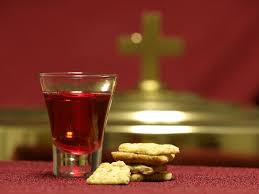
Some of us, though, prefer to simply call it “Supper.” Some believe that something mysterious takes place as they eat this meal. They call it transubstantiation. We only believe it is a dry little cracker and tiny sip of grape juice and an act of remembrance that is confined to our limited and finite minds.

But what if there is more going on here this morning than we can see, touch or taste or even remember?

When we gather around the Lord’s Table, what if there is more going on here than meets the senses? What if there is some mysterious communion or a very holy fellowship happening here?

Sharing what we merely call a “supper,” what if we are surprised to discover that we are somehow invited to join the same fellowship that is mysteriously and inexplicably enjoyed between the Father, Son and Holy Spirit?

In and around this table, what if there is something afoot, something happening— something moving, inviting, healing; something strengthening, loving, forgiving; something saving, calling, challenging, commissioning?

We thought that we have come to remember a life, a death and a resurrection, but I believe we could leave having been caught up in that life and death and transformed by that resurrection.

As Willimon has said, “For, that is our God at our God’s best. That night as Nicodemus talked with Jesus, he began with what he knew. And he ended with questions about what he did not know. He arrived fairly confident that he had a good grasp of, [a good hold on] who Jesus was; [he left surprised,] having been encountered and held by the mysterious, majestic Holy Spirit of God in the flesh.”[2]

This morning, when we awoke, we thought we knew what we were doing. We thought we were going to get up, get dressed and simply go to church, sing a few hymns, have the Lord’s Supper, listen to a choir sing and a sermon preached. Then we would leave, get some lunch and come back home unmoved and unchanged, to watch a little more basketball.

However, when got here, we realized that we did not know it all.

We were shocked when a song spoke to us.

We were surprised when a small wafer and tiny cup filled us.

We were jolted when a word challenged us.

We were startled when someone that we did not even know looked at us and blessed us.

And we were amazed when God, the Creator-of-All-that-Is, somehow, someway that we do not understand, called us by name and told us that She is especially fond of us.

And we were absolutely astounded as Christ himself came and wrapped his arms around us as the Holy Spirit breathed new life into us.

[1]Quote and interpretation of Nicodemus’ first words to Jesus “We know” came from William H. Willimon, We Know (PR 34/2; Inver Grove Heights Minnesota: Logos Productions, Inc., 2006), 49.

[2] Ibid.

Strength for the Lenten Journey

communion

After being affirmed by God on Mt. Carmel, Elijah found himself in a wilderness that was so bad, he did not know if he wanted to live or die.

1 Kings 19:3 reads: “Then he was afraid; he got up and fled for his life.” In verse three, it appears that he wants to live. He’s running from Jezebel to save his life.

Now, let’s look at the very next verse: “But he himself went a day’s journey into the wilderness, and came and sat down under a solitary broom tree. He asked that he might die: ‘It is enough; now, O Lord, take away my life…”

One day, he wants to live. The next day, he wants to die. Can you relate?

Elijah then fell asleep under that tree, but suddenly, an angel touched him and said to him, “Get up and eat.”  He looked and there at his head was a cake baked on hot stones and a jar of water. He ate and drank, and lay down again. But the Lord came a second time, touched him, and said, “Get up and eat, for the journey will be too much for you.”

“He got up and ate and drank, and went in the strength of that food for forty days and forty nights to Horeb, the mount of God.”

At times life can be so difficult, one day we want to live. The next day we are thinking that death might not be that bad of an option.

That is why, this Sunday, as I begin my forty day Lenten journey, I am going to eat and drink from a table with my family of faith. For if I do not, the journey in the wilderness of life will be too much for me.

Now, you might ask: How can one tiny, tasteless cracker, and one sip of juice give us sustenance for forty days and forty nights?

Last week’s scripture lesson took us to “the Mount of Transfiguration.” Before the disciples come back down into the wilderness of their lives, a voice came from heaven, saying: “This is my Son, the Chosen, listen to him.”

This is my Son, the Beloved, the Chosen, the one who has been tested and tempted and tried in the wilderness of life, listen to Him. Listen to the One who knows what it is like to be on the mountain top with God one day, only to be in Hell with the devil the next. Listen to the one who knows something about the ecstasy of being affirmed by God in the presence of God one day and to be famished in the middle of the desert the next day. Listen to the One who knows what it is like to be a human being living in a fragmented world.

Listen to the Christ as he says…

“For God so loved the world that he gave his only Son, so that everyone who believes in him may not perish but may have eternal life. Indeed, God did not send the Son into the world to condemn the world, but in order that the world might be saved through him.”

Listen to the Christ as he says…

“Your sins are forgiven.”

Listen to the Christ as he says…

“Your faith has saved you, go in peace.”

Listen to the Christ as he says…

“Daughter, your faith has healed you.  Go in peace.”

Listen to the Christ as he says…

“Whoever drinks the water that I give him will never thirst.  Indeed, the water I give him will become in him a spring of water welling up to eternal life.”

Listen to the Christ as he says…

“I am the bread of life.  He who comes to me will never go hungry, and he who believes in me will never be thirsty.”

Listen to the Christ as he says…

“I am the light of the world.  Whoever follows me will never walk in darkness, but will have the light of life.”

Listen to the Christ as he says…

“I am the good shepherd.  The good shepherd lays down his life for his sheep.  I am the good shepherd.  I know my sheep and my sheep know me.”

Listen to the Christ as he says…

“Your brother will rise again.”

Listen to the Christ as he says…

“I am the resurrection and the life.  He who believes in me will live, even though he dies; and whoever lives and believes in me will never die.”

Listen to the Christ as he says…

“Do not let your hearts be troubled.  Believe in God, believe also in me.  In my Father’s house are many dwelling places. If it were not so, would I have told you that I go and prepare a place for you? And if I go and prepare a place for you, I will come again, and I will take you to myself, so that where I am, you will be also.”

Listen to the Christ as he says…

“You are my friend”

Listen to the Christ as he says:

“I am with you always, even until the end of the age.”

Listen to Christ as he says, “This is my body given to you. This is my blood shed for you.”

Some might still say: “It is just a tiny cracker and a sip of juice.”

But the good news is that we can go in the strength of that food for forty days and forty nights, or however long our journey in the wilderness might last.

Beloved Dust to Dust

Ash_Wednesday

As a little boy, when I would misbehave (notice I said “when” and not “if”), my mother would often call me “a piece of dirt.” Well, she actually called me “a sod.”  For example: “Whenever I said an ugly word she would say, “Why you little sod!  I’ve got a good mind to wash your mouth out with a bar of soap!”

And she was not always angry or even disappointed me when she would call me “dirt.” When (again “when” and not “if”) I played practical jokes on Mom, like that time I drove home from college my freshman year for Thanksgiving and greeted Mama at the front door with a big, fat, smoking cigar in my mouth: “Why you little sod!”

But here’s the thing: Mama always graciously let me know that I was her beloved sod.

What I never thought about though was how accurate Mama really was— physiologically and theologically. In the first creation story of Genesis we read that God formed us “from the dust of the ground and breathed into [our] nostrils the breath of life” (Genesis 2:7). And in the second creation story we read that we have life “until [we] return to the ground, for out of it [we] were taken; [we] are dust, and to dust, [we] shall return” (Genesis 3:19). The Psalmist also declares that when our breath is taken away we die and return to dust (Psalm 104:29).

Lent is a time of reminding all of us that we are just a bunch of little sods. It is a time of reminding us of our mortality. It is also a time of reminding us that, because of our earthiness, none of us are above reproach. The Apostle Paul asserts that because of our lowliness, “all have sinned and fall short of the glory of God” (Romans 3:23).

I often hear people say, “Love the sinner and hate the sin.” I have always had problems with this, for it implies that the sinner is somehow separated from the sin. Sin is understood as specific action that can be avoided instead of an integral part of our earthly DNA.

The Jewish people once believed that sin could be avoided if 613 laws were obeyed. Not only is that a formidable task for any human, I believe Jesus would say that even if one obeyed all 613 laws, they would not be any less of a sinner than the one who broke every one.

I believe this is why Jesus said that those who have lust in their heart are just as sinful as those who commit adultery (Matthew 5:27-30). This is also why the Bible-believing, religious people of Jesus’ day dropped their stones before the woman “caught in the act of adultery” when Jesus said, “Let those without sin cast the first stone” (John 8:7).

The good news is, as the Apostle Paul wrote to the church at Rome, though our sin was serious, in Christ, “grace abounded.” We could not do right by God, so God, through the love revealed in Christ, did right by us.

And one day, when we our lives come to an end and our bodies return to this earth as dust, we have the hope in Christ that we are God’s beloved dust, and God’s grace will continue to abound.

This Wednesday is Ash Wednesday. It is the first day of Lent: the day Christians mark themselves with ashes, or dust, reminding ourselves of our mortality and our sinfulness. We remember that we are dust, but we are God’s beloved dust. We are sods, but we are God’s beloved sods.

Ash Wednesday is important, for it is only until we understand that we are all sods—imperfect, limited sinners saved by grace—that we can begin to live as God has created us to live, by loving others as God loves us: with abundant mercy and boundless grace; forgiving, accepting and including others as God forgives, accepts and includes us.

The King We Need

rolling stones

Luke 19:28-40 NRSV

Our Palm Sunday gospel lesson is a rather strange text. As Jesus instructed them to do so, the disciples borrowed a donkey, brought it to Jesus, threw their cloaks on it and set Jesus on top. “As he rode along, people kept spreading their cloaks on the road. As he was approaching the path down from the Mount of Olives, the whole multitude of the disciples began to praise God joyfully with a loud voice, for all the deeds of power that they had seen, saying, “Blessed is the king who comes in the name of the Lord! Peace in Heaven, and glory in the highest heaven!”

Did you hear something strange there? For when have you ever heard the disciples of Jesus referred to as “the whole multitude of the disciples.” There were only twelve. But Luke describes them as “the whole multitude of the disciples.”

Let’s see, has there been any other time in Luke’s gospel when we have heard such language? Reminds us of another multitude, doesn’t it? The whole “multitude of the heavenly host” at the birth of Jesus, praising God and saying, “Glory to God in the highest heaven, and on earth peace among those whom he favors!” That sounds much like the chant of the disciples this morning, doesn’t it? I believe Luke wants to make the point that this processional of Jesus into Jerussalem is as important as the first processional of Jesus into the world. For Luke, Palm Sunday is as significant as Christmas.


And this is certainly not the only strange thing in this text. But by this point in Luke’s story, should we really be that surprised?  For throughout Luke something is always out of place, out of kilter, out of whack. If we remember the stories Luke has told us thus far, we would remember that the perfect neighbor is a despised Samaritan; the selfish prodigal is welcomed home with an extravagant party; the greedy publican goes home from the Temple justified; a woman who lets down her hair at the dinner table is praised; the first is last and the last is first; to save one’s life, one must lose one’s life; and now the king, and not just any king, the king of kings, the one whose birth was heralded by “a  multitude of heavenly hosts,” a theme now picked up by a multitude of disciples, enters the city riding on a donkey, and not just any donkey, a borrowed donkey.

If Jesus is a King, he is certainly unlike any king the world had ever seen: A king of poor shepherds; A king of simple fishermen; A king of dishonest tax collectors; A king of despised Samaritans; A king of harlots; A king of lepers, demoniacs, cripples, and outcasts. New Testament professor Alan Culpepper writes: “Those who followed this king were a rag tag bunch, pathetically unfit for the grand hopes that danced in their imaginations.”


And the cloaks thrown on the road that day were not expensive garments but tattered shawls and dusty, sweat-stained rags. Jesus was certainly no ordinary king, but a rather strange one.

The King we may want is not the king we get. But the good news is, this is the King we truly need. It is the King this broken world needs. It is the only king that can save this world. It is the only King that can give us life, true life, abundant and eternal.

Reminds me of the words of those great theologians of our time who once sang: “We can’t always get what we want, but we we try sometimes, we might just find, we get what we need.”

Jesus is the King. But as he will tell Pilate later this week, Jesus is a different kind of King, for his kingdom “is not from this world.” He adds: “If my kingdom was from this world, my followers would be fighting to keep me from being handed over to the Jews. But as it is, my kingdom is not from here.”

And, if we are honest, this makes those of us living in this world very uncomfortable. But that is Jesus. He comforts the afflicted of this world and afflicts the comfortable of this world. And whether we like to admit it or not, the truth is, we have grown rather fond of the kings and kingdoms of this world. And we sometimes have difficulty accepting anything different.

We prefer the kingdoms in this world that “would be fighting” to keep Jesus “from being handed over to the Jews.”

We prefer “an eye for an eye and a tooth for a tooth.”

We prefer “It’s not our job to judge the terrorists. It’s our mission to arrange the meeting.”

We prefer “the statue of Liberty…shaking her fist.”

The truth is that we prefer answering violence with more violence. We believe combating hate with more hate. We believe fighting for what we believe, even for Jesus.

We believe in coercing our convictions, imposing our opinions, forcing our beliefs, and we don’t care who it offends or even destroys in the process.

We prefer a kingdom where we say it loudly and proudly that “we eat meat; we carry guns; we say Merry Christmas and Happy Easter; we speak English and if you don’t like it, get the heck out!”

We prefer a kingdom where we do unto others as they do unto us.

We prefer a kingdom where we love only those we believe deserve our love.

We prefer a kingdom where we help only those who are willing to help themselves.

We prefer a kingdom where people put the needs of their own before the needs of a foreigner.

We prefer a kingdom where we care ourselves, while our neighbors fend for themselves.

Jesus implies to Pilate that there are two types of kings. There are the kings of this world, and then there is the king from another world. And then Jesus asks Pilate and Jesus asks you and me: Who is your king? Who do you say that I am? Am I your King? Is your king from another world or is your king from this world?

One king offers protection;

One king promises persecution, saying if you follow him, people will rise up and utter all kinds of evil against you.

One king endorses greed and validates prosperity;

One king fosters sacrifice and promotes giving it all away.

One king caters to the powerful, the wealthy and the elite;

One king blesses the weak, the poor and the marginalized.

One king accepts only people of like-mind, like-dress, like-language, and like-faith;

One king accepts all people.

One king is restrictive with forgiveness;

One king is generous with it.

One king controls by fear;

One king reigns with love.

One king leads by threat of punishment;

One king rules with the promise of grace.

One king governs by imposing;

One king leads with service.

One king throws rocks at sinners;

One king defends those caught in the very act of sinning.

One king devours the home of the widow;

One king offers her a new home.

One king turns away the refugee;

One king welcomes the refugee, for he, himself, was a refugee.

One king destroys his enemies with an iron fist;

One king dies for his enemies with outstretched arms.

For one king’s throne is made with silver and gold;

One king’s throne is made with wood and nails.

One king wears a crown of rubies and diamonds;

One king wears a crown of thorns.


So, of course, the powers that be, the kings of this world, will arrest this king “whose kingdom is not from this world.” Of course, they will torture this king, spit on this king, mock this king, and crucify this king—this king from a foreign realm. Of course, they will try to bury this king and seal this king’s tomb up with a stone.

But hate will not defeat this king. Bigotry will not stop this king. Religion and patriotism will not overthrow this king. This king will rise again. But not in the way the kings of this world rise. Despite the desires of his followers or the lyrics of their songs, there will be no thunder in his footsteps or lightening in his fists. There will be no plagues, fire, brimstone, or flood. There will no shock and awe or violence or riots in the streets of any kind.

For this king understands what, sadly, few since have understood, and that is:

“The ultimate weakness of violence is that it is a descending spiral, begetting the very thing it seeks to destroy. Instead of diminishing evil, it multiplies it. Through violence you may murder the liar, but you cannot murder the lie, nor establish the truth. Through violence you may murder the hater, but you do not murder the hate. In fact, violence merely increases hate. So it goes. Returning violence for violence multiplies violence, adding deeper darkness to a night already devoid of stars. Darkness cannot drive out darkness: only light can do that. Hate cannot drive out hate: only love can do that,” said the Reverend Doctor Martin Luther King Jr.

Consequently, this king will arise from the darkness of the grave, powerfully, yet unobtrusively; mightily, yet unassumingly; leaving room to recognize him or not to recognize him, leaving room to believe or to doubt, to reject him or to follow him. This king will drive out the darkness, not with more darkness, but with light. This king will drive out the hate, not with more hate, but with love.

So, how do we live in these hate-filled days of hostility, violence and riots in the streets?

Well, that all depends on who your king is.

The arrest this week of a terrorist responsible for the attacks in Paris reminded me of Antoine Leiris, who lost his wife in those attacks, who proclaimed to the world which king he chooses to serve. He shared it in beautiful tribute to his wife on Facebook, in the days after the attack, promising to not let his 17-month-old son grow up in fear of ISIS.

“You took away the life of an exceptional human being, the love of my life, the mother of my son, but you will not have my hatred…

I do not know who you are, and I do not wish to…

If this God for whom you kill so blindly has made us in His image, every bullet in the body of my wife will have been a wound in His heart…

So I will not give you the privilege of hating you. You certainly sought it, but replying to hatred with anger would be giving in to the same ignorance which made you into what you are. You want me to be frightened, that I should look into the eyes of my fellow citizens with distrust, that I sacrifice my freedom for security. You lost. I will carry on as before.”

No, it may not be what we want, but if we open our hearts and try, it is truly what we need. It is what our world needs. So let heaven and nature sing! May the whole multitude of God’s people prepare him room shouting with our words and deeds: ‘Blessed is the king who comes in the name of the Lord! Glory in the highest heaven and on earth peace!”

Spring Is in the Air

lilies

“As he was now approaching the path down from the Mount of Olives, the whole multitude of the disciples began to praise God joyfully with a loud voice for all the deeds of power that they had seen, saying,
‘Blessed is the king who comes in the name of the Lord!
Peace in heaven, and glory in the highest heaven!’

Some of the Pharisees in the crowd said to him, ‘Teacher, order your disciples to stop.’ He answered, ‘I tell you, if these were silent, the stones would shout out’”(Luke 19:37-40).

This year, I believe what makes Holy Week special in Oklahoma is the way it corresponds with the unmistakable arrival of spring. The freezing temperatures of this Palm Sunday weekend appear to be the last gasp of winter. It is as if the entire creation is joyfully crying out with a loud voice: “Blessed is the king who comes in the name of the Lord!”

Trees budding; thunder booming; flowers blooming; grass greening; lilies rising; birds singing; sun shining—our world seems to be proclaiming that death has finally been transformed into life! It is Holy Week, and spring and hope and good news is literally in the air.

As disciples of the Lord, our mission is to share this good news with all people. And if we do not do it, Jesus says that the earth itself will shout out! May the arrival of spring remind us each day of this mission.

When we see new leaves in the trees dancing in warm breezes with new life, may we be reminded to hug those experiencing grief and loss.

When we hear the thunder, may we be reminded to comfort those who are afraid.

When we see flowers opening their blossoms toward the sun, may we be reminded to offer a smile and a kind word to those who are discouraged.

When we walk on green grass, may we be reminded to welcome those who feel lost and marginalized.

When we see lilies rise from the earth, may we be reminded to stand tall for justice on the behalf of the victims of narrow-minded bigotry.

When we hear the birds singing harmoniously together, may we be reminded to worship together in community.

And when we feel the warmth of the sun on our faces, may we be reminded to always let the light of love shine brightly for all people.

Left-Handed Power

okalhoma sunset

I recently had a conversation with someone who firmly believed God uses God’s power to cause tragedies in life in order to accomplish some divine purpose. The God who rules with “thunder in his footsteps” and “lightening in his fist” as the song goes, will rain down cancer, heart disease, automobile accidents, hurricanes and earthquake to accomplish the divine purpose.

For me, this represents a gross misunderstanding of the power of God. Although the Bible insists over and over that our ways are not God’s ways, we insist on equating God’s power with our concept of worldly power.

One day, a father was driving down a road with his little boy admiring a beautiful sunset. The father said to son, “And to think, God created all of this just for us to enjoy.”  The little boy responded, “And to think, God did it all with God’s left hand.”

“What do you mean, son? Where did you hear that?”

“Well, God had to use God’s left hand, because my Sunday School teacher told me that in heaven Jesus was sitting on God’s right hand.”

As they say, “out of the mouth of babes.”

The truth is, we have allowed the world to define power for us instead of allowing the Jesus we remember in this season of Lent to define such power.

To the world, power means controlling. Power means dominating.  Power means taking. Power means ruling.  Power means imposing.

However, the power of God as revealed through Jesus Christ is the exact opposite. God has what the late theologian Arthur McGill called a “peculiar” kind of power.  You could call it a “left-handed power.” It is a power of self-expending, self-giving love.

God’s power is not power that takes, but a power that gives.

God’s power is not a power that rules, but a power that serves.

Not a power that imposes, but a power that loves.

Not a power that dominates, but a power that dies.

And as McGill has written, this is the reason that it is “no accident that Jesus undertakes his mission to the poor and to the weak and not to the strong, to the dying and not to those full of life. For with these vessels of need God most decisively vindicates his peculiar kind of power, his power of service whereby the poor are fed, the sinful are forgiven, the weak are strengthened, and the dying are made alive.”

Bear Fruit or Die

rose of sharon

Luke 13:1-9 NRSV

One of the great things about living in southern Louisiana were the countless stories I heard about two infamous Cajuns named Boudreaux and Thibodeaux.

Reverend Boudreaux was the part-time pastor of the Boondock Bible Church and Pastor Thibodeaux was the minister of the Backwoods Gospel Church located directly across the road. One day, they were both standing out by the road in front of their churches, each pounding a sign into the ground as fast as they could. The sign read:

Da End is Near
Turn Yo Sef ‘Roun Now
Afore It Be Too Late!

As soon as the signs got into the ground, a car passed by. Without slowing down, the driver leaned out his window and yelled as loud as he could: “You bunch of religious nuts!”

Then, from the curve in the road they heard tires screeching and a big splash.

The Reverend Boudreaux yells at Pastor Thibodeaux across the road and asks:

“Do ya tink maybe da sign should jus say ‘Bridge Out’?”

Now, because I am a seminary-educated minister that has spent the bulk of my ministry preaching from mainline, downtown pulpits, I have always sought to differentiate myself from the so-called religious nuts. The repent-or-be-sent, turn-or-burn, reach-for-the-sky-or-fry, get-saved-or-get-microwaved style of preaching has never been a part of my repertoire.

Thus, when I preach a passage of scripture like our gospel lesson this morning, I have steered away from any interpretation that sounds like what Jesus is actually saying here is: “The end is near! Ya betta turn yo sef ‘roun now! A fore it be too late!”

For example, I have used this passage as an opportunity to have a deep, theological discussion on the problem of evil. I have said that here, in this passage, we have two basic types of evil in the world. There is natural evil, and there is personal evil.

The tower of Siloam, I have said, represents natural evil. In this fragmented world, sometimes tornadoes and straight-line winds destroy property and take lives.

And the Galileans massacred by Pilate, represent personal evil. In this broken world, sometimes a broken person will grab a gun, fire shots out their car window while driving down the road, then walk into a place where he once worked and begin shooting anyone in sight.

And with Jesus’ very emphatic response, “No, I tell you!” Jesus is saying that God does not will such tragedy because of human sinfulness or any other reason. In this imperfect world, sometimes bad things happen to very good people, and there is no divine explanation or driving purpose for it.

However, maybe, to avoid sounding like a religious nut, I have actually missed the very simple point of this passage which is, “The end is near. Ya betta turn yo sef ‘roun now! A fore it be too late!”

Maybe the point that Jesus is really trying trying to make here is: “Unless you repent, you will perish.”

You have a little more time, but unless you start producing some figs, start bearing some fruit, at least start sprouting a bloom or two, you are going to die.

“But, Dr. Banks, that sounds too much like the hell, fire and brimstone sermons of those backwoods churches in the boondocks, far from the lights of downtown, and you know that we moderate, educated clergy in our mainline, sophisticated pulpits are way too smart for that.”

However, I have a feeling that through this passage Jesus is arguing that we may be too smart for our own good!

People had gathered together, and they started doing what people do best when they gather together, even in the church. They began to gossip, especially about the sinfulness of others, the sinfulness of “those” people. “Those” people who had this tower tragically collapse on top of them.

Sadly, I believe this may be the only reason some people go to church these days: to hear about the sins of all those who are not in church. It makes them feel good, religious, superior, righteous.

And Jesus is emphatic, “No, I tell you!”

It is as if he is saying: “You better stop judging your neighbors and start taking a look at yourselves. Stop worrying about the speck in your neighbor’s eye and worry more about the log in your own eye. Look, bad things happen this world. People die. It’s not a matter of degrees of rightness or wrongness, sin or sainthood. Everyone dies. And one day, you are going to die. So, you better repent. You better change. Ya better turn yo sef roun now. A fore it be too late!”

And to drive the point home, Jesus tells the story about a fruitless fig tree. And the moral of the story is simple. Bear fruit or die.

Reverend Sharron Blezard believes this text is begging the church today to ask: “What are we doing to bear fruit, to bloom where we’ve been planted?”

She says, that far too many congregations are merely existing like a barren fig tree, wasting the soil. There are no signs of any fruits, no promise of any blooms. These churches exist primarily to get together, and sadly to do what people do best: to gossip, to talk about the sinfulness of those outside the church, to lament about the moral decay of society, and to pine for the return of good old days.

And they’ve lost hope. They’ve grown too weary, too worn down, too disheartened to invest the energy, creativity, and passion to share the Good News of Jesus with a broken and hurting world. While many congregations do provide a place to take care of one another, they have no sense of mission to be the Body of Christ that is sent by God into the world bearing fruit.

She says, think of it this way: fruit always “grows outward from the plant into the light. So, too, a healthy church grows outward.”

Several years ago, my mother gave me a Rose of Sharon root. She told me to plant it, and it would grow to be one of the most beautiful plants in my yard, with its flowers blooming all summer long.

Well, although the plant grew, it did not produce a single bloom that summer. I called Mama and said, “I think you must have given me a dud.”

She said, “Oh no. It’s not a dud. It just needs a little TLC. You may need to dig around it, give it a little fertilizer. You may even need to dig it up all together and plant it in better soil. Make sure it is in soil that can soak up water and is growing in a place where it can get good light.

As always, I did what Mama told me to to do. I ended up transplanting it to a spot that had better topsoil. I kept an eye on it, watered it, cared for it, and the next year, just like mama said, it produced the most beautiful blooms all summer long.

From the short time that I have known you, it is obvious that God has given this church many good gifts. The talents and resources that are here are astounding. There is not one dud in this room. And because of that, God expects us to be fruitful with those gifts. God expects our church to bloom.

I believe Jesus is asking us to take a lesson from a barren fig tree. To bloom and bear beautiful fruit will require some work, some sacrifice. We may need to dig around, put out some fertilizer, even transplant a thing or two. It may take some cutting back, pruning, shaping and nurturing.

Yes, it is scary. It is difficult. It is risky. But, Jesus says that it is the only way to life, the only way to bear fruit that nourishes the world.

Eddie Hammett, my friend and church consultant, loves to say that Christians need to stop going to church, and start being the church.

I believe he is talking about the difference between a church that is inward focused, therefore barren, and one that is outward focused, therefore bearing fruit for the world.

Hammett says:

Going to church is routine and easy. Being church in the world is challenging, difficult and calls for prayerful intentionality. Going to church keeps us safe…. Being the church makes us uncomfortable and challenges us to learn to BE salt, light and leaven. Going to church is familiar….Being the people of God as church is unfamiliar to many and overwhelming to most. May we press on in the faith…

And as much as I may want to avoid sounding like a back woods religious nut in the boondocks and speak only articulate, sophisticated words that make us comfortable from this mainline, downtown pulpit, maybe what we really need to hear is that the time is coming, the day is approaching, as it was for that barren fig tree, there’s going to be a reckoning.

What we really need to hear is that we must bear fruit or die. What we really need to hear is: “The end is near, so ya betta turn yo sef ‘roun now! A fore it be too late!”

May we use the gifts God has given us to press on in the faith, step up and out in our discipleship, do the hard work of getting out the fertilizer and the shovel, doing some digging, getting our hands dirty to produce some figs.

May we quit worrying about empty pews and why more people are not in church these days and begin worrying about what we are doing to be good stewards of the the gifts we have been given.

In the words of Blezard: “For there’s a big world out there, a world that is thirsting and hungering for the love of God. May we go out and bloom, bearing fruit in the image of Christ” (paraphrase).

Our God Rides a Donkey

donkeyjesusJohn 12:12-15 NRSV

A few moments ago we prayed for a variety of people who all have one thing in common.  They are suffering.  Some are suffering with cancer.  Others heart disease.  Some are trying their best to recover from strokes. Others are recovering from injuries from an accident or a fall.  Others are experiencing the grief over losing a loved one to death.

And of course the question that people of faith ask is why?

Why do bad things happen to good people?

As a Christian pastor, I have often said that the question that one should ask is not “why me?”   But “why not me.”  We are human beings, and the reality is, that human beings suffer.  Human beings get cancer, have heart disease and strokes and get into accidents.

“Why me?”  No, the better question is, since I am a human being, “Why not me?’

Hear me clearly say this: When bad things happen, God is not punishing us, God is not trying to get anyone’s attention, wake anyone up, and God is not trying to teach us something.  In this fragmented world, bad things simply happen.

I hate it when people misquote the Bible by saying that “the Good Lord doesn’t put any more on us that we can bear.”  As if the Lord looks at people like Joyce Letchworth and says: She has buried two sons, had heart bypass and a valve replacement surgery, still, I think she could bear breaking a hip.

God does not put anything on us.  We suffer because we are fragile, immortal human beings and that’s it. And God does not “take,” “pluck,” or “call home” anyone from this life.  We die because we are human.

However, I believe the question that most of us really want answered is not so much, “Why me?”, but “Why isn’t God doing something about it?”  Why doesn’t God do something to prevent or relieve the suffering? We understand that God doesn’t cause suffering, but, why on earth, doesn’t God do something about it?  That’s what I don’t understand.

Well, one easy answer is that suffering is for our own good. A long time ago, Irenaeus of Lyons, a second century bishop, wrote on the educational value of suffering.

Why doesn’t God end our suffering?  Well, through our encounters with pain, we grow and develop. The infant who touches a hot stove learns a valuable lesson.  What if human beings never experienced want, deprivation, terrible heat or unbearable cold? Would human culture have developed among other creatures? No, said Irenaeus. Suffering is thus a great teacher, a wonderful prod for advancement in human development.

Even the book of Hebrews says that Jesus learned obedience through his suffering.

Now, I realize that this is somewhat true. The keyword here is “somewhat.” My aching bones tell me that a person in my shape should not try to run a marathon. But what about those whose bones lie in the mass graves in Iraq or Syria? What about the bones of the five year old boy found in a septic tank in Virginia? What lesson is there for that grieving community?

Some pain is helpful, but not all pain. The truth is that there is far too much useless, pointless pain in this broken and fallen world to speak to positively of the educational potential of suffering. What on earth is a child who falls victim to an internet child molester to learn?

Which brings us back to our main question: Why doesn’t God do something about the pain of this world?  Why doesn’t God intervene and do something?

One philosopher once said, “Either God is good, but ineffective and unconcerned, in which case he is not good for us, or, considering the unrelieved, unjustified pain in this world, God is evil.”  There is just too much unrelieved, unaddressed pain in this world to have God any other way.

Another response is that God is very good, but God is simply inactive. This seems to be the conventional modern resolution of the matter. Rabbi Harold Kushner has said that God only had six days to complete the world, and unfortunately, some things were left unfinished. God is not a personal errand boy. Stuff happens. And God? Well, God is simply uninvolved.

This is the modern, deist God of our founding fathers. Deism is the belief that God set up the world then went on a permanent vacation. Deism rescues us from the dilemma of having to make excuses for God’s lack of engagement with us and our suffering. God doesn’t heal, save, rescue or reach in, not because God is unconcerned and unloving, but rather because God is simply uninvolved.

Deism tended to be the faith of most of the modern world because, in order to get the modern world going, the first thing we needed to do was to remove God from the world so that we could be free to run things as we want. Belief in this God who is empathetic but not meddlesome, having gotten God safely filed away as some vague spiritual feeling, we were free to give ourselves more fully to a more effective god—the nation, the economy, or whatever. The bloody 20th century, the perhaps even bloodier beginning of the 21st century, is the result.

But then, despite ourselves—God, all of a sudden, surprises us. God comes. And God acts. A life gets uplifted. Someone comes away healed, whole. A life is changed, a future rearranged.  On her death bed, after suffering more than I have seen anyone suffer, Alawoise Flanagan miraculously smiles, her eyes ablaze with hope. And members of the Flanagan family miraculously experience a peace and strength that surpasses all understanding. Just when we thought God had taken some cosmic vacation, God shows up and we experience life, abundant and eternal.

This is Palm Sunday. It is the Sunday that God showed up on the streets of Jerusalem riding a donkey. It isn’t that God is unconcerned, uninvolved, and uninterested in us, it is that the way God comes to us is not the way we want or expect God to come.

William Willimon writes: We wanted Jesus to come in to town on a warhorse, and Jesus rode in on a donkey. We wanted Jesus to go up to the statehouse and fix the political problem, and Jesus went to the temple to pray. We wanted Jesus to get organized, mobilize his forces, get the revolution going, and set things right, and Jesus gathered with his friends in an upper room, broke bread, and drank wine.  We wanted Jesus to go head-to-head with the powers-that-be, and Jesus just hung there, on Friday, from noon until three, with hardly a word.

It wasn’t that Jesus didn’t do anything; it was that Jesus didn’t do the thing that we wanted. It wasn’t that Jesus did not come and intervene; it was that Jesus came riding a donkey.

God emptied God’s self, poured God’s self out, became one of us, bore our sins and our sufferings, even to death, death on cross. God came to us—not in a way that we wanted—but in a way that is all we truly need for life—abundant and eternal.

When my friend, Tony Cartledge’s, eleven year-old little girl died in his arms after their car was struck by a drunk driver, Tony said that he knew beyond a shadow of a doubt that God was there. No, God didn’t go after the drunk driver with a vengeance and reverse the evil that had happened, but there God was nonetheless: Holding that little girl with him; feeling Tony’s pain; shedding divine tears; promising hope and peace. God was undeniably present. And “miraculously,” said Tony, “that presence was enough.”  “That presence was all that I needed.”

There are people on our prayer list, and others for whom we prayed today who I pray will somehow, some way, be able to say: “It may not have been what I wanted—but God’s humble, loving, suffering, self-giving, life-changing, healing, hopeful presence, is all that I will ever need—for now and forevermore.  Amen.”

Our King Wears a Crown of Thorns

6187141-crown-of-thorns-hung-around-the-easter-crossMany people will not worship in a church this Holy Week because someone in the church, without thinking, offered them an easy answer in the face of evil. “God does not make mistakes,” they said. “God is in control. God knows what God is doing,” they said.

The reason I believe people are tempted to give up on God in the face of evil is because, contrary to what their good-intended church friends say, they are unaware that God does not reign from some heavenly throne in some blissful castle, but from an old rugged cross, on a hill outside of Jerusalem, between sinners like you and me. I believe people become despairing and cynical about God, because they fail to understand that our God does not rule like the rulers of this world.

The rulers of this world rule with violence and coercion and force. Earthly rulers rule with an iron fist: militarily and legislatively and with executive orders. The kings of the world rule with raw power: controlling, dominating, taking, and imposing.

But Christ is a King who rules through suffering, self-giving, self-expending, sacrificial love. Christ the King rules, not from a distance at the capital city, not from the halls of power and prestige, but in little, insignificant, out-of-the-way places like Bethlehem and Nazareth, and Enid and Waukomis..

Christ the King doesn’t rule with an iron fist, but with outstretched arms. Christ the King doesn’t cause human suffering from a far, but is right here beside us sharing in our suffering.

God’s power is not a power that takes, but is a power that gives.

God’s power is not a power that rules, but is a power that serves.

God’s power is not a power that imposes, but is a power that loves.

God’s power is not a power that dominates, but a power that dies.

This, says the late theologian Arthur McGill, is the reason that it is “no accident that Jesus undertakes his mission to the poor and to the weak and not to the strong, to the dying and not to those full of life. For with these vessels of need God most decisively vindicates his peculiar kind of power, [a] power of service whereby the poor are fed, the sinful are forgiven, the weak are strengthened, and the dying are made alive.”

Christ the King did not take our first child. The day our baby died, God cried with us in that hospital room.

God did not cause the tumor. The day the doctor said the word “cancer” was a day of anguish for God as it was for us.

God did not create the layoff.

The day you were told that your job was ending, God stayed up with you and worried with you all night long.

And God did not take your loved one.  When they died, something inside of God died too.

What we all need to learn are very different definitions of “king,” “rule,” “reign” and “power”—very different because they define the ways of the only true and living God rather than defining our false gods and their ways.

So when life gets us down, we need to remember the great truth of Holy Week—Christ is the King. And this King is reigning, suffering, sacrificing and giving all that God has to give from the cross.

God does not make mistakes. God knows what God is doing. God is in control. But God’s throne is not made of silver and gold. God’s throne is made of wood and nails. God wears not a crown of jewels but a crown of thorns.

Spring Cleaning Our Mouths

wash+mouthJohn 2:13-22 NRSV

Have you ever wondered what would happen if Jesus showed up one Sunday morning in church? Would he politely take an order of service from a deacon and quietly find a place in the pews? Would he stand for the call to worship, sing from the hymnal and say the Lord’s Prayer? Would he eat the bread and drink from the cup? Would he put money in the plate when it was passed? Would he earnestly and respectively listen to the sermon, without any reply or retort?

Or would he have something to say? Would anything here anger him or incite him to take some sort of action? Would he take a look at how we were doing church and want to do a little spring cleaning? Would he take a whip and drive any of us out? Would he turn over table or two? Would he come up here to the pulpit and take my sermon notes and tear them to shreds?

Because that is kinda what he did when he visited the Temple in Jerusalem before the Passover. You might say that he did a little spring cleaning. Most scholars point out that it wasn’t so much that the people were exchanging money or selling in the Temple that burned Jesus up, but it was the manner in which they were doing it. The common practice was to charge oppressive amounts of interest, taxes and fees to exchange currency. And when selling cattle, sheep and doves for Passover, it was a common practice to take advantage of and rip off the poor. Just like today, those who can afford the least, often have to pay the most.

So what angered Jesus is how the religious establishment was preying on and hurting others. And this this text is asking: “Is there anything that the church does today that hurts other people?” “What is it about church today that needs a good spring cleaning?”

I try to talk to people every week who never attended church, or who no longer attend church. And when I ask them why they are not a part of church, they often tell me that they have been deeply hurt by the church. “How?” I ask. “By words,” they say.

The truth is: words have tremendous power. The Epistle of James says it well:

How great a forest is set ablaze by a small fire! And the tongue is a fire. The tongue is placed among our members as a world of iniquity; it stains the whole body, sets on fire the cycle of nature, and is itself set on fire by hell. For every species of beast and bird, of reptile and sea creature, can be tamed and has been tamed by the human species, but no one can tame the tongue—a restless evil, full of deadly poison. With it we bless the Lord and Father, and with it we curse those who are made in the likeness of God. From the same mouth come blessing and cursing. My brothers and sisters, this ought not to be so (James 3).

Nathan Parrish, a pastor friend of mine in Winston-Salem said that a mother in his church shared with him her outrage one Sunday after church. She said that during the week, her ten year-old boy came home from football practice and told her that the coach had the audacity to say that “he hit like a girl.” My friend Nathan responded: “The message starts early doesn’t it?”

She asked: “What do you mean?”

Nathan said: “Our children learn it while they are young, don’t they? That females are the weaker sex and need to be kept in their place.”

Laura Johnson, the pastor of Broad Street Christian Church in New Bern, has said that as a female pastor people give her qualified compliments all the time: “Laura, that was a great sermon…for a woman.” “Laura, you are a good pastor, for a girl.”

The message starts early, and it is pervasive. And it is prevalent in many churches. Through patriarchal language, the exclusive use of male pronouns to refer to God, men are touted as being somehow closer to God than women. Thus, in many churches, only men can be the leaders, and women are pushed to a more subservient place. The men belong in the church boardroom; whereas the women belong in the church kitchen.

Words indeed have great power and can cause tremendous harm. So, if Jesus was coming to our church do a little spring cleaning, he would perhaps start with our mouths. So what words in our church vocabulary do you think Jesus would want to drive out with a whip? What words or church expressions would be among the first to be cleaned out? What about:

We’ve never done it that way before, or worse, You are in my seat?

When these words are spoken at church, they almost always mean “new ideas, new ways of thinking, new approaches to ministry, and new people are not welcome here.” These words espouse a “This-is-my-church-my-house philosophy. It is what the gospel writer meant when he said: “then the disciples remembered what was written: ‘Zeal for your house will consume me.’” And any words espousing that this is our house and not God’s house have the power to kill a church. There was a great book written nearly thirty years ago that many churches who are closing their doors for good today failed to read. It was called The Seven Last Words of the Church: We’ve Never Done It that Way Before.”

The Bible clearly says…

As I said this past Wednesday night, whenever I hear this expression, I get a little nervous. You may have heard that there are many elected officials and TV evangelists in our country who would like to transform the United States into a Theocracy. That means that they would like to take the laws of God found in the Bible and make them the laws of the land. That is how they want to bring God’s kingdom to earth. While a theocracy may sound good to many Christians at first, it really all depends on who Theo is, doesn’t it? Who gets to pick and interpret the laws that they want others to obey? Whenever people talk about enforcing or legislating biblical morality, they are almost always thinking: “There is only one interpretation of the Bible, and it is mine!” However their interpretation may be the polar opposite of your interpretation that you try to discern through the words and works of Jesus.

ve the sinner and hate the sin.

 A couple of weeks ago I said that these words infer that we can somehow separate the sin from the sinner; however, sin is so much a part of our DNA, so much a part of who we are in this fragmented world, that it simply cannot be avoided. And when we think that we have reached some sort of spiritual pinnacle that we can somehow avoid sin, we contradict who Jesus calls us to be by becoming arrogant, proud, snooty and judgmental. And we drive people away from the church in droves.  We say: “But I don’t do the things that so-in-so does!” That might be good; however, we just need to understand that just because we don’t, we are not any less of a sinner than so-in-so.”

If you died today, do you know where you would spend eternity?

I believe in heaven and hell, but the truth is that when we infer that following Jesus should only be done for purely selfish reasons, to receive some award instead of punishment, then we miss the whole point of who Jesus is and who he calls us to be. Jesus calls us not to save our lives, but to lose our lives. Jesus calls us to live a  self-giving, self-expending life rooted in radical selflessness. Jesus never said, “Follow me and go to heaven.” He said, “follow me and carry a cross.”

And then there are the classics:

God has God’s reasons.

God does not make mistakes.

God will not put any more on us than we can bear.

It’s God’s will and we will just have to accept it.

These words have probably caused more people to leave the church, and leave God, than any others. There is no telling how many people have reached the conclusion: “If God is the one who caused my baby to die, if God is the reason behind my divorce, if God created my loved one to suffer, if God put all of these financial hardships on me, then I would be better off living in Hell for all of eternity than with a God like that.”

I believe many Protestant churches, in an attempt to distance themselves from Catholicism, have tried to teach the faith while avoiding the pain and suffering of Jesus. We look at the crucifix and say, “My Lord is not on the cross! He is living today in heaven! However, when we move too casually through the season of Lent, too quickly through Holy Week, and even skip Good Friday to get to Easter, we miss what may be the most important tenet of the Christian faith: that our God is a God who suffers. God is not seated on a throne far removed from the creation, pressing buttons, pulling levers, causing human misery, but our God is here in the midst of human pain, suffering with us, alongside us. So, in a way, our God is still on the cross today. As long as there is human life, our God is still emptying God’s self, pouring God’s self out. Our God is a God who grieves, agonizes, and bleeds. Our God is never working against us, but always for us, creating and recreating, resurrecting, doing all that God can do to wring whatever good can be wrung out of life’s most difficult moments.

It is almost Passover. And once again, Jesus is visiting the Temple. Jesus is coming, and he’s cleaning house. He is taking a whip and driving out all that we do, and maybe more importantly, all that we say in the name of God that harms others.

Come, Lord Jesus. Come quickly.