Spring Is in the Air

lilies

“As he was now approaching the path down from the Mount of Olives, the whole multitude of the disciples began to praise God joyfully with a loud voice for all the deeds of power that they had seen, saying,
‘Blessed is the king who comes in the name of the Lord!
Peace in heaven, and glory in the highest heaven!’

Some of the Pharisees in the crowd said to him, ‘Teacher, order your disciples to stop.’ He answered, ‘I tell you, if these were silent, the stones would shout out’”(Luke 19:37-40).

This year, I believe what makes Holy Week special in Oklahoma is the way it corresponds with the unmistakable arrival of spring. The freezing temperatures of this Palm Sunday weekend appear to be the last gasp of winter. It is as if the entire creation is joyfully crying out with a loud voice: “Blessed is the king who comes in the name of the Lord!”

Trees budding; thunder booming; flowers blooming; grass greening; lilies rising; birds singing; sun shining—our world seems to be proclaiming that death has finally been transformed into life! It is Holy Week, and spring and hope and good news is literally in the air.

As disciples of the Lord, our mission is to share this good news with all people. And if we do not do it, Jesus says that the earth itself will shout out! May the arrival of spring remind us each day of this mission.

When we see new leaves in the trees dancing in warm breezes with new life, may we be reminded to hug those experiencing grief and loss.

When we hear the thunder, may we be reminded to comfort those who are afraid.

When we see flowers opening their blossoms toward the sun, may we be reminded to offer a smile and a kind word to those who are discouraged.

When we walk on green grass, may we be reminded to welcome those who feel lost and marginalized.

When we see lilies rise from the earth, may we be reminded to stand tall for justice on the behalf of the victims of narrow-minded bigotry.

When we hear the birds singing harmoniously together, may we be reminded to worship together in community.

And when we feel the warmth of the sun on our faces, may we be reminded to always let the light of love shine brightly for all people.

Left-Handed Power

okalhoma sunset

I recently had a conversation with someone who firmly believed God uses God’s power to cause tragedies in life in order to accomplish some divine purpose. The God who rules with “thunder in his footsteps” and “lightening in his fist” as the song goes, will rain down cancer, heart disease, automobile accidents, hurricanes and earthquake to accomplish the divine purpose.

For me, this represents a gross misunderstanding of the power of God. Although the Bible insists over and over that our ways are not God’s ways, we insist on equating God’s power with our concept of worldly power.

One day, a father was driving down a road with his little boy admiring a beautiful sunset. The father said to son, “And to think, God created all of this just for us to enjoy.”  The little boy responded, “And to think, God did it all with God’s left hand.”

“What do you mean, son? Where did you hear that?”

“Well, God had to use God’s left hand, because my Sunday School teacher told me that in heaven Jesus was sitting on God’s right hand.”

As they say, “out of the mouth of babes.”

The truth is, we have allowed the world to define power for us instead of allowing the Jesus we remember in this season of Lent to define such power.

To the world, power means controlling. Power means dominating.  Power means taking. Power means ruling.  Power means imposing.

However, the power of God as revealed through Jesus Christ is the exact opposite. God has what the late theologian Arthur McGill called a “peculiar” kind of power.  You could call it a “left-handed power.” It is a power of self-expending, self-giving love.

God’s power is not power that takes, but a power that gives.

God’s power is not a power that rules, but a power that serves.

Not a power that imposes, but a power that loves.

Not a power that dominates, but a power that dies.

And as McGill has written, this is the reason that it is “no accident that Jesus undertakes his mission to the poor and to the weak and not to the strong, to the dying and not to those full of life. For with these vessels of need God most decisively vindicates his peculiar kind of power, his power of service whereby the poor are fed, the sinful are forgiven, the weak are strengthened, and the dying are made alive.”

Bear Fruit or Die

rose of sharon

Luke 13:1-9 NRSV

One of the great things about living in southern Louisiana were the countless stories I heard about two infamous Cajuns named Boudreaux and Thibodeaux.

Reverend Boudreaux was the part-time pastor of the Boondock Bible Church and Pastor Thibodeaux was the minister of the Backwoods Gospel Church located directly across the road. One day, they were both standing out by the road in front of their churches, each pounding a sign into the ground as fast as they could. The sign read:

Da End is Near
Turn Yo Sef ‘Roun Now
Afore It Be Too Late!

As soon as the signs got into the ground, a car passed by. Without slowing down, the driver leaned out his window and yelled as loud as he could: “You bunch of religious nuts!”

Then, from the curve in the road they heard tires screeching and a big splash.

The Reverend Boudreaux yells at Pastor Thibodeaux across the road and asks:

“Do ya tink maybe da sign should jus say ‘Bridge Out’?”

Now, because I am a seminary-educated minister that has spent the bulk of my ministry preaching from mainline, downtown pulpits, I have always sought to differentiate myself from the so-called religious nuts. The repent-or-be-sent, turn-or-burn, reach-for-the-sky-or-fry, get-saved-or-get-microwaved style of preaching has never been a part of my repertoire.

Thus, when I preach a passage of scripture like our gospel lesson this morning, I have steered away from any interpretation that sounds like what Jesus is actually saying here is: “The end is near! Ya betta turn yo sef ‘roun now! A fore it be too late!”

For example, I have used this passage as an opportunity to have a deep, theological discussion on the problem of evil. I have said that here, in this passage, we have two basic types of evil in the world. There is natural evil, and there is personal evil.

The tower of Siloam, I have said, represents natural evil. In this fragmented world, sometimes tornadoes and straight-line winds destroy property and take lives.

And the Galileans massacred by Pilate, represent personal evil. In this broken world, sometimes a broken person will grab a gun, fire shots out their car window while driving down the road, then walk into a place where he once worked and begin shooting anyone in sight.

And with Jesus’ very emphatic response, “No, I tell you!” Jesus is saying that God does not will such tragedy because of human sinfulness or any other reason. In this imperfect world, sometimes bad things happen to very good people, and there is no divine explanation or driving purpose for it.

However, maybe, to avoid sounding like a religious nut, I have actually missed the very simple point of this passage which is, “The end is near. Ya betta turn yo sef ‘roun now! A fore it be too late!”

Maybe the point that Jesus is really trying trying to make here is: “Unless you repent, you will perish.”

You have a little more time, but unless you start producing some figs, start bearing some fruit, at least start sprouting a bloom or two, you are going to die.

“But, Dr. Banks, that sounds too much like the hell, fire and brimstone sermons of those backwoods churches in the boondocks, far from the lights of downtown, and you know that we moderate, educated clergy in our mainline, sophisticated pulpits are way too smart for that.”

However, I have a feeling that through this passage Jesus is arguing that we may be too smart for our own good!

People had gathered together, and they started doing what people do best when they gather together, even in the church. They began to gossip, especially about the sinfulness of others, the sinfulness of “those” people. “Those” people who had this tower tragically collapse on top of them.

Sadly, I believe this may be the only reason some people go to church these days: to hear about the sins of all those who are not in church. It makes them feel good, religious, superior, righteous.

And Jesus is emphatic, “No, I tell you!”

It is as if he is saying: “You better stop judging your neighbors and start taking a look at yourselves. Stop worrying about the speck in your neighbor’s eye and worry more about the log in your own eye. Look, bad things happen this world. People die. It’s not a matter of degrees of rightness or wrongness, sin or sainthood. Everyone dies. And one day, you are going to die. So, you better repent. You better change. Ya better turn yo sef roun now. A fore it be too late!”

And to drive the point home, Jesus tells the story about a fruitless fig tree. And the moral of the story is simple. Bear fruit or die.

Reverend Sharron Blezard believes this text is begging the church today to ask: “What are we doing to bear fruit, to bloom where we’ve been planted?”

She says, that far too many congregations are merely existing like a barren fig tree, wasting the soil. There are no signs of any fruits, no promise of any blooms. These churches exist primarily to get together, and sadly to do what people do best: to gossip, to talk about the sinfulness of those outside the church, to lament about the moral decay of society, and to pine for the return of good old days.

And they’ve lost hope. They’ve grown too weary, too worn down, too disheartened to invest the energy, creativity, and passion to share the Good News of Jesus with a broken and hurting world. While many congregations do provide a place to take care of one another, they have no sense of mission to be the Body of Christ that is sent by God into the world bearing fruit.

She says, think of it this way: fruit always “grows outward from the plant into the light. So, too, a healthy church grows outward.”

Several years ago, my mother gave me a Rose of Sharon root. She told me to plant it, and it would grow to be one of the most beautiful plants in my yard, with its flowers blooming all summer long.

Well, although the plant grew, it did not produce a single bloom that summer. I called Mama and said, “I think you must have given me a dud.”

She said, “Oh no. It’s not a dud. It just needs a little TLC. You may need to dig around it, give it a little fertilizer. You may even need to dig it up all together and plant it in better soil. Make sure it is in soil that can soak up water and is growing in a place where it can get good light.

As always, I did what Mama told me to to do. I ended up transplanting it to a spot that had better topsoil. I kept an eye on it, watered it, cared for it, and the next year, just like mama said, it produced the most beautiful blooms all summer long.

From the short time that I have known you, it is obvious that God has given this church many good gifts. The talents and resources that are here are astounding. There is not one dud in this room. And because of that, God expects us to be fruitful with those gifts. God expects our church to bloom.

I believe Jesus is asking us to take a lesson from a barren fig tree. To bloom and bear beautiful fruit will require some work, some sacrifice. We may need to dig around, put out some fertilizer, even transplant a thing or two. It may take some cutting back, pruning, shaping and nurturing.

Yes, it is scary. It is difficult. It is risky. But, Jesus says that it is the only way to life, the only way to bear fruit that nourishes the world.

Eddie Hammett, my friend and church consultant, loves to say that Christians need to stop going to church, and start being the church.

I believe he is talking about the difference between a church that is inward focused, therefore barren, and one that is outward focused, therefore bearing fruit for the world.

Hammett says:

Going to church is routine and easy. Being church in the world is challenging, difficult and calls for prayerful intentionality. Going to church keeps us safe…. Being the church makes us uncomfortable and challenges us to learn to BE salt, light and leaven. Going to church is familiar….Being the people of God as church is unfamiliar to many and overwhelming to most. May we press on in the faith…

And as much as I may want to avoid sounding like a back woods religious nut in the boondocks and speak only articulate, sophisticated words that make us comfortable from this mainline, downtown pulpit, maybe what we really need to hear is that the time is coming, the day is approaching, as it was for that barren fig tree, there’s going to be a reckoning.

What we really need to hear is that we must bear fruit or die. What we really need to hear is: “The end is near, so ya betta turn yo sef ‘roun now! A fore it be too late!”

May we use the gifts God has given us to press on in the faith, step up and out in our discipleship, do the hard work of getting out the fertilizer and the shovel, doing some digging, getting our hands dirty to produce some figs.

May we quit worrying about empty pews and why more people are not in church these days and begin worrying about what we are doing to be good stewards of the the gifts we have been given.

In the words of Blezard: “For there’s a big world out there, a world that is thirsting and hungering for the love of God. May we go out and bloom, bearing fruit in the image of Christ” (paraphrase).

Our God Rides a Donkey

donkeyjesusJohn 12:12-15 NRSV

A few moments ago we prayed for a variety of people who all have one thing in common.  They are suffering.  Some are suffering with cancer.  Others heart disease.  Some are trying their best to recover from strokes. Others are recovering from injuries from an accident or a fall.  Others are experiencing the grief over losing a loved one to death.

And of course the question that people of faith ask is why?

Why do bad things happen to good people?

As a Christian pastor, I have often said that the question that one should ask is not “why me?”   But “why not me.”  We are human beings, and the reality is, that human beings suffer.  Human beings get cancer, have heart disease and strokes and get into accidents.

“Why me?”  No, the better question is, since I am a human being, “Why not me?’

Hear me clearly say this: When bad things happen, God is not punishing us, God is not trying to get anyone’s attention, wake anyone up, and God is not trying to teach us something.  In this fragmented world, bad things simply happen.

I hate it when people misquote the Bible by saying that “the Good Lord doesn’t put any more on us that we can bear.”  As if the Lord looks at people like Joyce Letchworth and says: She has buried two sons, had heart bypass and a valve replacement surgery, still, I think she could bear breaking a hip.

God does not put anything on us.  We suffer because we are fragile, immortal human beings and that’s it. And God does not “take,” “pluck,” or “call home” anyone from this life.  We die because we are human.

However, I believe the question that most of us really want answered is not so much, “Why me?”, but “Why isn’t God doing something about it?”  Why doesn’t God do something to prevent or relieve the suffering? We understand that God doesn’t cause suffering, but, why on earth, doesn’t God do something about it?  That’s what I don’t understand.

Well, one easy answer is that suffering is for our own good. A long time ago, Irenaeus of Lyons, a second century bishop, wrote on the educational value of suffering.

Why doesn’t God end our suffering?  Well, through our encounters with pain, we grow and develop. The infant who touches a hot stove learns a valuable lesson.  What if human beings never experienced want, deprivation, terrible heat or unbearable cold? Would human culture have developed among other creatures? No, said Irenaeus. Suffering is thus a great teacher, a wonderful prod for advancement in human development.

Even the book of Hebrews says that Jesus learned obedience through his suffering.

Now, I realize that this is somewhat true. The keyword here is “somewhat.” My aching bones tell me that a person in my shape should not try to run a marathon. But what about those whose bones lie in the mass graves in Iraq or Syria? What about the bones of the five year old boy found in a septic tank in Virginia? What lesson is there for that grieving community?

Some pain is helpful, but not all pain. The truth is that there is far too much useless, pointless pain in this broken and fallen world to speak to positively of the educational potential of suffering. What on earth is a child who falls victim to an internet child molester to learn?

Which brings us back to our main question: Why doesn’t God do something about the pain of this world?  Why doesn’t God intervene and do something?

One philosopher once said, “Either God is good, but ineffective and unconcerned, in which case he is not good for us, or, considering the unrelieved, unjustified pain in this world, God is evil.”  There is just too much unrelieved, unaddressed pain in this world to have God any other way.

Another response is that God is very good, but God is simply inactive. This seems to be the conventional modern resolution of the matter. Rabbi Harold Kushner has said that God only had six days to complete the world, and unfortunately, some things were left unfinished. God is not a personal errand boy. Stuff happens. And God? Well, God is simply uninvolved.

This is the modern, deist God of our founding fathers. Deism is the belief that God set up the world then went on a permanent vacation. Deism rescues us from the dilemma of having to make excuses for God’s lack of engagement with us and our suffering. God doesn’t heal, save, rescue or reach in, not because God is unconcerned and unloving, but rather because God is simply uninvolved.

Deism tended to be the faith of most of the modern world because, in order to get the modern world going, the first thing we needed to do was to remove God from the world so that we could be free to run things as we want. Belief in this God who is empathetic but not meddlesome, having gotten God safely filed away as some vague spiritual feeling, we were free to give ourselves more fully to a more effective god—the nation, the economy, or whatever. The bloody 20th century, the perhaps even bloodier beginning of the 21st century, is the result.

But then, despite ourselves—God, all of a sudden, surprises us. God comes. And God acts. A life gets uplifted. Someone comes away healed, whole. A life is changed, a future rearranged.  On her death bed, after suffering more than I have seen anyone suffer, Alawoise Flanagan miraculously smiles, her eyes ablaze with hope. And members of the Flanagan family miraculously experience a peace and strength that surpasses all understanding. Just when we thought God had taken some cosmic vacation, God shows up and we experience life, abundant and eternal.

This is Palm Sunday. It is the Sunday that God showed up on the streets of Jerusalem riding a donkey. It isn’t that God is unconcerned, uninvolved, and uninterested in us, it is that the way God comes to us is not the way we want or expect God to come.

William Willimon writes: We wanted Jesus to come in to town on a warhorse, and Jesus rode in on a donkey. We wanted Jesus to go up to the statehouse and fix the political problem, and Jesus went to the temple to pray. We wanted Jesus to get organized, mobilize his forces, get the revolution going, and set things right, and Jesus gathered with his friends in an upper room, broke bread, and drank wine.  We wanted Jesus to go head-to-head with the powers-that-be, and Jesus just hung there, on Friday, from noon until three, with hardly a word.

It wasn’t that Jesus didn’t do anything; it was that Jesus didn’t do the thing that we wanted. It wasn’t that Jesus did not come and intervene; it was that Jesus came riding a donkey.

God emptied God’s self, poured God’s self out, became one of us, bore our sins and our sufferings, even to death, death on cross. God came to us—not in a way that we wanted—but in a way that is all we truly need for life—abundant and eternal.

When my friend, Tony Cartledge’s, eleven year-old little girl died in his arms after their car was struck by a drunk driver, Tony said that he knew beyond a shadow of a doubt that God was there. No, God didn’t go after the drunk driver with a vengeance and reverse the evil that had happened, but there God was nonetheless: Holding that little girl with him; feeling Tony’s pain; shedding divine tears; promising hope and peace. God was undeniably present. And “miraculously,” said Tony, “that presence was enough.”  “That presence was all that I needed.”

There are people on our prayer list, and others for whom we prayed today who I pray will somehow, some way, be able to say: “It may not have been what I wanted—but God’s humble, loving, suffering, self-giving, life-changing, healing, hopeful presence, is all that I will ever need—for now and forevermore.  Amen.”

Our King Wears a Crown of Thorns

6187141-crown-of-thorns-hung-around-the-easter-crossMany people will not worship in a church this Holy Week because someone in the church, without thinking, offered them an easy answer in the face of evil. “God does not make mistakes,” they said. “God is in control. God knows what God is doing,” they said.

The reason I believe people are tempted to give up on God in the face of evil is because, contrary to what their good-intended church friends say, they are unaware that God does not reign from some heavenly throne in some blissful castle, but from an old rugged cross, on a hill outside of Jerusalem, between sinners like you and me. I believe people become despairing and cynical about God, because they fail to understand that our God does not rule like the rulers of this world.

The rulers of this world rule with violence and coercion and force. Earthly rulers rule with an iron fist: militarily and legislatively and with executive orders. The kings of the world rule with raw power: controlling, dominating, taking, and imposing.

But Christ is a King who rules through suffering, self-giving, self-expending, sacrificial love. Christ the King rules, not from a distance at the capital city, not from the halls of power and prestige, but in little, insignificant, out-of-the-way places like Bethlehem and Nazareth, and Enid and Waukomis..

Christ the King doesn’t rule with an iron fist, but with outstretched arms. Christ the King doesn’t cause human suffering from a far, but is right here beside us sharing in our suffering.

God’s power is not a power that takes, but is a power that gives.

God’s power is not a power that rules, but is a power that serves.

God’s power is not a power that imposes, but is a power that loves.

God’s power is not a power that dominates, but a power that dies.

This, says the late theologian Arthur McGill, is the reason that it is “no accident that Jesus undertakes his mission to the poor and to the weak and not to the strong, to the dying and not to those full of life. For with these vessels of need God most decisively vindicates his peculiar kind of power, [a] power of service whereby the poor are fed, the sinful are forgiven, the weak are strengthened, and the dying are made alive.”

Christ the King did not take our first child. The day our baby died, God cried with us in that hospital room.

God did not cause the tumor. The day the doctor said the word “cancer” was a day of anguish for God as it was for us.

God did not create the layoff.

The day you were told that your job was ending, God stayed up with you and worried with you all night long.

And God did not take your loved one.  When they died, something inside of God died too.

What we all need to learn are very different definitions of “king,” “rule,” “reign” and “power”—very different because they define the ways of the only true and living God rather than defining our false gods and their ways.

So when life gets us down, we need to remember the great truth of Holy Week—Christ is the King. And this King is reigning, suffering, sacrificing and giving all that God has to give from the cross.

God does not make mistakes. God knows what God is doing. God is in control. But God’s throne is not made of silver and gold. God’s throne is made of wood and nails. God wears not a crown of jewels but a crown of thorns.

Spring Cleaning Our Mouths

wash+mouthJohn 2:13-22 NRSV

Have you ever wondered what would happen if Jesus showed up one Sunday morning in church? Would he politely take an order of service from a deacon and quietly find a place in the pews? Would he stand for the call to worship, sing from the hymnal and say the Lord’s Prayer? Would he eat the bread and drink from the cup? Would he put money in the plate when it was passed? Would he earnestly and respectively listen to the sermon, without any reply or retort?

Or would he have something to say? Would anything here anger him or incite him to take some sort of action? Would he take a look at how we were doing church and want to do a little spring cleaning? Would he take a whip and drive any of us out? Would he turn over table or two? Would he come up here to the pulpit and take my sermon notes and tear them to shreds?

Because that is kinda what he did when he visited the Temple in Jerusalem before the Passover. You might say that he did a little spring cleaning. Most scholars point out that it wasn’t so much that the people were exchanging money or selling in the Temple that burned Jesus up, but it was the manner in which they were doing it. The common practice was to charge oppressive amounts of interest, taxes and fees to exchange currency. And when selling cattle, sheep and doves for Passover, it was a common practice to take advantage of and rip off the poor. Just like today, those who can afford the least, often have to pay the most.

So what angered Jesus is how the religious establishment was preying on and hurting others. And this this text is asking: “Is there anything that the church does today that hurts other people?” “What is it about church today that needs a good spring cleaning?”

I try to talk to people every week who never attended church, or who no longer attend church. And when I ask them why they are not a part of church, they often tell me that they have been deeply hurt by the church. “How?” I ask. “By words,” they say.

The truth is: words have tremendous power. The Epistle of James says it well:

How great a forest is set ablaze by a small fire! And the tongue is a fire. The tongue is placed among our members as a world of iniquity; it stains the whole body, sets on fire the cycle of nature, and is itself set on fire by hell. For every species of beast and bird, of reptile and sea creature, can be tamed and has been tamed by the human species, but no one can tame the tongue—a restless evil, full of deadly poison. With it we bless the Lord and Father, and with it we curse those who are made in the likeness of God. From the same mouth come blessing and cursing. My brothers and sisters, this ought not to be so (James 3).

Nathan Parrish, a pastor friend of mine in Winston-Salem said that a mother in his church shared with him her outrage one Sunday after church. She said that during the week, her ten year-old boy came home from football practice and told her that the coach had the audacity to say that “he hit like a girl.” My friend Nathan responded: “The message starts early doesn’t it?”

She asked: “What do you mean?”

Nathan said: “Our children learn it while they are young, don’t they? That females are the weaker sex and need to be kept in their place.”

Laura Johnson, the pastor of Broad Street Christian Church in New Bern, has said that as a female pastor people give her qualified compliments all the time: “Laura, that was a great sermon…for a woman.” “Laura, you are a good pastor, for a girl.”

The message starts early, and it is pervasive. And it is prevalent in many churches. Through patriarchal language, the exclusive use of male pronouns to refer to God, men are touted as being somehow closer to God than women. Thus, in many churches, only men can be the leaders, and women are pushed to a more subservient place. The men belong in the church boardroom; whereas the women belong in the church kitchen.

Words indeed have great power and can cause tremendous harm. So, if Jesus was coming to our church do a little spring cleaning, he would perhaps start with our mouths. So what words in our church vocabulary do you think Jesus would want to drive out with a whip? What words or church expressions would be among the first to be cleaned out? What about:

We’ve never done it that way before, or worse, You are in my seat?

When these words are spoken at church, they almost always mean “new ideas, new ways of thinking, new approaches to ministry, and new people are not welcome here.” These words espouse a “This-is-my-church-my-house philosophy. It is what the gospel writer meant when he said: “then the disciples remembered what was written: ‘Zeal for your house will consume me.’” And any words espousing that this is our house and not God’s house have the power to kill a church. There was a great book written nearly thirty years ago that many churches who are closing their doors for good today failed to read. It was called The Seven Last Words of the Church: We’ve Never Done It that Way Before.”

The Bible clearly says…

As I said this past Wednesday night, whenever I hear this expression, I get a little nervous. You may have heard that there are many elected officials and TV evangelists in our country who would like to transform the United States into a Theocracy. That means that they would like to take the laws of God found in the Bible and make them the laws of the land. That is how they want to bring God’s kingdom to earth. While a theocracy may sound good to many Christians at first, it really all depends on who Theo is, doesn’t it? Who gets to pick and interpret the laws that they want others to obey? Whenever people talk about enforcing or legislating biblical morality, they are almost always thinking: “There is only one interpretation of the Bible, and it is mine!” However their interpretation may be the polar opposite of your interpretation that you try to discern through the words and works of Jesus.

ve the sinner and hate the sin.

 A couple of weeks ago I said that these words infer that we can somehow separate the sin from the sinner; however, sin is so much a part of our DNA, so much a part of who we are in this fragmented world, that it simply cannot be avoided. And when we think that we have reached some sort of spiritual pinnacle that we can somehow avoid sin, we contradict who Jesus calls us to be by becoming arrogant, proud, snooty and judgmental. And we drive people away from the church in droves.  We say: “But I don’t do the things that so-in-so does!” That might be good; however, we just need to understand that just because we don’t, we are not any less of a sinner than so-in-so.”

If you died today, do you know where you would spend eternity?

I believe in heaven and hell, but the truth is that when we infer that following Jesus should only be done for purely selfish reasons, to receive some award instead of punishment, then we miss the whole point of who Jesus is and who he calls us to be. Jesus calls us not to save our lives, but to lose our lives. Jesus calls us to live a  self-giving, self-expending life rooted in radical selflessness. Jesus never said, “Follow me and go to heaven.” He said, “follow me and carry a cross.”

And then there are the classics:

God has God’s reasons.

God does not make mistakes.

God will not put any more on us than we can bear.

It’s God’s will and we will just have to accept it.

These words have probably caused more people to leave the church, and leave God, than any others. There is no telling how many people have reached the conclusion: “If God is the one who caused my baby to die, if God is the reason behind my divorce, if God created my loved one to suffer, if God put all of these financial hardships on me, then I would be better off living in Hell for all of eternity than with a God like that.”

I believe many Protestant churches, in an attempt to distance themselves from Catholicism, have tried to teach the faith while avoiding the pain and suffering of Jesus. We look at the crucifix and say, “My Lord is not on the cross! He is living today in heaven! However, when we move too casually through the season of Lent, too quickly through Holy Week, and even skip Good Friday to get to Easter, we miss what may be the most important tenet of the Christian faith: that our God is a God who suffers. God is not seated on a throne far removed from the creation, pressing buttons, pulling levers, causing human misery, but our God is here in the midst of human pain, suffering with us, alongside us. So, in a way, our God is still on the cross today. As long as there is human life, our God is still emptying God’s self, pouring God’s self out. Our God is a God who grieves, agonizes, and bleeds. Our God is never working against us, but always for us, creating and recreating, resurrecting, doing all that God can do to wring whatever good can be wrung out of life’s most difficult moments.

It is almost Passover. And once again, Jesus is visiting the Temple. Jesus is coming, and he’s cleaning house. He is taking a whip and driving out all that we do, and maybe more importantly, all that we say in the name of God that harms others.

Come, Lord Jesus. Come quickly.

Good News in the Disappointment of Holy Week

holy week crown

It is two-thousand years later, and we are still surprised, confused, and even somewhat disappointed. Shattering our expectations of a Savior, King Jesus enters the city this week to liberate his people riding a borrowed donkey with an army of rag-tag students who have no idea what they are doing.

God’s throne is not made of silver and gold. God’s throne is made of wood and nails. God wears not a crown of jewels, but a crown of thorns.

When God chose to save the world from sin and evil, Jesus exercised a peculiar kind of power. It is not the type of power that we are accustomed to or desire. It is not a power that rules but is a power that serves. It is not a power that takes but is a power that gives. It is not a power that seizes but is a power that suffers. It is not a power that dominates but is a power that dies.

And we are still surprised, confused and somewhat disappointed.

“O God, though I attend and support my church every Sunday, why do my prayers seem to go unanswered? Why do I still struggle with life?”

“Dear Lord, We have been serving you our entire lives, faithfully giving you all that we have! I do not understand why you have not brought physical healing to my wife who suffers daily with a chronic disease.”

“Heavenly Father, we try our best to respect and love all people. That is why I am somewhat dismayed that you allow others to call us names, ridicule us and cause us pain.”

“And yet, Lord, in my astonishment, bewilderment and disappointment, you come to me nonetheless. Although I have no idea I am doing, you envelop me with your grace. You come to me in all of your glory and with all of your power. You come serving, giving, suffering and dying. You come offering me the very best gift that you can possibly offer—the gift of your peculiar holy self.”

And the good news is: that is more than enough!

Holy Week

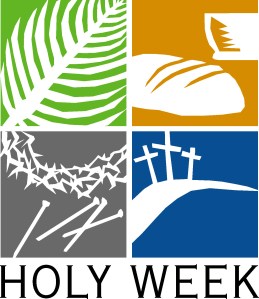
holyweekSometimes it seems odd to call this week “Holy.”

The week that begins on Sunday with our Savior’s triumphant entry into Jerusalem ends with his death on a cross at a place called “The Skull. Shouts of “Hosanna!” on Sunday quickly turn into shouts of “Crucify Him!” by Friday.

Every imaginable evil is hurled his way. The powers that be, both religious and political, are ready to entrap and ensnarl him. He is betrayed by one of his very own followers with a kiss for thirty pieces of silver. After his arrest and a hasty trial, his disciples all abandon him. One of his closest friends on earth denies that he even knows him.

Then, deserted by his friends, Jesus is ridiculed, spat upon, utterly humiliated and beaten beyond recognition. A crown of thorns is put on his head, and he is forced to carry his own cross. His hands and feet are nailed to the cross before it is lifted into the air where he hung for six hours between two criminals before dying. The week ends with his burial.

What on earth is “holy” about any of these events?

The answer is a simple one. If Jesus is an ordinary man, then the answer is, “nothing.” If Jesus was but a man, then this week is utter tragedy. However, if Jesus is the Incarnate God, the creator of all that is who became one of us, then the answer is “everything!”

For it means that God understands every aspect of what it means to be human. Our God is a God knows something about every imaginable evil that can be hurled our way. Our God knows betrayal, abandonment, humiliation, loneliness, and immense suffering. Our God has experienced death.

This week means that our God understands.

And three days later, an empty tomb reveals that God redeemed it all! God took the evil hurled God’s way and transformed it, recreated it into something wonderful.

Thus, the good news of this week is that not only has God experienced all of the evil of this world and understands (which would be good news enough), but that God takes that evil and transforms it into something wonderful, something profoundly “Holy.”

Dance Like Fools (Reflections on King David and John the Baptist on April Fools’ Day)

old-guy-dancing

2 Sam 6:1-5, 12b-19 and Mark 6:14-29 NRSV

After King David led a great army to return the Ark of the Covenant to Jerusalem, David and his army were so overcome with emotion that they engaged in festive dancing.

The scripture tells us that David danced before God“with all his might.”  He danced before God with all that he had and with all that we was, as he was utterly and completely overcome by the joy of God.

However, in this broken world there is always something or someone ready to burst our bubble of joy wide open.  So it was with David.

When David and his wife Michal arrived home from the party and began preparing to turn in for the night, David, if he was anything like most men I know, was probably expecting to hear some words of affirmation from his wife. “Honey, as I watched you dance this evening, you just don’t know how proud I was of you!  You danced your heart out!  And why shouldn’t you have, you brought the Ark of the Covenant back to Jerusalem where it belongs!”

However, the words David hears instead were something like: “Baby, you really made a fool out of yourself tonight!”

Perhaps David did act like a fool. Uninhibited and unrestrained, he lost all self-control.  Seized by “a spirit of prophetic ecstasy,” that night David held absolutely nothing back. David gave in to the joy which had consumed him. He had completely surrendered himself to the joy of God.

David danced, affirming the rule of God.  David danced, consumed by the joy of God. David danced a dance of total self-surrender. David danced, holding nothing back. David danced giving all that he had and all that he was to God.  And Michal despised David for it.

This is the harsh reality of living the gospel of Jesus Christ. The dance of the gospel is a dangerous dance. The dance of the gospel is a disturbing dance. The dance of the gospel is a dance which is despised by the world. The active affirmation of the rule of God does not set well with the Michals and Herods of the world.  In fact, people are likely to lose their heads if they claim too much for the gospel.

To metaphorically call the life and ministry of John the Baptist “a dance” does not call for a stretch of the imagination.  Like David, John the Baptist had lost all restraint, inhibition and self-control.  John the Baptist held absolutely nothing back.  He had surrendered himself completely to the rule of God.  And in the eyes of many probably acted like a fool. The joy of God consumed him. One could say that John the Baptist was seized by a spirit of prophetic ecstasy.  Everything about him: his dress, his speech, even his diet was an uninhibited dance of joy.  He had given all that he had and all that he was to God. And his head was served up on a silver platter.

The dance of prosperity preachers are easier steps to follow, aren’t they? The message of false prophets distorting the gospel of Christ as nothing more than a little dose of “chicken soup for the soul” is much easier to swallow. If we just get ourselves right with the Lord, if we would just straighten up and pray right and live right, good health and great wealth will come our way.

The dance of the gospel is radically different. The dance of the gospel contains steps to the beat of a different drum. If we get right with the Lord, if we pray right and live right, if we lose all inhibitions and all restraint, if we completely surrender ourselves to the rule of God, if we love others as Christ loves thereby allowing the joy of God to consume us, to control us, then suffering is inevitable.

If we dance to the beat of this drum, in the eyes of the world we can expect to look like a fool. For the dance of the gospel is a dance of self-surrender to a very radical drum beat. It is a beat of sacrifice. It is a beat of selflessness. It is a beat of self-expenditure. It is a beat of love and of grace.  And to world, as the Apostle Paul warned the Corinthians, if we let go and dance to this beat, we are certain to look pretty foolish.

The world may call us fools when offer our friendship to a poor, lonely, childless, widow as we visit her in the nursing home on a regular basis.

The world may call us fools when we prepare and deliver a meal to someone recovering from surgery, especially when that someone has always treated us with condescending contempt.

We may look like fools to the world when we spend valuable time volunteering at the hospital, serving lunch in a soup kitchen, visiting someone in prison or working in a homeless shelter.

The world may call us fools when we offer love and forgiveness to our enemies, when we give the shirt off our backs to complete strangers in need.

The world will call us foolish when we give sacrificially and consistently to the budget of a local church.

And the world will call us foolish anytime we love anyone with the self-expending love of Christ—whenever we love someone without inhibitions, without restraints, and without reservations.

I believe this is the dance of the gospel—a dance of immense joy, but also a dance of enormous suffering.

And the Herods and Michals of the world despise this dance.  And they will do everything in their power to stop this dance.

We have all heard their voices, echoes which discourage such dancing.  “Don’t get too close to him.  Do not give your heart to her.  As human beings they will only let you down.  They may one day betray you.  They might move away.  One day they will die.”

“Don’t love that man.  He has done absolutely nothing to deserve it.  And will probably never be able to reciprocate.  Don’t love that woman.  She is poor and destitute.  She is too needy.  She will demand too much.”

The voices Michal and Herod say: “Don’t give yourself away to another.  Loving like that is too risky.  It leads to too much pain, heartache and grief.”

However, there is another voice.  A voice which was heard by David and by John the Baptist.  It is a voice which says: “Dance!  Hold nothing back.  Give yourself away. Surrender yourself to beat of the heart of the gospel.  Love.  Love honestly and deeply.  Love courageously and graciously.  Lose yourself.  Empty yourself.  Pour yourself out.”

Will this love cause pain?  It will cause enormous pain.  But the joy of God which will consume you will be so immense the suffering will be well worth it.  So, dance.

Garth Brooks once sang a song entitled “the dance.”  There’s a line in that song that goes, “I could have missed the pain, but I would have had to have missed the dance.”

Loving others will inevitably bring pain.  However, never loving to avoid that pain is never really living.  There is no joy being a wallflower on the wall of life.

So, may we dance!  May we go out and dance in the streets of our world!  Let us go out and have seizures of prophetic ecstasy!  Be warned, we might look like fools, and we will suffer for it. However, the immense joy of God, the joy of abundant life, now and forevermore, is well worth it.

Getting Our Hands Dirty

John 9:1-41 NRSVdirty-hands-medium-new

Let’s think for a minute what it did for this poor blind man when the disciples began a theological debate over his blindness.

“So, they say you were born blind? Well, let get out our Bibles and see if we can find some theological reason for your blindness. It has to be because of sin. But since you were born blind, perhaps it’s not your sin that is to blame but the sins of your parents.”

Yes, I’m sure all of that theologizing and rationalizing did a whole lot for that poor man.

But how often have we’ve been guilty of doing the same. For some reason, because we are religious, or at least, spiritual people, we believe it is our ordained duty to try to explain human suffering and misery in light of our faith in God.

When the earthquake and Tsunami struck Japan a few years ago, like the Tsunami that struck Southeast Asia years before, I heard some preachers say that it is because Japan was not a Christian nation.

When terrorists destroyed the World Trade Center Towers on 9-11, they said that corporate greed was to blame.

When Hurricane Katrina devastated New Orleans and Gulfport, I heard some blame it on all the new casinos that had been built in the region.

And whenever there is an outbreak of strong storms, tornadoes, wildfires or landslides, I have heard plenty of Christians say, “God must be trying to get our attention!”

For whatever reason, when suffering occurs, we believe God must have had some pretty good reasons to allow it.

In the face of human pain and suffering, there are two predominate explanations that are usually given by the church.

The first one is the one I usually hear from the TV evangelists and conservative pulpits. God is sitting at the command center in complete control of every earthly thing that happens. God has got a plan for the world, and it’s a good plan, but we as limited human beings may not always be able to figure that plan out. Who knows? Maybe people who suffer deserve to suffer. But we do know this: God’s judgments are always just. You just have to have faith and believe. You have to trust that God has his reasons, has his driving purposes for everything that happens.

The other response comes from more liberal scholars. And that is one of silence, just silence. God is large and God is indescribable. Life, and the suffering that comes with it, is utterly mysterious. We simply have no answers to our “why” questions—silence.

Frankly, I believe both of these responses are terrible, to say the least. First of all, those who believe God has some kind of divine, driving purpose for every evil thing that happens in this world, in my estimation, paint a very evil and anti-christ portrait of God.

And those who respond with silence, those who refuse to say anything at all in response to human suffering, make God out to seem detached and aloof. God is watching us, but from a distance. Thus, God is reduced to this a mysterious abstraction devoid of any real meaning.

However, the gospels paint a very different image of God through the words and works of Christ. I believe the life, suffering and death of Christ teach us that when the landslide shook the earth in Washington, so quivered the very heart of God. As the earth rolled down and toppled homes and lives, so rolled down the very tears of God. As the lives of many were suddenly were poured out, so emptied the very self of God. God was not causing the evil. Neither was God silent.

This is where I believe our Gospel lesson this morning is especially helpful. When Jesus is questioned about this man’s lifetime of pain and suffering by his disciples, Jesus really doesn’t answer the question, but neither is he silent. Jesus responds by pointing out that this was a good opportunity, not for theological debate, not to assign blame or responsibility, but rather, to bend to the ground, spit in the dirt, and get his hands dirty, so that the glory of God might be revealed. Jesus responds to human suffering and misery by bending to the ground, getting his hands dirty to bring about healing and wholeness.

And with that, a huge argument ensues. But notice that Jesus refuses to engage in the argument. Jesus is not interested theological debate or speculation. Jesus is interested in simply being there with the man, touching the man, thus revealing the peculiar glory of our God and power of out God.

When I was in college, one of my favorite professors was Dr. Bobby Bell. During my junior year, Dr. Bell was diagnosed with a terminal cancer. I had the wonderful opportunity to take what would be his last class. He was a sociology professor; however, he would often share his faith in class.

ll never forget the time when one of my classmates asked Dr. Bell if he ever felt that God had some reason for allowing his cancer. “

God did not give me this cancer. I am a human being. And human beings sometimes get cancer. I have cancer because I am human, and not for any other reason. I don’t believe for a minute that God wants me or anyone to have cancer. That’s why I believe during this time of suffering and pain, I have sensed, in a way that I have never sensed before, the very intimate, near presence and love of Christ in my life. And I may not be healed physically, but I have certainly felt the hand of Christ on me and know that I have been healed spiritually. I believe the living Lord is here suffering with me, and that means everything in the world to me.

Dr. Bell died two days before final exams. But there’s no doubt in my mind that he died a healed and a very whole man.

I think it is interesting that the great Southeast Asia Tsunami hit the day after Christmas. One of the world’s worst natural catastrophes took place the very first day after the church’s celebration of the Incarnation, the celebration of the good news that our God did not remain silent, aloof and detached from us. The celebration that our God became flesh and came among us; our God is a God who descends; our God is a God who bends, who stoops to the earth.

The story of this healed blind man comes in the same Gospel of John that begins, “In the beginning was the Word…and the Word was made flesh and moved in with us…and we beheld his glory.” The great, grand glory of this God who became flesh with us, is not that God is in complete control of everything earthly thing that happens, and it is not that God has an explanation or a reason or a driving purpose for everything that happens to us, but rather that God is here with us.

In the face of suffering, our God reaches in and reaches out to us, bends himself to the ground, gets God’s hands dirty and touches us.

Every year when Holy Week approaches, I think about the worshippers of the Goshen United Baptist Church in Piedmont, Alabama. It was Palm Sunday in 1994. About midway through the worship service at 11:35 am, as the choir began to sing, a tornado ripped through the church building destroying it completely. Eighty-three out of the 140 worshippers who attended the service that day were injured. Twenty-one worshippers were killed. Eight of the dead were little children—children who had just walked down the aisle carrying their palm branches.

There was absolutely no driving purpose, no theological explanation for that tragedy, except for the fact that we live in fallen, broken, unfair and sometimes senseless world where tornados, landslides, tsunamis, hurricanes, and cancer can develop and arbitrarily destroy.

Thankfully Christians from all over the world responded to that great tragedy by emulating our God revealed to us in Christ, by bending themselves to the ground, getting their hands dirty, raising that church out of the rubble. Christians everywhere imitated their Savior by suffering with and being with the grieving.

On the church’s website today, you will find these words:

 After the tornado, we received many gifts from all over the world. They lifted us up and helped us to know that we are not alone. Among those gifts were a banner and a painting of Jesus walking on turbulent waters. These and other gifts are reminders that God is with us through our storms, and with His help we will rise above them and be stronger because of them. We can now affirm the truth of the message that is contained on a plaque and in the words of a song: ‘Sometimes God calms the storm. Sometimes, he lets the storms rage, and calms the child.’

The good news is, as the Psalmist so beautifully describes it in the 23rd Psalm, God is always there to calm God’s children.

And in the end, isn’t that much better than any theological explanation?