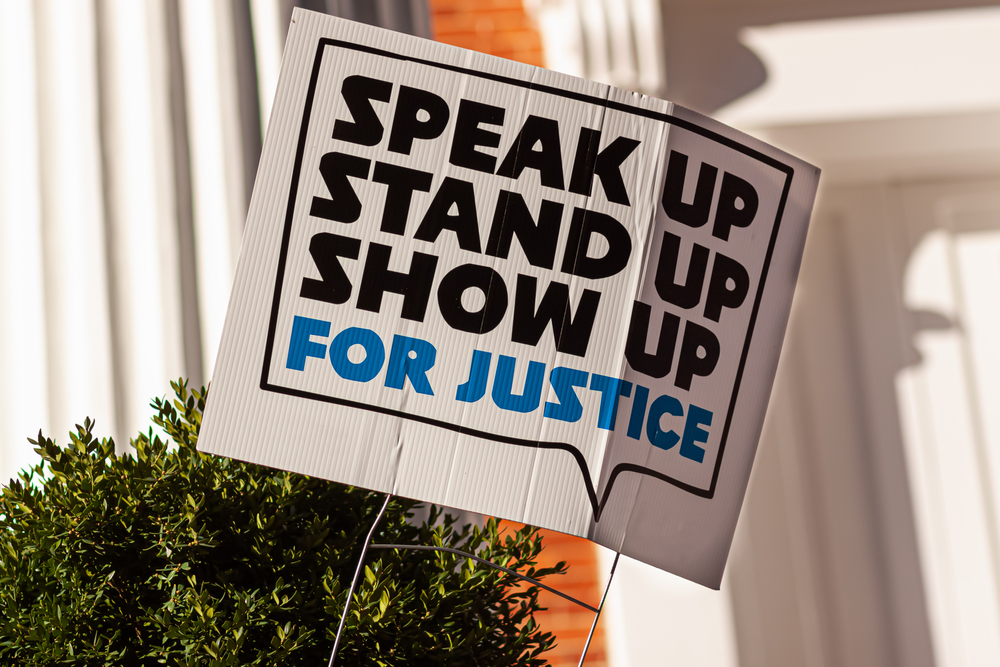

We Had Hoped

Luke 24:13-35

There is a particular kind of sentence that only comes from heartbreak. We find it in verse 21 of our gospel lesson, and it starts like this: “We had hoped…”

It’s the kind of sentence you hear when dreams collapse under the weight of reality. It’s whispered in hospital rooms, at funeral homes, often in conversations that trail off into silence. It’s the language of people who believed something good was possible, but then watched it all fall apart.

“We had hoped…” Things would be different. The diagnosis and the prognosis, the outcome and outlook for the future was better.

Two disciples are walking away from Jerusalem, walking away from the place where everything unraveled, walking away from the cross, from the chaos, from the confusion.

And as they walk away from it all, they talk: about what happened; about what went wrong; about how it all fell apart; about how mercy was beaten down, and love was crucified.

“We had hoped he was the one to redeem Israel.” We had hoped to be liberated from King Herod and from the systems that bless the elites while the poor suffer.

“We had hoped…” Past tense. Because hope had been buried.

And if we’re honest, that sentence doesn’t belong only to them. It belongs to us too.

For we know what it is to say, “We had hoped…”

We had hoped things would not be this bad.

We had hoped we would not go to war.

We had hoped that truth would matter.

We had hoped that the teachings of Jesus to love one another, to bless the poor, to defend the marginalized, to welcome the stranger, would have been followed by more people.

We had hoped that our friends were not betrayers.

We had hoped justice would come a little quicker and peace a little closer.

We had hoped that what we believed about love—that it is stronger than hate, deeper than fear, and more powerful than violence—would be easier to see in our world. And we had hoped that selfishness, greed, hatred, and just pure meanness, would not be so prevalent…and so powerful.

But here we are, walking our own roads to Emmaus, grieving that every time we look at the news, we read something crazy: something mean; something evil. We are also carrying grief we can’t always name, questions for which we don’t have answers, and anxiety that keeps us awake at night.

And like those disciples, we don’t always realize who is walking beside us, who has been walking with us all along.

The good news of our gospel lesson is that somewhere between Jerusalem and Emmaus, Jesus is present. Not in spectacle. Not in certainty. Not in the kind of power the world recognizes. But in quiet companionship.

He draws near to them. So near, they can reach out and touch him. And the strange thing is—they don’t recognize him. Which might be the most honest part of the whole story.

Some people tell me that they have trouble believing in this mystery we call resurrection. They read about it in the gospels, but they have trouble trusting it in the real world.

I believe that is because resurrection rarely looks like what we expect. It doesn’t always arrive in a blinding light or with a clap of thunder. Sometimes, it comes disguised as a conversation; It shows up as empathy, as a presence that won’t let us go, as a voice meeting us where we are, asking questions:

“What are you discussing as you walk along?”

Jesus is not interrupting their grief, as much as he’s joining it. He lets them tell the story. He listens to their disappointment. He holds space for their “we had hoped…” And then, and only then, he begins to reframe it.

Not by denying their pain or rushing them past it. But by reminding them that the story isn’t over yet.

He opens the scriptures. He re-tells the story they thought they knew.

He shows them that what looked like an ending…was never meant to be the end.

And still, they don’t recognize him. Not yet.

Because sometimes our hearts need to change before our eyes can see it. They ask: “Were not our hearts burning within us while he was talking to us on the road?”

That’s resurrection, too. Resurrection is not just empty tombs. It’s burning hearts. It’s not just life after death. It’s hope rekindled in the middle of a dark journey. It’s the realization sung by Raye in the Click Clack Symphony with Hans Zimmer that although we’ve “slipped back into a darkness we had hoped by now to overcome…the cold never lasts. It just teaches the heart how to burn.”

Finally, the disciples reach Emmaus, the place they thought they were going to stay, the place they had finally arrived to get away from it all.

But something has now shifted. “Stay with us,” they say. Because when resurrection gets close, even if you don’t fully understand it, you don’t want it to leave.

So, he stays. They sit at the table. He takes bread. He blesses it, breaks it, gives it. And suddenly, their eyes are opened, and they finally recognize him.

Not on the road. Not in the explanation. Not even in the opening of the scriptures. But in the breaking of bread. In a most ordinary act, made holy. In a moment so simple it could have been overlooked. Resurrection was experienced in fellowship, in community, around a table in an empathetic moment of grace and love.

And look at verse 31 again. Just as quickly as they recognize him, he vanishes. It all happens in one verse.

Which might seem cruel, until we realize: The Risen Christ doesn’t vanish as soon as he is recognized because he is no longer in the world. He vanishes because he is no longer limited to one place, to one moment, to one form. Now, the disciples will see him everywhere! In every broken piece of bread given. In every act of grace. In every moment where love refuses to stay buried and is shared freely.

And here’s the real miracle: They turn around. These same disciples who were walking away from it all, who were done, who were finished, who were at closing time—they get up that very hour and go right back to all. Back to Jerusalem. Back to the place of disappointment. Back to the place of pain. Back to the place where hope seemed to die.

But they go back differently. Not because everything has suddenly been fixed. Not because Herod is no longer on the throne. Not because the world has stopped being that crazy. They go back differently because resurrection has found them on a dark road. And once resurrection finds you, you can’t keep walking in the same direction.

That’s the hope of Easter.

Not that the world has suddenly become easier. Not that suffering has disappeared, or injustice has ceased. Not that every “we had hoped” is instantly resolved.

But that Christ is still walking with us, even when we don’t recognize him. That the story is still being told, even when it feels like it has ended. That hearts can still burn, even when hope feels cold. And that around a table, in the breaking of bread, in the sharing of life together, in the stubborn persistence of love, eyes can still be opened.

So, if you find yourself today on the road to Emmaus, if you are carrying disappointment, or confusion, or quiet grief…if your faith feels more like past tense than present reality…listen closely. Look around this room. Feel the love around you, the empathy that surrounds you.

There is a presence walking beside you this morning. Asking questions. Telling stories. Refusing to let the darkness have the last word. And maybe, just maybe, before this day is over, at some table, in some ordinary moment, your eyes will be opened too. And you will discover what the disciples did:

That resurrection meets us on the road. It sits with us in the tension. It breaks bread in the middle of our unfinished stories. And then it sends us back—

Not as people who have all the answers, but as people whose hearts are burning, carrying a hope that refuses to stay in the past tense. Because in Christ, “We had hoped” becomes “We have seen.” And that is enough to turn us around.

Not because we are strong enough, but because resurrection is. Easter is God’s declaration that even when empire does its worst, even when violence seems to have the final say, even when hope is sealed in a tomb, that is not the end of the story.

And if that is true, then we are not called to survive this moment quietly. We are called to face it. To resist it. To fight it.

But not with the weapons of the world. Not with hatred. Not with fear. Not with the same kind of power that crucified Jesus. We fight it the way the risen Christ teaches us: with truth that refuses to bend; with love that refuses to give up; with courage that refuses to be silent; with a community that refuses to let anyone walk the road alone.

We fight it every time we tell the truth when people prefer to hear the lie, every time we choose generosity in a culture of greed, every time we protect the vulnerable in a world that exploits them, every time we refuse to let religion be used as a tool of exclusion instead of liberation.

That’s what it means to be Easter people. Not people who escape the world, but people who are sent back into it.

Back to Jerusalem. Back to the places where things are broken. Back to the systems that need disrupting. Back to the communities that need healing. Back into a country that needs redeeming.

Because resurrection doesn’t remove us from the struggle. It prepares us for it. It steadies our hearts. It sharpens our vision. It reminds us who we are: we are people who have seen something.

Maybe not perfectly. Maybe not with absolute certainty.

But enough to know this: Love is still alive! Truth is still worth telling! Justice is still worth pursuing. And no empire, no ideology, no distortion of faith gets the final word.

War rages, but this is not the end of peace. This is where peacemakers rise.

Religious nationalism is in power. But this is not the end of democracy. This is where courage finds its voice.

Hate is loud. But it is not the end of love. This is where love becomes unrelenting.

The road to justice is long, and it is not easy, but Easter means we do not walk this road alone. It means our hearts can still burn. It means our eyes can still be opened. It means we can still turn around.

And it means that even now, in a world that feels like it is unraveling, God is still at work, Christ is still present, and resurrection is still breaking in.

So go back. Back to the places that need hope the most.

Go back. Not as people who are afraid of this moment, but as people who were made for it. Because we are Easter people. And the story is not over yet! Amen.


Pastoral Prayer

God of the road and the table,

we come to you as we are.

Some of us weary from the journey,

some of us carrying grief we cannot name,

some of us holding hope with trembling hands.

You know the roads we have walked this week—

the conversations that have stayed with us,

the headlines that have unsettled us,

the quiet fears we have not yet spoken aloud.

And still, you draw near.

You do not wait for us to have clarity or certainty.

You meet us in our questions,

you walk with us in the chaos,

you listen as we share our heartache and heartbreak.

So today, O God, rekindle in us a living hope.

Where there is despair, breathe your life.

Where there is fear, steady our hearts.

Where there is cynicism, awaken in us a deeper trust.

We pray for a world that feels fractured—

for places where war rages and peace feels distant,

for communities burdened by injustice,

for leaders and systems that have failed the lives of so many.

Give us courage to be people of truth and justice.

Give us strength to resist what diminishes your image in others.

Give us grace to love all people, as we love ourselves.

We lift before you those in need of healing—

in body, in spirit, in relationships that feel beyond repair.

Be present, O Christ,

in hospital rooms and living rooms,

in moments of waiting and in moments of fear.

And remind us, again and again, that we do not walk alone.

That even now, you are with us.

We pray all of this in the name of the risen Christ,

who meets us on the road and is known in the breaking of bread. Amen.


Invitation to Communion

This is not a table for the certain, for those who have everything figured out.

This is the table where Christ meets us—

on the road, in our questions, in our unfinished faith.

It was in the breaking of bread that their eyes were opened.

Not because they understood everything, but because Christ was present.

So, all are invited to partake.

Partake if your hope feels strong or if your hope feels fragile.

Partake if you are still searching, still wondering, still walking.

Because this is the table where Christ is made known.


Invitation to Give

The disciples did not recognize Christ at first, but their hearts were already changing.

That’s how it is with grace. It meets us, it stirs us, and it begins to turn us outward.

So, we give, not out of obligation, but as a response to the One who has walked with us, who has opened our eyes, who sends us back into the world with purpose.

In a world shaped by scarcity and fear, our giving becomes an act of trust.

In a culture of taking, our generosity becomes a witness.

So let us offer our gifts, as signs of hope, as acts of resistance, as participation in God’s ongoing work of love.

Commissioning and Benediction

Go now—

not as those who have all the answers,

but as those whose hearts have been set ablaze.

Go back to the places you came from,

back to your homes, your work, your communities,

knowing that Christ goes with you.

When the road feels long, when hope feels distant, when you struggle to see, remember:

Christ is still drawing near.

Christ is still being made known.

Christ is still turning us around.

So go in courage. Go in compassion. Go in the unrelenting hope of Easter.

And may the love of God, the presence of Christ, and the power of the Spirit go with you, now and always.

Amen.

Love Gets the Last Word

John 20:1-20

Before the sun had the decency to rise, before hope had any real evidence to stand on, Mary Magdalene ran. Not casually walked. Not carelessly wandered. Not cautiously approached. Mary ran.

Because when love has been crucified, when dreams have been buried, when the world as you knew it has collapsed in on itself—grief does not move slowly or carefully. It rushes. It assumes. It fills in the blanks with the worst possible story: “They have taken the Lord out of the tomb, and we do not know where they have laid him.”

That’s what grief says.

Not, “He is risen.”

Not, “God is doing a new thing.”

Not even, “Let’s wait and see.”

No. Often in a downward spiral, grief concludes: “They have taken him.”

Things are bad, and it’s only going to get worse. When it rains, it pours. And we better get out the buckets cause the roof is going to leak.

It is the most human response in this broken world: to assume that what we love the most has been stolen, taken away, destroyed, and erased. And it is not coming back.

And if we’re honest on Easter Sunday 2026, we know that feeling.

Because we are living in a moment where it is easy, almost natural, to assume the worst. It is what we assume every time we check the headlines.

No one expects to turn on the news these days and hear: Good news! Things are not as bad as they seem! Good news! Better days are coming.

No, these days, we expect only news of despair. The secretary of defense calls himself the secretary of war and calls the hell that is war, “holy,” and uses religious language to bless overwhelming violence. Here at home, gas prices are still rising. Grocery bills continue to climb. Families sit at kitchen tables doing math that does not add up. All the while White Christian Nationalism is suffocating democracy. History is being whitewashed. And we wonder about the next election, if there will even be a next election. And we ask: Has the country we love been taken from us. And in the quiet spaces of our hearts, a question forms:

Has hope been taken from us too? Has something sacred been stolen from our lives?

And like Mary, we rush to conclusions. “They have taken…” They have taken our peace. They have taken our security. They have taken our freedom. They have taken our future.

The good news today is that Easter interrupts our assumptions. Because what Mary thinks has happened is not what God is actually doing. She comes to the tomb expecting death to have the final word. Instead, she finds confusion. She finds what seems like absence.

But what she really finds is mystery. And if we’re not careful, we will mistake the mystery of God for the absence of God too.

Early in my ministry, I remember sitting at a hospital bedside, the kind of room where the machines speak more than the people. A family gathered, holding hands, passing a tissue box to wipe tears, praying prayers that felt like they were bouncing off the ceiling. One of them finally said what everyone else was thinking but didn’t want to say it out loud: “Where is God in this?”

Not in anger. Not even in disbelief. Just…exhaustion, just grief. Because sometimes the silence of God feels like abandonment. Sometimes the unanswered prayer feels like absence. Sometimes the delay feels like denial.

And in that moment, there was no lightning bolt. There was no sudden turnaround. No miracle that tied everything up neatly. Just breath. Just presence. Just people refusing to let one another be alone.

And I remember realizing—almost against my will—that maybe God had not stepped out of the room.

Maybe God had simply refused to show up on our terms. Maybe the mystery of God is not that God is absent, but that God is present in ways we do not yet recognize. Present in the quiet grip of a hand. Present in the tears that fall without shame. Present in the stubborn love that keeps showing up even when hope feels thin.

We want a God who explains everything. But more often, we encounter a God who accompanies us through anything.

And that kind of presence—it doesn’t always feel like power. Sometimes it feels like weakness. Sometimes it feels like waiting. Sometimes it feels like an empty tomb before you understand what empty really means.

The good news of Easter is: just because we cannot see God clearly does not mean God is not working deeply. The mystery is not God’s absence. The mystery is that God is already at work—in the dark, in the silence, in the in-between—bringing life out of places we had already declared dead.

Let’s get back to our gospel lesson, for the story is getting ready to take to turn.

Peter and the beloved disciple run to the tomb. They see the linen cloths. They don’t fully understand—but something in them shifts. The story is not over.

And then Mary, still weeping, encounters a gardener…or so she thinks. “Woman, why are you weeping? Whom are you looking for?” She is still operating out of her assumption: “They have taken him.”

Until he speaks her name: “Mary.” And everything changes.

This is the Easter truth we are invited into today: We are often wrong about how the story ends.

We assume God is not present when God is standing in front of us.

We assume loss when God is working resurrection.

We assume absence when God is preparing revelation.

We assume death has won when love is already rising.

As Rev. Dr. William Barber reminds us in his prophetic witness, “We must learn to see not just the pain of the present, but the possibility of redemption breaking through it.”

Easter is not naïve optimism. It does not ignore the cross. It does not pretend that violence, injustice, and suffering are not real.

No. Easter stares the powers of death in the face and declares: You do not get the last word!

Not war. Not “overwhelming violence.” Not religious nationalism.

Not greed. Not lies. Not systems that crush the poor, while protecting the powerful. Not even the grave itself. The good news of Easter is that love gets the last word.

But here’s the thing—we don’t always recognize resurrection right away. Mary doesn’t. She mistakes Jesus for the gardener. Which, if you think about it, is not entirely wrong.

Because resurrection is a kind of gardening. It is God tending to what has been buried. It is life pushing up through the soil of despair. It is beauty growing in places we had already written off as dead.

And maybe that’s what we need to hear this Easter: That even now—especially now—God is at work beneath the surface.

In communities organizing for justice.

In neighbors caring for one another when systems fail.

In courage rising up in unexpected places.

In love refusing to give up.

In people who have gathered on a rainy Sunday morning with the audacity to believe that something happened on that day Mary ran to the tomb, something mysterious happened that we call resurrection.

We may not understand it. We may never wrap our minds around it. But I don’t believe that is important. What is important is that we live it. It’s even more important than believing it.

Jesus says to Mary, “Do not hold on to me… but go.”

Go tell the others. Go bear witness. Go live as if love actually has the final word in this world.

And that’s the invitation of Easter for all of us.

In a world quick to assume the worst, we become people who dare to hope anyway. In a culture shaped by fear, we become practitioners of love. In a nation that chooses violence to get its way, we choose a life of nonviolence while praying, not my will, but God’s will be done. In the face of systems that profit from despair, we become witnesses to resurrection.

Not because things are not as bad as they seem.

Not because better days are right around the corner.

Not because life in this world is suddenly going to become easy.

But because Christ is somehow, some mysterious way, risen.

And that changes everything.

So, the next time you feel that familiar rush of fear, the next time your heart wants to say, “They have taken…”—

Pause. Breathe. And listen.

Because resurrection often begins with a voice calling your name.

Reminding us:

What you thought was gone is not gone.

What you thought was over is not over.

What you thought was lost is only being redeemed.

Hate does not get the final word. Violence does not get the final word. Despair does not get the final word.

Love does. It always has. It always will.

Alleluia. Alleluia.

Amen.


Pastoral Prayer

Risen Christ,

we come to you this morning carrying everything—

the joy we can name

and the weight we cannot quite put into words.

We come like Mary,

early in the morning,

still holding our assumptions,

still wondering if something sacred has been taken from us.

And yet, you meet us here.

So we pray—

not as people who have it all figured out,

but as people who are learning to trust you in the mystery.

God of life,

we lift before you a world that feels fragile.

We pray for places torn by war,

for lives caught in the crossfire of decisions made far from their homes.

We pray for wisdom where there is power,

for restraint where there is anger,

for courage where there is fear.

Let your peace rise where violence threatens to have the final word.

We pray for those feeling the pressure of rising costs—

for families stretching every dollar,

for workers carrying quiet anxiety,

for those who must choose between what they need and what they can afford.

Be bread in empty places.

Be provision where there is not enough.

Be hope where worry has taken root.

We pray for those gathered here and those we carry in our hearts—

for the sick and the recovering,

for the grieving and the lonely,

for those facing decisions, diagnoses, and uncertain futures.

Risen Christ,

meet them as only you can—

not always with easy answers,

but with your unmistakable presence.

Call their names in the darkness.

Remind them they are not alone.

Hold them in a love that does not let go.

God, teach us to be people of resurrection—

not just in what we believe,

but in how we live.

Where there is despair, make us bearers of hope.

Where there is division, make us builders of community.

Where there is injustice, make us seekers of your righteousness.

And when we are tempted to assume the worst—

to believe that love has been taken,

that hope has been buried,

that the story is over—

call our names again.

Turn us around.

Open our eyes.

Send us out.

We pray all of this in the name of the risen Christ,

who taught us to pray, saying:

Our Father…

Amen.


Invitation to Communion

This table is not for those who have it all figured out.

This is not a table for those who never doubted, never feared, never assumed the worst.

This is a table for Marys who come weeping. For disciples who run but do not yet understand. For people who have whispered, “They have taken…”

and are still learning how to say, “He is risen.”

Because at this table, we do not receive certainty—we receive presence. Bread that tells us God is still with us. Cup that reminds us love has already been poured out—and it has not run dry.

In a world where so much feels taken—peace, stability, freedom—this table declares: what God gives cannot be stolen.

Here, Christ meets us—not always where we expect, but always where we need.

So, come.

Come with your questions. Come with your grief. Come with your fragile hope.

Because the risen Christ is still calling our names, still breaking bread,

still reminding us:

Love does not lose. Love does not end. Love gets the last word.


Invitation to the Offering

In a world shaped by scarcity, we are taught to hold tight—

to protect what we have, to fear there won’t be enough.

But Easter tells a different story.

A story where life comes out of what was given away.

A story where love multiplies when it is shared.

A story where even what seemed lost is gathered up and redeemed.

So, we give—not because the world is secure,

but because God is faithful.

We give as an act of resistance

against fear, against greed, against the lie that death has the final word.

We give as a testimony:

that we believe in a God who is still bringing life out of empty places.

So let us offer our gifts, our lives, and our trust—

knowing that in God’s hands, nothing given in love is ever wasted.


Commissioning and Benediction

Go now into a world that will tempt you to assume the worst.

Go into places where fear speaks loudly,

where uncertainty lingers,

where it feels like something sacred has been taken.

But do not go as people of despair.

Go as those who have heard their name spoken by the risen Christ.

Go as those who know the tomb is empty—

not because nothing happened,

but because God happened.

And when you cannot see clearly,

when the mystery feels like absence,

remember:

God is still at work. Love is still rising. Hope is still alive.

So go—

to love boldly, to serve courageously, to live as witnesses to resurrection.

And may the God who brings life out of death,

the Christ who calls you by name,

and the Spirit who sustains you in every mystery

go with you, now and always.

Amen.

Holy Surprises at Sunrise

Invocation

Risen Christ,

you who meet us in the in-between,

on roads marked by uncertainty,

in moments we did not plan,

in places we did not expect,

draw near to us now.

As the light breaks over this new day,

break into our hearts again

with a hope we cannot control

and a joy we cannot contain.

Where we have given in to despair,

speak your living word.

Where fear has taken hold,

breathe your peace.

Where grief has settled deep within us,

call us again by name.

Meet us here—

not when we have it all together,

not when we have finally arrived,

but here, on the way—

and remind us

that we are not alone.

Open our eyes to your presence,

our ears to your voice,

and our hearts to your love,

that we might rise with you

to walk in newness of life.

For the dawn has come,

and still you come to us—

alive, unexpected,

and full of grace.

Amen.


Sermon

Matthew 28:1-10

Before the sun has fully risen…before certainty has returned…before the world has made sense again…two women are walking a road between grief and hope.

Mary Magdalene and the other Mary have come to a tomb carrying all the weight that comes with loving something the world has taken from you. They are not expecting resurrection. They are expecting silence. Finality. An ending.

And yet—the earth shakes, the stone rolls, and an angel speaks:

“Do not be afraid… He is not here… He has been raised… Go and tell… He is going ahead of you to Galilee; there you will see him… This is my message for you.”

It is a word meant to steady them. A word meant to give direction. A word meant to move them forward. Go to Galilee. That’s where resurrection will be.

And so, they go—afraid, yes, but also filled with great joy. Because even a trembling hope is still hope. But here is where the story surprises us. Because they don’t make it to Galilee. Somewhere on the road—before they arrive, before they figure it all out, before they get where they thought they needed to go—the Risen Christ meets them.

Not in Galilee. Not at the destination. But in the in-between. “Greetings,” he says. And suddenly the promise is no longer distant.

The hope is no longer deferred. The risen Christ is standing right in front of them. Which raises a holy, unsettling question for us this morning: What do we do with the fact that the angel said one thing…and yet, Jesus showed up somewhere else?

“You will see him in Galilee. This is my message for you,” the angel declared.

And yet, the risen Christ had his own way of arriving.

Maybe the angel wasn’t wrong. Maybe Galilee still matters. But if what this moment reveals is something deeper?

That even the messengers of God cannot map out all the places resurrection will break in. Even angels don’t get to control where new life appears. And if angels don’t know…then we certainly don’t.

Which means…hear this clearly this Easter morning: We cannot predict where Christ will show up. We cannot confine resurrection to a location. We cannot limit hope to what seems likely or reasonable.

And because of that, we can never give in to despair. Not now.

Not ever. Because despair depends on certainty.

Despair says:

“This situation is too far gone.”

“This violence will never end.”

“This division is permanent.”

“This grief will define the rest of my life.”

“This world is too broken to be redeemed.”

Despair pretends it knows the final chapter. But Easter interrupts that illusion. Because if the risen Christ can show up anywhere—on any road, in any moment, in any life—then despair loses its authority.

If the risen Christ does not even follow the directions given by angels…then there is no place left where hope cannot break in.

Not in a world at war.

Not in economies that strain and stretch families thin.

Not in communities fractured by fear and suspicion.

Not in the quiet, private griefs we carry that no one else sees.

Not even there. Especially there.

The women set out for Galilee thinking that hope was waiting for them down the road.

But they discovered that resurrection was already on the road with them. And maybe that is the word we need this morning.

We are always being told where hope is supposed to be.

“Things will get better when…”

“Peace will come if…”

“Joy will return once…”

We keep placing resurrection somewhere out ahead of us—

in Galilee.

But Easter says: Lift your eyes. Because Christ is not only waiting at the destination. Christ is meeting you in the middle.

On the road of uncertainty. On the road of grief. On the road between what has been and what will be.

“Greetings,” he says. And notice what the women do. They don’t analyze. They don’t debate. They don’t question whether this fits their expectations.

They fall at his feet. They take hold of him. They worship.

Because when resurrection meets you on the road, the only appropriate response is to cling to it. To trust it. To let it reorder what you thought you knew about what is possible.

And then Jesus says something that echoes the angel, but deepens it: “Do not be afraid… Go and tell my brothers…” Do not be afraid. Because fear and despair are close cousins.

Fear says: “We don’t know what’s coming.”

Despair says: “And whatever it is, it won’t be good.”

But resurrection says: You don’t know what’s coming—and that is precisely why you can hope. Because God is not limited to the outcomes you can imagine.

If Christ can appear where he was not expected, then new life can emerge where we have already given up looking.

If Christ can meet them on the road, then Christ can meet us here.

Here, in this fragile morning light, in this aching and beautiful world, in this moment that feels both heavy and holy.

And so, we go on. Like those women—with a strange mixture of fear and great joy.

We go on without having all the answers.

We go on without knowing exactly where resurrection will appear next.

We go on without the certainty we often crave.

But we also go on with this unshakable truth: Christ is risen. And because he is risen, hope is no longer confined.

It is loose in the world. Unpredictable. Uncontainable. Showing up where it shouldn’t, breaking in where it wasn’t planned, meeting us on roads we never expected to be holy.

So, we can never give in to despair. Not because everything is already fixed—but because resurrection refuses to stay where we put it.

Not because the world is easy—but because Christ is alive within it.

Not because we know what comes next—but because we don’t.

And somewhere—on some road you are walking even now—

the risen Christ is already drawing near. “Greetings,” he says.

Do not be afraid. Christ is risen. And he is already on the way.


Invitation to Communion

This is not a table for those who have it all figured out.

This is not a meal for those who know exactly where Christ will appear.

This is a table for travelers:

for those on the road between fear and hope,

for those who are still making their way to Galilee,

for those who have known grief, and yet dare to move forward.

Because the good news of Easter is this:

Christ does not wait only at the destination.

Christ meets us along the way.

So, partake.

Not because you are certain,

but because you are hungry.

Not because you have arrived,

but because Christ is already here.

Communion Prayer

Risen Christ,

we give you thanks this morning

for meeting us where we are—

not where we thought we needed to be.

You met the women on the road,

in their fear and their joy,

in their uncertainty and their hope.

And you meet us here.

In bread and cup,

in simple elements,

you come close again—

not distant, not delayed,

but present.

Pour out your Spirit upon us

and upon these gifts of bread and cup,

that they may be for us your life,

your love,

your resurrection.

And make us your body in the world—

a people who do not give in to despair,

a people who look for you

not only in the expected places,

but in every road we walk.

When we leave this table,

send us out with courage—

to trust that you are already ahead of us,

and already beside us,

and somehow, always still surprising us.

We pray in the name of the risen Christ,

who meets us and calls us forward.

Amen.


Easter Proclamation

One: When fear tells us the story is over—

Many: Resurrection is already on the move.

One: When grief convinces us all is lost—

Many: Christ meets us on the road.

One: When we do not know where hope will come from—

Many: We trust the God who surprises us.

One: When despair claims the final word—

Many: We proclaim life stronger than death.

One: Christ is not confined to where we expect—

Many: Christ is alive and already among us!

One: Christ is risen!

Many: Christ is risen indeed! Alleluia!

Benediction

Go now into this Easter morning—

not with all the answers,

but with a living hope.

Go knowing that Christ is not confined

to where you expect to find him.

Go trusting that on every road you walk,

in every place you fear hope cannot reach,

the risen Christ is already drawing near.

So do not be afraid.

And do not give in to despair.

For Christ is risen—

not only at the destination,

but all along the way.

And wherever you go,

he will meet you there.

Amen.

New Year’s Eve Prayer

Holy God of yesterday, today, and tomorrow,

we arrive at the edge of this year carrying more than we expected.

Some of what we carry is joy: surprises we did not plan and moments of grace we did not and could never create.

Some of what we carry is grief: names we speak more quietly now; dreams deferred; wounds that did not heal on our timeline.

We bring it all to You, trusting that nothing in our hands is too heavy for Your mercy.

As this year closes, we confess we have grown tired in a world that never seems to rest.

We have been tempted to numb ourselves to suffering that feels endless, to shrink our compassion in order to survive, to settle for outrage instead of action.

Forgive us for the ways we have learned to look away when love required us to look closer.

Yet, even now, O God, You are still at work.

You have not abandoned this world to violence, nor surrendered it to despair.

You are still planting seeds of justice in places we were told nothing good could grow.

You are still calling ordinary people to live brave, inconvenient, nonviolent lives.

So, as we step into a new year, we do not pray for mere optimism.

We pray for resilient hope.

The kind of hope that tells the truth about what is broken and still believes repair is possible.

The kind of hope that refuses to dehumanize our neighbors, even when fear tells us to do so.

The kind of hope that keeps showing up, to love, to serve, to resist, to heal.

Teach us to measure this coming year not by what we accumulate, but by who we protect.

Not by how safe we feel, but by how faithfully we love.

Not by how loudly we speak, but by how courageously we act.

When the road ahead feels uncertain, remind us that You go before us.

When we feel small, remind us that a bite of bread and a tiny sip of wine is still enough.

When we stumble, remind us that grace does not run out at midnight.

Receive this year that is ending. Bless this year that is beginning. And shape us into a people who do not merely watch the world change, but who, by Your Spirit, help bend it toward justice, mercy, and peace.

We pray in hope,
we pray in resolve,
we pray in the name of Jesus,
who makes all things new.

Amen.

Limping into the New Year

On the Friday before Christmas, my wife Lori was returning home on I-85 near High Point, North Carolina, when the dashboard lit up, and the car did something no one ever wants a car to do going 70 mph on the interstate. It went into “limp mode.”

If you’ve never experienced it, “limp mode” is exactly what it sounds like. The car doesn’t stop completely. It doesn’t break down and shut off on the side of the road. But it can no longer go as it once did. Power is reduced. Speed is limited. Everything is suddenly fragile.

Lori stayed calm while panicking a little at the same time. However, she kept both hands steady on the wheel. She said to herself: “I am still here. I am going slow, but I am still moving.” She listened to what the car could still do, not what it could no longer do. And little by little, she guided it safely off the highway to a convenience store. A tow truck came. A mechanic took a look. A few days later, the problem was fixed. And now she’s back on the road.

As we step into a new year, Lori’s limp-mode adventure feels like a parable, as many of us are not roaring into January with full power. Honestly, we are limping, emotionally, spiritually, financially, physically. Some are carrying grief that didn’t resolve itself by December 31. Some are exhausted by a world that keeps demanding more while offering less. Some are doing the brave work of survival and calling it what it is.

The good news is that “limp mode” doesn’t mean we have failed or need a complete overhaul.

It only means that something in the system needs attention. It means slow is the new faithful.

The temptation in a new year is to pretend we’re stronger than we are. We make bold promises we don’t have the fuel to keep. We shame ourselves for not accelerating fast enough. However, wisdom teaches us something different. Remain calm, even if we are panicking a little. Pay attention to what we still have. Protect what’s still working. Get to a safe place.

There is hope, not because everything is fine on January 1, but because we are still moving.

Hope looks like pulling over instead of pushing harder. Hope looks like asking for help. Hope looks like trusting that repair and recovery are possible, even if we don’t yet know how or when.

The car didn’t heal itself on the highway. It needed a tow. It needed a mechanic. It needed time.

So, if you are limping into this year, the good news is that you are not broken beyond repair. As long as you are still moving, even slowly, there is a future for you in 2026. As long as you are paying attention, pulling over when needed, and letting others help carry what you cannot, there is grace for the road ahead.

And sometimes the most hopeful thing we can say at the start of a new year is this: “I’m still here.” “I am going slow, but I am still moving.”

And that is enough to begin.

Do Not Be Afraid: Love Is About to Be Born!

Matthew 1:18-25

On the fourth Sunday of Advent, we stand with a man named Joseph, on the threshold of a future he never expected.

Week after week, Advent has been inviting us to look for God to show up where no one is looking: in the wilderness, in the shadows, in the cries of prophets and the songs of unlikely women. And now, as Christmas draws near, our gospel lesson leads us into the quiet and conflicted heart of a man who wanted to do the right thing but wasn’t sure what the right thing was.

We’ve been there before, haven’t we, asking: “Now, what?” “What in the world do we do now?” “How should we respond to the news we’ve just received, this loss, this change, this crisis?” And how do we respond faithfully?

How do we believe with the prophet Zechariah in a future that seems impossible? How do we believe that what is broken doesn’t have to stay that way? How do we move past our grief and our cynicism?

Here’s some good news that we shouldn’t miss: Matthew writes, “This is how the birth of Jesus the Messiah came about.”

How about that? Christmas didn’t come wrapped in certainty, clarity, or confidence, but in confusion, shock, and scandal, in questions that kept Joseph up at night.

Joseph receives the news that Mary is pregnant with a child that is not his. But Joseph is righteous, which means he loves God and neighbor. He believes in the golden rule and wants to do the merciful thing, the kind thing, the just thing. But sometimes, even righteousness can get tangled in fear. Even righteousness can struggle to imagine a horizon beyond the one we can see.

And so, Joseph, like so many of us, makes a plan to manage a difficult situation quietly, discreetly, safely.

This may be where that old saying “If you want to make God laugh, make a plan.”

Joseph had a plan. A good plan. A righteous plan. And then God showed up, and God being God says: “We’re going to need to revise that!”

An angel of the Lord interrupts his plans: “Joseph, son of David, do not be afraid.”

It’s something perhaps we all need to hear:

Do not be afraid of uncertainty.

Do not be afraid of mystery.

Do not be afraid of this news you did not expect.

Do not be afraid to love beyond what the world tells you is reasonable

or socially acceptable.

Do not be afraid to let go of your plans and let God write the rest of your story!

And then comes the promise: “The child conceived in her is from the Holy Spirit… and you shall call his name Jesus, for he will save his people from their sins.”

It’s important to understand that this is not just about personal sin, as we have been led to believe. It’s about God stepping into a world shaped by injustice and rescuing God’s people from everything that keeps them bound. Jesus is born to save people from the moral sickness of systems that deny dignity, distort truth, and crush the vulnerable.

Joseph stands right where many of us stand in this season: between the world as we know it today and the world God is unfolding; between our lived reality and the day when love will finally win; between answering a call and fear of where saying “yes” to that call may take us.

And it is precisely here, in this fragile in-between space, that Advent makes its final turn, not toward certainty or explanation, but toward love. And not toward just any love.

The love that breaks into Joseph’s life is not a sentimental love that asks nothing from him. It’s not a love that Joseph is only meant to feel deep inside.

 It is a fierce, courageous, and public love that asks something of Joseph: for him to be selfless; for him to sacrifice; for him to give of himself, for him to walk humbly and do justice. It’s the kind of love that refuses to leave any of God’s children cast aside or put away. And it is a love that refuses to allow fear to keep Joseph on the sidelines, insisting instead that he become a participant in God’s unfolding promise.

We know something about that kind of love; because this year, we have lived it. We have seen this love hold us together when the world felt like it was falling apart.

It’s the love that kept us going when mercy was mocked, when compassion was ridiculed, and empathy was dismissed. It’s the love that kept us committed when the holy values of equity, diversity and inclusion were attacked.

It’s the love that kept us showing up when the headlines were heavy, when the rhetoric of the powerful dehumanized the vulnerable, when policies wounded the poor, and when silence would have been much easier than faithfulness.

It’s the love that steadied us as we protested, prayed, voted, organized, fed, welcomed, and spoke out, sometimes with trembling voices, always with stubborn hope, because being silent was not an option, and we knew disengaging was not faithfulness.

It’s the love that has held us.

It’s the love that has carried us.

It’s the love that keeps us from surrendering our conscience,
even when cruelty is normalized, lies are rationalized, faith is compromised, and the truth is redacted.

It’s the love that will not let us look away, back down, or give up.

It’s the love that compelled us to feed the hungry, welcome the stranger, stand with the marginalized, and speak truth even when it came at a cost.

It’s the love that refused to let exhaustion become indifference, or disappointment become despair. It’s the love that sustained Marian Stump in the last year of her life, and so many who faced unexpected hardships, giving this year meaning and purpose with hope.

Time and again, when it would have been easier to retreat, this love called us forward.

And, like Joseph, it asks us not merely to survive the moment, but to participate in what God is still bringing to birth in the world. The same love that has carried us through fear and fatigue continues to call us today: to choose courage even when the path is uncertain. It asks us, like Joseph, to march into God’s unfolding promise, not safely, not quietly, but faithfully, boldly, and without delay.

The story of Joseph, of fear giving way to faithfulness, of uncertainty giving way to courageous action, is the Advent story.

It’s Joseph’s story. And it is our story. It’s a story that teaches us that God’s love does not always look like what we wanted or expected. But it’s always more than we knew to hope for.

Matthew says that all of this happened “to fulfill what the Lord had spoken through the prophet.” A virgin. A child. A name: “Emmanuel, God with us.”

And it’s important to pay attention to where the prophet imagines Emmanuel showing up: not in palaces; not in legislative chambers; not in the places where people wield power as if it belongs to them. Emmanuel is born among the poor, the marginalized, the least of these, in places the world least expects.

And today, if we want to see where God is Emmanuel, where God is still showing up, we must look where the world still refuses to look:

among immigrant families demonized for daring to hope;
among those struggling in poverty in the richest nation in the world;
among workers whose wages don’t cover their rent;
among seniors choosing between food and medicine;
among children whose schools are underfunded;

among those who are dismissed, dehumanized, or told their lives do not matter.

If Christmas teaches us anything, it is that God does not wait for systems to change before God moves. God enters the world right in the middle of the darkness amid the injustice, and says: “Look what I’m about to do!”

“When Joseph awoke from sleep, he did as the angel of the Lord commanded him.”

Joseph steps into God’s calling even though everything around him still looks uncertain. This is the moral courage William Barber calls “standing on higher ground,” on the ground where justice outweighs fear, where mercy outruns judgment, and where love overrides everything!

Joseph chooses love over reputation. Love over comfort. Love over convenience. Love over any path that would have been easier. Love over everything!

And friends, Christmas 2025 asks nothing less of us.

When laws are passed that deepen poverty, we must be Joseph.

When families are separated, migrants are demonized, and immigrants are treated as threats rather than neighbors, we must be Joseph.

When leaders weaponize fear, pitting race against race, faith against faith, neighbor against neighbor, we must be Joseph.

When cruelty masquerades as strength, when lies are repeated until they are accepted as “truth,” when power is prized over people, we must be Joseph.

When the right to vote is narrowed, restricted, or quietly taken away, especially from the poor, the young, the elderly, and communities of color, we must be Joseph.

When creation itself groans under neglect and exploitation, when people cannot afford health insurance, when children are denied safety, dignity, or opportunity, we must be Joseph.

And when our own lives are disrupted, by grief, illness, injustice, or futures we never planned, we must be Joseph.

And the good news—the hopeful, peaceful, joyful, love-filled, good news of Christmas—is that God is still whispering to a fearful people: “Do not be afraid. I am Emmanuel. I am with you.” “Do not be afraid, because Love is about to be born!”

And when Joseph holds that newborn child, he will hold a future no empire can contain, no lie can stop, and no hatred can overcome. And on this Fourth Sunday of Advent, we are reminded: God is still writing the story!

And so, as Christmas approaches:

Let the weary find rest.
Let the silenced find voice.
Let the broken find healing.
Let the fearful find courage.
Let the struggling find companions on the road.
And let love—real, disruptive, justice-making, life-restoring love—be born again in us.

Because Emmanuel is still with us. God is still moving toward us. And Christ is still being born wherever love takes the risk that Joseph took.

May this Advent love, bold, disruptive, and steadfast, fill us with hope.

May it remind us that no matter what the new year brings—uncertainty, struggle, sickness, or sorrow—we are not alone.

May it strengthen us to speak truth, to stand for justice, to welcome the stranger, and to act with courage.

And may it remind us, again and again, that God is still at work. God is still bringing light out of darkness. God is still calling forth life and making all things new.

Amen.

Trinity in the Trenches

Romans 5:1-5

Ok, here it is! The sermon that you’ve been waiting for! I wouldn’t call it a sugar-stick sermon, but it’s certainly a hopeful sermon. And oh, how we need some hope today! Because, in today’s world, we wonder how we’re still standing.

Our epistle lectionary lesson Romans 5:1-5 enters our turbulent time like a divine disruption, a flame refusing to be swallowed by the night. It doesn’t offer quick fixes or shallow answers, but it offers deep, lasting, transforming, Trinitarian hope.

I know, I know. Some of you have never been big fans of the Trinity. That’s because you’re not fans of any doctrine or creed, especially if it was decreed by the empire centuries ago, with other edicts and declarations that have caused more harm in the world than good. You don’t get it, and I get that. The Trinity is a strange concept. Three in one? Why three? Why not 7 or 12 or 17 or 153? Actually, I kinda like 153!

The good news for us on this day we call “Trinity Sunday” is that the Trinity doesn’t have to be a dusty old imperial doctrine. The Trinity can be divine, living reality.

I know, I know. Some of you didn’t like the sound of that. A preacher telling you what reality is. We have too much gaslighting these days from the power-that-be, and you’ve come to church this morning to hear the truth!

But hear me out. I am saying that maybe the Trinity, the Father, Son and Holy Spirit, or the Creator, Redeemer, Sustainer if you prefer, is not an ancient puzzle to solve. It’s a real, living, transforming, presence in which to dwell. The Holy Trinity is something to be lived more than learned, experienced more than explained, something or someone with whom to relate more than to understand. It’s not abstract; it’s active. It’s moving. It’s breathing. It’s calling, prodding, pushing, pulling us toward who we have been and are still being created to be.

Listen again to how the Apostle Paul describes the Trinity in his letter to the Romans:

“Since we have been justified by faith, we have peace with God through our Lord Jesus Christ… and hope does not disappoint us, because God’s love has been poured into our hearts through the Holy Spirit who has been given to us.”

Let’s walk together in this text and let the Trinity meet us in our grief, our protests, our healing, and our rising.

“Since we have been justified by faith, we have peace with God…”

To say, we are “justified by faith” is to say that God, the source of all that is, made a decision about us before the world could.

Before society tagged you as expendable, God named you “beloved”. Before empires wrote policies and made decrees to discount or disappear you, God wrote your name in glory.

  • Before redlining maps were drawn, God marked your entire neighborhood and called it blessed.
  • Before school districts were zoned to maintain inequality, God declared your mind worthy of wisdom.
  • Before they looked at your skin, your gender, your sexuality, and your zip code, and said “unworthy” God looked at you and said “very good!”
  • Before they erased you from textbooks, God had written your story in the Lamb’s Book of Life!

And it is God, the creator of everything, the energy of, in, and behind the universe, Love Love’s self, who is the one who declares peace over us— a cosmic, reconciling, justice-making peace.

It’s not the peace of silence. It’s not the peace of the status quo.

It’s not the peace one enjoys when they decide to play it safe.

It’s not the peace that comes with caution, following the rules or staying out of trouble.

It’s the peace that always lifts up the lowly, the least and the left out, even if it means flipping a table or two to do it!

It’s the peace that comes with the freedom of being justified. It’s not passive peace. It’s a prophetic peace. It’s the peace that tears down what divides and oppresses and builds what unifies and liberates in its place.

  • It’s the kind of peace that marched with Dr. King and bled with John Lewis on the Edmund Pettus Bridge.
  • It’s the kind of peace that says “Black Lives Matter” not to exclude anyone, but to expose what peace really demands.
  • It’s not the kind of peace that settles, but the kind of peace that agitates until justice rolls down like waters.

Let’s look at the next line:

“…through whom we have obtained access to this grace in which we stand…” (v.2)

Jesus is our access point to grace. Jesus didn’t just die because of our sins; He lived to show us what love looks like under empire, under oppression, under the shadow of the cross by living a life of grace.

Grace is not a loophole. It’s a lifestyle. Grace is what empowers us to stand tall in the rubble, to stand in front of an army deployed by a corrupt authoritarian and still speak truth. Grace is opportunity. Grace is an opening, a door, a window, even a crack. Grace is how Jesus reached out to the woman at the well, touched the leper, and restored the outcast.

And Paul says, Jesus is the access to this grace.

Sadly, this is where the church has really messed up its theology. Grace is not a ticket to heaven to escape the world. Grace is the opportunity to bring heaven to the world.

This is the grace Jesus came to give.

So let me say this prophetically: If your theology makes room for grace but not justice, you haven’t met Jesus yet.

If your gospel preaches forgiveness but ignores the systems that crucify, it’s not good news. It’s a performance.

Christ gives us grace to stand. Not to retreat. Not to hide. But to stand—

· To stand in the courtroom when the system is tilted, and still speak truth to power, with trembling hands but with a steady soul.

· To stand in the streets, in the pouring rain or the scorching heat and still lift up signs and prayers for a justice that won’t wait.

· To stand in your weary body—chronically ill, over-policed, underpaid—and say, “My presence is still a miracle!”

· To stand in grief when you’ve buried too many dreams, too many loved ones, and somehow still hope again.

· To stand when depression tells you to stay in bed, when anxiety says you’re not enough, and say: “Grace brought me here, and grace will keep me, and grace is enough.”

The good news is that there is more, much more! Look at verse 5.

“…and hope does not disappoint us, because God’s love has been poured into our hearts through the Holy Spirit…” (v.5)

Ah, the Spirit. The One too many of us try to explain instead of experience.

This is the Spirit who whispers to us when all hell is breaking loose.

This is the Spirit who moves us in protest chants and in silent prayers.

This is the Spirit who pours—not sprinkles, drizzles, or cautiously trickles, but liberally pours the love of God deep into us until we can breathe again, smile again, even laugh again.

And this is why we don’t give up or stand down or ever bow down. Because love has roots that run deep. Love has a heartbeat in us. And even when suffering surrounds us, the darkness envelops us, even when the trauma returns, the Spirit keeps saying, “Hold on. The good old days may be gone but good new days are coming!”

The Spirit does not eliminate suffering. The Spirit takes suffering and makes suffering meaningful. The Spirit resurrects and transforms suffering. The Spirit assures us that suffering produces endurance, endurance produces character, and character produces a hope that never disappoints us!

So, what do we do when the world is on fire?

When empires write decrees and send in the troops?

When systems still crucify the innocent?

When liberty and justice feels like a luxury only for the privileged?

When the whole world seems to be upside down, and we’re barely hanging on?

That’s when we remember the One, or the Three, who are holding on to us. The Father speaks peace. Christ gives grace. And the Spirit pours out love!

This is our Triune hope in the trenches, our Trinitarian anchor in a turbulent world. This is why we preach. This is why we worship in a pew, sing a hymn, and give an offering. This is why we pray and why we protest. This is why we forgive and feed, cry and console, resist and rise!

The Trinity is not an idea. It’s not just a concept. The Trinity is our inheritance, our identity, and our liberation. It’s how we can still stand when all is falling around us.

Still stand when policies crush the poor.

Still stand when truth is unfashionable.

Still stand when they gaslight and try to divide us.

Still stand when they deploy the military against us and threaten to kill us.

Still stand when love looks like resistance and hope costs everything.

The Trinity is not theoretical. It’s revolutionary!

The Father says, “Stand in this love.” The Son says, “Stand in this grace.” The Spirit says, “I’ve poured this love in you like wildfire—now go and light up your city, your state, your nation, and my world with my love. Go and stand and love until the torch of liberty and justice burns for all!”

So, let’s go and stand. Stand in courtrooms and stand in classrooms.

Stand in pulpits and in stand in peace vigils.

Stand in mourning and stand in movement.

Stand with our scars and with our sacred calling.

And when the world asks: Who gave you permission to stand like this? Who told you that you could be this courageous? How are you this strong, this confident? And why are you smiling like that?

That’s when you say, “I’ve been justified by faith!” “I’ve got peace from the Father!” “I’ve been given grace from the Son!” “And have been anointed with fire from the Holy Ghost!”

Now stand, and let your life be a sermon the world has been waiting for and cannot ignore.

I Have Seen the Lord!

John 20:1-18 NRSV

It’s Easter, and all over the world preachers are feeling the pressure to preach the better-than-the-average sermon. All week they’ve been burdened to come up with something insightful, something profound, to say about this story of stories, preferably something their congregations have never heard before. Oh, the pressure!

Each week for a sermon, I write, on average, 1,800 words. This is the number of words that I, with my seasoned homiletical and ecclesial acuity, have deemed theologically and linguistically necessary to bequeath the congregation an appropriate word from the Lord. And on the Sundays I need to be better than average, like Easter, I am always tempted to go a little longer, like upward to 2,000 words or more.

Now, my wife Lori believes that I should be able to write a sermon, and she’d prefer I write a sermon, even for Easter, with much fewer words. But Lori hasn’t been to seminary, I tell myself.

That’s why, by the way, every now and again, I throw in seminary words like “ecclesial” and smart-sounding words like “bequeath”—to convince the congregation, and myself, that I know what I’m doing up here. And we preachers especially like to use big words on Easter!

However, as I prepared for today’s sermon, I came to realize that Lori may be right.  In fact, esteemed professor of homiletics Karoline Lewis, points out that the best Easter sermon ever delivered, and the sermon we desperately need to hear again today, was nowhere close to 1,800 words. It contained 5. Lewis says that the best Easter sermon ever delivered was proclaimed by Mary Magdalene on that first Easter morning: “I have seen the Lord!”[i]

That’s it. There’s your Easter sermon. “I have seen the Lord!” Now, let’s sing a hymn, have communion, and pass the peace!

Now, because I don’t want to be accused of being lazy on Easter, I will attempt to say a little more. But I tend agree with Rev. Lewis that, too often, our preaching, especially on Easter, is just “too much –too much explanation, too much justification, too much rationalization.” She says our preaching is too much expository and not enough experiential. It’s too much illustrational and not enough incarnational. She argues preaching needs to be less performance and more personal, more down-to-earth, more authentic.

That struck a chord with me this week, as I recently heard local colleague make the shocking assertion, that on some days, he has this sinking feeling that God is not in Lynchburg.

Now, that’s a dark statement coming from anyone, but coming from a pastor in this town, it’s especially chilling. Almost as chilling as it is ironic with the vast number of churches in our city.

Last year, one of my guilty pleasures in life was binging the dark TV drama series called “Preacher.” Lori didn’t care for it. I loved it. It’s a story based on a comic book hero, a Texas Preacher, who’s on a mission in Louisiana searching for God who’s gone missing. God just got tired of being God one day, vacated the throne, got on motorcycle, and headed to New Orleans to listen to some good jazz and have a good time. It’s a very dark and rather bloody story about the chaos that ensues when God forsakes and abandons the world. All hell literally breaks loose as vampires, fallen angels, demons, and the devil himself wreak havoc upon the earth.

And my colleague says this is what it can sometimes feel like serving as a pastor in Lynchburg, Virginia. He says he sometimes wants to cry out like Jesus from the cross, “My God, My God, why have you forsaken us?”

Maybe we have had days when we have wanted to do the same.

The lack of affordable housing, the number of people living with food insecurity, the plans to cut spending on public schools and social services, the ugliness on the city council—it can all seem like God has left the city limits.

Just last week, an owner of a new restaurant told me that he recently served dinner to a member of the city council who had the hateful audacity to advise him to refuse service to members of the LGBTQ community.

And then we have the number of people who claim to be Christians or even “Champions for Christ” who support ways that the exact opposite of the way of the inclusive, universal, unconditional love that Jesus taught, modeled, and embodied.

Looking at some parts of our city, we can easily identify with Jesus when he lamented what seemed like the absence of God in Jerusalem, crying: “Jerusalem, Jerusalem, the city that kills the prophets and stones those who are sent to it!”

And you don’t even need to be religious to believe that God may have even fled the country—a nation where people can be snatched from their homes and disappeared to a gulag in El Salvador without any recourse. Bishop William Barber notes: “Like the lynching trees of the South and the crosses of Rome, these public acts of brutality are designed to inspire fear that compels the masses to comply. But we cannot comply.”[ii]

This is why on this Easter Sunday, we need to hear the personal, authentic, first-person, five-word sermon of Mary Magdalene: “I have seen the Lord!” We need a first-hand witness of the resurrection, not a third-person account, confession, or creed.

In these dark, seemingly God-forsaken days, we don’t need to hear the stale and old: “He was crucified, dead, and buried; the third day he rose from the dead…” or “Christ the Lord is risen; he is risen indeed.” That’s nice, that’s good, but these days, we need more.

We need a first-person, eye-witness testimony. We need to hear of a new and fresh encounter. We need somebody to stand up before us today and exclaim: “I have seen the Lord!”

As we demonstrated during our Maundy Thursday service, the good news is that we can easily point out all the places in Lynchburg where we have seen the Lord, where there is resurrection in the midst of ruin; the light of new life in the shadows of death; love, when all that seems visible is hate. There’s much goodness, generosity and compassion in the midst of all the meanness, selfishness and cruelty: Parkview Mission, Interfaith Outreach, Meals on Wheels, The Free Clinic…It would take much more 1,800 words to name all of the non-profits and organizations that are being the hands and feet of the Lord in this town.

 But proclaiming, “I have seen the Lord,” means even more than that.

“I have seen the Lord” means personally bearing witness to the resurrection. It means being a first-person, eyewitness, living testimony of Easter.

In the hateful darkness of a violent world that has rejected the way of Jesus and would crucify him all over again if it got the chance, “I have seen the Lord” means demonstrating that there is another way of being in the world— a loving, justice-seeking, non-violent way that embodies all that is life-giving. It means living and giving and loving and serving in such a way, that when others see you, watch you, listen to you, they say: “Wait one second. Did I just see the Lord?”

“I have seen the Lord” insists that the ways of love will always win over the ways of hate.

“I have seen the Lord” affirms that the way of peace will always overcome the way of violence.

“I have seen the Lord” confirms that the truth of kindness, mercy and decency will always be louder than the con of fear, confusion, and chaos.

“I have seen the Lord” asserts that the voices of compassion will always be heard over the clamor of cruelty and retaliation.”

“I have seen the Lord” is what Gandhi proclaimed when he shared a vision of a world where all of creation and every living creature is revered and respected, thriving in peace and harmony, when all most can see is ecological devastation, violence, war, oppression, injustice, colonialism, and imperialism.

“I have seen the Lord” were the exact words of Martin Luther King Jr. when he preached on the day before his assassination: “I have seen the promised land. I may not get there with you. But I want you to know tonight, that we, as a people, will get to the promised land. And I’m happy tonight. I’m not worried about anything. I’m not fearing any man. Mine eyes have seen the glory of the coming of the Lord.”

“I have seen the Lord” is a proclamation that neither death by starvation in India, nor death by a bullet in Memphis, nor death on a cross in Jerusalem, can prevent love from winning and justice from coming.

Mary’s proclamation “I have seen the Lord” proclaims not only that a single stone was rolled away 2,000 years ago, but countless stones are still being rolled away today, all the stones that are used to prevent new life from rising: racist stones blocking paths to citizenship; bigoted stones blocking the doors of closets; corrupt stones blocking the power of free speech and due process; greedy stones blocking care for the environment; deceptive stones blocking the truth of science and history; and violent stones blocking any possibility of new life, justice, and peace.

“I have seen the Lord” is the justice those are demanding on the behalf of Abrego Garcia and every person deported unjustly. It’s the defiance of Harvard University, and the cry of all protesting the rise of fascism.

“I have seen the Lord,” when we speak it into our own lives, become words that have the power to roll back all the stones that confine and constrain the possibility that liberty and justice, dignity and respect can be for all people.

But “I have seen the Lord” is so counter-cultural, so counter-intuitive, often defying what we see with our own eyes, that it can be difficult to speak it. Especially to speak it personally, authentically in the first-person, to speak it with faith and conviction. It’s much easier to walk out of this service this morning and recite a third-person creed, “Christ the Lord is risen. He is risen indeed” than it is to honestly say in the first-person, “I have seen the Lord!”

Perhaps, like anything difficult, we need to practice it, and practice it daily.

So, in what places do you need practice it today? In front of what tomb do you need proclaim resurrection today?

What stone in your life needs to be removed today so you can be free?

What’s preventing you today from experiencing the joy of new life? What is blocking you today from enjoying peace, possessing hope, and knowing love?

On this Easter morning, when we walk out of this church building, where’s the first place we need to go to proclaim: “I have seen the Lord!”

Who do we know that may be unable to say it today, but needs to hear it, because they have been hiding in the tombs too long?

Today, we thank God for Mary Magdalene, the preacher of the best Easter sermon ever proclaimed, the good news we all need to hear today: “I have seen the Lord!”

[i] Sermon inspired by the thoughts of Rev. Dr. Karoline Lewis shared in an article entitled: True Resurrection, March 20, 2016

[ii] From The Power of a Moral Opposition: A Holy Saturday Reflection, April 19, 2025.

A Crowded Table

Sermon delivered during the Interfaith Service of Unity at Peakland Baptist Church in Lynchburg, VA, Thanksgiving Day 2024

Isaiah 25:1-9 NRSV

I begin the sermon with the two questions that are on everyone’s mind today: #1 “Will this divided nation ever come together?” And #2 “When will there finally be peace on earth?”

Nah. That’s not it. The questions on everyone’s mind today are: #1 “What’s for dinner?” and #2 “Who’s all invited?”

The prophet Isaiah answers the first question “What’s for dinner?” with a song about God’s promise of a generous and extravagant table where (as we read in the New Revised Standard Version):

The Lord of hosts will make a feast of rich food, a feast of well-matured wines, of rich food filled with marrow, of well-matured wines strained clear.

I imagine Isaiah adding: “Did I mention we’ll be havin’ well-mature wines and rich food?”

Isaiah understands that life is best celebrated with plenty of delicious food and the best wines, particularly when times have been dark, when the table’s been empty, when the cupboards ae bare—when tyrants have the upper hand, when the shadows of chaos and catastrophe cover a nation, like it is being punished for their poor choices causing the entire creation to suffer.

In the previous chapter of Isaiah, we hear the desperate lament of the prophet:

The earth is utterly broken, the earth is torn asunder, the earth is violently shaken…the moon… abashed, and the sun ashamed (24:19, 23).

A dark shroud of universal dismay and despair covers the land. And there, under the dismal cover of darkness, everything good seems to be wasting away.

Of course, the first thing Isaiah grieves is the wine cellar. Isaiah cries out:

The wine dries up, the vine languishes, all the merry-hearted sigh, the mirth of the timbrels is stilled, the noise of the jubilant has ceased (24:7-8).

It is in this dry, dark, and desolate setting that a shocking announcement is made by the prophet. It comes in the form of a gracious invitation to attend a most extravagant dinner table with rich food and plenty of delicous wine!

Which brings us to the second question on our minds this day. Now that we know what’s for dinner, we want to know who’s all invited?

And here comes the real shock. Who’s invited? All are invited to enjoy the feast.

And notice that it’s like Isaiah understands that such radical inclusion will be difficult for some folks to believe. So, the prophet uses the word “all” five times in three verses to make sure he gets his point across!

In verse 6 we read that the table is “for all peoples.” And just in case some interpret all peoples to mean just the legal, documented citizenry, the prophet adds, “all nations, and all faces.”

Talk about a crowded table! A table where everyone whose got a face is welcome!

“All are welcome.” That’s the words that we are accustomed to seeing outside some of our houses of worship or our meeting places, right? All are welcome. But it was my son who once pointed out the fallacy of that simple welcome. Referring to the sign outside a church building where I once served, he commented: “Dad, all can’t be welcome unless someone is doing the welcoming. A better sign would read, ‘We welcome all.’”

I had never thought about that. But he’s right. For all to be welcome, someone must do the welcoming. Someone must put in some effort. Someone must take some initiative. Someone must have some radical intentionality to create the revolutionary hospitality. Especially if all faces are invited. Especially if strange faces might show up. And most especially if the table is going to be crowded with strange faces.

I will never forget the first time that my wife Lori came home with me to meet my parents back in 1987, a few months before we were engaged to be married. I am very tempted right now to tell you that it was Thanksgiving, but it was actually Easter.

After attending worship that Sunday, my family gathered around a very crowded table for dinner, nine of us scrunched up together to sit at a table made for six. My aunt and uncle and cousin joined my brother, sister, Mom, Dad, Lori, and me. I was sitting at one end of the able. Dad was seated to my left. And Lori was seated to my right.

As my father asked the blessing using the vernacular of King James in 1611, to make Lori feel welcome at the strange, crowded table, I took my foot under the table and gave Lori a little love-tap on her ankle. (Most inappropriate during the high Old English Eastertide blessing my father was offering, but I suppose that’s what made it so much fun). Feeling my affection under the table in the middle of the prayer, Lori made eye contact with me gave me the sweetest little grin. I know, we were so bad.

A few minutes went by, when Lori got the notion to reciprocate, reaching out her toe to tap my foot. But when she looked over at me, she was rather disappointed to see that I didn’t react. So, she did it once more, this time, a little more playfully. But again, I was as cool as a cucumber, sitting there eating my dinner like it never happened.

That’s because it never happened. Lori, in a state of confusion sat back and peered under the table, only to discover that she had been flirting with my father!

But here’s the thing. My dad also never reacted. He too sat there like it never happened.

Now, I can only come up with two explanations for Daddy’s stoic lack of response. The first one, which I refuse to believe, is that is he enjoyed it and didn’t want her to stop. So, the conclusion I have chosen to draw is that he realized that Lori, bless her heart, didn’t really know what she was doing, and thus he made the decision to extend grace. Instead of embarrassing her, he chose to forgive her, accept her, and love her.

To set a crowded table where every face is welcomed, all those at the table must be intentional when it comes to grace, more so if strange faces are present. All the grace Daddy offered that day would have been for naught, if my cousin, or one of my siblings, was gawking under the table judging all the inappropriate footsie carryings-on.

To set a gracious table, one where every face fed feels safe, appreciated, respected, affirmed, liberated, and loved, takes some work, especially for those faces who have not been feeling those things. To set such a table might mean that we have to go so far as to turn over a table or two. It might mean we need to get into some trouble, in the words of John Lewis, “some necessary trouble, some good trouble.”

Because as history as proved, there are always privileged tyrants in the world who believe it’s their role to play the judge: deciding who deserves a seat at the table and who should be excluded or deported.

I believe it is notable that the Hebrew word for “tyrant” is repeated three times in three verses (verses 3, 4 and 5). In Isaiah 13 and 49, we read that Babylon was the tyrant. But here in chapter 25 the lack of a specific reference conveys the frequent cyclical threat of tyrants throughout history—tyrants in every age whose refusal to demonstrate love and grace, to treat every face with equality and justice, benefits them and their friends at the top, while everyone else suffers, while “the wine drys up, the vine languishes, and all the merry-hearted sigh.”

In every generation, there are those seek to enrich themselves at the expense of others. And fearing a revolt of the masses who will certainly suffer, they lie and make up stories, conning the masses to believe that it’s not them and their oligarch cronies who are preventing them from having a seat at the table, sharing in the rich bounty of the table, but it’s some poor marginalized group who’s preventing them.

It’s the poor and the immigrants, the Eunuchs and the sexually different, the widows and the unmarried, we should fear. They are the ones who are poisoning our blood, making us weak, destroying our culture. The tyranny of the greedy and the powerful who are now at head of the table have nothing to do with our low position or no position at the table, or why there is so little on the plate in front of us.

So, not seated at the prophet’s extravagant table set with rich food and fine wines for all faces, are the tyrants. Because the problem with just one tyrant at the table is that all faces will no longer feel welcomed at the table, especially those who hunger and thirst for a seat at the table, those who have been the victims or the scapegoats of tyranny. These were Isaiah’s people, the faces for whom the prophet was most concerned: the faces of all who have been pushed to the margins: the faces of widows and orphans, the faces of Eunuchs and foreigners, the faces of the poor and needy.

This is the sacred table I believe people of faiths are being called to set in our world today: a large, crowded table where there is no injustice, no bullying, no cruelty, no hate, and no oppression whatsoever.

Setting such a gracious table will most certainly require possessing the courage to flip a table or two, as we will have to work diligently to prevent anything, or anyone, opposed to love from taking over the table.

Public dissent is essential around the table, because the one thing that tyrants count on is the silence of others. As the old German saying goes: “If one Nazi sits down at a table with nine people, and there is no protest, then there are ten Nazis sitting at that table.”

However, when the nine stand up, speak up, and speak out, taking steps to ensure that just love remains at the table, either the fascist will leave the table, taking their prejudice, fear, hate and toxicity with them, or they will find grace for themselves, experience liberation and redemption, and be given a welcomed place at table.

And in the safe space of the table, as the people eat and drink together, as they share their grief and cry together, as they are filled with grace and love together, the dark shroud that had been covering their world will begin to dissipate, and suddenly they will once again be able to celebrate and to laugh together.

Gathered around the crowded and diverse table, Palestinian and Jew, Ukrainian and Russian, Indigenous people and colonists, queer and straight, documented and undocumented, able-bodied, and differently-abled, brown, black and white, all God’s children begin to understand that they share more in common than that which divides them, most importantly, one God, one Lord, and Creator of all faces. And there around the prophetic table, they are able to see their great diversity as the very image of God.

So, what’s for dinner?

As prejudice leaves and fears are relieved and tears are wiped away, mercy and compassion are for dinner.

As disgrace is forgiven and barriers begin to fall, grace and love are for dinner.

As despair dissipates and sorrow fades, hope and joy are for dinner.

As plates are passed and the wine is consumed, as people are seen, their voices are heard, and their beliefs are respected, as enemies become friends, and strangers become siblings, peace and salvation are for dinner.

And who’s all going to be there?

Here, now, this afternoon, tomorrow, next year, and well into the future, around our family tables, around the tables of our faith, around the table of our city, around the table of our nation, around the table of the earth, all who believe in love and need love, all who hunger and thirst for justice, are going to be there! Your faces are going to be there, and my face is going to be there. We are all going to be there, regardless of our religion or lack thereof, ensuring that no one and no thing opposed to love, no matter how powerful, will be there.

And the good news, proclaims Isaiah, is that our hungry and thirsting God will be also there, seated in our midst at the very crowded table, swallowing everything in heaven and on earth that divides us from one another, and consequently, from the love of God.

God will be there with a ravenously righteous appetite, swallowing even death, forever. And the most divided of nations will be united as all become one, and on earth there will be peace, as the entire creation is born again. Amen.

Birth Pangs!

Mark 13:1-8 NRSV

One of the great things about living in southern Louisiana were the countless stories I heard about two infamous Cajuns named Boudreaux and Thibodeaux.

One story goes like this:

Pastor Boudreaux was the pastor of a small, rural church and Rev Thibodeaux was the pastor of similar church directly across the road. One day, they were both standing out by the road in front of their churches, each pounding a sign into the ground as fast as they could. The sign read:

“Da End is Near. Turn Yo Sef ‘Roun Now Afore It Be Too Late!”

As soon as the signs got into the ground, a car passed by. Without slowing down, the driver leaned out his window and yelled as loud as he could: “You bunch of religious nuts!”

Then, from the curve in the road Boudreaux and Thibodeaux could hear tires screeching, and then, a great big splash!

Pastor Boudreaux yells at Rev. Thibodeaux across the road and asks: “Do ya tink maybe da signs should jus say ‘Bridge Out’?”

I wonder sometimes if I am like that poor driver, as I am quick to look past scripture like Mark chapter 13 thinking that such passages about the end of days is for the nuts of my faith. After reading each of the lectionary lessons, I told Jeremy and Maria earlier this week that I was going to sidestep Mark 13 and preach the epistle lesson of Hebrews. My thinking was that, right now, no one in this church wants to hear about the end of the world. If we wanted to hear about dooms day, we’d just turn on the TV and watch the news!

And right now, to keep ourselves from sinking any further into the depths of the utter despair, many of us are trying to avoid the news.

However, all week, there’s something about this strange, cataclysmic passage in Mark that kept drawing me to it, something hauntingly relevant, eerily significant.

Most scholars believe Mark was written during, or just after, the catastrophic Jewish revolt against the Roman occupation of Palestine in the year 66. The Roman army crushed the revolution destroying the Jewish temple, and the Jewish people could not have felt more defeated and more hopeless.

Thus, the message of Mark’s Gospel is a message of hope proclaimed amid great devastation and despair. To really hear the message, to truly understand its meaning, we need to listen from a position of desolation, chaos, bewilderment, and panic.

See what I mean when I say, “hauntingly relevant?”

In the ancient world, whenever the forces of darkness seemed to be on the winning side— whenever the powers of deception, division, and oppression seemed victorious over truth, unity, and freedom— whenever fear, hate, and greed seemed to conquer love, justice, and compassion— people sought hope by turning to a peculiar genre of literature called “apocalyptic.”

“Apocalypse” is a word that sounds foreboding and dystopian. We associate it with “impending doom” or “the end of days.” But it literally means “to uncover” or “to reveal” a vision of hope during those times when all hope seems lost.

It’s where the book of Revelation gets its name as it is written a beautiful letter of hope to Christians in Ephesus who were suffering under the tyranny of a narcissistic authoritarian name Caesar Domitian. The book of Daniel is another example of such literature as it was written to encourage Jewish people to refuse to bow down to another narcissistic autocrat named Nebuchadnezzar.

The purpose of all apocalyptic literature is to inspire resistance to the fascism and oppression that is in every age. And it does so “by envisioning an imminent future in which God comes to the rescue in spectacular, vividly poetic fashion,” righting all wrongs and setting things right, inaugurating a new era of liberty, justice, and compassion.[i]

Apocalyptic literature paints a hopeful portrait of God pulling back the veil of what we read in the paper, or watch on the news, to reveal what God is truly up to in this world, revealing that God is still at work transforming sorrow into joy, despair into hope, and death into life.

Despite all appearances, Mary’s song that we call the “Magnificat,” like Hannah’s song from 1 Samuel that inspired our Call to Worship this morning, is even now being fulfilled. Wickedness is perishing. Righteousness thunders. Grief is becoming gladness, times of trial, times peace. The powerful are coming down from their thrones. The lowly lifted up. The hungry filled with good things, and the rich sent away empty. Despite all appearances, under the great veil of darkness and despair, love is winning, justice is coming, healing is happening, freedom is ringing, possibilities are growing, and the entire creation is being born again.

In Mark 13 we read Jesus’ warning to the faithful not to be led astray. Jesus challenges his disciples to see the good news behind the veil, the love behind the fear, the mercy behind the hate, while resisting being among the many who will led astray by those who say, “I am he!” or something like “I alone can fix it.”

When we hear of wars and rumors of wars, of nations that are rising up against nation or are deeply divided, when we hear of natural disasters, when we witness the entire creation crying out in angst and agony, the challenge for the faithful, says Jesus, is to believe that all of this is but “the beginning of the birth pangs.”

“The beginning of the birth pangs.” What a beautiful, hopeful, and expectant description of the suffering of this world! The groaning of creation is but a sign that something new, something wondrous, and ironically enough, something inconceivable, is about to be born. Our grief that is associated with the oppression and hate of this world is but a holy movement of liberation and justice that is even now in gestation. Our grief is the dawning of a new era of healing, mercy, and love.

I believe Jesus is saying: Right now, things are terribly bleak. People are being led astray, many in my name. You have great, seemingly unsurmountable obstacles before you, as large as the giant blocks of stone Herod used to build the temple. You are reeling in shock, sadness, and anger. You are fearful for your neighbors who are vulnerable, undocumented, Muslim, or transgendered. You are grieving the loss of friends and family led astray by lies, fear, and hate.

But that pain that you have? That ache that feels like you’ve been punched in the gut? That wrenching inside of you that keeps you awake at night?

It only means that you are in labor! It only means that something miraculous is about to be born! The misery you feel and the suffering you are enduring are but birth pangs from the Holy One— signs of the inbreaking of the kingdom of God, signs that God is on the move and moving inside of you. Your grief, your stress, and your sleepless nights are but holy contractions letting you know that God is coming in you and through you, to rescue, to restore, and to rebuild.

Jesus is saying: Take heart! All the obstacles before you, no matter how large and impressive, will be thrown down. The mighty upon their thrones shall fall. The hungry fed. The lowly lifted up. The yokes of oppression broken. For the God of love and justice is turning the whole world upside-down, or right-side up!

This past Thursday local clergy with the executive directors of Interfaith Outreach and Park View Mission met downtown at the El Mariachi restaurant for our weekly meeting to support one another while figuring out how to solve all the world’s problems, starting of course here in Lynchburg.

Like all good clergy gatherings, we started the meeting complaining about bad religion, lamenting over the state of the Church today—how many, maybe the majority of churches today, are not just off-track, but having been led astray, they are actually heading in the opposite direction from which they should be going. We shared our grief how this has led to our current national crisis.

We grieved the number of good people we know who have given up on the church. How at one time they claimed to be Christian and were part of a church, only to watch the people in their church behave in the most un-Christlike of ways, disparaging and denigrating the people whom Jesus cared for the most: the poor, the vulnerable, and the marginalized.

We concurred with Lutheran pastor Nadia Bolz-Weber who said:

People don’t leave Christianity because they stop believing in the teachings of Jesus. People leave Christianity because they believe in the teachings of Jesus so much, they can’t stomach being a part of an institution that claims to be about that and clearly isn’t.

Todd Blake from Park View and Shawne Farmer from Interfaith Outreach lamented the great needs in our city and shared their fears that things were only going to get worse.

Then, in our grief, we began to brainstorm together. We explored ways we could take the love and justice movement (that we believed we were somehow a part of as an interfaith clergy group) and expand it. We talked about ways we could invite others to join, not our churches, but to join a movement we are calling “Just Love Lynchburg,” a movement whose only agenda is love and justice. We discussed creative ways to recruit volunteers to support the work of Interfaith Outreach, Park View Mission and others who are doing good work, mobilizing volunteers of different faiths or of no faith who believe that the greatest thing we can do while we are on this earth is to love our neighbors as ourselves, especially our most vulnerable and marginalized neighbors.

  We started talking about building a “Just Love Lynchburg” float for the upcoming Christmas parade. We talked about how going to church and inviting people to come to church with us isn’t going to make this world a better place, or our city a more just and equitable place—that only love can do that.

Excitement around our table grew. We got a little loud. And suddenly and miraculously, El Mariachi transformed from a Mexican restaurant into a labor and delivery room!

Now, I am sure our exuberance baffled the other patrons who overheard our hope and witnessed our joy while they sipped their sipped their margaritas and dipped tortillas in queso. Some of them probably scoffed, whispering to one another, or at least thinking: “what a bunch of religious nuts!”

The good news is, even for all who scoff and doubt, the veil is being lifted, and the holy truth is being revealed. Despite all appearances, under the current cover of darkness, defeat, and despair, love is winning. For the pain we are feeling today only means that the Holy One is moving, moving even now, in each one of us. Our sufferings are but birth pangs, letting us know that a little something miraculous is growing inside of each of us, and those little somethings, collectively, because we are all in, together, have the power to change the world.

Thanks be to God.

[i] https://www.saltproject.org/progressive-christian-blog/lectionary-commentary-for-twenty-sixth-week-after-pentecost