God in Paris

paris 1Fred Rogers, an ordained Presbyterian minister and children’s television host, once said: “When I was a boy and I would see scary things in the news, my mother would say to me: ‘Look for the helpers. You will always find people who are helping.'”

When horrific tragedy unfolded in Oklahoma City in 1995, New York City in 2001, and in Charleston, Kenya, Lebanon, and Paris in 2015, we witnessed demonic evil personified through the selfish actions of terrorists influenced by pride, hate and bad religion.

The evil was real, yet unimaginable; heart-wrenching, yet heart-numbing. The evil produced deafening silence and loud cries of anguish.

However, during the same dark moments, we witnessed holiness personified through the selfless and sacrificial actions of police officers, firefighters and other first-responders influenced by pure love and authentic faith.

We also witnessed love through the prayers, thoughts and actions of God’s children: Muslim, Jewish, Taoist, Hindu, Buddhist, Christian and others.

The love expressed was real yet unimaginable, heart wrenching yet heart numbing. The willingness of people to suffer with, and even sacrifice their lives for, strangers produced deafening silence yet loud cheers of praise.

And the good news is this love that is pure, holy, sacrificial, real and unimaginable, unspeakable and cheerful, suffering and shocking, always overcomes the hate. This light always overcomes the darkness. This good always overtakes the evil.

So, in the midst of every tragedy, “look for the helpers. You will always find people who are helping.”

Consequently, in the midst of every “scary thing” you will always find hope. You will always find God.

It’s November

emptychair

It is November, and our world seems to get darker by the day. Sunny days are few and far between. There is a leak in our roof. Our car needs new brakes. A friend has let us down. Politicians continue to disappoint. Refugees despair as doors close. An airliner crashes killing hundreds on board. ISIS marches on. GI Joe was not the hero we thought he was. Promises have been broken. Trust has been betrayed. Relationships have failed.

It is November, and in a few days, we are somehow, someway supposed to gather around a table and a turkey and be grateful.

And this year, for the very first time, there will be an empty chair or two around that table. There will be sorrow, and there will be grief around that table. This year, there will be despair around that table.

During a famine, a widow once told Elijah: “I only have a handful of flour in a jar and a little oil in a jug. I am going to prepare one last meal and gather around the table one last time with my family. And then we will die” (1 Kings 17).

Elijah responded: “Thus says the Lord God of Israel: the jar will not be emptied, and the jug will not fail.” And Elijah was right. The widow and her family were able to eat from that jar and that jug around that table for many days and endure the famine.

This is how we can gather around a table and a turkey and be grateful this November. Because despite the dark and damp days, despite the closed doors and the shattered dreams, despite the sorrow and the grief, God promises that our jars will not be emptied and our jugs will not fail. God promises that hope will never disappoint us, for God’s love for us never ends.

The good news is that with the help of God we will endure these dark days of November until hope springs eternal.

Joseph: More than a Name – Remembering Joseph Scott Thorne

Joseph's Coat of Many Colors
Logo Designed by Joseph Scott Thorne for His Handyman Ministry
Genesis 32:22-30; 37:3

Since Scott and I became friends fifteen years ago, he and I had numerous conversations about his name. Although he did not have a big problem with his middle name Scott, the name by which he was most commonly known, he actually preferred his first name Joseph; because, like the Jewish people of the Bible, Scott understood that names are important.

Joseph was his favorite name for a couple of reasons. First, Joseph reminded Scott of Jesus’ earthly father, the selfless carpenter who had the privilege of raising the savior of the world.

Although Scott was always quick to admit that he was no carpenter, Scott did consider himself to be a pretty decent handyman. And not only was he a decent handyman, Scott was a most selfless handyman. As far as I know, Scott never profited from any of his labor.

I could literally stand up here for the rest of the day and talk about the countless mission projects that Scott worked on voluntarily in Farmville for the First Baptist Church, for Monk Memorial Methodist Church, Emmanuel Episcopal Church and the Farmville Community Soup Kitchen. Scott spent incalculable hours, many times working all through the night, painting, refurbishing, repairing, restoring and landscaping.

Scott also shared his talents by working on many homes that needed repair throughout eastern North Carolina. Additionally, Scott volunteered at a homeless shelter in Tarboro doing whatever they needed him to do. And just this past summer, he helped our church build a handicap ramp for someone in Farmville, as he built many handicap ramps in this community with the West Edgecombe Baptist Church.

Scott would do anything that you needed him to do, and Scott never expected anything in return. In fact, Scott volunteered to serve, without pay, on staff of the First Baptist Church in Farmville as the Church Sexton. Anytime anything needed repairing or refurbishing, the church could count on Scott.

Along with local mission projects here in eastern North Carolina, Scott traveled to Gulfport, Mississippi to repair homes with the First Christian Church of Farmville after Hurricane Katrina. Scott and Bridget also traveled to Moldova on a mission trip with the Oakmont Baptist Church of Greenville.

Like the Good Samaritan, Scott never passed up any opportunity to help someone in need. And he literally never passed anyone on the side of the road who needed assistance. I bet no one in this room has changed more flat tires for strangers than Scott Thorne.

Scott was always volunteering to do things for me personally. Scott repaired my lawnmower, repaired my son’s electric scooter, repaired my washing machine, repaired my dishwasher, repaired cracks in my sheetrock, caulked my windows, painted my ceilings and spread pine straw around my bushes. Scott was the consummate giver, always doing whatever he could do to selflessly help others.

Like I said, I could talk all day about Scott’s selfless ministry, but Scott would not want me to do that. Because Scott’s favorite name was Joseph.

Scott preferred the name of a selfless handyman who had the honor of raising the savior of the world, yet in the scriptures, does not utter a single word. Scott’s favorite name was Joseph, the name of one who selflessly gave himself to the world, yet never drew any attention to himself and never asked anything in return for his selflessness.

Scott also loved the story of Joseph in the Old Testament, the favorite son of Jacob. In fact, Scott’s dream was to start a ministry based on this story called: Joseph’s Coat of Many Colors. Earlier this year, he designed a logo that he wanted to put on an enclosed tool trailer to use to offer his many gifts with any who needed them, whether it was painting a church or a house or repairing a washing machine. Bridgett said that the T-shirts Scott ordered with the Joseph’s Coat of Many Colors logo were just delivered to their home.

The following are Scott’s words that he put on Facebook earlier this year to describe his dream:

I am trying to start up a new ministry to occupy my time and serve God. Over the past eight years, I have done much needed work on four churches and on many homes of elderly and disabled community members. My wife and I want to continue this ministry. I am not asking for money from my family or friends, only prayers. This type of ministry is not expensive. I always refer back to the time I helped a widow who had a broken shower. She took pan baths for six months, because her hot water nob in her shower was broke. With less than four dollars for a part and with a few tools, I was able to change her life. All I asked was for her to know that God loved her and for a hug. Please lift me and my wife up as we plan a more detailed and organized ministry. The “many colors” in our ministry name represent many aspects of our ministry.

I am not sure I can even remember the last time Scott introduced himself to anyone as Scott. He always introduced himself as Joseph. Sometimes Joseph Scott Thorne; but never just Scott Thorne.

Like the people of the Bible, his name was important to him. Moreover, Scott also understood that names have the peculiar power to bless or to curse. Like few others we know, Scott understood the popular lie that we have been taught by our culture that sticks and stones may break our bones, but names will never hurt us.

Scott understood that names do hurt. He would agree with David Lose, President of the Lutheran Seminary in Philadelphia who has written:

“Whether they are names we have been called by others, or those we have called ourselves, names can exaggerate our inadequacies or herald our failures; names can expose our weaknesses or pay tribute to our bad decisions.”

It was no secret that Scott suffered with mental illness. Scott suffered with it, and in a world that does not treat mental illness like other diseases, Scott also suffered for it.

And I believe it needs to be said today, and said clearly, that Scott did not take his life. The disease of mental illness took his life.

Scott would be the first to admit that he had a disease. He would often say something to me in jest that was simply hilarious. For example (now, remember I am a pastor): “Hey Jarrett, why don’t you and I go out tonight, buy us some lottery tickets, get us a case of beer and a carton of cigarettes and just have a big ol’ time.”

Or, after he joined the staff of First Baptist Church as our Sexton: “Hey Jarrett, I am going to get me some business cards that read ‘Joseph Scott Thorne: Sexton. It’s not what you think.’”

I would say, “Scott, you’re crazy.”

And each time he would respond, “Yeah, and I’ve got papers to prove it!”

On some days, Scott could joke about his mental illness. But on many days it was no laughing matter.

It was no secret to anyone that Scott struggled; not just recently, but for much of his life. Some days he felt as if he was blessed by God, but other days, perhaps most days, he felt as if he had been cursed by God.

And more than anything, all Scott wanted was to know that he was blessed by God.

This is the real reason I believe Scott’s favorite name was Joseph. Joseph: the favorite son of Jacob, the fulfillment of the promise of God to Jacob.

None of us will ever understand Scott’s struggles, much like we will never understand the struggles of Jacob. Much like Scott, Jacob also struggled with his name. Jacob, literally, meant “heel,” as he was named for grasping the heel of twin brother Esau in the womb to prevent him from being the firstborn. And ever since that day, Jacob lived his life grasping and struggling.

One might say that Jacob’s grasping and struggling came to a head one night on a bridge over troubled waters. It was there we are told that Jacob wrestled all night. No one knows exactly with whom Jacob wrestled or what monsters assailed him in the dark of that night. Perhaps it was his hopes and his fears; his dreams and his nightmares; his present and his past; his regrets and his hopes. Was it a demon? Was it an angel? Was it an enemy? Was it a friend?

Whatever it was, the struggle was real. The struggle was spiritual. The struggle was mental. And the struggle was even physical, as he dislocates his hip during the fight.

Jacob, realizing that he is in the presence of something real, but at the same time, something supernatural, asks for that which he had always yearned, to be blessed. Because more often than not, Jacob believed that he was somehow cursed.

It is here that the story takes a strange but wonderful twist as Jacob’s opponent demands to know Jacob’s name before he will bless him. But names in the biblical world are never simply names; rather, they are descriptors, tell-tales, indicators of one’s very character.

And Jacob’s name, literally, “heel,” is no exception. Jacob was the one who was grasping to be blessed by God even before he was born. And he’s been grasping ever since, struggling to make sense of the world and to find his place in it.

In asking for his name, the demon or angel or enemy or friend was demanding that Jacob confess— confess his grasping and struggling, confess his pain and brokenness, confess his fears and failures, confess that he can no longer live in this world the way he has been living.

And when he does, when he confesses that he is at the end of his rope; when he confesses he has simply had it with his life; when he confesses that he has had all that he can stand; when he confesses that he wants the pain and the suffering, the dark voices of torment lurking inside his head and in his soul to finally be silenced, something extraordinary happens. Something miraculous happens.

Amazing grace happens. Unconditional love happens. Eternal salvation happens. Resurrection happens. Because God happens. God shows up, and God refuses to allow Jacob’s name, Jacob’s ceaseless struggles, Jacob’s relentless grasping, to define him forever.

So, God gives Jacob a new name, a name that signifies to the world that although he struggled his entire life, struggled with humans and with God, struggled with angels and with demons, he has prevailed. He has finally and eternally prevailed. He has seen God face to face, and his life has been preserved.

Thus, Jacob enters a new future with a new hope. Jacob is given a new name and a new life, a name and a life that he passes down to each of his descendants, but somehow, especially to Joseph, his favorite son, his favorite name.

Joseph: It is just a name. But, it is much more than a name.

Joseph: the favorite name of the one who had been grasping so.

Joseph: the favorite name of the one who had been struggling so.

Joseph: the favorite name of the one you had been yearning to be blessed by God so.

Joseph: the fulfillment of the promise of God to the one who found himself at the end of his rope.

Joseph Thorne, your name means that your dark struggle on the bridge over troubled waters is over.

Joseph Thorne, your name means that although the fight with unseen monsters appears to have gravely wounded you, the good news is that you have prevailed.

Joseph Thorne, your name is the revelation to the world that you have fought the good fight, you have finished the race, you have kept the faith, and you have struggled with humans and with God, with angels and with demons; with others and with yourself, and you Joseph, you Joseph Thorne have won.

Joseph Thorne, you have finally been given that which you have always yearned. You have finally been blessed by your God. You have been wholly, completely and eternally blessed.

Joseph Thorne, you have seen God face to face, and your life is now whole, complete and eternal; your life, Joseph Thorne, has truly been preserved.

Quiet, Compassionate, Generous – Remembering Earl Umphlett

Earl Umphett

There are basically two types of Christians in this world.

First, there are the loud, demonstrative, sanctimonious and pretentious Christians. Every time the church doors are open, they are present. Every time they do a good deed, you know it. They speak very openly about their faith, even to total strangers. They never miss an opportunity to teach a Sunday School class or chair a church committee; lead a prayer, sing a solo or read scripture in worship. They are all over social media, posting and tweeting all sorts of religiosity. And if they are not careful, they can come across to others as arrogant, superior, holier-than-thou, and even fake.

That’s the first type.

Then, there is Earl: quiet, unassuming, inconspicuous, real, not a pretentious bone in his body. He modestly served his Lord reticently, yet compassionately and generously. Earl served his Lord, not so much in the church, as in the community.

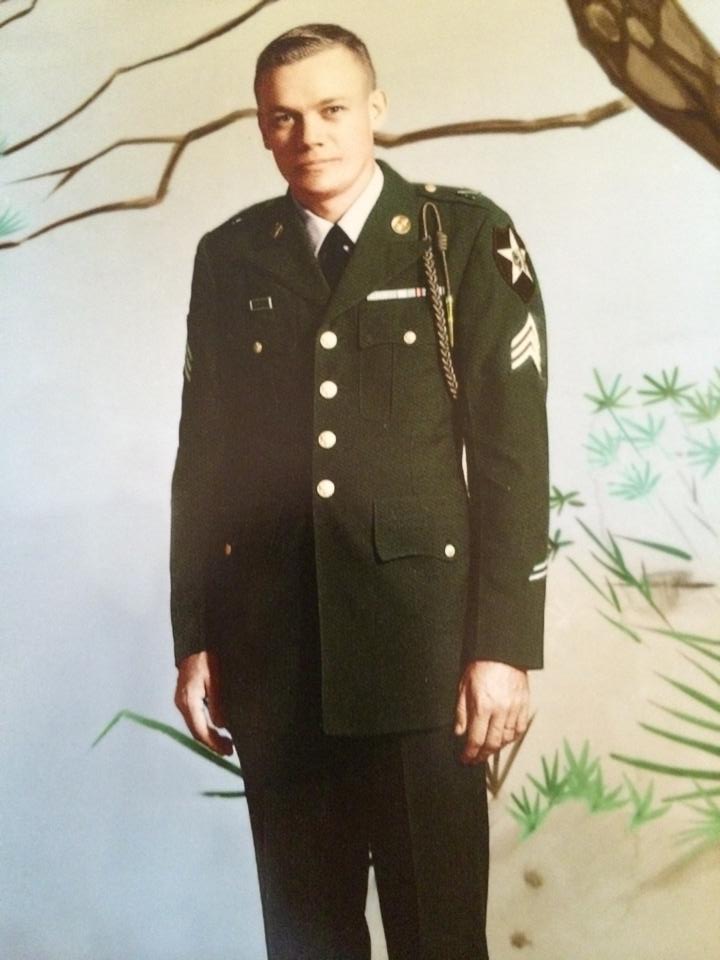
Earl enlisted in the US Army at age 17. He was promoted to staff sergeant, while he served for ten years through both the war in Korea and the war in Vietnam.

But how many of his friends and clients knew this? How many of his neighbors knew this? For Earl never bragged about his generous service to his country. He never boasted about any of his military accomplishments.

Earl was also a generous supporter of scouting for most of his life. I am certain that one thing that he really appreciated about his church is our sponsorship of Cub Pack 25. But how many of his friends and clients knew this about Earl? How many of his neighbors knew of his compassionate contributions to the youth in this community?

Donna said that she remembers first witnessing this quiet, yet compassionate faithfulness when they learned that Danielle Nelson, a nine-year old girl from Bethel, was diagnosed with cancer. She lived only one more year. Donna says she will never forget the sincere empathy that Earl possessed for that little girl and her family and the quiet, yet generous compassion that he shared with them.

Donna remembers many times watching Earl quietly being moved to tears, after they learned someone, especially a small child, was diagnosed with cancer or another dreadful disease. And she said that his compassion almost always led him to give generously.

But how many of his friends or clients knew this? How many of his neighbors or church members knew this?

I believe Earl possessed something that more Christians need to possess in this world, and that is: the quiet empathy of Christ.

Over and over, the gospels speak of Jesus being “moved with compassion.” And the Greek word translated “moved” is a deep, inward, visceral word. It is a special reaction that takes place deep within someone’s soul. And usually, only someone who is very close to one who has this reaction notices it.

When Jesus encountered the hungry Matthew says, “he was moved with compassion.”

When Jesus encountered the helpless who were: “like sheep without a shepherd;” he was moved with compassion.”

When Jesus encountered someone who stricken with the dreadful disease of leprosy, Mark says, “he was moved with compassion.”

Jesus was moved with a deep, visceral, real compassion.

This was type of Christian that Earl was.

Earl lived his life with a quiet faithfulness and dedication. He loved and took care of his family, his children and grandchildren, unassumingly, yet compassionately and generously. He never bragged about being a good father or grandfather. He never flaunted his love. For his love was deep. His love was visceral. His love was real.

Earl took care of his clients with the same quiet, faithful dedication. He worked hard until the job was finished, yet he never sought any accolades or special recognition. Because his dedication was deep. His dedication was visceral. His dedication was real.

Earl gave generously to this community whenever he learned of a need. But he always gave quietly, almost always in cash, not expecting anything in return, not even a tax deduction. And he was a CPA! Because his generosity was deep. His generosity was visceral. His generosity was real.

Donna said that Earl loved the scriptures; however, he preferred the scriptures that were the direct words of God, as opposed to, for example, the Apostle Paul’s interpretation of those words. Some might call Earl a “Red-letter Christian,” in that the words in the Bible written in red letters, the direct words of Jesus, meant something a little more to Earl.

For those of us who really knew Earl, this should not surprise us. For in his first recorded sermon, Jesus spoke the following words:

Beware of practicing your piety before others in order to be seen by them; for then you have no reward from your Father in heaven.

So whenever you give alms, do not sound a trumpet before you, as the hypocrites do in the synagogues and in the streets, so that they may be praised by others. Truly I tell you, they have received their reward. But when you give alms, do not let your left hand know what your right hand is doing, so that your alms may be done in secret; and your Father who sees in secret will reward you (Matthew 6:1-3).

Earl would quietly attend our Wednesday night suppers at church with Donna. As soon as they walked through the door, they would be greeted by Kim, our church administrative assistant who takes up money for each plate which costs $6.00.

Kim says that every time before Earl would pay for him and Donna, he would say the same thing. He said: “Look, I will make a deal with you. I don’t have any money on me today. But Donna will wash all of the dishes.” Then, he would whip out a hundred dollar bill, put it in the basket, and say, “Keep the change.”

The only reason that I know this is that Kim tells me this every Thursday morning after this happens. She says: “And he never says what all of the extra money is for! When he first did it, I thought he was pre-paying for him and Donna for an entire year of suppers. But, every week, he keeps doing it.”

Knowing Earl, I believe when he walked into our fellowship hall, he immediately saw a table full of children who come to our church without their parents. And looking at them, he knew could not afford the $6. Thus, I believe that when he saw them, he was moved with compassion. He had a deep, visceral, real reaction which led to his quiet, yet passionate; secret, yet generous donation.

Every Thursday, Kim would ask: “Why does Earl keep doing this?”

I would respond today: “That was just the type of Christian that Earl was.”

The good news is that now as Earl has given generously to us, compassionately, yet quietly, and secretly; his heavenly father who sees in secret has rewarded him.

For when Earl’s heart stopped on Thursday evening, I believe God was moved. Knowing the pain that would be experienced by Maurey and Brent, by their children, and by Donna, I believe God was moved with the quiet empathy of Christ.

And then I believe God came. God came to Earl. God came quietly, and God came compassionately. God came quickly, and God came generously. And the generosity of God is deep. The generosity of God is visceral. The generosity of God is real. And the good news is: the generosity of God is eternal.

And as God came and gave God’s self to Earl compassionately, generously and eternally, God promises to come to you Donna, to you Brent and Maurey, to all of Earl’s family and friends. For God knows your pain. And God is deeply moved by it.

God will come to you with the same empathy of Christ we have been blessed to know through Earl.

Because that is just the type of God our God is.

Final Lessons from My Wheelchair (or Crutches)

man-in-crutchesTottering around on my crutches has been a royal pain. It has been a pain in my arms, shoulders, back, and in my good knee. It has also been a pain in my spirit.

However, what has gotten me through these painful six weeks, besides my wife (God bless her), was the hope that I would one day be able to walk, even run, again. My pain was not forever.

This is the great hope of our faith in God. No matter how weak or disabled we are, no matter how much pain we are in, even if we are suffering on the brink of death, we possess the hope that our weakness and pain is not forever. We have the hope that we will one day have the strength to walk, and to even run, without pain.

Consequently, there is nothing in all of creation, neither in life, nor in death, that we cannot get through. The hope of our faith will see us through anything. I love the way the prophet Isaiah speaks of this great hope:

Have you not known? Have you not heard?

The Lord is the everlasting God,

the Creator of the ends of the earth.

He does not faint or grow weary;

his understanding is unsearchable.

He gives power to the faint,

and strengthens the powerless.

Even youths will faint and be weary,

and the young will fall exhausted;

but those who wait for the Lord shall renew their strength,

they shall mount up with wings like eagles,

they shall run and not be weary,

they shall walk and not faint (Isaiah 40:28-31 NRSV).

Thanks be to God.

Only Harry: Remembering Harry H. Albritton, Sr.

Let me share with you how I usually prepare a person’s eulogy. I think about the person’s life, their contributions, their personality, and then I find a biblical character or story that parallels, or in some way relates to, the person. This is how I usually prepare. However, when it comes to Harry Humphrey Albritton, Sr., usual preparation does not apply. Think with me. Is there one biblical story, or single biblical character, or anyone else you know for that matter, who compares to Harry?

During his final hours, the Hospice nurse came into the room to tell the family what to expect. She concluded by saying, “but everyone’s different.” I pointed to Harry and said, “And you have no idea just how different this one is.”

How many people do you know who played basketball well into his seventies, and played basketball very competitively, physically, tenaciously, always to win; taking on Rocky Stone and me, two against one, when Rocky and I were still young enough to play basketball?

Only Harry.

Who do you know who, when he began having trouble sleeping this past this year, went online and ordered himself a military cot, because he remembered the four years while he was serving our country in the Air Force, getting the best sleep of his life?

Only Harry.

How many people do you know who always, I mean always, told you exactly what he thought to be the truth, even when it came to religion or politics, even when he knew that what he believed to be the truth would make you angry and probably dislike him?

Only Harry.

How many people do you know who, when their pastor dropped by to see him one evening after the pastor got word that he was extremely sick, was honest enough to tell the truth when the pastor asked if there was anything the pastor could do to help, by answering: “Yeah. You can get the hell out of here!”

Only Harry.

How many people do you know who, while in the hospital the day after no one thought he would make it through the night, when his pastor came to see him on crutches following knee surgery, honestly greeted his pastor in the following manner:

“Did you come to see me on crutches?”

“Yes, I did,” I proudly responded.

“You dumb, stupid butt!” Of course, he was much more colorful than that. “You had no business running those long distances at your age! You should have had good sense and stuck to playing basketball!”

Only Harry.

How many people do you know who at a Wednesday night church supper, at the dinner table, in front of God and little old ladies, gave a birds-and-the-bees lecture to the pastor’s son who was getting ready to go off to college?

Only Harry.

How many people do you know living in Farmville who, because he believed in being a good steward of the earth, and because of just good common sense, drove an electric car?

Only Harry.

Who do you know who had the best HVAC system money could buy installed in his garage because of the empathy he possessed for his pets? Who owned dogs that live as he lived: first class all the way?

Only Harry.

How many people do you know who was wise enough and humble enough to begin using a walker before he ever broke a leg or a hip and strongly encouraged others to use one?

Only Harry.

How many people do you know in town who, because of his concern for the children of this town, was not only one of the oldest, active members of the Farmville Kiwanis Club, but paid for his pastor to also be a member?

Only Harry.

How many people do you know who, after listening to a presentation at church about a mission trip opportunity to repair homes in the rural Mountains of West Virginia, in one of the most impoverished areas in our country, became so moved, so agitated and so concerned that he stood up and spoke out, saying that he didn’t want to just put a “Band-Aid” on the poverty, but he wanted to actually do something to cure the poverty? He wanted to strategize, energize and mobilize to end the poverty, to repair the breach, to restore the streets, and make it a place where future generations could thrive.

He wanted to set up meetings with the CEO’s of corporations, with state and local government and investors and encourage them to build new factories in the area and offer employment. And if that did not work, he wanted to lobby Congress to provide tax incentives, to create ways to re-locate the residents to them to the jobs.

Someone responded, “We can’t do that!”

He said, “What do you mean ‘we can’t?’ There’s no such thing as ‘can’t.’ You mean, ‘we won’t.’”

Only Harry.

Who do you know who took his faith, and his call to share his faith, so seriously, that he recently purchased and distributed copies of a book entitled Jesus Calling at Bojangle’s and admonished all of the recipients to read it every morning when they woke?

Only Harry.

How many people in this post-9/11 world do you know who intentionally built a relationship, a genuine friendship, with one of the few Muslims in town: giving him a Bible; inviting him to church; and promising his God to be there if he ever came to church to do all that he could to make sure that felt more than welcomed at the communion table?

Only Harry.

How many people do you know who, because of his empathy for the elderly in town, especially the many widows living here, did all he knew how to do, to get a retirement home built here in Farmville?

Only Harry.

Who do you know who, after being told by his mother as a little boy that he could not go over to the home of his best friend Ting, because Ting had black skin, and he had white skin, went outside, got a hand full of some coal dust, spread it all over his arms and face, went back in and said: “Mama, now I have black skin. Now, can I please go home with my friend Ting?”

Only Harry.

How many white people do you know who went to the Paramount Theater in the late 1930’s with his black friend but sat in the balcony, because his friend was not allowed to sit downstairs with the whites? He said, “If my friend Ting is going to sit in the balcony, I am too.” He remembers being the only white boy sitting in the balcony that day.

Only Harry.

Who do you know who loved his pastor with an unparalleled frankness and straightforwardness; and loved his church faithfully and generously, yet critically and honestly, in a way like none other?

Only Harry.

Who loved ECU academics and athletics, supported them with his generous donations and with his faithful attendance, and with his ad nauseum discussions with you, especially if you were a Tar Heel?

Only Harry.

Who loved Joyce more than he loved his own life, who constantly bragged on her competence and her accomplishments, her faithfulness and her intelligence, even more than he bragged on his own basketball skills and East Carolina?

Only Harry.

Who loved his children with an honest and tough love, but also a compassionate and forgiving love, who continually preached to instill in them the virtues of hard work, of striving for excellence, of the willingness to change and to adapt, and of giving their all to make a difference in the world all the while loving neighbor as self?

And who do you know who did this and actually succeeded? How many people do you know who spent their last days surrounded by all of their children, all of them hard-working, successful contributors to society?

Only Harry.

Who loved his grandchildren with the same honest, tough, but compassionate and gracious love? Who has grandkids who will never forget this unrivaled love, who will undoubtedly grow up in this world with a little bit of their grandfather living in them, with this burning desire in their hearts to be the very best that they can be, to give their all to make this world a better place?

Only Harry.

Who has friends, a church and a family who will always be grateful to God for giving them the one and only, irreplaceable gift of God’s grace named Harry Humphrey Albritton Sr.?

Only Harry.

The good news is that because of the uniqueness of Harry, I believe our days of mourning will be quickly transformed into days of gratitude and celebration, if they haven’t already.

And here is more good news: It is very obvious to all that Harry was created in the image of our God and imaged our God through his faith in Christ, because the God that gave us the matchless gift of Harry, is, God’s self, matchless.

Of whom does Moses ask after the Israelites are delivered from slavery and death: “Who is like you, O Lord, among the gods?  Who is like you, majestic in holiness, awesome in splendor, doing wonders” (Exodus 15)?

Only God.

Of whom does the Psalmist ask: “For who is God except the Lord? And who is a rock besides our God?” “Who is like the Lord our God, who is seated on high, who looks far down on the heavens and the earth” (Psalm 18, 113)?

Only God.

To whom does King David pray: “Therefore you are great, O Lord God; for there is no one like you, and there is no God besides you” (2 Samuel 7)?

Only God.

Of whom is the prophet Jeremiah speaking: “There is none like you, O Lord; you are great, and your name is great in might… Among all the wise ones of the nations and in all their kingdoms there is no one like you” (Jeremiah 10)?

Only God.

Who commanded to the faithful, “You shall not pollute the land in which you live…You shall not defile the land in which you live, in the midst of which I dwell…” (Numbers 35)?

Only God.

Who through the prophet Isaiah admonished God’s people to strategize, energize and mobilize, “to rebuild the ancient ruins, to raise up the foundations for future generations, to be called the repairers of the breach, restorers of the streets to live in” (Isaiah 58)?

Only God.

Who through the writer to the Hebrews proclaimed the good news: “We do not belong to those who shrink back and are destroyed, but to those who have faith and are saved. And faith is the substance of things hoped for. The evidence of things to not seen” (Hebrews 10, 11)?

In other words: “There is no such thing as ‘can’t!'”

Only God

In the gospels, who gives the gift of God’s only self in the person of Jesus, showing us how to live and how to love:

By speaking the truth, even while knowing that people will be angered by that truth and reject him for that truth;

By being a living example of wisdom and humility;

By caring for children everywhere;

By having concern and taking action on the behalf of the poor, the vulnerable, and the widows;

By sharing the good news of God’s love with all people;

By accepting foreigners at his table, making disciples of all nations, all ethnicities and all religions;

By identifying with, and by friending, and by sitting beside, and by liberating those who have been regulated by society to sit in a seat on the margins;

By challenging all of his friends, his family of disciples, his sisters and his daughters, his sons and his brothers: to always strive for excellence, to do the very best that they can, to work hard while generously giving all that they have to give, even their very lives, to make this world a better place?

Only God.

And who sent his son into the world to say:

“Very truly, I tell you, anyone who hears my word and believes him who sent me has eternal life, and does not come under judgment, but has passed from death to life” (John 5).

“Very truly, I tell you, the hour is coming, and is now here, when the dead will hear the voice of the Son of God, and those who hear will live” (John 5).

“I am the resurrection and the life. All who believe in me shall never die” (John 11).

“In my father’s house, there are many dwelling places. If it were not so, would have told you that I go to prepare a place for you” (John 14).

Only God.

Who called apostles like Paul to say, “There is nothing in heaven or in all of creation, not even death itself, can separate us from the love of God in Christ Jesus” (Romans 8).

Only God.

And who called apostles like John to proclaim that the time is coming for all of us “when there is going to be no more mourning, no more crying, no more pain, and no more death” (Revelation 21)?

And who called people like Harry Humphrey Albritton, Sr. to walk in this distinctive way and to share this inimitable hope in word and deed?

Only God.

Closing Prayer and Commissioning

May we please stand. Let us pray together.

In the days ahead, O God, may we continue to thank you for the gift of the uniqueness of Harry, and for the many ways that Harry will forever remind us of the uniqueness of our loving, eternal and only God who we know fully through Jesus Christ our Lord and Savior. Amen.

Now go onward from this place as Christian soldiers remembering Harry and honoring God…

By strategizing, energizing and mobilizing,

By speaking the truth;

By being a living example of wisdom and humility;

By being a good steward of the creation;

By caring for children everywhere;

By having empathy for and taking action on the behalf of the poor and the vulnerable;

By sharing the good news of God’s love with all people;

By accepting foreigners at your table;

By identifying with and by friending and by sitting beside and by liberating those who have been regulated by society to sit in a seat on the margins;

By striving for excellence, doing all that you can do, giving all that you have to give, even your very lives, never saying the word “can’t,” to make this world a better place;

By rebuilding the ruins, repairing the breach, restoring the streets and raising the foundation for generations to come.

All in the name of Jesus Christ our matchless Lord, who reigns with the inimitable Father and Holy Spirit forever and ever. Amen.


A New Day Dawning in Farmville

McNairIn the late 1930’s Harry Albritton began dreaming of a new day for Farmville. It began one day when he and his best friend decided to go to the movies together at the Paramount Theater. When they arrived, Harry became confused, agitated and disappointed as he was told that his friend could not sit with him. For you see, his friend, nicknamed “Ting,” was black. Harry was told that he was welcomed to come in and sit downstairs, but his friend had to use another entrance and sit in the balcony. Harry, not wanting to be separated from his friend, remembers responding: “If Ting is going to sit in the balcony, I am going to sit in the balcony too.” He said, “I was the only white boy in the balcony that day, but I was not going to let skin color separate me from my friend.”

It is almost eighty years later, and a lot has changed in Farmville. However, a lot has remained the same. In many ways, we are still separated. The new day of Harry’s dream as a little boy has yet to arrive.

Yet, there appears to be a light glimmering on the horizon. It’s a distant, faint light, but it’s a light nonetheless. Last Thursday, the Apostle Dr. Aaron McNair from the Mount Moriah Church spoke from the pulpit of the First Christian Church. He boldly admonished us to come together erasing the lines that separate us to be one Church to do the work of Christ together, side-by-side, hand-in-hand: feeding the hungry, lifting up the poor, giving hope to the despairing, speaking truth to power, and exorcising all kinds of demonic evil: structural, systemic, personal and even ecclesial.

McNair said: “Think of what a better town this would be. Think of what a better nation this would be, if we would just come together.”

After he spoke to the congregation that was gathered, he and I embraced there on the chancel. As we hugged, he whispered, “I believe this is the start of something big.”

I whispered back, “I believe it is.”

The light on the horizon is faint, because there is much work to do. If the new day of Harry’s dream, and of so many others since, is to arrive, much will need to change. However, the good news is that wherever there is just a flicker of light, there is hope. And last Thursday, I saw more than a flicker.

Peace Be with You: Remembering Albert Mosley

Albert Mosley 1 (3)In the sixteenth chapter, the 33rd verse of John’s gospel, we read words of Jesus that cannot be more true: “In the world you will have tribulation.”

Jesus didn’t say we might or we may have tribulation. Jesus said that we will have “tribulation.” Other translations read: “torment,” “trials,” “trouble,” “sufferings,” “distress” or “persecution.”

In this world, we will suffer. In this world, we will lose people we love, sometimes tragically. In this world, we will be injured, sometimes in terrible accidents. In this world, we will be diagnosed with sickness, sometimes with dreadful diseases. In this world, we will have failed relationships, sometimes divorce. Jesus said that in this world suffering is inevitable.

Albert Mosley could certainly testify to this truth.

Albert had just started high school here in Farmville when his father tragically committed suicide. Later, Albert, himself, would be critically injured on the football field. Years later, there would be the sudden and untimely loss of his mother, a risky back surgery, a grim diagnosis of Addison’s disease, broken relationships, the loss his best friend Ronnie Avery, incessant physical pain, diabetes, debilitating strokes and blindness.

Now, if this was the only testimony that Albert Mosley’s life could give, that in this world, we will have tribulation; then today would certainly be a sad and tragic day for all of us. However, the good news is that this was only a small part of Albert’s testimony.

Jesus said: “In this world, you will have tribulation.” Now, let’s read the entirety of this verse: Jesus said: “I have said these things to you, that in me you may have peace. In the world you will have tribulation. But take heart; I have overcome the world.” (John 16:33).

After Albert lost his father, Albert did not hesitate to courageously become the man of the house, take care of and look after his mother, his six siblings, maybe especially, his little sister, Donna. Albert resonated with the great song by Clarence Carter, “Patches,” intentionally becoming the one that his family could always depend upon.

In spite of the tragic loss of his father and the increased responsibilities for his family, Albert somehow miraculously managed to excel in school. And in spite of some very good reasons to be bitter and angry, Albert possessed such a sweet and loving disposition that the girls in this town affectionately called him “teddy bear.”

However, I am certain that no one called him a teddy bear on the football field. Albert was an exceptional athlete, a strong, ferocious hitter. Perhaps football became the outlet for some of some of his anger that he had to have harbored. He hit someone so hard one night when Farmville was playing at Ayden, that it put Albert in the hospital where he was in a coma for three weeks.

And yet again, although he had even more reasons to become angry or bitter at life, Albert took heart and persevered.

After he recovered, he finished high school and went on to Atlantic Christian College, where he again continued to excel, earning the prestigious Top Hat Award. After college he went on to get a Masters in Education degree at Old Dominion University. Upon graduation, he taught school briefly until he was quickly promoted to principal.

Later, he became Vice President of the Virginia National Bank in Franklin, Virginia and in 1982 was awarded the “Boss of the Year” Award from the Franklin Jaycees. He was also awarded the #1 Jaycee President Award in the state of Virginia.

Then, as Jesus promised all of us, more tribulation would come to Albert, this time in the form of sickness and disease. However, in spite of every tribulation in his life, Albert always miraculously found a way to persevere, to love his life, and to love others. You could see it on the dance floor when you watched him Shag, Twist or do the Gator. In spite of everything, Albert was still the sweet, pleasant, fun-loving teddy bear.

I met Albert twelve or thirteen years ago. He had retired and moved back to Farmville to be with the family he loved. He had experienced many more ups and downs in his life. I watched him grieve deeply when his friend Ronnie passed away, and I witnessed his health continue to decline. The truth is that I have watched him suffer perhaps more than anyone I know. I cannot count the times I have visited him in the hospital and doubted that he would ever make it home.

Yet, I never heard him, not one time, not even in the hospital or in the nursing home, ever complain or grumble. Even when he lost his eye sight, his ability to walk, his ability to swallow just a sip of Diet Pepsi, Albert remained positive. In fact, I never heard him say anything negative, about himself or anyone for that matter. Even in his darkest moments of life, he loved his life, and loved those who were in his life.

Bro was always more concerned about others, than he was himself, especially his siblings. No matter how sick he was, if you asked him, he was always fine. And then he would ask you about others.

Doctor J,” he would say, lying in the hospital, unable to see, blood sugar over 200; “Have you seen Donna? How’s ol’ Carson and Sara doing? How are things going at the church? I got to get myself straight so I can come back there.”

And nearly every time before I left his side, even in ICU after his debilitating stroke in November, he would miraculously say to me, “Peace be with you.” And the miracle was not only that Albert could speak those words of peace, but was how it was obvious to all that in spite of every tribulation, Albert actually possessed this miraculous peace. And he truly wanted to share it with others.

The only way that can possibly explain how Albert endured the tribulations of his life is that the God of Jesus, somehow, some miraculous way came to Albert, obviously since he was a young boy, and filled him with this peace that surpasses all human understanding.

The disciples of Jesus also knew something about the ups and downs of life. Like a star football player, a teddy bear that the girls adored, or the vice president of a bank, the disciples had experienced some very high moments in life. They were with Jesus when he healed the sick, gave sight to the blind and raised the dead. Some of them even went to the mountaintop with Jesus and stood with him in the very presence of God. They rode triumphantly into Jerusalem with Jesus as little children lined the streets waving their palm branches.

And the disciples certainly knew something about tribulation. They were with Jesus when he was arrested in the garden. Some betrayed him. Others denied him. They all deserted him. They had made mistake after mistake, and they knew it. And they watched in horror as the one for whom they left their families and all forms of worldly security be tried, tortured and crucified.

Three days later, John writes that they were cowering in fear in a locked room. Rumors were floating all over town that the body of Jesus had been stolen, and the ones who destroyed Jesus and had taken his body would soon come to destroy and take them.

So, there they were, cowering behind locked doors. They could not have been more afraid. They were not unlike: a small boy who discovers his father’s suicide; a star athlete who is severely injured on a football field; or a well-respected and successful professional whose declining health had stripped nearly everything from him.

Then Jesus comes. We can’t explain how. The doors are locked. The windows are barred. But Jesus somehow, some miraculous way comes; he stands among them, and says: “Peace be with you.”

And this is not some superficial word of peace that denies or overlooks human tribulation and suffering. It is a genuine word of peace that acknowledges the pain of life, recognizes the wounds of today, but also the certain hope of a better tomorrow. Jesus shows them the wounds in his side and in his hands and says again, “Peace be with you. As the Father has sent me, so I send you. When he had said this, he breathed on them and said to them, ‘Receive the Holy Spirit. If you forgive the sins of any, they are forgiven them; if you retain the sins of any, they are retained.’”

The disciples then went out and lived the rest of their lives sharing the grace and peace of Christ with others. And they shared it to the end, even in the face of great persecution, suffering and death.

This is how I will always remember Bro. Like the first disciples, Albert was an imperfect man who suffered much tribulation in this world. However, although I cannot fully explain it, it was obvious to all that knew him that Jesus, somehow, some miraculous way, came to him. Through the love and faithfulness of his wife Ginny, certainly; through the love of his family and friends, definitely; and through divine and mysterious ways that surpasses all human understanding, Jesus came to him and filled him with this genuine peace, and then, sent him out into the world forgiving others, loving others, sharing the peace of Christ with other.

Days before Albert died, Becky said that Albert asked her if Chester could maybe spend the night with him in the nursing home. Becky said, for the first time, I could tell that he was somewhat afraid. And who would not be? In a nursing home, blind, nearly paralyzed, dying: he had more reasons to be afraid than anyone.

However, Becky said that when Albert breathed his last breath on Tuesday, that she had never seen anything so peaceful. I drove her and Chester home from the nursing home that day, and she kept saying, all the way home, “Thank you God, thank you God.”

The good news for all of us is that we have the certain hope that, once more, when Albert experienced his final tribulation on this earth, somehow, some miraculous way, Jesus once again came to Albert, as Jesus had obviously came so many times before, and lovingly tugged Albert’s ear saying: “Peace be with you. Peace I leave with you; my peace I give to you. I do not give to you as the world gives. Do not let your heart be troubled, and do not let it be afraid” (John 14:27). Jesus came to him and filled him once more with a peace that is beyond all understanding, and this time, it is for eternity.

May this wonderful truth give peace to all of us who are still experiencing the tribulations of this world this day, tribulations that will continue in the days ahead. Through the memory of Bro, may we hear the risen Christ speak to us words that cannot be more true: “Peace be with you.”

A Mother’s Love

Alawoise
Alawoise and Harold on their wedding day, April 18, 1958

The following was written for the memorial service for Alawoise Strickland Flanagan (July 29, 1935 – February 9, 2015)

In the very first chapter of our Bible, we have a beautiful portrait of the human vocation—a portrait of who we human beings were created to be, how we were created to live, during the relatively short time we have on this good earth.

So God created humankind in his image, in the image of God he created them; male and female he created them. God blessed them, and God said to them, ‘Be fruitful and multiply, and fill the earth… (Genesis 1:27-28a).

With our thoughts this hour on the enormous Flanagan family, perhaps one of the first things that we glean from this portrait of who we were created to be, and how we were created to live, is: “Be fruitful and multiply.”

Harold and Alawoise certainly fulfilled this part of the human vocation, and they wasted no time in doing so. It was on this day, Valentine’s Day in 1958, that Harold proposed marriage to his Valentine, Alawoise.

Before the luncheon today, I said, “Harold, let me get this straight. You proposed on Valentine’s Day and were married on April 18, of the same year?

Harold said, “Did you see her nursing school picture on the communion table?”

“No,” I said. “Not yet.”

He said,  “Well go look at that pretty girl, and you will understand why I did not want to wait.”

And “to be fruitful” they also did not wait as Jerry has often been called “a honeymoon baby.”

The beautiful family portrait on this table, this order of service with participation from some of the grandchildren, and this room filled with their offspring tell the rest of their story—a story of a two Valentines fulfilling their human vocation to “be fruitful and multiply.”

However, as beautiful as this story is, as beautiful as the Flanagan family is to this community and to our world, this is just a small part of Alawoise’s story. This is only part of her fulfillment of what it means to be human on this earth, a small part of her legacy. In Genesis we first read:

“So God created humankind in his image, in the image of God he created them; male and female he created them.”

The primary way that we fulfill our human vocation, is not to be fruitful, but to be, to live, in the image of God. The good news for all for us this day is that Alawoise more than fulfilled this purpose for which she was created. As the poem recited by her granddaughter, Leigh Kathryn, so beautifully described, Alawoise perhaps best lived in the image of her God as a mother.

In Deuteronomy 32:18 we read that the Israelites are asked to remember “the Rock” that “bore” them; the God who gave them “birth.”

Throughout the Old Testament, God is portrayed as the mother of Israel. It is God who gave birth to Israel and loves Israel as a mother loves her child, unreservedly, unconditionally, tenaciously.

Growing up in the Flanagan house, there was never any doubt that Alawoise was “the Rock” who could always be counted on to love her children in the same manner. Just ask anyone who ever tried to cross any of them! As it was spoken by the prophet Hosea of God and her love of Israel: She would “fall upon them like a [mama] bear robbed of her cubs…” (Hosea 13:8a).

She was the constant care-taker, and she was the perpetual protector. As a mother, she was tried and true. And, let’s face it, let’s be honest this afternoon, I don’t know about Gayle, but you boys often tried her.

Like the time Harold taught Mark to drive a truck. Mark, how old were you? Six or seven? In trying to reach the gas-peddle, Mark recalls slipping off the seat and stomping on the gas, all the while poor Scott was sitting up high on some hay bales in the back. Well, as you can surmise, he wasn’t sitting up there very long.

Alawoise was tried by you boys with multiple broken bones, stiches, car accidents, rattle snakes, even gunshot wounds. But her love, her devotion and commitment to you never wavered, always remained true.

Even up to the time she had to go to the nursing home, each time she heard the town’s siren go off, she instinctively possessed this hair-trigger panic button that would immediately do a family roll call, one that is reminiscent of the motherly words of Jesus himself recorded by the Gospel of Luke:

Jerusalem, Jerusalem, …How often have I desired to gather your children together as a hen gathers her brood under her wings…

Even during these past difficult months, almost each time I visited her, Alawoise would do a roll call, asking me about the whereabouts of her family. Even when she was not in her right mind, lying sedated in a hospital bed, she would oftentimes ask me to help her to take things like barbeque and fried chicken off the stove for her Harold and her children.

Jerry, Gayle, Scott and Mark, and Harold, Alawoise lived her life to take care of your needs, to protect you, to love you unreservedly, unconditionally and tenaciously, and in so doing, she fulfilled the purpose for which she was created: living in the image of her motherly God and her Lord and Savior.

Now, if this was her only legacy, I believe it would be enough. However, there is much more.

The motherly love of Alawoise was in no way limited to her husband and children, or even to her grandchildren and great-grandchildren. Alawoise possessed a desire to gather many others under her maternal wings. She welcomed an exchange student and many others into the hospitality of her home. She lived to provide plenty of food, clean clothes, and a clean bed for anyone in need.

Her motherly love was experienced by many of us who have gathered here this day. We experienced it through Alawoise as a Sunday School Teacher, a deacon, a school nurse or as a Cub Scout Den Mother.

This broad and expansive motherly love of Alawoise was perhaps most ostensibly experienced during her twenty-six years as director of nursing and later as administer for the Guardian Care Nursing Home in Farmville. She loved the patients of the nursing home with the same tenacity with which she loved her own children.

She had absolutely no tolerance for any nursing home employee who did not treat a patient with the compassion. On the behalf of her patients, she did not hesitate to even stand against the company just as the prophet Isaiah spoke of God standing for her children: Thus says the Lord: “For a long time I have held my peace, I have kept still and restrained myself; now I will cry out like a woman in labor, I will gasp and pant.”

Alawoise lived in the image of God by suffering alongside and standing up for the least of these our brothers and our sisters, those who are the weakest, the most vulnerable members of society.

And for all of us who mourn this day this is truly good news. Alawoise was lived in the image of God. This means that when Alawoise suffered during these last difficult years, God, like a loving mother, also suffered. It is important for us to realize that God did not cause her suffering. God did not give her Parkinson’s disease. For what mother would do that to their child. Jesus once asked:

Is there anyone among you who, if your child asks for bread, will give a stone? Or if the child asks for a fish, will give a snake? If you then, who are evil, know how to give good gifts to your children, how much more will your Father [or Mother] in heaven give good things to those who ask!

Like a woman in labor or a mama bear, suffering and fighting for her cubs, God suffered with and fought with Alawoise. God did not take Alawoise from us with Parkinson’s Disease as some may say, but when she was in her weakest, most vulnerable, broken state, God came to her and gave her the best gift God had to give—the gift of God’s complete self. Thus, the best way to describe what happened on Monday morning of this week is that God came. God did not take, but graciously gave God’s self to her— tenaciously, completely, finally, eternally.

I don’t believe there is any other way to explain the very last words she said to me. Just days before she died, after suffering more than anyone one deserves, she opened her eyes, and spoke, not words of complaint or bitterness, but words of a loving mother, or of a child who has been comforted by her heavenly mother, asking me, “And how is your family.”

And the good news is that God will do the very same for us. God will come to each of us in our grief, in our brokenness, to each of God’s beloved children, and comfort us. In Isaiah 66 we read:

You shall nurse and be carried on her arm and dandled on her knees. As a mother comforts her child, so I will comfort you; you shall be comforted in Jerusalem.

As Alawoise taught us by living her life in the image of God, it is in God’s very divine, maternal nature to extend God’s peace and comfort to us all, especially to those in need. It is the nature of our God to place those of us who are hurting this day in the shadow of God’s maternal wings.

I began my remarks this afternoon with some of the first words of our Bible. I would like to close my remarks with some of the last words of our Bible. Hear now these very maternal words from Revelation:

And I saw the holy city, the new Jerusalem, coming down out of heaven from God, prepared as a bride adorned for her husband. 3And I heard a loud voice from the throne saying, ‘See, the home* of God is among mortals. He will dwell* with them; they will be his peoples, and God himself will be with them;  he will wipe every tear from their eyes. Death will be no more; mourning and crying and pain will be no more, for the first things have passed away.

I am thankful, and I know that her family is thankful, that Alawoise fulfilled her human vocation on this earth by being fruitful and multiplying. But I believe we are more grateful this day that Alawoise fulfilled her vocation by living as she was created to live on this good earth: in the image of our motherly God who loves us all unreservedly, unconditionally, tenaciously, and eternally.

Divine Strength of John Barefoot

Exodus 17:9-13 NRSV

In the 17th chapter of the Book of Exodus we read the amazing story of how the Israelites defeated of their enemy, the Amaleks. The Amaleks were a group of nomads who attacked the Hebrews in the desert of Mount Sinai during the Exodus from Egyptian slavery. The Amaleks swooped in on the Israelites and cowardly killed those who were lagging behind: the weary, the old, the weak and frail.

For that is what the enemies of life do. They can attack us at any time, during our strongest times when we are young, but perhaps more so, during our weakest times, often when we are older. Cancer, heart disease, and debilitating strokes swoop in on many during that precious period of life that we call retirement, during that period of life where we look forward to well-earned rest, respite, and recreation.

John Barefoot was not the first person to receive a new set of golf clubs as a retirement gift that he would never use due to sickness or a disability.

And when the enemies of this life attack us, we are faced with a choice. We can surrender to our enemies; we can succumb to their attacks; or, like an old Army veteran, we can stand our ground and fight.

“Moses said to Joshua, ‘Choose some men for us and go out; and fight with Amalek.”

After faithfully serving this country in the US Army, after devoting his life to what is now Southern States, after raising two beautiful children, Roger and Linda, after thirty years of service through this community through the First Christian Church, John began to suffer debilitating strokes. Many men, in John’s shoes, surrender and succumb to such illnesses, especially after retirement. After all, they are weary and old; they no longer lack the strength within to fight. They can reach down and dig deep; however, there is just nothing left. No amount of digging will see them through.

However, men with faith in the God of Abraham and Isaac, Moses and Joshua, men with faith in the God revealed in the Risen Christ, understand that true strength does not come from within, but comes from and by the grace of God.

Moses said to Joshua: “Choose an army and fight. I, myself, retired a long time ago from fighting. I left the army years ago. I am too old, too tired, but I will stand on the top of a hill and raise the staff of God with my hands and summon the grace and strength of God to defeat our enemy.”

So Joshua did as Moses told him, and fought with Amalek, while Moses, Aaron, and Hur went up to the top of a hill.

Whenever Moses held up his hand, Moses noticed that Israel prevailed; and whenever he lowered his hand, he noticed that Amalek prevailed. [This was a certain sign that it was God, and God alone, who was giving the Israelites the grace, perseverance and strength to defeat their enemy].

There can be no other explanation for the strength and the perseverance of John Barefoot, especially during these last years of his life. As I have said, many in John’s shoes would have surrendered and succumbed twenty-five years ago. Possessing no reason to live, no sense of purpose, and no strength to fight, many men die shortly after their retirement.

Many more men die shortly after their wives pass away. Several years ago when Audrey died, it would not have surprised anyone if John followed her soon after.

But John kept going, kept persevering, kept fighting. Many studies have been made to identify symptoms of depression or the giving up on life. People who give up and surrender to the enemies of life become detached and disengaged from the world around them. They no longer care what their neighbors are up to. They become disinterested in their church, the local and national headlines, and interestingly, they no longer care about sports.

John possessed none of these symptoms. John always looked forward to visits from his church family. He absolutely loved taking a stroll in his wheelchair around the neighborhood and even downtown so he could see the people he loved. He cared about what was going on in the world, and he was in no way, shape or form disengaged from sports. He was an avid fan and loved rooting for the Wolfpack of NC State and the Atlanta Braves.

It was obvious to everyone that John, though weak and weary, never gave up. For as Isaiah 40:29 reads, John was a living testimony that “God gives strength to the weary, and to him who lacks might God increases power.” And in the 73rd Psalm we read: “My flesh and my heart may fail, but God is the strength of my heart and my portion forever.” John Barefoot was a living example to all of this great truth.

Our story continues in Exodus: “But Moses’ hands grew weary; so Aaron and Hur took a stone and put it under him, and he sat on it. And Aaron and Hur held up the hands of Moses, Aaron on one side and Hur on the other, and the hands of Moses were steady until the sun set.”

God has always used others to do God’s work in this world. God calls each of us to minister to one another. God uses us to supply God’s strength to those who are weak, to keep them steady, to help them fight the good fight, to finish the race. Such was the case in this victory of Amalek. Moses did not possess the strength to keep his hands raised through the duration of the battle, so God sent him Aaron and Hur who brought him a rock to sit upon and then held up each of his hands.

God also sent John others to give him support when he was the most weary. Church members visited. He children cared for him daily. And caregivers from Silvercare came to John’s aid. You could say that they brought him a rock and steadied his hands until the sun set. Pam Johnson, Catherine Walker and Savilla Jones were to John like Aaron and Hur were to Moses.

“And the hands of Moses were steady until the sun set. And Joshua defeated Amalek and his army.”

God always supplies us with strength for a purpose. God supplied Moses with strength through Aaron and Hur for the purpose of defeating the enemy. Thus, God did not supply John with strength, send him a rock through Pam, Catherine, Savilla and others who visited him and prayed for him just so John could watch a few more ballgames on TV. As Ephesians chapter 2 reads: “God will enable us to continue on in righteousness and to do the good works which the Lord has appointed for us.”

As God supplied Moses with the strength to keep his staff raised through the battle to defeat the enemy and to reveal the source that strength, I believe God supplied John with strength. As it was evident to all who encountered John—who saw his smile, heard his laughter, experienced his joy—that God was the source or his strength.

barefoot

A month ago, a group of parents and children from our church came to John’s house to sing Christmas carols. One of the mothers that came with her children was someone who, just a couple of years ago, was not a part of any church. She said that she even avoided church and had many doubts about faith and the power of God.

But there, standing around John’s bed with others from the church singing Christmas carols, through John, something miraculous happened. God spoke. She said as she watched John donning a Santa hat and wearing a smile that was so amazing that it had to be divine, as she watched him sing along with the children the best that he could, with a joy, this amazing joy, a joy that had to come from heaven, she said that Christmas became real to her. Faith became real. God became real.

There is no telling how many people have been changed by God, how many battles have been won by God, how many of life’s enemies were defeated by God, through John Barefoot’s amazing strength in the midst of adversity, through John’s amazing joy in the midst of suffering, through God’s amazing grace in the midst of John’s life.

And the good news for us today is, that this same God, the God of Abraham and Isaac, the God of Moses and Joshua, the God revealed in the Risen Christ and in the life of John Barefoot, will give us strength in our grief, joy in our suffering and grace in our lives. God will send others: friends and family and church members to hold our hands, to keep them steady, until the sun sets, until the battle is won.

But the really good news is that the final battle, the battle with life’s final enemy has already been won. As Paul wrote to the Corinthians: “Death has been swallowed up in victory. O death, where is your victory? Where is your sting?”

The good news for all of us today is that as God has stood by John and has given him strength to battle the enemies of life, through our resurrected Lord, God has defeated death, and John is now and forever with his Lord.

May this good news help us now to live our lives as John lived his: Persevering with the strength of God, receiving help from friends and family who provide us a rock, living with the purpose of sharing the joy and the hope of the Lord with all people, until the sun sets here and rises forever in eternity. Amen.