Welcome Others, Welcome God – Remembering Jim Butler

james-butler-1475668196

Genesis 18:1-8 NRSV

“The Lord appeared to Abraham by the oaks of Mamre, as he sat at the entrance of his tent in the heat of the day.”

When you worship and follow the Lord, the creator of all that is, the one who has graciously chosen to accept, forgive and love us, be in a relationship with us, then you never know when or where the Lord might appear. It could be the most ordinary of days while you are doing the most ordinary of things, like sitting outside your tent, or on your porch, or sitting on tractor, or sitting on a four-wheeler in the heat of the day. You may or may not be in the right frame of mind to recognize the presence, but the presence is nonetheless real and nevertheless powerful.

Abraham is minding his own business in the middle of the day when, out of nowhere, three strangers appear on the street.

Next, without hesitation, Abraham does what the Bible says the people of God do for others, he welcomes them with a generous hospitality.

And notice, that when he sees them, he does not safely call out to them from a distance. He does not cautiously walk over to them. And he certainly does not practically ignore them and allow them to walk on by. When he sees them, the scriptures say that he runs to meet them.

And when he encounters these strangers, he does not stand arrogantly over them, above them, but humbly bows himself to the ground before them and speaks to them like a servant.

“Please do not pass me by. Let me get some water and wash the dust off your feet. Let me make a place for you to rest in the shade. My wife, Marjorie, I mean Sarah, bakes the best bread. Come and allow us to serve you. Then, you can continue your journey, refueled and refreshed.”

When the strangers agree to stay a while, Abraham can hardly contain himself. He is absolutely thrilled. He runs back inside, “Hurry, Marg, Sarah, prepare three cups of choice flour, knead it, and bake a delicious cake. He then runs out back to the field and takes the best looking calf of the flock and has his servant prepare a delicious dinner. He brought it to them under the shade tree and waited on them while they ate.

In other words, when Abraham sees the three strangers he said with his words and his deeds, with his very heart and his soul, with all that he has: “Boy, am I glad to see you!”

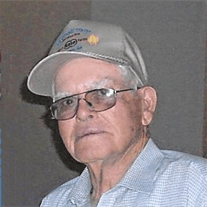
I never once visited Jim, when he did not say those beautiful words of welcome to me. Never saw him when he did not act like he was absolutely thrilled to see me. But here’s the thing, Jim was never acting. It was always so evident that his words of greeting were never said casually or disingenuously, but said from his very heart and and soul.

And I am told that this is how Jim welcomed everyone: “Boy, am I glad to see you!”

One day he came in from the house and told his family: “The Oklahoma Highway Patrol just pulled me over on my four-wheeler.”

“What?” asked his family.

“Yeah, I was riding in on the state road the runs by the farm and he pulled me over!”

“Did you get a ticket?”

“No” I didn’t” said Jim.

His family looked at each other and said: “It’s probably because when the patrolman walked over to Jim’s four-wheeler, the first thing that he said was: “Boy, am I glad to see you!”

As verse one of Genesis 18 suggested, we later discover that these three strangers were actually angels, messengers from God. I believe the point that our God wants us to get is this: When we welcome others into our lives, the Bible tells us, we welcome God. When we welcome others, the Lord appears.

This truth was also taught by Jesus. In chapter 10 of Mark’s Gospel we read the following words of Jesus to the disciples, “Whoever welcomes you welcomes me, and whoever welcomes me welcomes the one who sent me” (Matthew 10:40-42). In Mark’s gospel we read where Jesus took a little child in his arms, and said, “Whoever welcomes one such child in my name welcomes me, and whoever welcomes me welcomes not me but the one who sent me” (Mark 9:36-37).

And in Matthew 25 we read Jesus’ words, “I was hungry and you gave me food; I was thirsty and you gave me a drink; I was a stranger and you welcomed me.”

Do you see the pattern here? Jesus said that when we welcome others, we are welcoming Jesus. And Jesus said when we welcome him, we welcome God.

When we open our hearts wide, when we sincerely invite others in, when we let them know how glad we are to see them, we are welcoming God into our lives.

No wonder we always felt so good every time we were in Jim’s presence. We were also in the presence of God.

I am so happy that I had the opportunity to speak with Jim during the last week of his life to tell him how, as a pastor, I wished everyone in the church had the same gracious, hospitable spirit that he possessed. Because I truly believe that when we swing wide the doors of the church to sincerely welcome others, letting others know that they are genuinely appreciated, that we are truly glad to see them, as Jim welcomed and appreciated others, no one will ever doubt that God is in our church, that the Lord himself is present, healing us, forgiving us, loving us, leading us to be the very embodiment of Christ in this world.

As you have already heard from his children and grandchildren, it was obvious to all who knew and loved Jim and were known and loved by him, that Jim had most certainly welcomed the the Lord into his life. Not only because we know that he hardly missed a Sunday worshipping here at Central Christian Church, faithfully attending the early 8 am service which gave him time to do some work on the farm on Sunday if needed. But we know that Jim had welcomed the Lord into his life, because we know that Jim truly emulated Christ in all that he did.

Hear again to the words from his children, how they remember him, this time paying attention to the many ways Jim imitated our Lord:

Vickie said that he was always there for her, that he always had time to listen. Through words, but more importantly through his actions, giving her guidance and wisdom, teaching her integrity, honesty and respect for others and teaching her to be grateful for all of the blessings of God.

If everyone had a dad like him, what a wonderful world it would be.  Because everyone would grow up knowing they were safe, protected, and loved.  Everyone would know what it means to have someone to believe in …someone who believes in you, too. Everyone would be given the opportunity, and the joy, that our family’s been given…by having a dad as supportive, as caring, as simply wonderful as he was to us.

And Ron described Jim’s Christ-like life in this way: He was a friend to me. He taught me to give my best in all that I do. He showed me how to love others unconditionally. He put the needs of others before his own need. He showed the importance of a good marriage, loving mom and making her happy for 67 years. He was generous to others, but never wanted recognition for his generosity. He always had a positive outlook on life, saying, “everything is going to be ok.” But what I will miss most is hearing my dad tell others ‘I sure am glad to see you,’ and meaning it.”

And today, because Jim lived a life imitating his Lord, a life that proclaimed the gospel of Christ, because we know that the very presence of the Lord was not only in his heart, but also in his actions, in his love for others, we can celebrate this day. For we the have confidence that because God was with Jim, and because God is with us, “Everything is going to be ok.”

When Rev. Speidel visited with Jim on Monday, this is exactly what she told him. And she told him this with full confidence. “Everything is going to be ok.” Although he was unable to speak, Shannon said that he nodded his head and she was certain that he heard her and understood that everything was truly going to be ok.

Because we have no doubt that Jim had welcomed God into his life, we now know that God has welcomed Jim, fully, finally and eternally into the life of God. On Tuesday afternoon, I am certain that before Jim could utter the words, he heard them the following words from the very throne of God, “Jim Butler, boy, am I glad to see you.”

And because of that, today, we are not saying good-bye to Jim. Jim never liked that. Instead, we are saying, “We will see you again!”

Let us pray together:

O God, help us to continue to be grateful for the life we remember this day. May we graciously welcome others, and thus welcome you. So you will one day welcome us to our eternal home. Amen.

Grace and Gratitude-Remembering Johnny Matthews

johnny-matthews

Grief comes to us in many forms. Many have said that the worst kind of grief is the kind that is experienced suddenly, without warning, without any time to prepare for it, or even brace for it.

This is the how we experienced it on the fourth of September as sharp, sudden grief took us by surprise. There was shock and denial.  “No, God, no, not now.” “Please, Lord, this can’t be.” “I can’t believe it.” There was anger. “How did this happen?” And with all grief, there has been guilt: things we wished we said; things we wished we could have taken back.

And here we are, almost two weeks later, and some may still be having a difficult time accepting it.

We are perhaps having a difficult time accepting it, because Johnny was such a good, fun-loving, people-loving, life-loving person. He has been described this week by the people that he did business with in Tallequah as “a hoot to be around.”

I am not sure if anything actually made him this way, or he was just born with it. For even as a little boy, he he sounded like he was sort of a hoot. His sister Virginia fondly remember their mother taking Johnny with them and some girls in the neighborhood to her Tap, Ballet dance lessons. Because Johnny always had a strong thing for the opposite sex, Johnny didn’t mind going. But then, Johnny must have thought, if I have to go along with them to these lessons, I might as well dance too. So the instructor recruited a few other boys and created a ballet with baseball players and clowns.

That experience may have had something to do with him enjoying ball room dancing later as an adult. Or it could have been that he never did outgrow his affection for the opposite sex!

Johnny loved the arts, loved formal dancing and the type of music that soothes the senses. He appreciated nature, a beautiful landscape: the grandeur of the plains and the majesty of the mountains. But he also loved sports and driving a truck and working on a farm, especially during the harvest.

Johnny loved Cajun food. And Johnny loved Mexican food. Johnny loved food with flavor. But of course, to Johnny, life itself was smorgasbord of spice.

Johnny loved family. His sisters remember him saying and saying often that his children had no idea how much he loved them. Johnny loved family gatherings, for they reminded him of the love he had for grandparents.

There wasn’t anything Johnny would not do for any member of his family. When his sister Virginia was diagnosed with spinal stenosis, had neck surgery, couldn’t walk, like he did when his mother was sick, Johnny dropped everything he was doing and drove to Colorado to stay with Virginia, not for a couple of days, or for a couple of weeks, not even for 2 months, but for 2 years.

And it wasn’t only his family that he would do anything for. He loved to do whatever he could to help anyone he could. His sisters said every time it snowed, he wished he owned a tractor with a plow so he could clear as many driveways and sidewalks. Johnny simply loved people and loved to help people.

I believe Johnny would have loved to know that on the day that his life was celebrated, Heather and Ben ran in this morning’s Great Land Run, pushing a child with exceptional needs, including them in their first 10k race.

Johnny was also very proud of his service to his country, giving four years of his life during the Vietnam War in the United States Air Force.

So when sudden grief came to us on September 4th, we grieved hard. “No, God, no, not now. Please Lord, this cannot be!” And even, today, almost two weeks later, we are still having those thoughts.


It grieved me when Joyce told me that Johnny enjoyed worshipping at our church and looked forward to coming back. It grieved me because Johnny is the type of person that pastors love to have in their congregation. A group of ministers were having a conversation one day about how many active church members they had.

One minister said, “How many active church members do I have? Probably about half of them.”  They all chuckled, for they knew that was the sad truth. However, one minister spoke up and said that all of his members were active.

“What?” Asked the others. How can that be?”

He said, “Half act one way, and the other half act another way.”

Johnny would most definitely fall into the category of “the way we want our church members to act: Fun loving, people loving, life loving.”

I believe that is because Johnny truly understood that all of life is but grace. This mystery we call life is all unearned, undeserved. And Johnny lived a life of profound gratitude for it all.

I believe this is the way that he was able to get through the divorce of marriages and not be bitter. Johnny would probably say, “I didn’t deserve to be married to one woman, and I had three.” Instead of being bitter about what he did not have, or what he lost, Johnny was grateful for what he did have.

And people who get that, get that all of life is but grace, are generally good, people loving, life-loving people.  This is why I believe Johnny especially loved Disciples of Christ Churches. He loved the openness of our church, our welcome and love for all people.

And people who don’t get that, that all of life is grace, people who believe life or the world owes them something, that they somehow have earned it, are generally not the type of people that we pastors, especially Disciples of Christ pastors, like to have in our churches.

When Johnny was nineteen years old, he would drive the church bus full of high school youth to out-of-town football games. One night they were on their way back from a game in Stillwater. It was raining cats and dogs. They were heading west and approached a stop sign at a “T-intersection.: With all of the water on the road that night, the brakes failed, and the bus went through the stop sign and ended up sideways, miraculously without rolling over into a ditch. Johnny somehow managed to steer the bus in that ditch another 100 yards before it came to a stop with every on board safe and sound.

Now, I am not sure what was going through Johnny’s mind when the brakes failed on the bus that day. But it might have been something like:

“No, God, no, not now.” “Please Lord, this cannot be.” I am only 19. Never had a chance to marry, have a son and a daughter. Love a son and a daughter more than they will ever know. Become a grandfather to three boys. No, God, no, not now. I have yet to be able to serve my country in the Air Force. Please, Lord, this cannot be. I still have many more ballgames to watch, more spicy food to enjoy! There’s still so many people I want to help. I want to be there for my family and neighbors. I want do what I can for a few more years to make this world a better place. I want to see so much more of the beauty of this world.”

Now, that being said, I am also not sure what was going through Johnny’s mind on September 4 when before his vehicle crossed the center line to crash head on into another car. But it might have been something like:

“O God, please protect those in the other car. Please keep them safe. But as for me…Thank you. Thank you for the grace. Thank you for my life. Thank you for my family. My children and grandchildren. Thank you for the grandeur of the plains and majesty of the mountains. Thank you for music and dancing and food with lots of flavor. Thank you for allowing me to serve my country. Thank you for the grace of it all.

Instead of being bitter about what he was losing, I believe Johnny was grateful for what for all that he had received.

I am certain that the first thing that he learned in eternity was that not one of the three children or the four adults were seriously injured that car accident.

And this, my friends, is how I believe we can all get through the sharp, sudden grief we are still experiencing today. By being grateful for the grace of it all.

Garth Brooks once sang a song entitled “the Dance.” One line of that song goes, I could have missed the pain, but I’d a had to miss the dance.”

The only way to miss the pain we are feeling today is to have never loved Johnny and to have never been loved by Johnny. We grieve today, because we were given a gift of God’s grace named Johnny Matthews. Johnny was himself grace, unearned, undeserved.

And when we can understand that, the sheer grace of it, instead of being bitter for what we have lost, I believe God will give us hearts, souls and minds, as God gave to Johnny, to be somehow be grateful for what we had.

Until that day comes when we will surely see Johnny again, face to face, as we will meet the Giver of all Graces face to face. Amen.

Pillar of the Church: Remembering Jane Adams

Jane-Adams-1471363292

When I texted Rev. Speidel early Tuesday morning to inform her of Jane’s passing, she responded back with the words: “Pillar of the church.”

Jane Adams exemplified the foundation of Central Christian Church in Enid Oklahoma, as I believe Jane Adams, even in her last days on this earth, exemplified the very foundation of the gospel.

The day after they removed her ventilator, one week before she died, Jane asked me to give her an update on what was happening at the church. I knew exactly what she meant. She wanted to know if anything had happened that she would normally be involved with. In particular, she wanted to know if she missed helping to organize, prepare and serve a meal for a family before or following the funeral service of a loved one. For this is what she perhaps loved to do most in the church.

So, I mentioned the passing and an upcoming service for of one of our members, Bob Shaw. She immediately asked (now remember, they just pulled out the respirator less than 24 hours earlier): “Jarrett, have you contacted Dorothy Bracher about serving the church serving a meal for the family?”

I said, “Yes, I called Dorothy, but she is on her way to Texas for the week.”

I will never forget the concern that came over her face. I said, “Jane, don’t worry, I have contacted Irene Green, and she has agreed to plan the meal.”

Jane immediately: “Poor Irene! I don’t think has ever organized a funeral meal. I will help her!”

I said, “Jane, we will be fine, you just worry about getting well.”

She asked, “When is the funeral?”

I sort of chucked and said, “It’s Friday afternoon.”

And before I could say, “but,” she said, “Maybe I will be home Friday morning, and I will be able to help.”

“Jane!” I said with a smile, “Yesterday you were on life support! You don’t need to be worrying about this!”

She shook her finger at me, and we laughed together.

After a moment of laughter, Jane said, “Seriously, I will at least talk with Irene and give her some instructions.”

Jane was a pillar of Central Christian Church because Jane possessed the gift that I believe the scriptures suggest is the pillar of the Church, the gift that is the very foundation of the gospel.

Israel was commanded over and over to show hospitality, not only to fellow Jews, but also to the “sojourner, the stranger in their gates.”  Deuteronomy chapter 10 reads, “Remember you were a stranger and a sojourner, and God took you in. Therefore, you do the same.”

This virtue of hospitality is the foundation of the Christian Church (Disciples of Christ). Our statement of identity which is displayed at the doors of our sanctuary read: “We welcome all to the Lord’s table, as God has welcomed us.”

Jane Adams emulated this virtue, a virtue that is commanded throughout the Scriptures.

One day, Abraham and Sarah were awakened from their afternoon nap by three strangers by the Oaks of Mamre.  Sarah, like Jane did so many times in our church’s kitchen, prepared and served the strangers dinner.

Do you remember the rest of the story?  Those strangers turned out to be angels in disguise, angels who blessed Abraham and Sarah for their hospitality.

In practicing her gift of hospitality, her gift of welcome, her gift of being family to strangers, Jane continued the hospitality of the matriarch of our faith who entertained angels unaware.

Throughout his letters, the Apostle Paul picks up on this Hebrew theme by often encouraging the early church to “practice hospitality.” He recounts the words of Hosea to the Church at Rome:

As indeed he says in Hosea, ‘Those who were not my people I will call “my people”,  and her who was not beloved I will call “beloved”.

And at the end of Matthew’s gospel, do you remember what Jesus says is the great test of our faith, the one thing Jesus says that separates the sheep from the goats?  Jesus said that the major test of our faith is:

I was hungry and you gave me food. I was thirsty and you gave me something to drink. I was a stranger and you welcomed me.

And welcoming strangers into our church after or before a funeral service, becoming like family to them, is not the only way that Jane practiced this great virtue of hospitality.

I had only been in Enid a few hours when I was invited to the home of Tina Swanson for a welcome-to-the-church-new-pastor meal. Guess who else was a part of that meal? That’s right, one of the first persons who welcomed me to Enid as the minister of this church was Jane Adams.

Many people in the church do not even know this, but it was Jane Adams who made sure all children felt welcomed when they entered our education wing, as she decorated, and continually updated the decorations, of the front of our Children’s Library.

Now, I am aware that nearly every church has someone like this who volunteers their time and talents to make children feel welcome; however, more often than not, that someone usually has children or grandchildren of their own in the church. So they have some very personal reasons to make sure that children are welcome.

But this was not the case with Jane. With no children and no grandchildren of her own using our children’s library, Jane only had very divine reasons to welcome the children. Children that were not her own, became her children.

And as rare as this type of gracious hospitality is, none of her own children who are here today are surprised by this.

After teaching elementary school students in France and Germany, Jane returned to San Antonio where she taught at the Randolph Air Force Base for fifteen years. And then on June 6, 1978, Jane married Paul Adams. But here is the thing: Paul brought with him to this marriage, six children.

It was like the Brady Bunch; however, unlike Carol Brady, none of the six children were her own. And unlike Mike Brady, Paul Adams was not an architect, but was an Air Force Pilot.

And not long after they were married, with four kids still living at home, John 16, Lori 12, Philip 11 and James 5, Paul’s duties took him away from home for three months of Commander School.

So there was Jane, a newlywed. Since moving to the home of Vance Air Force Base, I have been told that being a newlywed to an Air Force Pilot has its own challenges. But here was Jane, a newlywed to an Air Force Pilot with a 16, 12, 11 and 5 year old, all of whom she barely knew, suddenly in her home without their father!

However, because of Jane’s innate gift of hospitality, James and John remember Jane being completely dedicated to their family from the get-go. It was like she just jumped right on in saying “well, here we go.”

Although those kids were almost strangers, Jane quickly became their mother, quickly and lovingly became family to them.

This reminds me so much of Paul’s words to the Ephesians. In chapter two, we read:

So then you are no longer strangers and aliens, but you are citizens with the saints and also members of the household of God, built upon the foundation of the apostles and prophets, with Christ Jesus himself as the cornerstone. In him, the whole structure is joined together and grows into a holy temple in the Lord; in whom you also are built together spiritually into a dwelling-place for God.

“Foundation.” “Cornerstone.” Another word for those things is “pillar.”

I believe this is why the Scriptures place so much emphasis on extending hospitality. This is why hospitality is the foundation of not only Central Christian Church in Enid, but of the Church. Hospitality, becoming sisters and brothers, or mothers to others, welcoming the stranger, helps us to welcome God.

When we become a pillar, our souls are forever attached to the pillar, a pillar though shaken will never fail, a pillar that not even death itself can move, because that pillar is none other than Jesus Christ himself.

The good news for all of us today is that there is no doubt in any of our minds that Jane had welcomed Jesus into her life.

She lived for Jesus. She proclaimed Jesus. She emulated Jesus. She was indeed a very part of the structure of the Body of Christ here at Central. In fact, she was one of our most important parts, for she was truly a pillar of this church.

And because of that, we have full confidence that she is forever attached to the pillar of Christ himself.

And here is more good news for her church that she loved and for all of us who are grieving this day: Because Jane welcomed others and thus welcomed Jesus, we have the certain hope that Jesus has now welcomed her. As Jane has welcomed so many people as family to her table, she is now and forever a child of God at the heavenly table.

Matthew writes that the “Kingdom of heaven can be compared to a king who gave a [great] wedding banquet (the kind that Jane prepared for so many, figuratively and literally)…[and he said] tell those who have been invited: Look, I have prepared my dinner, my oxen and my fat calves have been slaughtered, and everything is ready; come to the wedding banquet.”

And one of the most hopeful passages in the Bible is found in the book of Revelation: “And the angel said to me, ‘Write this: Blessed are those who are invited to the marriage supper of the Lamb.’ And he said to me, ‘These are true words of God’ (Revelation 19).

The good news for us today is that because Jane welcomed so many, became family to so many, thus welcoming Christ himself, the Lord has now welcomed her part of the eternal household of God. She is seated at the table being waited on by the Lord himself, this day and forevermore.

And what’s more, if we follow Jane’s example by welcoming others, God will one welcome us to join Jane at that table. Amen.

Life Like a Country Song: Remembering Robert Dean Shaw

Bob shaw

Bob Shaw loved music, more specifically country music, more specifically pre-1960 country music, and more specifically, pre-1960 country music that you could dance to, or at least tap your toe to. The kind of songs that were earthy, rural, set in a small town or in a farming community. Songs stirring patriotism and championing hard work. Songs speaking about lasting love and songs speaking about love lost and heart break. Songs speaking about rural life: the land, raising children and bird dogs, hunting and catfishing. Songs of sacrifice and worrying about the kids and the dogs.

Bob loved another Bob with the last name of Wills, known as the King of Texas Swing.

Bob had such a love for Texas Swing that he taught himself to play the guitar, and steered his daughter Ronda away from the flute, an instrument that may never have been played in the Texas Playboy band. Bob even took some guitar lessons in his late in his forties.

I don’t believe Bob’s love for country music should not surprise anyone who reads reads his obituary, as his epitaph reads like lyrics to a country song, you might say, some good ol’ Texas Swing.

Born in Lacey, Oklahoma, a small rural farming community, Bob attended Mound Ridge, a one room school house.

Bob Wills once sang of the rural, slow paced, southern way of life that Bob Shaw was born into:

Yes, this is Southland, where everything’s fine

It’s where they really live and give you a feeling

That you’re welcome any time

You’ll find our men are stronger, women sweeter

And you’ll live much longer, no rush every day.

Bob graduated from high school and was drafted into the United States Army, serving from 1953 to 1955 during the Korean Conflict. He was stationed in what he called “cold and dark Greenland,” building a runway to defend the North Atlantic from a possible Russian advance. Those years of service were difficult for Bob. He lost a dear friend and comrade in an explosion, and Bob himself was injured in an accident with a Jeep. This service and sacrifice, this love for country led him to later become the Commander and District Commander of the American Legion. Bob’s love for country is perhaps what attracted him the patriotic music of Bob Wills’. One song goes:

When the Yanks raised

The Stars and Stripes on Iwo Jima Isle

Ev’ry heart could sing once again

And the sight of Old Glory over Iwo Jima Isle

Swelled the hearts of our fighting men

After serving his country, Bob moved to Kingfisher where he worked for Cimarron Electric, and later he would move to Enid to work with OG&E where he continued to sacrifice for others. Working with electricity is a dangerous venture, but being a lineman, is another kind of danger.

One day, in Pawhuska, Oklahoma, Bob was on the ground while a fellow lineman was high in a bucket truck working on an electric line. Not knowing that the line was live, his co-worker grabbed the line. The electricity immediately grabbed and held on to him, until Bob says he could see smoke appear to come from the top of his head. Without hesitation, and putting himself at risk, Bob climbed the pole and pulled his co-worker off of the line, saving the man’s life.

Bob would find love, have two sons, but then, like a country song, lose love, as his first marriage would not last.

Bob Wills sings of the heartbreak of love lost:

No more to be sweetheart, no more to be friend

My yesterdays haunt me, my weary heart cries

I just can’t go on, dear, with tears in my eyes.

However, Bob Wills also sings of the hope of finding new love:

I’ll have somebody else as soon as you are gone

You’ll never break my heart no more

I used to weep and sigh each time we said goodbye

You broke my heart so often, there’s no more tears to cry.

And in 1969, Bob married Linda Kisling.

Celebrating the joy of lasting love Wills sings:

Stay all night, stay a little longer

Dance all night, dance a little longer

Pull off your coat throw it in the corner

Don’t see why you don’t stay a little longer.

And that is just what Linda did, standing faithfully by his side for 47 years. The two of them had one child together, his only daughter, Ronda.

Bob enjoyed hunting quail on the farm. He and his bird dogs also hunted ducks, turkeys and pheasants. He also enjoyed fishing, especially catfishing. Bob liked to get a way, and enjoy the outdoors. Bob believed in working hard, but he also believed in taking it easy.

Bob Wills sings:

I might have gone fishing. I got to thinking it over.

And the road to the river is a mighty long way,

Now it could be the season, no rhyme or no reason,

Justa taking it easy, it’s my lazy day

Bob Shaw’s obituary closes: Bob is survived by his wife, Linda, a daughter ,Ronda and her husband Terry, two sons, Jerry Walker, Larry Walker and his wife, Candy, three grandchildren, seven great-grandchildren and one sister, June Lindsey. He was preceded in death by a brother.

When I asked Bob’s family how Bob expressed his love and devotion to them, they all agreed: “He worried about us.” Ronda said that he especially worried about her driving, arriving at her destination safely, wherever that may have been. Bob would probably agree that worry is the price that parents pay for the gift of children.

Again, Bob Wills sings:

Woe is me, so is you

What a price to pay

Tell me what I’m gonna do

I can’t go on this way

Every night I walk the floor

Worried over you

All I do is watch the door

Hopin’ you’ll come through

Pacin’ up, pacin’ down

‘Til the break of day

I’m the saddest soul in town

I can’t go on this way

Where are you at tonight?

Now, I do not believe that Bob Shaw’s worry meant that he lacked faith in God. For after his heart surgery, Bob made a grateful promise to God that he’d be more faithful in his church attendance. Keeping his promise, Bob and Linda would arrive around 9 am for the 10:15 service almost every Sunday! They sat together on the same bench for over an hour in the gathering area waiting for the service to begin. It was kind of their spot.

Thus, I don’t believe that Bob’s worry meant his faith was weak. I believe it only meant that he loved you so. Worry was simply the price that he paid for love.

I believe it is good to be reminded that, like worry, grief is also the price we pay for love. Grieving only means that we have loved have loved another the way our creator has intended for us to love another.

Garth Brooks, a post-1960 country music star that Bob probably never listened to, sings a song entitled, “The Dance.”

One line of that song goes: “I could have missed the pain, but I’d a’had to miss the dance.”

The only way to miss pain in life is to miss love in life. But to never love someone the way you loved your husband, your father, your brother, your grandfather and great grandfather is to never really live. As the country song goes, the only way to miss the pain of loss is to miss the whole dance of life.

You loved Bob, and now you are paying the price for that love. Grief is the consequence of love. But you know something? Everyone of us here this day, is going to go on courageously loving one another because the ones we love are worth that price. You have loved.  And now you grieve.

So I say to you this afternoon, grieve. Grieve long and deeply. Do not dare run away from it. Do not treat it as if were a stranger you could send away, or deny that grief, because who does not know any better thinks it means your faith is weak. Grieve what is lost. Grieve honestly, lovingly and patiently. Grieve until your cup is emptied. For this is the only way back to wholeness.

Grieve and even thank God or your grief. Because like Bob’s worry, your grief only means you loved. However, also remember the words of the Apostle Paul in his letter to the Thessalonians that those of us who call ourselves Christians should not grieve as others do who have no hope.  As Christians, our grief is different, because as Christians we possess hope.  We have the hope that as God raised up Jesus from the dead, God has raised Bob.

Perhaps today, Bob Shaw has found another Bob, and maybe even the rest of the Texas Playboy band, and they, even now, are playing the guitar and singing together:

Will you miss me when I’m gone?

Will you ever think of me?

Will the past be just today…

If you cry yourself to sleep

As I did for you for so long

Then perhaps you’ll dream of me

Will you miss me when I’m gone…

…I love you just the same

More than you will ever know

When your hair has turned to white

And you feel so all alone

Maybe then you’ll think of me

Will you miss me when I’m gone?

Do This and Live

dallas shootings

Luke 10:25-37 NRSV

Sometimes preachers can begin preparing their sermon too early. I began working on this sermon more than a week ago. I chose the theme, the point and the title of the sermon early Tuesday morning.

As you can probably tell by the title of my sermon, “Do This and Live,” the point of my message this morning was going to be that it is high time for Christians to put our faith into action.

In the beginning of Luke 10, we read Jesus saying to seventy of his followers: “the harvest is plentiful but the laborers are few.” Then he commissions them to do some pretty big things: bring peace to the people, cure the sick, work to bring the kingdom of God near.

This was going to be my sermon.

I was going to tell the story of the Good Samaritan, tell how he overcame his fear of the other, how he reached out and reached down to help him in his time of distress, and then I was going to quote Jesus, by saying: “Go and do likewise.” “Do this and live.”

I was going to say that it is time for us act, to go and do likewise.

I was going to say that the Samaritan did not merely wish the man lying in the ditch well. He did not just send his thoughts and his prayers. He didn’t mull over the situation, consider  the risk involved, ask whether or not his insurance would cover it. He just acted.

I was going to encourage you to be the church that Shannon often describes as one that is “on the move.”

I was going to admonish you to move beyond thoughts and prayers, study and contemplation, to be more committed than ever to truly be a movement for wholeness in this fragmented world.

A movement. Not a team of thinkers.

A movement. Not philosophy class.

A movement. Not a club of theorists.

A movement. Not a group of day dreamers.

A movement. Not a church of well-wishers.

A movement, a body of doers, doing all that we can, when we can, with all that we have been given,

working for wholeness in a creation that is broken,

working for justice in systems of inequality,

working for mercy and grace in a society of bigotry and prejudice,

working for peace in a culture of war and violence,

working for truth in a nation of politics,

working for love in a world of hate,

working for hope in a world of despair.

However, after the horrific events continued to unfold this week, I went back to our scripture lesson to read it once more in the light of what has been a horrendous week for our country.

Surely, God has something else to say to us this week.

The first time I read the story, I read it the way many read it. By understanding that God wants us to see ourselves in that Good Samaritan, that God wants us to overcome our fear of the other and act to truly love others as we love ourselves. God wants us to courageously go out, reach out and reach down to help those who have been left behind, put down, beaten up.

But after a week in which we witnessed 250 murders in Baghdad, the murder of two African Americans in Baton Rouge and St. Paul, and the murders of five police officers in Dallas, I began to read the text differently.

Instead of seeing ourselves in that Good Samaritan, perhaps God needs us to acknowledge today that we are more like one who has been robbed, beaten, and left bleeding, half-dead in a ditch on the side of a wilderness road.

That is where I believe we truly are as Americans today. We have been robbed: robbed of pride and dignity, robbed of trust and hope, and robbed of peace and security. We have been beaten: beaten by racism and hate, beaten by terrorism and violence, and beaten by confusion and despair. And we are bleeding. We are bleeding tears, bleeding fear, and bleeding anger.

And honestly, we are currently unable to act sensibly, unable to move courageously, and certainly unable to be any semblance of a movement for wholeness, because we ourselves are not whole. We are broken, barely making it, not knowing whether we might live or die.

And one by one, people are passing us by. Friends are disappointing us, and even people of faith are letting us down. We are being treated as if our lives do not matter.

But here is the good news:

The good news is that someone is coming towards us. Someone is coming very near to us. Although we cannot comprehend it, we sense his presence.

He is but a stranger to us. His ways are not our ways. He comes from a foreign land. He is one who has been despised and rejected by the world, a man of sorrows held in low esteem.

But when this strange one sees us, as he becomes acquainted with our suffering, he is immediately moved with compassion. He is moved thoroughly and deeply.

We have been beaten so badly, he does not recognize if we are black or white, Jew or Muslim, male or female.

Yet, he suffers with us, and he suffers for us. His empathy towards us brings him down to his knees. We can feel his warmth. We perceive his empathy. And then, kneeling beside us, with his own hands, he tends to the places where we have been hurt. He stops the bleeding. He cleanses our lacerations. A costly wine poured out. Carefully, attentively and lovingly, he bandages all of our wounds.

He then puts his arms around us. Although we still cannot make out his face, cannot comprehend his actions, we instinctively know that we can trust him. We can trust him. So we put hands around his neck as he picks us up.

He picks us up and carries us until we reach a safe place, a place where no one judges us, a place where we are welcomed and accepted just as we are.

He stays beside us and continues to care for us. He gives us warm bread and something refreshing to drink. He stays with us through the darkness of the night, holding us, loving us, assuring us that we will not only have life, but we will have life abundantly, assuring us that a new day will dawn and we will be a part of it.

And when that day comes, he sacrificially pays the price for our care, for our healing, for our salvation. And then he places us in the hands of others who will care for us, shepherd us, love us as he loved us.

He then tells us that he must go, but before he departs, he makes a promise. I will come again. I will surely come again, and whatever your debt may be, I will take care of it. I will pay it in full. I will forgive it fully, completely. Grace will be yours not only today, but forever.

And our cups runneth over. We are healed, made whole. We have been saved. For we have never experienced such a love, a love without conditions, a grace without limits, a mercy without reservations.

This afternoon, our church is partnering with Youth and Family Services to host a back to school bash for foster children living here in Garfield County. We will have games, provide haircuts, and give out book bags with school supplies. Most of all, we will give them our love.

We will let them know that today they come to a safe place. A place where no one will judge them, a place where they will be accepted and welcomed.

We will let them know that there is a community here that will hold them, love them unconditionally, share mercy with them unreservedly, and offer grace to them with no strings attached whatsoever.

We are not going to merely offer these foster kids our thoughts and prayers. We are not going to just wish them well. We are going to act.

And we are going to continue these acts of grace with others in our community who find themselves in need. We are truly committed to be a church on the move.

However, before we can do this, before we can be a body of doers, before we can go and hold others in the light of Christ, a light that will certainly drive away the darkness, I believe we first need to be held in that light ourselves.

Before we can envelop others with a love that will drive out the hate, we first need to know that we have been embraced by such a love. Before we can become a movement for wholeness, we first need to be made whole.

And if we do this, accept this love, receive this grace, allow this mercy to take a hold of us, pick us up, heal us, redeem us, and transform us, if we do this, we will live.

And then, we can share this life with others. We can truly be a movement for wholeness in a fragmented world.

Come, Lord Jesus. Come quickly.

Between the Verses

GirlieBorder1

Psalm 6 NRSV

About one-third of the Psalms are called “Lament Psalms.” I love these Psalms for their sheer honesty. These Psalms are unashamedly real, straight up authentic. They speak to the reality of our pain, frailty, and failures. They also speak to the reality of the pain of our world: the plight of the poor; the despair of the displaced, the evil of war, the scourge of disease, and all kinds of injustices. And they speak of the reality of what sometimes seems like God’s apathy or even absence in this world.

Psalm 10 reads:

1 Why, O Lord, do you stand far off? Why do you hide yourself in times of trouble?
2 In arrogance the wicked persecute the poor—

7 Their mouths are filled with cursing and deceit and oppression;

8 They sit in ambush in the villages;
in hiding-places they murder the innocent.
Their eyes stealthily watch for the helpless;
9   they lurk in secret like a lion in its covert;
they lurk that they may seize the poor;
they seize the poor and drag them off in their net.

Walter Brueggemann says that the Lament Psalms “break the force of denial” teaching us that the truth of our pain must be told. They teach us the importance of declaring out loud that things are bad. Things in our lives are bad. Things in this world are bad. And even things about our relationship with God are bad. The Psalms teach us to honestly say out loud that when it comes to God, even on our best days, we have our doubts.

However, that is not our tendency. Is it? We have this notion that any amount of crying, complaining, protesting or “lamenting” means that our faith is weak. And to ever doubt God, well, that is simply out of the question!

To be a positive witness to the world to the saving acts of our God, we believe we should always wear a victorious guise. Thus, this morning, there are churches everywhere full of smiling, happy, clappy Christians casually dressed singing simple, repetitive songs devoid of any semblance of reality. And there are churches full of serious, somber Christians in suits and dresses, preachers robed with stoles, monotonously singing the old hymns of faith without any real concern for the suffering of others.

Christians everywhere have a tendency to retreat into sanctuaries and cling to denial, ignoring the suffering of this world. We cover it up with a smile or hide it with our Sunday best. We deceive ourselves by pretending that with our faith everything is good, everything is working; when in fact, everything is far from good, and nothing is actually working. Confession of sin, acknowledgement of pain, and doubting God is something that is done sparingly and always privately, if it is even done at all.

However, the Lament Psalms move us in the opposite direction. They persuade us to not only tell it like it is, but to publically tell it like it is to God.

And these Psalms teach us it this kind of honesty, this kind of truth-telling, that is the only way we can experience new life and salvation.

Those of us who have read the stories of Jesus should not be that surprised. For whenever Jesus encounters people in need whether it is blind people, poor people, or in the case of Jarius’ daughter and Lazarus, dead people, it is always the needy person, or the family of the dead person who summon Jesus to come into their life or into their house. It is always the one who is in great need, the one who is suffering or grieving who takes the initiative to invoke the help of Jesus.

When Bartimaues, the blind beggar, hears that Jesus is passing by, he cries out, over and over, until Jesus hears his lament, a lament that sounds much like a Psalm: “Jesus, son of David, have mercy on me.” It is then, and only then, after the man honestly cries out in need to Jesus, publically voices his desire to change, that Jesus stops and heals him.

Psalm 32 speaks clearly about the power of our honest cries. The Psalmist writes: “While I kept silence,” in other words, while I was in denial, while I was pretending to be a happy, clappy person of faith or a stoic, serious religious person, “my body wasted away through my groaning all day long. For day and night your hand was heavy on me; my strength was dried up as by the heat of summer.” In other words, when I pretended everything was working, that all was good, my body wasted away.

“Then I acknowledged my sin to you, and did not hide my iniquity.” I stopped playing religious games, stopped pretending, stopped faking my faith, stopped trying to appear like I had it all together with my fine wool suit and silk tie, or with my long robe and stole. “I said, ‘I will confess my transgressions to the Lord” (and guess what happened next!), and you came, “and you forgave the guilt of my sin,” the guilt that was eating my life away. “Therefore let all who are faithful offer prayer to you,” fully, sincerely, honestly.

Thus, Psalm 6 is one of my favorite Psalms. For here the Psalmist honestly pours out his heart before God like none other.

1 O Lord, do not rebuke me in your anger,
or discipline me in your wrath.
2 Be gracious to me, O Lord, for I am languishing;
O Lord, heal me, for my bones are shaking with terror.
3 My soul also is struck with terror,
while you, O Lord—how long?
4 Turn, O Lord, save my life;
deliver me for the sake of your steadfast love.
5 For in death there is no remembrance of you;
in Sheol who can give you praise?
6 I am weary with my moaning;
every night I flood my bed with tears;
I drench my couch with my weeping.
7 My eyes waste away because of grief;
they grow weak because of all my foes.

Here the Psalmist tells the truth, the whole truth, to God. There is no holding back, no masking the pain, no masquerading behind a Bible and a hymn book, no pretending to be strong because others will think he is weak. There is no denial. This Psalmist takes the initiative, goes to God, and keeps it very real. And notice what happens next. Look at what happens somewhere between verses seven and eight.

Somewhere between seven and eight, God shows up. New life, inexplicable, yet certain, comes. Easter happens. Pentecost arrives. Blessed assurance, amazing grace, and a peace beyond all understanding are received. Thus in verse eight, the Psalmist confidently continues:

8 Depart from me, all you workers of evil,
for the Lord has heard the sound of my weeping.
9 The Lord has heard my supplication;
the Lord accepts my prayer.
10 All my enemies shall be ashamed and struck with terror;
they shall turn back, and in a moment be put to shame.

Now, we do not know what exactly happened between verse seven and eight. We just know that something happened and that something was God. Somewhere, somehow, someway, God breathed on the Psalmist new life, inexplicable, yet certain. God came, and God resurrected, restored, and revived. When the Psalmist was honest saying “this is not working,” “this is bad,” God came and worked all things together for good.

Somewhere, somehow, someway between verses seven and eight God showed up. Perhaps through a still small voice. Perhaps through a quiet warmth that mysteriously erased the terror from his bones and soul.

Or perhaps through love expressed by a friend. Perhaps God came through a visit from a concerned neighbor. Perhaps someone cooked supper and brought it over, or simply offered a listening ear or an empathetic embrace. We just know that somewhere between verses seven and eight, God, in some inexplicable yet certain way, came.

I see this all the time in the church. People come to me and tell me that their life is over. Nothing is working. There is no way.  Some are grieving a loss: either a job loss, a lost opportunity or the loss of a loved one. Some are just sick and tired of being sick and tired. They come to me honestly, pouring themselves out. In their life, it is verse 7, and they are languishing.

Then a short time later, I see them again. And suddenly, it is verse 8. They tell me that life has never been better. How losing that job was the very best thing that happened to them. That although they still grieve over the loss of their loved one, God not only brought them great comfort and peace, but God has made them a stronger, better person. They say that although they thought their life was over, they realize that a new life is only just beginning. There is now a way when there was no way.

The good news is that this is how our God loves to work in the world. It is the very nature of God. However, as the Psalters remind us, when we are languishing, if we ever want to experience what is between verses seven and eight, it is up to us to take the initiative. It is up to us to come honestly before God, confess our sins, confess our brokenness, confess our weakness, confess our need of God. It is up to us to tell God the whole truth. And then I promise you, somewhere there between verses seven and eight, God will inexplicably, yet certainly show up.

And as people of faith, when verse 8 comes, I believe God continually calls us to go back to live in between the verses. God calls us to service somewhere in between verses seven and eight keeping our minds and our hearts open to the cries, to the pain, and to the needs of others.

And who knows, even today, you may be that inexplicable, yet certain something that happens for someone living between seven and eight! It may be through preparing a meal, sending a card, making a phone call or making a visit, or by just being present to listen to someone’s cries. God is calling each of us, every person in this room, and God is counting on us to be there for others between the verses, so all of God’s children can get to the verses where they are able to confidently sing:

“The Lord has heard the sound of my weeping. The Lord has heard my supplication. The Lord accepts my prayer.”  “The Lord is my shepherd. I shall not want.” Amen.

The Hands of God

Cash
Army Captain Christopher S. Cash, 36, died on June 24, 2004 in Baquabah, Iraq when his Bradley Fighting Vehicle came under attack by enemy forces using small arms fire and rocket-propelled grenades. He was assigned to the Army National Guard’s 1st Battalion, 120th Infantry, Jacksonville, North Carolina. 

Isaiah 49:8-16

If I am to be truly honest with you, I must confess, that I suppose I am just like most of us here, in that, from time to time, I have my doubts.  I cannot help it, and I’d be a hypocrite to deny it.  It’s just part of my fragmented human nature.

What I believe makes the Bible so great is the sheer honesty of it.  When I slip into the doldrums of doubt and despair, I can always pick up the Bible to discover that I am not alone.

Listen again to these words of Isaiah to the people of Israel in exile:

“Thus says the Lord”—what a powerful statement. This is not a mere prophet’s voice, but the voice of Almighty God, the Holy One, the Redeemer of Israel.

“Thus says the Lord… who is faithful…who has chosen you.” Israel did not reach up and choose God. God reached down and chose Israel. Here, God is the actor, the mover, the shaker. And listen to how God has acted…

“Thus says the Lord…I have answered you…I have helped you…I have kept you…I have given you….”  In other words, “I answered your cries in Egypt, I sent Moses to deliver you, I protected you in the wilderness, and I gave you a promised land.”

“And not only have I acted in the past, I promise to continue acting, reaching out and reaching in… giving you light in your darkness…feeding your hunger, quenching your thirst.  I promise to protect, lead and guide you.  I will transform mountains into roads, lift up highways and show you the way out of captivity…”

“So shout for joy, O heavens, and exult, O earth; break forth O mountains into singing!  For the Lord has comforted God’s people, and will have compassion on God’s suffering ones!”

And what did the people say?  “Halleluiah!  Thine the glory?”  No, not even close.

The people in exile responded to the voice of God, the divine acts of the past and the divine promises for the future the same way I suppose you and I sometimes respond—with a lot of doubt.

In verse 14 we read…But Zion said, “The Lord has forsaken me, the Lord has forgotten me.”

Deep within, we know that God has always been with us, never away from us. We know God is for us, not against us.  And we believe in our hearts that whatever our future brings, God will always work all things out for the good. However, due to, I suppose, our sinful, finite nature, the reality is that, sometimes, we have our doubts.

I can go to church on Sunday and experience the love and grace of Christ through my family of faith. I’m greeted each Sunday at the door with handshakes and smiles. I listen to the choir sing. I hear the word of God being read. I sing the great hymns of faith, and through it all, I sense the nearness and the intimacy of God. But then, during the week, a thousand different things can happen and change everything.

Fifteen years ago, I became good friends with Christopher Cash, a member of the National Guard.

On October 1, 2003, his unit was deployed to Iraq. As the only person I personally knew in Iraq, I specifically remember praying for my friend Christ the following year, on the Sunday morning before Memorial Day the following year.

About a month later, I picked up the Saturday newspaper and read the headlines on the front page: “Captain Christopher Cash Killed in Iraq.” I tried my best to read the article, but couldn’t. I never made it pass the sub-title: “Cash leaves behind his wife, Dawn, and two children.”

The room started spinning. I felt sick to my stomach. I was lost.  And I had never felt more alone. With Zion I wanted to cry out, “The Lord has forsaken me. The Lord has forgotten me.”

One moment we’re filled with faith and hope; we sense the intimate presence of God. And in the next moment, we sense only God forsakenness.

A thousand different things can happen…the telephone rings in the middle in the night…there’s been a terrible accident…your child is sick…your spouse is laid off from work…someone who you are supposed to be able to count on for encouragement, lets you down…a terrorist or a crazed gunman attacks…a tornado or earthquake strikes…war rages…the doctor gives a grim diagnosis…a loved one dies.

One day we are basking in the presence of God. We know we’ve been chosen. Our prayers have been answered. We’ve been helped. We have received and kept by an eternally faithful God. We have confidence that as God has not let us down in the past, God will certainly not desert us in the future. God will continue to reach out and reach in, transform, protect, shed light in our darkness, feed and quench, protect, lead and guide.

But then something happens; and just a short time later, with Zion we cry out, “The Lord has forsaken me. The Lord has forgotten me.”

This is why I love the Bible. I love the sheer honesty of it!  In spite of everything we know about God, what God has done, and what God promises to do, like Zion, we fragmented and finite human beings still have our doubts.

Now listen to the good news. The good news is that our God never gives up on us. God never leaves us to our own devices. God never deserts us with our doubts, but always responds to our doubts. God keeps moving, keeps reaching out and reaching in.

In verse 15, we read God’s response to our doubt.  “Can a woman forget her nursing child, or show no compassion for the child of her womb?  Even these may forget, yet I will not forget you. See, I have inscribed you on the palms of my hands…”

Tomorrow, our nation remembers those members of our armed forces who have made the ultimate sacrifice. Today, our church remembers members of our family of faith who have died during the past year. But this is not why we have gathered here for worship. We gather to worship this day, not because we remember them, but because our God remembers them.

For our remembering is shallow and weak; our remembering is fraught with doubt; laden with despair. God’s remembering is deep, unfailing. God’s memory endures forever. God responds to our doubt with the assurance that we and our loved ones will never be forgotten by God because they, with us, are in the very hands of God.

And, as Christians, we know something about the hands of God, don’t we? The life, death and resurrection of Jesus Christ teaches us that the hands of our God are always responding to our brokenness, always working, always doing all they can do to work all things together for the good, always creating and recreating, healing and transforming and resurrecting.

As my heart broke upon learning about by friend’s violent death in Iraq. I must confess I had my doubts. I am sure that his wife Dawn had her doubts. But thank God that God did not give up on us. God responded to our doubts the hands of God kept working, kept moving, kept creating, kept resurrecting. And today, nearly 14 years after Chris’ sacrifice for this country, Dawn has helped to raise nearly a half million dollars in scholarship money in Chris’ memory to assist needy students with college educations.

And for me, well, I still have my doubts from time to time; however this Memorial Day, because of Chris and so many others who gave their lives serving and protecting this country, I possess a deeper appreciation for our country and for this miraculous gift we call life. Because of their sacrifice, I possess a profound desire to serve others more faithfully, to love others more deeply, and to preach the message of peace more fervently.

But here’s the true miracle: Because God never gives up on any of us, because we are indeed in the very hands of God, each time in our humanness we have our doubts, each time we wonder if our faith is even real, that God is even real, our faith miraculously grows stronger.

Thanks be to God that as the very hands of God picked my friend Chris up from the battlefield to hold forever, those very hands also hold us.

Her Jug Will Never Fail: Remembering Delcea Batterman

Delcea-Batterman-1463996239

1 Kings 17:8-16 NRSV

In 1 Kings we read, “Then the word of the Lord came to him.”

Those of us who grieve the loss of Delcea are also able to celebrate this day, because we know that the word of the Lord came to her.

Because we know that the word of the Lord came to her many years ago when she decided to follow Christ as his disciple, and because of the many ways that she let us know through her faithful love and amazing smile that the word of the Lord came to her daily, today we who grieve also celebrate. We celebrate because we also know that the word of the Lord came to her this past Saturday morning, finally, fully and eternally.

I loved the way her daughter Eilene notified me Saturday morning of her passing. Revealing Delcea’s deep faith in the word of the Lord, and the faith that she passed down to her children, Eilene sent me a text that simply read: “Mom just left this world to be with God.”

Eilene will never forget the first time she truly grasped the depth of her mother’s faith. As a small child she remembers living very meagerly in a mobile home. One day, Eilene asked her mother to make her a peanut butter sandwich, but Delcea had to explain that, at the time, there was no bread in the house.

“But mama, I really want a peanut butter sandwich.”

“I am so sorry,” said Delcea. “And we don’t have any money right now to go out and buy any bread.”

Looking at the disappointment in her child’s face, Delcea said, “But you know something, we can pray for bread.”

The two of them then knelt down by the couch in the living room and prayed for bread.

As soon as they got from prayer, there was a knock on the door. Delcea opened the door, with Eilene by her side, to greet a gentleman who was giving away loaves of Colonial Bread.

Whenever I read stories of the Bible like the ones I read from 1 Kings and the gospel of Mark, someone will inevitably comment: “I sure wished the Lord spoke to people and worked miracles today like God did back in Bible days.”

But I don’t think you will ever hear any member of the Batterman family make that comment. And I know for certain you have never heard Delcea make that comment.

“The word of the Lord came to Elijah saying: Go now to Zarephath and live there; for I have commanded a widow there to feed you when you arrive.”

Notice that, like Delcea illustrated throughout her life, Elijah was faithful to the command of the Lord. He sets out and goes immediately to Zarephath. And when he comes to the gate of the town, just as the Lord had said, he meets a widow who is gathering a couple of sticks to build a fire for dinner. He called to her and said, “Pour me a glass of water. And while you are at it, bring me a morsel of bread.”

But she said, “As the Lord your God lives, [I don’t have a loaf of bread in the house] I have nothing baked, only a handful of meal in a jar, and a little oil in a jug.” She only had enough flour and oil to make one final meal for her and her son. Then, in the midst of the drought and famine in the land, they would surely die.

Elijah says: “Do not be afraid.”

Hebrew biblical scholar Katherine Schifferdecker imagines her saying:

“Easy for you to say! You’re not the one preparing to cook one last meal for yourself and your son before you die. You’re not the one who has watched your carefully-hoarded supply of flour and oil relentlessly dwindle day-by-day, week-by-week, as the sun bakes the seed in the hard, parched earth and the wadis run dry. You’re not the one who has watched your beloved son slowly grow thinner and more listless.”

But Elijah still says to her, go and make me a little cake of it and bring it to me, and afterwards make something for yourself and your son” (1 Kings 17:13).

“How dare this man of God ask me for bread, knowing that I have so little? Who does he think he is, asking me for bread before I feed my own child? There is simply not enough to go around. I told him that I have only “a handful of meal, a little oil, and a couple of sticks. There is not enough. And Death waits at the door.”

Then the good news:

“For thus says the Lord, the God of Israel: The jar of meal will not be emptied and the jug of oil will not fail until the day that the Lord sends rain on the earth.’ She went and did as Elijah said, so that she as well as he and her household ate for many days. The jar of meal was not emptied, neither did the jug of oil fail, according to the word of the Lord that he spoke by Elijah” (1 Kings 17:14-16).

Have you heard the word of the Lord?

We who grieve this day are also able to celebrate, because we know Delcea not only heard the word of the Lord, she believed it. And today we give thanks that she was a living testimony to the miracle of that word.

Born right before the Great Depression, I am certain that there were many times that her family questioned whether or not they would make it. But Delcea did make it, graduating from Elkhart High School in Kansas and marrying the love of her life, Marion Batterman. Growing up during some of the most difficult years in our country was not easy. I am certain there were many times her family just about ran out of sticks. But the good news is that their jars never emptied, and their jugs never failed.

The two newlyweds farmed together and dreamed of starting a family and making a good life together. But this was 1943, and the United States was in the middle of war with Germany and Japan. So Marian left Delcea to defend his country and freedom around the world. I am sure she worried and prayed every day and night for Marion, and although I am sure she sometimes doubted that her dreams of raising and family and growing old with her husband would be realized, the miracle was that her jar did not empty, and her jug did not fail.

Upon Marian’s return, they both put their faith into action as they both answered a call to Christian ministry. Marian preached in the gospel, while Delcea played the piano. And although they often struggled, sometimes not even having a loaf of bread in the house to make a peanut butter sandwich, the good news is: although their jars got low, they never emptied; although their jugs almost ran dry, they never failed.

I met with Delcea’s children, Marvin, Eilen and Glenda Saturday afternoon and asked them to name some things about their mother that would inspire them for the rest of their lives.

They talked mostly about her faithfulness to them as a mother. They talked about her always being there for them, supporting, them encouraging them no matter what. They talked about her always being there when they go home from school.

They also talked about how much she loved life, always curious. How she took flying lessons, enjoyed traveling and making costumes and participating in the Gaslight Theater.

They talked about a faithful woman whose jar never emptied, a woman whose jug never failed.

For the last several years, unable to walk, Delcea has suffered greatly. Her poor health forced her to move out of an assisted living facility with Marion into a nursing home.

A few weeks ago, she was hospitalized. Her doctors determined that she had suffered multiple heart attacks. They tried to correct the blockages in the arteries of her heart, but they were unsuccessful. They essentially told her that she only had only a couple of sticks left.

Hospice was called in to keep her comfortable. However, each time I would visit her, in the hospital or in the nursing home, Delcea had this amazing, remarkable smile that, considering her condition, was miraculous.

She smiled and laughed with the hope of a young girl who had just gotten married to what would be the love-of-her-life for over seventy-three years; certainly not like someone who had only a couple of weeks to live.

And during her final hours with us, when she was heavily medicated and unable to laugh and smile, if you looked down towards her legs that had been immobile for years, you would see them moving, running, almost dancing, as if if to say: “My sticks may almost gone. Death may be at the door. But my jug will never be emptied and my jar will never, ever fail.”

Night is falling. Jesus has been teaching out on a hillside. And the crowd that showed up that day, well, they were getting hungry.

The disciples with a little panic in their voices insist: “Jesus, there’s a thousand hungry people out there. We need to send them back to town so they can buy something to eat.”

Jesus asks, “But tell me what do you have?”

“Just a few loaves and two miserable little fish.”

Jesus takes what they have, blesses it, breaks it, and gives it.  And, the good news is: it is enough.

However, that is not the end of the story.  Although that would be enough, there is more. We read where “all ate and all were filled.”  They were all fulfilled, all satisfied. They just didn’t receive something to “tie them over” until they got back into town. They ate until they were full and satisfied.

But the story doesn’t even in end there. They took up what was left over and 12 baskets were filled. The truth is: there was not enough. There was more than enough. There was not only fulfillment and satisfaction, but there was a surplus. The good news is: This is simply the way it is with Jesus.

I visited a little while with Marion yesterday. He talked about how difficult life was going to be without his wife at his side. Naturally, he talked about being a little numb, how reality had yet to set in. He knows that will soon find himself in a deserted place.

The good news is, and all of us who knew and loved Delcea know it, the word of the Lord will surely come to Marian, to Marvin, Eilene and Glenda and their families, and to each one of us who grieve this day saying: “Do not be afraid. Because your jar will never be emptied and your jug will never fail, and as long as you are following Jesus, you will always have a great big pile of sticks and more than enough bread!”

You Never Know

Pentecost fire

Acts 2:1-21 NRSV

“You never know!” There are a couple different places I hear these three powerful words.

One place is in the midst of chaos and pain. It is a phrase that is frequently heard in hospitals or at funeral homes. It usually comes after an accident, a diagnosis, or sudden death. It comes after the telephone rings in the middle of the night, and it is not the wrong number. It comes when we hear words from our employers like “cutting back,” “laying off,” letting go,” or words doctors like “cancer,” “inoperable” and “terminal.”

“You never know when life might change, and change dramatically. You never know what each day will bring. You never know what tomorrow is going to be like. You never know from one day to the next. All of a sudden, in a blink of an eye, your whole world can change.  You just never know.”

Then the other place that I oftentimes hear these words is when God suddenly takes us by surprise. We think we have life all figured out. We think we finally have a plan our lives. Then God somehow, some mysterious way reminds you that God is the one with the plans. Someone once asked me: “Do you know how to make God laugh?”  Make a plan.

It was only one short year ago. We had just bought a new house in Farmville, North Carolina. We told several members of our church family that we were there to stay. “Eastern North Carolina is our home,” we said. “We have no plans to ever move again,” we said. Well, you never know.

This type of surprise is what I would call a God-ordained surprise, a divine, holy surprise. I think it would also be fair to call it a “Pentecostal surprise.”

Pentecost, that time and place when and where “suddenly” (“suddenly”—now there’s a good Pentecostal word, a word that denotes great surprise), “suddenly a sound like the blowing of a violent wind came from heaven and filled the whole house.”

Then they saw what seemed to be tongues of fire that separated and came to rest on each of them. All of them were filled with the Holy Spirit and began to speak in other tongues as the Holy Spirit enabled them.

You just never know.

But that is not the only thing that surprised them.

Now there were staying in Jerusalem God-fearing Jews from every nation under heaven. 6 When they heard this sound, a crowd came together in bewilderment, because each one heard their own language being spoken. 7 Utterly amazed, they asked: “Aren’t all these who are speaking Galileans? 8 Then how is it that each of us hears them in our native language?

You just really never know do you

It’s what Joel was talking about when he said, young men will see visions and old men will dream dreams and sons and daughters will prophesy.  You never know.

I believe this is exactly what Jesus was trying to explain to Nicodemus when he was describing the life of the believer. It is what happens to a person when that person no longer lives by the flesh but by the spirit of God living in them.

We read in John’s gospel:

“You should not be surprised at my saying, ‘You must be born anew.’  The wind blows wherever it pleases. You hear its sound, but you cannot tell where it comes from or where it is going. So it is with everyone born of the Spirit.”

In other words, “Nicodemus, if you are born of the Spirit, if you are filled with the Spirit, and if you are led by the Spirit, I can promise you this old friend, you will never be bored.  Cause you just never know.

Last Sunday, since it was Mother’s Day, I had a longer than usual phone conversation with my mother. She told me that she had just started babysitting a two-year old little boy, while the boy’s father, who suffers with bells palsy, goes to his part-time job. My mother, whose grandchildren are all grown, who is not in the best of health, is now caring for a toddler almost daily, ministering to a young family in need in a way she could have never dreamed.  You never know.

My sister called me later that day. We talked about mama taking care of this little boy, how she is helping out this struggling family.  It was then my sister said, “Oh Jarrett, Mama is not helping them out as much as they are helping her. That little boy has given mama a reason to get up in the morning. That boy is what keeps mama going. That boy and that family is ministering to mama. You never know.

You never know when God reveals greater purpose for your life, a purpose that is bigger than your life, plans that are bigger than your plans. You never know when your life might change and change dramatically.

One Sunday Jesus rides into Jerusalem celebrated as King of the Jews by children with palm branches singing Hosanna. A few days later the shouts of Hosanna turn into shouts of “crucify him, crucify him.”

On Sunday they throw you a parade. On Friday they crucify you between two thieves and bury you in a tomb.

But here is the good news, “Although your world is turned completely upside down, even if you are buried in a tomb that is sealed with a stone, the good news is, are you ready?  The good news of our faith is: “you never know.”

Mary Magdalene and the other Mary, trying to comprehend what had happened, how in a blink of an eye, their whole world changed, went to see the tomb.

And before they knew it, it happens.  “Suddenly (there’s that great Pentecostal word again), there was a great earthquake.  And in the midst of their surprise, an angel of the Lord descended from heaven and came and rolled back the stone and sat on it and surprised them even more. You never know.

The angel said to the women “Do not be afraid; I know that you are looking for Jesus who was crucified. He is not here.  For he has been raised, as he said. Come, see the place where he lay. Then, go quickly and tell his disciples. “He has been raised from the dead, and indeed he is going ahead of you to Galilee; there you will see him. This is my message for you.”

“Then, we are told, “Suddenly, Jesus met them and said, “Greetings!”  “And the women came to him,” and did the only thing they could do, “They took hold of his feet, and worshiped him.” Then Jesus said, “Do not be afraid; go and tell my brothers to go to Galilee; there they will see me.”

Hold on! I thought the women were in Galilee.  For that is what the angel had said, “He is going ahead of you to Galilee, there you will see him.”  The angel even bolsters these instructions by saying, “This is my message to you.”  But where do they see Jesus?  Somewhere along to road to Galilee.  The angel’s wrong. The good news of the gospel is: even the angels just never know.

And listen, if the angels do not know exactly when or where the Risen Christ will suddenly appear with a presence and with words which cause us to take a hold of his feet and worship him, how can any of us presume to know?

Thus, as Christians we should never despair, that is, we should never believe that things have gotten so bad that the Holy Spirit of the risen Christ might not show up. Because we never know.

The good news is that when our lives are suddenly surprised by evil, Christ will always come, suddenly, perhaps when and where and in ways we least expect it, but he will suddenly come nonetheless and surprise us some more.

The risen Christ will suddenly come and change our world forever. And Christ will do so until that day comes when the Spirit utterly amazes all disciples with the undeserving gift of eternal life, a life that is so amazing and so wonderful, that until we experience it, we will never know.

Until that day comes, the Holy Spirit is here. The Holy Spirit is here touching each person in this place. Calling each person here to use his or her gifts to be the embodiment of the living Christ to meet the needs of people in our community and in our world in ways we’ve never dreamed.

Think of what would happen if every believer in this church truly answered this call of God’s Spirit, truly believed that the Holy Spirit has a greater purpose for your life, a purpose that is bigger than your life, plans that are bigger than your plans, a purpose that will not only bring you a sense of fulfillment and satisfaction, but one that will be the reason you get up in the morning.

Imagine what this church would look like, how this community would change if every believer suddenly commits him or herself to follow the Holy Spirit of Christ wherever he leads.

Well, you just never know!

The Seal Broken

stone rolled away

Matthew 27:62-28:10

During our very meaningful Tenebrae service on Friday night, we listened to the voices of Good Friday. “Father, if it is possible, let this cup pass from me; yet not what I want, but what you want.”

“Are you still sleeping and taking your rest? See, the hour is at hand, and the Son of Man is betrayed into the hands of sinners. Get up, let us be going.  See my betrayer is at hand.”

“The one I will kiss is the man; arrest him.”

“Have you come out with swords and clubs to arrest me as though I were a bandit?”

“Then all of the disciples deserted him and fled.”

“He has blasphemed!  Why do we still need witnesses? He deserves death. Then they slapped him and spat in his face.”

“You were also with Jesus, the Galilean.” “I do not know what you are talking about.”

“This man was with Jesus of Nazareth.” “I do not know the man.”

“Certainly you are also one of them, for your accent betrays you.”

“’I do not know the man!’ And the cock crowed.”

“I have sinned by betraying innocent blood.” “Judas then went out and hanged himself.”

“Are you the King of the Jews?”

“Release to us Barabbas.” “Crucify Jesus.” “Let him be crucified.”

“I am innocent of this man’s blood, see to it yourselves.”

“Hail, King of the Jews!”

“You, who would destroy the Temple and build it in three days, save yourself!”  “If you are the Son of God, come down from the cross.” “He saved others, yet cannot save himself.”

“Eli, Eli, lema sa-bach-tha-ni? My God, my God, why have your forsaken me?”

“Command the tomb to be made secure. You have a guard of soldiers; go, make it as secure as you can.” “So they went with the guard and made the tomb secure by sealing the stone.”

These are the voices of Good Friday: voices of betrayal; voices of denial; voices of disappointment; voices of hate; voices of cruelty; voices of finality; voices of no turning back; voices of no moving forward; voices of death. “Make the tomb as secure as you can. Seal the stone.”

And the reality is that you did not have to attend either the service on Thursday or Friday to hear these voices. For we live in a Good Friday World, don’t we?

We’ve heard these voices just this week.

Yesterday from Utah: “A woman heading to her mother’s funeral has died in a car crash.”

From Iraq on Friday: “A suicide attacker detonated an explosive belt in a park outside Baghdad on Friday, killing 41 people and wounding over 50 more.”

From Oklahoma City on Thursday: “The state medical examiner’s office said bones recovered from near Lake Stanley Draper are human.

Oklahoma City police Master Sgt. Gary Knight said police received a call Monday that bones, clothing and personal effects had been discovered near the lake.”

From North Carolina on Wednesday: “In a bill that zoomed through with head-spinning speed, lawmakers blocked cities and counties from protecting people from discrimination.”

From Brussels on Tuesday: “Two suicide bombers blew themselves up in Brussels airport, killing 11 people, and a third man detonated a suicide bomb one hour later in an underground train in central Brussels, killing 20 more.”

From Indiana on Monday: “Indiana Sheriff’s deputy shot dead. Partner seriously injured after serving search warrant.”

And from Enid this week: “I can’t believe she talks about me behind my back.”

“Why does he have to be so hateful?”

“I don’t even know who you are anymore.”

“Why won’t my children come and visit me?”

“My wife is having part of her foot removed next week. We are just waiting for the doctor to call with the exact day and time.”

“Since my back surgery, I am still dealing with a lot of pain.”

“She needs a root canal. He needs braces.”

“I owe thousands in taxes this year. And I don’t know where the money is going to come from. I am already working more hours now than by body and mind can stand.”

“I’m never going to be able to forgive myself. “I have never been so embarrassed in my whole life.” “I simply can’t continue going on like this.”

“My mother really doesn’t like the nursing home. She believes we are all plotting against her. I think my father may have Alzheimer’s.”

“Her baby was born three months premature. My sister has been having chest pains. My brother’s arthritis is about to get the best of him. The doctor said my tumor is malignant and inoperable. I still can’t believe that my wife is gone. I have never felt so alone and so depressed. At times, I just want to go to sleep and never wake up.”

These are the voices of Good Friday, and they echo throughout our world without ceasing, sometimes overwhelming us. Every time we turn around there is something else in our Good Friday world to worry about. There is no escape. It is like being entombed in sepulcher for all of eternity by a large stone that has been sealed shut by soldiers.

So, now let us hear another voice. It is a voice called Easter. It is a voice called resurrection, a voice called hope.

“As the first day of the week was dawning. . .”  (Sounds hopeful already, doesn’t it?) As a new day, a new week was dawning, was beginning anew, fresh, bright, giving a chance to the promise of hope, “Mary Magdalene and the other Mary went to see the tomb. And suddenly there was a great earthquake; for an angel of the Lord, descending from heaven, came and rolled back the stone and sat one it.”

In our Good Friday world, oh how we need to hear this voice of Easter— this voice that says that our God who gave God’s all for us on the cross is so awesome, so good, so great, so much bigger than all of the cruelty and evil of the world, that God does not have to lift one finger, but sends an angel to break the seal that entombs all of us who are shrouded by the evil of our Good Friday world.

The Good Friday world says: “Seal it up.” Then our Easter God, without flinching a muscle, sends one meek angel to break the seal—an angel who then sits upon the stone and says the most hopeful words found in the entire Bible: “Do not be afraid; I know you are looking for Jesus, who was crucified. He is not here; for he has been raised, as he said.”

The world says seal it up. The world says things are not going to get any better. The world says the good old days are long gone. The world says that evil will get the best of us. The world says that God is either a fairy tale, is powerless, or has taken some cosmic vacation. The world says death is final.

Then God without lifting a finger breaks the seal and says: “I am always working all things together for the good. Through the breaking of the seal, God says to us that the best days of our lives are always yet to come. Gods says, although we cannot go back to the good old days, good new days are dawning. God says that nothing in this world is final, not even death. God says I can, and I will transform all of your despair into hope, all of your defeats into victory, all of your pain into joy, and even all of your deaths into life.”

The world says: “seal it up; you will never amount to anything. You’re a loser. You are insignificant. You are worthless. You are not a good person. Nobody really cares about you. You are pitiful. No matter how hard you try, sin always has a way of getting the best of you.  Perhaps you’d be better off dead. Seal it up.”

God breaks the seal and says: “I love you and suffered for you and died for you and raised Jesus to life for you, just as you are. There is nothing you could possible do to earn my love. I will always be with you and never away from you. I will always be for you and never against you. I will always stay by your side fighting for you, doing all that I can to wring whatever good can be wrung out of all of your misery.” God says “I will give you an Easter Faith to live victoriously in your Good Friday world.”

“Through eyes and ears of Easter faith you will see my resurrecting presence all around and hear my voice everywhere. You will be able to see it in flowers and in the trees. You will read it in a card sent to you by a friend. You will experience through the smile of a child.”

You can know it through the devotion of a Sunday School teacher. You can experience it through the woman who serves meals in the soup kitchen the needy. You can experience it with the church group who visits the nursing home; see it in the one who volunteers at the hospital; through the family who gives sacrificially and faithfully to the church, through missionaries who have given their lives to serve in third world countries, through encouraging words, handshakes, hugs, through a meal prepared; a lawn mowed, a house painted, a petition signed.

You can hear it through the confessions of faith from two young men being baptized.

God says you can hear it and see it and sense it and know it through people who by my grace are living an Easter Faith in a Good Friday world. You can see it when and wherever justice finally prevails and love ultimately wins.

During this coming week, you will not have to pay close attention to continue to hear the voices of Good Friday. You will quite possibly hear them even before this Easter Sunday ends. My hope and prayer is that as people living an Easter faith, we will continue to raise our Easter voices: voices of hope; voices of justice; voices of equality; voices of peace and love; voices of life; voices of a new day dawning; voices of a tomb whose seal has been broken on this day and forevermore.