Why Bother with Church (Renewing Our Partnership Mission)

church-why-botherEphesians 4

Over the last several years, I have talked to many people about church, specifically, about why they no longer are, or have never been, a part of a church. The four most common responses are as follows:

#1: “Faith in God is something that is very personal. Thus, my relationship with God is a very private matter between God and me and no one else. I don’t have to go to church to be a Christian.”

Then there are all the criticisms.

#2: I used to go to church. But I kept hearing church people say that everything that happens in this world is God’s will; that God is in control of everything. Then, some very bad things started happening in my life.” They will then share something like: “Our child was killed in an automobile accident” or “my spouse was diagnosed with a chronic illness” and then they will say something like: “So, frankly, if the church thinks all of this bad stuff in my life is the will of God, then I don’t need the church in my life.”

#3: “The church is full of condescending, judgmental, mean people who think they are better than everyone else. I believe in God, and I love Jesus and his teachings, but I can worship and serve God better by myself while having a cup of coffee on my back porch, or on the beach, a mountain or a lake, than I can sitting in church all dressed up with a bunch of hypocrites.”

And lastly, #4: “Organized religion has always been bad. Much of the hate and violence that has been a part of our world, and is in our world today, is because of religion. Not only do I think the world is better off without church, I am better off without it too.”

Now, during the first half of my ministry, back in my good ol’ Baptist days, I used to defend and make all sorts of excuses for the church. I used to argue with people who said negative things about the church, telling them that they really did not know what they were talking about. But today, in what I hope is only the beginning of the second half of my ministry, I am no longer defending the church. As a Christian pastor who feels more free than ever to simply tell it like it is, I am no longer making excuses.

Because the truth is that almost everyone I have spoken with who has given up on the church has made some very valid points.

Of course, faith is very personal. For God is personal, and I believe God desires to have a very personal, intimate relationship with each one of us.

And yes, I cannot agree more that the church is guilty of preaching some very bad theology. Preaching that everything that happens in this fragmented world is God’s will has led many to believe that God is an uncaring, immovable, distant God who is sitting on some throne arbitrarily pushing buttons making some very bad things happen to some very good people.

And people are absolutely right when they say some church people are condescending, judgmental and mean-spirited people who really do think they are better than everyone else. Some are arrogant, rude, pretentious, and are just not any fun to be around.

And, to the charge that organized religion has done, and is doing, some very bad things in this world, I will be the first to say: “Amen!” After all, it was organized religion that killed Jesus.

I believe it is time for the church to stop making excuses and honestly acknowledge that the church is certainly at fault for the number of people who have decided once again to stay home this morning or go any place this morning except to a church. However, although I believe the criticisms about the church could not be more accurate, I believe the conclusions that these criticisms have led to cannot be more inaccurate.

When Jesus went into the Temple and saw some very bad things happening, he did not make excuses; however, nor did give up on the Temple and stay home on the Sabbath with a cup of coffee to worship and serve God on the back porch. Jesus confronted the badness by flipping a table or two, telling the religious folks that they had made “a house of prayer” into “a den of robbers.”

More than anything else, not only do I believe the church today needs to confess that we too have been “a den of robbers,” I believe the church needs to rediscover what it means to be “a house of prayer.” And I believe we need to be the house of prayer that Jesus taught us to be.

Of course, faith in God is personal. We worship and serve not a static thing, not some vague idea or some spiritual force, but a very personal God who desires more than anything else to get personal with us. However, one’s faith in God was never meant to be, and can never be, a private matter.

There’s a very good reason that when Jesus taught us to pray, he said pray: “Our Father who art in heaven,” and never: “My father who art in heaven.” There’s a reason Jesus said, pray “Give us this day our daily bread,” and never “give me this day my daily bread.” God wants us to pray, not alone on our back porches with a cup of coffee, not in the park or on the beach, but together, as a community, as partners in faith and ministry.

Of course, the church has taught and currently teaches bad theology, and no one needs bad theology in their life. However, I believe everyone who wants to have a relationship with God needs the church in their life. Church is where you can hear some bad theology, but it is also the only place in the world you can hear some very good theology, theology that helps us grow into the persons God is calling us to be.

In spite of what you may hear a few people say, church is where are reminded that everything that happens in this fragmented world is not the will of God, as Jesus taught us to pray, “Thy kingdom come, thy will be done, on earth as it is in heaven.” If everything that happens on earth is God’s will, then there would be no need to pray for it to be done. Church is where we pray for it together, where we seek to be the people God is calling us to be together, where we partner together to use our individual gifts and our talents to do the will of God together in our communities and in our world.

Of course, churches are full of people who can be mean; however, it is simply impossible for one to serve God better alone than it is being a part of a congregation with those mean people. Over and over in the gospels Jesus admonishes us to love our enemies and forgive others as we have been forgiven.

Jesus never said stay home away from people who get on your nerves, who push your buttons and pray: “Forgive me of my trespasses, period.” “Come into my life and save me, period.”

As we have seen for several weeks now, Jesus never calls us to a selfish, self-absorbed life. Jesus calls us to deny ourselves, give of ourselves, partner up with one another, and together, pray, “Forgive us our trespasses, (comma; not period) as we forgive those who trespass against us.” Being a part of a community, especially with people who have trespassed against us, is the only way we have the opportunity to practice forgiveness, to love our enemies, to live as Christ calls us to live, to move beyond a selfish, self-absorbed temporary religion into a selfless, sacrificial, eternal life.

And of course, organized religion is bad, and many churches are bad; however, I do not believe anyone one is better off without a church.

Like all human organizations, churches can give into the great temptations of the world: power, exclusivity, greed, hate. However, instead of sitting at home and complaining about how bad the church is, Jesus calls us to join the church, to partner with and pray with the church, “Lead us into temptation, but deliver us from evil.” Being the church that God is calling us to be requires all of us praying this prayer together. And sometimes it may require someone summoning the courage to flip a table or two.

Nowhere in the New Testament are we taught that one can be a Christian alone, at home, on a beach, mountain or lake. We were not given life, grace, and salvation so we could have some sort of private, self-absorbed relationship with God, but we were given life, grace, and salvation, and we were given certain gifts and talents to selflessly partner with others to do ministry. We are called to build up the Body of Christ, to share with all the life, grace and salvation that has been given to us.

So, next time you encounter someone who criticizes you for being a part of a church, or the next time someone gives you an excuse for why they no longer attend church, or the next time someone upsets you at church and you are tempted to start staying home on Sunday mornings, remember the words of Jesus that we have been talking about during these last four weeks.

Jesus said, if you want to be my disciples, you must deny yourself, pick up a cross and follow me. Jesus is continually calling us to give ourselves away, lose ourselves, die to ourselves. Jesus expects us to suffer with others. Last week we read a story about Jesus praising a woman for giving away everything that she had to something larger than herself, all that she had to live on. Now ask yourself: “Where else on this planet, other than the church, is this type of lifestyle being encouraged?” “What other group is asking you to give your life away?” “Where in this world does another group meet together in a room where a cross, a table, a loaf representing a broken body and a cup representing a life outpoured?”

The church is not perfect and will never be perfect. The church often teaches some bad theology and has some bad people. Organized religion has been and continues to be bad; at times it is even evil. However, despite all of its badness, I believe the church is the best way in this world we can truly be the people God is calling us to be.

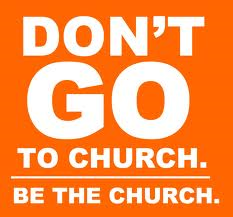
Renewing Our Stewardship Mission

faith and giving

Mark 12:41-44 NRSV

As we give some thought to renewing our mission to be good stewards of what we have, as we consider what we give back to God as a response to all that God has given us, I believe as Christians we need to consider the responses of Jesus to those he encountered who gave and those who did not give.

One day Jesus sits down and watches the crowd put their offerings into the treasury of the temple. Many rich people come and drop in large bags of money. Then a poor widow comes and puts in only two small copper coins which were only worth a penny. Jesus immediately calls his disciples together and says, “The truth be told, this poor widow has put in more than any one else today. While others have been giving out of their abundance, she gave out of her poverty, putting in everything she had, all she had to live on.”

I imagine the disciples being absolutely shocked by this, asking:  “But Jesus, isn’t that just a bit too generous? Everything she had? Don’t you think she was overdoing it just a bit?”

And I imagine Jesus responding: “Why are you surprised? Too Generous? Overdoing it? Have you not learned anything about who God is and how God relates to this world?  Do you know nothing about the grace of God? Were you not paying attention in Sabbath School or Vacation Torah School? The whole story of God is about God surprising us by generously overdoing it!”

Adam and Eve selfishly decide that they want to live in the garden on their terms instead of on God’s terms. In the process, they gain the painful knowledge of good and evil. With all of their sin exposed, in fear they hide from God whom they hear walking through garden in the cool of the day. But God lovingly and generously makes garments of skin and clothes them with a grace they did not deserve.

Cain does the unthinkable and kills his brother Able. He is exiled from the community because of his actions, but God promises to go with him, graciously protecting him.

Moses kills an Egyptian, breaking one of the Ten Commandments. But God surprisingly chooses that murderer to reveal those commandments to the world and to lead the Israelites into the Promised Land.

David not only commits adultery, but kills the husband of his mistress. Yet, the Bible surprisingly calls David “a man after God’s own heart.”

When it comes to grace, when it comes to love, God always surprises, shocks, and generously overdoes it.

I then imagine Jesus reminding the disciples all that has taken place since they had chosen to follow him.

“Don’t you remember the first sign of God’s grace that I showed you?  Do you remember what happened when we ran out of wine at that wedding reception? I turned water into more wine. And not just some water into a little bit of cheap wine. But I surprised everyone by making 180 gallons of the best-tasting wine anyone ever tasted. And yes, I admit it. I overdid it. But that was the point. It was the first sign that the Kingdom of God was coming near.

It is why I overdid it feeding five thousand people that day. Don’t you remember all of those leftovers?

And think about all of the stories I tell everyday about the nature of our God.

A farmer sows way too much seed. Most of it is “wasted,” falling on the wrong type of soil. But when sowing good seed in bad soil, you have to overdo it. And the seed that did take root produced an abundant, overflowing, overdone harvest.

A father not only welcomes home his wayward son, he way overdoes it with the hospitality. He says to his servants, “Quickly bring out a robe, the best one, and put it on my son. Put a ring on his finger and sandals on his feet. And get the best calf we have and barbeque it. Then let us eat and celebrate!”  The older brother is shocked by the whole generous, overdone scene.

The Good Samaritan not only stops and helps a wounded man in the ditch, he overdoes it, by pouring expensive oil on his wounds, by putting the wounded man in his SUV, by taking the man to the hospital and telling the doctors, “Forget about filing insurance! Here’s all my credit cards, my checkbook, everything. I’ll be back in a week, and if that’s not enough money to treat the man’s wounds, I’ll give you even more!”

And then, in the greatest story that will ever been told, the one that I have been talking about for months that you still don’t quite understand. For God so loved the world that has sent the very best gift that God had to send into the world, all that God had, all that God was and is, all that God had to live on, the gift of God’s life. But the world is going to reject this gift. The shocking, overdone grace of it is too much for this sinful world to handle. They are going to torture, humiliate, and kill this gift in the most painful and degrading of ways.  But three days later, God will transform death into life, forgiving the sins of the entire world, proving once and for all, that when it comes to grace, there is something built right into the very nature of God always generously overdoes it.

The question for each of us as we think about stewardship is: how have we responded to this grace? As people who have been called to inherit the generous, self-giving nature of God, as the Body of Christ in this world, how do we live? How do we give? Are we stingy with our love?  Are we miserly with forgiveness? Do we scrimp on grace? Are we tight-fisted with the good news? When it comes to giving to God, when is the last time any of us have generously overdone it?

When we talk about stewardship in the church, Christians love to talk about tithing: giving ten percent of one’s income to the church. We keep 90% and give God 10%. There are a few verses in the Old Testament that allude to it. It seems reasonable, comfortable enough. So we pick out those verses, and we preach it. The problem is: Jesus and the entirety of the Holy Scriptures never once even hint that, when it comes to giving, when it comes to responding to grace, God wants us to be reasonable and comfortable. And when God gave to us, thank God that God was not reasonable. Thank God that God did not remain in the comfort of some heavenly cloud. God came. God emptied and poured out God’s very self. When God gave, God overdid it. God gave it all.

Thus, Jesus never talked about giving ten-percent. He talked about giving it all. The entire Bible says when we give, God expects us to overdo it.

We all know what it means to overdo it. And the sacrifice that overdoing it requires. We have all said it. “I better tighten the old purse strings, because I really overdid on vacation last week.” “We better not go on that ski trip in January, because we really overdid it this year on Christmas.”

We overdo it at the mall. We overdo it at the spa. We overdo it in restaurants. We overdo it on trips. We overdo it at the beach. But when have we ever overdone it at church?

“We better skip going out for lunch today and go home and eat some leftovers, because when that offering plate came my way today, I really overdid it.”

“I don’t think I am going to take that trip this year, because I am really going to overdo it with my pledge to the church.”

Giving ten percent for some may be overdoing it. For others, it might be a sacrifice to give 5%. However, for others, giving 10% may be simply reasonable and comfortable. For some, giving 25% is still reasonably comfortable.

And I believe we all know that God does not want us to be the reasonable, comfortable church on the corner of Church and Main. When it comes to giving to others, when it comes to love, when it comes to grace, when it comes to selfless ministry in our community and in our world, God wants us to be a church that overdoes it in just about everything we do.

One day as Jesus is setting out on a journey a man runs up to him, kneels down at his feet and asks: “Good Teacher, what must I do to inherit eternal life?” Jesus said, “Go, sell what you own, and give the money to the poor, and you will have treasure in heaven; then come, follow me.” When he heard this he was shocked and probably silently  responded: “Isn’t that overdoing it a bit?” And he went away grieving, for he had many possessions (Mark 10:17-31).

A very wealthy member of the church was asked by the minister to share a brief testimony during worship about why he believed in stewardship. He agreed. It was the Sunday before the pledge cards were due. He stood up in front of the congregation and said: “You all know me to be a man of great wealth. And it is true. I am a millionaire. But I want to say that I attribute it all to something I did in church as a young boy. I had just earned my first dollar for feeding my neighbors’ dog while they were on vacation. I went to church and there was a missionary speaking. He challenged us to give sacrificially to the work of missions, and since I only had one dollar, I knew that I either had to give all of it to God or none of it. So at that moment, I made a decision. I decided to give my whole dollar, the first money I’d ever earned, all that I had, to God. I believe God blessed that decision and that is why I’m a millionaire today.”

The gentleman made his way back to his seat and there was a sort of awed silence in the room at the power of his testimony. But just as he was sitting down, a little old lady sitting in the pew behind him, leaned over to the man, and in a loud whisper that could be heard throughout the entire sanctuary said, “I dare you to do it again!”

Sermon Excerpts about Church

As we renew our mission to be the church, here are some thoughts about the church from a year’s worth of sermons.

Be the church

Going solo with faith

I have a confession to make. During my break from pastoral ministry, I often felt the temptation to go solo with my faith. I would go for a Sunday morning run along the Tar River in Greenville. There, I would pray and enjoy being alive in God’s creation, and think to myself, “This is the way to do church! There is no one to disagree with me. There is no one sharing their problems with me, making me uncomfortable, and taking up my time. And I must confess, it was rather nice!

However, I must also confess it was very selfish. It was arrogant, and it was self-righteous. The truth is: it was the very antithesis of who Jesus calls us to be as his disciples.

From People Grumble But Angels Sing

The church is the light of the world

We are to shine our lights by lifting up, accepting and caring for all people, especially those the world leaves behind. We are to light it up by loving, accepting, and caring for the least among us: the poor, the weak, those who need mercy, the marginalized who hunger and thirst for justice, the obviously flawed but pure in heart, and the troubled who yearn for peace.

Will we look like fools? You bet. Will people say that the way we accept and love and affirm others is socially and even theologically unacceptable? It’s likely. Will we be demeaned and even persecuted by others in the community, even other churches? Perhaps.

From Light It Up

Got Jesus? Oh God, I hope not!

If Jesus is something or even someone that we get, then church becomes just another product whose members are mere consumers. Thus, like going to a store, the spa, or the local cineplex, church becomes some place we go to get something. Some go to get fed. Others go to get nurtured and pampered. Some go to get entertained.

However, if it is Jesus who gets us, if Jesus is about us giving ourselves to the God revealed in Christ, then church means a radical, self-denying, sacrificial way of living.

If Jesus is about giving one’s life away, then the church becomes something much more than a self-help center offering self-improvement workshops.

Wednesday night becomes less of a time to get fed, physically and spiritually, and more of a time to pray for others, celebrate the joys of life with others, and even suffer with others. It becomes a time to build a community of selfless love and forgiveness with others. Bible study becomes less of a time to acquire more biblical knowledge than others and more of a time to consider how the scriptures inform our service to others.

Sunday morning becomes less about what God has to offer us and more about what we have to offer God.  When we eat the bread, we do not consume it. When we drink from the cup, we do not merely swallow it. We allow it to consume and swallow us, every part of us. And we commit ourselves to presenting our own bodies as living sacrifices for others, pouring our very selves out for others in the name of the God who emptied God’s self out for us.

And every day of the week, we become more than Christians who possess exclusive tickets to heaven in hand. We become the Light of the World.

Got Jesus? O God, for the sake of this community and for sake of this world, I pray not. Amen.

From Got Jesus?

 It only takes a spark

The truth is, when our church becomes nothing but a safe, static sanctuary, a place of secure stability where nothing really ever changes, where we can cool off, cool down and just for sixty-minutes a week, chill out, we are not fulfilling our purpose as the children of a dynamic, dancing God.  We are not the incendiary force that Jesus ignites us to be.  And we are one boring sight—to God as well as to the world.

Yet, when we be become ignited, fired up, disrupted, when we allow ourselves to be engaged by the Christ, when we truly decide to follow him, each of us using the gifts we have been given by the fiery Holy Spirit to serve him, to truly love all people, to meet the needs of our community; when we lose ourselves and become caught up in God’s dance, discover God’s purpose, we become a purifying and warming blaze, and it is, I promise you, a glorious site to behold, to God, as well as to the world.

When others see that that we look like the fiery Holy Spirit of Jesus—when they see us mowing a neighbor’s lawn, growing fresh vegetables for the needy, serving the soup kitchen, giving to help the poor in our community with rent and utilities, delivering meals on wheels to the elderly, adopting a nursing home resident, planning to help repair a stranger’s home in West Virginia, going back to Nicaragua, when they read on our sign, “All Are Welcomed to Worship and to Serve”, when they see that we are always willing to change and adapt, even reorganize—others will want to join us and serve alongside us.

From I Smell Smoke

The church is in the clothing business

I believe with all of my heart that this is one of our primary purposes as a community of faith. We are to always be a community of grace. If people cannot come through the doors of the church and take off their masks, stop the charade, and honestly lay bare all of their sin and all of their grief, knowing that they will never be judged, looked down upon or condemned, then I do not believe we are a church. I am not sure what type of business we’re running, but we are not a church, we are not a community of grace. As a church we are to always be in the business of yearning to meet people where they are, so we can be with them, so we can walk alongside of them, so we can listen to them, learn from them, forgive them and love them.

From Grace in Genesis: Adam and Eve

The first word people should hear from the church

The first word they hear from the church should never be judgment, condemnation or some loud, angry, hate-filled rant or protest. It should never be that God took her or snatched him, or is punishing them, or trying to get their attention because of some sin. No, the first word they need to hear from us is “peace.”  They need to hear God say, “Peace. My peace I give to you. You are my sons. You are my daughters, I have always loved you.  I still love you. I will love you forever. I am here with you and for you, always working all things together for the good.”

I believe people in our world who have locked their doors to the church are thirsting for this peace. They are thirsting for a group of people in our world that have the audacity to truly live as the embodiment of Christ in this world offering the first word of Easter, the peace of Christ to a fearful world through selfless, sacrificial love and service to others. They are thirsting for a church that seeks to be, not an institution, but the living embodiment of Christ in this world, serving the poor, and those whom society has marginalized, offering grace, acceptance, love and peace.

From The First Easter Word

We learn from others

Dare to leave your comfort zone to minster to those who are struggling somewhere in a foreign state, but when you go, it is important to realize that you do not go as if you are one with all of the answers, possessing all of the faith, going out as if on a crusade to save all those with less faith. Because oftentimes, says Jesus, it is the one living on the edge, the foreigner, who can teach us a thing or two about faith in God and salvation.

From Welcome Home! Too Bad You Can’t Stay

Embracing Diversity

Therefore, if we ever act or speak in any manner that denigrates or dehumanizes another because of their race, language, nationality or ethnicity, we are actually disparaging the God who willed such diversity. According to Genesis, diversity is not to be feared, avoided, prevented or lynched. If we want to do the will of God our creator and redeemer, diversity is to be embraced. In other words, if we love God, we will also love our neighbor. And this is what God wants us to be united by. It is why Jesus called it the greatest commandment—love God and our neighbors as ourselves. Love is what should unite us; not racial pride or patriotism.

From Grace in Genesis: Tower of Babel

Allowing the words and works of Jesus to interpret the Bible for us

From Baptism Obstacles

The world would be a much better place today if more people understood that the Bible needs to be interpreted. I do not believe God ever intended for people, on his or her own, to pick up the Bible, and arbitrarily lift scripture passages out of their contexts, and try to understand it or follow it. I believe this is one of the reasons that baptism statistics are in such a decline today. Too many Christians are using the Bible out of context to support all kinds of hate and injustice. And because of that there are countless people in this world, countless people in this community, who are the victims of bad religion. They feel marginalized and disenfranchised by the church. They have been taught their entire lives that God despises them. They have no idea that God loves them and has a future for them— All because no one has interpreted the Bible pointing to the Jesus who came into the world, not to condemn the world by to save the world, to love the world.

Luke tells us that the Spirit had to urge Philip to get up and go to the chariot to see this Eunuch from Ethiopia. Go to the chariot and meet this strange foreigner; this victim of bad religion who had been ostracized from the community of faith; this one demeaned and exploited for his sexuality; this one who has been clobbered by the Bible by those who arbitrarily pick and choose scripture passages like Deuteronomy 23:1 that says they are forbidden to enter the temple; this one who has been taught his entire life that he is despised by God. Go, Philip, and meet him where he is. Do not stand above him or over him. Do not judge him or condemn him. Join him. Get into the chariot and sit beside him. Ride alongside him. Engage him. Listen to him. Learn from this other, this stranger, this foreigner.

From Baptism Obstacles

We are born holding hands

This past Mother’s Day, a rare set twins were born in Ohio. They were called mono, mono twins, meaning that they shared the same amniotic sac and thus were in constant contact with one another. However, it was not the mono, mono rarity that got them so much attention this week. Jillian and Jenna Thistlewaite were miraculously born holding hands.

One of the most popular songs when I was born back in 1966 was entitled, Born Free.  “Born free, as free as the wind blows, as free as the grass grows, born free to follow your heart.”

It’s a nice song. However, when you take a good look at Jillian and Jenna Thistlewaite, we learn something completely different. We were not born to be independent and free, but we were born to be utterly dependent on one another. We were born to need one another. Jillian and Jenna remind us that Christ has commanded us to love one another, to link up with one another in mutual care and concern, and to feel responsibility for one another. We were born to live in community.

We were not born free, as the song goes. We were born holding hands.

From Born Holding Hands

We must be willing to share in the suffering of others

Another reason I believe people are leaving the church is that they see within the church a group of people who fail to see the importance of true fellowship, of suffering with others.

Today, this can most obviously be seen on social media, especially facebook. Someone will post a tragic circumstance: the loss of a job, the loss of their health, or even the loss of a child. Then come the God-awful comments: “God doesn’t make mistakes.” “God has a purpose.” “God has a plan.” “God knows best.” “God needed another angel.”

For some reason or another, some Christians think it is their mission to help others avoid suffering, as they think suffering somehow means their faith is weak. They believe they must say something to fix the problems of another, to say something theological to make everything better. However, their trite comments are seen as uncaring, unsympathetic, distant, and cold. And people everywhere read those callous comments and think, “If that is the church, then I want no part of it.”

Henri Nouwen has written: “When we honestly ask ourselves which persons in our lives mean the most to us, we often find that it is those, who instead of giving advice, solutions, or cures, have chosen rather to share our pain and touch our wounds with a warm and tender hand. The friend who can be silent with us in a moment of despair or confusion, who can stay with us in an hour of grief and bereavement, who can tolerate not knowing, not curing, not healing and face with us the reality of our powerlessness, that is a friend who cares.”

From Renewing our Fellowship Mission

Ten Reasons Victoria Osteen Was Wrong

Victoria Osteen was wrong because our faith in God calls us to love all people. The reality is that if we love all people, and persuade others to love all people, there will always be some people, probably religious people, who will want to kill us.

Victoria Osteen was wrong because our faith in God beckons us to act like fools. While the world continually beckons us to look up and get ahead, Christ beckons us to look down and get with those who have been left behind.

Victoria Osteen was wrong because our faith in God drives us to bear the suffering of others. We are to offer others genuine care, not a simple cure; compassionate empathy, not a quick-fix; and an understanding presence, not some happy religious advice to make everything better.

Victoria Osteen was wrong because our faith in God encourages us to help those who cannot help themselves. Furthermore, not only can they not help themselves, neither can they help us.

Victoria Osteen was wrong because our faith in God challenges us to love unconditionally. We are to lift up, embrace, and accept those who in no way deserve our love and that seldom makes us happy.

Victoria Osteen was wrong because our faith in God demands that we forgive those who have wronged us. We are to forgive those who do not deserve our love and have done things to earn our hate. Happiness is revenge. It is not forgiveness.

Victoria Osteen was wrong because our faith in God leads us to places that we would rather not go to do things we would rather not do. It propels us to dark, dangerous and dreadful places to do unpleasant, uncomfortable and unsafe things.

Victoria Osteen was wrong because our faith in God requires that we put the laws of God over human laws. There is a reason that much of the New Testament was written from a prison cell: God’s greatest commandment to love our neighbor as we love ourselves is oftentimes illegal.

Victoria Osteen was wrong because our faith in God costs us our lives. A god that wants us to live long, happy lives is attractive. However, the God of Christ continually urges us to give our lives away.

Victoria Osteen was wrong because the symbol of our faith in God is a cross. We tend to forget that the cross is not a pretty piece of jewelry or a cool tattoo. It is an emblem of suffering and shame. It is an instrument of death to one’s self.

Sermon Excerpts about Discipleship

As we renew our mission to being Disciples of Christ, here are a few discipleship quotes to prayerfully consider from a year’s worth of sermons.


Do you know what you are getting yourselves into here?

forest-gump1One day, noticing the growing number of people following behind him, like a scene in Forrest Gump, Jesus suddenly stops, turns to the masses and says something like: “Do you people really know what this is all about? Do you really know what you are getting yourselves into here? Because I am not so sure the crowd would be this large if you really knew! Do you really understand what you are signing up for here? Do you really get this journey called, ‘discipleship’? Because, I have a sinking suspicion that most of you do not have a clue.”
The truth is, this road we call discipleship is a difficult and sometimes painful road. There’s even a cross involved. And we are going to have to carry it.

From A Bunch of Losers, September 8, 2013.

For those who believe discipleship is only about a ticket to heaven

Jesus is saying: “It is perfectly is to think and dream about going to Heaven one day. It is fine to have the hope that someday, somehow, some way there’s not going to be anything more to fear or dread. It is wonderful to know a time is coming when there is going to be no more crying, no more pain, and no more death. It is great to sing those old hymns of faith, such as “When We All Get to Heaven,”  “Shall We Gather at the River,” and “I Can Only Imagine,” but if Heaven is the only place your hearts are, if going to Heaven and avoiding Hell is the only reason you are Christians, then you have missed the whole point of who I am and who you are called to be as my disciples.”

I believe Jesus is saying to us: “So don’t come to church looking to avoid a suffering world! Come to church and bear the sufferings of this world! Don’t come to church looking for some fire insurance. Come to church and let me lead you into the fire!”

This is exactly why I believe so many Christians are tempted “go after” those who love to preach about the end of days, especially those who say that it is coming in our lifetimes. For it is far easier to believe that God has already given up on this world. It is much easier to look at the destruction in the Philippines and believe that it is all a part of God’s plan, a preview of things to come! It is far easier to believe that earthquakes and hurricanes and tornadoes and poverty and wars are all part of God’s apocalyptic will than it is to believe that God calls us to selflessly and sacrificially suffer alongside those who are suffering.

It would be far easier to believe that Christianity is only about getting a ticket to heaven to escape this world than it is to believe that it is about selfless, sacrificial service.

From Heaven Can Wait, November 17, 2013.

Faith is a journey

It is no mere coincidence that all of the Gospels depict Jesus as we meet him in today’s Gospel—as one who is always on a journey, always going someplace, always on the way to see someone, always on the move.

I’m afraid many of us have erroneously learned along the way that this thing we call faith is something that we possess instead of some road we travel, some place we go. We have reduced our faith into some sort of transaction made or some sort of ticket in hand. Our faith is merely some sort of stamp of approval or some kind of Get-of-Hell-Free card.

When we invited Jesus into our hearts, who knows what we thought he was going to do in there! Just come in and sit still? Come inside, lay down and take a nap? Just stay with us, comfort and assure us until we die and go to heaven? We seldom understand that our faith is a journey with the Christ who is always on the move, always going places. Thus faith in Christ is always an adventure, an expedition to places that were previously, without Christ, unknown to us.

From Guess Where We’re Going, January 25, 2014

Our problem

Our problem is not that we are not willing to turn the other cheek and forgive. Our problem is that we are so private, so unconcerned about anyone other than ourselves, that we never cause any confrontations.

Our problem is not that we are not willing to give someone the shirt off our backs. Our problem is that we are never around anyone who needs even our coats.

Our problem is not that we are not willing to go the second mile. Our problem is that we are never in a position to go the first mile.

Our problem is not that we are not willing to give to needy who personally approach us and beg of us. Our problem is that we do not know anyone in need.

Our problem is not that we are not willing to love our enemies. Our problem is that most of us have never created any. We are so self-centered, self-absorbed, and so afraid of any controversy that might cause us a little pain, we simply never put ourselves out there to make any enemies.

From The First Mile, February 23, 2014.

The downward way of Jesus

The scriptures do say that Jesus grew upward in stature; however, the gospel writers continually paint a portrait Jesus’ life as one of downward mobility. He is continually bending himself to the ground, getting his hands dirty to touch the places in people that most need touching.

While his disciples seemed to always focus on privilege and honor and upward mobility, chastising little children who needed to shape up and grow up before they could come to Jesus, Jesus argued that the Kingdom of God actually belonged to such children.

While his disciples argued about who was going to be promoted to be first in the Kingdom, Jesus frustrated them (and if we are honest, frustrated us) by doing things like moving down to sit at the lowest seat at the table, bending down to wash their feet, stooping down to welcome small children, crouching down to forgive a sinner, reaching down to serve the poor, lowering himself down to accept the outcast, touch the leper, heal the sick, and raise the dead.

While others exercised worldly power to move up, climb up, and advance, Jesus exercised a strange and peculiar power that always propelled him in the opposite direction. It is not a power that rules but is a power that serves. It is not a power that takes but is a power that gives. It is not a power that seizes but is a power that suffers. It is not a power that dominates but is a power that dies.

And today, we remember that, nearing the culmination of his downward life, Jesus comes into Jerusalem to save the world, riding a borrowed donkey with a handful of disciples stumbling, fumbling and bumbling behind him. The whole scene, in the words of Henri Nouwen, looks “downright stupid.”

This is the narrow and seemingly foolish way of downward mobility, the descending way of Jesus toward the poor, the suffering, the marginal, the prisoners, the refugees, the lonely, the hungry, the dying, the tortured, the homeless–toward all who thirst and hunger justice and compassion. What do they have to offer? Not success, not popularity, not riches, not worldly power, but the way to life, full, complete, abundant and eternal.

From This Church Is Going Down, April 13, 2014.

Risky hospitality

And Jesus said to go and do this. Go out, move out, and reach out to strangers. Love your neighbors. Yes, this world is very frightening beyond our walls. And the truth is our neighbors are downright scary. But our neighbors are also thirsty. Welcome, engage, touch. Make yourselves vulnerable to another. For there is no other way to fulfill the purpose for which you were created—to seek and make genuine peace in this world. This is discipleship. This is following the way of Jesus. It is done face-to-face, hand-to-hand, person-to-person. We cringe. Because we know that this kind of hospitality is risky. It involves openness and intimacy with another.

From Ricky Business, June 22, 2013.

Why churches are losing members

I believe one of the reasons many churches are losing members today is because, for many, the church does not look like Jesus. I believe people still love Jesus and want to follow Jesus today; however, the church does not look like a group of people who have decided to follow Jesus. Church members do not look like a group of people who are on a mission for others but look more like some type of religious club created for the members in order to make them feel holier and superior than others.

This is perhaps why the first thing Jesus says we must do once we decide we want to follow him is to “deny ourselves.”  We must learn that this thing called “discipleship,” this thing called “church,” is not about us. It is not about achieving a good, happy and successful life or even an eternal life.

Discipleship is not about receiving a blessing. It is about being a blessing to others. It is not about feeding our souls. It is about feeding the hungry. It is not about finding a home. It is about welcoming the outsider. It is not about acquiring spiritual riches. It is about giving everything away to the poor. It is not about getting ahead. It is about sharing with people who can barely get by. It is not about triumph. It is about sacrifice. It is not about gaining eternal life for ourselves. It is about dying to ourselves.

I believe the reason that many churches struggle today is because, in our attempt to entice, excite and gain new members, we have made the church all about us. We have said, “Come, and join our church where we have programs that are certain to benefit your life!” Instead of saying: “Come and join our church where you will be given opportunities to give your life away. Come and join our church where you will be encouraged to sacrifice and to serve expecting nothing in return.”

From Renewing Our Discipleship Mission, August 24, 2014.

Wise ones still seek him

I believe there is something within all of us, deep within our most selfish, indulgent and decadent selves, even in the heart of sin city, that yearns to associate with those who love others more than self, with those who humbly, courageously and sacrificially serve, expecting absolutely nothing in return.

And I believe there is something within even the most devout church cynic, even within the ones who have all but given up on organized religion, that desires to be more like Jesus. And they still are hoping that somewhere, somehow, some way, a church exists in this broken world that looks and acts like more Jesus than a country club for the pure and self-righteous.

From The Least of These or The Exalted of Us, September 1, 2013.

Church Is Not About Us

Its not about usThe following is an excerpt from Renewing Our Discipleship Mission to be published in the Farmville Enterprise.

I believe one of the reasons many churches are losing members today is because, for many, the church does not look like Jesus. I believe people still love Jesus and want to follow Jesus today; however, the church does not look like a group of people who have decided to follow Jesus. Church members do not look like a group of people who are on a mission for others but look more like some type of religious club created for the members in order to make them feel holier and superior than others.

Mike Huckabee, former pastor, Arkansas governor, and presidential candidate, wrote about why he resigned from serving as pastor of a church to enter politics. He states: “I had been growing restless and frustrated in the ministry,” As a young minister, he said he envisioned himself as “the captain of a warship leading God’s troops into battle.” But he said, what the people really wanted was for him “to captain the Love Boat, making sure everyone was having a good time.”

This is perhaps why the first thing Jesus says we must do once we decide we want to follow him is to “deny ourselves.”  We must learn that this thing called “discipleship,” this thing called “church,” is not about us. It is not about achieving a good, happy and successful life or even an eternal life.

Discipleship is not about receiving a blessing. It is about being a blessing to others. It is not about feeding our souls. It is about feeding the hungry. It is not about finding a home. It is about welcoming the outsider. It is not about acquiring spiritual riches. It is about giving everything away to the poor. It is not about getting ahead. It is about sharing with people who can barely get by. It is not about triumph. It is about sacrifice. It is not about gaining eternal life for ourselves. It is about dying to ourselves.

I believe the reason that many churches struggle today is because, in our attempt to entice, excite and gain new members, we have made the church all about us. We have said, “Come, and join our church where we have programs that are certain to benefit your life!” Instead of saying: “Come and join our church where you will be given opportunities to give your life away. Come and join our church where you will be encouraged to sacrifice and to serve expecting nothing in return.”

Pastoral Prayer Inspired by Dietrich Bonheoffer

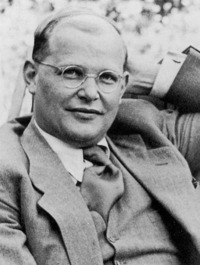
Dietrich BonhoefferDietrich Bonhoeffer did not have to help Jews escape Nazi Germany and flee to Switzerland.  After all, he was safe and sound in New York in the early 1940’s. He was free to stay in America and preach the gospel from the safety of a free church pulpit or teach New Testament in the peace and freedom of a university. But the gospel he preached compelled him to return to Germany and stand against Nazi aggression.
Before he was executed by the Nazis in 1945, he wrote the following words that I believe the American Church that is embedded in a narcissistic society needs to hear again and hear loudly:

Cheap grace is the preaching of….forgiveness without requiring repentance, baptism without church discipline, communion without confession…  Cheap grace is grace without discipleship, grace without the cross, grace without Jesus Christ living and incarnate. Costly grace is…the gospel which must be sought again and again. The gift which must be asked for, the door at which one must knock. Such grace is costly because it calls us to follow Jesus Christ.  It is costly because it costs us our lives. It is grace because it gives us the only true life.

The following pastoral prayer was inspired by Bonhoeffer’s timeless words:

O good and gracious God, we come to this place this morning to recommit ourselves to being faithful disciples of Jesus Christ our Lord and Savior. However, if we are ever going to truly follow Jesus, we will first need to repent of our sins that are derived from our love with what your servant Dietrich Bonhoeffer called “cheap grace.”

We gather in this place Sunday after Sunday to hear preaching that will remind us that we are loved and forgiven; not to hear that we need to change our selfish ways.

We gather to remember the way we came up out of the waters of our baptism to symbolize life abundant and eternal; not to remember our immersion into the waters to symbolize death to self.

We come to gather around a table to receive the gift of Holy Communion; not to confess our sins and our shortcomings.

We come to this place to receive grace and love; not to be encouraged to share grace and love with others.

We come here to worship at the foot of the cross; not to pick it up and carry it ourselves.

We come here to worship Christ in the safety and comfort of this sanctuary; not fully realizing that the Christ is actually alive today, present  here, calling us, prodding us, pulling us to follow him out into a risky and uncomfortable world.

So, O God, forgive us of our love for “cheap grace.” Help us to truly repent, turn from our wicked ways and seek to live for a grace, in a grace, and by a grace that is worthy of your sacrificial love for us, even if it is “costly.”

May we come to this place to seek this grace Sunday after Sunday. May we keep asking, keep knocking at your door, keep giving our lives away to you, keep denying ourselves, and keep looking to you for the strength we need to pick up our crosses and follow our Lord and our Savior wherever he leads. Because we know that this grace, although it costs us our very lives, is the only way to true life, abundant and eternal. We pray this in the name of Jesus Christ our Lord.  Amen.


Welcome!

jesus_children_orthodoxGenesis 18:1-8 NRSV

Last week I said that the first four stories in our Bible are stories that are considered to be pre-history, that is before the call of Abraham and the history of God’s people. The story of Adam and Eve, Cain and Abel, Noah and the Flood and the Tower of Babel teach us some very important characteristics about who God is and how God relates to our world. They teach us that our God is a gracious, loving Creator who is committed to suffering with and for all people, people of every nation, race, color and creed.

The stories that follow in Genesis teach us what should be the very important characteristics of the people who claim to worship and serve this God.

Verse one of chapter eighteen is one of the most loaded verses in the entire Bible. “The Lord appeared to Abraham* by the oaks* of Mamre, as he sat at the entrance of his tent in the heat of the day.”

When you worship the Lord, the creator of all that is, the one who graciously loves and forgives, the one who is compassionately involved in the creation, stirred by it, moved by it, then you never know when the Lord may appear. It could be the most ordinary of days while you are doing the most ordinary of things, like sitting on your front porch in the heat of the day. You may or may not be in the right frame of mind to recognize the presence, but the presence is nonetheless real and nevertheless powerful.

Abraham is minding his own business in the middle of the day when, out of nowhere, three strangers appear on the street. Next, Abraham simply does what the Bible says the people of God do for others, he very welcomes them with a generous hospitality.

When he sees them, he does not safely call out to them from a distance. He does not cautiously walk over to them. And he certainly does not practically ignore them and allow them to walk on by. When he sees them, the scriptures say that he runs to meet them.

And when he encounters these strangers, he does not stand arrogantly over them, above them, but humbly bows himself to the ground before them and speaks to them like a servant.

“Please do not pass me by. Let me get some water and wash the dust off your feet. Let me make a place for you to rest in the shade. My wife, Sarah, bakes the best bread. Come and allow us to serve you. Then, you can continue your journey, refueled and refreshed.”

When the strangers agree to stay a while, Abraham can hardly contain himself. He runs back inside, “Hurry, Sarah, prepare three cups of choice flour, knead it, and bake a delicious cake. He then runs out back to the field and takes the best looking calf of the flock and has his servant prepare a delicious dinner. He brought it to them under the shade tree and waited on them while they ate.

And as verse one suggested, we later discover that these three strangers were actually angels, messengers from God. When we welcome the stranger, the Bible tells us, we may be welcoming God. When we welcome others, the Lord appears.

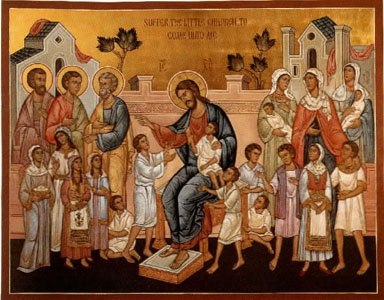
We also see this very clearly in the New Testament. In chapter 10 of Mark’s Gospel we read the following words of Jesus to the disciples, “Whoever welcomes you welcomes me, and whoever welcomes me welcomes the one who sent me” (Mark 10:40-42). In the previous chapter we read where Jesus took a little child in his arms, and said, “Whoever welcomes one such child in my name welcomes me, and whoever welcomes me welcomes not me but the one who sent me” (Mark 9:36-37).

And in Matthew we read Jesus’ words, “I was hungry and you gave me food; I was thirsty and you gave me a drink; I was a stranger and you welcomed me.”

Do you see the pattern here? Jesus said that when we welcome others, we are welcoming Jesus. And Jesus said when we welcome him, we welcome God.

When we open the doors of the church wide, when we invite others in, when we let them know that we are glad that they are here, we are welcoming the Lord himself.

There was once a monastery that had fallen on hard times. The order was dying out. There were only five monks left, the abbot and four others.

The monks feared that the monastery would have to be closed. In their desperation, they went out and sought counsel from a wise man they knew who lived in a hut in the woods that surrounded their monastery.

The wise man agreed to a meeting to talk with the abbot regarding the fate of their monastery. The meeting was very brief. The wise man said that he really did not have any great advice to give them, but he could say this: that the Messiah was among them.

The abbot returned to the monastery, where the monks were waiting eagerly to hear what the wise man had said. “Please tell us! What do we have to do to save the monastery?”  “Well,” the abbot replied, “the wise man was rather cryptic. He simply said that the Messiah is among us.”

“The Messiah is among us?” All of the monks scratched their heads. How could the Messiah be among them? As they pondered the meaning of these words, the monks soon began to think of each member of the order as a possible Messiah. They started to treat one another with tremendous respect and kindness. And when people came to visit, they treated each of them as if they could be the Messiah, too.

People from the surrounding area often came to picnic on the monastery’s beautiful grounds, to walk along the paths, and to pray in the chapel. The visitors were amazed by the welcome they received from the monks. There was an aura of respect and love that filled the place, making it strangely attractive, even compelling. Hardly knowing why, they began to come back to the monastery more frequently, to picnic, to play, to pray. They began to bring their friends to show them this special place. And their friends brought their friends. Some of the younger men who came to visit talked more and more with the old monks, and they began to join the order. So before long, the monastery had once again become a thriving order, and a vibrant center of light and love for people all over the realm.

When I first joined the conversations you were having a year ago to renovate our windows, to remove the stained plexiglass and replace it with a clear plastic so the windows could be seen from the street, I said that the need was not only aesthetic, as they looked horrendous, but it was also theological. To keep this beauty, the beauty of our Lord and Savior, inward, only unto ourselves, inside these walls was simply a theological travesty.

I have said recently that our education building needs to be renovated or at least refurbished. And like the windows, the need is not only aesthetic, it is also theological.

We have a great building and grounds committee; however, they cannot do it all by themselves. Our buildings are too old, have too many needs for just one committee to do it all by themselves. To be good stewards of our property, to make this a warm, welcoming place, we need to have many more work days like the one we had yesterday in the basement. I want to encourage you to walk through the education building, do it today if you have time, make sure you go upstairs, and ask yourself: what would you do to the building if you knew the Messiah was coming for a visit? Would you paint the walls? If so, what color? Would you paint the windows? Would you replace the ceiling tiles that are stained? Would your replace ceiling tiles that are missing?  What would the plaster in this room look like? Would it be chipped, stained, faded, discolored?

I want us to work hard in these nine months to finish the basement,  and make it a place of welcome for children; renovate our education building, and make it a warm and inviting place for all children; put up a playground right off of church street and make it a sign to the community that this church welcomes children; not so much because we want our church to look nice and pretty, not so much because we want to be proud when we invite over 100 children and their families here next June for the community Vacation Bible School, but because we take the words of Jesus very seriously when Jesus, holding a child in his arms, says, “Whoever welcomes one such child in my name welcomes me, and whoever welcomes me welcomes not me but the one who sent me” (Mark 9:36-37).

Fred Craddock, one of my favorite preachers, tells a story about going to church when he was a boy. He said that every Sunday morning, his mother took him to church with his sister. When the service was over, he said they followed their mother like little ducks out of the church. As the preacher stood at the door greeting folks, he would always say, “Mornin’ Mrs. Craddock.”  Then he would address the kids, “Good mornin’, Sonny. Good mornin’, Honey. The next Sunday, “Good mornin’ Mrs. Craddock, Good mornin’, Sonny. Good morning, Honey.” Every Sunday, “Good mornin’ Mrs. Craddock, Good mornin’, Sonny. Good morning, Honey.”

Then one day there was a new preacher. After he had been there a few weeks, as the Craddock family filed out of church, he said, “Good mornin’, Mrs. Craddock. Good mornin’, Fred.” And Fred Craddock said, “He was the best preacher we ever had, because there’s a big difference between Fred and Sonny.”

What a difference a genuine welcome makes. We all long for a place to call home. We all long for a place of welcome. Where we look around and it is obvious that someone cares about us, wants to know our names. Even the walls say they care.

As Disciples of Christ, we do not have a creed we follow. But we have a statement of identity. Part of it is on our church sign today. More than anything else, I want it to be the identity of this special place on the corner of Church and Main. I want it to be clear to all, not only through our actions and our words and our living, but also through our bricks and our mortar: “We welcome all to the Lord’s table as God has welcomed us.”

So let us commit ourselves to welcoming all, for when we welcome others with all that we are and with all that we have, we are welcoming God in the name of Christ Jesus our Lord. Amen.

Grace in Genesis: Tower of Babel

Tower_of_Babel

Genesis 11:1-9 NRSV

The pastor stands up behind the pulpit, clears his throat, and announces: “This morning we are going to talk about race and racism.”

All over the sanctuary the congregation winces, and beg under their breaths: “Preacher, please don’t do it, for you’re about to open up a giant can of worms!”

But the old preacher, who has opened up more cans of worms than anyone could possibly count, ignores the grimaces and metaphorically gets out the can opener.

I hear many people in the church say that we should not talk about race or make race an issue. However, I believe we make it an issue when we pretend that it is a non-issue. I believe we do great harm to the cause of Christ when we ignore racism or deny that it exists. Furthermore, if we are to accept and do the will of God that I believe is revealed in the story of the Tower of Babel, the church must be willing to openly talk about race and the inherent racism that is prevalent in our families, our town, our region, our world, even in our own hearts.

In the eleventh chapter of Genesis we read:

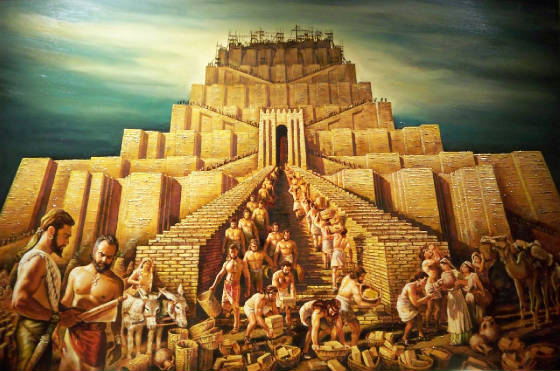
Now the whole earth had one language and the same words. And as they migrated from the east, they came upon a plain in the land of Shinar and settled there. Then they said, ‘Come, let us build ourselves a city, and a tower with its top in the heavens, and let us make a name for ourselves; otherwise we shall be scattered abroad upon the face of the whole earth.

The whole earth was one. One language. One people. One tribe. One race. And they all came together to live in one place. They all came together to build something special, something big, something wonderful that would be a symbol of their unity, pride and patriotism.

Now, what is not to like about that?

Unity, oneness, togetherness, harmony, people of the same minds living in one accord.  Isn’t that the aspiration of all? Isn’t true that great minds think alike? Isn’t this the will of our God, God’s great purpose for humanity?

So what’s not to like in this seemingly perfect picture of unity in Genesis chapter 11? As it turns out, according to God, the creator of all that is, not very much.

Let’s look at God’s reaction to this oneness in verse 7 of our story: “Come, let us go down, and confuse their language there, so that they will not understand one another’s speech.”  So the Lord scattered them abroad from there over the face of all the earth…”

What? Are you serious? What is wrong with this great portrait of human unity, of one race of people, one nation, under God indivisible, all of one mind, coming together to make a name for themselves, to build great things, to be on top of the world, to celebrate their purity and pride as one master race?

The truth is that the builders of the great tower in Shinar had accomplished not what God wants for humanity, but what many throughout history, including the likes of Adolf Hitler and the Ku Klux Klan, have wanted for humanity: One master race of people coming together to form one supreme social order, one culture, sharing the same ideals, values and moral principles. Diversity is a threat. Diversity is something to fear. Diversity is something to segregate and discriminate. Diversity is something to send to the gas chambers or lynch in a tree.

I am not sure if anyone in my lifetime has articulated the thinking of the people of Shinar better than Atlanta Braves pitcher John Rocker back in 1999. Some of you may remember his response when he was asked by Sports Illustrated if he would ever play for the New York Mets or New York Yankees.

Rocker said:

I’d retire first. It’s the most hectic, nerve-racking city. Imagine having to take the number 7 Train to the ballpark looking like you’re riding through Beirut next to some kid with purple hair, next to some queer with AIDS, right next to some dude who just got out of jail for the fourth time, right next to some 20-year-old mom with four kids. It’s depressing… The biggest thing I don’t like about New York are the foreigners. You can walk an entire block in Times Square and not hear anybody speaking English. Asians and Koreans and Vietnamese and Indians and Russians and Spanish people and everything up there.[i]

The story of the Tower of Babel teaches us that what John Rocker said racked his nerves in the world is what God wills for the world. In verse 4 we read that the purpose of building the tower was to avoid what depressed John Rocker on the No. 7 train leaving Manhattan for Queens, and to avoid what John Rocker heard in Times Square. The purpose of settling in Shinar and building that tower was to live in a world with no foreigners, no confusing babbling in the streets, no queers or kids with purple hair to encounter on the way to work, no eating in the marketplace with people on strange diets, no rubbing elbows with people wearing weird clothes, head coverings or dots on their foreheads. So they came together and said, let’s build a tower of unity “to not be scattered over the face of the whole earth.” And God’s reaction to this racial purity and pride was to “scatter them over the face of the whole earth,” to create a world of diverse languages and cultures, to create a world of foreigners.

God was only accomplishing what God had always willed for the creation: diversity. In chapter one of Genesis, we read that the original plan for creation was for humankind to “multiply and fill the earth.” And after the flood in chapter ten we read where God sanctions and wills all nations to be “spread out over the earth.” (Gen 10:32). Simply put, from the very beginning of time, in spite of our will, in spite of our fear and our racial pride, God wills diversity.

Therefore, if we ever act or speak in any manner that denigrates or dehumanizes another because of their race, language, nationality or ethnicity, we are actually disparaging the God who willed such diversity. According to Genesis, diversity is not to be feared, avoided, prevented or lynched. If we want to do the will of God our creator and redeemer, diversity is to be embraced. In other words, if we love God, we will also love our neighbor. And this is what God wants us to be united by. It is why Jesus called it the greatest commandment—love God and our neighbors as ourselves. Love is what should unite us; not racial pride or patriotism.

The story of the Tower of Babel belongs to the same genre of the stories of Adam and Eve, Cain and Abel and Noah and the Flood. They are considered to be “pre-history stories.”[ii] That is, they are describing God’s relationship to the world before the call of Abraham and the history of the Jewish people. It amazes me how God in each of these stories is so often misinterpreted by Christians who believe that the God of the Old Testament is a God of wrath; not a God of grace. They say that they believe Jesus Christ is God; however, they fail to see Christ in these stories.

Consequently, God is often seen as one who curses Adam and Eve by kicking them out of the garden instead of as one who bends to the ground and clothes them with grace. God is seen as someone who curses Cain by sending him to the land of Nod, instead of as one who protects his life with a mark of grace. God is seen as one who curses all of humanity with a great flood with the exception of one family, instead of one who makes a decision to graciously suffer alongside all of humanity. And here in this story, God is seen as one who curses the builders of the tower by scattering them over the face of the earth, instead of being seen as one who reacts to racial pride and unity by fulfilling the purpose of creation from the very beginning, filling the earth, by graciously creating diverse languages, races and cultures.

The tragic irony is that throughout history many have used the story of the Tower of Babel to support slavery, apartheid, segregation and other forms of racism. Bob Jones University once used this story to ban interracial dating on campus. However, this story teaches something very different. The story of the Tower of Babel is God’s gracious stamp of approval, of blessing, on every race, every tribe, and every language in every land. It is the fulfillment of God’s original purpose for creation. The song we learned as little children cannot be more true: “Red, yellow, black and white, they are all precious in God’s sight.” God is not color-blind, as I hear some say, for God creates, wills, blesses and loves color. And it is this love that unites us all, as we have all been created to harmoniously see humanity as God sees it: as a beautiful, diverse, colorful rainbow created by, sanctioned by, and graced by God.

As a Bible-believing Christian, it confounds me when I hear that another, supposedly, Bible-believing Christian, has decided to put their house on the market and move because a person or a family of another race has moved into their neighborhood. I often think about this story in the first book of our Bible that describes a beautiful and diverse creation willed by God. But I also think about a passage in the last book of our Bible that describes an eternity willed by God. And I wonder what in the world these people, who claim to be Christian, are going to do if they do get to that place they think they are going after they die to live forever and ever.

Because guess what? According to Revelation, heaven looks more like Times Square and that No. 7 train on the way from Manhattan to Queens than some affluent suburb outside of Atlanta, Georgia.

In Revelation 7, we read these words:

After this I looked, and there was a great multitude that no one could count, from every nation, from all tribes and peoples and languages, standing before the throne and before the Lamb, robed in white, with palm branches in their hands. They cried out in a loud voice, saying, ‘Salvation belongs to our God who is seated on the throne, and to the Lamb!’  And all the angels stood around the throne and around the elders and the four living creatures [each representing the diversity of all creation], and they fell on their faces before the throne and worshipped God, singing, ‘Amen! Blessing and glory and wisdom and thanksgiving and honor and power and might be to our God for ever and ever! Amen.’

[i] Read more: John Rocker – At Full Blast – York, Braves, City, and League – JRank Articles http://sports.jrank.org/pages/4014/Rocker-John-At-Full-Blast.html#ixzz39oVUCEtA

[ii] See Walter Brueggemann Genesis


Other Sermons in this Series:

Grace in Genesis: Adam and Eve

Grace in Genesis: Cain and Abel

Grace in Genesis: Noah


Running this Race Called “Life”

running-group

Running is such a great metaphor for life.

It began as an ordinary Saturday morning run with the Greenville Running Group.  We were running our regular Starbucks’ route from Greenville Boulevard to the Town Commons and the Greenway. I effortlessly covered the distance of the first two miles before I even realized it. Into the third mile, I was confidently running down Charles, past Dowdy-Ficklen Stadium, as I had many times in the past. I had this. Life was good. I was all smiles, on cruise control.

Then without warning, early into mile three, I really stepped into it. Without seeing it, I managed to step into a metal hoop that was in the road, about 18 inches in diameter. My right heel caught the back of the hoop and stood it up. My left foot joined my right foot inside the hoop and down I went. Before I knew exactly what happened, I was laying in the gutter of Charles Boulevard. Muddy and bloody, my knees took the brunt of the fall.

Three of my running friends rushed to my aid, empathetically asked me if I was okay, then reached down and helped pick me up out of the gutter. They did not judge me for not looking where I was planting my feet, nor did they express any disappointment that I had interrupted their run. They only expressed compassion for me.

They led me to the Duck-Thru convenience store at the corner on 14th Street where they found a spigot to wash my wounds. One of my friends came out of the store with a first aid kit. Another friend, with her own hands, took some gauze from the kit and made sure my abrasions were clean.

Willing to sacrifice their run, they offered to walk back with me to my car. However, their compassion was more than I needed to encourage me to press on and finish the run. Ten miles later, I completed one of the best runs ever.

The scriptures say: “Therefore, since we are surrounded by so great a cloud of witnesses…let us run with perseverance the race that is set before us…” (Hebrews 12:1). Jesus said, “I give you a new commandment, that you love one another. Just as I have loved you, you also should love one another” (John 13:34).

May God forgive us for arrogantly thinking that we can do this thing called “life” alone. And may God give us the grace to love one another, to link up with one another in mutual care and compassion, to feel responsibility for one another, and to run this race together.