The Way

ultrasound

John 14:1-14 NRSV

It was the summer 1993. Lori and I had been married five years and were expecting our first child. I had graduated from seminary the previous year and was serving with my first church as a pastor in rural Northeast Georgia. At our first OB/GYN appointment in Athens, we were told that our baby was due to be born on November 25. On Mother’s Day 1994, we were going to have some special reasons to celebrate.

During the last week of July, we were scheduled to have an ultrasound that would hopefully determine the gender of our child. I remember being more excited than anxious about this appointment. The baby was already moving and kicking quite a bit. Lori would call to me from another room in the house asking me to rush over to her. She would grab my hand and place it on the exact spot the baby was kicking so I could share her excitement. Lori was clearly showing at this time as strangers were beginning to approach us in public to offer their congratulations and to inquire when our baby was due.

As the doctor moved the ultrasound wand around on Lori’s abdomen and the black, white, and gray images of our baby appeared on a computer screen, I remember feeling like a wide-eyed child at Christmas getting a glimpse of the best present I could ever receive. We immediately heard a very strong and fast heartbeat. We then saw the outline of a head and a face. We saw arms, hands, legs, feet, even toes. After a minute or so, I remember growing impatient and asking the doctor if he could tell if it was a boy or a girl.

Following my question, my anticipation heightened as there was a brief period of silence in the room with the exception of the loud echo of a rapid heartbeat. Finally, the silence was broken as the doctor said, “It is really difficult to tell sometimes with our outdated equipment.” He moved the wand around for another minute and said, “The equipment that they have in Atlanta is far more advanced than mine. We probably need to make an appointment for you.” But before I could express any disappointment, he added: “There’s also something else going on that needs a better look.” He then handed the wand to the nurse and asked for us to come to his office where he would make an appointment for us to go to Atlanta. It was at that moment that my excitement was completely replaced by anxiety.

Suddenly, I no longer cared if it was a boy or a girl.

During the appointment in Atlanta, the doctor, who had been attentive yet quiet during the entire exam, spoke for the first time by pointing out a curvature in the spine. He called it a “neural tube defect.” This was the first time I had ever heard the term “neural tube.” However, upon hearing it one does not need to be familiar with it when the word “defect” is attached to it, as that word is more than enough to cause any parent-to-be’s heart to sink, especially when it is spoken to describe the spine of your unborn child’s spine.

Immediately following the ultrasound, we met with a team of doctors, nurses and genetic counselors in a large consultation room. In a compassionate, yet straightforward way, we were told that our baby’s spine “twisted,” probably during the early weeks of the pregnancy, and prevented the formation of an abdominal cavity. We were told that although our baby seemed to have healthy organs, there was nothing to contain those organs. Surgery was not an option. Our baby had absolutely no chance at life. A counselor put her hand on Lori’s shoulders and handed her a tissue to wipe the tears from her face.

After counseling and prayerfully considering all of our options, two days later, the pregnancy was terminated in the hospital without complications.

When we came home from the hospital, Lori went to bed where enormous grief she experienced kept her for days. She did not feel like talking to anyone, not even talk to her mother, who called several times a day, every day.

When Lori finally decided that she was ready to talk to people, the support from Christians came. However, some of the support came in ways that were more hurtful than helpful. It came in religious, pious, and judgmental ways. Almost everyday it came in ways that left us cold, empty, even resentful.

Now, I am sure it only came in these ways because these perhaps well-intended religious people understood it was their Christian duty to bring life, resurrection, restoration where there is death, despair and brokenness. And, maybe this was just the only way they thought they could bring it. Maybe this was the way they were taught on some church pew or in some Sunday School class. This was simply the only way they knew how to share the good news, proclaim the gospel, to be “a movement for wholeness in this fragmented world,” as we Disciples like to say.

But it came in ways that, for us, made the world even more fragmented. It came in preachy, accusatory ways, demeaning us for terminating the pregnancy. It came in the way of a theology lesson suggesting that we perhaps should have possessed more faith, that with prayer, God could have created a new body for our baby before he or she was born.

It came by the way of an ethics lecture insinuating that we were somehow “playing god.”

Then, came the support in ways that are all too familiar but never too helpful, all too religious-like but never too Christ-like. It came in the way of words that would have been best left unsaid.

“God knows best. God has God’s reasons. God does not make mistakes.” “God must have known you were just not ready to be parents.” “God must have needed another flower in heaven.” “You are young and can always try again.” One even said, “Perhaps God knew that your child was going to be a bad person or have a difficult life, so God, with the ability to see a future that we cannot, intervened and took your child.”

For some reason, Christians just feel compelled to say something, anything, even if it is hurtful.

We tried not to be angry with them, not to resent their ways of being religious. We defended them by saying, “Well, that is just her way, bless her heart.” We said, “Well, everyone knows the way he is.” It was just their way of doing what they thought would bring us some hope, their way of bringing us some wholeness, their way of bringing peace to our troubled hearts; and people, well, people have their ways.

Jesus, however, said that he was the way. “I am the way, and the truth, and the life; no one comes to the Father, but by me” (John 14:6).

As Frederick Buechner has reminded us:

He didn’t say that any particular ethic, doctrine, or religion was the way, the truth, and the life. He said that he was. He didn’t say that it was by believing or doing anything [or saying anything] in particular that you could “come to the Father.”

Jesus didn’t say the Bible-Belt-culture evangelicalism manufactured for the self-interest of the privileged was the way. He didn’t say some alternative gospel created to ignore God’s will for social justice was the truth. And he didn’t say that the fake good news made up to cheapen the grace of the irrefutable good news was the life. He said that he was.

Buechner continues:

He said that it was only by him – by living, participating in, being caught up by, the way of life that he embodied. That was his way.

And thank God, that others came to us in his way. People from our church came to us with silent but empathetic embraces. They came bringing nothing with them but their tears and their own broken hearts. Some came bringing a home-cooked meal or a homemade dessert. One came with a vase of freshly-cut flowers from their garden. They came graciously. They came faithfully. They came intentionally with the love and in the way of the Christ. They came with the face of God.

Andrew King poetically reflects on this love, this way and this face:

We thought you wore the skin

of thunder, spoke in verbs of stormwind,

majestic and mighty as lightning

upon summits,

unreachable

as the cold and silent fire

of distant stars; hidden behind

a curtain in the temple,

an untouchable invisibility approachable

by the highest priest only,

hands freshly bloodied

from an altar.

And then somehow the veil was parted:

we gained glimpses of the glory

of the nearness of your love

as the hurting were healed,

the outcast befriended,

the lost restored,

and everywhere the powers of death

had their dominion challenged,

by the son of a Jewish carpenter

from Galilee.

If you have seen me,

said Jesus, you have seen the Father.

And we do see you there,

in the Gospels,

healing in synagogues

and in houses,

feeding the hungry on hillsides,

embracing the lepers and the sinners,

turning over the tables

in the temple,

nailed to a cross of injustice

but risen,

greeting women at

the graveside,

sharing bread with your friends,

the dominion of death

overturned.

Approachable, reachable,

the accessible God,

visible in the skin of Jesus.

But you are not done,

not content to wear

such skin only in the pages

of the Gospels.

The many-colored, multi-shaped

body of Christ – the Church

wide as the nations of the world –

bears your image where it acts

in your love:

still feeding,

still healing,

still teaching mercy,

making you visible

not in great

structures nor

in high saints alone,

but in the ordinary

persons in the pews,

as here, on a day like any other,

a woman making dinner,

and packing it,

knocking on the door of a neighbor

newly home from surgery for cancer:

the face of the one receiving it

lit with thankfulness,

the face of the one freely giving

like the face

of God.

When our hearts were troubled, because of the many faces of God that came to us in his way, in the visible skin of the body of Christ, although we were without child, on Mother’s Day in 1994, we still had special reasons to celebrate.

And on Mother’s Day in 2017, I can stand here today confidently proclaiming that Jesus—not religion, not ethics, not any doctrine—Jesus is the way, the truth and the life.

Let us pray,

God, embolden us to live, participate in, be caught up by, the way of life embodied by the Christ. Amen.

Invitation to the Table

The way to this table of communion this morning is not religion. The way to the bread of life is not ethics. The way to the cup of salvation is not any doctrine. The way to the life and to the truth that is represented here is only Jesus. And since Jesus lived and died to make a way for all, all are invited.

Recognizing Christ

Devotion shared by Amanda Phillips at the evening worship service following the Enid Welcome Table on April 30, 2017.

Luke 24:13-35 NRSV


The walk to Emmaus… a very popular story, because it’s relatable on so many levels. Some will read this story and see men so distraught and so in mourning, they do not recognize the Savior. That is very relatable. Deep in anguish and pain, how many of us have wondered where God is?

Some will read this story and see stubborn men who didn’t believe the women who went before them. (That’s what I see) That’s pretty relatable as well.

There are many “meanings” or “lessons” in this story…

I’d like to focus on this one:

30 When he was at the table with them, he took bread, blessed and broke it, and gave it to them.

31 Then their eyes were opened, and they recognized him; and he vanished from their sight.

They recognized him through the breaking of bread. They were blind until they shared a meal together. Their heartache and weariness lifted in sharing food with Christ. They’re eyes were opened.

Today was a very hard day for my family. We have said “congratulations” and “see ya soon” to our Associate Minister and friend, Rev. Shannon Speidel as she moves on to a new position with the Oklahoma Coalition of Churches. The last few weeks I have been walking through my life with deep sadness in my heart, so today, I tried to focus on all of the sharing.

Shannon shared Christ’s love first with my children when she began her ministry here. Always focused on serving God by helping others, she found ways to sow service into the children’s ministry. She worked with others to have the kids lead worship at nursing homes and serve homebound communion. She had these little people breaking bread and showing love to those who cannot attend church. They collected pet food for the SPCA and made doggie blankets. Her heart always on ways to help others. She shared her service and our eyes were opened and we recognized Christ.

Shannon continues to spend her ministry being an advocate for all people, LGBTQ and women in particular. Standing up for health and justice issues for those who are discriminated against and ridiculed. She shared her support for others and our eyes were opened and we recognized Christ.

Shannon wanted anyone at all who needed a meal to be able to come eat without strings attached. No hoops to jump through, no prerequisite, no religious requirements. If people are hungry, you just feed them. She worked very hard to keep everyone involved in this project focused and was vital in making sure that Enid Welcome Table became a reality. She shared a meal and our eyes were opened and we recognized Christ.

As she moves forward in her career I’m incredibly confident that she will continue to move mountains. It is our duty to keep sharing Christ’s love with all we meet as we continue forward here. Breaking bread with strangers, sharing the cup with all we meet, so that their eyes may be opened and through us they can recognize Christ.

We have a children’s worship service on Sunday morning called “Following Jesus.” During this worship we light a “Christ candle.” I tell the kiddos “it reminds us that He is with us as we hear the word of God.” At the end of the service we “change the light.” I take the candle snuffer and cover the candle until it goes out. Slowly I raise and swirl the snuffer to make beautiful swirls of smoke. As I do this, they hear something like this: “Now it’s time to change the light, because we know that the light of Christ isn’t really this candle and doesn’t stay in this room. The light is within us and goes with us as we share the love of God with others.”

Thank you Rev. Speidel for shining that light. Let us all move from this place and share God’s love so that eyes may be opened and they can see the risen Savior.

Easter People Behind Locked Doors

Andrew Finiish
As a Special Olympian, Andrew has run in many 1 mile “fun runs,” but he has always dreamed of finishing a 5k race. However, Down’s Syndrome and surgically-reconstructed knees have made it impossible. The good news is Easter transforms impossibility into reality.

1 Peter 1:3-9 NRSV

It’s the Season of Easter. The Lord is Risen. Christ is alive! Jesus is on the loose. The Messiah is on the move. And he’s coming for his disciples! He’s coming to offer them an incredible gift!

As our Epistle Lesson testifies:

“Blessed be the God and Father of our Lord Jesus Christ! By his great mercy he has given us a new birth into a living hope through the resurrection of Jesus Christ from the dead…” (1 Peter 1:3).

And where are the disciples?

The first verse of our gospel lesson this morning reads: “When it was evening on that day, the first day of the week, and the doors of the house where the disciples had met were locked…”

Jesus is alive. He is moving out in the world, and the disciples are inside a building, cowering behind locked doors.

Now, it is nighttime, a dangerous time in any city, and here in the city of Jerusalem on this night, maybe they had a good reason or two to lock their doors.

The most obvious reason being their fear that the religious leaders who organized to crucify Jesus would soon be coming after them. The ones who began plotting from the very beginning to put an end to Jesus and his message were quite possibly even now plotting to put an end to them.

So, who could blame them for locking the doors.

But then, there may be have been another reason those doors were locked.

Remember, Mary Magdalene has told them, “I have seen the Lord.”

And what do the disciples do? They lock their doors.

Could it possibly be that they did not know what kind of gift the Risen Christ was bringing to them: a new birth into a living hope through his resurrection?

Or could it be that they knew exactly the kind of gift Jesus was bringing?

After all, they were all witnesses to what had to taken place before Easter could happen: Before a new birth into a living hope could come, somebody had to pick up a cross.

So Jesus might be coming with the promise of new birth into a living hope, but before this new life can fully realized, there might be some more cross bearing to do.

And this was certainly no new concept for them. For they had heard Jesus say on numerous occasions: “to gain one’s life, one must first be willing to lose one’s life.”

They had heard Jesus say, the road to rebirth, the way to new life, the route to resurrection, the path to Easter, was very narrow and very few find it. For it’s a road of self-denial. It’s a way of self-expenditure. It’s a route of sacrifice. It’s a path of suffering.

So, when they heard that Christ was on the loose and he was coming with the promise of new birth into a living hope through his resurrection, of course they locked the doors.

Just like we lock our doors.

And my, my: The locks that we use! The barriers we create! The walls we build!

His way is just so radical, so revolutionary, so scandalous, we do all we can do to shut him out.

“I know Jesus said that he is ‘the way, the truth and the life,’ but we still prefer to do things our way, make up our own truth, live our own life.”

“I know Jesus said, ‘Blessed are the poor,’ but isn’t that the Salvation Army’s job?”

“I know Jesus never excluded anyone, but perhaps we ought not advertise that.”

“I know Jesus said ‘the first shall be last,’ but I still think we should put America first.”

“I know Jesus called women to be his disciples, and I am aware that whenever he had an opportunity, he elevated the status of women, but they really shouldn’t serve behind the table or preach behind a pulpit.”

“I know Jesus stopped the self-righteous from throwing rocks at a sinner, but if we are not careful we are going to make our church ‘a haven’ for all kinds sinners.”

“I know Jesus said that when we welcome the stranger we welcome God, but ‘pardon me, I believe you are sitting in my pew.’”

“I know Jesus said ‘forgive seventy times seven,’ but the Bible says those people are abominations!”

“I know Jesus said we could learn from Syrophoenicians and Samaritans, and he said, ‘Love your neighbor as yourself’ but surely he did not mean for us to love our Muslim neighbors!”

“I know Jesus said ‘there are other sheep who do not belong to this fold and we must bring them in also,’ but ‘You’re not a member of this church. So, what are you doing here?’”

“I know Jesus said feed the hungry, but we have to be fed too.”

“I know Jesus talked about being salt for the world, but are we going to let those people use our salt…and our pepper…and our sugar… and our sweet ‘n’ low?”

I want to suggest that it wasn’t just great fear that caused the disciples to lock those doors. It was also great courage.

For it takes some incredible nerve, some brave audacity, some serious brass, to lock the Risen Christ out of the building.

And sadly, ever since that first Easter evening, people who claim to follow the way of Jesus have been brazen in their attempts to thwart the way of Jesus.

Think about it. We have to be pretty bold to dare to reduce the meaning of the death-defying power of the resurrection. We have to be pretty brave to call ourselves “Easter People” and then water down the meaning of it.

I am grateful that church pews all over Enid were full last Sunday. However, I am afraid that the only reason many people came to church was merely to thank God that they, like Christ, will one day be resurrected to live forever. I am afraid the reason some church pews were so full on Easter Sunday was simply because “Easter People” wanted to remember Jesus’ resurrection and look forward to their own.

But if that is all Easter truly means, do you really believe those disciples would have locked those doors on that first Easter Sunday?

No, those doors were locked, because those disciples knew exactly what Easter means. They knew that Easter means the resurrection offers a living hope for this world, and not just for the next world. Easter is something to be lived today and freely shared with all who need re-birth and new life now.

But to do that, to offer that Easter hope to others, to truly live as Easter people, means that someone is going to have to pick up a cross.

It means that someone is going to have to deny themselves. It means someone is going to have to lose themselves. It means someone is going to have to open a door, leave a building, remove a barrier, tear down a wall, go outside, bend down to the ground, pick up a cross and walk in the steps of Jesus.

It means someone is going to have to share. It means someone is going to have to sacrifice. It means someone is going to have to suffer. It means someone is going to have to do something more than study a lesson, sit on a pew, sing a hymn and listen to a sermon.

So, the disciples, like you and like me, locked the doors.

Now listen to the good news:

When it was evening on that day, the first day of the week, and the doors of the house where the disciples had met were locked… Jesus came and stood among them.”

The good news is that the doors we lock, the barriers we create, the walls we build, will not thwart the way of Jesus! Despite our bold and brazen attempts to stop Jesus from coming, to shut him out, he’s still coming. And nothing is going to stop him or even slow him down.

And he is coming to lead his Easter people get out of the building, to pick up a cross and bring rebirth and new life to all whose lives have been diminished, to all those who have been de-humanized by poverty, disability, bigotry and hate.

And here is some really good news: To bring new life, by the grace of God, we may not have to hang on that cross. We might not have to shed any blood. We may not even have to get arrested. We just need to be willing to pick up a cross and carry it a little way. The Risen Christ will carry it the rest of the way.

Running 3.1 miles is nothing for Gary Hula. Gary has been running 26 miles before church on Sunday for the last several weeks in training for the Oklahoma Memorial Marathon. Gary can run 3.1 miles while reading the News and Eagle and drinking a cup of coffee!

But that is how far Gary usually runs while pushing someone with special needs for Ainsley’s Angels.  Just 3.1 miles. Takes Gary 20 minutes.

But after a 3.1 mile race last week, the mother of the 26-year-old man with surgically reconstructed knees and Down’s Syndrome, who rode in a running chair that this church purchased for just a few hundred dollars, said and I quote: “My son’s dreams have come to life.”

Can you hear the resurrection in that statement? Do you hear Easter in that mother’s voice?

The next day the risen Christ came and helped us to welcome some of the most impoverished people in this community for a meal in our Fellowship Hall. Now, we didn’t do that much. The Oakwood Country Club prepared all the food. All we had to do was warm it up and put it on some plates. We just had to show up, unlock a couple of doors, and invite people in. We just had to be kind to people, treat people as we would want to be treated.

But after serving that meal, one of the guests said to a volunteer: “Today, you have made me feel human again.”

Do you hear the rebirth in that statement? Do you hear the new life? Can you hear Easter in that woman’s voice?

The good news is that because the Lord is risen, because Christ is alive, because Jesus is on the loose in this world, because the Messiah is on the move, all we may have to do to be the Easter people the Risen Christ is calling us to be is to be willing to unlock a door.

Easter People

Welcome Table

The Easter Sunday timing of the Enid Welcome Table’s debut could not have been more appropriate.

The front doors of the church building swung open wide, as guests, some homeless, some extremely impoverished, all hungry, were greeted with smiles and words of welcome. As they walked into the fellowship hall, a host guided them to a table that was beautifully decorated with an Easter-themed table cloth and a spring flower bouquet centerpiece. Soft jazz  played from the sound system adding to the welcoming ambiance.

After the host fulfilled the guests’ drink orders, a waiter approached the table to read the menu that was displayed on the TV monitors in the front of the room. Guests had a choice between pork tenderloin, peel-and-eat Cajun jumbo shrimp, and baked chicken. Sides included sweet potatoes, roasted potatoes, a medley of roasted vegetables, macaroni and cheese, and deviled eggs. Desserts included lemon cake, cherry pie, apple pie and chocolate cupcakes.

The attentive wait staff promptly served the guests with generous portions and while keeping their drink glasses full.

Volunteers who had come to serve, some members of our church, some members of other churches, some members of no church, joined the guests at the tables to share dinner and conversation.

Upon experiencing the extravagant welcome, a genuine welcome devoid of any agenda, strings, or ulterior motives, one of the guests said to a volunteer: “You have made me feel human again.”

“You have made me feel human again.”

Let that sink in.

It was Easter Sunday, and someone said that she felt alive again. It was Easter Sunday, and someone said that she experienced new life. It was Easter Sunday, and someone said that they felt resurrected.

Christians often like to call themselves “Easter People.” However, I am afraid that what that means to many is that they, like Christ, will one day be resurrected to live eternally in heaven. I am afraid the reason some church pews are so full on Easter Sunday is simply because “Easter People” want to remember Jesus’ resurrection and look forward to their own.

However, what if being “Easter People” means something more?

What if the resurrection is not just a gift to remember or a gift to look forward to, but a gift to be experienced now? What if resurrection is a gift to be shared with others today? What if being “Easter People” means that we are people who offer the gift of resurrection to those whose lives have been diminished by the sin and evil in our world? What if being “Easter People means we are called to resurrect those who have been de-humanized by poverty, racism, classism, sexism, homophobia, or xenophobia?

What if being “Easter People” means that we are called to do much more than sit on a pew on Easter to thank God for the promise of God’s kingdom that is coming after the resurrection? What if being “Easter People” means that we are called to get off of those pews to bring the promise of God’s Kingdom that is coming now to those who need resurrection today? This Easter Sunday at Central Christian Church, that is exactly what being “Easter People” meant.

The First Easter Word


Easter Welcome

Sermon delivered at the 6 PM service  following the first Enid Welcome Table Meal, Easter, 2017

John 20:19-23 NRSV

The very first word that the risen Christ brought to his fearful and anxious disciples who denied and abandoned him was: “PEACE!” “Peace be with you!”

It was the same word that was proclaimed at his birth by the angels: “Glory to the God in the highest and on earth, peace!” And it was the last word that came from the cross: “Father, forgive them, for they know not what they do.”

“PEACE!” It is the word that every human being living in this fragmented world needs to hear from our risen Savior.

Thus, after Jesus pronounced the word to his disciples, he said, “As the Father has sent me, so I send you.”

The Church has been commissioned by none other than the risen Christ to share this word with others. “PEACE!” It is the word people need to hear from the church more than any other word, and it needs to be the very first word that they hear from the church.

However, sadly, even after nearly 2000 Easters, churches all over this world have ignored this commissioning. And tragically, the very first words that many hear from the church are words that denote the exact opposite of peace.

The first words they hear from many in the church are words of judgment and condemnation. They hear loud, angry, hate-filled rants and protests. They hear words judging them as not only sinners, but as “abominations.” In the name of God, they are condemned by those who justify their hate with the same type of Christ-less scriptural interpretation that was used to support sexism, slavery and racial discrimination.

They may hear reserved words of welcome to come in and sit on a pew, but they clearly get the message right away that they are not to expect to truly become a part of the church. They are not to expect to be able to use their gifts to serve with and alongside those who have been deemed worthy for service. They are not expected to be truly accepted, forgiven, and loved.

However, I believe the Risen Christ still speaks to his disciples today. He is still saying to us that first word of Easter, “PEACE;” and is still saying, “As the Father has sent me, so I send you.”

For God knows that there are people in every town, at every crossroad,  who hunger and thirst for a community of people in our world who have the audacity to truly live as followers of Christ who take the commission of their Risen Christ seriously to share “PEACE” with all people.

They are yearning for a church that seeks to be, not an institution or club of moral and devout people with right religion, right beliefs, right color and right lifestyles, but a church that seeks to be the living embodiment of the Risen Christ in this world, serving, loving, accepting and embracing the poor, the lost, the broken, the fearful, the grieving, those riddled with guilt and shame, and those whom society has rejected as outcasts, offering them the unlimited hope, unfettered grace and unreserved love that is in that first beautiful first Easter word, PEACE.

Remember Your Baptisms!

Baptism

Romans 6:1-5 NRSV

I love a baptismal service on Easter Sunday morning! I love it, because I believe one of the greatest things we can do on Easter Sunday morning is to listen again to the words of the Apostle Paul that are etched onto our baptistery, and remember our baptisms!

As a pastor who has been blessed with the opportunity to remember many baptisms, I will never forget one particular Sunday I walked into the waters of a baptistery like ours.

It was the Sunday after Hurricane Floyd flooded the first house Lori and ever purchased in eastern North Carolina.

I had been wading in waist deep water that Thursday and all day Friday. And then that Sunday morning, one of the first things that I did was to climb down those steps into waist deep water.

I’ll never forget the first words I spoke.  I looked out into the congregation from that baptistery, and I said, “You know, standing here this morning in waist deep water is the last place I wanted to be this morning.”

But I then said, “But it may also be first place I need to be this morning!”

Before that Sunday, baptismal water had always represented purity and refreshment to me. It was a water which cleansed one’s spirit and refreshed one’s soul. It was a renewing, invigorating water, life-giving water. Baptismal water was to me like the water from a spring welling up into eternal life from which we could drink and never thirst again.

However, on that particular Sunday, that water came to represent to me something more, something dreadful, something heinous, something sinister. That water came to symbolize destruction, despair; it came to symbolize death.

To the church in Rome, the Apostle Paul said: “Remember that you have been buried with Christ by baptism into death.”

You know what this means don’t you?  It means Paul’s house must have flooded too!

Well, probably not. But it does means that Paul understood the destructive forces of sin and evil in our world. It means the apostle Paul understood water to be symbolic of of those chaotic forces, evil forces in our world that seek the drain the very life out of us.

For many of that day, water was a very fitting for symbol for death, as many lost loved ones at sea, folks who who traveled out on the water, encountered a storm and never returned. Therefore, water was something to fear. Water was something to dread.

This is why the picture of Jesus walking on water is so inspiring.  Jesus was doing much more than walking on water. Jesus was walking all over the forces of evil like they did not even exist.

This is why when John gives a list of things which we are not going to find in heaven in the 21st chapter of Revelation, “no more sea,” is the first thing on his list. Before no more crying, no more pain, and no more mourning, John says there will be no more sea. One day there will be no more of anything more to fear or dread.

My hope on this Easter Sunday is that Braylen, Brenden, Ethan, Caden, Ashton, Rhianna, Brooke and Angie will always remember their baptisms—Remember that they who have been buried with Christ into death, have also been raised with Christ to walk in the newness of life.

And may each of us remember our baptisms. May we remember that we went under the water, but may we especially remember that we also came up out of that water.

We came out of the water symbolizing that in this world of evil and sin, with Christ we can be more than conquerors.

We came up out of the water symbolizing that in spite of those who attempt to drain the very life of us, in spite of those who never cease in persecuting us, we can do all things through Christ who strengthens us.

We came up out of the water symbolizing that despite the many storms of life that come our way, death, divorce disease, there is nothing in all of creation: no rulers, no powers, no things present, no things to come, no height, no depth and not even death, that will ever be able to separate us from the love of God through Christ Jesus our Lord.

We came up out of the water symbolizing that in all things, God works for the good for those who love God and are called according to God’s purpose.

We came up out of the water symbolizing that when we face uncertain days, even death, we will possess the grace to always remember our baptisms and the glorious message of Easter that our baptisms proclaim!

Sudden Sunday Surprise

He is not here

Sermon preached at the Easter Sunrise Service, Central Christian Church, Enid, Oklahoma.

Matthew 28:1-10 NRSV

There is no doubt that the surprising events which took place on Friday had left the disciples in a state of shock and disbelief.  The King of the Jews, the Son of God, the one who would finally bring them liberation from the Romans was crucified like a common criminal.  They were all taken off guard as all of their hopes, all of their dreams suddenly vanished.

They found themselves in the same state of mind you and I find ourselves when our lives are often surprised by evil.  When the telephone rings in the middle of the night.  And it is not the wrong number.  When we hear words from our employers like “cutting back, laying off, letting go,” or words from our doctors like “cancer, inoperable, terminal.”

 “No, it can’t be!”  “I don’t believe it!”  “This is not happening!”

Then as Sunday morning was dawning, maybe not part of the original twelve because of the sexism that has been so apparent in the history of humankind, but two of Jesus’ disciples nonetheless, Mary Magdalene and another Mary went to see the tomb, trying to comprehend what had happened, still trying desperately to believe it and somehow accept it.

And then it all seemed to happen again.  For that is how evil works in our world. When evil surprises us it does it in clusters. Some people say that it always comes in three’s. Other say, “when it rains pours.”

And suddenly, suddenly a word which always denotes surprise, shock and awe: there was a great earthquake.

“Not again!”  ‘Please no more.  There is just so much we can stand.”

But then in the midst of their confusion, shock, and bewilderment, an angel of the Lord descended from heaven and came and rolled back the stone and sat on it.  It so surprised the guards at the tomb, that they fell down on the ground like dead men.

But the angel said to the women, “Do not be afraid; I know that you are looking for Jesus who was crucified. He is not here. For he has been raised, as he said. Come, see the place where he lay. Then, go quickly and tell his disciples. “He has been raised from the dead, and indeed he is going ahead of you to Galilee; there you will see him.  This is my message for you.”

“So they left the tomb quickly with fear and great joy.”  There’s a paradox, isn’t?  Fear and joy. It lets us know that the women are still somewhat shocked. For they have been saturated with surprise!

Then, “Suddenly,” (there’s our surprising word again).  “Suddenly, Jesus met them and said, “Greetings!”  Surprise of all surprises!  “And they came to him,” and did the only thing they could do, “They took hold of his feet, and worshiped him.”  Then Jesus said, “Do not be afraid; go and tell my brothers to go to Galilee; there they will see me.”

Hold on!  I thought the women were in Galilee. For that is what the angel had said, “He is going ahead of you to Galilee, there you will see him.” The angel even bolsters these instructions by saying, “This is my message to you.” But where do they see Jesus?

They see Jesus somewhere along to road to Galilee.  The angel was wrong.  For the women did not have to wait to see Jesus.

I believe this is even more good news for us on this early Easter morning.

If angels do not know exactly when or where Jesus will appear with a presence and with words that compel us to take a hold of his feet and worship him, how can any of us presume to know?

Therefore, we should never be despairing, that is, we should never believe that things have gotten so bad Jesus will not come.

The wonderful truth is that when our lives are suddenly surprised by evil, Christ will always come, perhaps when we least expect it, maybe when we are least aware of it, and surprise us with words of love, words or peace, words of grace, words of assurance and words of salvation.

If we keep our eyes peeled to it and our hearts open to it, Christ will suddenly catch us off guard with his wonderful, hopeful, life-giving presence.

And we must never forget that since we are his followers, since we are called to be the Body of Christ in this world, we are commissioned to surprise all those who need surprising with the astounding love and amazing grace of God.

Maternal God

mama bear

I need a brand new start, a fresh new beginning. I need to begin again, begin anew, begin afresh. I need to experience some new life, some new creation, some new opportunities, some new birth. I need some more Easter in my life. I need to be born again, born anew. This world and all of its injustices and hate is draining the very life out of me.

The good news is that it is Mother’s Day. We are in church. The Bible is open, and our maternal God is making all things new.

Deuteronomy 32:18  “You were unmindful of the Rock that bore you; you forgot the God who gave you birth.”

The Bible suggests that one of the reasons that we yearn for newness of life is that we have simply forgotten the God who gave us new life in the first place. Throughout the Hebrew Scriptures, God is portrayed as the mother of Israel. It is God who gave birth to the nation and loves Israel as a mother loves her child.

In the New Testament, it is obvious that Jesus understands this maternal love as he uses birth imagery to explain the gift of salvation, the gift of new life, abundant and eternal. Jesus told Nicodemus that if he wanted to truly experience life, he must be born anew, born from above.

And throughout the history of the Church, baptismal waters have always been symbolic of the waters of the birthing process. For the God that is portrayed throughout scriptures, the God we worship this morning is a God who is continually in labor. Always creating, recreating, working all things together for the good. Always making a way when there is no way.

So if you are yearning for a fresh start, a new beginning, a new birth, some more Easter in your life this morning, the good news is that it is Mother’s Day. We are in church, and the Bible is open to help us remember the source of all new life.

Psalm 22:9  “Yet it was you who took me from the womb; you kept me safe on my mother’s breast.

This is a beautiful portrait of God as a midwife who helps in the birth process. As the church, one of our chief goals is to make sure that we do everything in our power to help others experience new life. I believe we are called to share the maternal love of God and its power to create, re-create, renew and refresh with all people.

One special way we do this is by being a community of love and forgiveness, one that always gives all persons a welcoming and accepting environment to be born again and to start afresh.

Whenever people walk through the doors of the church they need to instinctively know that that they are loved without conditions, without reservations, and without limits. People need to know that, unlike most places in this world, we are not as concerned about your past, as we are about your future. In this place, we don’t care as much about what you have done or where you have been, as we care about where you are and where you are going.

So, if you are looking for a new birth today, if you are looking for a little more Easter in your life, the good news is that it is Mother’s Day. We are in church, and the Bible is open proclaiming the love and grace of our birth giving, new life-giving, maternal God.

Isaiah 49:15  “Can a woman forget her nursing child, or show no compassion for the child of her womb?  Even these may forget, but I will not forget you.”

 I think that it is important to acknowledge on this Mother’s Day that the Bible does not blindly and sentimentally honor our earthly mothers as some churches will do this morning. The Bible is honest enough to admit that for some of us, this day we call Mother’s Day brings more pain than it does joy. Today, some of us remember mothers who abused us or abandoned us. And for some of us mothers, this day is a fresh reminder of children who have continually disobeyed and disappointed us. Today, there are mothers everywhere who have been forgotten by their children. For some there was no card in the mail and there will be no visit or phone call. However, as Isaiah reminds us, God, our Heavenly Mother, who gave birth to us, the true source of our lives, the one who nursed us when we were children, will always show compassion for us and will never forget us; will never leave nor forsake us.

As a church that is committed to share this maternal love with all people, may we never forget the pledge we have made to Gentry Jo today and so many other children we have pledged our support to in this place.

May we not forget this pledge when one day we are asked to volunteer in the nursery, to teach a Sunday School class, to serve as a camp counselor, to work at Vacation Bible School, or to spend the night at the church for a children’s lock-in.

And may we not forget this pledge, and sit quietly and idly by, as Gentry Jo’s schools continue to be underfunded, Gentry Jo’s teachers continue to be underpaid, and public education in general continues to be undermined.

And may we not forget the pledge we have made to our children and remain silent when we hear of children who are being exploited or abused, who are being bullied and harmed for being different, for being poor, or for being vulnerable.

May children everywhere know: It is Mother’s Day. We are in church. The Bible is open, and we are worshipping and serving and following a Heavenly Mother who never forgets any of her children. We are worshiping and serving and following a Heavenly Mother who has filled us with compassion and a determination to bring new life, re-creation and restoration to all of God’s children, especially to those who are easily and conveniently forgotten by the majority.

Hosea and Isaiah proclaim this tenacious determination:

Hosea 13:8a  I will fall upon them like a bear robbed of her cubs…” 

Isaiah 42:14  “For a long time I have held my peace, I have kept still and restrained myself; now I will cry out like a woman in labor, I will gasp and pant.”

 This passage reminds me of the great words of Martin Niemöller, the prominent German Lutheran pastor who was arrested and placed in a concentration camp for being an outspoken critic of Adolf Hitler. He is perhaps best remembered for the quotation:

First they came for the Socialists, and I did not speak out—
Because I was not a Socialist.

Then they came for the Trade Unionists, and I did not speak out—
Because I was not a Trade Unionist.

Then they came for the Jews, and I did not speak out—
Because I was not a Jew.

Then they came for me—and there was no one left to speak for me.

According the US Department of Health and Human services, 27% of Oklahoma’s children under five years-old live in poverty. 12,000 children in Oklahoma are the victims of neglect or abuse a year. The number of child victims has increased 62.2% since 2009. Of this number, 61.7% were either Black, Hispanic, Native American, Pacific Islander or of another ethnicity other than Caucasian.

These numbers are not often talked about in the majority of churches in Oklahoma, because these children are not in the majority. Just as the majority of churches are deathly silent today in the face those who are currently legislating, dictating, and propagating hate and discrimination towards minorities.

However, it is Mother’s Day. And we are in a church that truly believes where the Bible speaks, we speak; and thus, like a woman in labor, like a mama bear robbed of her cubs, we are no longer restraining ourselves, but are crying out with our maternal God against the evils and injustices that are so much a part of our world.

And we do not cry out in despair, but like a woman giving birth, we cry out with great hope knowing that something inexplicable, yet certain is coming. Something is about to be born. Something new is coming. Something miraculous is coming. Something refreshing and comforting is coming.

Isaiah 66:12-13  “For thus says the Lord; I will extend prosperity to her like a river, and the wealth of the nations like an overflowing stream; and you shall nurse and be carried on her arm, an dandled on her knees.  As a mother comforts her child, so I will comfort you; you shall be comforted in Jerusalem.”

We never cry in despair, because we know that whenever we cry out to God honestly, whenever we cry out telling God the whole truth, our God always shows up, filling our cup, giving us hope, making a way when there seems to be no way, sending a river in the desert, and enveloping us with a peace and a comfort that is experienced by a child nursing in her mother’s arms.

So, today, we cry out like a woman in labor, we gasp and we pant knowing that God is coming to work all things together for the good. For it is in God’s very divine maternal nature to extend God’s peace and comfort and God’s grace and mercy to all people regardless of who we are or what we have done. Thus Jesus says:

Luke 13:34 “Jerusalem, Jerusalem, the city that kills the prophets and stones those who are sent to it!  How often have I desired to gather your children together as a hen gathers her brood under her wings, and you were not willing!”

The good news is, albeit good news that is difficult for us to hear, that there is not only hope and comfort coming for the children who are exploited and abused, there is also hope for the perpetrators. We worship a God who maternally loves and cares for all people, good and bad. And because of that unconditional love, our God is suffering greatly this day. Our God is suffering like any mother who has felt the sting of her children’s rejection. So, as difficult as it may be, it is for the sake of God on this Mother’s Day, that those of us here in the church with our Bibles open, also pray for our enemies, as we will continue to pray for the entire creation.

With the determination and tenacity of a mama bear, we will pray for and work for the comfort of all of God’s children, that all may experience new life, experience the hope of Easter, experience the grace and the forgiveness, the comfort and the peace in the shadow of the maternal wings of our God—until that day comes when God makes all things new!

Hear now these very maternal and hopeful words from Revelation:

Revelation 21  “Then I saw a new heaven and a new earth; for the first heaven and the first earth had passed away…And I saw the holy city, the new Jerusalem, coming down out of heaven from God…And I heard a loud voice from the throne saying,
‘See, the home of God is among mortals.
God will dwell with them;
and they will be God’s children,
and God will be with them
to wipe every tear from their eyes.
Death will be no more;
mourning and crying and pain will be no more,
for the first things have passed away.’ And the one who was seated on the throne said, ‘See, I am making all things new.’”

Yes, thanks be to God, it is Mother’s Day. We are in church. Our Bibles are open, and our maternal God is wiping every tear from our eyes and making all things new. Amen.

The Baptisms of Lydia and Traci

FullSizeRender-1

Acts 16:9-15 NRSV

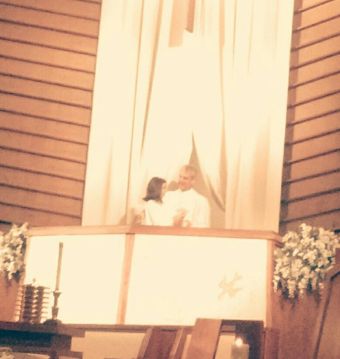
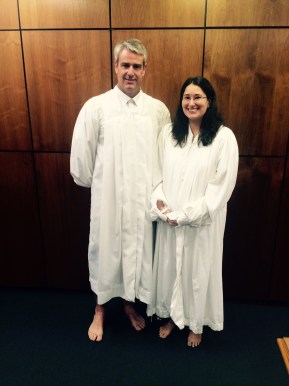
I believe the baptism of a certain woman named Lydia, and the baptism of a certain woman named Traci, have much to teach us this day.

Luke tells the story the baptism of Lydia. It begins with Paul and Silas sharing the good news of Jesus in Troas, an Asian town situated across the Aegean Sea from the European district of Macedonia. Paul has a vision of a man in Macedonia pleading: “Come on over and help us.” Convinced by the vision that God was calling them to go and proclaim the good news in Europe, without hesitation, they sailed to Macedonia, went through Samothrace and Neapolis, eventually settling in the leading city of Philippi.

While they were there, Paul and Silas heard about a group of women that had been gathering for worship down by the river outside the gate. So when the Sabbath came, they went and found the women, sat down with them, and engaged them in a conversation.

Then Luke says that it was obvious that this one woman in the group, this woman named Lydia, was really paying attention to what Paul had to say. And then he says some very remarkable things about this woman. First of all, he points out that she is an Asian business owner from Thyatira. Secondly, because he says that “she and her household” were baptized, it’s evident that she was the head of her household.

Now, remember, this is the first century. It’s not a period known for women working outside of the home. Females were treated as second-class citizens and even as “property.” Males were the leaders, the heads of business and the heads of households. And yet, here is a woman who is the head of both.

And since she is the only one who is pointed out to be really paying attention to what Paul was saying, she also appears to be the head of that community of faith which gathered there each week by the river.

And this says Luke, this baptism of a foreign woman who shatters all cultural expectations, this baptism of a woman who lived life two-thousand years ahead of her time, the baptism of this woman as the first European Christian, is the result of a vision from God that came to Paul.

So, what in the world was God trying to say to Paul and Silas through that vision of a man saying, “Come to Macedonia, because I need some help!”

Could it be that God was saying: “Paul and Silas, I know you are clear across the sea on another continent, but I need you to get in a boat right now and set sail to Macedonia. I need you to come over here to Europe, make your way through Samothrace and Neapolis, all the way to Philippi, and help me, once and for all, show the world that through my love revealed in Christ Jesus who continually lifted up the status of women, elevated the foreigner, accepted the Eunuchs, and did something almost daily to shatter all cultural expectations, destroying the stigma of status, race, ethnicity, class, and sexuality, that in my kingdom, there no longer Jew nor Gentile, slave nor free, male nor female. Help me clearly make the statement that in Christ all are one.”

It is as if God is saying, “I know people have heard the stories of Jesus calling women to be counted among his disciples. I know the word is out that Mary and Joanna were the first ones to proclaim the good news Easter. I know many have heard about my disciple Tabitha and her works of kindness and gifts of charity. And I know that folks are hearing about the good work of sister Phoebe leading the church at Cenchreae; however, I am still afraid I am going to need some more help here in Europe. Because I have this bad feeling that if I do not do something as radical as making the first baptized Christian on this continent a strong woman like Lydia, some of these Europeans, not to mention their descendants, are still going to argue, even two-thousand years from now, that a woman has no business being at the head of a communion table, or being the head of a household, or even being the head of her own body.”

“And I know people have heard the story of the Good Samaritan, that despised foreigner who proved to be a holy neighbor to the Jewish man who who was beaten and left dead on the side of the road, but I have this terrible inkling that if I don’t make a foreigner the first European convert, some Europeans, not to mention their descendants, even two-thousand years from now, may still harbor all kinds of prejudices against those who are not of European descent. So, get yourself over here to Macedonia as fast as you can and help me baptize this certain woman named Lydia!”

I believe Paul may have Lydia in mind when he penned the following words to the church at Ephesus: “But now in Christ Jesus you who once were far off have been brought near by the blood of Christ. For he is our peace; …and has broken down the dividing wall… So he came and proclaimed peace to you who were far off and peace to those who were near; for through him both of us have access in one Spirit to the Father. So then you are no longer strangers and aliens, but you are citizens with the saints and also members of the household of God” (Ephesians 2).

Then, there is the baptism of Traci. Like Lydia, Traci is also a certain woman; however, fortunate for her, she has joined a church that has learned a thing or two from Lydia. For, here at Central Christian Church, the gifts of women are valued just as much as the gifts of men. Traci will be encouraged here to use her gifts to freely follow Christ wherever the Spirit leads.

Traci is not a foreigner. However, since she was not raised in our church, she was a stranger, an outsider to most of us. Therefore, I believe the baptism of Traci reminds us that we have been called by God to reach out beyond our walls and embrace others like Traci who did not grow up in this church, or any church for that matter, so that they will no longer be strangers.

It is as if God is saying: “I know people have heard the Great Commission of the Risen Christ to “be witnesses in Jerusalem, in all Judea and Samaria, and to the ends of the earth” making “…disciples of all nations, baptizing them in the name of the Father, Son, and Holy Spirit…” But I have this bad feeling, that if I do not stir the hearts of people like Traci, and draw them into the renewing waters of the church, enlarging and changing the congregation, then the church might be tempted to become so comfortable with the status quo that they grow apathetic, just uninterested in reaching out to welcome the stranger.

The Rev. Jesse Jackson Jr. told a story at the recent men’s retreat that reminded me of something that happened to my wife Lori a few months before we came to Oklahoma. Rev. Jackson said that he went to a Popeye’s Chicken restaurant one night to get him some chicken. He went through the drive through and ordered a Chicken Combo plate. And lo and behold, the person working the drive thru window told him that they were out of chicken.

Lori had the same experience with a Bojangle’s Chicken and Biscuit restaurant in North Carolina. She went to Bojangles, which is similar to Popeye’s or a Golden Chick, to get her some chicken, only to be told that they were out of chicken.

Lori came home and said, “I am so mad. Bojangle’s Chicken and Biscuits told me that they were out of chicken. She said, “I can understand if they run out of the mashed potatoes. I can maybe even sympathize a little with them if they run out of biscuits. But Bojangle’s, like Jesse Jackson said of Popeye’s, has got no business running out of chicken!”

The baptism of Traci reminds us what the church is all about. If a church is not continually working to break down dividing walls and to build bridges and relationships with those outside the church, with the goal of having several baptismal services a year like this one a year, then the church is like a Rib Crib opening their doors for business when they’re fresh out of ribs! Might as well close down and put a chain on the doors.

After Lydia is baptized, notice the first thing that she does. She extends a gracious welcome to Paul and Silas inviting them stay at her home. Her words following her baptism remind me of our identity statement as Disciples of Christ, “We welcome all to the Lord’s table as God has welcomed us.”

I was on facebook Friday night, and I read these words from Traci’s timeline that are so so reminiscent of Lydia’s words: “Please come and visit Central Christian Church. The service starts at 10:15 am. It is a great church.”

Lydia and Traci remind us that each person in this room who has been baptized, who has been welcomed by God through the gracious hospitality of Christ, should feel compelled by the Holy Spirit of Jesus to go out from this place and welcome all people.

Through the baptisms of a certain woman named Lydia and a certain woman named Traci, I believe God is saying to each of us: “Go out, reach out, tear down a wall, build a bridge, connect, engage, get on facebook, get in a boat if you have to, travel through the streets of places like Samothrace and Neapolis and Philippi and Enid and North Enid and East, West and South Enid, because I need some help! I need some help sharing the good news that all are welcome at my table.”

Cliques and Churches


clique

John 10:11-18 NRSV

When I first moved to Enid, I was immediately told that Enid could be “a cliquish town.” They told me that within this town, there exist these “cliques,” these small groups, circles or factions of close knit, tight, cohesive people. I have also heard this said about every church that I have ever served with, and this church is no different.

However, this may not be as bad as it might sound. I believe there may be something good, even redemptive in the cliques of Enid and in the cliques of the Central Christian Church.

Jesus differentiated himself as a shepherd as opposed to a hired hand. He said that when the hired hand sees the wolf coming, he leaves the sheep and runs away, and the wolf snatches the sheep and scatters them. Jesus says that the hired hand runs way because a hired hand does not care for the sheep. The good shepherd, however, knows the sheep and loves the sheep and is willing to lay down his life for the sheep.

Along life’s journey, all of us have encountered shepherds and hired hands haven’t we? Perhaps it was when we, or our loved ones, were admitted to the hospital. The nurse on duty during the day was loving and caring and compassionate. He called us by name. It was apparent that he loved his job. He acted as if he had been called by God to be a nurse. Being a nurse and caring for others was his Christian vocation. He checked on us frequently and did things for us that he really did not have to do. He was a shepherd who cared for his sheep.

Then the 7:00 shift change came. The night nurse took over. And he was night and day different from the day nurse. We asked him politely for some medicine to help us rest. He rolled his eyes and walked out of the room. We only saw him one other time during the night. We never got the medicine we requested. It was obvious that he was only there to earn a pay check. There was no sense of call, no sense of vocation.  He was truly a hired hand if there ever was one. Not a caring bone in his body. He never once called us by our name.

Jesus said that he is the good Shepherd and he knows his own, and his own know him. Jesus is describing a type of inexplicable, intimate relationship. The Greek word translated “know” in this verse is the same word used to describe the intimate relationship between a married couple.

The relationship Jesus is describing is rooted in the most intimate relationship between the Father and the Son. It is a relationship which is so intimate that Jesus later says, “the Father and I are one.”

Thus, when Jesus speaks of the flock, Jesus is describing a close knit, tight, cohesive, caring, supportive flock of people. There are no strangers in this flock. Each person in the flock knows and is known, intimately, personally, profoundly. You might say that Jesus is describing a type of clique.

This knowing is much more than mere recognition. This knowing in this clique includes a deep involvement in the life of the other. It is an involvement characterized by self-giving, sacrificial love. Where folks, Jesus says, are willing to lay down their lives for one another. Jesus was describing what should characterize the life of this church, and every church.

This is what I believe makes this installation service, three and a half months after I began serving with you as your pastor, so meaningful. If we had this service in January, or even in February, many in this flock would be like strangers to me, and I might feel more like a hired hand. I told the group Wednesday night that I was glad we are having this service in April, because now, three months in, because I have come to know you, I have really come to like you folks, in fact, I have grown to love you. I think we have a pretty good clique going on here.

However, Jesus reminds us that such mutual knowing and intimacy, which is characteristic of cliques, should never become so warm, safe and cozy that it becomes exclusive. Such intimacy and caring should never be turned inward. Listen again to verse 16. I think it may be the most important part of our lesson this morning: “I have other sheep who do not belong to this fold. I must bring them also.”

Jesus reminds us that although a clique may represent a loving and caring, intimate community, a clique should never be closed. A clique should always be open-ended. The flock is not yet finally fixed. There are always others who recognize the shepherd’s voice and need to enter the fold.

I believe failing to remember this is the downfall of churches. We must always remember that communities of mutual caring and intimate knowledge should never be closed.

Someone asked me if we were an open and affirming church. I thought to myself, “What a sad day it is when someone feels like they need to ask that question!” Because as a church, we have absolutely no business being closed and condemning.

However, it is important to recognize that all of us possess a tendency to exclude those who are different from us: those who did not grow up in the church; folks who have no idea what it means to be Christian; folks who have questions and doubts; those who are burdened by all types of struggles; folks who are broken, physically, spiritually and socially; those who look, live, believe and speak differently. Comfortable with our clique, we may tend to avoid inviting and embracing the other.

But if a church gives into this tendency to shun and exclude others, then it ceases being a church. Because if a church is not, first and foremost, a place of grace for all people, then it ceases being Christian.

In Acts, chapter 11, we read that when Barnabas arrived in Antioch to visit one of the first churches, the first thing that he witnessed was “grace.” In verse 22 we read:

“…and they sent Barnabas to Antioch. When he came and saw the grace of God, he rejoiced, and he exhorted them all to remain faithful to the Lord with steadfast devotion… and it was in Antioch that the disciples were first called ‘Christians’. I believe it is important to remember that the first clique to be called to be called Christian was called a community of grace.

As Mother’s Day approaches, our thoughts will almost certainly turn inward toward family. There is no doubt about it, a family is a clique; it is a close knit, tight, cohesive community of mutual knowing and caring. But, do you remember what Jesus reminded us about families? In the 12th chapter of Matthew’s Gospel, Matthew writes that as Jesus was speaking to the crowds, someone told him, “Look your mother and your brothers are standing outside, wanting to speak to you.”  And Jesus replied: “Who is my mother, and who are my brothers?” And pointing to his disciples, he said, “Here are my mothers and my brothers!  For whoever does the will of my Father in heaven is my brother and sister and mother.”

Jesus had a very broad understanding of family, didn’t he? The clique is never closed. The flock is never finally fixed. Jesus yearned for deep, personal, intimate relationships with all who try to do the will of the Father. Jesus desired to be in a community of mutual knowing and caring with a broad range of people, with, in fact, all people.

They tell me that Enid is a cliquish town and Central Christian is a cliquish church. And I for one am grateful that they are absolutely correct.  Within our city there exists communities of mutual knowing and caring. The same is true with this church. There are Bible study classes and small groups who genuinely know one another and care for each another. They are not hired hands but are shepherds to one another.

However, during this installation Sunday as our thoughts turn inward as we commit ourselves to remain faithful to one another with steadfast devotion, may Jesus remind us that those thoughts should also be turned outward to the world. May Central Christian Church reach out and invite and embrace others, embrace even those who are different from us, realizing that the clique is never closed and the flock is never finally fixed.

May we go out and remembering the words of Jesus, “I have others who do not belong to this fold. And I must bring them also.”  And may we remember that we are not hired hands; we have a vocation and a high calling… We are the body of Christ.

Teresa of Avila described it this way: “Christ has no body on this earth but yours…Yours are the eyes through which the compassion of Christ looks out on a hurting world; yours are the feet with which he goes about doing good; yours are the hands with which he is to bless now.”  Right now. Right here.  Let us pray together.

Lord Jesus, even though we crucified you, you rose from the dead and returned to us. Even though we forsook you and denied you, you returned and sought us out, as a shepherd seeks lost sheep. You called us by our very own names, and you summoned us to follow you as sheep follow their good shepherd. So here we are. We are together because you have called us to be together.  However, there are many others who you have also called and summoned who are not here, not yet a part of this flock.  May we have the grace and the courage to bring them in also.  Amen.