A New Teaching

Mark 1:21-28 NRSV

My first-grade teacher, Mrs. Banks, will always be remembered as one of my favorite teachers. And it is not because she had such a cool last name or that was one of my very first teachers. It is also not because of the wonderful lessons that she taught me. Because, the truth is, I do not remember a single lesson. Mrs. Banks will always be remembered as my favorite teacher, because during that school year when I spent some time in the hospital to have my tonsils removed, she came to see me. She came to my hospital room and brought me cards hand-made by my classmates with construction paper.

It is not the words of the teacher that I fondly remember today. I remember her actions.

Mark writes that people in the synagogue were amazed at the power of Jesus’ teaching. “They kept asking one another: ‘What is this? It’s a new teaching with authority!’” But notice that Mark does not mention any words. There is no mention by Mark of even a hint of the content of Jesus’ lesson or even one point from his sermon. For Mark, it is not the words, but the authoritative action of the teacher that is important. Perhaps this is what made Jesus’ teaching so “new.”

Throughout Mark’s gospel, Jesus is continually identified by Mark using the word, “teacher.” And we are quick to learn that Jesus is a different kind of “teacher.”

In chapter four, Mark says that the “teacher” stills a storm. In chapter five, the “teacher” raises a dead girl to life.

In chapter six, the “teacher” feeds a hungry crowd.

In chapter nine, the “teacher” cures an epileptic.

 In chapter eleven, the “teacher” curses a fig tree.

And here in our text this morning, the “teacher” is the one who exorcises a demon in the synagogue. Jesus is a different kind of teacher, an authoritative teacher, because Jesus is continually putting the Word of God into action. Jesus is continually on the move, working and reworking, creating and recreating, restoring, renewing, reviving, healing, saving, transforming, acting.

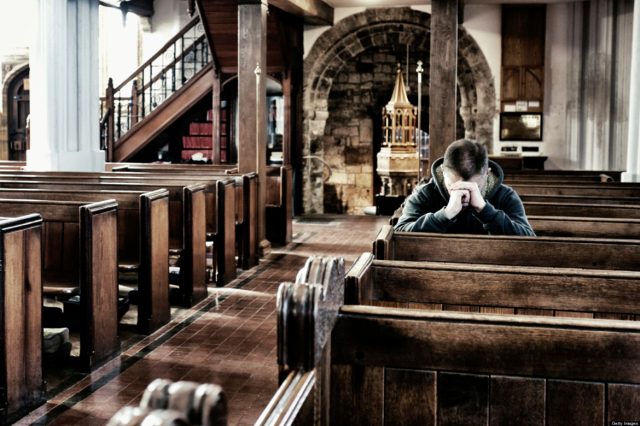
Although, we modern, well-educated, well-informed folks who believe in psychology and science would rather ignore this demon in our story, I do think it is important for us to notice the location of this demon in our gospel lesson this morning. It’s not in all those places that some would expect to find demons today. This demon is sitting on a pew. I do believe that the sad reality of this fragmented world is that evil is real and evil is present and evil is personal and evil is experienced in all places, even in the church, sometimes, especially in the church.

I believe the church is afflicted with a number of demons today, but the one that perhaps concerns me the most is this demon of “defeatism.”

Defeatism: We have too many people in the church who have just accepted the evil in this world as normative. We’ve given up that things in this world can get better, that we as a people can do better, be better, or in other words, we’ve stopped believing that “demons can be exorcized.”

People leave church on Sunday to show up at the polls on Tuesday for an unstable politician who brazenly look into the camera and stokes fear, xenophopia, misogyny, and racism. The gap between the super rich and the super poor in our world continues to widen; women and transgendered people are denied healthcare; the poor are not given living wages; public education is undermined; affordable housing is not available; the environment continues to suffer; wars continue to wage; gun violence is everywhere, and we in the church sit back and say that there’s just nothing we can do about it. “This is just the way things are.” “It is what it is.” “This is the new normal.”  Or worse, we say something like: “Thank God the Lord is coming back soon.”

Some in the church actually have the audacity to call this defeatism, “faith”; instead of calling it what it really is: “demonic.”

I believe the point Mark wants us to hear is that this new, unprecedented teaching of Jesus has the authoritative power today and takes authoritative action today over the evil that afflicts our world. Mark wants us to know that although evil surrounds us, although we are tempted to believe that things are only going to get worse, a teacher is coming, and he is coming not with mere words, but with authoritative, imminent action today for a more just, more equitable and more peaceful tomorrow.

When this teacher comes and teaches us that there is hope, he is not just “whistling in the dark” or “grasping at straws.”  He is not coming on some “wing and a prayer” “wishing upon a star.” He is not coming with mere words and tiresome clichés. He is coming taking authoritative action.

The teacher does not come with a mere history lesson of God’s past actions but comes beckoning us to see what God is actively doing in our world today and will do in our world tomorrow.

As one of my favorite preachers, the late John Claypool has said, Jesus comes teaching us that our faith is and has always been “a faith of promise; never a faith of nostalgia. Our faith is always looking forward; never backward.”

Our faith never sulks, pouts, or grumbles for the good old days, but always marches for, works for, fights for, and anticipates good new days.

When someone comes to see me who has just been diagnosed with cancer or another dreadful disease; or has just lost their job, their income; or has just lost their spouse to death, or worse, to separation or divorce; or has been afflicted in any number of ways; and I say to them “it is going to be ok,” I am not simply saying “cross your fingers” and “hope for the best,” or even saying something like “there’s a light at the end of the tunnel.”

I am saying with the authority of God, the creator of all that is, the One who has been revealed in Holy Scriptures and in the life, death and resurrection of Jesus Christ, that things are going to be better.

Because our faith that is rooted in the Holy Scriptures is one that has always, and will always, draw us into better days.

When God first approached human beings, it was never from behind (“Hey you, turn around, come back here”), but it was always from out ahead, out in the future, promising, beckoning.

God came to Abraham and Sarah in their old age with a promise. God came promising that they would one day father and mother a nation. And you know something? Abraham and Sarah did the very same thing that some of you do when I tell you that things are going to be ok. They laughed. They scoffed: “We are much too old to have any future.”

God came to Moses showing him that he would lead Israel into the Promised Land. And Moses responded the same way some of you do, the same way Abraham and Sarah responded: “Nah; not me!  You know that simply don’t have what it takes to have such a future.”

But we know the rest of the story, don’t we? We know the rest of their stories, but we also know the rest of some of our own stories. No, Abraham, Sarah and Moses, nor any of us, had what it takes, but thank God that God did. And God acted. We look back at our afflictions, where we have been, and how far we have come, what we have gained through the storms, and we say something miraculous like, “If I could go back and change anything in my life, I don’t believe I would change a thing.”

This is why we point to our God in a very different manner than people of other faiths point to their God. When we are asked: “Where is your God?” we should never say “Back there,” or “in here,” or even “up there.” Rather we should point straight into the future and say: “My God is out there, pulling me into a better tomorrow!”

This is the teaching that Jesus puts into action, and this is the teaching that he calls all of us to put into action.

It is why we make a commitment to teach our children the stories of faith through Worship and Wonder. It is what compels us to help prepare impoverished children for kindergarten. It is what propels us to volunteer at Park View Mission. It is what drives us to join a movement like One Home One Future.

It is what propels some of you to volunteer at the hospital, visit a nursing home, send a card, or make a phone call to someone who is hurting. And hopefully it is what has brought you to be a part of this church, this movement for wholeness in our fragmented world, this blessed place of love and inclusion and it is what will send you out to be a blessing in all places.

For our God is a God of promise—A God of hope who is made known more in actions than in words.

I believe this explains the conversation I had with a colleague who was under the care of hospice just days before her death.

She talked about her life. She talked about how good God had been to her in the past. She talked about her service through the church alongside her husband. Then she began to talk about her present situation and about the cancer that had returned and had spread throughout her body. She talked about her pain. She said she knew that she had days and not weeks left on this earth. She talked about how difficult her death was going to be for her family, for her husband and children. Then she said with this special smile that I will never forget, “But I’m fine! I am going to be fine!”

She was going to be fine because her God, whom she knew through her teacher, Jesus Christ, had never approached her from behind. But always from out ahead, out in the future, always promising, always beckoning, always acting, transforming, renewing, restoring, resurrecting. Her God was never back there, somewhere in the distant past, but her God was out there, always assuring her that her best days of living, her best days of life, were ahead of her.

In what she knew to be her last few days on this earth, she had miraculously been taught to say, “I’m fine. I’m going to be fine.”

Aren’t we all?

Holding Christmas Hope

Luke 2:22-40 NRSV

One of the great wonders of church is the surprises. Our worship on Christmas Eve certainly had one, as probably, for the very first time for all who had gathered, as Erin Gresham read from John 1 about the light coming into the world that the darkness could not overcome, a rather exuberant bat invaded the service.

Now, you may not know this, but in seminary, they don’t teach you what to do or say when that happens. So, instead of singing “What Child Is This” with the congregation before Holy Communion, I just stood at the table racking my brain for the right words to say as I watched people in the back of the sanctuary, unsuccessfully and rather comically, trying to shoo the bat out by frantically waving their jackets at the bat to chase it out the door, but I didn’t want to say anything that may illicit some laughter that might interfere with the seriousness of the moment.

So, I just kept leading the service as planned, ducking at least once as the bat swooshed towards the chancel. It was a crazy scene, really. We just lit our candles and sang Silent Night like it had never happened or that it happens all the time. I guess we proved the words Erin read to be true, that our lights were going to shine in the darkness, and nothing, not even a crazy bat, was going be able to stop it!

But that’s the thing with church, you never know when you will be surprised or shocked by what goes on here! You are tired and not feeling your best, but you get up and come to church anyway. You may come more out of duty than desire. You come not really expecting anything surprising from what is certain to be a just another predictable service. You come fully expecting to leave the same way you came, unmoved, untouched, unchanged. But then, out of nowhere something happens that astonishes you: someone unexpectedly hugs you; a song you’ve sung a thousand times before astounds you; a word you’ve heard countless times startles you. God, in spite of everything, in spite of you, and even in spite of the preacher that day, speaks. And everything, including you, your whole world, is amazingly transformed. A simple handshake brings healing. A smile from an unassuming child generates hope. A tiny cracker and a sip of juice become more than sufficient.

Simeon had arrived to worship in the Temple as he had for many decades. He was as devoted to the Lord as anyone. For years, he had been eagerly coming to the Temple expecting to be surprised by the presence of the Messiah; however, year after year he left each service disappointed.

It was just another ordinary Sabbath. Old Simeon was tired and give-out. Over the years, much of his anticipation had turned into doubt. But he got up and came to Temple anyway, more out of duty than desire, knowing that he would probably once again leave the service unmoved, untouched, and unchanged.

He came in through the front door, nodded politely to the usher who handed him an Order of Service that he had all but memorized, and settled in his usual seat for another predictable service. During the Prelude, he opened the bulletin and noticed that there was going to be another baby dedication service. As was their custom several times during the year, the minister was going to once again ask the congregation to bless a newborn baby. Nothing unusual. Simeon had seen this a hundred times before.

After the Prelude and the Chiming of the Hour, the Call to Worship the Invocation, and a hymn, this strange new couple unexpectedly came down the aisle holding a tiny baby. They were coming for the baby dedication service. And then, out of nowhere, it happened.

Simeon cannot explain how he knew it, but he knew it, nonetheless. This was it! He could not keep his eyes off that baby during the prayers for the child and the parents, for he knew without a doubt that this was the Messiah, the Promised One God sent to save Israel.

In the middle of the dedication service, he grabbed the back of the pew in front of him with both of his hands and slowly pulled himself up to stand on his tired feet. Holding on to the pew in front of him, he shuffled past three people who were sitting beside him and made his way down the aisle to the front where the new parents were standing. Then he had the courage, some would say the audacity, to ask the parents if he could hold the tiny baby. The old man must have looked harmless enough, for Mary and Joseph handed the old gentleman their firstborn son without hesitation.

Again, Simeon cannot explain how he knew it, but he knew that he was holding more than a baby in his arms that morning. Astoundingly, he was holding hope in his arms. Amazingly, he was holding salvation in his arms. Surprisingly, he was holding none other than Christmas in his arms, Simeon had crossed off in his mind the only thing that was ever on his bucket list and started praising God saying:

‘Master, now you are dismissing your servant in peace,
according to your word;
for my eyes have seen your salvation,
which you have prepared in the presence of all peoples,
a light for revelation to the Gentiles
and for glory to your people Israel.’

This is the wonder of this thing called church. When we least expect it, God shows up and surprises us. We perform an ordinary ritual, like a Child Dedication Service, and something extraordinary happens that changes us forever.

Mary and Joseph showed up with their baby asking the likes of old men like Simeon to bless their newborn baby, and the child ends up blessing Simeon.

 We may have thought we knew what we were doing here this morning. We thought our friends Kevin and Elaine Lindmark were coming to merely present their daughter, Leighton Annette and Shanaya and Aili Barricklow-Young were merely presenting their daughter Feyre Elaine.  Wee thought they were coming to ask us, their family of faith, to take them in our church’s arms and bless them—Bless them by promising to teach them the faith, to share our knowledge of the way of love Jesus taught his disciples with them.

But, to our surprise, what if it is the other way around?

What if we are not here this morning to bless Feyre and Leighton, but Feyer and Leighton are actually here to bless us? Now, I know we are not Simeon and they are not the Messiah; however, it was the Messiah who had this to say about children like these: “Let the little ones come to me, for to such as these, belong the Kingdom of God” (Luke 18:16).

I believe this means that these little ones have more to teach us about the ways of God than we could ever possibly teach them. I believe this means that they and the other children whom God has given us are not the future of the church, but they are the church’s present. Surprisingly, they have much to give the church today. Unexpectedly, even as young and as they are, have much to teach the church this very moment.

For example, Feyre and Leighton will never be more vulnerable, more dependent than they are right now. And because of this, they may never have more to teach us. For hey teach us that if the church is going to look like the Kingdom of God, then the church must continually reach out, invite, bring in, accept and adopt, and care for those in our society who are the most vulnerable, the most dependent.

         They teach us that we are to feed those who cannot feed themselves, give drink to those you cannot drink on their own, clothe, shelter, comfort those in need, and love those who are the most frail, fragile and needy.

Feyre and Leighton affirm our support of Our Daily Bread, Miriam’s House, Parkview Mission, The Free Clinic and Interfaith Outreach. Teaching us that we come the closest to living in the Kingdom of God, we come the closest to holding the Messiah in our arms, when we offer grace and hope to the least of these.

However, they also teach us something that may be even more important. The Messiah once said: “Unless one comes to me as a little child, they cannot enter the Kingdom of God.”  Leighton and Feyre may never be more honest, more real, and more genuine than they are today. What you see is what you get. There is no putting on airs with them. They are not proud. There’s not a pretentious bone in their tiny bodies. When they are hungry, they are going to let us know. When they are distressed, saddened or in any discomfort, they are going to tell us. When they need a change, they will cry out to us.

If we could only learn to be as honest as these little ones: honest with each other, and honest with God. Because before we can truly offer grace and hope to others; I believe we must confess our own need for grace and hope. We must confess our own dependency on God and on others. We must confess our own weaknesses, our need of a Savior who knows such vulnerability, to pick us up, to comfort us and to change us in those places where we most need changing.

We thought we were going to come here this morning and hold two little girls in our arms; however, through their honest vulnerability and their utter dependence, through the Christ revealed in them, amazingly, we held hope in our arms, hope for the present and for the future. We held our church’s mission in our arms. We held Christmas in our arms. We held salvation in our arms. And with Simeon, by the grace of God, we will not leave this service unmoved, untouched, unchanged. We will leave this morning praising God saying:

‘Master, now you are dismissing your servants in peace,
according to your word;
for our eyes have seen your salvation,
which you have prepared in the presence of all peoples,
a light for revelation to the Gentiles
and for glory to your people Israel.’ Amen

Room for Christmas

Isaiah 64:1-9 NRSV

It was a dark time in a dark world. The prophet Isaiah prays a desperate prayer asking God to rip open the heavens and come down and heal the nation, to bring peace on earth and joy to the people; a prayer asking God to establish a new order that will override the destructiveness of those in power. It’s a prayer of hope that God will come in the same liberating way as God had come in the past.

However, the mood of the prayer changes. Hopeful expectation turns into dreadful despair as the sins and transgressions of the people are considered.

The term “unclean” means “ritually unacceptable.” It is not believed that Israel is a community where God’s presence is willing to come. Like a “filthy cloth,” the nation is so impure and contaminated that no one would dare touch it.

Like “a faded leaf,” it’s in danger of rotting away. Because the people have called on false gods, there seems to be no room for the God of truth. Because they have turned their backs on social justice, turned their eyes away from the poor, there seems to be no place for the God of mercy. Because the people have chosen a way of violence, there seems to be no way for the God of peace. There seems to be no hope.

But then, the mood changes once more with one of the most hopeful words in the scriptures: “YET!”

YET, you are our Parent. YET, you are our potter. YET, we are all the work of your hand. YET, we are your people.

Isaiah hopefully asserts: YET, you made us, you own us, you are responsible for us, we belong to you. Thus, we trust that you will indeed come again to love us, to save us, just as you have come in the past.

Advent is a time of celebrating this hopeful: “YET!”

It was a dark time in a dark world. The sick and injured were passed by on the other side by prominent men claiming to be religious. The poor were unfairly taxed. Foreigners, scapegoated. Women, objectified. Victims of abuse, stigmatized. Anyone different, marginalized. The entire nation, demoralized.

 YET, a peasant girl named Mary carries hope in her womb and a song in her heart:

 ‘My soul magnifies the Lord,
and my spirit rejoices in God my Savior,
for he has looked with favor on the lowliness of his servant…

…he has scattered the proud…
He has brought down the powerful from their thrones,
and lifted up the lowly;
he has filled the hungry with good things,
and sent the rich away empty.

This is the hope of Advent! The world seems dark, YET, the Light of the World is coming!

Later, the parents-to-be were on the road to pay taxes to a puppet king of an occupied land. The road was long, and being with child made the road especially difficult. And to make things more difficult, when it was time for the baby to be born, they discovered that there was no room in the inn.

There was no room. Sounds like the desperate prayer of Isaiah.

There was no room. There was no place. There was no way. There was no hope.

YET, as God had proved over and over throughout history, from the covenant of Abraham to the great Exodus, there is nothing in all of creation that can separate the world from the love of God. For God, would once again come! Despite every demonic power that tried to thwart God’s coming, God came.

And the good news of this Advent season is that we know that God still comes. And there is nothing in all of creation, nor things above nor below, nor angels nor rulers, nor things present nor things to come, nor life nor death that can stop God from coming.

A church once presented a Christmas play. You know the kind. I used to be in one every year when I was growing up. Three boys playing shepherds are carrying long sticks wearing bath robes with towels wrapped around their heads. And three more boys playing wise men wearing cardboard Burger-King crowns wrapped in Reynolds Wrap are carrying boxes decorated with left-over Christmas garland. They all walk up on the chancel, greet Mary and Joseph, and bow down before the baby Jesus.

Well, during one particular play, after the wise men and shepherds came and bowed before Jesus, a spokesperson for the wise men made the announcement: “We three kings have traveled from the East to bring the baby Jesus gifts of gold, circumstance and mud.” Of course, laughter filled the sanctuary.

But you know what they say: “out of the mouths of babes.”

In the circumstance of being told there is no room for you, there is no place for you, there is no way for you, and there is no hope for you, through Christ, God came to Mary and Joseph and God comes to us and says: “YET!”

The good news of Advent is that God comes to us in all our circumstances and offers us the assurance that there is no circumstance on earth or in heaven that is beyond God’s amazing grace.

And coming as a human being, coming into the world as a fleshly body, a body made up of dust and water, God comes and joins us in our mud.

Through Christ, God came into and still comes into our muck of pain and sickness and offers comfort and healing.

Through Christ, God came into and still comes into our muck of loneliness and fear and shares divine presence and a peace beyond understanding.

The world says there is no room; things are not going to get any better. The world says there is no way; the good old days are long gone. The world says there is no place; evil will get the best of you. The world says there is no hope; peace on earth and good will shall never happen.

YET, a young woman named Mary goes into labor as God says: “I am working all things together for the good!”

YET, a baby is born in the darkness as God says: “The best days of life are always before you.”

YET, a child cries in the night as God says: “Although you cannot go back to the good old days, good new days are coming!

The world says: “There is no room. You will never amount to anything.”

The world says: “There is no way. Sin will always get the best of you.”

The world says: “There is no place for you. Nobody really cares about you.”

The world says: “For you, there is no room, no way, no place, no hope.”

YET, a baby is wrapped in bands of cloth born to underserving, unwed teenagers in an occupied land, as God says: “I love you just as you are, and I come to wrap you in my mercy, clothe you with my grace, nurse you with my love. I know your sins and I forgive you. I will always be with you and never away from you. I will always be for you and never against you. I will always stay by your side fighting for you, even if it means dying for you.”

The world says: “Racism will never end. Bigotry will not cease. Misogyny isn’t going away. There is no way this country will ever come together. There is no room for diversity. There is no place for equality. There is no hope for unity.”

YET, a brown-skinned baby’s birth to a Hebrew woman is announced by angels: “I am bringing you good news of great joy for ALL the people. For you, ALL of you, a baby is born who is Christ the Lord, and through him there is no longer Jew or gentile, slave or free, male or female, for all are one!”

The good news of Advent is while the world often seems dark, YET the light of God will not be diminished.

Biased news channels and social media will continue to divide us, YET the good news that unites us will not be suppressed.

Minorities continue to be pushed to the margins, YET the justice of God will not be defeated.

The sound of gun violence is deafening, YET the Word of God will not be silenced.

The cease-fire has ended, rockets are being fired, YET the Prince of Peace will not be conquered.

The powerful spew misinformation and stoke fear to push their racist agendas, YET truth cannot be hidden.

Hate seems to be flourishing, YET love will not lose.

Sin and selfishness seem to get the best of us, YET grace will not fail.

Despair overwhelms us, YET hope will not die.

The nation feels like a faded leaf that’s about to rot away, YET the kingdom of God will reign forever and ever.

Many churches seem to have lost their way. Blind by power and greed, they embrace a spirit that can only be described as anti-Christ, YET I know of many churches, I know one particularly well, that is committed to following the way of Christ, committed to being the church, to being the enfleshed body of Christ in this world bringing good news the poor, freedom to the oppressed and recovery of sight to the blind.

It’s Advent, and our world grows darker;

YET, it’s Advent, and the Light of the World is coming!

And the darkness will not overcome it.

It’s Advent. God is acting. The Spirit is moving. Christ is coming—Being born, even today, even this very moment, in every one of us. Hallelujah.

Religion Is Making the Pandemic Worse

This pandemic is terrifying, and religion is making it worse.

Science is being denied in the name of religion as pastors, politicians and parishioners are ignorantly insisting that people should still gather for worship putting all of us at risk. But what I believe is even worse than that is the insidious theology that is being expressed by people of faith everywhere.

“God is in control” they post. “God doesn’t make mistakes” they say. “God is trying to teach us something” they sermonize.

Really? God, the creator and source of love, Love Itself, wants the most vulnerable among us to die alone, sick, afraid and unable to breathe?

I believe religion is making this pandemic even more terrifying, because there are too many people in this world who are following the wrong god.

Too many Christians have created their own version of God, their own Lord, their own King, who sits up on some heavenly throne pushing buttons, pulling levers, controlling, dominating, dictating.

A tornado strikes. They say, “God is trying to get our attention.”

Cancer happens. They say, “God has God’s reasons.”

A loved one dies. They say, “God needed another angel.”

A pandemic rages. They say “God must be angry.”

“God is in control. God does not make mistakes. God knows what God is doing.” They think they are making things better by saying these things, but they are only making things worse.

This is why I believe this week that we call “Holy Week” which begins this weekend is so important. The events we remember this week remind us what kind of God, what kind of King, we serve. Holy Week reminds us, contrary to what some of our Christian friends say, God does not rule like the rulers of this world. God does not reign from some heavenly throne in some blissful castle in the sky, but God rules from an old rugged cross, right here on earth, between broken people like you and me.

The rulers of this world rule from places of self-interest and self-preservation. They rule from places of greed and pride.

However, this Holy week teaches us that Christ is a King who rules from a polar-opposite place—a place of self-expending, self-dying, sacrificial, suffering love.

Christ the King does not rule with an iron fist; Christ the King serves with outstretched arms. Christ the King does not cause human suffering from some far away heavenly realm; Christ the King is right here in our realm sharing in our suffering.

Theologian Arthur McGill put it this way:

God’s power is not a power that takes, but is a power that gives.

God’s power is not a power that rules, but is a power that serves.

God’s power is not a power that imposes, but is a power that loves.

God’s power is not a power that dominates, but a power that dies.

This is why it is no accident that Jesus undertakes his mission to the poor and to the weak and not to the rich and the strong; to the dying and not to those full of life. This is why Jesus was so concerned about those marginalized and demonized by organized religion and the power-that-be. McGill continues:

For with these vessels of need God most decisively vindicates the divine power: a power of service whereby the poor are fed, the sinful are forgiven, the weak are strengthened, and the dying are made alive.

God did not cause this pandemic. The day the first person was infected was a day of anguish for God.

God did not create the layoff. The day you were told that your job was ending, God stayed up with you and worried with you all night long.

And God did not take our loved one. When they died, something inside of God died too. For self-givers are never takers.

A more accurate and theologically sound way of describing what happened to our loved ones when they breathed their last breath is that God came, and God, wholly, completely and eternally, gave all of God’ self to them.

So when this pandemic gets us down, we need to remember the great truth of Holy Week—Christ is King. And this King is reigning, suffering, sacrificing and giving all that God has to give from the cross. God’s throne is not made of silver and gold. God’s throne is made of wood and nails. God wears not a crown of jewels, but God wears a crown of thorns.

And when more people begin to understand this, that God did not bleed for only a few hours during one Holy Week, but continues, even today, to bleed for us, to pour God’s self out for us, perhaps religion will cease making this pandemic worse.

It will be what gets us through it. And then, together with our Easter God, we will make something very good come out of it all.

Hope in the Midst of a Pandemic

APTOPIX Taiwan China Outbreak

For thousands of years, when people in the world found themselves in a crisis, they have turned to the Psalms for words of hope and peace.

About one-third of the Psalms are called “Lament Psalms.” These Psalms are unashamedly real, blatantly honest. They speak to the reality of the pain of our world: the plight of the poor; the despair of the displaced; the evil of war; the scourge of disease, and the horrors natural disasters.

Psalm 6 is perhaps my favorite “Lament Psalm.” For here the Psalmist honestly pours out his heart before God like none other:

2 Be gracious to me, O Lord, for I am languishing;

O Lord, heal me, for my bones are shaking with terror.

3 My soul also is struck with terror,

while you, O Lord—how long?

4 Turn, O Lord, save my life;

deliver me for the sake of your steadfast love.

5 For in death there is no remembrance of you;

in Sheol who can give you praise?

6 I am weary with my moaning;

every night I flood my bed with tears;

I drench my couch with my weeping.

7 My eyes waste away because of grief;

they grow weak because of all my foes.

We do not know why the Psalmist is languishing so, why their bones are shaking and their soul is struck with terror. We do not know exactly what is causing them to grieve. What was lost. What made them so weary, so afraid of dying. Why their bed is flooded, their couch drenched with tears. We do not know what great change happened in the world of the Psalmist that caused them to experience so much fear and uncertainty, lamenting, how long, O Lord, how long?

But living in 2020, we can certainly relate.

Notice that the Psalmist is not afraid to reveal their grief. There is no holding back. There’s no masking the pain, no pretending to be strong because others might think they are weak. Things are about as bad as they can be. Their eyes are wasting away with grief. And they are brutally honest about it.

I believe this is a great reminder for us that is okay to grieve what we have lost. It is okay to grieve the uncertainty. And its is good to grieve openly and honestly.

However, as the Apostle Paul once said, we grieve, but we do not grieve without hope. And here, it is the honest, grieving Psalmist who also reminds us that even when our eyes are wasting away from grief, our souls are struck with terror, there is hope.

Notice the change in tone beginning with verse 8:

8 Depart from me, all you workers of evil,

for the Lord has heard the sound of my weeping.

9 The Lord has heard my supplication;

the Lord accepts my prayer.

10 All my enemies shall be ashamed and struck with terror;

they shall turn back, and in a moment be put to shame.

Somewhere between seven and eight, something happened in the life of the Psalmist. New life is experienced. Blessed assurance, amazing grace, and a peace beyond all understanding are received.

Just like we do not know what exactly happened in the Psalmist’s world that caused them to express their grief so openly in verses one through seven, we do not know what exactly happened between verses seven and eight that turned their life around. We just know that something happened, and that something was miraculous. Somehow, someway, new life, inexplicable, yet certain, came. Somewhere between verses seven and eight, Divine Love and hope showed up. The Psalmist does not say exactly how God showed up, but we can certainly take some good guesses.

Perhaps people from all over the Psalmist’s world came together, realizing that despite their differences, they were all connected, they were intrinsically dependent on one another. Perhaps they came together to truly love their neighbors as themselves, to do unto others as they would have others do unto them. They came together and sacrificed much, valuing people more than anything else.

Yes, the workers of evil were still working. Some people, I am certain, behaved selfishly, hording essential supplies. Some behaved fearfully purchasing more weapons. Some, I am sure, even in the name of God, struggled to put the well-being of the most vulnerable ahead of their self-interests and greed.

However, most of the people were workers of good and not evil. They shared necessities They chose people over politics. They chose their neighbors over money, as they chose the way of love over the way of fear.

And when they chose the way of love, when they began to look after one another, perhaps Liberals and Conservatives put aside their differences. Households of faith finally began to realize that their buildings were not that important because what the world needed was people to worship out in the the community with their service more than it needed people worshipping behind four walls in services.

So, maybe we do know what happened between verses seven and eight after all. The Holy One showed up. In different ways through different people, God came. Selfless, sacrificial, united love came.

This is how we can grieve honestly, yet grieve hopefully in this uncertain and frightening time.

I have heard many people say that when this pandemic is over, we will never be the same again.

Let’s pray that this is true.

O God,

Despite our differences, may we never forget that we are all connected and dependent on each other regardless of race, gender, ethnicity, sexuality, nationality, politics and religion.

As our healthcare professionals risk their lives to heal all who are brought to them; as our teachers find creative ways to love and teach their students; as police, firefighters and first responders continue to faithfully serve and protect; as people everywhere pick up and deliver medications and groceries to their neighbors; as we have witnessed that it is selflessness and not greed, that it is love and not fear, that will us through this crisis–may we continue to love our neighbors in such a way that the entire world will not only be healed of this virus, but it will be more kind, more just, more forgiving, and more unified.

We pray that the most vulnerable among us will be protected more. Science will be respected more. Truth will be upheld more. All people will be valued more. Gratitude and graciousness will be expressed more. Mercy will be shared more.

And when we face another crisis, when we face any adversity, may we always remember that it is okay to be afraid. It is okay to grieve, confident that being afraid and grieving does not mean we are weak. Because, with you help, we will be as strong as we have ever been, never allowing, even for one minute, our fear to shut out love, and our grief to diminish hope. Amen.

In a Foreign Land

church in decline

Jeremiah 29:1, 4-7 NRSV

I often think of Rev. David Brooks. He was the first pastor who suggested that God may be calling me to be a pastor. I had the opportunity to serve with him as the youth director of a church during the summer of 1986.

I will never forget the day that he called me into his office and shut the door behind me. I thought I was in some kind of trouble. For this was the first time I had ever served on church staff, and I wasn’t too sure I knew what I was doing.

Well, I soon found out that I was in trouble, albeit a different kind of trouble. For he asked me: “Jarrett, have you ever considered that God may be calling you to be a pastor?”

“Me a pastor? No way I will ever be a pastor!” I said.” He then went on to point out the pastoral gifts that he saw in me and to encourage me to prayerfully consider that God may be calling me to pastor a church. Out of respect for him, I told him I would.

Well, five years later, as I was getting ready to graduate from seminary to be a pastor, I was sad to hear that Rev. Brooks had passed away.

I think about him often today. For, as we are studying on Wednesday nights, the church and the culture has changed so much since that day he called me into his office, and I think of how shocked he would be if he could witness what we are experiencing today.

I must confess that I also wonder if he would still believe I possessed the necessary gifts to pastor a church. Because the truth is, although I now have over 30 years of experience serving with churches since that day I was called into his office, I still have moments, especially here in 2019, when I am not too sure I know what I am doing.

In the 1980’s, if a pastor loved the members of their church, if a pastor showed up on Sunday morning with a sermon (it didn’t have to be an awe-inspiring or even a good sermon, just a sermon that was based on scripture and had an appearance that the pastor had put a little work into it), then the church pews on Sunday morning would be full of people to hear the sermon.

Parents with young children came without hesitation, although the only children’s program consisted of a nursery and a simple Sunday School lesson. Young adults even found the music meaningful, that consisted only of a small choir, organ and piano.

Today, the only churches that seem to be full of people are expected to have elaborate children’s centers that rivals some amusement parks, a Chuck-E-Cheese or a Playland at McDonalds. The music must be on par with the music that entertains us at concerts. There’s disappointment if there is an absence of video screens, smoke machines and concert lights. The pastor needs to wow us with their charisma, and just make us feel really, really good.

He also never experienced 9-11 and the rise of religious fundamentalism that came out of it. He never witnessed the election of the first black President, and as a response, the resurgence of the religious right and the rise Christian white nationalism. He never witnessed the anti-Christ spirit that is in our nation today: the greed, the vulgarity, the selfishness, the fear of the other, and the further marginalization of those who are different.  And he never knew that many churches today would support, even seem to worship these anti-Christ sentiments.

And Rev. Brooks died before some people started walking away from the church for good. He knew that many churches in Europe were in delcine, but he never saw it here. He could not ever imagine that an entire generation of young adults would reject the church.

From the vantage point of 1986, it is like we are living in a strange, foreign land, in a completely different world. Churches that were once the insiders of society are now the outsiders. And many of us in churches like ours today are afraid, and we are not too sure if we know what we are doing.

This is exactly where the Israelites find themselves in today’s Hebrew lesson. They have just been exiled into Babylon, finding themselves in a foreign land.           .

It is into this strange and fearful reality, that the prophet Jeremiah sends a letter of hope.

Jeremiah writes that they can find their hope in the willingness and the courage to let go of their past.

Jeremiah insists that the people who have found themselves in a foreign land must surrender its old identity and accept its new situation not only to survive, but to eventually flourish.

He encourages them to begin working towards building a new way of life. They needed to accept that Babylon was where God has planted them and where God wants to work through them.

When Jeremiah says, “Pray to the Lord on their behalf,” the prophet is affirming the truth that God can be found even in this strange and foreign land. God has never left them. God is still working among them and wants to use them to make their new world a more just and peaceful place to live.

Jeremiah wants them to know God is present everywhere, even at the margins, even among the broken, the dejected, the afraid, and the subjugated, in other words, even among outsiders like them.

Jeremiah assures them that they can call on the Lord even without the temple, and the Lord will answer.

Having been conquered, humiliated and deported by military force, the exiles are embittered and vengeful. And Jeremiah writes: “Seek the welfare of the [foreign] land to which God has banished you.” In other words, “Seek the well-being of the land of your enemies. For their well-being is also you well-being. Their peace is also your peace. Pray for their land.”  This is an illustration of the social and political significance of praying for and loving one’s enemies.

Jeremiah encourages them to accept their situation in exile, but not to regard it as hopeless or unchangeable. As he mentions in a later verse, we have the promise from God: “I know the plans I have for you, plans to prosper you and not to harm you, plans to give you hope and a future.”

I believe Jeremiah’s letter has much to say to churches in 2019 who find themselves in a foreign land.

Churches today who find themselves living in a foreign land respond respond in several unhealthy ways.

The most popular response is to just give up and walk away, to give in to defeat and scarcity, to succumb to the lie that God is no longer present, no longer working in the land, that God no longer has anything for us to do, that church today is just a waste of time.

Another popular response is to just be in denial about it all and to just ignore it. “Yes, the world may be different, but we really don’t need to do anything differently to live in this new reality. So we just need to keep doing the same things that we have always done.”

Another response is to adopt a defensive, self-protective posture. Paralyzed by fear, having no idea what to do, we retreat into our safe sanctuaries to comfort one another while loathing our enemies, for those we blame for this new reality.

Another response is to join the new culture. “People crave entertainment? We will give it to them. People want to feel good about themselves today? Let’s make that happen. The culture has embraced an “us vs. them” mentality? Our leaders resort to name-calling and bullying and work to further disenfranchise the other? To survive in this new world, we will join them and do the same thing. Everyone around us has forgotten that the greatest of God’s commandments is to love our neighbors as ourselves? Well, we’ll just forget that too. To survive in this new culture, we will simply blend in with the new culture.”

I believe Jeremiah’s prophetic words call churches today to respond in a better way.

The prophet reminds us that God is still here, and God is still working in this world. And God still wants to work through us. And God still has a lot of work for us to do!

And God is specifically pressing us to move away from the private walls of the church and into the world, into the public space, to do what we can to fulfill our calling as people of faith to do justice, to love kindness and to walk humbly.

And because churches that embrace love, kindness and humility now find themselves living in a world of hate, meanness and greed, because churches that embrace the inclusive, counter-cultural way of Christ, are now the outsiders, the disenfranchised, and the marginalized of society, I believe we are to especially go out and address the needs of others who have been disenfranchised and marginalized, all those who suffer from political, social and cultural insecurity and discrimination.

For one thing that our faith teaches us is that God is always most discernible and most present in the margins. Jesus called his disciples to leave their old lives, their old worlds behind, to drop their nets, to journey out to the fringes of society to experience God in new ways and in new forms.

So, what does God want us to do in this foreign land? What do we do when we are not sure what to do?

We need to first make sure that our theology is not a private theology, but that it is a very public theology. It is one that presses us to pray for the welfare, not for our church, but for our city and nation.

It pushes us to commit to work for shalom, for peace, for well-being, for healing, for wholeness, and for justice, not just for the members of our church who feel like they are now living on the margins of society, but for those who have always lived on the margins, for those who have always felt like outsiders…

…while remembering the great promise of God:  “I know the plans I have for you, plans to prosper you and not to harm you, plans to give you hope and a future.

Let us pray together

O God, in this strange time and place, help us to be strong and courageous as we share the good news of gospel out to the margins of society. Knowing that you are with us and with you is our hope and our future.

Age to Age: Celebrating Gwen Long’s 100th Birthday

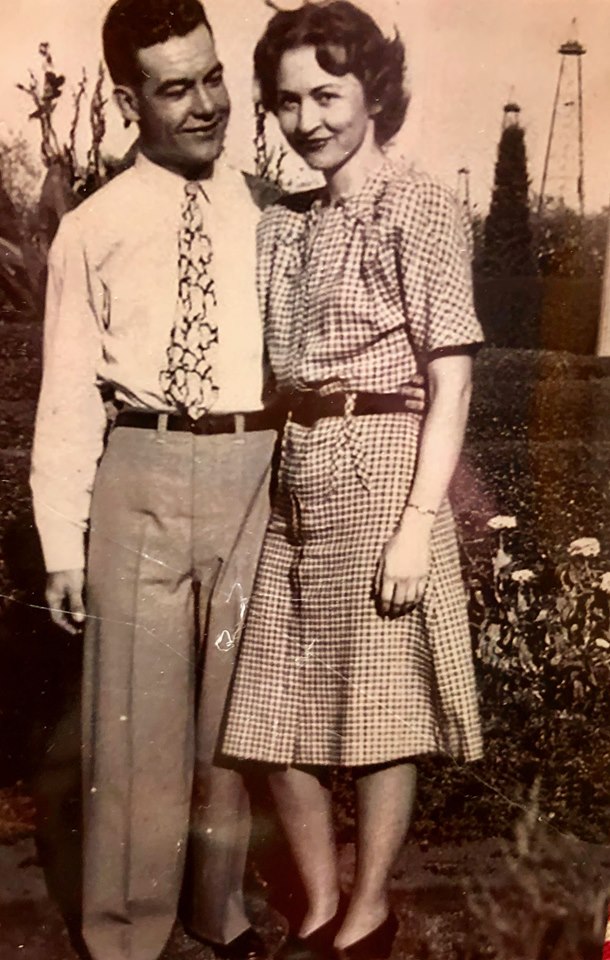
Gwen and George Long

Psalm 71 NRSV

Psalm 71 is a beautiful declaration of an individual’s trust and hope in the faithfulness of God through every stage of their life: birth (v. 6), youth (vv. 5, 17), and old age (vv. 9, 18). Throughout any long life filled with many ups and downs, the Psalmist wants people to know that God can be trusted.

Most scholars believe that Psalm 71 is the declaration of a person in the latter stage of life who is uniquely capable of reflecting on all of life’s stages. Some suggest it could belong to an older David written shortly after Absalom’s revolt, but most believe it was an older member of the Rechabite community that was living in exile. Verse 21 suggests that it could have been a leader of that community offering hope to others during exile.

What a God-given coincidence that one of our lectionary readings for this day is this beautiful Psalm. Because on this day, we celebrate that this community called First Christian Church in Fort Smith has such a leader—someone who comes to us today on her 100thbirthday to offer all of us much hope.

Gwen was born on August 25, 1919 in Antlers, Oklahoma to Hugh and Lillie Vaughn.

Born ten years before the Great Depression, Gwen is probably the only person who is here today who rode a horse to grade school.

Gwen’s childhood was a rather unsettled time as the family lived in various places in Texas and Oklahoma as Gwen’s father would find different work in the new oil industry.

When Gwen graduated from the 8thgrade, her dad said that he could help get her an apartment as she continued her education, but she would need to find work to pay for room and board, which was not an easy thing to in that time.

At first, Gwen got a temporary job helping a woman in Camargo, Oklahoma who was pregnant. Then, she got another temporary job helping a Catholic woman who had several children. This was before Gwen was baptized into the Christian Church, so she recounts: “She must not have been a very good Catholic, because if she was, I suppose I would be a Catholic today.”

During her sophomore year, Gwen worked in a cafe south of Woodward, Oklahoma. But Gwen said that was a difficult experience, because the woman she worked for was an alcoholic and she “didn’t much care for that.”

Frustrated with her job in the cafe, as she was walking home one day, she happened upon a couple sitting in their front yard. They owned a mercantile store in Vici, Oklahoma. When they found out that Gwen was looking for a job, they said to Gwen: “Young lady, we have been praying for God to send us a daughter!”

The couple were leaders in the Christian Church. Gwen not only started working in their store, but she started attending their church, and at the age of 16, Gwen was baptized. Although she could not see it then, looking back she says she knows that it was God’s providential presence led her to that couple. For this is when life took a very promising turn for Gwen.

She soon met a young man who was working at a full-service filling station named Oliver Wendell Beck. After a courtship, the couple was married in 1937. World War II had just started when their son Kenneth was born on January 2, 1940 in Seiling, Oklahoma.

At this time, a new Air Corps Basic Flying School was being constructed in Enid, Oklahoma where Wendell landed a good job. However, not long after the young family moved to Enid, while Wendell was helping to unload gravel from a box car with a piece of heavy equipment, he was accidentally and tragically crushed to death.

Gwen remembers “There I was a widow and a single mother of a two year-old after four short years of marriage. She adds: “I was only 22 and had no sense. There is no way I could have endured that period in my life without God. I know God was with me.”

Gwen miraculously had the determination, the wherewithal and the strength to move back to Vici where she found childcare for Kenneth, worked hard and finished High School graduating as the Valedictorian of her class.

One day, a man from Oklahoma City was driving by the school looking for a secretary. The man saw Gwen and asked her to get in his car so he could dictate a letter for her. When Gwen finished writing the letter, the man read it and hired her on the spot. She then moved to Oklahoma City where she was able buy a house for her and little Kenny

Gwen soon learned of a grand opportunity at the Douglas Aircraft plant in Midwest City. This is where Gwen would become a real-life Rosie the Riveter. Their spirit of “We Can Do It” inspired not only their contemporaries but each subsequent generation of working women in all fields of employment.

More than ten-thousand Oklahoma women worked at the Douglas Aircraft Company and Tinker Field during the Second World War.

And Gwen adds that as a riveter, she made “barrels of money.”

During this period, Gwen received word that one of her good friends who in was living in California went through a painful divorce. Gwen, who had not that long ago lost her husband empathized with her friend’s loss like few others could. To help her distraught friend, she sold her car, and boarded a train with little Kenny and headed west where another riveting job awaited her in California.

Looking back, she knows without a doubt that the presence of God was with her and Kenny on that train.

After comforting her friend in her grief, and perhaps having been comforted herself in her own grief, yet another sign of God’s providential care, Gwen transferred back to the Douglas Plant in Midwest City. When the war was over, she got a job in the cosmetic department at Haliburton in Oklahoma City. It was then that her friend from California moved back to become a beauty operator at Haliburton. Soon after moving back, her friend met a soldier who had just returned from overseas, and the two of them married.

What does this have to do with Gwen?

Well, one of her friend’s customers had a brother who had also just returned from serving overseas in France and Italy. And obviously feeling grateful to Gwen for giving her hope after her divorce in California, she set up a blind date up for Gwen to meet this soldier. His name was George Long.

Gwen said that she was single 9 years after losing Wendell, because she never met anyone she wanted to marry, someone who would be a good daddy to Kenny. She says she supposes Kenny made her picky. George, however, fit the bill. George was college-educated, smart, handsome, an Army Major and a good father.

After marrying, George and Gwen raised Kenny and two had two girls Carolyn and Kathleen.

Gwen remembers that period of her life between marriages vividly. She said most of the time she really didn’t know what she was doing. Moving to Oklahoma City as a secretary and then taking the job at the Douglas plant and then going all the way out to California and then back to Oklahoma. She says, “I didn’t know what I was doing. I just did it.” But looking back, “I know it was God leading me, helping me. I know it was God’s presence.”

George and Gwen had a wonderful life together. Kathleen and Carolyn were both able to go to college, something Gwen was never able to do. And fortunate for First Christian Church, George transferred to Fort Smith as an engineer with OG&E. They joined our church after attending the first service here in this sanctuary. Here, George worked tirelessly on our Property Committee. Gwen sewed the drapes for the baptistery and made the cover for our piano. They both devoted their lives to this church.

During George’s retirement, they had the wonderful opportunity to spend 20 years traveling in RV’s across the country.

After many wonderful years, tragedy struck Gwen’s life once more as her son Kenny was diagnosed with brain cancer. After a 2-3 year-long courageous battle, on September 4, 2006, Kenny died. He was only 66 years old. Your children are supposed to bury you; you are not supposed to bury your children. And to compound the tragedy for Gwen, just three short months later on November 28, George, her beloved husband of 58 years, passed away.

Gwen said that losing her son and husband so close together was devastating, but she knows God was there, and it was God who got her through it.

Life after George has not been easy for Gwen. Although Gwen said George left her well taken care of, she says the only trips that she has been able to take since she turned 90 are trips to the doctor. She says she used to go anywhere she wanted to go, but now, living at Brookdale Assisted Living, “she only goes down to eat at 8, 12, and 5.”

She says she doesn’t know what she would do without Carolyn and Kathleen and calls them both gifts from God. “God has been so good to me, my whole life long,” she says.

And today, on her 100thbirthday, her very presence with us is a declaration of God’s faithfulness that offers us so much hope, hope that only someone who has experienced God’s protection and deliverance throughout a life-time can give us.

Her sense of humor, her smile, her laugh, her honesty (which sometimes can be brutal), the way she is still so very much engaged in the life of this community fills us with so much hope.

She gives us hope that although we experience many hardships in life (death, divorce, disease, in a thousand different ways we experience them), those hardships are never lasting. However, the faithfulness of God is lasting, from age to age.

Like the Psalmist, perhaps the eldest leader of the Rechabite Community, Gwen, our eldest leader gives all of us hope, for…
1 In God, Gwen has taken refuge;
and she has never been put to shame.
2 In God’s righteousness God has delivered Gwen, rescued Gwen; inclined God’s ear to Gwen and is to Gwen a rock of refuge, a strong fortress.

5 For the Lord is her hope,
her trust, from her youth.
6 Upon God she has leaned from her birth;

And today, she praises God continually.
8 Her mouth is filled with God’s praise,
and glory all day long.
9 The Lord will never cast her off in the time of old age;
or ever forsake her when her strength is spent.
12 God has never and will never be far from her.
God will always make haste to help her!
14 Thus, she hopes continually,
and will praise God yet more and more.
15 Her mouth will tell of God’s righteous acts,
of God’s deeds of salvation all day long,
though their number is past her knowledge.

17 From her youth God has taught Gwen,
and she still proclaims God’s wondrous deeds.
18 So even to old age and grey hairs,
God will not forsake her, and today on her 100thbirthday, she comes into to the house of God to proclaim God’s might
to all the generations to come.

20 The Lord has revived her from many troubles and calamities
and she knows that
even from the depths of the earth
God will bring her up again.

And the good news is that God’s faithfulness that Gwen has experienced throughout her life is for all people. As Gwen has trusted in God’s faithfulness, so can we. The good news is that Gwen’s story of trusting in God’s providential care from age to age is not the only story in this room.

So today, as a community of faith, we join hands with Gwen to praise God. Our lips shout for joy. For, with Gwen, our souls have also been rescued!

Thanks be to God!

Steady Until Sunset: Remembering Larry Gene Vaughn

Larry Vaughn

In the 17thchapter of the Book of Exodus we read the amazing story of how the Israelites defeated of their enemy, the Amaleks. The Amaleks were a group of nomads who attacked the Hebrews in the desert of Mount Sinai during the Exodus from Egyptian slavery. The Amaleks swooped in on the Israelites and cowardly killed those who were lagging behind.

For that is what the enemies of life do. For some the enemy is cancer. For some it is diabetes, renal failure and heart disease.

And when the enemies of this life attack us, we are faced with a choice. We can surrender to our enemies; we can succumb to their attacks; we can bemoan or whine, or we can stand our ground and fight.

Moses said to Joshua, ‘Choose some men for us and go out; and fight with Amalek.’

This week, I have heard more than one person say that they had no idea Larry had the health issues that he had or that Larry must have had more health problems than he let on.

Because Larry was always so positive. Always upbeat, steady. Although he spent five hours a day, three days a week in a dialysis unit, he never complained.

He knew he had an amazing life. He was grateful to have had the opportunity to spend time in over 40 countries through the Oil and Gas industry, to learn different customs and to appreciate different traditions. I love listening to his stories, especially the way he would describe the beauty of wildlife in different parts of the world and the food he enjoyed while traveling. Always remaining true to his positive spirit, every steak he ate was the best piece of beef, and every deer he saw was a monster.

Many men in Larry’s health surrender and succumb to such illnesses. They lose strength within to fight, to continue living, to continue working. They can reach down and dig deep; however, there is just nothing left. No amount of digging will see them through.

However, men with faith in the God of Abraham and Isaac, Moses and Joshua, men with faith in the God, understand that true strength does not come from within, but comes from and by the grace of God.

Moses said to Joshua:

Choose an army and fight. I, myself, retired a long time ago from fighting. I am too old, too tired, but I will stand on the top of a hill and raise the staff of God with my hands and summon the grace and strength of God to defeat our enemy.

So Joshua did as Moses told him, and fought with Amalek, while Moses, Aaron, and Hur went up to the top of a hill. 

Whenever Moses held up his hand, Moses noticed that Israel prevailed; and whenever he lowered his hand, he noticed that Amalek prevailed. [This was a certain sign that it was God, and God alone, who was giving the Israelites the grace, perseverance and strength to defeat their enemy].

I don’t believe can be no other explanation for the optimism and positive spirit of Larry Vaughn considering his poor health. It was more than some inborn competitive sprit or personal determination, drive or grit. It was something divine.

Larry simply never quit. He kept persevering. He kept fighting. He wanted to do whatever he could to keep to keep living, to keep working, to keep hunting, to keep being there for his family and friends. “Oh, to do that, I need to have a triple bypass and possibly a valve replacement to be on the kidney donor list. Ok, sign me up!”

Many studies have been made to identify symptoms of depression or the giving up on life. People who give up and surrender to the enemies of life become detached and disengaged from the world around them. They no longer care what their neighbors are up to. They begin to ignore their children and their grandchildren. They stop communicating with their spouse, and most certainly with their ex-spouse. They become disinterested in their church.  And they stop paying attention to the news and to sports.

Although dialysis took a toll on Larry, he possessed any of these symptoms. Larry enjoyed his evenings with Elizabeth, watching the news, the wheel of fortune and a movie. He was forever selflessly doing things for his Jason and Jordon, always finding time to do things with and for Grayson. Through thick and thin, he never missed a day without checking in with them. Just as he did throughout his life, no matter where he was.

He was not only interested in his church, attending every Sunday, but he was even interested in his pastor. He kept up with my work with persons with special needs through Ainsley’s Angels on facebook. He became especially concerned about me when he discovered that I had not been hunting since 1993. So concerned, that he scheduled us a dove hunting adventure for the first of September.

He cared about what was going on in the world, and he was in no way, shape or form disengaged from sports. He continued to follow his alma mater Arkansas Tech in sports and loved watching Razorback game.

It was obvious to everyone that knew Larry, that he never gave up. For as Isaiah 40:29 reads, Larry was a living testimony that “God gives strength to the weary, and to him who lacks might God increases power.” And in the 73rdPsalm we read: “My flesh and my heart may fail, but God is the strength of my heart and my portion forever.” Larry Vaughn was a living example to all of this great truth.

That’s why so many of us were left scratching our heads when we learned of his passing. We simply had no idea that he was so sick.

Our story continues in Exodus:

But Moses’ hands grew weary; so Aaron and Hur took a stone and put it under him, and he sat on it. And Aaron and Hur held up the hands of Moses, Aaron on one side and Hur on the other, and the hands of Moses were steady until the sun set.

God has always used others to do God’s work in this world. God calls each of us to minister to one another. God uses us to supply God’s strength to those who are weak, to keep them steady, to help them fight the good fight, to finish the race. Such was the case in this victory of Amalek. Moses did not possess the strength to keep his hands raised through the duration of the battle, so God sent him Aaron and Hur who brought him a rock to sit upon and then held up each of his hands.

God also sent Larry others to give him support when he was the most weary.

Last week, when Larry needed support, God sent him good friends, Dr. Dana Rabideau and Wayne Wright who who traveled great distances to be with him. They were so faithful to him. And of course, his twin brother Jerry, who had been a part of Larry his entire life, was there with Susie letting Larry know that he was loved. As was his companion Elizabeth. Divorced, but still together, until death parted them.

Larry and Jerry love to tell stories about them fighting and whipping one another. Jerry talks about beating him up during the day and Larry sucker punching him while he slept at night. Jerry talks about one incidence when Larry stabed him in the leg with a knife during a competitive game of Mumble Peg. Jordon remembers the two of them wrestling, trying to get the best of each other, in the White River. But more often than they were horsing around and competing with one another, they were supporting one another. They were loving one another. And in the end, Jerry, you were there for him.

You could say that you brought your brother Larry a rock to St. John’s Hospital in Tulsa to steady his hands until the sun set. And together with Elizabeth, Dana and Wayne, you were to Larry like Aaron and Hur were to Moses.

And the hands of Moses were steady until the sun set. And Joshua defeated Amalek and his army.

And the good news for us today is, that this same God, the God of Abraham and Isaac, the God of Moses and Joshua, the God revealed in the Risen Christ and in the life of Larry Vaughn, will give us strength in our grief, joy in our suffering and grace in our lives. God will send others: friends and family and church members to hold our hands, to keep them steady, until the sun sets, until the battle is won.

But the really good news is that the final battle, the battle with life’s final enemy has already been won. As Paul wrote to the Corinthians: “Death has been swallowed up in victory. O death, where is your victory? Where is your sting?”

The good news for all of us today is that as God has stood by Larry and gave him strength to battle the enemies of life, through our resurrected Lord, God has defeated death, and Larry is now and forever with his Lord.

May this good news help us now to live our lives as Larry lived his: Persevering with the strength of God, receiving help from friends and family who provide us a rock, living with the steady purpose of sharing the joy and the hope of the Lord with all people, until the sun sets here and rises forever in eternity. Amen.

For Easter to Happen, Somebody Needed to Pick Up and Carry a Cross

oklahoma city bombing firefighter baby

Luke 24:1-12 NRSV

It is Easter Sunday! Resurrection morning has dawned. New life is being born! Something wonderful has been lost, but something magnificent is being gained.

However, on this Sunday of Sundays, I believe it is important for us to realize that before we can experience new life, before we can celebrate resurrection, before we can sing alleluias, before love can win, somebody needed to pick up and carry a cross.

And the sad thing is that there are very few of Jesus’ disciples who understand this. They do not understand it today, and they did not understand it 2,000 years ago.

Although Jesus continually taught that to gain our lives, we must be willing to lose our lives, that Easter could not happen without some self-denial, that resurrection could not come without some self-expenditure, that new life could not be born without some sacrifice, that love could not be won without some suffering, that the the light of Sunday morning could not  dawn without the darkness of Good Friday, when the time came for the disciples to follow Jesus all the way to the foot of the cross, most all of them very selfishly fled to save their lives.

One would betray Jesus. Another would deny that he even knew Jesus. Nearly all would desert him. In spite of Jesus’ continual call to pick up a cross and follow him, most of the disciples never got it.

However, there were a few disciples who did get it. There were a few who were willing to carry a cross. There were a few who chose to live selflessly and to love sacrificially. There were a few who faithfully followed Jesus all the way to Golgotha.

Although the intrinsic sexism of this world’s history has caused many in the church to overlook these faithful disciples, the good news is that all four Gospel writers did not.

In Luke 8 we read these words: Afterward [Jesus] journeyed from one town and village to another, preaching and proclaiming the good news of the kingdom of God. Accompanying him were the Twelve and some women…Mary, called Magdalene… Joanna…Susanna, and many others…” These women helped support Jesus and the twelve “out of their own means.”

And on Good Friday, when none of the male disciples could be found, Mark 15 reads: “There were also some women looking on…among whom were Mary Magdalene, and Mary the mother of James, Joses, and Salome.

In Matthew 27 we read: “Among them [gathered at the foot of the cross] was Mary Magdalene, and Mary the mother of James and Joseph, and the mother of the sons of Zebedee.

In John 19:25 we read where all the male disciples fled: “But standing by the cross of Jesus were His mother, and His mother’s sister, Mary the wife of Clopas, and Mary Magdalene.

There are many problems with Christianity today. However, I believe one of the biggest problems with our faith today, especially here in North America, is that we have too few Mary Magdalenes.

There are too few people who understand that authentic faith, true discipleship, always involves a cross. It always involves answering a call, taking a risk, denying oneself, going against the status quo, pushing the boundaries, stepping way outside one’s comfort zone.

A problem with the church today is there are too many Christians who believe they can sing “alleluias” on Easter Sunday without going through some suffering on Good Friday, who believe they can experience some new life without death to self, who believe they can somehow rise up from the waters of baptism without getting their hair wet, who believe they can serve Jesus without getting their hands dirty.

What this world desperately needs needs right now, and what the church needs more than anything today, are more disciples like Mary Magdalene. For Mary Magdalene understood that when Jesus called people to be his disciples, Jesus was always clear that there would be a cross involved.

I think this is the reason that Mary Magdalene is remembered today by Matthew, Mark, Luke and John. This is the reason she is mentioned by name by the gospel writers more than any other apostle. And this is the reason that today, on this Easter Sunday morning, Christians all over the world will hear her name mentioned as they gather to worship.

Some will hear her name as Mark 15 is read: “Mary Magdalene and Mary the mother of Joses were looking on to see where Jesus was laid.”

Some will hear her name as Matthew 28 is read: “Now after the Sabbath, as it began to dawn toward the first day of the week, Mary Magdalene and the other Mary came to look at the grave.”

Some will hear it as Mark 16 is read: “When the Sabbath was over, Mary Magdalene, and Mary the mother of James, and Salome, bought spices, so that they might come and anoint Him.”

And others will hear it as John 20 is read: “Now on the first day of the week Mary Magdalene came early to the tomb, while it was still dark, and saw the stone already taken away from the tomb.”

Just as Mary Magdalene had given what she had to support Jesus’ life, Mary was still doing all she could for Jesus in death.

And because she always selflessly pouring herself out, because she kept giving, kept sacrificing, kept risking, serving, bending, expending, anointing, because she was the most faithful of all of the disciples, because she not only sacrificially followed Jesus all the way to the cross, but courageously followed him all the way to the grave, because she followed him to the very end, she was the first person on earth to see the risen Lord.

Mark 16:9 reads: “Now after He had risen early on the first day of the week, He first appeared to Mary Magdalene…”

And in John 20:18 we read where it was Mary Magdalene who first proclaimed the good news of Easter, speaking five simple words that changed the world forever: “Mary Magdalene came, announcing to the disciples, ‘I have seen the Lord.’”  Not only was she the first person to see the Lord, she was the first person to proclaim the world-changing, earth-shaking, life-saving good news of Easter to the world!

Mary Magdalene was the very first to preach the glorious good news of resurrection on Easter Sunday, because she stayed with Jesus until the very last in his suffering and death of Good Friday. Easter happened for Mary because she had answered a call to follow Jesus, and she followed Jesus all the way.

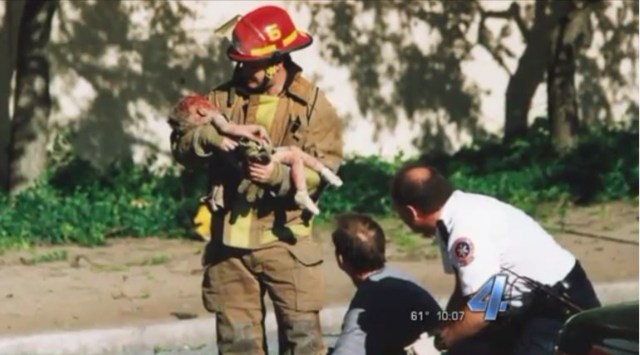
Observing Good Friday this year was a surreal experience for many Americans, as it fell on April 19, the day of the terrorist bombing in Oklahoma City.

The story of one survivor, Terri Talley, exemplifies the suffering experienced by our nation, as well as how new life was raised out of the ashes through those who were willing to pick up and carry a cross.

Employed by the Federal Employee’s Credit Union on the third floor of the Murrah Federal Building, that morning was extremely busy for Terri. She had just returned to work after spending several days away, and a stack of paperwork waited for her.

Catching up on work, Terri took a moment that morning to chat with her good friend and coworker Sonja Sanders. “For her, it was a big day. She had just been promoted into management,” states Terri, who is certain she was the last person to have spoken with her friend.

What seemed like just moments afterward, everything changed. At 9:02 am, thousands of pounds of explosives, assembled in the back of a Ryder moving truck parked in front of her office building, exploded.

Terri recounts: “I fell from the third floor to somewhere around the basement level. It was really really fast. It was so fast that I didn’t really know what had happened. The suction pulled me down so quickly.”

Surrounded by noise Terri says, “When I came to the first time, I thought: ‘This is a really bad dream. I will just go to sleep and when I wake up everything will be okay.’ But when I came to [again], everything wasn’t okay. I thought that I must have been in a really bad wreck, and I must be [pinned in the wreckage], because I couldn’t see anything. I couldn’t move. I couldn’t even scream for help. I would try, but I was really squished. And I thought to myself: ‘I hope someone finds me.’”

Terri was found by a firefighter who almost overlooked her. [Like being sealed in a tomb] she was completely encased in concrete and granite. Terri says: “There was just a little hole and a little piece of me was showing. He touched me and … started screaming: ‘Hey! I have a live one here, and I need some help!'”

After much hard work, Terri was freed and rushed to a nearby hospital, where her injuries were identified: temporary blindness, a concussion, temporary amnesia, a cracked first vertebra in her neck, a broken right ankle, skin damage on her foot, and multiple abrasions. During her seven days in the hospital, and for weeks following, a sense of shock permeated her life.

However, today, she has this powerful message for the world:

I always tell [even] the littlest of kids: ‘Don’t think that there is nothing you can do, because kids would color pictures and send me notes. Those made me feel like people were really thinking about me. You can always do something, no matter what age you are.’[i]

This illustrates that to experience Easter Sunday, we have to have a Good Friday.

Before new life could be experienced, before resurrection could be celebrated, before “alleluias” could be sung, before love could be won, somebody needed to pick up and carry a cross.

-First Responders needed to run toward an explosion.
-Firefighters needed to go into a burning building.
-Doctors and nurses needed to give all that they had to give.
-Friends and family and church members needed to pray.
-And little children needed to pick up some crayons and color a picture.

To make Easter happen for someone–today, right here, right now–we can all do something, be something, risk something, sacrifice something, give something, create something.

We can all pick up and carry a cross.

We can feed someone who is hungry.

Visit someone who is lonely.

Love someone who is hurting.

Include someone who has been left out.

We can mentor someone who lives in a foster home.

Care for someone who is sick.

Forgive someone who has made mistakes.

Believe someone who has been abused.

We can share grace with someone who faces discrimination.

Stand up for someone victimized by injustice.

Speak out for someone devalued by oppression.

We can stay close by and anoint someone who is dying.

Be a friend to someone who is grieving.

With the spirit of Mary Magdalene, let’s keep the faith, and let’s keep the faith going, keep it moving forward, all the way to the foot of the cross, through the betrayals, through the fear, through the denials, through the suffering, through the shame, all the way to the grave, even to a tomb that has been sealed by granite or concrete.

Let us keep doing whatever we can, with whatever we have, wherever we are, to love one another until the entire world is able to sing:

“Alleluia! Alleluia! I have seen the Lord!”


[i]https://www.nps.gov/okci/learn/historyculture/stories.htm

Remembering Harold Stewart

harold stewart pic
July 17, 1946 – January 1, 2019

As evidenced by the attendance here this morning, the shocking news of Harold’s passing has been devastating to many.

We did receive some comforting words. Harold did not suffer. There was no prolonged illness, no pain, no struggle. Harold was given the opportunity to celebrate Christmas with loved ones here in Fort Smith and then in Nebraska. Harold was happy. He was full and content.

But then we received a dreadful word, a word that was difficult for us to hear, that that his wife Audrey, whom we all know he adored, had to drive home from Nebraska all by herself as Harold’s body was sent home by another way.

“Home by another way.” Those are the exact words Matthew uses in yesterday’s gospel lesson to describe the journey of the Wise Men after they worshiped Jesus, laying down their gifts of gold, frankincense and myrrh. Having been warned in a dream not to return to King Herod, we are told that they went “home by another way.”

“Going home” is of course how we like to talk about death. We find great comfort in the old hymn:

O God, our help in ages past, our hope for years to come, our shelter from the stormy blast, and our eternal home.

“Home” is being with God. It is a place of perpetual belonging, acceptance, comfort and love. It is a place of eternal rest and peace.

In his book of Revelation, John described it this way:

“And I heard a loud voice from the throne saying,

See, the home of God is among mortals.

God will dwell with them;

they will be God’s peoples,

and God himself will be with them;

God will wipe every tear from their eyes.

Death will be no more;

mourning and crying and pain will be no more,

for the first things have passed away (Revelation 21).

So, in a way, going home is the goal of every believer. And as Christians, we believe that how we get there, how we go home, matters.

Do we go home following the instructions of King Herod? Do we go home by collaborating with the empire? Or do we go home by another way?

Do we go home following the way of greed and power, the way of self-centeredness and fear, the way of deceit and cowardice, the way of exclusion and isolation? Or do we go home by another way?

I believe the most comforting word, the most hopeful word for us this morning was what we first thought was a most dreadful word: “Harold went home by another way.”

As Christians, we believe Jesus showed us the way, the truth and the life, the very narrow, yet broad and expansive way home.

Matthew writes:

One day Jesus was teaching a large crowd of people. While he was still speaking, his mother and his brothers were standing outside, wanting to speak to him. Someone said to him, ‘Look, your mother and your brothers are standing outside, wanting to speak to you.’

But Jesus replied, ‘Who is my mother, and who are my brothers?’ And pointing to his disciples, he said, ‘Here are my mothers and my brothers!’ (Matthew 12:46-50).

In other words Jesus said, “here is my home, here is my family.”

I believe this story reveals that Jesus had a much broader, more expansive definition of home and family than we often do.

This, of course is why Gentile Wise Ones from the East were guided by that star to worship the Jewish Christ child: The people of God, the family of God, extends beyond Israel, and includes all people.

And so it was with Harold.

If I said to you, “Harold sure did love cooking for his family.” Your first response would probably be: “Which family are you talking about?”

Are you talking about the Stewart family? Or are you talking about his family at the Elks Lodge? Perhaps you are you talking about his family at First Christian Church?

Someone told me that he left Mike and Jane one of his famous pizzas in the fridge before he and Audrey left for Nebraska. That was so Harold. As his mother Roberta Ray used to always say: “It is very difficult to get Harold out of the kitchen!”

Harold also loved to make his pizza monthly for his Elks lodge family. And each time Harold invited me to the lodge and introduced me to other lodge members, it was obvious to me that he was introducing me to his home away from home. During the fish fry, he introduced me to his son Mike and daughter-in-law Jane, but he also introduced me to countless sisters and brothers. Chris Perry has written that Harold’s example and leadership is the reason they like to say that the “Elks Loge 341 is the friendliest little Elks Lodge in America.” That is because they are truly a family.

And of course this church was the beneficiary of having a brother named Harold in our family. Our brother Harold spoiled us with that infamous pizza recipe, the juiciest hamburgers you have ever tasted, unbelievable pulled-pork barbeque, and most recently, a Christmas dinner that featured a prime rib that Steve Riggs described best as “crazy good.”

What if I said to you that “Harold loved being there for his family?”

Well, are you talking about his sons Brian and Mike? Are you talking about one of his six grandchildren or his great-grandson?

Are you talking about his family at Fort Smith Restaurant Supply? Are you talking about the names of the people with whom he worked that he would text to his pastor requesting prayer for them when they were sick, experienced a loss or had a need?

Or are you talking about a child he mentored for the last three years at Howard Elementary School? Are you talking about the 12-year-old boy he visited once a week, oftentimes bringing him lunch, building his self-esteem, encouraging him in his studies and teaching him the importance of values that he may not learn in the classroom, like looking someone in the eyes while giving them a firm handshake?

Or are you talking about one of the children at the church who he made an effort to greet every Sunday morning before reaching in his pocket and giving them a piece of candy.

Yes, the good news is that Harold certainly went home by another way.

Speaking of going home by another way, it is no secret that Harold could literally build a home. His sons describe him as the best teacher they ever had. They even built an entire house together on Ten Killer Lake. Harold taught them how to do everything, from carpentry, duct work, heat and air, plumbing to laying tile and flooring. They said Harold knew how to crack a whip in such away that you never even knew there was a whip.

Harold could fix anything. His son Brian recalls that anytime he or Mike ever had a problem with their house, whether it be carpentry, plumbing, heating or air, all they had to do was call Dad. They said: “And it seemed like it was before we get the phone hung up the doorbell would ring and there would be Dad, standing there wearing a tool-belt around his waist and light on his head.”

With Harold, anytime something would break, his family said they never called a professional. They called Harold. Just like we did here at the church. Just like I am sure they did at the Elks Lodge.

Yes, more than anyone we know, Harold went home by another way.

Yesterday, someone asked Audrey: “How in the world did you drive home all by yourself?” She replied: “I had a good teacher.”

We all know how he absolutely adored and cherished his wife of 38 years, Audrey, but the love he expressed to Audrey always seemed to have an even higher purpose. For me it was like he was modeling for others what love looks like, what being a true gentleman looks like, what being an authentic disciple of Christ looks like.

As I watched him each Sunday morning, walking into the church building holding Audrey’s hand, opening the car door for her after church—it was as if he loved her as an example to the world how we ought to love one another.

Perhaps that is exactly what Harold was doing. Harold was not only a mentor to a young man at the Howard Elementary. He was trying to teach us all how to be wise men and wise women and go home by another way.

He was teaching us how share the inclusive, expansive love of God with all people; how to see and treat all people as children of God, as sisters and brothers; how to leave this world a better place than we found it.

Yes, as his sons have said, Harold was one of the best teachers we have ever had, for he taught us all how to be wise men and wise women by avoiding the way of King Herod that so many seem to be taking these days, and instead, choose another way:

the way of chivalry over the way of indecency,

the way of love over the way of indifference,

the way of compassion over the way of apathy,

the way of sacrifice over the way of self-centeredness,

the way of inclusion over the way of fear,

and the way of calmness and peace over the way of stress and worry.

And when we choose to go home by this way, not only will we change the world and leave this world a better place than we found it, we can rest assured that like Harold, we will see that the home of God is among mortals. With Harold, we will dwell with God and be God’s peoples. God God’s self will be with us.

To wipe every tear from our eyes.

Death will be no more;

mourning and crying and pain will be no more,

for the first things have passed away.’

There is a great old hymn with beautiful words that describes what Harold experienced the first day of this new year.

Just think of what it must be like to step on shore and finding it heaven,

Of taking hold of a hand and finding it God’s hand.

Of breathing a new air and finding it celestial air,

Of feeling invigorated and finding it immortality

Of passing from storm and tempest into an unbroken calm,

Of looking up and finding it home.