Spring Is in the Air

lilies

“As he was now approaching the path down from the Mount of Olives, the whole multitude of the disciples began to praise God joyfully with a loud voice for all the deeds of power that they had seen, saying,
‘Blessed is the king who comes in the name of the Lord!
Peace in heaven, and glory in the highest heaven!’

Some of the Pharisees in the crowd said to him, ‘Teacher, order your disciples to stop.’ He answered, ‘I tell you, if these were silent, the stones would shout out’”(Luke 19:37-40).

This year, I believe what makes Holy Week special in Oklahoma is the way it corresponds with the unmistakable arrival of spring. The freezing temperatures of this Palm Sunday weekend appear to be the last gasp of winter. It is as if the entire creation is joyfully crying out with a loud voice: “Blessed is the king who comes in the name of the Lord!”

Trees budding; thunder booming; flowers blooming; grass greening; lilies rising; birds singing; sun shining—our world seems to be proclaiming that death has finally been transformed into life! It is Holy Week, and spring and hope and good news is literally in the air.

As disciples of the Lord, our mission is to share this good news with all people. And if we do not do it, Jesus says that the earth itself will shout out! May the arrival of spring remind us each day of this mission.

When we see new leaves in the trees dancing in warm breezes with new life, may we be reminded to hug those experiencing grief and loss.

When we hear the thunder, may we be reminded to comfort those who are afraid.

When we see flowers opening their blossoms toward the sun, may we be reminded to offer a smile and a kind word to those who are discouraged.

When we walk on green grass, may we be reminded to welcome those who feel lost and marginalized.

When we see lilies rise from the earth, may we be reminded to stand tall for justice on the behalf of the victims of narrow-minded bigotry.

When we hear the birds singing harmoniously together, may we be reminded to worship together in community.

And when we feel the warmth of the sun on our faces, may we be reminded to always let the light of love shine brightly for all people.

God Fights for Us – Remembering Jane Puckett

3597981

I believe this ground, this sacred place where tears have cried a river, is reminiscent of that place the Israelites found themselves in after they were liberated from Egyptian bondage.

With Pharaoh’s army advancing behind them, it was as if their whole world was suddenly crashing down upon them. Because standing before them stood what they perhaps feared the most, the Red Sea. It stood before them like the casket of a loved one for it most certainly represented the end of the line, the end of dreams, the end of hopes. For the Israelites, encamped by the sea with an army closing in behind them, the sea represented certain death.

Overcome by fear, the Israelites did not know what to do. They could not go back to the good old days, and going forward into the promise of good new days seemed impossible. Paralyzed by grief, unable to take one step forward, they did the only thing they could do. They cried out. They cried out to the Lord. They cried out to Moses. They cried out to anyone who would hear. They cried out in disbelief. They cried out in anger. They cried out in fear. They cried out in grief.

But then, the good news. Moses said to the people: “Do not be afraid, stand firm, and see the deliverance that the Lord will accomplish for you today; for the Egyptians whom you see today, you shall never see again. The Lord will fight for you, and you have only to keep still.” (Exodus 14: 13-14).

And we know the rest of the story: The Red Sea was not the end of the line. It was not the end of their dreams. It was not the end of their hopes.

“Then Moses stretched out his hand over the sea. The Lord drove the sea back by a strong east wind all night, and turned the sea into dry land; and the waters were divided.”

Then the same Israelites who were unable to move forward, unable to see beyond the sea, or the casket in front of them, rose up and walked into the sea of their fear as if it were dry ground. They rose up and moved forward into the future with a renewed confidence and a resurrected strength. And this is how they were able to make it to yet unimaginable promised land.

Gary, Josh, Heidi, Amy and Mike, although you cannot go back to the good old days, this is how you and your family will be able to move forward this day into unimaginable good new days. The good news is that the Lord will fight for you. And the really good news is that you only have to stand firm and keep still.

There is no other way that I can possibly explain the industrious strength and the unfailing patience of Jane Puckett. There is no other explanation for her tenacious work ethic, serving her country working for Vance Air Force Base with aircraft maintenance for 42 years. She only recently retired because her unbeknownst cancer made her work physically impossible.

And how else do you account for her courageous battle she fought once she discovered her stage-four cancer that started in her lungs but had metastasized into her brain? How do you explain someone who was as sick Jane, but never complained?

And if anyone had any reason to complain it was her. To work as hard as she did for 42 long years without the opportunity to enjoy a well-earned retirement would make even the sweetest personality bitter. The truth is: a diagnosis like Jane changes most people.

But not Jane. Jane remained firm. She was still the sweet, fun-loving person that she had always been.

The one who loved to go snow skiing in Colorado and water skiing in Canton Lake.

The one who loved to patiently cross stitch gifts for her family and friends.

The one who loved to make baby blankets that were so beautiful that the mothers who received them would hang them on the wall for all to see instead of wrapping them around their babies.

The one who never said anything negative about anyone else.

The one with terminal cancer who had every right to be jealous of those who arbitrarily live into their seventies, eighties and nineties, but still refused to join in any conversation that demeaned another.

The one refused to be bitter and impatient with anyone, including herself and God.

She was still the same firm and patient one who not only tried to make caramel once, only to have it explode sending its sticky shrapnel flying all over her kitchen, but she was the one who had the audacious forbearance to try it again, albeit with the same result.

Even with a terminal disease, she was still the same person who loved to sit on the back porch with Gary and her beloved pet Weazer enjoying a cold drink on a summer evening, thanking God for the gift of her life.

Now, some may say that her kids should probably take some credit for some of her patience and strength, for they were both known to test it a time or two or thirty. Like the time one winter Josh decided to go skiing in the back yard. However, the flat plains of Oklahoma have never been very conducive to backyard snow skiing. But Josh, being a crafty and smart kid, some would argue “perhaps a little too smart for his own good,” decided he would ski off the roof of the house.

Sitting inside, Amy was watching the snow fall out the window, when here comes Josh flying off the roof like some Nordic Olympic ski jumper. “Mama, Josh just skied off the roof!”

Amy also remembers trying her mama’s patience by doing foolish things like walking through a glass door, without first opening that door, requiring a multitude of stitches.

However, as much as these kids tried her patience and tested her strength, I still believe that her strength, her courage, and her patience, especially in the face of her illness, came from a much higher place. I believe it came from the God who continually whispered words to her throughout her living and perhaps especially in her dying. It was the same words whispered to Moses and to the Israelites when they were tested in the wilderness: “The Lord will fight for you, and all you have to do is be still.”

The good news is that her fight is now over. Jane has crossed the sea. Her enemy, her cancer, has been defeated like Pharaoh’s army. She has been led by a pillar of fire and cloud, led by the very hand of God, into a promised land.

And the good news is that as the Lord fought for her, the Lord will fight for you too, and all you have to do is be still. Be still, and then move forward, holding onto one another, holding onto the memory of Jane’s courage and strength, while holding onto the hand of God.

I want to close by reading some words that I read at my grandmother’s graveside service. She also died in her sixties with lung cancer that also had metastasized. However, because of her courage and strength, because she, like Jane, never complained, never had a bitter bone in her body, never uttered a word of malice against anyone, there was no doubt in my mind that before she died, God was there fighting with her and for her. And I knew that everything was going to be alright.  The following are those words (author unknown):

Although Cancer seems to destroy so much, when God is fighting for us, it is obvious that there are many things that cancer cannot do. Cancer, in fact, is very limited in the presence of God. [Like my grandmother, Jane Puckett was a testimony of this].

Cancer is limited.

Cancer cannot cripple love.

It cannot shatter hope.

It cannot corrode faith.

It cannot eat away peace.

It cannot destroy confidence.

It cannot kill friendship.

It cannot shut out memories.

It cannot silence courage.

It cannot invade the soul.

It cannot reduce eternal life.

It cannot quench the Spirit.

It cannot lessen the power of the resurrection.

Thanks be to God.

Good News of Christmas

no room

Sermon preached at Mt. Moriah Community Church’s Christmas Concert, Farmville, December 23, 2015

Luke 2:1-7 NRSV

No place. No room.

Adam and Eve were in the garden trying to cover up their sins. Ashamed of what they had done, ashamed of who they had become, they saw no way out. So they went into hiding. But what they did not know was that even if they used all of the fig leaves in the garden, there was no place on earth they could hide from God.

As the sun was about to set on them, literally and figuratively, they heard a rustling in the trees, footsteps in the grass, for God showed up! And although they could not go back to the good old days and undo their mistakes, God surprised them by using God’s own hands, making garments of skin and clothing them with grace.

Consumed with hate, Cain kills his brother Abel. He is exiled from the garden into the land of Nod. But just when he thought his new place would be God-forsaken, God forgotten, God-cursed, God showed up and put a mark of protection, a mark of mercy on Cain which would stay on him for the rest of his life.

Abraham and Sarah were enjoying retirement. Their old age, frail bodies and declining health told them that there was no way they could ever be used by God. They were in no place to ever make a difference. But just when they thought they could just sit back, watch the Wheel of Fortune and Jeopardy and just turn in, God showed up with a purpose that was so miraculous, it caused them to laugh out loud!

Moses was a fugitive on the run. Running from his sins. Running from himself. Running from God. Then, just when he thought he was in a place where he had run away from it all, a bush suddenly bursts into flames. God showed up. God showed up saying, “I’m sending you Moses, yes, you Moses, a sinner with a speech impediment and a thousand other excuses, I am anointing you to stand up to the Pharaoh to proclaim good news to the poor, freedom for the prisoners and recovery of sight to the blind, to set the oppressed free.”

Soon after the children Israel were set free from slavery, they they hit a dead end with Moses in the wilderness. Pharaoh’s army was advancing behind them and the Red Sea stood before him. There was no way to escape. No place to go. Then, when they had all but given up, complaining to Moses that they would have been better off dead back in Egypt, at the very moment they lost all faith and all hope, God showed up. God showed up and made a way when there was no way. God showed up and brought hope in the midst of despair, faith in the midst of doubt, victory in the midst of defeat and life in the midst of certain death.

It was a dangerous time in a dangerous world. Mary, who was with child, and her betrothed husband Joseph, were on the road to pay taxes to a puppet king in an occupied territory. The road was long, and being with child made the road especially difficult. And to make things more difficult, when it was time for the baby to be born, they discovered that there was no room in the inn. There was no room.

But this was not the first time God heard these words. There is no room. There is no place. There is no way. There is no hope.

So, as God had proved over and over throughout history that there is nothing in all of creation that can separate the world from God’s love, God, once again, showed up! In spite of every demonic power that tried to thwart God’s coming, God came.

And the good news of Christmas is that God still comes. And there is nothing in all of creation, nor things above nor below, nor angels nor rulers, nor things present nor things to come, nor life nor death that can stop God from coming.

Last Sunday I shared the story about a certain Christmas play that a local church was presenting. You know the kind. I used to be in one every year when I was growing up. Three boys playing shepherds are bare-footed, wearing bath robes with towels wrapped around their heads and carrying long sticks. And three more boys playing wise men wearing cardboard Burger-King crowns wrapped in Reynolds Wrap are carrying boxes decorated with left-over Christmas garland. They all walk up on the chancel, greet Mary and Joseph, and bow down before the baby Jesus.

Well, during one particular play, after the wise men and shepherds came and bowed before Jesus, a spokesperson for the wise men made an announcement: “We three kings have traveled from the East to bring the baby Jesus gifts of gold, circumstance and mud.” Of course, laughter filled the sanctuary.

But you know what they say: “out of the mouth of babes.”

The truth is that when God wanted to reveal God’s love for the world, God came to us through the person of Jesus born in Bethlehem to meet us in all of our circumstances.

Through Christ, God came Adam and Eve and God and comes to meet us hiding in our circumstance of sin and shame and offer us forgiveness.

Through Christ, God came to Cane and God comes to meet us in our circumstance of living in a hate-filled, seemingly God-forsaken and God-cursed world and offers us mercy.

Through Christ, God came to Abraham and Sarah and God comes to us to meet us in the circumstance of our old age, tired bodies and declining health and offers us new life.

Through Christ, God came to Moses and God comes to meet us in the circumstance of our wandering and our running and offers us a divine purpose.

Through Christ, God came to the children of Israel and God comes to us in our circumstances of dead ends and utter despair and offers us a new way and a new hope.

Through Christ, God came to Mary and Joseph and God comes to us in the circumstance of being told there is no room for you, there is no place for you, there is no way for you, and there is no hope for you and says, “Oh, yes there is!”

The good news of Christmas is that God comes to us in all of our circumstances and offers us the assurance that there is no circumstance on earth or in heaven beyond God’s amazing grace.

And coming as a human being, coming into the world as a fleshly body, a body made up of dust and water, God comes and joins us in our mud and all of our muck.

Through Christ, God came into and still comes into our muck of pain and offers comfort.

Through Christ, God came into and still comes into our muck of sickness and brings healing.

Through Christ, God came into and still comes into our muck of loneliness and shares divine presence.

Through Christ, God came into and still comes into our muck of fear and gives peace.

The world says that there is no room, that things are not going to get any better. The world says there is no way, that the good old days are long gone. The world says that there is no place where evil will not get the best of you. The world says there is no hope because in the end, everyone dies.

Then a young woman named Mary goes into labor as God says: “I am always working all things together for the good!” A baby cries in the darkness as God says: “The best days of life are always before you.” The child cries in the night as God says: “Although you cannot go back to the good old days, good new days are always coming, even if you are about to draw your last breath!”

The world says: “There is no room. You will never amount to anything. You are a loser. You are insignificant. You are worthless. You are not a good person.”

The world says: “There is no way. No matter how hard you try, sin always has a way of getting the best of you. You’ve made too many mistakes.”

The world says: “There is no place for you as nobody really cares about you.”

The world says: “There is no hope. You and this world would be better off if you were dead. For you, there is no room, no way, no place, no hope.”

Then a baby is wrapped in bands of cloth born to underserving, unwed teenagers in an occupied land, as God says: “I love you just as you are, and I come to wrap you in my mercy, clothe you with my grace. I know your sins and I forgive you. I will always be with you and never away from you. I will always be for you and never against you. I will always stay by your side fighting for you, even if it means dying for you.”

The world says: “There is no way the churches in this town will ever work together. Racism will never end. Bigotry will never cease. The railroad tracks will always divide. There is no room for compromise. There is no place for reconciliation. There is no hope for unity.”

Then a brown-skinned baby’s birth to a Hebrew woman is announced by angels: “I am bringing you good news of great joy for all the people: white and black, red and brown, Aramaic-speaking and foreign-speaking, gay and straight, rich and poor, documented and undocumented, citizen and refugee. For you, all of you, a baby is born who is Christ the Lord and through him there is no longer Jew or gentile, slave or free, male or female for all are one.”

The good news of Christmas is although the world often seems dark, the light of God will not be diminished.

The good news of Christmas is although racism and bigotry will try to divide us, the good news that unites us will not whitewashed.

Although the sounds of guns and violence are deafening, the Word of God will not be silenced.

Although the rich will always try to rob the poor, the justice of God will not be defeated.

Although the powerful rule with fear, the prince of peace will not be conquered.

Although hate seems to have its way, love will not lose.

Although sin seems to get the best of us, grace will not fail.

Although despair seems to overwhelm, hope will not fade.

Although death seems to be final, the kingdom of God will reign forever and ever.

Hallelujah. Hallelujah. Merry Christmas.

God in Paris

paris 1Fred Rogers, an ordained Presbyterian minister and children’s television host, once said: “When I was a boy and I would see scary things in the news, my mother would say to me: ‘Look for the helpers. You will always find people who are helping.'”

When horrific tragedy unfolded in Oklahoma City in 1995, New York City in 2001, and in Charleston, Kenya, Lebanon, and Paris in 2015, we witnessed demonic evil personified through the selfish actions of terrorists influenced by pride, hate and bad religion.

The evil was real, yet unimaginable; heart-wrenching, yet heart-numbing. The evil produced deafening silence and loud cries of anguish.

However, during the same dark moments, we witnessed holiness personified through the selfless and sacrificial actions of police officers, firefighters and other first-responders influenced by pure love and authentic faith.

We also witnessed love through the prayers, thoughts and actions of God’s children: Muslim, Jewish, Taoist, Hindu, Buddhist, Christian and others.

The love expressed was real yet unimaginable, heart wrenching yet heart numbing. The willingness of people to suffer with, and even sacrifice their lives for, strangers produced deafening silence yet loud cheers of praise.

And the good news is this love that is pure, holy, sacrificial, real and unimaginable, unspeakable and cheerful, suffering and shocking, always overcomes the hate. This light always overcomes the darkness. This good always overtakes the evil.

So, in the midst of every tragedy, “look for the helpers. You will always find people who are helping.”

Consequently, in the midst of every “scary thing” you will always find hope. You will always find God.

It’s November

emptychair

It is November, and our world seems to get darker by the day. Sunny days are few and far between. There is a leak in our roof. Our car needs new brakes. A friend has let us down. Politicians continue to disappoint. Refugees despair as doors close. An airliner crashes killing hundreds on board. ISIS marches on. GI Joe was not the hero we thought he was. Promises have been broken. Trust has been betrayed. Relationships have failed.

It is November, and in a few days, we are somehow, someway supposed to gather around a table and a turkey and be grateful.

And this year, for the very first time, there will be an empty chair or two around that table. There will be sorrow, and there will be grief around that table. This year, there will be despair around that table.

During a famine, a widow once told Elijah: “I only have a handful of flour in a jar and a little oil in a jug. I am going to prepare one last meal and gather around the table one last time with my family. And then we will die” (1 Kings 17).

Elijah responded: “Thus says the Lord God of Israel: the jar will not be emptied, and the jug will not fail.” And Elijah was right. The widow and her family were able to eat from that jar and that jug around that table for many days and endure the famine.

This is how we can gather around a table and a turkey and be grateful this November. Because despite the dark and damp days, despite the closed doors and the shattered dreams, despite the sorrow and the grief, God promises that our jars will not be emptied and our jugs will not fail. God promises that hope will never disappoint us, for God’s love for us never ends.

The good news is that with the help of God we will endure these dark days of November until hope springs eternal.

Joseph: More than a Name – Remembering Joseph Scott Thorne

Joseph's Coat of Many Colors
Logo Designed by Joseph Scott Thorne for His Handyman Ministry
Genesis 32:22-30; 37:3

Since Scott and I became friends fifteen years ago, he and I had numerous conversations about his name. Although he did not have a big problem with his middle name Scott, the name by which he was most commonly known, he actually preferred his first name Joseph; because, like the Jewish people of the Bible, Scott understood that names are important.

Joseph was his favorite name for a couple of reasons. First, Joseph reminded Scott of Jesus’ earthly father, the selfless carpenter who had the privilege of raising the savior of the world.

Although Scott was always quick to admit that he was no carpenter, Scott did consider himself to be a pretty decent handyman. And not only was he a decent handyman, Scott was a most selfless handyman. As far as I know, Scott never profited from any of his labor.

I could literally stand up here for the rest of the day and talk about the countless mission projects that Scott worked on voluntarily in Farmville for the First Baptist Church, for Monk Memorial Methodist Church, Emmanuel Episcopal Church and the Farmville Community Soup Kitchen. Scott spent incalculable hours, many times working all through the night, painting, refurbishing, repairing, restoring and landscaping.

Scott also shared his talents by working on many homes that needed repair throughout eastern North Carolina. Additionally, Scott volunteered at a homeless shelter in Tarboro doing whatever they needed him to do. And just this past summer, he helped our church build a handicap ramp for someone in Farmville, as he built many handicap ramps in this community with the West Edgecombe Baptist Church.

Scott would do anything that you needed him to do, and Scott never expected anything in return. In fact, Scott volunteered to serve, without pay, on staff of the First Baptist Church in Farmville as the Church Sexton. Anytime anything needed repairing or refurbishing, the church could count on Scott.

Along with local mission projects here in eastern North Carolina, Scott traveled to Gulfport, Mississippi to repair homes with the First Christian Church of Farmville after Hurricane Katrina. Scott and Bridget also traveled to Moldova on a mission trip with the Oakmont Baptist Church of Greenville.

Like the Good Samaritan, Scott never passed up any opportunity to help someone in need. And he literally never passed anyone on the side of the road who needed assistance. I bet no one in this room has changed more flat tires for strangers than Scott Thorne.

Scott was always volunteering to do things for me personally. Scott repaired my lawnmower, repaired my son’s electric scooter, repaired my washing machine, repaired my dishwasher, repaired cracks in my sheetrock, caulked my windows, painted my ceilings and spread pine straw around my bushes. Scott was the consummate giver, always doing whatever he could do to selflessly help others.

Like I said, I could talk all day about Scott’s selfless ministry, but Scott would not want me to do that. Because Scott’s favorite name was Joseph.

Scott preferred the name of a selfless handyman who had the honor of raising the savior of the world, yet in the scriptures, does not utter a single word. Scott’s favorite name was Joseph, the name of one who selflessly gave himself to the world, yet never drew any attention to himself and never asked anything in return for his selflessness.

Scott also loved the story of Joseph in the Old Testament, the favorite son of Jacob. In fact, Scott’s dream was to start a ministry based on this story called: Joseph’s Coat of Many Colors. Earlier this year, he designed a logo that he wanted to put on an enclosed tool trailer to use to offer his many gifts with any who needed them, whether it was painting a church or a house or repairing a washing machine. Bridgett said that the T-shirts Scott ordered with the Joseph’s Coat of Many Colors logo were just delivered to their home.

The following are Scott’s words that he put on Facebook earlier this year to describe his dream:

I am trying to start up a new ministry to occupy my time and serve God. Over the past eight years, I have done much needed work on four churches and on many homes of elderly and disabled community members. My wife and I want to continue this ministry. I am not asking for money from my family or friends, only prayers. This type of ministry is not expensive. I always refer back to the time I helped a widow who had a broken shower. She took pan baths for six months, because her hot water nob in her shower was broke. With less than four dollars for a part and with a few tools, I was able to change her life. All I asked was for her to know that God loved her and for a hug. Please lift me and my wife up as we plan a more detailed and organized ministry. The “many colors” in our ministry name represent many aspects of our ministry.

I am not sure I can even remember the last time Scott introduced himself to anyone as Scott. He always introduced himself as Joseph. Sometimes Joseph Scott Thorne; but never just Scott Thorne.

Like the people of the Bible, his name was important to him. Moreover, Scott also understood that names have the peculiar power to bless or to curse. Like few others we know, Scott understood the popular lie that we have been taught by our culture that sticks and stones may break our bones, but names will never hurt us.

Scott understood that names do hurt. He would agree with David Lose, President of the Lutheran Seminary in Philadelphia who has written:

“Whether they are names we have been called by others, or those we have called ourselves, names can exaggerate our inadequacies or herald our failures; names can expose our weaknesses or pay tribute to our bad decisions.”

It was no secret that Scott suffered with mental illness. Scott suffered with it, and in a world that does not treat mental illness like other diseases, Scott also suffered for it.

And I believe it needs to be said today, and said clearly, that Scott did not take his life. The disease of mental illness took his life.

Scott would be the first to admit that he had a disease. He would often say something to me in jest that was simply hilarious. For example (now, remember I am a pastor): “Hey Jarrett, why don’t you and I go out tonight, buy us some lottery tickets, get us a case of beer and a carton of cigarettes and just have a big ol’ time.”

Or, after he joined the staff of First Baptist Church as our Sexton: “Hey Jarrett, I am going to get me some business cards that read ‘Joseph Scott Thorne: Sexton. It’s not what you think.’”

I would say, “Scott, you’re crazy.”

And each time he would respond, “Yeah, and I’ve got papers to prove it!”

On some days, Scott could joke about his mental illness. But on many days it was no laughing matter.

It was no secret to anyone that Scott struggled; not just recently, but for much of his life. Some days he felt as if he was blessed by God, but other days, perhaps most days, he felt as if he had been cursed by God.

And more than anything, all Scott wanted was to know that he was blessed by God.

This is the real reason I believe Scott’s favorite name was Joseph. Joseph: the favorite son of Jacob, the fulfillment of the promise of God to Jacob.

None of us will ever understand Scott’s struggles, much like we will never understand the struggles of Jacob. Much like Scott, Jacob also struggled with his name. Jacob, literally, meant “heel,” as he was named for grasping the heel of twin brother Esau in the womb to prevent him from being the firstborn. And ever since that day, Jacob lived his life grasping and struggling.

One might say that Jacob’s grasping and struggling came to a head one night on a bridge over troubled waters. It was there we are told that Jacob wrestled all night. No one knows exactly with whom Jacob wrestled or what monsters assailed him in the dark of that night. Perhaps it was his hopes and his fears; his dreams and his nightmares; his present and his past; his regrets and his hopes. Was it a demon? Was it an angel? Was it an enemy? Was it a friend?

Whatever it was, the struggle was real. The struggle was spiritual. The struggle was mental. And the struggle was even physical, as he dislocates his hip during the fight.

Jacob, realizing that he is in the presence of something real, but at the same time, something supernatural, asks for that which he had always yearned, to be blessed. Because more often than not, Jacob believed that he was somehow cursed.

It is here that the story takes a strange but wonderful twist as Jacob’s opponent demands to know Jacob’s name before he will bless him. But names in the biblical world are never simply names; rather, they are descriptors, tell-tales, indicators of one’s very character.

And Jacob’s name, literally, “heel,” is no exception. Jacob was the one who was grasping to be blessed by God even before he was born. And he’s been grasping ever since, struggling to make sense of the world and to find his place in it.

In asking for his name, the demon or angel or enemy or friend was demanding that Jacob confess— confess his grasping and struggling, confess his pain and brokenness, confess his fears and failures, confess that he can no longer live in this world the way he has been living.

And when he does, when he confesses that he is at the end of his rope; when he confesses he has simply had it with his life; when he confesses that he has had all that he can stand; when he confesses that he wants the pain and the suffering, the dark voices of torment lurking inside his head and in his soul to finally be silenced, something extraordinary happens. Something miraculous happens.

Amazing grace happens. Unconditional love happens. Eternal salvation happens. Resurrection happens. Because God happens. God shows up, and God refuses to allow Jacob’s name, Jacob’s ceaseless struggles, Jacob’s relentless grasping, to define him forever.

So, God gives Jacob a new name, a name that signifies to the world that although he struggled his entire life, struggled with humans and with God, struggled with angels and with demons, he has prevailed. He has finally and eternally prevailed. He has seen God face to face, and his life has been preserved.

Thus, Jacob enters a new future with a new hope. Jacob is given a new name and a new life, a name and a life that he passes down to each of his descendants, but somehow, especially to Joseph, his favorite son, his favorite name.

Joseph: It is just a name. But, it is much more than a name.

Joseph: the favorite name of the one who had been grasping so.

Joseph: the favorite name of the one who had been struggling so.

Joseph: the favorite name of the one you had been yearning to be blessed by God so.

Joseph: the fulfillment of the promise of God to the one who found himself at the end of his rope.

Joseph Thorne, your name means that your dark struggle on the bridge over troubled waters is over.

Joseph Thorne, your name means that although the fight with unseen monsters appears to have gravely wounded you, the good news is that you have prevailed.

Joseph Thorne, your name is the revelation to the world that you have fought the good fight, you have finished the race, you have kept the faith, and you have struggled with humans and with God, with angels and with demons; with others and with yourself, and you Joseph, you Joseph Thorne have won.

Joseph Thorne, you have finally been given that which you have always yearned. You have finally been blessed by your God. You have been wholly, completely and eternally blessed.

Joseph Thorne, you have seen God face to face, and your life is now whole, complete and eternal; your life, Joseph Thorne, has truly been preserved.

Quiet, Compassionate, Generous – Remembering Earl Umphlett

Earl Umphett

There are basically two types of Christians in this world.

First, there are the loud, demonstrative, sanctimonious and pretentious Christians. Every time the church doors are open, they are present. Every time they do a good deed, you know it. They speak very openly about their faith, even to total strangers. They never miss an opportunity to teach a Sunday School class or chair a church committee; lead a prayer, sing a solo or read scripture in worship. They are all over social media, posting and tweeting all sorts of religiosity. And if they are not careful, they can come across to others as arrogant, superior, holier-than-thou, and even fake.

That’s the first type.

Then, there is Earl: quiet, unassuming, inconspicuous, real, not a pretentious bone in his body. He modestly served his Lord reticently, yet compassionately and generously. Earl served his Lord, not so much in the church, as in the community.

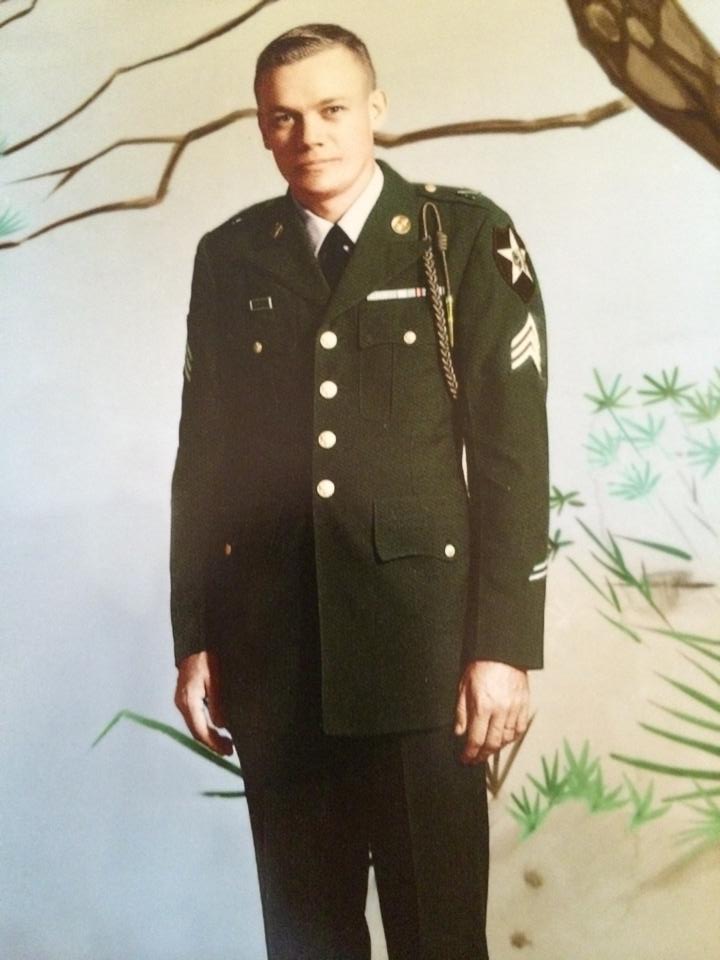
Earl enlisted in the US Army at age 17. He was promoted to staff sergeant, while he served for ten years through both the war in Korea and the war in Vietnam.

But how many of his friends and clients knew this? How many of his neighbors knew this? For Earl never bragged about his generous service to his country. He never boasted about any of his military accomplishments.

Earl was also a generous supporter of scouting for most of his life. I am certain that one thing that he really appreciated about his church is our sponsorship of Cub Pack 25. But how many of his friends and clients knew this about Earl? How many of his neighbors knew of his compassionate contributions to the youth in this community?

Donna said that she remembers first witnessing this quiet, yet compassionate faithfulness when they learned that Danielle Nelson, a nine-year old girl from Bethel, was diagnosed with cancer. She lived only one more year. Donna says she will never forget the sincere empathy that Earl possessed for that little girl and her family and the quiet, yet generous compassion that he shared with them.

Donna remembers many times watching Earl quietly being moved to tears, after they learned someone, especially a small child, was diagnosed with cancer or another dreadful disease. And she said that his compassion almost always led him to give generously.

But how many of his friends or clients knew this? How many of his neighbors or church members knew this?

I believe Earl possessed something that more Christians need to possess in this world, and that is: the quiet empathy of Christ.

Over and over, the gospels speak of Jesus being “moved with compassion.” And the Greek word translated “moved” is a deep, inward, visceral word. It is a special reaction that takes place deep within someone’s soul. And usually, only someone who is very close to one who has this reaction notices it.

When Jesus encountered the hungry Matthew says, “he was moved with compassion.”

When Jesus encountered the helpless who were: “like sheep without a shepherd;” he was moved with compassion.”

When Jesus encountered someone who stricken with the dreadful disease of leprosy, Mark says, “he was moved with compassion.”

Jesus was moved with a deep, visceral, real compassion.

This was type of Christian that Earl was.

Earl lived his life with a quiet faithfulness and dedication. He loved and took care of his family, his children and grandchildren, unassumingly, yet compassionately and generously. He never bragged about being a good father or grandfather. He never flaunted his love. For his love was deep. His love was visceral. His love was real.

Earl took care of his clients with the same quiet, faithful dedication. He worked hard until the job was finished, yet he never sought any accolades or special recognition. Because his dedication was deep. His dedication was visceral. His dedication was real.

Earl gave generously to this community whenever he learned of a need. But he always gave quietly, almost always in cash, not expecting anything in return, not even a tax deduction. And he was a CPA! Because his generosity was deep. His generosity was visceral. His generosity was real.

Donna said that Earl loved the scriptures; however, he preferred the scriptures that were the direct words of God, as opposed to, for example, the Apostle Paul’s interpretation of those words. Some might call Earl a “Red-letter Christian,” in that the words in the Bible written in red letters, the direct words of Jesus, meant something a little more to Earl.

For those of us who really knew Earl, this should not surprise us. For in his first recorded sermon, Jesus spoke the following words:

Beware of practicing your piety before others in order to be seen by them; for then you have no reward from your Father in heaven.

So whenever you give alms, do not sound a trumpet before you, as the hypocrites do in the synagogues and in the streets, so that they may be praised by others. Truly I tell you, they have received their reward. But when you give alms, do not let your left hand know what your right hand is doing, so that your alms may be done in secret; and your Father who sees in secret will reward you (Matthew 6:1-3).

Earl would quietly attend our Wednesday night suppers at church with Donna. As soon as they walked through the door, they would be greeted by Kim, our church administrative assistant who takes up money for each plate which costs $6.00.

Kim says that every time before Earl would pay for him and Donna, he would say the same thing. He said: “Look, I will make a deal with you. I don’t have any money on me today. But Donna will wash all of the dishes.” Then, he would whip out a hundred dollar bill, put it in the basket, and say, “Keep the change.”

The only reason that I know this is that Kim tells me this every Thursday morning after this happens. She says: “And he never says what all of the extra money is for! When he first did it, I thought he was pre-paying for him and Donna for an entire year of suppers. But, every week, he keeps doing it.”

Knowing Earl, I believe when he walked into our fellowship hall, he immediately saw a table full of children who come to our church without their parents. And looking at them, he knew could not afford the $6. Thus, I believe that when he saw them, he was moved with compassion. He had a deep, visceral, real reaction which led to his quiet, yet passionate; secret, yet generous donation.

Every Thursday, Kim would ask: “Why does Earl keep doing this?”

I would respond today: “That was just the type of Christian that Earl was.”

The good news is that now as Earl has given generously to us, compassionately, yet quietly, and secretly; his heavenly father who sees in secret has rewarded him.

For when Earl’s heart stopped on Thursday evening, I believe God was moved. Knowing the pain that would be experienced by Maurey and Brent, by their children, and by Donna, I believe God was moved with the quiet empathy of Christ.

And then I believe God came. God came to Earl. God came quietly, and God came compassionately. God came quickly, and God came generously. And the generosity of God is deep. The generosity of God is visceral. The generosity of God is real. And the good news is: the generosity of God is eternal.

And as God came and gave God’s self to Earl compassionately, generously and eternally, God promises to come to you Donna, to you Brent and Maurey, to all of Earl’s family and friends. For God knows your pain. And God is deeply moved by it.

God will come to you with the same empathy of Christ we have been blessed to know through Earl.

Because that is just the type of God our God is.

Final Lessons from My Wheelchair (or Crutches)

man-in-crutchesTottering around on my crutches has been a royal pain. It has been a pain in my arms, shoulders, back, and in my good knee. It has also been a pain in my spirit.

However, what has gotten me through these painful six weeks, besides my wife (God bless her), was the hope that I would one day be able to walk, even run, again. My pain was not forever.

This is the great hope of our faith in God. No matter how weak or disabled we are, no matter how much pain we are in, even if we are suffering on the brink of death, we possess the hope that our weakness and pain is not forever. We have the hope that we will one day have the strength to walk, and to even run, without pain.

Consequently, there is nothing in all of creation, neither in life, nor in death, that we cannot get through. The hope of our faith will see us through anything. I love the way the prophet Isaiah speaks of this great hope:

Have you not known? Have you not heard?

The Lord is the everlasting God,

the Creator of the ends of the earth.

He does not faint or grow weary;

his understanding is unsearchable.

He gives power to the faint,

and strengthens the powerless.

Even youths will faint and be weary,

and the young will fall exhausted;

but those who wait for the Lord shall renew their strength,

they shall mount up with wings like eagles,

they shall run and not be weary,

they shall walk and not faint (Isaiah 40:28-31 NRSV).

Thanks be to God.

Only Harry: Remembering Harry H. Albritton, Sr.

Let me share with you how I usually prepare a person’s eulogy. I think about the person’s life, their contributions, their personality, and then I find a biblical character or story that parallels, or in some way relates to, the person. This is how I usually prepare. However, when it comes to Harry Humphrey Albritton, Sr., usual preparation does not apply. Think with me. Is there one biblical story, or single biblical character, or anyone else you know for that matter, who compares to Harry?

During his final hours, the Hospice nurse came into the room to tell the family what to expect. She concluded by saying, “but everyone’s different.” I pointed to Harry and said, “And you have no idea just how different this one is.”

How many people do you know who played basketball well into his seventies, and played basketball very competitively, physically, tenaciously, always to win; taking on Rocky Stone and me, two against one, when Rocky and I were still young enough to play basketball?

Only Harry.

Who do you know who, when he began having trouble sleeping this past this year, went online and ordered himself a military cot, because he remembered the four years while he was serving our country in the Air Force, getting the best sleep of his life?

Only Harry.

How many people do you know who always, I mean always, told you exactly what he thought to be the truth, even when it came to religion or politics, even when he knew that what he believed to be the truth would make you angry and probably dislike him?

Only Harry.

How many people do you know who, when their pastor dropped by to see him one evening after the pastor got word that he was extremely sick, was honest enough to tell the truth when the pastor asked if there was anything the pastor could do to help, by answering: “Yeah. You can get the hell out of here!”

Only Harry.

How many people do you know who, while in the hospital the day after no one thought he would make it through the night, when his pastor came to see him on crutches following knee surgery, honestly greeted his pastor in the following manner:

“Did you come to see me on crutches?”

“Yes, I did,” I proudly responded.

“You dumb, stupid butt!” Of course, he was much more colorful than that. “You had no business running those long distances at your age! You should have had good sense and stuck to playing basketball!”

Only Harry.

How many people do you know who at a Wednesday night church supper, at the dinner table, in front of God and little old ladies, gave a birds-and-the-bees lecture to the pastor’s son who was getting ready to go off to college?

Only Harry.

How many people do you know living in Farmville who, because he believed in being a good steward of the earth, and because of just good common sense, drove an electric car?

Only Harry.

Who do you know who had the best HVAC system money could buy installed in his garage because of the empathy he possessed for his pets? Who owned dogs that live as he lived: first class all the way?

Only Harry.

How many people do you know who was wise enough and humble enough to begin using a walker before he ever broke a leg or a hip and strongly encouraged others to use one?

Only Harry.

How many people do you know in town who, because of his concern for the children of this town, was not only one of the oldest, active members of the Farmville Kiwanis Club, but paid for his pastor to also be a member?

Only Harry.

How many people do you know who, after listening to a presentation at church about a mission trip opportunity to repair homes in the rural Mountains of West Virginia, in one of the most impoverished areas in our country, became so moved, so agitated and so concerned that he stood up and spoke out, saying that he didn’t want to just put a “Band-Aid” on the poverty, but he wanted to actually do something to cure the poverty? He wanted to strategize, energize and mobilize to end the poverty, to repair the breach, to restore the streets, and make it a place where future generations could thrive.

He wanted to set up meetings with the CEO’s of corporations, with state and local government and investors and encourage them to build new factories in the area and offer employment. And if that did not work, he wanted to lobby Congress to provide tax incentives, to create ways to re-locate the residents to them to the jobs.

Someone responded, “We can’t do that!”

He said, “What do you mean ‘we can’t?’ There’s no such thing as ‘can’t.’ You mean, ‘we won’t.’”

Only Harry.

Who do you know who took his faith, and his call to share his faith, so seriously, that he recently purchased and distributed copies of a book entitled Jesus Calling at Bojangle’s and admonished all of the recipients to read it every morning when they woke?

Only Harry.

How many people in this post-9/11 world do you know who intentionally built a relationship, a genuine friendship, with one of the few Muslims in town: giving him a Bible; inviting him to church; and promising his God to be there if he ever came to church to do all that he could to make sure that felt more than welcomed at the communion table?

Only Harry.

How many people do you know who, because of his empathy for the elderly in town, especially the many widows living here, did all he knew how to do, to get a retirement home built here in Farmville?

Only Harry.

Who do you know who, after being told by his mother as a little boy that he could not go over to the home of his best friend Ting, because Ting had black skin, and he had white skin, went outside, got a hand full of some coal dust, spread it all over his arms and face, went back in and said: “Mama, now I have black skin. Now, can I please go home with my friend Ting?”

Only Harry.

How many white people do you know who went to the Paramount Theater in the late 1930’s with his black friend but sat in the balcony, because his friend was not allowed to sit downstairs with the whites? He said, “If my friend Ting is going to sit in the balcony, I am too.” He remembers being the only white boy sitting in the balcony that day.

Only Harry.

Who do you know who loved his pastor with an unparalleled frankness and straightforwardness; and loved his church faithfully and generously, yet critically and honestly, in a way like none other?

Only Harry.

Who loved ECU academics and athletics, supported them with his generous donations and with his faithful attendance, and with his ad nauseum discussions with you, especially if you were a Tar Heel?

Only Harry.

Who loved Joyce more than he loved his own life, who constantly bragged on her competence and her accomplishments, her faithfulness and her intelligence, even more than he bragged on his own basketball skills and East Carolina?

Only Harry.

Who loved his children with an honest and tough love, but also a compassionate and forgiving love, who continually preached to instill in them the virtues of hard work, of striving for excellence, of the willingness to change and to adapt, and of giving their all to make a difference in the world all the while loving neighbor as self?

And who do you know who did this and actually succeeded? How many people do you know who spent their last days surrounded by all of their children, all of them hard-working, successful contributors to society?

Only Harry.

Who loved his grandchildren with the same honest, tough, but compassionate and gracious love? Who has grandkids who will never forget this unrivaled love, who will undoubtedly grow up in this world with a little bit of their grandfather living in them, with this burning desire in their hearts to be the very best that they can be, to give their all to make this world a better place?

Only Harry.

Who has friends, a church and a family who will always be grateful to God for giving them the one and only, irreplaceable gift of God’s grace named Harry Humphrey Albritton Sr.?

Only Harry.

The good news is that because of the uniqueness of Harry, I believe our days of mourning will be quickly transformed into days of gratitude and celebration, if they haven’t already.

And here is more good news: It is very obvious to all that Harry was created in the image of our God and imaged our God through his faith in Christ, because the God that gave us the matchless gift of Harry, is, God’s self, matchless.

Of whom does Moses ask after the Israelites are delivered from slavery and death: “Who is like you, O Lord, among the gods?  Who is like you, majestic in holiness, awesome in splendor, doing wonders” (Exodus 15)?

Only God.

Of whom does the Psalmist ask: “For who is God except the Lord? And who is a rock besides our God?” “Who is like the Lord our God, who is seated on high, who looks far down on the heavens and the earth” (Psalm 18, 113)?

Only God.

To whom does King David pray: “Therefore you are great, O Lord God; for there is no one like you, and there is no God besides you” (2 Samuel 7)?

Only God.

Of whom is the prophet Jeremiah speaking: “There is none like you, O Lord; you are great, and your name is great in might… Among all the wise ones of the nations and in all their kingdoms there is no one like you” (Jeremiah 10)?

Only God.

Who commanded to the faithful, “You shall not pollute the land in which you live…You shall not defile the land in which you live, in the midst of which I dwell…” (Numbers 35)?

Only God.

Who through the prophet Isaiah admonished God’s people to strategize, energize and mobilize, “to rebuild the ancient ruins, to raise up the foundations for future generations, to be called the repairers of the breach, restorers of the streets to live in” (Isaiah 58)?

Only God.

Who through the writer to the Hebrews proclaimed the good news: “We do not belong to those who shrink back and are destroyed, but to those who have faith and are saved. And faith is the substance of things hoped for. The evidence of things to not seen” (Hebrews 10, 11)?

In other words: “There is no such thing as ‘can’t!'”

Only God

In the gospels, who gives the gift of God’s only self in the person of Jesus, showing us how to live and how to love:

By speaking the truth, even while knowing that people will be angered by that truth and reject him for that truth;

By being a living example of wisdom and humility;

By caring for children everywhere;

By having concern and taking action on the behalf of the poor, the vulnerable, and the widows;

By sharing the good news of God’s love with all people;

By accepting foreigners at his table, making disciples of all nations, all ethnicities and all religions;

By identifying with, and by friending, and by sitting beside, and by liberating those who have been regulated by society to sit in a seat on the margins;

By challenging all of his friends, his family of disciples, his sisters and his daughters, his sons and his brothers: to always strive for excellence, to do the very best that they can, to work hard while generously giving all that they have to give, even their very lives, to make this world a better place?

Only God.

And who sent his son into the world to say:

“Very truly, I tell you, anyone who hears my word and believes him who sent me has eternal life, and does not come under judgment, but has passed from death to life” (John 5).

“Very truly, I tell you, the hour is coming, and is now here, when the dead will hear the voice of the Son of God, and those who hear will live” (John 5).

“I am the resurrection and the life. All who believe in me shall never die” (John 11).

“In my father’s house, there are many dwelling places. If it were not so, would have told you that I go to prepare a place for you” (John 14).

Only God.

Who called apostles like Paul to say, “There is nothing in heaven or in all of creation, not even death itself, can separate us from the love of God in Christ Jesus” (Romans 8).

Only God.

And who called apostles like John to proclaim that the time is coming for all of us “when there is going to be no more mourning, no more crying, no more pain, and no more death” (Revelation 21)?

And who called people like Harry Humphrey Albritton, Sr. to walk in this distinctive way and to share this inimitable hope in word and deed?

Only God.

Closing Prayer and Commissioning

May we please stand. Let us pray together.

In the days ahead, O God, may we continue to thank you for the gift of the uniqueness of Harry, and for the many ways that Harry will forever remind us of the uniqueness of our loving, eternal and only God who we know fully through Jesus Christ our Lord and Savior. Amen.

Now go onward from this place as Christian soldiers remembering Harry and honoring God…

By strategizing, energizing and mobilizing,

By speaking the truth;

By being a living example of wisdom and humility;

By being a good steward of the creation;

By caring for children everywhere;

By having empathy for and taking action on the behalf of the poor and the vulnerable;

By sharing the good news of God’s love with all people;

By accepting foreigners at your table;

By identifying with and by friending and by sitting beside and by liberating those who have been regulated by society to sit in a seat on the margins;

By striving for excellence, doing all that you can do, giving all that you have to give, even your very lives, never saying the word “can’t,” to make this world a better place;

By rebuilding the ruins, repairing the breach, restoring the streets and raising the foundation for generations to come.

All in the name of Jesus Christ our matchless Lord, who reigns with the inimitable Father and Holy Spirit forever and ever. Amen.

A New Day Dawning in Farmville

McNairIn the late 1930’s Harry Albritton began dreaming of a new day for Farmville. It began one day when he and his best friend decided to go to the movies together at the Paramount Theater. When they arrived, Harry became confused, agitated and disappointed as he was told that his friend could not sit with him. For you see, his friend, nicknamed “Ting,” was black. Harry was told that he was welcomed to come in and sit downstairs, but his friend had to use another entrance and sit in the balcony. Harry, not wanting to be separated from his friend, remembers responding: “If Ting is going to sit in the balcony, I am going to sit in the balcony too.” He said, “I was the only white boy in the balcony that day, but I was not going to let skin color separate me from my friend.”

It is almost eighty years later, and a lot has changed in Farmville. However, a lot has remained the same. In many ways, we are still separated. The new day of Harry’s dream as a little boy has yet to arrive.

Yet, there appears to be a light glimmering on the horizon. It’s a distant, faint light, but it’s a light nonetheless. Last Thursday, the Apostle Dr. Aaron McNair from the Mount Moriah Church spoke from the pulpit of the First Christian Church. He boldly admonished us to come together erasing the lines that separate us to be one Church to do the work of Christ together, side-by-side, hand-in-hand: feeding the hungry, lifting up the poor, giving hope to the despairing, speaking truth to power, and exorcising all kinds of demonic evil: structural, systemic, personal and even ecclesial.

McNair said: “Think of what a better town this would be. Think of what a better nation this would be, if we would just come together.”

After he spoke to the congregation that was gathered, he and I embraced there on the chancel. As we hugged, he whispered, “I believe this is the start of something big.”

I whispered back, “I believe it is.”

The light on the horizon is faint, because there is much work to do. If the new day of Harry’s dream, and of so many others since, is to arrive, much will need to change. However, the good news is that wherever there is just a flicker of light, there is hope. And last Thursday, I saw more than a flicker.