How God Responds to Death

cemetary sunsrise

Luke 7:11-15 NRSV

All Saints’ Sunday gives us an opportunity to reflect on a topic that we all like to avoid. Though it occurs to every living person, we do everything we can to distance ourselves from it.

Just a century or more ago, people seemed to be more comfortable with death. There was less distance between the living and the dead. Instead of dying in a hospital or a nursing home, people usually died in their own house.

And their bodies were not sent off to the funeral parlor, but kept at home, prepared there by family members for visitation and burial.

Today, death usually occurs in isolated places where where we have these specialists who deal with it. When families make funeral arrangements, we have more specialists step in to maintain a margin of protection around the grieving.

When I was growing up, I remember being shielded from death. Visitation with the family always occurred in the home of the deceased without the body being present. It stayed at the funeral home.  Although one had the opportunity to privately view the body at the funeral parlor, most people chose to only visit with the surviving family members in the home.

I remember my parents teaching me that there was no need to go to the funeral home to see my Great Granddaddy, because Great Granddaddy was not at the funeral home.

“That’s just his body, an empty shell. He is in heaven with God,” they’d say.

My parents were only doing what they could do to protect me, to keep me at a safe distance from death.

There’s a growing trend to revert back to a more acceptable view of death, to an understanding that death is a natural part of life. After all, at some point, everybody’s doing it. Hospice Homes have been built to accommodate entire families, so everyone can be included in someone’s final moments.

I believe this is a better approach to death. To face it. Accept it.

However, if we are not careful, I believe Christians can take acceptance of death too far. For I believe it can become very problematic when every death, no matter how tragic or horrific, is accepted as the will of God.

In fact, I believe we misconstrue who our God is when, upon hearing of someone’s untimely death we say things like: “Well, it must have been his time to go.” “The Lord called her home.” “Another flower was needed in God’s garden.”  “This is just God’s will, and we just have to accept it.”

By having an understanding that every death is God’s will, I believe some Christians encourage the grieving to move on too quickly with their lives. They infer that spending too much time grieving over a loss means their faith in God is weak and shallow.

“You need to accept that this is all a part of God’s plan. So dry it up. Get yourself together. Get on with your life.”

Thus, many people who still find themselves grieving over a loss they experienced as little as six months ago begin to feel guilty for lacking faith.

People today even try to naturalize the death of children. I do not believe there is anything more unnatural than the death of a child. It is a break of the natural order of things. Our children are supposed to be there to take care of us when we grow old and die.

But I’ve heard people try to limit the tragedy, naturalize the heartbreak. At the funeral of an infant, I one preacher said: “Some children have always died before their parents. The only reason that it seems so tragic is because, today, people are having fewer children.”

He then told the story of Johann Sebastian Bach who had 20 children by two wives. He said, “Only ten of his children survived to adulthood.  What nature took away in the form of untimely death, nature made accommodation by the fruitfulness of human union.”

It was as if he was saying to the grieving parents: “Your grief today is your fault for not having more children! Don’t blame death for your grief, for death is a natural, God-willed process.”

I believe our scripture lesson this morning encourages us to have a better-informed theology when it comes to death.

Jesus and his followers encounter a funeral procession while traveling through the town of Nain. Nothing unusual. A very common occurrence, even today. However, instead of ignoring and isolating himself from death, instead of distancing himself from or denying death by calling it a natural part of life, Jesus confronts death. Jesus stops, recognizes the harsh reality of death

And when Jesus learns that the funeral was for a widow’s only son, Luke tells us that he was moved with compassion. The Greek word used here is a “visceral” verb. It literally means that Jesus was moved from deep within his inner bowels. Jesus had a gut-wrenching reaction to this widow’s loss.

Jesus recognized the tragedy of this death, the unnatural pain and heartache that this death had caused. Jesus recognized that sons should bury mothers. Mothers should not bury sons. Jesus recognized that this was not the will of God.

This is how I believe our God always responds to death. God does not will death. God is not sitting on a throne pushing buttons calling people home.

No, Luke teaches us that when someone dies, God is moved and moved deeply. God has a visceral, gut-wrenching reaction. God is flooded with compassion and overcome with grief. God does not accept death as a natural part of life, but on the contrary, God recognizes the unnatural aspect of it, and God is moved from the very depths of who God is.

Remember Jesus’ response when his friend Lazarus died. It’s the shortest but perhaps most hopeful verse in the Bible: “Jesus wept.”  When a loved one dies, our God does not say: “Have some faith. Move on. Get over it and get on with your life. Stop cying.”

No, our God grieves. Our God cries with us.

With compassion, Jesus reaches out his hand and touches the casket and speaks to the one within it: “Young man, I say to you, get up!”

And then (listen to these wonderful words): “When the son arose, Jesus ‘gave him back to his mother.’” Isn’t that beautiful?  This young man’s life was restored, but so was the life of his mother.

Thus, Jesus demonstrates what our God is all about. God is and has always been about bringing life to all people.

Genesis says that the first act of our God was to breathe the breath of life into creation. God’s breath, God’s Spirit, swept over the face of the waters. God breathed into the human the first breath of human life. And it was in the same manner, God, in Jesus breathed new life into the young man from Nain by speaking the words: “Young man, I say to you, arise,” demonstrating that God’s business is always to give life, not death.

Therefore, I believe it may be questionable theology to say that “God wills death,” or “calls people home,” “or takes our loved ones.”

For our God is always giver. That means God is never a taker.

Thus, it’s more accurate to say that when any death occurs, no matter the age, no matter the circumstance, God confronts it. God is moved with compassion by it. In that moment someone takes their last breath, God is not there taking, but God is there giving, giving all that God has, pouring God’s self out into that person, fully, completely and eternally.

God does not ignore death, demean death, or simplify death saying: “This is all part of my plan.” God does not let any funeral pass by like it is somehow meant to be. No, God is moved with compassion and sees death as a force contrary to God’s will and takes action to overcome it, transform it, resurrect it.

It could be said that God’s whole life in the story Jesus is about this one thing: overcoming the power of death. As Jesus spoke life to this young man from Nain, God speaks life in the resurrection of Jesus and accomplishes not a resuscitation of one, but the redemption of all.

Through Jesus, God restores the natural order of things. God may not keep all children from dying before their parents, but God does restore the power of life over death, and the power of God over everything else in all of creation.

This is the good news for us on All Saints’ Sunday. We worship the God of life. We worship the God who has brought life to the ones we have lost this year, and who is even now bringing life eternally to us.

And this is the challenge for us this day. Because we worship the God of life, we are called even now to do what we can do to bring life, restoration and hope at the graveside of grieving parents and grandparents, as we will do this afternoon, at a Hospice Home or a funeral home, but also wherever there is degradation and dehumanization, wherever women are harassed and objectified, wherever children are neglected and victimized, wherever outsiders are scapegoated and demonized, wherever people are oppressed and demoralized, or wherever anyone is made to feel like they might be better off dead.

I will never forget the response of a homeless woman after our church served her a hot meal this past Easter Sunday.

She said, “Today you have made me feel human again.” T

hink about that. On Easter Sunday, because of the actions of a church, a woman, demoralized and dehumanized by the world, just didn’t learn about resurrection, she actually experienced resurrection.

Thank you for being the God of resurrection, the God of life and restoration. As we follow the Christ wherever he leads us, may we always be your resurrection people who make it our business daily to bring life and restoration wherever it is needed.

Invitation to the Table

Now, may the God of life breathe upon these gifts of grain and grape that they might be for all of us the live-giving presence of the living Christ, that we might be reflections of God’s likeness in a hurting world, so that others might know the blessings of life, abundant and eternal.

We remember all who have gone before us into God’s eternal splendor and now join them and all the angels and all of the saints of heaven as we continue to sing our praises to God together.
No Regrets: Remembering Charles Young

img_6608
Life. Those of us who are truly grateful for it, those of us who understand the sheer grace of it, grasp the gift of it, appreciate the miracle of it, hope to get the most out of it as we possibly can. Whether we live 90 years or 83 years, we want to squeeze as much joy out of this world as long as we are in this world.

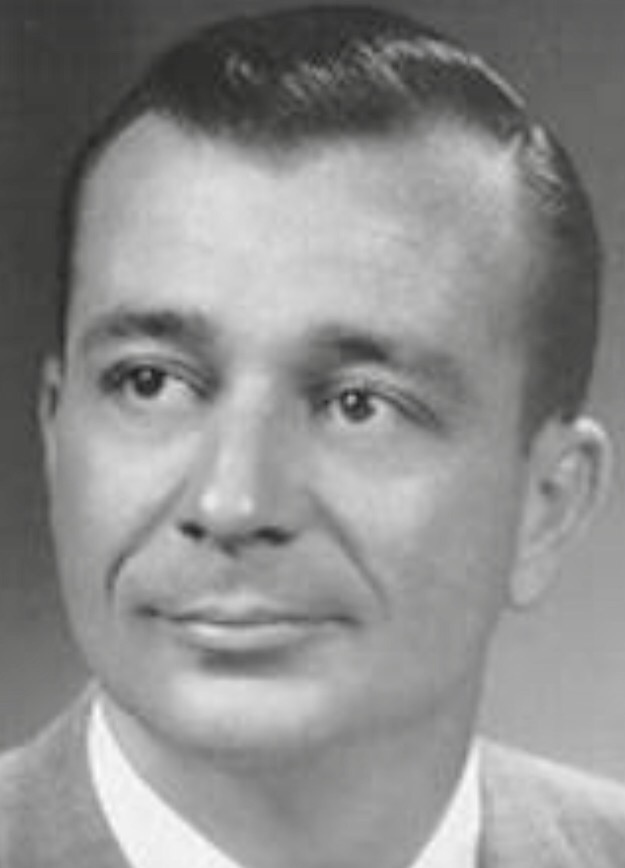
Charles and Wanda Young were those kind of people.

Charles faithfully served this country in the US Army during World War II. When the war was over, he continued serving in Germany, helping persons get their lives back on track, helping others squeeze as much joy as they could out of it, despite having their lives displaced by war or having their lives interrupted as a prisoner of war.

When he returned home, he continued serving others as a member of the First Christian Church of Fort Smith and as a member of the Belle Pointe Lodge of Freemasons in Fort Smith. He loved working to raise funds for Shriners Children’s Hospital in Memphis, Tennessee, serving as the Shrine Circus chairman. He also served children and youth here in Fort Smith, helping them to enjoy life through play and completion, as he coached and supported the Fort Smith Boys Club.

Charles also enjoyed playing himself. He loved hunting, fishing, skeet and trap shooting. He and his wife of 63 years, Wanda, were both Arkansas State Trap Shooting Champions for a number of years. The both of them also enjoyed playing golf.

These opportunities to enjoy life were afforded to him by his work ethic, starting many businesses throughout his career, retiring as president and owner of R.A. Young and Son Construction Equipment Company.

Now, on the surface, all of this sounds like a full and fulfilled life; all of this sounds as if Charles truly did squeeze all of the joy out of life that he could, especially as we consider how he also did all that he could to give others a chance to enjoy life. 

However, as I have heard many preachers say, when people reach the end of their lives, when they look back to make an assessment, look back to make a list of their regrets in life, there are several regrets that are never mentioned.

For example, at the end of life, no one ever says: “I regret that I did not spend more hours in the office  away from home.”

No one ever says: “I regret that I did not spend more time away from my family trapshooting, fishing, hunting or playing golf.”

And as proud as people usually are of their military service, preachers never hear people say: “I regret that I did not spend more years overseas away from my friends and family.”

No, the regret that most preachers hear is:

“I regret that I did not spend more time with my family.”

“If I had to do it all over again, I would have paid more attention to my children.”

“I wished I would have shared more of my life with my kids.”

“I regret that I did not teach my children more of the values that were instilled in me by my parents.”

“I wished I would have spent more time with my wife, especially when she became ill.”

This is why I believe the greatest line in Charles’ obituary, which is full of his attainments, pursuits and successes is this one:

“His family always came first in his life.”

Greater than his military achievements that we honor today in this National Cemetery, greater than his business accomplishments, perhaps even greater than his charitable generosity, was his devotion to his family. First and foremost in his life, and in the life of Wanda, whose obituary reads much like her husband’s as she had her own list of accolades, was family.

Their daughter Linda shared the following words with me:

We are grateful that both Mom and Dad shared their zest for life with us. They were both people with many varied talents and interests. Growing up with Mom and Dad was always an exciting adventure. We were constantly involved in interesting activities such as golf, skeet and trap shooting, and trail riding on motorcycles in the beautiful Ozark mountains, hunting, fishing, calf roping, heading and heeling.

A love for education, of reading and art was also important in our lives. Learning about new things, learning to do new things, accomplishing and mastering new activities was a constant in our lives. Life’s lessons were embedded in all the activities. Dad spent his life teaching us about the cornerstones of life that would guide us as adults.

These always involved pursuing excellence and competitions. Dad taught us that practice makes perfect. That meant lots and lots of practice at whatever we were learning.

They took us with them everywhere, and they involved us in everything.  Dad was the one who set the pace and it was rigorous.

Mom was always a good sport and jumped right in to join in the fun and learn right along with the kids! She ended up being an expert at whatever the activity. As the only girl, I am grateful that my mom set an example for me – ‘girls can do it all!’ With the right attitude and determination [I learned to always] go after your dreams!

We are grateful that Dad took time to be our mentor and a great role model.  We are grateful that dad spent lots of time with us teaching life’s lessons along the way.  My brother, Jim, reminded me that Dad had themes he worked on with us; he taught us to persevere – he taught us the meaning of integrity – honesty – and persistence – and to never judge the other man.

He taught us generosity for those less fortunate in life.

We are grateful that our mom was always home for us and that we were her sole focus in life besides our dad.  She shared her artistic talents with all of us. We all spent hours with Mom doing art projects, painting, ceramics, and other arts and craft activities. She always took us along when she volunteered at the Girl’s Club as an art teacher.

She was a perfect match for Dad in spirit and in energy. They shared 60 years together. When my mom became ill with Alzheimer’s, Dad took care of her at home. For six years, he devoted his life to caring for her and giving her the most quality of life possible as the terrible disease progressed.  Even when it was very, very hard he stepped up and worked harder at caring for her.

We are grateful that he showed us what true love and commitment is really about.

Life. Those of us who are truly grateful for it, those of us who understand the sheer grace of it, grasp the gift of it, appreciate the miracle of it, hope to get the most out of life as we possibly can. Whether we live 90 years or 83 years, we want to squeeze as much joy out this world as long as we are in this world.

Many people try to do that. However, I believe very few people can actually do it without regrets.

The good news is, according to what I have learned about Charles and Wanda through their children, I believe they may have done it: leave this life with no regrets.

And it is because of this good news, and because of their faithfulness to their God, to their church, to their communities, to this country, but especially to one another and their children, we, who are left behind to continue our lives, we also do not have any regrets this day. For we know that as they were faithful with the lives they were given by the miracle of creation, God has now been faithful to them by the power of the resurrection.

We come to this place with grateful hearts. Thanking God for eternal life in heaven, but also for eternity here on earth, as the Spirit of Charles and Wanda are still very much alive through their children and grandchildren.

Therefore, the final words from the Apostle Paul are most appropriate to conclude this eulogy, marking the end of lives well-lived.

2 Timothy 6

As for me, I am already being poured out as a libation, and the time of my departure has come. I have fought the good fight, I have finished the race, I have kept the faith. From now on there is reserved for me the crown of righteousness, which the Lord, the righteous judge, will give to me on that day, and not only to me but also to all who have longed for his appearing (2 Timothy 6:6-8).


Obituary

Charles Holt Young, 90, of Hot Springs passed away Saturday, Sept. 30, 2017. He was born in Greenwood on Nov. 10, 1926, to Horace William and Lucille (Scales) Young. Mr. Young graduated from Kemper Military Academy in 1944 and went on to attend Texas A&M University in College Station, Texas. He was a World War II veteran serving in the 3rd Army, First Calvary Division. Following the war, he remained in Nuremberg, Germany, as part of the Army of Occupation assigned to oversee reintegration of displaced persons and prisoners of war.

Mr. Young was a Mason and a member of the Belle Point Lodge in Fort Smith. He served as the Shrine Circus Chairman raising substantial funds in support of the Shriners Hospital in Memphis, Tenn. As a longtime volunteer and board member of the Fort Smith Boys Club, he enjoyed coaching and supporting the baseball program.

His interests included golf, reading, hunting, fishing, skeet and trap shooting, performance breeding of Angus cattle and thoroughbred horse racing. A keen competitor, he held state, regional and national trap and skeet shooting titles. He was the Arkansas State Trap Shooting Champion for a number of years and inducted into the Arkansas Trapshooting Hall of Fame in 1973. A successful businessman, Mr. Young started numerous businesses throughout his career. Prior to retirement, he was president and owner of R.A. Young and Son Construction Equipment Co.

His family always came first in his life. Loving survivors include his daughter, Linda Young of Little Rock; two sons, Charles William Young and wife Ranie of Dallas and James Franklin Young and wife Mary Ellen of Chicago; grandchildren, Charles and Patrick Murray, Dr. Virginia Young and husband Brad Geswein, Clayton and Madeline Young. He was preceded in death by his wife of 63 years, Wanda Louise Young; and his two sisters, Nancy Young and Billye Smreker.

A kind and generous man, Mr. Young will be greatly missed by all who knew him. Arrangements by Little Rock Funeral Home and Edwards Funeral Home in Fort Smith.

In lieu of flowers, please consider donation to the Michael J. Fox Foundation for Parkinson’s Research, www.michaeljfox.org.

Eternal Educator: Remembering Kaye Birkhead

BruceKaye_2777

It is with gratitude and honor that I stand before you today to share a word of hope and good news for all of us who loved Kaye Birkhead.

For how wonderful is it to be able to speak words marking the end of one’s life that are evidence that one truly fulfilled their human vocation, their very purpose for which they created.

In the first story of creation, we read about this purpose. It is the purpose of every human being. It’s the first commandment of God to humankind:

God blessed them, and God said to them, ‘Be fruitful and multiply, and fill the earth and subdue it (Gen 1:28)

And how do we do that? How do we become the people God has created us to be?

It is in the second creation story, that we read where God places the human in the garden, because to fulfill our purpose, we humans have to eat.

We are all going to have an opportunity to do this essential, primal thing together in just a few minutes, as we are all invited to gather in Disciples Hall, or what might be called, our church’s garden, to share a simple meal of Pintos and Cornbread, one of Kaye’s favorite dishes that her grandmother used to serve.

A side note here. I have sometimes been criticized for the funerals that I preach for making the person being remembered out to be a saint. Well, let me go ahead and state right here that Kaye was not perfect. Nope, as good as we think she was, she was a human being. For when Kaye’s mother would serve a meal that Kaye didn’t like when she was a little girl, I am told that Kaye would get under the table and cry until one of her uncles would go over to her grandmother’s house and come back with a bowl of beans and some left-over biscuits from breakfast.

Her grandmother’s food would comfort Kaye. It would dry her tears, and feed her heart.

Perhaps that is why Kaye loved coordinating countless meals, making certain everything was prepared just right, to comfort grieving families after the funeral or memorial services. Maybe she wanted to do what she could do to dry their tears and feed their hearts.

Back to the creation story:

Then the Lord God said, ‘It is not good that the human should be alone (Gen 2:18)

The very first thing that God said was not good in the creation was loneliness, so God created a partner for the human which made him exclaim: “This at last is bone of my bones and flesh of my flesh.” “At last, someone who gets me, understands me, and loves me.

To fulfill our purpose as human beings, the story of creation is explicit: we need one another. We need to understand the sanctity and the holiness and the grace that is in all human relationships.

It was very difficult visiting Kaye during these last couple of weeks of her life in palliative care, but what made it a little easier was knowing that Kaye was never alone. Kaye spent her last days on earth as she did all of her days, surrounded by her family and her friends, those with whom she shared a sacred relationship, those who got her, understood her, loved her, those who could relate to her so genuinely they affectionately called her “Muffin.” I never saw her in the hospital when Bruce, Todd, Zena, grandchildren, or others were not there with her. There is no doubt thate love that you share as a family is from God and of God.

Right before God creates a companion for the human, something else happens in this creation story that we can sometimes miss.

So out of the ground the Lord God formed every animal of the field and every bird of the air, and brought them to the human to see what the human would call them; and whatever the human called each living creature, that was its name. The human gave names to all cattle, and to the birds of the air, and to every animal of the field (Gen 2:19-20).

After eating, the very first thing the human did in order fulfill their purpose on the earth was to name the mystery and majesty of God’s creation. To be the person God was calling them to be, the first thing the human needed to do was to name God’s world.

Do you know what we call that?  In a recent sermon, I heard the Rev. Charles Johnson from Texas say, “We call that ‘education.’”[i]

The naming of God’s world, naming its beauty and its mystery, naming its diversity and its majesty: this is education.

In order to fulfill the first commandment of God to humankind, in order to be fruitful and replenish the earth, before we can be the person God has created us to be, we first need education. We need to name the creation.

Valuing every child and every child’s passion, and believing that every child, not just those who can afford it, has a God-given, inalienable right fulfill their purpose, to live out the full potential of who God created them to be, Kaye began a career in public education in 1957, a career she would love until her retirement in 2000.

But because Kaye truly yearned for all children to fulfill their God-given purpose, no matter their circumstance in life, she came right out of retirement to work for the Fort Smith Adult Education Center. She loved this work.

I believe Kaye appreciated the words of our second President John Adams who said in 1785: “Let there be not one square mile in this land without a school in it.” With our forbearers, Kaye believed in equitable public education for all, and all means all. And that this was the way to build a great nation.

And I believe Kaye would want her new pastor to emphasize today that equal access to quality public education is not only one of the highest ideals of our country, it is the high, God-ordained, holy work, spelled out on the first pages of our Bible—Learning, studying, discovering, and naming the creation, is the first thing human beings were called to do.

But God’s creation is so wonderfully diverse, so mysteriously majestic, sometimes naming it with mere words simply will not do.

To name the mystery of this miracle we call life, sometimes we need to appeal to the arts. I believe this is why art, sewing, cooking, floristry, the theater, dramatic and musical expressions of life, were so important in Kaye’s life and will always be important in the life of her family.

Likewise, the gospel of Christ, the good news of God’s love and grace, is so extravagantly expansive, so radically revolutionary, naming it with mere words simply will not do.

This is why I believe Kaye will always be known in this city, as not only an educator, but also as a selfless servant. Kaye served her community through public education, her church, her PEO, the Fort Smith Little Theater, teaching through her service the good news of the Christ who came as a sacrificial servant for all.

I believe Kaye’s servitude indicates that the greatest thing that this educator ever learned in life was knowing who she was in the creation. For this, I believe, is the greatest education any of us can receive: Knowing who we are before God in God’s world.

This sacred, intimate and personal knowledge that God’s love enveloped her, God’s grace covered her, God’s presence surrounded her, is the only way I can explain Kaye’s miraculous disposition during these last difficult days. Kaye knew that the one who had always been so gracious to her in life was not going to let her down in death. As a parent herself, she knew that her heavenly parent was going to take care of her the same way she took care of her children, and so many of God’s children.

Therefore, in her final days, there was really nothing final about them. Kaye was miraculously more whole, more alive, more aware, and more hopeful, than the healthiest person any of us know. Even when she no longer possessed the strength to open her eyes, she still mustered the strength to smile and sometimes laugh, for as Kaye always taught us, “laughing makes everything better.”

I marveled how she continued to stay so engaged with the world, so interested in what was going on around her, always asking questions, asking me how I was doing and how things at the church were going. It amazed me how she continued to watch Jeopardy every weekday afternoon.

Maybe it was because Kaye wanted to keep learning. Even at the end of her life, she wanted to keep growing, keep discovering, keep expanding her mind, keep naming God’s beautiful world. Because she believed that God through life itself, always had something to teach her.

The problem with many people we know is that they have life all figured out. They have all of the answers. There is no room for growth and change. Their minds are made up and closed. There is no mystery. And when we think about it, these are the people we usually don’t like being around. They are nothing like Kaye.

Kaye taught us to never stop learning, to never close our minds. As long as we are awake in this world, we should never cease listening to what God has to teach us.

And the good news for all of us who loved Kaye Birkhead is that by the power of the resurrection, God is still using Kaye to teach us. From eternity, this great educator will instruct us for the rest of our lives to keep learning, to keep our minds and our hearts wide-open, to keep growing, to keep discovering, to keep changing.

Continue to learn to know who we are in God’s creation before our Creator. Learn to know how loved we are. Touch, taste and inhale the grace that is in it all. And then, learn to know how we are uniquely called to share this love and grace with others.

Therefore, perhaps the best way you can remember Kaye, thank God for Kaye, celebrate Kaye, is to read a book, visit the library, take a class, go to a play, attend a musical, stop and absorb the beauty of a flower, hold a baby, cook a meal for a loved one, love, laugh, share.

Soak in as much of life as you can. Never stop naming God’s creation. Continue to allow God to teach you how much God loves us—how deeply, how graciously, how eternally.

And then, with the knowledge of God’s expansive and everlasting love, reach out and read to a child. Tutor a student. Get your business to offer an internship. Ask your church to adopt a school. Pray for a teacher. Join a PTA. Donate school supplies. Fill a backpack.

And I believe that Kaye would always want us to remember that this is not only what she would want from us, but according to the first two stories of our Bible, this is what our Creator wants from all of us if we are to be the people God has created us to be.

___________________________

[i] Rev. Charles Foster Johnson, the keynote speech at the first Pastors for Oklahoma Kids meeting, January 24, 2017, First Baptist Church, Oklahoma City, Oklahoma.


Kaye BirkheadIn Memory of Saundra Kaye Birkhead

January 3, 1939 – October 11, 2017

Obituary

Saundra “Kaye” Birkhead passed into the age of the eternal on October 11, 2017. She was born to Oza Butler Albert and Jack Albert on January 3, 1939 in White County, Arkansas. She and her brother, Jack Albert, grew up a part of a robust extended farming and mercantile family of which she was very proud. She earned a degree from then Arkansas State Teachers College, now UCA, and began teaching on an emergency teaching license in 1957. She married Bruce Birkhead in 1962 and together they raised two children, Zena Marshall and Todd Birkhead, in Fort Smith, Arkansas.

Kaye was a charter member of the Carnall Elementary School teaching staff and after a brief time away from education, taught at Orr Elementary School until her retirement in 2000. Rather than “retire” however she went to work for the Fort Smith Adult Education Center where she became the Chief GED Examiner. She was dedicated to each of her many students through the years and instilled in them, and her own children and grandchildren, a love for learning. In addition to her teaching career, she volunteered at the Fort Smith Little Theater for many years and helped many directors costume shows including “The Best Little Whorehouse in Texas” and the “Sanders Family” shows.

She is preceded in death by her mother and father; and son, Brett; her dear friend and sister-in-law, Barbara Arndt. She is survived by Bruce; her brother, Jack and his wife, Diane Albert; son, Todd and wife April Birkhead; daughter, Zena and husband Dan Marshall; her grandchildren, Katy and Grace Featherston, Claire Birkhead, Alex and Mitt Marshall and their families, Eleanor and Larry Underwood, Richard Arndt, nieces, nephews, and her cousins, along with many friends at First Christian Church (DOC) and PEO, Chapter AD, Fort Smith Adult Education Center, and The Fort Smith Little Theater.

Graveside services will be held at Mt. Salem Cemetery in Logan County at 11 a.m. on Saturday, October 14, 2017 under the direction of Edwards Funeral Home.

A memorial service will be held Saturday at 5 p.m. at First Christian Church (DOC), 3501 Rogers Avenue in Fort Smith.

Memorial contributions can be made for books for children who attend the Fort Smith Adult Education Childcare Center or First Christian Church, Fort Smith.

Another Point of View

Callie Anne

Philippians 3:4b-14 NRSV

There are many things that happen to us that make us look at the world in a brand new way. Things happen, and our whole world changes.  We see things differently, have a new perspective, see things from another point of view.

Oftentimes, this new perspective comes to us by way of tragedy or pain. Sometimes, when someone suffers a heart attack or another life-threatening illness, they can experience such a radically new perspective that their entire personality changes.

Our world changes every time we lose someone we love. “Without them, the world is just not the same,” we say.

Our world changed when we woke up on Monday morning and learned of the horrific shooting in Las Vegas. We were reminded how vulnerable and fragile life is, how evil human beings can be. We were given a new sense of humility. We appreciated life more. We cherished our loved ones more. We were given a brand new perspective for living.

Likewise, something very good can also bring a new perspective. Love can do that. When we are with someone we love, the sky seems bluer, the sun shines brighter. Love makes us more grateful, more giving, more kind. When we fall in love, the whole world changes.

And of course, having a baby changes everything. It brings a whole new perspective. A brand new point of view. There’s more responsibility, more worries, and more fun, and there’s less sleep, less time, and less fun. Parenthood: it’s a brand new world.

In this morning’s scripture lesson, the Apostle Paul is writing about the miraculous change that has been wrought in his life because of the change that has been wrought in the world through God in Jesus Christ.

The things that used to matter to him no longer matter: being religious, having religious parents, observing all of the religious rituals, obeying and defending all of the religious laws. It’s all “rubbish,” says Paul. He is saying: “In the power of the resurrection of Christ, I have a brand new faith, a brand new way of relating to God and to the world!”

In his second letter to the church at Corinth, he puts it this way:

From now on, therefore, we regard no one from a human point of view; even though we once knew Christ from a human point of view, we know him no longer in that way. So if anyone is in Christ, there is a new creation: everything old has passed away; see, everything has become new! (2 Corinthians 5:16-17).

In the life, death and resurrection of Christ, a new age has dawned, the whole world is different.

This is what the great theologian Moltmann was trying to point out when he wrote:

We have attempted to view the resurrection of Christ from the viewpoint of history. Perhaps the time has come for us to view history from the viewpoint of the resurrection.

Paul believed that when God raised Jesus from the dead, the whole world shifted on its axis. All was new.

A couple of weeks ago, I suggested that when we read the gospels, we discover that Jesus doesn’t tell us how to have abundant life through our religion, but tells us how to have abundant life through our sight. Perhaps Jesus figures, in his stories and actions, if he could just get us to see the world through some new angle of vision that is larger than our limited “human point of view,” then we will know how to live that vision.

Maybe that is the purpose of every Sunday morning in this place. Sunday mornings is less of a time to get some religion, be religious, learn some religious laws, and more of a time to help us to no longer see the world “from a human point of view.”

And let’s be honest, from a human point of view, church can be depressing. The forces of evil are so strong, hate is so commonplace, our political system is so corrupt, religion is so crazy; everyday, I know clergy who feel like throwing their hands up in the air and just giving up.

But we keep at it. We keep going. We keep working. We keep preaching, hoping and praying that somehow, someway, someday, someone’s going to catch a new vision. Someone’s going to gain a new perspective. Someone’s going to start seeing the world in a brand new way. Someone’s is going to start giving more generously, speaking more courageously, serving more compassionately, loving more unconditionally. Someone is going to open their eyes and answer the divine call to do something, anything, to make this world more kind, more just and more peaceful.

This is not wishful thinking. This is not a failure to come to terms with reality. This is a staunch faith that when people truly experience the life, death and resurrection of Christ, there is a whole new creation, a brand new world.

When he was told that he was going to be laid off from work, he thought his life was over. He believed he had no other possibilities, no other options. He could see losing his house, his insurance, his pension, and so many things that he had worked so hard for.

However, that was just his narrow-minded, limited, human point of view. What he couldn’t see was losing that job was going to be the best thing that ever happened to him. He couldn’t see that a new job awaited him that would utilize his gifts more fully, thus giving him greater fulfillment.

After the doctor’s diagnosis and the decision was made to place her under the care of Hospice, some said that it was just not God’s will for her to be healed. Some grieved for they knew her last days would be a time of sadness and pain.

But that’s just a narrow-minded, short-sighted, restricted, human point of view. They failed to remember that in Christ there’s a whole new creation. A new creation where spiritual healing is greater than physical healing.

Can you see it?

Of course, she would be feeble, and she would be tired, but she would be more alive, more whole, more blessed, and more engaged; she would possess more hope and share more love than the most physically fit person anyone knows.

Before she was born in 2012, she was diagnosed a rare genetic disorder called Apert Syndrome. The bones in her skull, hands and feet fused together prematurely. Two surgeries to split the bones of her skull would be required, along with surgeries to split the bones in her hands and feet. To survive, she would need to be fed through a feeding tube for two long years.

“Oh, how tragic,” the people said. “How horrific,” they cried. “How is she going to ever be happy?” they asked. “How will her parents afford her costly surgeries, attend to her special needs? How will they ever survive the stress? It’s difficult enough to raise a healthy child in this world? How are they going to raise one with so many challenges?”

But that’s only seeing the world from a limited, incomplete, dimly-lit, narrow-minded, human point of view. What they failed to factor in is that in Christ there is a brand new world, a new brand new creation.

Can you see it?  I think you can.

Despite her many challenges, she will be one of the happiest, spirited little girls that you’ll ever know. Fundraisers and generous donations by God’s people would help pay for the enormous medical expenses. Like raising any child in this world, there will stress, but the strength and courage and peace that flows out of a relationship with Christ will be more than enough to see this family through each day. And they will never be alone.

They will be surrounded by families of faith that care for them, prays with them and vows to help Callie Anne and her family see their world with brand new eyes—to see life with a new vision, with a fresh new perspective.

A terrorist thug shoots and kills 58 people, injuring over 500 more.

“The world is going to hell!” they say. “God has given up on us!” they bemoan. “This is the new normal. There’s just nothing we can do to prevent this from happening again!” they quibble.

But that’s only a narrow-minded, limited, shallow, shadowy, defeated, and very ignorant human point of view.

There was only one cowardly terrorist, but did you see the countless brave men and women who were willing to lay down their lives for strangers, forming human shields, carrying the wounded to safety? Did you see the police officers risking it all by running towards the gunfire, courageous men and women bearing witness to the truth that God still loves this world, God has not given up on this world, God still believes this world is worth fighting for, sacrificing for, dying for!

The good news is that we will not allow the personal evil of a single killer affect our sight, cloud our vision, and shape our worldview.

No, with faith in Christ, we will continue to see our world from the viewpoint of the resurrection. We will see a world where when there seems to be no way, God is always making a way. We will see a world where no matter how bad things sometimes get, God is always working those things out for the good. We will see a world where no matter how distant God seems, God is always present resurrecting, recreating, reforming and transforming sorrow into joy, despair into hope, and death into life!

Let us pray,

Lord Jesus, in whose light is our life, we pray that you will give us eyes to see your work in the world, eyes to see your presence moving among us, and eyes to gain a new vision of who we ought to be. Release our grip on the old, familiar world of death and defeat. And help us thereby live out your resurrection everyday of our lives. Give us grace to see.  Amen.


Waking Up to the Knowledge of Evil

las-vegas-shooting-carry-gty-ps-171002_12x5_992
ABC News – Go.com  People carry an injured person at the Route 91 Harvest country music festival

On Monday morning, we awoke to the knowledge of what our president called “pure evil.”

As the news continued to break, the horror seemed to intensify as we learned that the terrorist was “a normal person.” He had no prior criminal record, no history of mental illness, and no religious or political motivation. He was described as “an average accountant who enjoyed playing poker.”

Desperately trying to understand the evil, someone suggested that he was perhaps bitter about the unfairness of life. They said: “Maybe he wasn’t happy with his life, thus he became upset seeing others celebrating life at a country music concert.”

This is, of course, the reason Cain killed his brother Abel in the biblical story describing our innate propensity for evil.

Whatever the reason for it, on Monday morning we awoke to the knowledge of the pure evil of which we human beings are capable. And it is horrifying.

However, we also awoke to the knowledge of pure good.

We learned of the selfless, sacrificial actions of police officers and first responders. We learned of “normal people” forming human shields to protect strangers from the gunfire. We learned of “average men and women” picking up and carrying the wounded to safety.

We learned that, even in our divided nation, even in so-called “sin city,” people have the innate propensity to put aside their differences to love their neighbors as they love themselves.

On Monday morning, we awoke to the description of our humanity as told in the story that precedes the account of Cain and Abel. We awoke to the knowledge of good and evil. The good news is: In the midst of evil, we know there is good.

Thus, in the midst of the unfairness of it all, we know there is hope.

So together, we pray:

God of Love, Awaken the pure good of which all human beings created in your image are capable. Awaken the selfless, sacrificial love that is within us all— the very same love revealed to us in Christ—the love that we know has the power to change the world. Amen.

God-Blessed Eyes

Harrison

Matthew 13:10-17 NRSV

The pastor stands up in the pulpit, clears his throat, and announces: “This morning we are going to talk about racism and reconciliation.”

And all over the sanctuary the congregation winces. Under their breaths, they beg: “Preacher, please don’t do it! You are getting ready to open up a can of worms!”

But the middle-aged preacher, who has opened up more cans of worms than anyone could possibly count, ignores the grimaces and metaphorically gets out the can opener.

Ever since I have been a pastor, church folks have urged me to avoid talking about race.

They say: “If you talk about it, you are just going to stir things up, make things worse. If we would all just leave it alone, it will go away.

And if you think about, those who call attention to the color of their skin are the real racists. They need to stop saying their lives matter and understand that all lives matter. Reconciliation Sunday? Really? Come on, preacher, we just need to let it go!”

And, for the most part, when it comes to talking about race, we white preachers have been very silent.

But guess what? It ain’t working.

The recent Alt-Right White Nationalists’ march in Charlottesville was a stark reminder that racism in this country is not going away that easily.

Yet, many would still rather shut their eyes and close their ears, pretending that racism no longer exists.

A couple of years ago, someone blocked me on Facebook. When I asked a mutual friend why I was blocked. She responded that he didn’t like seeing my Ainsley’s Angels posts of children with special needs. He said that the pictures of the children made him uncomfortable.

“Out of sight out of mind,” as we like to say.

Maybe this is why Jesus talked more about sight than he talked about sin.

Throughout the gospels, Jesus asks: “Do you have eyes and fail to see?” (Mark 8:18)

In our gospel lesson this morning, Jesus quotes the prophet Isaiah:

You will indeed listen, but never understand, and you will indeed look, but never perceive. For this people’s heart has grown dull, and their ears are hard of hearing, and they have shut their eyes; so that they might not look with their eyes and listen with their ears.

In Isaiah chapter 6, we read that closed minds, closed eyes, and closed ears (ignoring injustice, looking the other way, tuning it out), will lead to “cities lying in waste without inhabitant, and houses without people, and the land utterly desolate.”

Refusing to listen to and understand the cries of injustice— possessing hearts that are dull and indifferent— leads to complete desolation. It leads to tiki torches in Charlottesville, a shooter in Charleston, voter suppression in North Carolina, an assassination in Memphis, Jim Crow in the South, a holocaust in Germany, and a mass lynching of 237 African Americans in Arkansas.

Isaiah continues:

Even if a tenth part remains in it, it will be burned again,
like…an oak whose stump remains standing when it is felled.’

But listen to the good news. This passage in Isaiah concludes:

The holy seed is its stump.

There’s a holy seed ready to sprout forth. In a land of deep darkness, a light shines forth. In the demise and the decay, there is the promise of new life. Like a candle flickering in the dark, hope is burning. Like a stream trickling in the desert, reconciliation is possible.

And Jesus suggests that the key to reconciliation, healing and redemption is open minds and open hearts.

The mission of Ainsley’s Angels is the very thing that Jesus is talking about here. The primary mission is “raising awareness.”  Awareness, says Jesus, is having God-blessed eyes and God-blessed ears. Because whether you are talking about ableism or racism or any other ism, awareness is what is needed before reconciliation can happen.

And with this blessed awareness, what is it specifically that Jesus wants us to see? What do we see for Jesus to respond: “Blessed are your eyes for they see!” “Prophets and righteous people longed to see what you see but did not see it!”

I believe the answer is in Jesus’ first recorded sermon. In Matthew 5 we read where Jesus went up on a mountain and taught them saying:

Blessed are the poor in spirit, for theirs is the kingdom of heaven. Blessed are the meek for they shall inherit the earth.

God-blessed eyes see that the “poor in spirit” and the “meek” are blessed by God; Not the one who has never had a reason to doubt that God was indeed for them, not against them; with them, not away from them. But God-blessed eyes see that God is on the side of the ones who have been degraded and dehumanized by the systems and structures of the priveledged. Their spirits have been crushed by inequitable education, poor healthcare, discrimination in the workplace and racial profiling in the streets. But their future, says Jesus, is the kingdom of heaven.

Blessed are those who mourn, for they will be comforted.

God-blessed eyes see that God empathizes with the mourners. Not those the Apostle Paul is talking about when he says we should “give thanks in all circumstances” (I Thessalonians 5:18), or “rejoice even in the midst of suffering” (Romans 5:3-10), but the ones who have a difficult time finding anything for which to be thankful. For them, there is no rejoicing. They are not just complaining about the pain in their life. They actually in mourning over that pain. They look at how their parents and grandparents were valued by the world. They see how their lives are valued. And they look into the eyes of their children and grandchildren, and they grieve for them. But because Jesus knows that love will win, and evil will be overcome, Jesus calls them blessed and promises comfort.

Blessed are those who hunger and thirst for righteousness for they will be filled.

Not the ones who are righteous, but the ones on whose behalf the prophet Amos preached: “Let justice roll down like waters, and righteousness like an ever-flowing stream” (Amos 5:24). This is everyone who have been marginalized by society, even by communities of faith. They have suffered grave injustices just for being different.

They have been bullied so badly by the world that they hunger and thirst for justice and righteousness like a wanderer lost in a hot desert thirsts for water. Jesus says that they are blessed, and they are the ones who will not only be satisfied, but will be filled, their cups overflowing.

Blessed are the pure in heart, for they will see God.

Not the pure, but the “pure in heart.” Not those who look like you do on the outside. Not those who share your skin tone. No, God blesses those who dream with Rev. Dr. King for a world where they will be judged not by the color of their skin but by the content of their character. God-blessed eyes have the grace to see others as the Lord sees them, “for the Lord does not see as mortals see; they look on the outward appearance, but the Lord looks on the heart” (1 Samuel 16:7). God sees them for who they truly are, beloved children of God, created in the image of God, and they will see God.

Blessed are the peacemakers, for they will be called children of God.

Not the ones who have necessarily found peace for themselves. But God blesses the tormented: the discriminated and the victimized, who, because their lives are so continuously in chaos, seek to make peace whenever and wherever they can. Blessed are those who live with no peace, but seek it, because they will find a home and a peace that is beyond all understanding, within the family of God.[i]

Blessed are the merciful, for they will receive mercy.

Not the proud, the boastful and the arrogant. Not the ones who never admit any mistake, those who say they are “the least racist person” or that they “don’t have a racist bone in their body.” But God blesses the ones who are fully aware of their prejudices, the ones who have made mistakes, terrible mistakes, and they know it. Thus, when they encounter others who are also suffering from this fragmented world, they have mercy and compassion. In their hearts there is always room for others. They give mercy, because they need mercy for themselves. And Jesus says, they will receive it.

Do you see what Jesus wants us to see? Are your eyes God-blessed?

What’s the one thing we mortals need in order to see?

We need light.

The good news is that the Lord announces: “I have come as light, as the Light of the World!”

And not only that, Jesus says: “You who seek to be my disciples, you who have answered the call to be my hands and feet in this world, are not only holy seeds in a burned-out stump. You are also the Lights of the World. And you are called not to hide your light, but to shine your light so all may see this world as God sees it.

We are to shine our lights by Stanley with, lifting up, and caring for all people, especially those who are left behind. We are to light it up by defending and caring for those whose spirits have been broken, those who mourn and need mercy, the marginalized who hunger and thirst for justice, the discriminated who seek equity, and the troubled who yearn for peace.

So, as lights of this world, for the sake of this world, may First Christian Church of Fort Smith light this our city up:

So crushed spirts can have new life.

Light it up,

So the despairing can have hope.

Light it up,

So that those who ache for fairness will be satisfied.

Light it up,

So that victims of all kinds of discrimination will see God.

Light it up,

So that those who yearn for peace will receive justice and know peace.

Light it up,

Until the day comes when the eyes and ears of all are finally and fully blessed and the entire human race be reconciled as one.

[i] Inspired by Frederick Buechner. Whistling in the Dark: An ABC Theologized (New York: Harper Collins, 1988), 18.     


Hilda Duke: What She Taught Me About God

Hilda

I preached the following sermon entitled “Coincidence or Providence” on March 25, 2007 for the First Baptist Church of Farmville, NC. Hilda Duke, who passed away yesterday, was the inspiration for this sermon. I will always love her immensely. 

Isaiah 43:16-21

On Sunday morning, February 5, 2006, Hilda Duke left the worship service looking like she’d seen a ghost.  I asked, “What’s wrong, Hilda?”  She said, “You won’t believe it.  But today is the day my husband, Wilton, passed away eight years ago.  And every hymn that was sung this morning in worship was sung at his funeral service.”

Wilton died the year before I came to Farmville.  I had no idea when Wilton died, and I certainly did not know what was sung, if anything at his funeral.  “What a wonderful coincidence!” I thought to myself.

One morning a couple of weeks ago I was in the office here at church helping Patty with the bulletin.  After spending about a half hour with her, I went into my office to study for a little while.  About half way through my studying, Peggy Whitfield entered my mind.  I knew she was probably at the place that she had been for days—in the nursing home with her brother who was slowly passing away.

As much as I tried to continue studying, I just could not get Peggy off my mind.  Peggy, one of our most gifted deacons is so good at visiting patients and family members in the hospitals and nursing homes, and now here she was at the bedside of her dying brother.  I kept thinking about her and could no longer concentrate on my studies, so I got up and told Patty that I was going to drive out to the nursing home for a little while.

As soon as I walked into the room, I hugged Peggy who was sitting at a table near the door, and before I could speak to anyone else, Peggy’s niece who was at Jimmy’s bedside said, “Peggy, you might want to come over here.  His breathing has changed.”

I walked to the foot of the bed with Peggy and saw that Jimmy was taking his final breaths.

“Would you like me to say a prayer?”  I asked.

“Yes, please,” several responded.

I prayed briefly, asking God to be with and take care of Jimmy in death as God had been with and taken care of him in life.  When I said, “Amen,” Jimmy took his last breath.

And I thought to myself, “what a wonderful coincidence!”

Before I left the nursing home, Peggy hugged me goodbye and said, “Your timing could not have been more perfect.  The Lord certainly does work in mysterious ways.”

I drove back to the church thinking about what just happened.  I drove up Main Street, thinking and pondering, wrestling and doubting.

Was it just a mere coincidence that Peggy came to my mind while I was studying, or was it something else?  Should I say that “Peggy came to my mind” or would it be more accurate to say that “Peggy was brought to my mind?”

A mere coincidence?  Did her name just rise up, haphazardly and randomly, from the recesses of my conscience during that moment in my office?  Or was it brought to my consciousness from outside of my consciousness?

A year ago, was it just by mere happenstance that I selected the hymns from Wilton’s funeral service on the eighth anniversary of his passing?  Did those titles just come to me, randomly, accidently?

Or were they brought to me?

The dictionary defines “coincidence” as “an accidental sequence of events that appear to have a causal relationship.”  This is how, of course, the main way the modern world has taught us to think of our lives—as a random, pointless, series of accidents.

Therefore, any thought that may happen to come into my mind as I am sitting in my office is always exclusively coincidental, accidental, and random, never intentional, designed, purposeful, and gifted.  It was just happenstance that I showed up in the nursing home when I did.  I was not compelled to go or propelled to go by anything external.

In freshman biology class, this was taught to us as teleological fallacy.  The Greek word for “end,” or “purpose,” is telos.  Science does not engage in speculation about purposes and ends, only means.  And the means are always accidental.  The world in which we live is random, coincidental.

The professor tried to trick us on the exam.  Trick question: “Why did the giraffe develop a long neck?” And the professor probably expected that we dummies would answer something like, “The giraffe developed a long neck in order to reach the leaves in the top of the trees for food.

No, we had listened in class, studied our notes and read our textbook, so we answered, “The giraffe developed a long neck, not because of any plan or purpose, certainly not because of any plan or purpose, certainly not because of any divinely inspired program, but rather the end of a series of mutations, random changes that proved beneficial.”

Science has been very successful in carrying this sort of thinking a long and doing a lot of good with it. But right now, at this stage in human history, I’m wondering if a good deal of reality has been lost in this sort of thinking. I believe we would do well to listen again to these wonderful words from Isaiah.  “Behold, I am doing a new thing.”

Israel is in Babylonian exile, trapped, far from home, forlorn and without hope, except that God promises to make a new thing for them.  Here are words addressed to people who have no way out if there is not a God who not only care but also acts.  Their hope, our hope in life, in death, in life beyond death, is that our God lives and acts, creates and intervenes, intrudes and moves among us. Our hope is that our God speaks to our consciousness from without, puts thoughts into our minds, leads us and directs us in right paths for his name sake.

But this is not how we have been trained by the modern world.  We’ve been conditioned to admit that any strange, external sort of word is mere coincidence, a kind of random, accidental, meaningless glitch of the brain that means very little.

But what if it means everything?  What if these so called coincidental thoughts are some of the best thinking that we do?  What if all of these weird coincidences we experience in life are as close to reality, as close to what is really real in this world, as we human beings can get?

I believe we’ve got to break ourselves of the habit of dealing with things that happen to us, or visions that come our way, or words that come to our mind, by dismissing it as mere coincidence.  For those who are convinced that the Word has been made flesh, and the Son of God has intruded into the world, that God is always working in this world, creating and re-creating and resurrecting and transforming, there is nothing in this world that can be labeled “mere.”

For people with faith in the risen Christ, a miracle, the supernatural, is not something that momentarily intrudes among us into an otherwise natural world, but rather for us, it is all miracle and it all comes from the creative hand of God.  We look at trees blooming everywhere on this first weekend of spring in a completely different way.  It’s all supernatural.  It’s all extraordinary.

We pay attention to conversations, we listen to the reading of an ancient text, and we listen to the singing of the hymn, with the assumption that it is all potentially revelation, all the footsteps and handiwork of an intrusive God.

As Frederick Buechner says, “in the last analysis of all, all moments are key moments and life itself is grace.”

Our grandmother in the faith, Sarah, was one day straightening up her tent in the desert when these three people, complete strangers, show up.  Sarah extends hospitality to the strangers, welcomes them, and prepares a meal for them.

And after the satisfying meal, one of the strangers peaks and blesses Sarah and her husband Abraham, tells Sarah that she is going to have a baby that will be the beginning of a great people, a great family, Israel, a family that will bless all of the world’s families.  Suddenly, the text moves from describing these people as mere visitors, to describing them as the “Lord.”

In fact, later, early Christian preachers through these three strangers as embodying God—the Trinity—Father, Son, and Holy Spirit.  When Paul later referred to this incident, he said that, “Some have entertained angels unaware.”

Now I know that, to the world, this is making a huge deal out of a meal for three ordinary visitors.  A simple meal, even eating with people that we don’t know, is a merely ordinary experience.

But having been encountered by the Christ, having experienced a God who is not distant and disinterested, we do not live in the ordinary and we don’t deal with people, with one another, with the world, as merely anything.  For us, with eyes of faith, it is never merely coincidental, accidental or happenstance.  It’s revelation.  It’s extraordinary.  It is a gift of God who does not leave us alone, who loves us enough to seek and to find and to reveal.

Our God keeps promising us, “Behold, I’m doing a new thing!” Can you see it?

Peggy Whitfield was absolutely right.  Our Lord works in mysterious ways.  And our Lord is here right now and he’s working all around us.

Can you see it?

We Are God’s Help

rescue

The catastrophic images from Texas bring back painful personal memories from 1999 when Hurricane Floyd flooded our home in Eastern North Carolina. Carson and Sara, who were four and two years-old at the time, were rescued by boat, while Lori and I stayed behind to put more of our things into the attic. We spent the next three months living in a FEMA camper in the driveway of our decimated home.

In the days the water receded, I remember being overwhelmed with feelings of despair. We had only lived in our home for six weeks prior to the flood. It was the first home we ever owned, and we had yet to make our first mortgage payment. Because we did not have flood insurance, rebuilding our home seemed impossible.  I cannot recall any other time in my life when I felt more hopeless. If ever I needed divine help, it was then.

Thankfully, help from God came. Every week help came. Help came bringing pry bars, hammers and saws to rip out carpet, pull up flooring, tear out sheetrock and pull out wet insulation. Help came bringing new flooring, sheetrock, and insulation. Help came with paintbrushes and paint.

Help also came bringing what we needed the most: hope. Help came with a message that rebuilding our home was possible. Help came with the good news that although we could not go back to the good old days before the flood, with the help of God, we could go forward into good new days.

The movie All Saints, which is now playing in theaters, is a true story of the All Saints Episcopal Church of Smyrna, Tennessee. The church was preparing to close their doors for good and sell their property when a group of refugees from war-torn Southeast Asia showed up.

In one scene, the teenage son of Rev. Spurlock asks his father about the fate of the refugees if he decides to allow the church to close.

Rev. Spurlock responds: “We must pray and ask God to help them.”

His son replies: “Dad, aren’t you God’s help?”

The people of East Texas need our prayers. However, when we pray for God to help them, may we remember that we are God’s help.

Today, we can be divine help by sending our dollars to Texas by giving to the mission fund of the Christian Church (Disciples of Christ) at http://www.weekofcompassion.org. You can designate 100% of your gifts to help communities affected by Hurricane Harvey.

In the days, weeks, and months to come, we will have opportunities to be divine help by sending ourselves, bringing tools and building materials. More importantly, we will have opportunities to be divine help by bringing what these people need now more than anything else: hope.

We will have opportunities to go with the good news, that with the help of God, although it seems impossible, good new days are indeed ahead.

Easter People

Welcome Table

The Easter Sunday timing of the Enid Welcome Table’s debut could not have been more appropriate.

The front doors of the church building swung open wide, as guests, some homeless, some extremely impoverished, all hungry, were greeted with smiles and words of welcome. As they walked into the fellowship hall, a host guided them to a table that was beautifully decorated with an Easter-themed table cloth and a spring flower bouquet centerpiece. Soft jazz  played from the sound system adding to the welcoming ambiance.

After the host fulfilled the guests’ drink orders, a waiter approached the table to read the menu that was displayed on the TV monitors in the front of the room. Guests had a choice between pork tenderloin, peel-and-eat Cajun jumbo shrimp, and baked chicken. Sides included sweet potatoes, roasted potatoes, a medley of roasted vegetables, macaroni and cheese, and deviled eggs. Desserts included lemon cake, cherry pie, apple pie and chocolate cupcakes.

The attentive wait staff promptly served the guests with generous portions and while keeping their drink glasses full.

Volunteers who had come to serve, some members of our church, some members of other churches, some members of no church, joined the guests at the tables to share dinner and conversation.

Upon experiencing the extravagant welcome, a genuine welcome devoid of any agenda, strings, or ulterior motives, one of the guests said to a volunteer: “You have made me feel human again.”

“You have made me feel human again.”

Let that sink in.

It was Easter Sunday, and someone said that she felt alive again. It was Easter Sunday, and someone said that she experienced new life. It was Easter Sunday, and someone said that they felt resurrected.

Christians often like to call themselves “Easter People.” However, I am afraid that what that means to many is that they, like Christ, will one day be resurrected to live eternally in heaven. I am afraid the reason some church pews are so full on Easter Sunday is simply because “Easter People” want to remember Jesus’ resurrection and look forward to their own.

However, what if being “Easter People” means something more?

What if the resurrection is not just a gift to remember or a gift to look forward to, but a gift to be experienced now? What if resurrection is a gift to be shared with others today? What if being “Easter People” means that we are people who offer the gift of resurrection to those whose lives have been diminished by the sin and evil in our world? What if being “Easter People means we are called to resurrect those who have been de-humanized by poverty, racism, classism, sexism, homophobia, or xenophobia?

What if being “Easter People” means that we are called to do much more than sit on a pew on Easter to thank God for the promise of God’s kingdom that is coming after the resurrection? What if being “Easter People” means that we are called to get off of those pews to bring the promise of God’s Kingdom that is coming now to those who need resurrection today? This Easter Sunday at Central Christian Church, that is exactly what being “Easter People” meant.

Can’t Celebrate Easter Without a Carrying a Cross: Remembering Mary Magdalene Feightner

Mary-Feightner-1492072139Here in the mournful darkness of this Saturday vigil, still in the shadows of Good Friday, we gather together with bated breath.

For Easter is coming! New life is being born! Resurrection morning is dawning! Something wonderful has been lost, but something magnificent is being gained.

However, I believe it is very important for us to realize on this Holy Saturday, that before we can experience new life, before we can celebrate resurrection, before we can sing alleluias, someone needed to pick up and carry a cross.

And the sad thing is that very few of Jesus’ disciples understand this. They don’t understand it today, and they didn’t understand it 2000 years ago.

Although Jesus continually taught that to gain life, we must be willing to lose our lives, that Easter would not happen without some self-denial, resurrection would not come without some self-expenditure, new life would not be born without some sacrifice, and the light of Sunday morning cannot dawn without the darkness of Good Friday, when the time came for the disciples to follow Jesus all the way to the foot of the cross, most all of them very selfishly fled to save their lives. One would even betray Jesus. Another would deny that he even knew Jesus. Nearly all would desert him. In spite of Jesus’ continual call to pick up a cross and follow him, most of the disciples turned their backs on him in his darkest hours.

However, there were a few disciples who got it. There were a few who were willing to carry a cross, to live and to love selflessly and sacrificially. There were a few who faithfully followed Jesus all the way to Golgotha.

Although the intrinsic sexism of this world’s history has caused the majority of people to overlook these faithful disciples, all four gospel writers did not.

In Luke 8 we read these words: Afterward [Jesus] journeyed from one town and village to another, preaching and proclaiming the good news of the kingdom of God. Accompanying him were the Twelve and some women…Mary, called Magdalene… Joanna…Susanna, and many others…”

And on Good Friday, when none of the male disciples could be found, in Mark 15 we read: “There were also some women looking on…among whom were Mary Magdalene, and Mary the mother of James, Joses, and Salome.

In Matthew 27 we read: Gathered at the foot of the cross: “among them was Mary Magdalene, and Mary the mother of James and Joseph, and the mother of the sons of Zebedee.

In John 19:25 we read where all the male disciples fled, “But standing by the cross of Jesus were His mother, and His mother’s sister, Mary the wife of Clopas, and Mary Magdalene.

The problem with Christianity today is that there are too few Mary Magdalenes in the church who understand that authentic faith, true discipleship, involves a cross. There are too many Christians in our world who believe they can have Easter Sunday without Good Friday, who believe they can experience new life without death to self, who believe they can sing alleluias without sacrifice.

What this world needs, what this community needs, what the church needs more than anything are more disciples like Mary Magdalene and Mary Magdalene Feightner.

Like the Mary Magalene before her, Mary Magdalene Feightner understood that when Jesus called people to be his disciples, Jesus was always quite clear that there would be a cross involved, a cross that they would voluntarily need to pick up and carry.

I will never forget the last time I spoke with Mary. It was here, in this place, just this past Sunday. After the service was over and the congregation was dismissed, I was finishing a conversation with some people down front here who were asking about joining our church. I looked up and saw Mary walking down this aisle. I met her right here to greet her. I said, “It is so great to see you Mary.” And it was so good to see her. For each time I saw her she was always beautiful, stunning really, dressed to the nines, and always wearing a tremendous, welcoming smile.

Mary responded not in a manner people usually respond to such a greeting with “It is good to see you too!“ but rather “How is it going with that Air Force Class Central Christian Church adopted?”

I said, “It is going great! We had a good time trap shooting with them!”

And instead of replying, “Great, glad to hear it!” not allowing me to rest on any laurels, she replied: “Well, what’s the next event you have planned for them?”

Like Mary Magdalene, Mary Magdalene Feightner understood that to find true life is to lose one’s life, to truly live to truly deny one’s self, to always put the needs of others ahead of one’s own needs, to love and to welcome and to accept as Christ loves, welcomes and accepts.

It is no secret that Mary made it her mission for nearly the last thirty years of her life to give all that she had to welcome Air Force pilots and their families into our community.

It was obvious that Mary learned from her own personal experience, as she compassionately and empathetically understood from how difficult life could be for enlisted service men and women having to move and make a new home in a new community every few years. She knew the hardship on families: the time the kids get settled in school, make new friends, it’s time to move and start all over.

This is why Mary made Vance Air Force Base her base. They were here pilots, her families. She didn’t invite businesses or organizations or churches like ours to adopt these pilots or to do anything that she was not willing to do herself.

And she never did it for the recognition, for any reward, and certainly not to have the foyer of the auditorium named in her honor—the foyer, the first place pilots enter when they come to Vance, and the last place they leave after they earn their wings.

The night of the naming ceremony, her sons Ray and Mark will never forget having to tell Mary that they were going to the base, because Governor Mary Fallin was speaking, just so their mother would get dressed up and go.

Although Mary earned much recognition, Mary Magdalene Feightner did not volunteer her time for any award, any accolade, I believe she did it because she understood to find one’s life, one must first lose one’s life, as her work for the base was purely selfless, always tireless, and truly sacrificial.

It has been said by many who are associated with Vance: “Mary didn’t know she was 81 years old.” Because even during the most fragile part of her life, she selflessly gave all that she had. For example: staying out on the 103-degree tarmac for the Thunderbirds last summer until she passed out, sacrificing her personal well-being.

This was just Mary. No matter what Mary did, she gave her all and always put others first, whether as a banker in a man’s world working her way up from a teller to a loan officer to a Vice President, as a substitute teacher in the Enid public school system, as a Grace-Care Volunteer helping the elderly with basic needs, as the Secretary-Treasurer of the Northwest Oklahoma Banker Association, as a successful fund-raiser for the YMCA, the American Cancer Society, the March of Dimes, the United Way, or as Secret Shopper for Subway and Pizza Hut.

She did it because as a genuine disciple of Jesus, when it came to loving others, she didn’t mind that a cross might be involved. For Mary, people were worth the sacrifice. Thus, you could often find Mary in Enid wherever you find people. Whether she was picking up side gigs peddling Straight Talk phones at Wal-Mart or Kobalt tools at Lowes, she just wanted to where the people were, because she genuinely loved people!

She loved others, perhaps especially the Vance Air Force family with the same love that she had for her own family. By a living example she taught her sons a staunch work ethic, the importance of networking and social skills, and yet how to be a good listener. But, perhaps most importantly, she taught them how to accept, welcome, and love people.

Mark’s wife Diane will always cherish the way she used to welcome her and Mark into her home while they were in college. She said no matter what time of night it was when they arrived, she could always count on Mary being there to greet them at the front door.

Ray’s wife Kim and Diane testify, although somewhat reluctantly, of Mary’s unwavering devotion to her family, as according to Mary, Ray and Mark simply can do no wrong.

And each of her grandkids, Zachary and Kylie, Mason, Morgan and Madison can attest, at Gurnie’s house there were never any rules. Three scoops of ice cream? Who says you can’t have four?

I think it is interesting that Mary Magdalene is remembered and mentioned by name by the gospel writers more than any other apostle. And perhaps more than any other Partner in the Sky in Enid, Mary Magdalene Feightner will perhaps be most remembered by our community.

However, her great legacy is not why we are gathered here this afternoon in a Christian church. And her many contributions to this community is not why it is so appropriate that we have gathered here on this Holy Saturday, between the darkness of Good Friday and the light of Easter Sunday.

For tomorrow morning, Christians all over the world will gather and read or hear the following scriptures.

Some will hear the words Mark 15:47: “Mary Magdalene and Mary the mother of Joses were looking on to see where Jesus was laid.”

Matthew 28:1 reads: “Now after the Sabbath, as it began to dawn toward the first day of the week, Mary Magdalene and the other Mary came to look at the grave.”

Mark 16:1 reads: “When the Sabbath was over, Mary Magdalene, and Mary the mother of James, and Salome, bought spices, so that they might come and anoint Him.”

John 20:1 reads: “Now on the first day of the week Mary Magdalene came early to the tomb, while it was still dark, and saw the stone already taken away from the tomb.”

Out of all of Jesus’ disciples it was Mary Magdalene who not only sacrificially followed Jesus all the way to the foot cross, but she followed him all the way to the grave.

I don’t believe it was a coincidence that Mary Magdalene Feightner was here in this place to worship Jesus last Sunday morning. I don’t believe it was happenstance that she walked down this aisle on her last Sunday on earth, with her mind and heart not on herself, but on others. Like the Mary Magdalene before her, Mary Magdalene Feightner followed Jesus to the very end.

Because tomorrow Christians all over the world will read and hear those wonderful words that we are all anticipating on this Holy Saturday. From Mark 16:9 we read: “Now after He had risen early on the first day of the week, He first appeared to Mary Magdalene…”

We are gathered here in this place, appropriately on this Saturday between Good Friday and Easter to celebrate someone who, because of her faithful discipleship, because she voluntarily carried a cross, because she sacrificed and poured herself out to this community, because she selflessly followed her Lord all the way to the end, Mary Magdalene Feightner has now experienced the good news of Easter in a way that we can only imagine.

And this Easter, out of all the disciples that have gathered here this day, “He, the risen Lord and Savior of the world, first appeared to Mary Magdalene Feightner.”

In John 20:18 with we these most hopeful words: Mary Magdalene came, announcing to the disciples, “I have seen the Lord.”

Yes, she most certainly has. Thanks be to God.