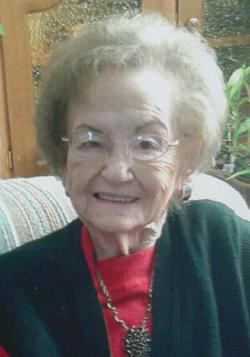
A Living Prayer of Thanksgiving: Remembering Margaret Lambke

Margaret Lambke

Thirteenth century German theologian and philosopher Meister Eckhart is often credited with the following quote: “If the only prayer you ever say in your entire life is ‘thank you,’ that will be enough.”

If the only prayer you ever say in your entire life is ‘thank you,’ that will be enough.

I believe it is enough, because I believe that the simple prayer, “thank you,” indicates that one understands that all of life is a wonderful, free gift of God’s amazing grace.

I have said before that I believe there there are basically two types of people in this world: People who get the concept of grace and people who don’t get it.

People who fail to see the grace of it all are usually not what we call “good” people. They act as if they have somehow earned their life, done something to deserve their life. They walk around with this air that the world owes them something. And they grow bitter and even hostile if life doesn’t go their way. After all, they deserve better.

And because they feel as if they have earned it, their lives are usually self-absorbed. Selfishly, they do only what they want to do, even if that means doing nothing at all.

Then there are those like Margaret Lambke who get it, who truly understand the sheer grace of it all. They understand that all of life is gift. It is unearned and undeserved. It is mysteriously and utterly precious. And these are who we generally call “good” people.

Filled with gratitude and joy, they live their lives abundantly, enthusiastically, lovingly. Every moment—whether that moment may seem extraordinary or ordinary, miraculous or mundane—every moment, because it is gift, because it is grace, is relished, appreciated and even celebrated.

It is not hard to understand how people like Margaret make the best parents. Margaret absolutely cherished being a mother, and later a grandmother, and great grandmother.

Debbie and Conie, this is because, for your mother, you two, and later your families, all of her grandchildren and great-grandchildren, were gifts of God’s amazing grace, all unearned, undeserved. And she got it.

This is why she remembered, looked forward to, and loved to celebrate every birthday, every anniversary or every life event in your families.

I loved that you will always remember her many voicemails. I think you told me that you could receive over a dozen from her in one day.

“Hi Hon, it’s me, I don’t need anything. Just calling to check on you.”

I believe Margaret called you and left those voicemails as a way of saying: “Thank you.” Thank you for being you. Thank you for being my family. And she called each time her heart was suddenly filled, overflowing with gratitude for you. This is why she called twelve or sixteen times a day!

I believe this immense gratitude which flooded her soul was the exuberant energy behind everything that she did.

There’s no telling how many times she heard someone say to her: “Mar Mar, please sit down. Mar Mar, please rest a while.”

But like the energizer batteries a little pink bunny, the gratitude that overflowed inside of her compelled her to keep going and going and going.

Gratitude is what propelled her to immediately step up and raise her hand whenever anyone asked for a volunteer. Gratitude is how she managed a gift store, helped Jim with bookkeeping in his pharmacy, served as president of PEO, volunteered with mobile meals, played some tenacious tennis, planted and maintained beautiful gardens, made homemade candies and baked her famous Mar Mar bread. Gratitude is what compelled her, no matter how busy she was at the store or with her volunteer work, to always be there for her family. Gratitude propelled her to get in her car and drive to Colorado when she learned Debbie was a little homesick to to drive to the school to give a ride to Conie and the rest of the cheerleaders if they needed one. And gratitude was the reason that no matter how busy she was, she was always a leading candidate for “Mom of the Year.”

Everything she did, every project she undertook, every holiday decoration she created, every Easter egg hunt she hosted, every extra goodie or appetizer she prepared, every Sunday school class she taught, every breath she took, was a prayer of thanksgiving to God for the gift of her life.

“Mar Mar, please sit down!” she would often hear. But the immense gratitude she possessed for Jim and Debbie and Conie, her friends and family, drove her to keep at it, keep working, keep volunteering, keep cooking, keep decorating, keep loving, and keep praying with all that she had that simple but beautiful prayer: “Thank you.”

I am certain this is why it has been so especially painful to watch Margaret these last few years since she suffered a broken hip and the subsequent unsuccessful surgeries. To witness this one who never missed a beat, never slowed down, and never sat down, has been very difficult, to say the least.

And now to think that this one who was so full of life, abundant, exuberant, tenacious, is no longer living with us, well, it can be almost too much to bare.

Conie and Debbie told me that one of their mother’s favorite scriptures was John 3:16: “For God so loved the world that he gave his only Son, so that everyone who believes in him may not perish but may have eternal life.”

It is easy for me to understand why this passage of scripture was special to Margaret. For there is such amazing grace revealed in these beautiful words.

God gave, God gave. Do you hear it? Do you hear the gift? Do you hear the grace? God gave God’s only son, why? For the world earned this gift? For the world deserved this gift? No, for God so loved the world!

So that everyone who believes in this gift, believes in this grace, so that everyone who truly gets it, so that everyone who truly understands that if the only prayer that you every pray in your lifetime is “Thank you” that is enough, so that everyone whose entire life is a prayer of gratitude, they will never perish but have eternal life.

Eternal life. Life without ceasing. Life forever. For people who fail to get it, who fail to appreciate the gift of temporal life on this earth, this is not good news. However, for people like Margaret, for people who truly get it and appreciate it and celebrate it, that life itself is grace, for people who have lived life fully and abundantly and tenaciously and enthusiastically, then this is the best news of all!

And I believe this good news can bring much comfort and peace to those of us who are grieving today.

But I also believe that Margaret taught us that we can find even some more comfort this day.

For you see, Margaret herself was a gift. Margaret was grace. This world didn’t earn her, nor deserve her. We didn’t earn or deserve 8 minutes or 8 days or 8 years, and we got 88 years. Jim you got all but 20 of those years. 68 years of marriage. That is grace.

Knowing Margaret, I believe she is eternally grateful for that. And I believe she has taught us to be eternally grateful to that.

Garth Brooks sings a song entitled “The Dance.” One line of the song goes: “I could have missed the pain, but I would have had to miss the dance.” Our grief today only means that we have received and lost something wonderful. The only way to never grieve is to have never received or appreciated that gift. But as Margaret taught us with her life, to never appreciate it, to never get it, is to never truly live. As the song goes, the only way to miss the pain of loss is to miss the whole dance of life.

So Jim, Conie and Debbie, as I told you last week, every time you remember your mother and shed a tear, be grateful for those tears. Because those tears only mean that you have been graced by God. Those tears only mean, that you like your wife and your mother, also get it.

And because you get that you have been graced by God with the gift of Margaret, because we all get it, may we live out our remaining days on this earth as Margaret lived all of her days, by being a living prayer of thanksgiving.

It Can’t Be the Messiah. Can It?

FullSizeRender

John 4:5-29 NRSV

With United Methodist Bishop William Willimon, I believe that the Bible is not so much an account of our search for God, as it is the amazing account of the extraordinary lengths to which God will go to search for us. Whether we know it or not, or can even begin to understand it or not, we are here this morning because we have been sought, we have been called, and we have been summoned. We are here because God has reached in, grabbed us, and led us here. We are here because God has pursued us. God is even now persuading, prodding and pulling us.

And I believe that the purpose of our worship is to condition us to pay attention to this, to admonish us to look over our shoulder, to help us to notice those little coincidences in our lives and those strange happenings.

For they may be a part of God’s continuing attempts to wrap God’s loving arms around us.

And these things, these coincidences, these strange happenings can occur anytime and in any place. As Jesus told Nicodemus, “The Spirit of God, like the wind, blows where it will”—whether or not we’re ready for it, looking for it, or even want it.

So, it would behoove us to stay alert, look, listen, always pay attention.

I believe the woman in our scripture lesson this morning teaches us how to pay such attention.

That fact alone teaches us something about the way God works. In the male-dominated society in which Jesus lived, especially in the area of faith and religion, Jesus uses a woman to teach us theology. Talk about the spirit of God blowing where it will!

In Jesus’ day, mainline Jewish rabbis simply did not speak to women about faith. However, Jesus was anything buy mainline. But one who always, very radically and counter-culturally, valued women and men equally.

Which brings us to another surprise. She was not only a woman; she was a Samaritan woman. And we know what Jews thought of Samaritans. They were known as pagans and foreigners. They were victims of racism, xenophobia, and bigotry.

Here, the radical words of the Apostle Paul are being fleshed out: “there is no longer Jew nor Greek, slave nor free, male nor female, but all are one in Christ Jesus” (Gal 3:28).

During her conversation with Jesus (which, by the way, is the longest recorded conversation that Jesus ever had with anyone), we also discover that she carries the stigma of divorce, as she has been remarried several times.

And, of course, she is astounded that this man, a Jew, talks to her, a Samaritan. In her eyes, she’s the wrong gender, wrong race, wrong religion. Yet, Jesus meets her where she is. Jesus initiates a conversation with her. Jesus reaches out to her. Jesus engages her.

And of all places, at a well!

It is important to understand that she isn’t there for Sunday School. She isn’t there for the 8am or the 10:15 worship service. She’s not even there for CWF. She is there doing the most ordinary of everyday tasks. She’s simply drawing water.

So, the first thing this woman teaches us is that God speaks to us, God reaches out to us, and God engages us when we least expect it, where we least expect it, and how we least expect it. God comes to us, unexpectedly, undeservedly in the most ordinary of ways.

Jesus then begins to teach her about something called living water and then tells her that he knows all about her; all of her failures, all of her disappointments, all of her grief which has been so much a part of her life.

She then runs all the way back home to tell everyone, “Come! See a man who has told me everything. He can’t be the Messiah. Can he?”[i]

Willimon has said: “She—Samaritan, woman, husbandless—thus becomes the precursor, the very first of all of us later preachers. She was the first to run to tell everyone about Jesus.”

And all she meant to do that day was to go out and get a bucket of water!

And here is the amazing part. She didn’t all of a sudden understand everything about who Jesus. She didn’t run back home singing the Gloria Patri and reciting the Lord’s Prayer. She merely left her encounter with Jesus with a simple, but very profound question: “He can’t be the Messiah. Can he?”

“He can’t be the Messiah. Can he?”  Do you hear it?  Listen again, “He can’t be the Messiah. Can he?

No, it’s not the words of some religious fundamentalist who has it all figured out. It’s more like the words of a innocent child. “He can’t be the Messiah, can he?”

Fifteen or so years ago, during the weeks leading up to Christmas, when my children would misbehave or fuss, when they were not looking, I remember making a fist and knocking on a wall or under the table.

Carson and Sara would immediately stop their fussing and ask, “Who is that? Someone’s knocking on the door.”

I’d get up, go to the door, open it, look around, and of course, not seeing anyone, I would shut the door and say: “It must have been Santa Claus! Don’t you know that this time of year he’s always watching?”

Sara Beth would say, “Nah uh! That wasn’t Santa Claus!” But a of second of silence later, she’d ask, “Was it?”

Can’t you hear it?  Like an innocent child, full of surprise and wonder and an unbridled hope, the woman at the well said: “He can’t be the Messiah. Can he?”

Do you hear it?

With Willimon, I hear a playful openness, a light flickering in the dark, a wonderful willingness to consider that God was larger than her presuppositions of God. I hear a courageous willingness to be shocked, surprised, and intruded upon. I hear a thirst for something to quench a longing soul.

I believe this is the problem with us grown-ups, especially we modern, mainline, mainstream church-goers. We simply say: “That can’t be the Messiah…period!

There is no openness to the possible potential that it might be, may be, could be, probably is.

We are so smart. We have things so figured out, we never question, “Can it? Was it? Is it?”

Even when we are at church, in a Bible Study or in worship, there is no real expectation that Jesus Christ, the Messiah and Savior of the world might actually show up.

To be honest with you, last Sunday, I was almost dreading coming to church. I was thinking: “Daylight Savings Time, Spring Break. Very few people are going to be at church today. And nothing good is really going to happen this Sunday.” I was also feeling a little disheartened that I had to make an announcement regarding our supplemental giving drive. Asking for more money makes me feel like I have perhaps failed at something.

The point is, last Sunday, when it came to church, I wasn’t feeling it.

But then, to my surprise, four people came forward during our final hymn asking to formally join the mission of our church to bless this community and world. One even offered to bless my family by taking us out to lunch after the service. And then, later in the week, I received a phone call with the news that someone believed in our church’s mission enough to make a sizable donation to be used anyway we believe God may be leading us.

And here it is, just one week later, and there’s this renewed, restored, replenished fullness in my soul. There’s this recommitment to share the love and grace of Christ with all people.

Now, I am aware many would say that those events were merely coincidences. Perhaps. However, as I have studied our scripture this week, like a light flickering in the dark, my heart has become open to the providential possibility that God was somehow involved. And the fullness that I feel in my soul is from this wonderful willingness to be shocked, surprised, and intruded upon by none other than the Messiah and Savior of the world, Jesus Christ himself.

Thinking on the words of the woman in our scripture this morning, I cannot help but to think: “It can’t be the Messiah. Can it?”

Can it possibly be that, here in this place last week, Jesus Christ was actually present? Could it be that he was coming to me through ordinary people, unexpectedly, undeservedly, bringing living water that quenches the deepest thirst of my soul.

Jesus, through this Samaritan woman, at the well, answers that question: “Yes, I am the Messiah. I am more alive and more present and more at work in this world than you ever thought possible. I am everywhere offering the wonder of living water, and those who drink of the water that I will give them will never be thirsty. The water that I give will become a spring of water gushing up to eternal life.”

One of the greatest things about being a pastor is sharing not only times of immense joy with a congregation, like childbirth with the Weibling family this week, but also sharing times of immense sorrow, like with Charlie Heller last week.

I look around this room and see people here who have experienced much sorrow, so much in this past year. I am certain that even getting up this morning and getting to this place was an arduous task for you. Some of you have recently lost a parent, a sibling, a spouse. Some of you have lost a child. You all have lost dear friends. Some of you have been diagnosed with cancer. Some have had to make the difficult decision to place a loved one in a nursing home. Some are grieving broken relationships, broken dreams, broken lives.

And people, including me, look at you and are amazed. We say, “We don’t know how you are making it.”

And yet, somehow, some mysterious way, you are making it. At the very least, something or someone has given you the sustenance to make it to this place this morning to possibly hear a hopeful word.

I look at you with the wonder of a wide-eyed child. And I think of the wonder of that woman from Samaria, and I ask, “It can’t be the Messiah…can it? Can it?


Commissioning and Benediction

Now, let’s go and get out on the road

to encounter ordinary people doing the most ordinary of things.

They may be dining at a restaurant, shopping for groceries, exercising at the gym, learning in a classroom, waiting to see the doctor.

They may be the server in a restaurant, the clerk at the store,

the trainer at the gym, the teacher in the classroom, the nurse, the doctor.

Their gender, their race, their religion—it doesn’t matter.

They may be a victim of prejudice or a beneficiary of privilege.

Meet them where they are. Engage them. Listen to them. Bless them.

And may the eternal well of God’s love be found in our encounters.

May the grace of Christ shine brightly through us.

And may the Spirit be with us on every hill, every plain, and in every valley.

[i] If my memory is correct, the words of this sermon were originally inspired and gleaned from a sermon written by William Willimon, possibly entitled, Look over Your Shoulder, in 2005.

A Nurse’s Prayer: Remembering Marianna Powell

Marianna Powell

I’m certain that many people have contacted the Powell family since Sunday to let them know that they were in their prayers.

Prayer: it is a wonderful gift of God’s grace. To know that others, some from great distances, from all over the country, are speaking to God on our behalf, asking God to bring us healing and comfort, can bring us a peace that is truly beyond our understanding.

For the good news is that we believe that God not only hears our prayers, listens to our prayers, but we believe God does all that God can do, gives all that God can give, to always answer our prayers.

This is why I loved Kerry’s response when I asked him and his brother Randy: “What was the most important thing that your mother taught you?”

Without hesitation, he said, “She taught us how to pray.”

Immediately, Randy nodded in affirmation.

I said, “What do you mean?”

“Oh. she would work and work with us to help us remember the and recite the words of the Lord’s Prayer,” he said. “Prayer was important to her. She believed in prayer. Before meals, before bed, she taught us to always pray.”

We talked a little more about prayer, but it wasn’t long, nor hard to understand, how prayer was the perfect segue to begin talking about her life, especially how she loved her vocation as a registered nurse.

As Randy and his wife Kandi, and Kerry and his wife Maria, who is also a nurse, talked about how important nursing was to Marianna, I began thinking about my grandmother who, like Marianna, was also born on April 19, but one year later in 1927; and, like Marianna, was also a registered nurse.

I will never forget my Nana talking about how she enjoyed nursing. She would often speak of what she believed to be “the healing power of personal touch,” the importance of “up close and personal” contact with patients.

And whenever I was sick or not feeling well, I always felt better when Mama would have Nana come over to check on me. I always felt better when Nana would come close to me, gently place the back of her hand on my forehead to check for a fever, placing her hands around my cheeks and neck to check for swelling.

Yes, as I said, there are many people praying for the Powell family today, some from great distances. They have sent cards, made phone calls, or reached out electronically with emails or social media, all pledging the Powell family their sincere prayers. Prayer is a wonderful gift of God’s grace. The Powell family appreciates prayer. Marianna taught them to believe in prayer.

But, then there are others (and I am speaking of you) who have gathered here in this place this morning. I am speaking of your who, as they they say, have put some feet on your prayers. You have come to be close this family in their grief. You have come to lay your hands on them, to touch them with an empathetic handshake or a loving embrace.

And they will forever be grateful for your presence here today. They will be grateful that you are not only here and near to them on this day, but grateful for the way that you will always remind them of their mother, grandmother and sister, for the way that you will always remind them of this this one with the heart of a nurse who loved them and loved others and prayed for so many, not from a distance, but up close and very personally.

I shared with the family the story of one of my first visits with Marianna. She was in the dining hall of the nursing home eating dinner. I pulled up a chair and sat beside her. At first, perhaps due to the strokes that she had suffered, she seemed to be a little distant, aloof.  I was on her left, unsure that she recognized my presence. She was sitting up, but slumping a little bit to the right, away from me.

However, when I leaned over and touched her arm, telling her that I was her pastor from Central Christian Church, she immediately turned to make eye contact with me and smiled. And I will never forget what happened next.

With strength that I did not know she possessed, she sat up and started leaning her head towards me.

The caregiver who was feeding her said: “She wants to kiss you!”

Surprised, but pleasantly so, I leaned in, turned my cheek towards her as she gave me what has to be one of the sweetest kisses I have ever received!

She loved her church and this one who represented her church so much, she prayed for her church in such a way that she could not remain distant, aloof. With the heart of a nurse still beating inside of her, she wanted to demonstrate her love, up close and personally. With every bit of strength that she could muster, with all that she had, a pure and powerful love compelled her to sit up and lean forward, until she could come close enough to me to offer me a prayer through her touch, through a beautiful kiss on the cheek.

Marianna taught her children how to pray with words. But, perhaps, more importantly, she also taught them how to pray with her life, with all that she had.

I believe the Apostle Paul aptly describes Marianna’s life when he wrote that we should “pray without ceasing.” That is, we should live a life of prayer. We should live our lives as if we are always with the Holy One.

It was this prayerful life that Randy and Kerry said taught them the Christian values of love, kindness and respect. However, they were both quick to point out: “Now we are not saying that we have always conveyed to others these values or lived out these values like our mother! We are just saying that because of our mother, and because of what she taught us with her life, we have at least been blessed with the wonderful opportunity live those values.”

We then talked about her love for God’s entire creation, especially for her beloved horses. They will never forget the time they took her to say goodbye to one of her horses. As you can imagine, Marianna did not say not say goodbye with a simple wave through the car window. She got as close as she could possibly get to her horse, so the horse could feel her touch and know her love.

This is why I thought it was rather interesting that one of the memories that Randy and Kerry said they will always cherish was their mother reading them the Christmas story from Luke’s gospel every Christmas. They then talked about how important it was to them to sit at their mother’s bedside this past Christmas and read it to her:

         In that region there were shepherds living in the fields, keeping watch over their flock by night. Then an angel of the Lord stood before them, and the glory of the Lord shone around them, and they were terrified. But the angel said to them, “Do not be afraid; for see—I am bringing you good news of great joy for all the people: to you is born this day in the city of David a Savior, who is the Messiah, the Lord. This will be a sign for you: you will find a child wrapped in bands of cloth and lying in a manger.” And suddenly there was with the angel a multitude of the heavenly host, praising God and saying, “Glory to God in the highest heaven, and on earth peace among those whom he favors!”  (Luke 2:8-14)

I find this interesting because the story of Christmas is essentially a story of a God who loved this world so much that God could not remain distant, aloof. God did not merely say to the heavenly host: “Let us pray for the creation. Let us pray for humanity.”

And of course, that in itself would have been enough. Because we believe in prayer. Marianna taught us to believe in prayer.

The writer to the Hebrews assures us that

[Christ] is able for all time to save those who approach God through him, since he always lives to make intercession for them.” The writer is saying that Jesus lives to make intercession for us. In other words, Jesus lives today to pray for us (Hebrews 7:25).

The Apostle Paul in his letter to the Romans writes:

Likewise the Spirit helps us in our weakness; for we do not know how to pray as we ought, but that the very Spirit intercedes with sighs too deep for words.  And God who searches the heart, knows what is the mind of the Spirit, because the Spirit intercedes for the saints according to the will of God (Romans 8:26-27).

If we ever worry that no one is praying for us, the Apostle Paul says that we can stop worrying. If no one earth is praying for us, Jesus certainly is. Jesus is our High Priest. He is our intercessor. He is our advocate. Christ lives today to pray for us. Even when we don’t know how to pray for others or for ourselves, even when we cannot find the words to pray, Paul says that the Spirit of God intercedes for us with “sighs too deep for words.”

Yes, if all God did for us was pray for us, even from a distance, that would be enough.

However, the love of God, the love of God that was revealed to us through Marianna Powell, and through Christ Jesus himself, is so great, so pure, and so powerful, that there was no way in heaven that God could remain distant, aloof.

God’s love for us compelled God to summon all the strength God could muster, to summon all that God had to give. Love compelled God to sit up in the heavens, and lean towards the earth, until God could come close enough to us to offer us a prayer through the “up close and personal” touch of the Divine, through a baby—Christ the Good Lord, the Good Shepherd, the Good Teacher, the Good Nurse—lying in a manger.

This is how we who are grieving today can truly be filled with a peace beyond understanding. People are not only praying for us from a distance. People are indeed here, in this room, with us. And God is not praying for us from some aloof heavenly place. God is indeed Emmanuel, which means, “God with us.”

God is here with us as God is with Marianna, loving her, touching her, embracing her, now and forevermore.

I want to close my remarks thanking God for Marianna’s love for us and for the special way that she revealed God’s love for us with these beautiful words by Allison Chambers Coxsey, entitled: A Nurse’s Prayer.

Give me strength and wisdom,

When others need my touch;

A soothing word to speak to them,

Their hearts yearn for so much.

Give me joy and laughter,

To lift a weary soul;

Pour in me compassion,

To make the broken whole.

Give me gentle, healing hands,

For those left in my care;

A blessing to those who need me,

This is a Nurse’s prayer.

Don’t Mess with Barbara: Remembering Barbara Newton

barbara-newton
Visiting with Barbara one week before her funeral service.

Eulogy delivered for Barbara J Newton Friday, December 16, 2016

The first chapter of our Bible teaches us that in the beginning “God created humankind in God’s image, in the image of God he created them; male and female he created them” (Genesis 1:27).

Canadian Theology professor Douglas John Hall wrote that the “image of God” is not necessarily something we human beings have or possess, but more of something that we are created and called to do and to be. Imago Dei is not a noun. Imago Dei is a verb.

During our relatively short time on this earth, we are called to do what we can where we can to image God, to reflect God, to mirror God. That’s why we pray, “Thy Kingdom come, thy will be done on earth as it is in heaven.”

And perhaps this is part of the reason that as a pastor and a preacher I have come to the conclusion that the only aspects of a person’s life that should be included in a person’s eulogy are those aspects of a person’s life that mirrors who or God is and how our God acts in the world.

Because of this, and unfortunately, because of the way some people live their lives on this earth, sometimes writing words of eulogy can be one of the most difficult tasks of a minister.

However, I have discovered that for most mothers, especially mothers like Barbara Newton, writing a Christian eulogy comes fairly easy.

For throughout the scriptures, God is oftentimes described as a mother.

In Deuteronomy 32:18 we read:

  You were unmindful of the Rock that bore you; you forgot the God who gave you birth.

Throughout the Hebrew Scriptures, God is portrayed as the mother of Israel. It is God who gave birth to the nation and loves Israel as a mother loves her child.

In the New Testament, it is obvious that Jesus understands this maternal love as he uses birth imagery to explain the gift of salvation, the gift of new life, abundant and eternal. Jesus told Nicodemus that if he wanted to truly experience life, he must be born anew, born from above.

And throughout the Church, baptismal waters have always been symbolic of the waters of the birthing process. The God that is portrayed throughout scripture is continually in labor. Always creating, recreating, working all things together for the good. Always giving life, abundant and eternal.

Fig, Kelly, and Chad, there is no doubt that part of the reason Barbara was such a wonderful human being was the way Barbara uniquely mirrored the motherly love of our heavenly parent. Her love was divine.

Now, I know what some of her immediate family are thinking: “Preacher, I don’t know about that. Mama loved us, but sometimes mama perhaps loved us to a fault.”

“Mama loved us so much, that if we were ever wronged or hurt by another, Mama was not the type to just let that go. The perfect title of her Eulogy might be: ‘Don’t…Mess with Barbara.’

So preacher, I am not so sure that I would describe her love as ‘divine love.’”

However, this is precisely how the holy scriptures describe it.

The prophets Hosea and Isaiah proclaimed a God, when it came to loving God’s children, you better not…mess with.

Hosea 13:8 reads:

I will fall upon them like a bear robbed of her cubs…  

In other words, thus saith the Lord, if anyone harms my children, if anything is done that causes pain and heartache to the ones that I love the most, you better believe that I am not letting that go!”

Isaiah 42:14 reads:

For a long time I have held my peace, I have kept still and restrained myself; now I will cry out like a woman in labor, I will gasp and pant.

Sound like anyone you know? And here is the good news for all of us who are grieving today.

Today, we are hurting. Today we are in pain. For death has wronged us. Barbara was too young and too good to suffer as I have seen her suffer since I have been her pastor.

And the good news is that our maternal God loves us so that God is not going let that go.

One day, Jesus and his followers encounter a funeral procession while traveling through the town of Nain.

He watches as a casket and a grieving family go by.

But because Jesus is God incarnate, the very image of our God, because Jesus loves with a divine, motherly love, Jesus can’t let it go.

The scriptures tell us that when he encounters this scene, he was moved with compassion. More specifically, he was moved very deeply.  The Greek word used here is a visceral verb. It means that Jesus was moved from deep within his inner bowels. Jesus has a visceral, gut wrenching reaction to that funeral procession. Jesus had this reaction, because Jesus loved. Some would say that he “loved to a fault.”

And Jesus’ deep compassion was for something more than the deceased. Jesus’ compassion was also for the living. Jesus recognized the tragedy of death.  Jesus recognized the pain and heart ache that this death had caused. Jesus recognized that it was not the will of God for any of God’s children to suffer like this. And because of his great love, Jesus is not going to let it go.

With great love and compassion, Jesus reaches out his hand and touches the casket and speaks to the one within it, “I say to you, get up!”  And then, listen to these wonderful words, “When the dead arose, Jesus ‘gave him back to his family.’” Isn’t that beautiful?  This young one’s life was restored, but so were the lives of the family.

Thus, Jesus demonstrates what our God is all about. God is and has always been about life. God is and has always been about bringing life, new life, abundant life, eternal life to God’s people.  In fact, giving life is the first, most important work that God does. For in the beginning, in the Genesis chapter one, we read that God breathed life into humanity.

Therefore, we have the certain hope that when Barbara breathed her last breath on this earth, God did not that go, but was there to breathe new, eternal life into her. And it is this hope that should also breathe new life and breathe peace into the lives of those of us who are grieving this day.

And we can rest assured that the divine motherly love of our God is not going to let our pain go today.

In Isaiah 66:12-13 we read:

For thus says the Lord; I will extend prosperity to her like a river, and the wealth of the nations like an overflowing stream; and you shall nurse and be carried on her arm, an dandled on her knees. As a mother comforts her child, so I will comfort you; you shall be comforted in Jerusalem.

The Psalmist declares:

Yet it was you who took me from the womb; you kept me safe on my mother’s breast.

And in Luke chapter 13, we read these beautiful words of Jesus:

Jerusalem, Jerusalem…  How often have I desired to gather your children together as a hen gathers her brood under her wings…!

In Revelation 21 we read:

See, the home of God is among mortals, He will dwell with them as their God; they will be his peoples, and God himself will be with them; he will wipe every tear from their eyes.  Death will be no more; mourning and crying and pain will be no more, for the first things have passed away.

Paul Smith, a pastor from Kansas City says, that here in the last book of the Bible, in John’s picture of eternal life, “We see God’s maternal presence doing something that almost every society understands as a mother’s delight.”  Someone once told me that there is nothing in the world that can wipe away tears better than a mother’s blouse, when she holds you tightly in her arms.

What a wonderful and hopeful joy to know that Barbara breathed her last breath on this earth…only to breathe her next breath in the arms of God, wiping away any tears that she may have shed. And God is also here to hold us, wiping away our tears.

God is not going to just let our tears go!

This is the hope for all of us who grieve this day. We look forward to the day when we, like Barbara, will be held in God’s arms, but until that day comes, we can find comfort in God’s church that has been commissioned with the mission of sharing the motherly love of God with all people. The good news is that God has graced each of us with friends and family, who like Barbara emulate our motherly God to care for us, especially when we are hurting.

And God, Emmanuel, God-with-us, is also here. God’s not letting our pain go. God is right here to wipe away every tear from our eyes. Until death is no more. Until mourning, crying and pain are no more.

Strength for the Lenten Journey

communion

After being affirmed by God on Mt. Carmel, Elijah found himself in a wilderness that was so bad, he did not know if he wanted to live or die.

1 Kings 19:3 reads: “Then he was afraid; he got up and fled for his life.” In verse three, it appears that he wants to live. He’s running from Jezebel to save his life.

Now, let’s look at the very next verse: “But he himself went a day’s journey into the wilderness, and came and sat down under a solitary broom tree. He asked that he might die: ‘It is enough; now, O Lord, take away my life…”

One day, he wants to live. The next day, he wants to die. Can you relate?

Elijah then fell asleep under that tree, but suddenly, an angel touched him and said to him, “Get up and eat.”  He looked and there at his head was a cake baked on hot stones and a jar of water. He ate and drank, and lay down again. But the Lord came a second time, touched him, and said, “Get up and eat, for the journey will be too much for you.”

“He got up and ate and drank, and went in the strength of that food for forty days and forty nights to Horeb, the mount of God.”

At times life can be so difficult, one day we want to live. The next day we are thinking that death might not be that bad of an option.

That is why, this Sunday, as I begin my forty day Lenten journey, I am going to eat and drink from a table with my family of faith. For if I do not, the journey in the wilderness of life will be too much for me.

Now, you might ask: How can one tiny, tasteless cracker, and one sip of juice give us sustenance for forty days and forty nights?

Last week’s scripture lesson took us to “the Mount of Transfiguration.” Before the disciples come back down into the wilderness of their lives, a voice came from heaven, saying: “This is my Son, the Chosen, listen to him.”

This is my Son, the Beloved, the Chosen, the one who has been tested and tempted and tried in the wilderness of life, listen to Him. Listen to the One who knows what it is like to be on the mountain top with God one day, only to be in Hell with the devil the next. Listen to the one who knows something about the ecstasy of being affirmed by God in the presence of God one day and to be famished in the middle of the desert the next day. Listen to the One who knows what it is like to be a human being living in a fragmented world.

Listen to the Christ as he says…

“For God so loved the world that he gave his only Son, so that everyone who believes in him may not perish but may have eternal life. Indeed, God did not send the Son into the world to condemn the world, but in order that the world might be saved through him.”

Listen to the Christ as he says…

“Your sins are forgiven.”

Listen to the Christ as he says…

“Your faith has saved you, go in peace.”

Listen to the Christ as he says…

“Daughter, your faith has healed you.  Go in peace.”

Listen to the Christ as he says…

“Whoever drinks the water that I give him will never thirst.  Indeed, the water I give him will become in him a spring of water welling up to eternal life.”

Listen to the Christ as he says…

“I am the bread of life.  He who comes to me will never go hungry, and he who believes in me will never be thirsty.”

Listen to the Christ as he says…

“I am the light of the world.  Whoever follows me will never walk in darkness, but will have the light of life.”

Listen to the Christ as he says…

“I am the good shepherd.  The good shepherd lays down his life for his sheep.  I am the good shepherd.  I know my sheep and my sheep know me.”

Listen to the Christ as he says…

“Your brother will rise again.”

Listen to the Christ as he says…

“I am the resurrection and the life.  He who believes in me will live, even though he dies; and whoever lives and believes in me will never die.”

Listen to the Christ as he says…

“Do not let your hearts be troubled.  Believe in God, believe also in me.  In my Father’s house are many dwelling places. If it were not so, would I have told you that I go and prepare a place for you? And if I go and prepare a place for you, I will come again, and I will take you to myself, so that where I am, you will be also.”

Listen to the Christ as he says…

“You are my friend”

Listen to the Christ as he says:

“I am with you always, even until the end of the age.”

Listen to Christ as he says, “This is my body given to you. This is my blood shed for you.”

Some might still say: “It is just a tiny cracker and a sip of juice.”

But the good news is that we can go in the strength of that food for forty days and forty nights, or however long our journey in the wilderness might last.

Being an Artist with One’s Life: Remembering R. Arlen “Whitey” White

whitie

Arlen, or “Whitey,” was a gifted artist. After submitting several paintings, he was immediately accepted into the Art School at Phillips University. After school, he worked for Ray Sears, and later, established his own painting business. Whitey’s special gift, his meticulous attentiveness to detail, the pride that he took in his work, and his kindness and professionalism soon became renowned throughout the area, and he was given the distinct pleasure of painting some of Enid’s most beautiful homes, offices and businesses.

Whitey loved doing new and innovative things with paint. He could mix and match colors brilliantly with the specific purpose of creating something beautiful, or more specifically, taking something and making it more beautiful, completely transforming it.

Many of us here today are the recipients of Whitey’s gift, or we have at least have seen his artistry.

But today, as we thank God for his life, I would like for us to consider his artistic achievement that I believe is much more important than his painting, for it seems clear to me that Arlen used much more than the stroke of a brush to transform this world. Whitey was an artist with his life.

The Rev. Charles Hoffacker, author of A Matter of Life and Death suggests being an artist with one’s life means that “you take the material available to you—days and years, relationships, opportunities—and you make something out of them, something with its own integrity and truth, a [beautiful] creation that others can appreciate and be enriched by…the artist, working on the material of his life, thus demonstrates a measure of hope, a deep confidence that this beautiful world can become more beautiful still.”

The good news that we celebrate today is that Whitey was much more than a gifted artist with a brush and some paint. Whitey was a magnificent artist with his life. Whitey used the gifts that God had given him to do his part in transforming the world.

After God, the Supreme Artist, fashioned the good masterpiece called the earth, the Bible teaches us that God formed male and female in God’s own image, in the image of God, God created them.

I believe that means the vocation of every man and woman is to create, to fashion, to form, and transform, to be an artist with our very lives, using the resources that have been given to us by the Artisan of the Universe to make this world even more beautiful.

This, I believe this is the way and the truth and the life: the holy purpose for every person.

And as a Christian, I believe, as Whitey believed, that the way, the truth, and the life, our holy purpose can be found through following Jesus.

Not by merely going to church every Sunday worshipping Jesus, not by attending weekly Bible Study studying Jesus, but by following Jesus, by doing the things that he did, by going to the places that Jesus went.

And Jesus was, himself, a painter.

What? You thought he was just a carpenter? Nope. Jesus was a painter.

In fact, Jesus began his very first sermon by painting. With the beautiful words that we call “the Beatitudes,” Jesus painted a portrait of how this world should be completely transformed, making his Father’s creation even more beautiful.

Blessed are the poor in spirit, for theirs is the kingdom of heaven.

This is how I want you to use your gifts to transform the world, says Jesus: bless those, help those, favor those, love those, who are not only poor financially, but poor spiritually, those who scrapping the bottom of the barrel but are also at the end of their rope, those whose very souls are bankrupt due to the loss of a job, or bad decisions made, or by the stigmatized disease of addiction.

Because Whitey owned his own business, he had the resources available to him to help those who found themselves in desperate need of a job. Because he was a follower of Christ, Whitey blessed so many in this community, perhaps some of you who are here today, who came to him when you were completely broke and broken; or more likely, he came to you. He came to you, not judging you, but showing you a portrait of better, transformed future. Whitey came came to showing you the very kingdom of God.

Blessed are those who mourn, for they will be comforted.

         Velma, I know this is a very difficult day for you, but as I told you on Wednesday, the tears that you shed only mean that you are grieving the loss of a beautiful gift to you from God, the gift of someone who was lovingly devoted to you for 67 years. And the only way not to mourn today is to have never received that gift.

So, every time you feel a tear roll down your face, you can thank God for those tears. You can thank God for your grief. With your family, thank God for the gift of God that was your beautiful marriage. And through your gratitude, I believe you and all who are mourning this day will receive comfort.

Blessed are the meek, for they will inherit the earth.

Jesus says, paint a portrait of the world where the meekest among us always know that they are loved they have a place in this world.

Whitey painted this portrait with his love and deeds to children, his children certainly, but also other children as he enjoyed coaching little league football and supporting high school athletics, hardly ever missing a Plainsman football game.

His heart broke when his only son Rick, who he was always so proud of, passed away. Toni, you were “daddy’s girl.” and you will always cherish the special bond you shared and the many unforgettable memories from your childhood: all of those cross country vacations camping in the Redwood Forest and in our many of our great national parks.

And Whitey painted a portrait where the meek are always blessed as he adored his grandchildren and great-grandchildren, doing whatever he could do to make every day special, like he did every Christmas playing Santa and artistically wrapping the most beautiful gifts.

Blessed are those who hunger and thirst for righteousness for they will be filled.

Whitey painted a portrait of a world where the poor and the poor in spirit are helped, those who mourn are comforted and the meek are blessed, but he also painted a portrait of a world that encouraged personal responsibility.

Arlen’s incredible work ethic grew out of the depression era. He was only nine or ten years-old when he worked riding a bicycle on a paper route to help support his family.

Whitey painted a beautiful portrait of the blessings that come from thirsting to be trustworthy and by hungering to be dependable. And because of this portrait, his life was full. And the lives of those who knew him have been filled.

Blessed are the merciful, for they will receive mercy.

Whitey’s portrait of dependability and trustworthiness not only filled the lives of his friends and family, and many customers, it also touched the lives of complete strangers, because in every one of Whitey’s life portraits, the colors of mercy were always present.

One day, while driving to Bass Construction Company, Whitey saw the car in the front of him suddenly swerve, run up on the curb, stopping in some bushes. Whitey drove up beside the car and noticed a man, slumped over. Although he was no EMT and had no CPR training, Whitey jumped out of his car and into in the passenger seat of that man’s car and began administering CPR, until Bob Berry from Bass ran over to help get the man who was having a massive heart attack to the hospital.

Later, the Enid police department presented Whitey with an award for saving that man’s life.

Blessed are the pure in heart, for they will see God.

God, the Supreme Artisan created Arlen, as he created each of us, that we may creatively make this world a better place.

Arlen did this by answering the call to follow Jesus. Arlen was not perfect. No one is. But his motives were pure. With genuine kindness with, purity of heart, Whitey used his gifts to follow the Christ to the best of his ability. The portrait of his life is the example for all of us, each one of us.

Whitey would want me to extend an invitation to each of you here to speak with me anytime after this service about what it means to follow Jesus in this life, to use the gifts that we have been given by God to transform this world with pure colors of mercy, grace and love, and to have the hope that when our painting is completed here, we will see God.

As, now, through the power of resurrection, the Master Artisan beckons Whitey on to a new, transformed life where I believe God and Whitey will continue painting together.

In the very presence of God, I believe he is even more creative than ever before.

There Bob will discover, much to his delight, that the faithful life he lived on this earth was but the primer. It was just the first coat.

As Hoffacker wrote about an artist who was faithful until death: “Now [God’s] gift to him is all the color he needs to make his new life brilliant with praise.”

Blessed are the peacemakers, for they will be called children of God.

And because of this beautiful portrait, a portrait of a transformed Whitey painting colors of praise in the very presence of God, as God’s beloved children, we can have some peace today, a peace that is even beyond our understanding.

And having received that peace today, may each of us, go out from this place, and, like the famous Sherwin Williams’ logo, do what Whitey did, “cover” this world with peace, until that day comes when we are all reunited with him as God’s beloved children. Amen

Sewing Love: Remembering Bernice Crandall

bernice-crandall

As a pastor, I have learned along the way that the only words that are truly appropriate for a Christian Eulogy are words that speak to the ways the person whose life is being remembered actually mirrored or imaged God and the good news of the gospel.

Because in the end, when it is all said and done, it really doesn’t matter how much money we made, nor how many businesses we created, nor how many buildings we built.

The only thing that truly matters is that we somehow fulfilled our human vocation, our holy purpose on this earth, that I believe is revealed in the very first chapter of our Bible: “So God created humankind in God’s image, in the image of God God created them; male and female God created them” (Genesis 1:27).

In the end, what truly matters is how we as human beings imaged God, mirrored God, thus proclaiming to the world with our lives who our God is, how our God acts, and what our God desires.

When Shannon and I visited with Bernice this past Saturday, the day before she died, her children handed me a tiny slip of paper with words that were read at Bernice and Eugene’s wedding ceremony in 1942 in Fullerton California.

I’ll be loving you, always;

With a love that’s true, always.

When the things you’ve planned,

Need a helping hand,

I will understand, always.

Days may not be fair, always;

That’s when I’ll be there, always.

Not for just an hour,

Not for just a day,

Not for just a year,

But, always.

As her family lovingly gathered around her bedside that day, I had the wonderful opportunity to read those words to Bernice once more and to tell her that as she and Eugene were always there for one another and for their children, God, would always be there for her.

In fact, I said that the Bible often likens the relationship that God has with us to the relationship of a married couple. God loves us with the same personal, intimate, covenantal love that is expressed in the sacred vows of marriage.

And this love is not a mere sentiment. It is more than a feeling. It’s greater than an emotion. Think about it, no where in a marriage ceremony does the minister ever ask the question, “Are you in love with one another?” But always, “Will you love one another?” This love is a commitment, a dedication, a promise, a special covenant to always be there for one another, always, in sickness and in health, for richer or poorer, for better or worse, not just for an hour, not just for a day, not just for a year, but always.

This is how Bernice’s children will always remember their mother. They will forever be grateful that she was always there for them, for the way that she was always loving them.

When I asked Lavona and Jana to give me an example of how Bernice was always there for them, the first thing that came to their mind is how Bernice, with her own hands and a sewing kit, would make dresses and clothes for them to wear to school and to church.

I think it is a shame that this art of sewing clothes for children is slowly dying out with Bernice’s generation. Because this art, this wonderful act of love, is the very first way that our God demonstrated that for better or worse, God would always be there for God’s children.

Again, in the very first chapters of our Bible, we read that when Adam and Eve heard God walking through the garden at the time of the evening breeze, they hid themselves in the trees, for they realized that they were unclothed before God. All of their sins were exposed. They were ashamed of what they had done, embarrassed of who they had become.

But the good news is, good news that we oftentimes miss when we read this story, although Adam and Eve ate the fruit that was forbidden, although they decided to live in God’ s creation on their terms instead of on God’s terms, although they were naked, all of their sins laid bare, the Lord God, with God’s own hands makes garments of skin for the couple and clothed them.

And of course, like Bernice, God was clothing them with something more than garments. God was clothing them with love. God was covering them with grace. God was clothing them with the promise that although they would have to leave the garden of Eden as the consequence for their sins, God would never leave them. God was clothing them with the dedication that although the days may not be fair always, God would be there for them, always.

And this is the reason that we are able to celebrate today with so much hope, for better or worse, even in a chapel of an old cemetery. This is the reason that even a grieving family who has suddenly lost two sisters can be grateful.

The good news that that even when we have to leave this earth, God is still there for us. God will never leave us nor forsake us.

As the Apostle Paul boldly proclaimed, “For I am convinced that neither death, nor life, nor angels, nor rulers, nor things present, nor things to come, nor powers, nor height, nor depth, nor anything else in all creation, will be able to separate us from the love of God in Christ Jesus our Lord.”

And because of this divine truth, this holy truth that Bernice taught us with her life, a chapel in the middle of an old cemetery in Enid, Oklahoma can suddenly begin to feel like a wedding chapel in Fullerton California, full of hope, love and promise.

For through remembering Bernice’s steadfast love and abiding presence, through celebrating the wonderful way that she fulfilled her human vocation my imaging her creator, we are reminded that God will be there always, for better or worse, for richer or poorer, in sickness and in health, and the good news is, that with God, not even death will depart us.

No More Sea: Remembering Barbara Campbell

barabara-campbell

There’s a famous list in the book of Revelation of things that we will not find in heaven. John says that when we all get to heaven there will be no more death, no more mourning, no more crying, and no more pain. And that is good news of us who are grieving today.

However, there is one more thing on John’s famous list that may be even better news. The very first thing which is on John’s famous list of the things we will not find in heaven is the sea. John says, “and the sea was no more.” Sounds rather odd doesn’t it? For even most of us who live in land-locked Oklahoma have a strong affinity for the sea.

To understand why John includes the sea on this famous list, we need to understand a little something about the book of Revelation. Revelation is a letter of hope written to the church in Ephesus while John was imprisoned on the island of Patmos for preaching the Gospel. At this time, the Christian Church in Ephesus was being persecuted by the Roman government. And John loved the people in Ephesus very much and wanted to be with them and help them through their persecution. But he was on an island, and the sea was the great barrier which separated him from the people he loved.

And John says that one day there is going to be no more sea. That means one day there will be no more of anything that will separate us from the people we love.

I believe these words should be especially hopeful for us today. For we live in a world where there are many seas that separate us from our loved ones.

For many of us the sea is distance, like the fourteen years that Kristin lived apart from her family in Texas. Like with John on that island, sometimes the seas that separate us from our loved ones are miles.

However, one of the greatest seas that some of us experience on this earth is what Kristin has called “a devil of a disease.” Alzheimer’s is a great canyon, a wide gulf, that separates us from the people we love, slowly, painfully, certainly.

Part of Kristin’s grief today is her realization that her husband Don and her son Henry never had the opportunity to know Barbara at her best.

However, she is very grateful that she moved back to Enid with them in 2012, when they noticed her health failing. Kristin, I believe, as I am certain you believe, that this opportunity to move back was truly a gift from God to you and to Barbara.

During this time, Henry was Barbara’s light and joy. Although she could barely get around during this past year, she never missed one of his soccer games. Kristin says, that while on occasion, Barbara might have forgotten who she and Stan were, she never forgot Henry. She would knit him blankets, buy him books, and in nearly every photo that Kristin has of the two them, she is beaming!

While John was separated by the sea from the people he loved in Ephesus, John sent them the Book of Revelation to let them know that God was for them, not against them; God was with them, not away from them. For Barbara, I believe Henry was revelation. Henry was light. Henry was a message from heaven letting Barbara know that, in spite of her deep sea of sickness, she was loved by God.

I believe this teaches all of us this important lesson: In spite of the many seas that separate us from our loved ones, we will never be separated by God.

And this is especially hopeful for us today as we are painfully reminded, that for all of us, the greatest sea we experience on this earth is death.

The good news is: Because we can not be separated by the love of God, John says, one day, there will be no more sea. Some day, some how, some way, there is going to be no more of anything that will ever separate us from the ones we love. Although distance, disease and now death have separated us from Barbara, John tells us that it is only for season. It is not forever.

John says that one day there is going to be nothing which will separate us from Barbara’s love that she had for so many, especially as a wife, mother and grandmother.

One day, there will be nothing more to separate us from the twinkle that was always in Barbara’s eyes. There will be nothing to separate us from the love and appreciation that Barbara had for the gift of life; from the Barbara who loved movies, music, the theater and the arts; from the Barbara who loved shopping and spending time with her daughter in New York City; from the Barbara who loved listening to her ham Stan sing and perform; from the Barbara who dancing with her husband. He might have owned the stage, but she owned the dance floor!

One day, John says there will be nothing to separate us from the Barbara who loved going on what was always longer-than-expected hiking trips with the family, and who loved graciously knitting baby blankets for unwed mothers.

Stan says that it was this act of grace, of knitting blankets for these mothers, that perhaps most touches him about Barbara.

Perhaps it is because that when these mothers-to-be perhaps felt judged and separated by family, even by people in the church, Barbara’s blankets were like a revelation, a light, a sign to these mothers that no matter how alone and separated by others they may feel, nothing can separate them from the love of God.

And it is because of this love that John says that one day there is going to be no more sea.

However, until that day comes, we are forced to live with the reality that we live in a world of seas.  A world where there is much that comes between us and those whom we love. I believe it is in these days that we need to cling to the hope that was knitted in each of those baby blankets, that although there is much on this earth that separates us from one another, there is nothing on this earth or in all of creation that can or every will separate us from the love of God in Christ Jesus our Lord.


I experienced this most fully nearly every time I visited Barbara at Garland Road during these last difficult weeks of her life. I hardly ever walked into her room and found her alone. Stan was always there, faithfully, attentively, lovingly. Always doing whatever he could do to comfort her, to let her know that she was loved and she was not alone.

Kristin calls her parents her role models, an example of how marriage should be. Always there for each other, in good times and in bad, in sickness and in health, until death.

When we consider the special relationship that Stan and Barbara shared, I believe we can become especially hopeful we consider that the Hebrew Bible often describes Israel as the bride of God and John in his book of Revelation, describes the people of faith “as a bride adorned for her husband.” God loves us with the same faithful love that Barbara and Stan shared with each other.

As Stan was always there for Barbara, doing all that he could do to let her know she was loved, God will do the same for us. God will do all God can do to remind us everyday through countless revelations, numerous signs, that there is truly nothing in heaven and or on earth that can separate us from the love of God.

We will experience this through the love of our family, and through all of the wonderful memories of this sweet woman. These memories are not only Barbara’s gift to, but I believe they are God’s gift to us.

God will stay with us through God’s holy church and through God’s Holy Spirit. God will stay with us and sustain us until that day comes when we see Barbara again, completely, fully, with no seas of separation between us.

One of Barbara’s favorite writers was Kahlil Gibran. I want to close this service with these beautiful words on death:

You would know the secret of death.

But how shall you find it unless you seek it in the heart of life?

The owl whose night-bound eyes are blind unto the day cannot unveil the mystery of light.

If you would indeed behold the spirit of death, open your heart wide unto the body of life.

For life and death are one, even as the river and the sea are one.

In the depth of your hopes and desires lies your silent knowledge of the beyond;

And like seeds dreaming beneath the snow your heart dreams of spring.

Trust the dreams, for in them is hidden the gate to eternity.

Your fear of death is but the trembling of the shepherd when he stands before the king whose hand is to be laid upon him in honour.

Is the shepherd not joyful beneath his trembling, that he shall wear the mark of the king?

Yet is he not more mindful of his trembling?

For what is it to die but to stand naked in the wind and to melt into the sun?

And what is it to cease breathing, but to free the breath from its restless tides, that it may rise and expand and seek God unencumbered?

Only when you drink from the river of silence shall you indeed sing.

And when you have reached the mountain top, then you shall begin to climb.

And when the earth shall claim your limbs, then shall you truly dance.

Your People Will Be My People: Remembering Imogene Price

imogene-price

It was a little over a year ago when I first met Imogene Price. I had just been blessed to receive the call to have the opportunity to serve with this church as the senior minister. She was a patient in skilled nursing at Greenbrier, and one of the first church members that I went to visit.

During my first visit, I remember introducing myself to her as her new pastor. She asked me a lot of questions. She wanted to know where I was from. She wanted to know about my wife, my children, even my parents. At the end of her conversation, I held her hand and we prayed. And like I always try to do in my all my prayers, although I was new and still learning names, I called her by name, asking God to be with her.

A week or so later, I went back to visit her at Greebrier. And I will never forget that visit. I walked through the dining hall, through the little common area Then, I took a right to go down the hallway. Her room was just a couple of doors on the left. Right before I knocked on the door, a nurse stopped me.

“Excuse me sir, are you Mrs. Price new pastor?”

I said rather proudly, “Why, yes, I am.”

I thought to myself: “She must have said some good things about me. There’s a new pastor in town and the word is out!”

“Well pastor, you need to know that her name is Imogene; not Emmagene.”

I thought, “Oh my goodness, I made such a poor first impression during my first visit that Imogene is complaining to the staff about me!”

And then I thought (I know I know this is ridiculous, but I thought it): “This woman is going to be rather difficult.”

I know. It is laughable.

While I was in seminary, I took what we called an “Exit Class.” It was a class that taught us all of the things we would need to know in ministry that we were not taught in our Greek, Hebrew or Theology classes. And one of the things we learned was: How to deal with difficult people, like I thought Imogene might be.

One day the professor said, “You pastors need to know that you are going to have some people in your church that are going to be difficult. They are going be grumpy, forever complaining. You are never going to be able to please them. But one day they are going to need a visit from you. And you are not going to want to go. But you are their pastor and you have to go. So, let me tell you what I do. I tell myself that if I go and see them, afterwards I can have some sort of reward. I say to myself, ‘If you go see o’l so-in-so, afterwards, you can drive to Wendy’s and get yourself a Frosty!’”

So, as I knocked on her door that day, after being reminded how to pronounce her name, I thought to myself: “Well, after this visit, I guess I will be heading to Wendy’s!”

Of course, I quickly learned during that visit that Imogene was in no way someone that I needed to be rewarded with a Frosty to see. Imogene was the Frosty. She was the reward.

I am being serious.

Serving on a church staff, sometimes you have to do things that you don’t want to do. Like, attend a church board meeting or a business meeting. And I would literally say to myself “If I can get through this meeting with Don Johnson, going over all these financials, I get to go see Imogene!”

And it quickly became very obvious that the reason Imogene wanted me to pronounce her name correctly after my first visit was not because she was not trying to be difficult. It was because she was trying to be family. And family members do not mispronounce each other’s names. Strangers do that.

Imogene asked me about my wife, my children, and even my parents, because she wanted to make my people her people. Imogene was the living example of Ruth’s love and devotion to her mother-in-law Naomi. Although they were related by marriage, they were more unrelated as Ruth was a Gentile and Naomi was Jewish.

After her husband and sons died, Naomi decided to return to Bethlehem. It is then that Ruth says those wonderful words that we might remember:

Where you go I will go, and where you stay I will stay. Your people will be my people and your God my God. Where you die I will die, and there I will be buried. May the Lord deal with me, be it ever so severely, if even death separates you and me (Ruth 1:15-18).

Imogene wanted me to pronounce her name correctly; because, although I was a stranger, she wanted me to be her people.

And this is how she treated everyone. She loved people with this special determination to make everyone her people.

I never once visited with Imogene when she did ask me: “Now, tell me what’s going on with you and the people at church?”

I shared with the family that what made Imogene unique is that unlike some people who are confined to a nursing home, in and out of the hospital as much as she was during this past year, Imogene never withdrew from the world. She never gave up. She was always very interested in what was going on in the community.

And that is because she loved the people of this community. They were her people. And she made the commitment, the promise, to love her people until the very end.

The good news for us today is that Imogene not only mirrored Ruth’s love for Naomi, Imogene mirrored God’s love for each of us.

We are God’s people. Thus, where we go, God will also go. Where we lodge, where we live, God also lives. And where we die, God is there.

And this divine love is so powerful, that not even death can separate us from it.

And the special good news for us who loved Imogene is (and we know it. We feel it even today even in this memorial service, even in our grief): That not even death has separated us from Imogene’s love for us. She loved us, and we know deep in our souls, that she still loves us. She will always love us.

Thanks be to God.

Disappointment at Christmas

christmas-disappointment-7159866

Matthew 11:2-11 NRSV

It’s the Third Sunday of Advent. The days are getting shorter. The nights are growing longer. The last month of the year is a darker, colder place to live. And it is in this cold December darkness that we are all a little more sensitive, a little more attuned to the real darkness and chill of our world. The world around us appears even more fragile than usual, more harsh, and more broken.

Human service organizations report record number of volunteers and donations in the days leading up to Christmas. It’s really kind of silly when you think about it. The homeless are still homeless in July. The cold are even colder come February. Nursing home residents won’t be any younger when March arrives, and the hospitals are filled with the sick every month of the year. But at Christmas, our hearts become a little more tender, and they tend to bleed just a little bit more.

And here lies our great December disappointment. Our holiday awareness of the world’s plight is the great paradox of Christmas. If God so loved the world that God was willing to become flesh and be Emmanuel, God with us, why is there so much pain and suffering in our world? Why is there so much poverty, sickness, injustice, and pure evil? Why is this world so cold, so dark?

Death, divorce, disease, destitution, desperation, despair—darkness—it envelops us like a December Arctic blast.

If God so loved the world that God was willing to become flesh and dwell among us, if Christmas really occurred, if God truly came, if good news actually happened, why is this world still so cold? Why are we left disappointed?

I believe these are the questions with which John the Baptizer struggled.

As we mentioned last week, John is the very first character in the Christmas drama. He is the one of whom Jesus says: “Truly I tell you, among those born of women no one has arisen greater than [he]”. He is the one who had given his entire life to God, who had very faithfully and courageously lived out his purpose in life preparing the world for the advent of the Messiah. His important role in salvation history had been prophesied years earlier by the prophets Isaiah and Malachi. And he fulfilled this role with utmost humility and commitment.

When people felt led to worship him, John quickly said, “No, for there is one who is coming who is more powerful than me, for I am not even worthy to untie the thong of his sandals.”

And what does he get? What is his reward?

Imprisonment. He is locked up in a cold, dark cell waiting for the Romans to cut off his head.

Talk about Christmas paradoxes!

“Wait one minute!” John must have thought. “This can’t be happening! Not to me! Not to the one who was chosen by God to prepare the hearts of people for the Advent of the Messiah! I have been so faithful, so courageous. I have sacrificed, and I have given my all. And just look at me now! Look what I have gotten! Look where I am! My world could not be more cold, more dark!  Something is just not right about this.”

Can you relate?

I can.

So, there, in prison, enveloped in disappointment, John sent word asking Jesus, “Are you the one who is to come?” Are you the messiah? Are you the one about whom I have been preaching all these years?

“Or are we to wait for another?” Someone who is even more powerful. Someone who will finally come and set this world straight. For if you are truly the Messiah, why is my world so dark? Why am I sitting in prison about to lose my head? Why do I feel the way that I feel? Why am I so disappointed? Something is just not right with this picture. Jesus, I want, I need some answers!”

Jesus answered John alright. Just not the way he hoped he might answer. Jesus told his disciples to “Go and tell John what you hear and see. The blind receive their sight. The lame walk. The lepers are cleansed. the deaf hear. The dead are raised, and the poor have good news brought to them.”

What is Jesus telling John by pointing to these signs of the Messiah’s coming?

Well, I know what he is not telling John the Baptist. As one who has read about John ten chapters earlier in Matthew and as one who knows something of the disappointment of this world, I know that Jesus was not telling John what John wanted to hear.

Jesus was not saying, “Yes, John, I am the one. I am the Messiah of the world who is coming with my ax in hand to cut down the Romans and throw them into the fire! With my winnowing fork, I am coming to clear the threshing floor and burn your enemies with an unquenchable fire!

So Cuz, you just sit tight, because Christmas is coming and things are about to get straightened out! Somebody’s coming to town and he’s making a list! He’s checking it twice! So all who are against you, why, they better watch out!”

No, Jesus said, “I am he. I am Christmas. However, Christmas is not carrying an ax and a winnowing fork and harsh words of condemnation. I’m carrying bread for the hungry. I am carrying water for the thirsty, and I’m carrying words of forgiveness for the sinners.”

The one who is more powerful than John comes, but this powerful one comes with a different type of power: a selfless, self-expending power. He comes to rule not with an iron fist, but with outstretched arms. He comes to love and to save and to die. The Messiah goes into villages, not to burn them down with unquenchable fire. But goes into villages to eat at the table with sinners, to give hope to the poor, to bring wholeness to the broken, and to give life to the dead.” This one who is more powerful than John comes as a suffering servant.

From his cold, dark prison cell, John the Baptist heard about this so he sent word inquiring, “Are you the one? Are you the Messiah who is to come?  Or are we to look for another?”  John’s whole ministry had been pointing to Jesus, saying that he is the one. Now John asks Jesus, “Are you really the one?”

John preached, “The Messiah is coming!  He’s going to fix everything.  He’s going to straighten the whole thing out. He’s going to finally set things right.  But now the Messiah had come. And John the Baptist is in prison. And he’s about to have his head served up on a silver platter.

Anticipation of the Messiah has now met the reality of the Messiah.  And for John, and if we are honest, for even us today, there is some disappointment.

And all John was told was to look for these signs of his coming. And although these signs were not what he expected, and certainly not what he wanted, miraculously, John will soon learn, as we all are still learning, that these signs were all he truly needed.

And you know what I am talking about! The good news is: Jesus the Messiah of the world has come to this earth as the light of the world to save us all from Satan’s power, and there are signs all around us that prove it!

The blind receive their sight—you know people who are physically blind, yet they can see God more distinctly, see hope more clearly, and see love more purely than anyone with 20/20 vision.

The lame walk—you know people in wheelchairs who are more whole, more together, more able, and more gifted than some world-class professional athletes.

Lepers are cleansed—you know people who have been demeaned, degraded and dehumanized, yet they have more of a sense of belonging, of distinction, of purpose, of eminence, than royalty.

The deaf hear—you know some hearing impaired who are more attentive, more alert and more keenly aware of this miraculous gift we call Christmas than folks who can hear a pin drop.

The dead are raised—you know people who on their deathbeds were more conscious, more hopeful and more alive than some couples on their wedding day.

And the poor have good news brought to them—And we all know folks who do not have a dime to their name, yet they are richer, more satisfied and better-off than some of the wealthiest people we know.

And there was once an old preacher named John sitting in a cold, dark Roman prison cell, about to lose his head, who, although he did not always realize it, was more liberated, more unfettered and unshackled, and more free than any new born baby!

And then there are the small signs of Christmas that are all around us—in a friend’s or a spouse’s undeserved forgiveness; in the innocent love of a child; in a warm embrace; in a friend’s thoughtful visit, encouragement, empathy and love; in the breaking of bread, in the sharing of a cup.

And these signs can also be seen through serving a hot meal to a stranger; giving a coat or providing shelter to the cold and undeserving; visiting the lonely in a nursing home; and wrapping gifts for families you have and will never meet.

Yes, on the surface, John the Baptist may have been disappointed when Messiah did not come quite as he preached, when Christmas did not come with a fire to conquer and destroy his enemies. But I believe John began to learn, as we are all still learning today, that fire can take many forms. Yes, some of the forms are destructive and dominating in their effects.  But other forms are warm, comforting, purifying, light-producing and life-giving. These are the forms of fire which our Messiah, which Christmas takes in our world.

And because of this, on this Third Sunday of Advent, on this dark, cold day of December, we light another candle, and we are still learning that light does not disappoint us.